To date, those in power in Cuba have reaffirmed their decision to self-immolate, which translates to their decision to immolate us.
As is often the case, the best is the hardest thing to achieve. / 14ymedio
14ymedio, Reinaldo Escobar, Havana, May 22, 2026 / The urgency of profound change for Cuba is so obvious that all the proposals for transition are essentially the same. With nuances in the tone of the language, be it moderate, academic, or radical, the same thing occurs to all of us: freedom for political prisoners, decriminalization of political dissent, economic opening, a balance between justice and reconciliation, a new Constitution, and, of course, multiparty elections.
It would be pretentious to claim that I have read all the proposals—there are so many!—and that’s a good thing, but what I do not find is the sequence expressed in the temporal plane, a chronology that makes it clear what should happen first.
And here I return to the old theme of the four possible variables (mentioned in no particular order):
1 A decision from above to save the country before ideology.
2 An uncontrollable social explosion that will sweep everything away.
3 A foreign intervention.
4 Let everything stay as it is forever.
Step two leads to step three. If step three is reduced to economic limitations, excluding military action, it can lead to either step one or step two.Number four opens the door to the others.
No one doubts anymore the obsolescence of the ideological proposal that this party defends in its discourse.
As is often the case, the best is the most difficult, and that is for those who rule in Cuba to have a “surge of patriotism” and decide to save the country before the ideological proposal of the only permitted party, which could also be understood as saving the country before their obscene attributes of power, because no one doubts anymore the obsolescence of the ideological proposal that, in its discourse, that party defends.
The scenario is clear: foreign intervention, expressed in limitations on acquiring fuel, plus threats of escalation to the military level, may lead those in charge in Cuba to save the country before the ideology and, in parallel, generate the conditions for an uncontrollable social explosion.
To date, those in power in Cuba have reaffirmed their decision to self-immolate, which translates as their decision to immolate us, as if what they were defending had any future.
______________________
COLLABORATE WITH OUR WORK: The 14ymedio team is committed to practicing serious journalism that reflects Cuba’s reality in all its depth. Thank you for joining us on this long journey. We invite you to continue supporting us by becoming a member of 14ymedio now. Together we can continue transforming journalism in Cuba.
The Cuban regime accuses the EU of lacking objectivity and independence from the United States
Cuban pensioners waiting to be served at a bank in Havana. / 14ymedio
14ymedio/EFE, Madrid, 25 May 2026 / The Cuban regime criticized the European Union (EU) for lacking “objectivity,” by failing to consider that United States sanctions are the main cause of the crisis on the Island, and expressed the hope that the European bloc’s position would be voiced with “independence” from Washington.
Cuban Foreign Minister Bruno Rodríguez posted a critical comment on social media this Monday about the EU’s positions, recently expressed by the EU High Representative for Foreign Affairs, Kaja Kallas, during a special debate on Cuba in the European Parliament.
Rodríguez stated that failing to recognize that U.S. sanctions, “the oil siege and the military threat” against the Island are “the main causes” of the crisis “strips the European bloc of objectivity and reveals a clear double standard.”
“Nor have we heard any concern or support from her for the many European companies and citizens who are being threatened and harmed by the latest U.S. measures, which are clearly extraterritorial and illegal in nature,” he wrote.
In the Cuban foreign minister’s view, Kallas would be expected to adopt “a consistent position” in line with “international law and the peace promoted by the European bloc.” continue reading
The country’s situation “is the result of decades of structural economic failures, bad policies, and the impact of ongoing external restrictions and measures”
“We hope that the EU’s foreign policy, in the complicated circumstances the world is living through, where the use of force and imperialist domination are being imposed, will express European independence and traditional European and multilateral values, as its citizens demand,” he added.
Rodríguez nevertheless acknowledged the humanitarian aid offered by the EU and several of its member states, as well as their “contribution to the development of bilateral cooperation” structured through the Political Dialogue and Cooperation Agreement.
He added that Cuba will continue to back a relationship with the EU based on “respect, equality and reciprocity.”
Kallas, speaking in the European Parliament, said that “a negotiated reform is preferable” on the Island, but called on Havana to “put an end to political repression” and to its “uncompromising control of the economy.”
The head of European diplomacy stated that the country’s situation “is the result of decades of structural economic failures, bad policies, and the impact of ongoing external restrictions and measures.” She also stressed that “the European Union does not finance the Cuban State” and warned that “humanitarian support will not resolve Cuba’s crisis, but will merely alleviate immediate human suffering.”
Translated by GH
______________________
COLLABORATE WITH OUR WORK: The 14ymedio team is committed to practicing serious journalism that reflects Cuba’s reality in all its depth. Thank you for joining us on this long journey. We invite you to continue supporting us by becoming a member of 14ymedio now. Together we can continue transforming journalism in Cuba.
“They give us 15 minutes of electricity, several times like that over the last three days, but yesterday was too much, and everyone came out together to bang their pots.”
An improvised kiosk keeps a small generator running, roaring like an old engine. / 14ymedio
14ymedio, Darío Hernández, Havana, May 25, 2026 / “Havana wakes up with bags under its eyes,” says a resident of Regla, though he makes it clear he is not trying to be poetic. The bags under their eyes are not from a night out, nor from age, but from that sticky darkness that falls over homes when the power goes out and turns the night into a test of endurance.
In his neighborhood, as in so many other parts of the Island, residents came out to bang pots after 27 hours without electricity. The noise of the pot-banging is the way of raising their voices for people who no longer know what to do about the heat, the mosquitoes, the spoiled food, the children unable to sleep, and the rage.
“The pots were ringing out on every block,” the resident tells this newspaper. According to other residents of the Havana municipality, the neighborhood had been without service for more than a day. When it was supposedly time for power to be restored under the block rotation system, a fault appeared. Then came the “on and off”: a few minutes of power, another blackout, another attempt, another wait. Until patience went out too.
“In the end they were giving us 15 minutes of electricity,” says the man, with those same bags under his eyes. “Like that, several times over the last three days, but yesterday was too much, and everyone came out together to bang their pots.” continue reading
“What the Electric Union reflects in its Telegram messages does not come anywhere close to reality,” another witness says
“What the Electric Union reflects in its Telegram messages does not come anywhere close to reality,” another witness says. Out on the street, the crisis is not measured in megawatts, but in hours without sleep.
A woman from the same neighborhood sums it up without metaphors: “Sleeping in Cuba has become a privilege.” Sleep depends on having a rechargeable fan, on having been able to charge it beforehand, on the battery lasting, on having a generator, on having fuel, on living in a house where some air comes in, and on the mosquitoes granting a truce.
“The power went out at 4:30 in the afternoon and came back at 7:30 in the morning,” one Havana woman says. “The whole night without power.” She puts the rechargeable fan on the lowest speed to stretch out the battery. But the heat is already starting to bear down. She opens the windows. At one in the morning she wakes up because of the mosquitoes, even though she lives on an upper floor. She closes the windows again. She turns up the fan speed. Then another problem appears: the noise will not let her sleep. Two hours later, the charge runs out.
“Then you turn on the generator and put the fan to charge,” she says. “And that is how the whole night has gone until the power comes back, and you have slept only a couple of hours.”
At dawn there is no rest. The plans for the following day are cancelled before they even begin. “There is no way anyone can cope with this,” she says. And then she immediately qualifies it, with a mixture of guilt and clear-headedness: “I consider myself privileged. I have a fan and a generator. Most people have nothing.” The question hangs in the hot room: how do the others sleep?
A teacher gives a simple and devastating answer. Adults no longer sleep. They spend the night fanning the children with a piece of cardboard so the mosquitoes do not bite them. When the power comes back, nobody celebrates anymore. People run.
Adults no longer sleep. They spend the night fanning the children with a piece of cardboard so the mosquitoes do not bite them. When the power comes back, nobody celebrates anymore. People run
“When the power comes on, whatever time it is, there is a mad rush: to charge everything, to cook, to put the washing machine on, always with the fear that it will not last long,” says the teacher, who spent 15 hours without service. She speaks from a house that gets sun all day and where the heat clings to the walls. The night before she tried to sleep, but she could not either. “I fell asleep from exhaustion, an uncomfortable sleep, not deep at all,” she says.
“I now know almost as much as Lázaro Guerra,” the woman says ironically, referring to the official face who gives the daily report on the energy crisis. “Until a few years ago I was a complete novice when it came to megawatts, circuits, synchronizations, deficits. Now I could give the energy report myself if I set my mind to it.”
“I woke up about five times in the early hours,” the same woman says. “Each time I checked the Telegram channel, hoping to see: ‘Block 1 begins the gradual restoration of service.’” The bureaucratic phrase has become a kind of civic prayer. It is waited for the way one waits for a sign.
“Look what we have been reduced to,” she says. “I feel as though I am begging for crumbs of a service that is a right and that is not free, because I pay for it every month.” Electricity thus appears like an intermittent handout. A concession that forces people to live with body and soul hanging on a switch.
The material deterioration brings another, more silent one: damage to health. One of the accounts speaks of a stomach ache after ordering food for delivery. He suspects it was in bad condition because of lack of refrigeration. “Or who knows how many times that food was frozen and thawed,” he says. He has gone days without drinking cold water. He has no strength. He feels “wrecked.”
“After 12 hours of continuous blackout, my mood changes. All you think about is how to get out of this. You don’t feel like reading, going out, watching something. Nothing. The body goes into survival mode.”
“After 12 hours of continuous blackout, my mood changes. All you think about is how to get out of this. You don’t feel like reading, going out, watching something. Nothing. The body goes into survival mode.”
“Does anyone think about that, about the mental health of Cubans?” his partner asks. “The bags under my eyes are already part of my look, and with no cucumbers or potatoes to improve them.” The humor appears, but it does not save them. It barely lets them breathe amid the annoyance. “That is why people in the street are in a bad mood. The quality of sleep determines many things,” she insists.
“The worst thing is not the heat, or the mosquitoes, or the anxiety, or tossing and turning in bed at three, at four, at five,” the woman says. “The worst thing is opening your eyes and seeing everything dark, feeling that the night is swallowing you, along with the neglect, the lies of a Government that thinks about itself but not about its people.”
At seven in the morning, light begins to come in through a crack. But that is not a sign of relief either. It is the announcement of another day of work, queues, walking, finding something to eat, accumulated tiredness, and supposed normality. And, at the same time, the certainty that when night falls everything may happen all over again. “In Cuba you cannot sleep, much less dream,” says the resident of Regla, and he brings his fingers to the bags under his eyes, trying to rub them away.
Translated by GH
______________________
COLLABORATE WITH OUR WORK: The 14ymedio team is committed to practicing serious journalism that reflects Cuba’s reality in all its depth. Thank you for joining us on this long journey. We invite you to continue supporting us by becoming a member of 14ymedio now. Together we can continue transforming journalism in Cuba.
“I present to you the paramilitary man who killed your people in Venezuela,” Ratcliffe told his counterpart in Havana, according to CBS
The CIA usually protects the identity of its operatives with extreme secrecy, especially if they participated in sensitive operations. / X / CIA
14ymedio, Havana, May 24, 2026 — The report published by CBS News about CIA director John Ratcliffe’s visit to Havana contains all the ingredients of a scene designed to shock: a U.S. intelligence chief sitting before senior Cuban officials and, beside him, a paramilitary operative who allegedly participated in the capture of Nicolás Maduro. According to the report, Ratcliffe not only brought him to the meeting, but introduced him as the man responsible for the deaths of the 32 Cuban military personnel during the January operation in Venezuela.
The detail is explosive. Imagining that the CIA presented this supposed paramilitary operative before the heads of the Cuban security apparatus as “the man who killed your people” carries an obvious theatrical charge, difficult to accept without reservations.
The scene described by CBS sounds more like dramatized intimidation than secret diplomacy. It may have happened, but it is also possible that the story was inflated by sources interested in projecting an image of extreme toughness in negotiations with Havana.
In CIA language, “paramilitary” can refer to special activities operators linked to covert missions or direct-action forces
The word “paramilitary” itself requires caution. In the Latin American world, the term refers to irregular armed groups, illegal squads, or structures operating parallel to the State. In CIA language, however, it can refer to special activities operators connected to covert missions or direct-action forces. Translated without context, the expression can distort public continue reading
perception for the audience targeted by the American media report.
CBS states that Ratcliffe met, among others, with Raúl Guillermo Rodríguez Castro, grandson of Raúl Castro. The outlet identifies him as “Raulito,” a nickname used in family and diplomatic circles, though among Cubans he is better known as “El Cangrejo” (“The Crab”).
The presence of Rodríguez Castro at the meeting confirms, at least, his role as a direct link to the family core that has ruled Cuba for more than six decades. His prominence also reinforces the idea that Washington’s message would not be aimed at Miguel Díaz-Canel’s formal Government, but at the heart of real power: the military, the security services, and the Castro family.
The only American serviceman publicly identified for participating in Maduro’s capture is Eric Slover
Even so, the story of the paramilitary operative raises eyebrows. Until now,
the only American serviceman publicly identified for his participation in Maduro’s capture is Eric Slover, a U.S. Army helicopter pilot decorated by Donald Trump with the Medal of Honor during the State of the Union address.
But Slover has not been described as a CIA paramilitary operative, but rather as an American serviceman. If the “paramilitary” mentioned by CBS is in fact a covert operator, it is difficult to believe Washington would want to display him before Cuban officials, even as an intimidation tactic.
The story also has a problem of operational logic. The CIA usually protects the identity of its operatives with extreme secrecy, especially if they participated in a mission as sensitive as the capture of a foreign head of state. Bringing one of them to Havana, identifying him before historic adversaries, and directly associating him with the deaths of Cuban military personnel would imply an unnecessary risk. Cuba maintains intelligence ties with Russia, China, and Iran. It also still keeps its embassy active in Venezuela and operates special flights between Havana and Caracas. Exposing an operative of that profile before Havana would amount to handing information to half of Washington’s adversarial intelligence community.
Exposing an operative of that profile before Havana would amount to handing over information
That does not mean the report is false. The meeting took place. The tension exists. The pressure on Cuba is real. Maduro’s fall altered the regional chessboard. But the scene of the paramilitary operative presented like a human trophy before the Cubans seems too novelistic even for a psychological warfare leak.
In any case, the report reveals that Washington is trying to make Havana understand that the old regional balance has been broken. Venezuela is no longer the shield it once was. The Castros, even in biological retreat, remain interlocutors of power. And Cuba once again finds itself at the center of a confrontation that mixes intelligence, oil, sanctions, threats, and the memory of the Cold War.
Translated by Regina Anavy
______________________
COLLABORATE WITH OUR WORK: The 14ymedio team is committed to practicing serious journalism that reflects Cuba’s reality in all its depth. Thank you for joining us on this long journey. We invite you to continue supporting us by becoming a member of 14ymedio now. Together we can continue transforming journalism in Cuba.
“This place is a hotbed of informal vendors, filth and collapses, the police don’t show their faces, marginality reigns supreme.”
Young women affected by the ‘chemical’ on Ángeles Street at the corner of Monte Street, in Central Havana. / 14ymedio
14ymedio, Juan Diego Rodríguez, Havana, May 24, 2026 / They may be minors or simply young women shrunken by a life of malnutrition and other hardships. Sitting on the curb at the corner of Ángeles and Monte streets in Central Havana, the two—one dark-skinned and the other white, representing the country’s diverse mix—sway forward, their heads dangling so low they almost touch the ground, saliva drooling uncontrollably from their mouths. Passersby who look at them have no doubt: “That’s elquímico” [the chemical].
The synthetic cannabinoid that authorities have been fighting for several years is appearing on the streets of the capital, even in the busiest areas, like this one, in broad daylight. It’s barely ten in the morning.
Surrounded by onlookers, the young women receive no help. There are no police officers to assist them either. The people who see them simply mock them: “Look, look, how the little black girl is drooling,” one woman remarked to another she was walking with.
“What can I say?” lamented an elderly witness to the scene, “this place is a hotbed of informal vendors, filth and collapses, the police don’t show their faces, marginality reigns supreme.”
Surrounded by onlookers, the young women receive no help. There are no police officers to assist them either. The people who see them simply mock them.
The regime’s efforts are largely ineffective against a drug to which it has remained blind, mute, and deaf for far too long . Last April, the General Customs Office of the Republic seized 22,800 doses of the chemical from the United States, giving it the opportunity to blame the phenomenon on its perennial enemy, claiming it is “the main source” of the substance, and to boast of its effectiveness .
The government has, however, acknowledged an increase in drug use for the past couple of years, unlike in the past, and has expressed concern about its circulation on the island, especially among young people. At the same time, it insists that the island “is neither a producer nor a transit country for illicit drugs” and that the official policy is one of “zero tolerance.”
In 2025, authorities seized a total of 507 kilograms of drugs, primarily cocaine, and arrested 174 people linked to drug trafficking. The head of the Interior Ministry’s anti-drug unit, Juan Carlos Poey, reported last December that 51 young adults and 72 minors were involved in “83 incidents of drug trafficking and consumption.” He also noted that almost all of them were teenagers between 13 and 16 years old who use the drug known as químic” (47%).
The Cuban Penal Code punishes “the possession and trafficking of illicit drugs with sentences ranging from four to 30 years in prison, including life imprisonment and even the death penalty.”
______________________
COLLABORATE WITH OUR WORK: The 14ymedio team is committed to practicing serious journalism that reflects Cuba’s reality in all its depth. Thank you for joining us on this long journey. We invite you to continue supporting us by becoming a member of 14ymedio now. Together we can continue transforming journalism in Cuba.
US authorities summon streamer Hasan Piker and Susan Medea Benjamin over their trips to Cuba
CodePink delegation upon its arrival in Holguín last week. / X/@codepink
14ymedio, Madrid, May 24, 2026 — A total of 145 organizations established in the United States have been identified by Fox News as part of the network of influence that Donald Trump’s Administration suspects the Government of Havana has built on U.S. territory. The network reported this in a feature story on Saturday, announced as part of a series dedicated to the subject.
As part of the investigation, the Treasury Department’s Office of Foreign Assets Control (OFAC) has cited Marxist influencer Hasan Piker and CodePink co-founder Susan Medea Benjamin, who traveled to Cuba last March to deliver humanitarian aid as part of the Our America Convoy .
Fox News also reports that the activities of Olivia DiNucci, CodePink’s Washington, D.C., coordinator, are being examined. The network states that 40 other Americans are under investigation by federal authorities for allegedly coordinating with Cuban regime officials to transport goods and supplies to the island in convoys and flotillas.
“A coordinated rapid response network was already being mobilized across the United States to defend Castro and the Communist Party of Cuba.”
The lengthy Fox News report focuses on the analysis of numerous messages issued in response to the formal indictment against former Cuban president Raúl Castro for the 1996 shootdown of two Brothers to the Rescue planes last Wednesday. Just nine minutes after the news became public, Fox News states, “a coordinated rapid-response network was already mobilizing across the United States to defend Castro and the Communist Party of Cuba.” continue reading
Some of the slogans were: “Baseless indictment against Raúl Castro,” “A pretext for another war,” “We will not hand over Raúl,” or “Cuba is not a threat to the world. The United States is a threat to the world. The world supports Raúl Castro, hero of the Cuban Revolution. The world turns its back on Donald Trump, clown of human destruction.” This last message, the news channel notes, was shared by Manolo de los Santos, executive director of The People’s Forum, a New York-based NGO, and by leaders of CodePink.
Both organizations, according to another investigation carried out by Fox News last March, are part of an international leftist network financed largely by Shanghai-based American tech businessman and supporter of the Chinese regime Neville Roy Singham. Other groups within the network include Answer Coalition, Liberation News and Party for Socialism and Liberation, International People’s Assembly, Venceremos Brigade, Hatuey Project, BreakThrough News, Tricontinental Institute, IFCO, and Pastors for Peace.
Aside from the Singham network, Fox News names six more structures within the “ecosystem” of support for Cuba: unions such as United Union of Roofers or Waterproofers and Allied Workers Local 36, aid brigades and delegations such as Global Exchange or the Convoy Nuestra América, Marxist organizations such as the Communist Party USA or the African People’s Socialist Party, media outlets such as BT News or Liberation News, academic and professional networks such as the National Lawyers Guild, and humanitarian and infrastructure aid campaigns such as Global Health Partners.
In total, the network identifies 145 groups, including NGOs, unions, and other activists, whose annual revenues reach one billion dollars.
For Homeland Security officials investigating the influence of foreign governments on U.S. territory, this kind of “rapid response” campaign is evidence of Havana’s influence, disguised as “solidarity” with the Island.
“It is neither extraordinary nor a violation of any international or U.S. law for Cuban diplomats to interact with civil society”
Asked about the matter, the Cuban Embassy in Washington denied any improper activity to Fox News and, through a spokesperson, stated that “Cuban diplomats strictly comply with the Vienna Convention on Diplomatic Relations,” whose Article 41 establishes that diplomats have the duty not to interfere in the internal affairs of a State.
The spokesperson also stated that “part of diplomatic work” consists of “promoting friendly relations” and “interacting with organizations and institutions of civil society in the State to which they are accredited.” The Cuban mission continued: “It is neither extraordinary nor a violation of any international or U.S. law for Cuban diplomats to interact with civil society,” concluding that this “does not encourage Americans to overthrow or act against the constitutional order of the United States.”
Sources close to the government investigation told Fox News that they are examining the activities of several prominent activists and organizers linked to the Cuba solidarity movement, including Twitch streamer Hasan Piker, CodePink cofounder Medea Benjamin, and CodePink coordinator in Washington D.C., Olivia DiNucci. Likewise, they are investigating another 40 Americans who allegedly coordinated with Cuban Government officials to bring goods and supplies to the Island in “convoys” and “flotillas” earlier this year.
This past Saturday, the Cuban official press echoed the “denunciations” made by CodePink — one of the organizations in the “Singham network” — and Democratic Party senators against Donald Trump’s Government over the increasing pressure on the Island. “We must stop this madness. Cubans, and not politicians in Washington nor hardline fanatics in Miami, should decide Cuba’s future,” was one of the CodePink messages circulated by several state media outlets, which praised the civil organization for warning “about the danger of a new war” and demanding “an end to the unilateral coercive measures that threaten the sovereignty and living conditions of the Cuban people.”
Translated by Regina Anavy
______________________
COLLABORATE WITH OUR WORK: The 14ymedio team is committed to practicing serious journalism that reflects Cuba’s reality in all its depth. Thank you for joining us on this long journey. We invite you to continue supporting us by becoming a member of 14ymedio now. Together we can continue transforming journalism in Cuba.
Joe García describes eight issues on the table, including political prisoners, the embargo, confiscated properties, internal reforms, and financial reintegration
According to García, the talks would not point toward an immediate expulsion, but rather a gradual scheme. / 14ymedio
14ymedio, Madrid, Yunior García Aguilera, May 24, 2026 — Much has been speculated in recent weeks about the secret agenda between Havana and Washington. But now, for the first time with this level of detail, a source with access to officials from both Governments is laying out a concrete roadmap. Businessman and former Democratic congressman Joe García speaks of eight points ranging from the release of political prisoners to the lifting of the embargo. At the center of this possible negotiation, however, appears an issue more thorny than any diplomatic gesture: the return to the Island of up to 500,000 Cubans currently living in the United States.
The figure alone is enough to shake both sides of the Florida Straits. Half a million people is not an abstract category in a federal file. They are families, workers, people who arrived under humanitarian parole, asylum seekers, and individuals with pending cases. It would also include individuals considered inadmissible because they committed crimes. Mixing everyone into the same bag may be politically useful, but humanly dangerous.
In an article published by The Palm Beach Post, García identifies eight main points in the conversations between the United States and Cuba: the release of more than 1,000 political prisoners, economic reforms, compensation for confiscated properties, political reforms, lifting the embargo, readmission of the Island into multilateral organizations, Most Favored Nation status, and the repatriation of hundreds of thousands of Cubans.
The release of political prisoners would be the minimum moral condition needed to sell any agreement to the exile community and to Congress
It would, therefore, not be a simple immigration arrangement, but rather a return to the entire chessboard of the bilateral relationship. Speaking with 14ymedio, García acknowledges that the issue of the half million migrants “is the one that moves the heart,” but he considers the other seven aspects also very “specific” and constituting “a fairly large movement.”
The release of political prisoners would be the minimum moral condition needed to sell any agreement to the exile community and to Congress; economic reforms would open the door to investments that today collide with state and military control over strategic sectors; compensation for continue reading
expropriations would touch an open wound dating back to 1959 and would require the creation of legal and financial formulas for American and Cuban claims; and political reforms would be the most sensitive point for Havana, because any real opening would call into question the monopoly of the Communist Party.
García’s statements rest on an old rule of American foreign policy: sometimes only a hawk can negotiate with the enemy without being accused of weakness. Nixon was able to open the door to China because his anti-communist record protected him from suspicion. Reagan was able to sit down with Gorbachev after having called the Soviet Union “the evil empire.” And George H. W. Bush was able to manage the Soviet collapse without turning it into a public humiliation that would push Moscow toward chaos. In all those cases, the rapprochement was not sold as
I can imagine the number of onions, potatoes, mangoes, and peppers that won’t survive another day to be sold this Saturday.
You have to hold on to something. Waiting for those yellow petals to open in the middle of the rooftop gave me hope. / 14ymedio
14ymedio, Yoani Sánchez, Havana, May 23, 2026 / I need onions. I take advantage of the electricity and go down in the elevator, also carrying the garbage that has accumulated during the days of blackout on our 14th floor. On the corner, the bins are no longer visible because a mountain of waste has covered their blue plastic. Several wheels have also been ripped off to make wheelbarrows for hauling water. One has its plastic ripped lengthwise, the other has holes caused by the flames of some fire. Neither has a lid.
I continue along Factor and turn onto Tulipán Street. A cart loaded with plantains and papayas catches my eye and makes my mouth water. It belongs to a family who come every weekend from San Antonio de los Baños, in Artemisa. I calculate the distance, consider the work it must take to move the merchandise to Havana, amidst the fuel shortage. “Everything is brought here because this is where the money is; in our town, there’s not even enough room to tie up a goat,” the matriarch of the clan, who also sells guavas, confides in me.
There was a time when I used to go to San Antonio de los Baños a lot. I would take my German students to visit the Museum of Humor, we’d go boating on the Ariguanabo River, and we’d even sneak into the International Film and Television School. The last few times I’ve been to that small town, a bridge between so many other areas of “red earth” and old pre-university schools in the countryside, I’ve barely recognized the once beautiful village. After 11 July 2021, which erupted right in its streets, the small town has become a place of silence. “We don’t even have water,” the vendor tells me as she offers me a handful of tiny plantains.
They tell me that “they’ve given the order to go to the march for Raúl [Castro]” and that’s why the most important market in the area hasn’t opened.
I continue along Tulipán Street to the farmers market, but I came across a closed gate and other people, like myself, arriving and feeling frustrated to see the empty stalls and an eerie silence that hangs over the place, on a Friday that is traditionally bustling. No one knew what had happened. I turned around and approached the other gate, which opens onto Marino Street. Inside, two young men were dozing in a guard booth. At my insistence, they told me that “they’ve given the order to go to the march for Raúl [Castro]” and that’s why the most important market in the area hadn’t opened.
An elderly man approaches with perplexed look upon hearing the justification. “So all this is because we went to support that old guy who shot down the planes,” he says angrily. Fury has taken hold here, where complaints used to be voiced with a touch of irony, a half-smile. Now anger has become the state in which we spend most of our time. We’re angry the 24 hours of the seven days in the week. There aren’t even jokes left to tell amidst a collapse that, according to one of my neighbors, “hasn’t hit rock bottom yet.”
Standing in front of the silent market, I imagine the countless onions, potatoes, mangoes, and peppers that won’t survive another day to be sold this Saturday. A single day of closure skyrockets spoilage, costs, and losses. Nor can I imagine the private vendors who fill these stalls, once run by the Youth Labor Army (EJT), crowding into the Anti-Imperialist Tribune to support a man they feel is both distant and responsible for the debacle we’re living through. There go the military personnel, the relatives of Castro, a fugitive from US justice, where he has been indicted on criminal charges including murder for the downing of the Brothers to the Rescue planes in 1996. There go the workers from the military conglomerate Gaesa, who can’t refuse these calls to action. There go those who haven’t realized, or don’t want to realize, the rage that throbs in these streets.
There go the military personnel, the relatives of Castro, a fugitive from US justice, where he has been charged with criminal offenses.
The onions will have to wait for another day. I’m heading home quickly before the blackout hits. Last week was terrible. One day we only had electricity for an hour and a half, divided into two 45-minute blocks. They couldn’t pump water to our building’s tank those days, and to top it all off, the Havana Water Company announced a break. One morning we only had one pitcher of drinking water left, but a sunflower I’ve been carefully cultivating absolutely needed some water.
You have to hold on to something. Waiting for those yellow petals to open in the middle of the rooftop gave me hope. Should I drink the blessed glass of water or give it to this spindly plant that won’t make it to tomorrow if I don’t water it now? I faced the dilemma. With its drooping leaves and limp stem, it didn’t have much of a chance. I’m definitely not prepared to survive by trampling over other lives. I poured the last of my water on it. That morning, miraculously, the electricity came back on and they were able to pump water into the tank.
This Friday, when I returned from the closed market, the sunflower on the rooftop was waiting for me in full bloom. I’m not ready to give up on beauty, not even amidst so much pent-up anger.
COLLABORATE WITH OUR WORK: The 14ymedio team is committed to practicing serious journalism that reflects Cuba’s reality in all its depth. Thank you for joining us on this long journey. We invite you to continue supporting us by becoming a member of 14ymedio now. Together we can continue transforming journalism in Cuba.
Father Alberto Reyes points out that “the people want and expect” international intervention. Many Cubans say they “prefer a horrific end to endless horror.”
The documentary screening was followed by a discussion of more than two hours with Reyes, one of the most critical Catholic voices in Cuba. / 14ymedio
14ymedio, Dayana Prieto, Madrid, May 23, 2026 / “Cuba is not that happy, Caribbean, beautiful paradise of propaganda.” The phrase, uttered by Cuban priest Alberto Reyes before a packed auditorium in Madrid this Friday, summed up the sense of despair felt by a large part of Cuban society. Amid applause, laughter, and tears, the audience experienced the bitter realization of a country where, according to the priest from Camagüey, “life is unlivable” and “misery is insurmountable.”
The Palacio de la Prensa in Madrid hosted the presentation of the documentary Cuba’s Eternal Night on May 22nd. The film is by British-American filmmaker, journalist, and human rights advocate Jordan Allott, founder of In Altum Productions and senior advisor to the organization In Defense of Christians. The screening of the film—whose title is inspired by Oswaldo Payá’s famous quote, “The night will not be eternal”—was followed by a discussion of more than two hours with Reyes, one of the most critical Catholic voices in Cuba.
🇨🇺 “Life in Cuba is unlivable”: Father Alberto Reyes’ testimony shakes Madrid / 14ymedio
The event was part of the Fourth Wall project, organized by “It’s Time to Think”, also known as “the thought movement.” The hall, with a capacity of about 200 people, was completely filled with Cubans, Spaniards, and people from various other countries. Before it began, the priest personally greeted the attendees at the entrance, in a gesture that combined pastoral warmth and a sense of community.
One of the most harrowing stories is that of Emilio, a father of three who participated in the La Güinera protests.
Cuba’s Eternal Night delves into the aftermath of 11 July 2021, when thousands of Cubans took to the streets chanting “freedom.” The documentary follows several families marked by repression, exile, surveillance, and imprisonment. In a video submitted for the presentation, Allott explained that he met Reyes in Mexico and, from that moment on, knew that his testimony had to be included in the film.
Among the stories collected is that of Ariadna, a protester on July 11th and mother of two girls. After the protests, she had to leave the island after authorities threatened to imprison her or harm one of her daughters if she continue reading
didn’t leave the country. The camera follows her journey to the United States, but the narrative doesn’t stop at her arrival; instead, it focuses on what she leaves behind: her daughters, the family rupture, and that form of exile that begins even before crossing a border.
Also featured is Camila Acosta, a journalist for Cubanet and contributor to the Spanish newspaper ABC, arrested on July 12, 2021, and still subjected to surveillance and persecution by State Security in Cuba. And Raúl appears, the son of an evangelical pastor, who participated alongside his father in the demonstrations and is presented as a young man who believed, for a few hours, that Cuba could become free.
“In Cuba we say this phrase: if Yankee imperialism hadn’t existed, Fidel would have invented it.” / 14ymedio
But one of the most harrowing stories is that of Emilio, a father of three who participated in the protests in La Güinera—on the outskirts of Havana—one of the neighborhoods hardest hit after July 11. His daughter was the one who came to the aid of Diubis Laurencio, shot in the back by the police. Then came the punishment. Emilio’s three children were sentenced to ten years in prison.
Since then, that father’s life has become a pilgrimage through prisons, scarcity, and exhaustion. He must find food in a country where everything is in short supply, pack bags, scrape together money for transportation, and travel from one end of the country to the other to visit his children. One daughter is incarcerated in a women’s prison, one of his sons is in a juvenile detention center, and another is in a men’s prison. The sentence, in practice, didn’t fall only on them. It also fell on the father, who grows old standing in lines, traveling, carrying packages, and trying to support three lives unjustly imprisoned.
The figure of Alberto Reyes plays a central role in the film. The images show him in his pastoral work in the province of Camagüey, in remote and hard-to-reach villages, delivering medicine and humanitarian aid to communities in need, but also denouncing human rights violations. In Madrid, the priest once again dismantled one of the regime’s favorite arguments: the constant justification of the disaster by blaming “the blockade.”
“Something in Jonathan Muir has already died. Something of his innocence, of his childhood, has already died, and no one has been able to do anything about it.”
“Cuba has very effectively exploited the technique of the external enemy,” he stated. “In Cuba we say this phrase: if Yankee imperialism hadn’t existed, Fidel would have invented it.” For Reyes, the embargo—“blockade, embargo, whatever we want to call it”—functions as “the easy excuse to justify the unjustifiable.”
The priest maintained that Cuba trades with numerous countries and that the United States itself sells products to the island, on the condition that the government pays in cash. “The chicken consumed in Cuba comes from the United States,” he noted. “So, in reality, the embargo is a justification.”
The conversation turned to the possibility of a U.S. intervention. Reyes didn’t sugarcoat what, according to him, is being said on the street. “What does the average Cuban say? They want it and they’re waiting for it. That’s the reality of my people.” To explain, he used a simple image: if an eight-year-old is bullied by another child of the same age, they can stand up to them; but if the aggressor is a 16-year-old, it takes “a higher power” to stop them.
“We prefer a gruesome end to a horror without end.”
“There is no rule of law in Cuba,” he said. “Civil society is extremely vulnerable.” He then mentioned the case of Jonathan Muir, a 16-year-old who went out with his father to demand freedom. He is imprisoned, has a health condition, is accused of sabotage, and faces an eight-year sentence. “He was beaten the other day,” Reyes reported. “I think he’s a broken child. He’ll get out of prison, he’ll get through this, but something inside Jonathan Muir has already died. Something of his innocence, of his childhood, has died, and no one has been able to do anything about it.”
That sentence silenced the room. Because Jonathan is not just a court case. He is, above all, a warning. To young people, to parents, to churches, to anyone who thinks that demanding freedom can come without consequences.
As the night drew to a close, there were no easy answers. Nor does the documentary offer them. Cuba’s Eternal Night portrays an island where repression is inherited, imprisonment extends to the family, and exile begins long before the airport. But it also reveals something that the regime has failed to silence: the voice of those who still dare to speak out.
Reyes left the Press Palace in Madrid with several masses scheduled for the weekend in the Spanish capital. Many approached to greet him. Others remained in their seats, some in tears, others in silence. Many were left with the phrase that, according to Reyes, is heard throughout the island: “We prefer a horrific end to a horror without end.”
______________________
COLLABORATE WITH OUR WORK: The 14ymedio team is committed to practicing serious journalism that reflects Cuba’s reality in all its depth. Thank you for joining us on this long journey. We invite you to continue supporting us by becoming a member of 14ymedio now. Together we can continue transforming journalism in Cuba.
The case of Adys Lastres Morera reveals how relatives of military power on the Island have used the United States as a destination for migration, business, and property.
Adys didn’t enter the US like thousands of Cubans do, with a backpack, a border in between, and a scary story to tell an immigration officer. / Social Media
14ymedio, Havana, May 23, 2026 / The most talked-about news among Cubans this Friday wasn’t the tribute to Raúl Castro in Havana, which the honoree did not attend, but rather an event that occurred on the other side of the Florida Straits. It all began with an arrest by Immigration and Customs Enforcement (ICE), a name lost among immigration files, and two surnames familiar to any informed Cuban: Lastres Morera. The arrested woman was Adys, sister of Ania Guillermina Lastres Morera, CEO of GAESA, the military conglomerate that manages a significant portion of the money flowing in and out of Cuba.
Adys Lastres Morera didn’t enter the United States like thousands of Cubans do each year, with a backpack over her shoulder, a border to cross, and a scary story to tell an immigration officer. She arrived on January 13, 2023, as a legal permanent resident, according to ICE, sponsored by her son, Ernesto Carvajal Lastres, a U.S. citizen who had been living in the country for twelve years. In other words, Adys didn’t arrive through a loophole in the immigration system. She arrived through a family door, legal and perfectly open.
Thousands of people emigrate through family connections and obtain residency in the United States without anyone noticing. But in Adys’s case, there was a piece that changed everything. Her sister wasn’t just any civil servant. Brigadier General Ania Guillermina Lastres Morera took over GAESA after the death, in July 2022, of Luis Alberto Rodríguez López-Calleja, Raúl Castro’s former son-in-law and the architect for more than two decades of the military’s economic empire. She initially assumed the position on an interim basis. In February 2023, she was confirmed as the executive president of the conglomerate that controls a crucial part of the Cuban economy.
Brigadier General Ania Guillermina Lastres Morera took over as head of Gaesa after the death of Luis Alberto Rodríguez López-Calleja, Raúl Castro’s former son-in-law. / Screenshot / Canal Caribe
Adys’s path in the United States is also unlike that of so many Cubans who, after obtaining legal status, start from scratch in a restaurant, a warehouse, or a shopping mall. Just over a year after her arrival, her name already appeared in Florida’s corporate records as a registered agent and manager of REMAS Investments LLC, a company created in April 2024 and publicly presented as a real estate investment platform.
On its website, REMAS offered property sales and purchases, renovations, fund management, and projects in areas like Tampa and Lehigh Acres. The language was typical of the South Florida real estate market: fast-paced, optimistic, and full of promises of profitability. The difference lay in the name behind that storefront: a woman directly related to the economic elite of the Cuban dictatorship.
In Cuba, Adys Lastres Morera didn’t appear as a visible official in the state apparatus, but neither did she appear as a humble housewife. A professional profile under her name presented her as a telecommunications engineer. Her most striking trace, however, lay in the private tourism business. Before emigrating, she managed accommodations in Havana, including Casa Verde Habana and Casa Presidente, a 320-square-meter apartment continue reading
described as “luxury.”
Adys was there, managing or representing real estate companies, while her sister ran the economic heart of the Cuban military.
In Florida, REMAS wasn’t her only business footprint. Her name also appears in STA Elena Investments LLC, a company registered in January 2025. There, she’s listed as a manager alongside Maria E. Gomez Martinez, Jorge Chall Rodriguez, and Jose E. Veliz Gonzalez. Unlike at REMAS, where her position seemed more central, at STA Elena she shared management with other managers. The company purchased at least one lot in Lehigh Acres for $25,000, a minor transaction in real estate terms, but enough to illustrate the type of structure that was beginning to take shape: companies, land, Florida addresses, and names connected by public documents.
Limited liability companies in Florida do not publish balance sheets, profits, or beneficial owners with the level of detail necessary to establish earnings or income. The available records do not reveal who contributed capital, whether there were commissions, whether there were clients, or how much money passed through these structures. The verifiable fact is something else entirely. Adys was there, managing or representing real estate companies, while her sister ran the economic heart of the Cuban military.
How many relatives of Cuban leaders, military personnel, state-owned businesses, or intermediaries have used the United States as a haven for their assets?
Following her arrest, Adys Lastres Morera was taken into ICE custody pending formal deportation proceedings. U.S. authorities assert that her permanent residency was revoked by Secretary of State Marco Rubio, who accused her of living in Florida and managing real estate assets while aiding the communist regime in Havana. ICE has not reported any criminal charges against her, but maintains that her continued presence in the United States contradicts Washington’s foreign policy objectives toward Cuba.
Adys’s son, Ernesto Carvajal Lastres, came to her defense after her arrest. He asserted that the family had done “everything right,” from the initial application to obtaining residency, “like all Cubans.” He also reported that he hadn’t been able to speak with his mother since her arrest and that she was being held in isolation. “I thought I had come to a country where institutions are respected, and apparently not,” he said, questioning how Rubio could revoke a permanent residency without first going through a court.
The question isn’t just what Adys Lastres Morera did. The bigger question is who else has done the same. How many relatives of Cuban leaders, military personnel, state-owned businesses, or intermediaries of power have used the United States as a haven for their assets? How many have bought properties, created companies, or moved capital while in Havana they denounce the “imperialist enemy” and call for resistance from ordinary citizens? How many names still lie dormant in corporate records, property deeds, and immigration files?
______________________
COLLABORATE WITH OUR WORK: The 14ymedio team is committed to practicing serious journalism that reflects Cuba’s reality in all its depth. Thank you for joining us on this long journey. We invite you to continue supporting us by becoming a member of 14ymedio now. Together we can continue transforming journalism in Cuba.
By Julio M. Shiling | May 22, 2026 | This coming Monday, May 25, 2026, marks the 54 th anniversary of the death of Pedro Luis Boitel, a courageous Cuban patriot and emblematic victim of the Castro regime’s brutal political prison system. Boitel died on May 25, 1972, after enduring 53 days on a hunger strike. He had launched the protest to denounce the inhumane treatment of political prisoners and the regime’s arbitrary extension of his sentence. Despite his critical condition, authorities failed to provide adequate medical care when he was moved to the prison infirmary.
Boitel’s death was entirely preventable. The Castro-Communist regime chose to let him perish. His sacrifice remains a powerful symbol of the thousands of Cubans who have suffered torture, dehumanization, and extrajudicial killing under more than six decades of communist rule. Boitel’s story continues to expose the systematic cruelty that defined Cuba’s prisons and the regime’s ruthless suppression of dissent. A horrific fact that remains true to this day.
Last Wednesday, May 20—Cuba’s Independence Day—an important development occurred when dictator Raúl Castro was formally indicted for the 1996 murder of four humanitarian pilots and crew members of Brothers to the Rescue: Carlos Costa, Armando Alejandre Jr., Mario de la Peña, and Pablo Morales. The two civilian aircrafts were shot down in international waters while on a mission to aid Cuban rafters fleeing the island. This indictment, though long overdue, serves as a timely reminder that even the most powerful figures of the regime are not beyond the reach of justice. Time does not contain its exercise when the crime is of this proportion.
Raúl Castro’s advanced age should evoke no pity. The soul knows no calendar. At 94, he remains the same man, with the same soul. In 1959, for example, he ordered the Massacre of San Juan Hill, one of the most notorious mass executions in modern Latin American history, where 71 individuals were mercilessly shot without any due process. Hundreds of summary executions received his continue reading
endorsement. The system that he, along with his older brother, concocted oversaw the killing, torture, and dehumanization of thousands of Cubans. In the Latin American context, by way of their Marxist revolution export business, the victims list grows to the hundreds of thousands. Raúl Castro’s physical body may be decaying, but the malicious soul that drove those crimes has never changed.
As we remember and honor Pedro Luis Boitel this Monday, the recent indictment against Raúl Castro stands as a fitting prelude. It reinforces a vital truth. Justice may be delayed for decades, but it must not be ignored. Boitel was killed 54 years ago. The Brothers to the Rescue volunteers were murdered 30 years ago. In both cases, the perpetrators bear full responsibility. These anniversaries remind us that heinous crimes against humanity carry no statute of limitations.
The convergence of these two dates carries deep significance for the Cuban people. As the prospect of a free and democratic Cuba grows stronger, the nation must consciously embrace the imperative of justice. A future democratic government—or any transitional authority, even if temporarily operated by the United States—should place comprehensive transitional justice at the very cornerstone of its mission. This includes truth-seeking, accountability for the killers and torturers, reparations for victims and their families, and the moral restoration of a nation long scarred by repression.
The memory of Pedro Luis Boitel demands nothing less. His death was not in vain if it continues to inspire the pursuit of justice for all who suffered under the Castro regime. The indictment of Raúl Castro should be celebrated not merely as a legal action but as a powerful signal that the long era of impunity is coming to an end. Cubans both on the island and in exile must internalize this message. Justice is not optional. It is essential for genuine national reconciliation and the construction of a truly free society. Let us properly honor Boitel by committing ourselves to the idea that no crime this monstrous can remain forever unpunished. Justice delayed for more than half a century is still justice. This is the case, even if it is long overdue.
🖋️Author Julio M. Shiling Julio M. Shiling is a political scientist, writer, columnist, lecturer, media commentator, and director of Patria de Martí and The CubanAmerican Voice. He holds a master’s degree in Political Science from Florida International University (FIU) in Miami, Florida. He is a member of The American Political Science Association, The PEN Club (Cuban Writers in Exile Chapter) and the Academy of Cuban History in Exile.
The main speaker was Gerardo Hernández, one of the five former spies accused in the US of participating in the conspiracy to shoot down the Brothers to the Rescue planes
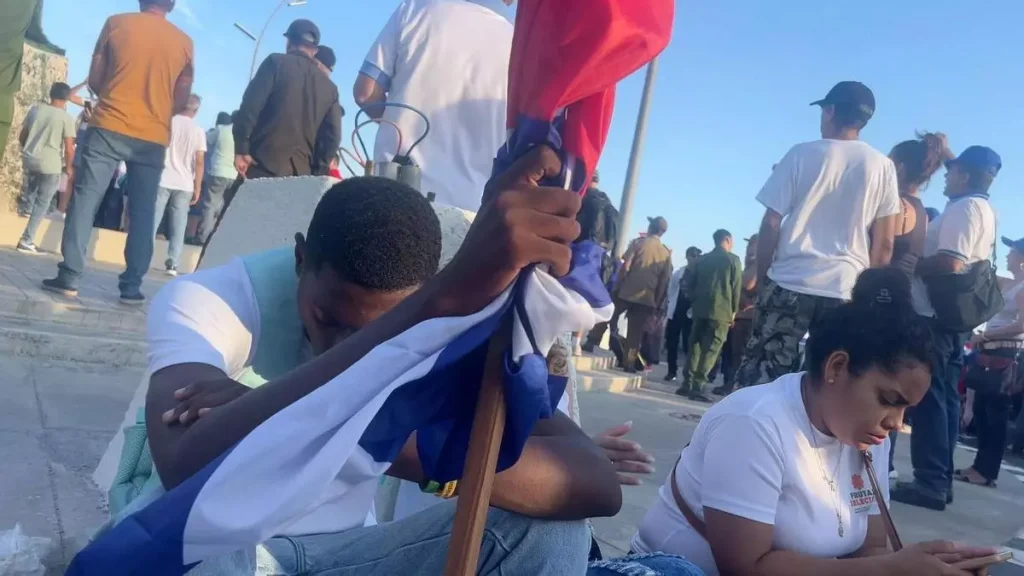
Tired and disinterested attendees during the demonstration. / 14ymedio
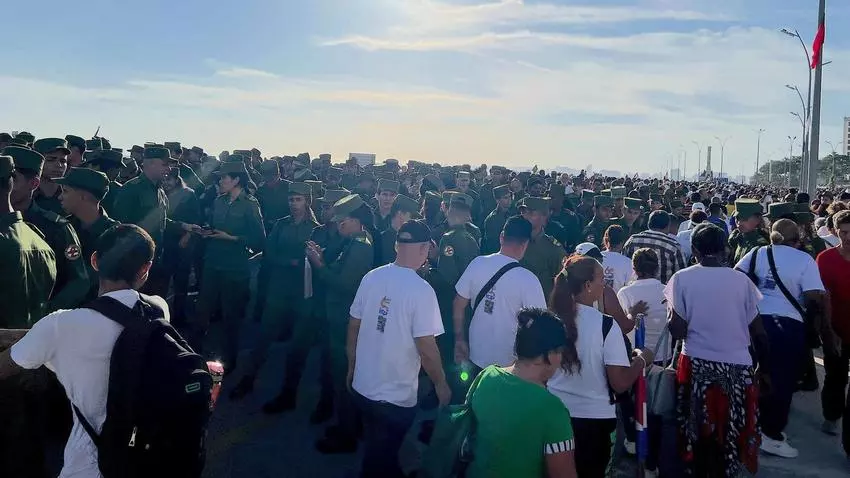
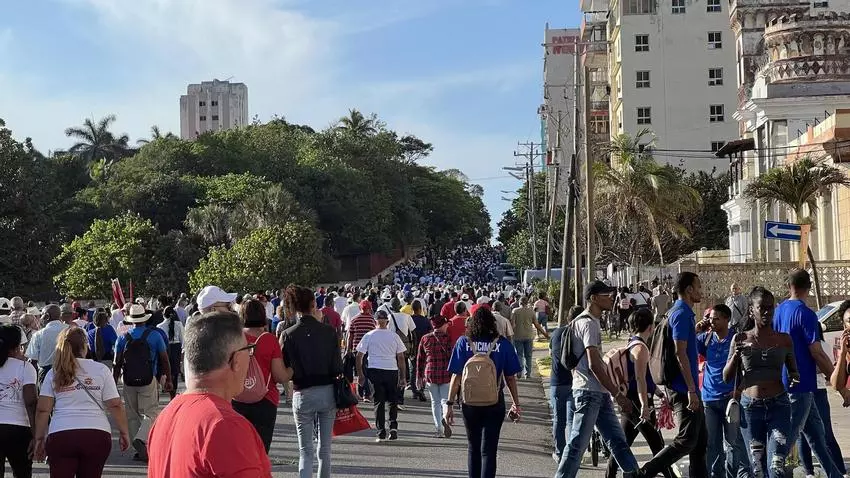
14ymedio, Dario Hernandez, Havana, May 22, 2026 / In a new attempt to display popular support, increasingly weakened, the Cuban government called for another mobilization this Friday at the so-called Anti-Imperialist Tribune – located in front of the US Embassy in Havana – “to condemn the despicable and infamous act of the United States Department of Justice” –referring to the indictment made this Wednesday against Raúl Castro for the downing of the Brothers to the Rescue planes – “and to support the declaration of the Revolutionary Government.”
The official media presented it as a novelty that the call for the mobilization came from the Union of Young Communists, “along with other student organizations, mass groups, and youth movements.” The official statement also framed the event within the celebrations for Raúl Castro’s 95th birthday, on June 3rd.
For these mobilizations, the government spares no resources or fuel. / 14ymedio
Despite the severe fuel crisis that the Island is experiencing and that worsens every day, the Government has found resources to organize these mobilizations, which are coordinated in a mandatory way through state institutions and workplaces.
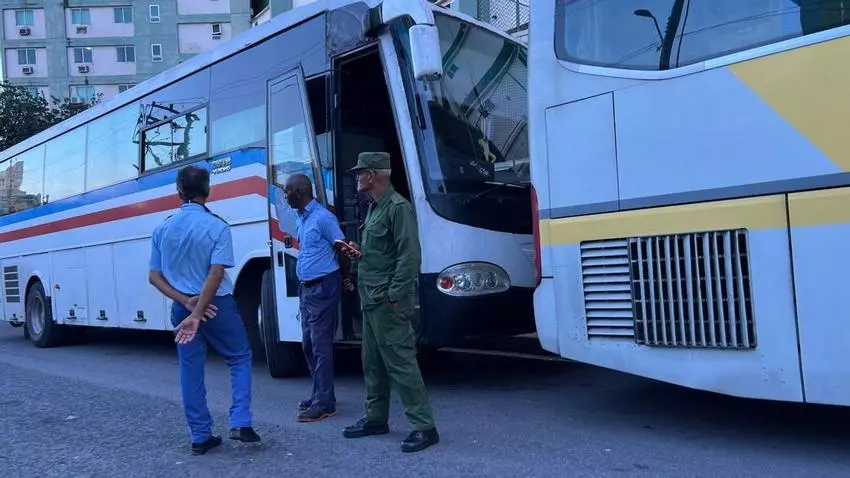
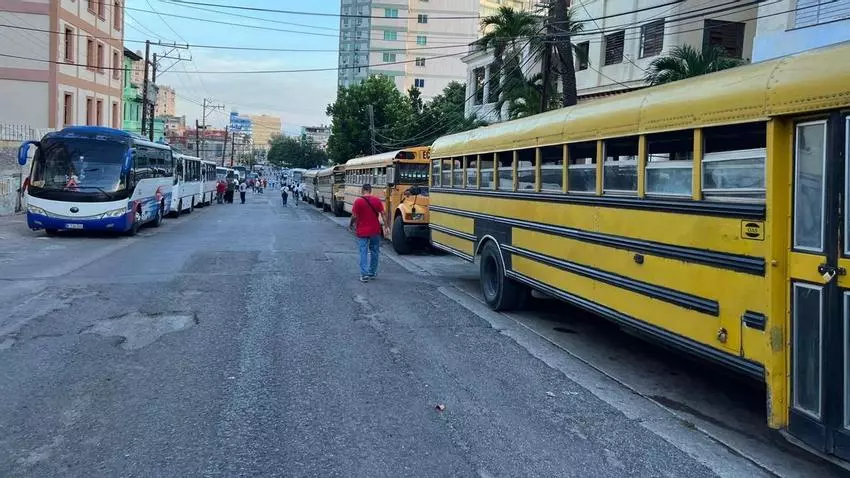
While Havana residents deal daily with the lack of transportation and authorities have applied drastic reductions to public mobility, a long line of buses waited in the early hours of this Friday after transporting attendees to the event, as shown in the photographs taken by 14ymedio.
Buses used to transport attendees during the demonstration. / 14ymedio
The leak of an internal document from the Havana Electric Union, ordering the mobilization of workers, reveals the mandatory and controlled nature of these calls, with which the regime attempts to project an increasingly less credible image of popular support.
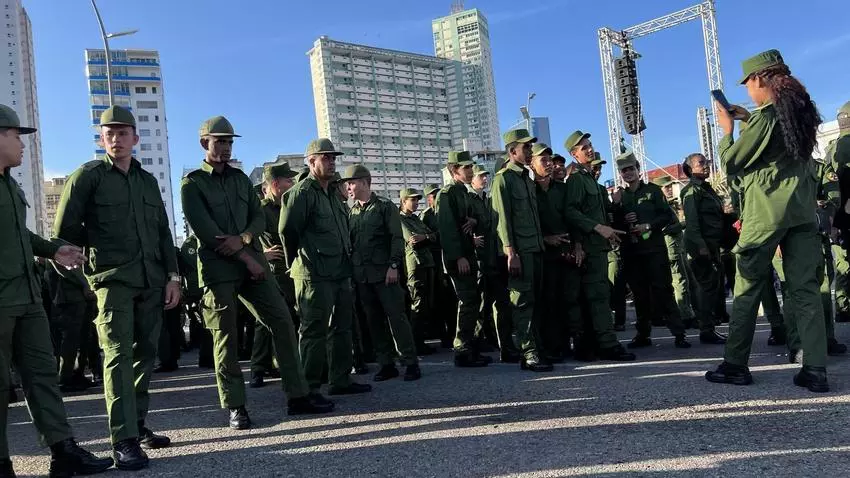
The mandatory nature of the rally is also evident in the large presence of uniformed military personnel and attendees wearing propaganda T-shirts distributed by state entities. “Raúl is Raúl” is one of the slogans of this propaganda campaign, which aims to counteract the effects of the indictment.
However, the Army general was not present at the ceremony, which has sparked speculation on social media. The nonagenarian is no longer continue reading
in good enough health to make public appearances, and his presence at the May Day parade had already drawn similar comments due to his visible physical decline.
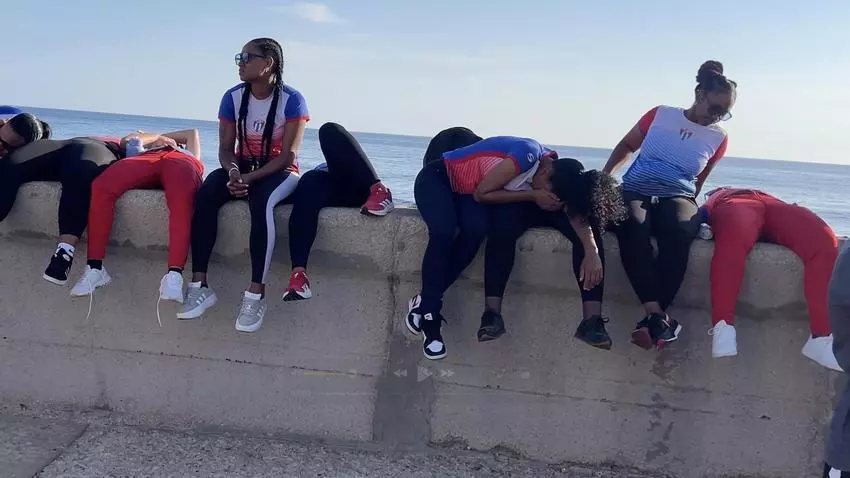
Young athletes fatigued during the mobilization, after having been called up since dawn. / 14ymedio
Miguel Díaz-Canel led the ceremony in military uniform, and among those present was the general’s grandson, Raúl Guillermo Rodríguez Castro, known as “El Cangrejo” (The Crab). Also in attendance were the president of the National Assembly of People’s Power, Esteban Lazo; the prime minister, Manuel Marrero; and the commander of the Rebel Army, José Ramón Machado Ventura.
The five former Cuban spies were also present; their activity in US territory was fundamental for Cuban intelligence services to obtain information on all the movements of Brothers to the Rescue during the nineties, until the fateful February 24, 1996, when a MiG-29 shot down two planes of the humanitarian organization in international waters, causing the death of the four crew members, three of them with US nationality and one with legal residence in Florida.
To begin, the pro-government musician Raúl Torres performed a song dedicated to Raúl Castro. Following this, the pro-government lawyer Rolando López Meriño took the floor to express, on behalf of the legal profession, their rejection of the “scoundrelly accusation” against the former president and to reiterate the regime’s arguments against the legality of the charges brought by the U.S. Department of Justice.
Attempts to chant slogans sounded half-hearted, mostly coming from the soldiers themselves. / 14ymedio
“It is absolutely fraudulent and illegitimate,” stated López Meriño, who invoked the 1944 Chicago Convention on International Civil Aviation to justify shooting down the planes as an act of defending national sovereignty. The lawyer also held the United States responsible for the incident, arguing that Washington ignored warnings from the Cuban government about alleged violations of national airspace by the Brothers to the Rescue aircraft.
López Meriño’s speech added nothing new to the official discourse, which has historically rejected Washington’s version that the downed planes were in international airspace, a conclusion supported by reports from the International Civil Aviation Organization (ICAO) and the Inter-American Commission on Human Rights (IACHR).
Gerardo Hernández Nordelo, one of the five former Cuban spies and accused in the US of participating in the conspiracy linked to the downing of the Brothers to the Rescue planes, was the main speaker at the event.
A large military presence was seen attending the demonstration. / 14ymedio
He paraphrased a “message from our comrade, the Army General,” to those present: “He tells us that he sincerely appreciates the solidarity of the people and of friends around the world, and that we can be certain that as long as he lives, he will continue marching at the head of our people, defending the revolution, with his foot in the stirrup.”
The former Cuban agent also lashed out at Cuban-American José Basulto, founder of Brothers to the Rescue and one of the figures linked to the current accusations against Raúl Castro. Hernández called him “one of the real culprits behind those tragic deaths” and accused him of seeking a confrontation between the two countries.
“Who do they think they are to judge Raúl?” Hernández Nordelo asked before launching into extensive praise for Castro. He also reiterated the official position on the downing of the Brothers to the Rescue planes, maintaining that the Cuban government had repeatedly warned Washington about violations of its national airspace. “We had and have a moral obligation to preserve the security of our people,” he said.
Hernández Nordelo questioned when US President Donald Trump will be tried “for ordering the killing of 200 people and 57 vessels in international waters of the Caribbean and the Pacific without showing evidence, solely on suspicion that they are drug traffickers.”
After the former spy finished his speech, the attendees dispersed to attend to their daily needs. / 14ymedio
As soon as the former spy finished speaking, many attendees immediately began to leave the square, tired and eager to get on with their daily needs. Attempts to chant slogans were lackluster, mostly coming from the soldiers present.
Once again, the population, already tired and desperate in these long months of scarcity and prolonged daily blackouts, has taken on the obligation of attending these types of events, in order to avoid consequences in their respective state institutions, and so that the Government can demonstrate some popular support before public opinion.
______________________
COLLABORATE WITH OUR WORK: The 14ymedio team is committed to practicing serious journalism that reflects Cuba’s reality in all its depth. Thank you for joining us on this long journey. We invite you to continue supporting us by becoming a member of 14ymedio now. Together we can continue transforming journalism in Cuba.
In the province, 560 criminal acts were committed, 28 more than the previous year.
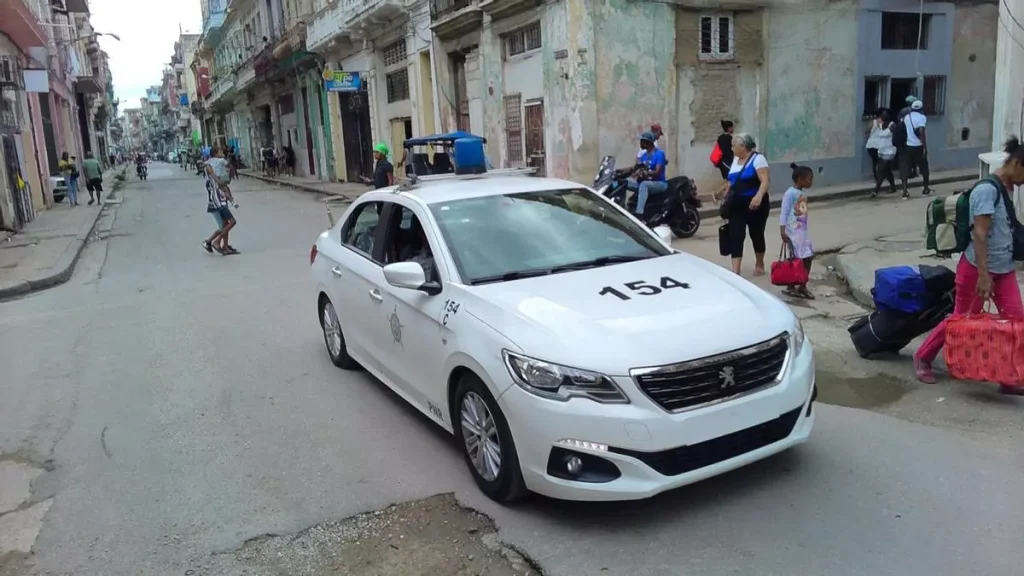
Police patrol on Neptuno Street in Havana. / 14ymedio
14ymedio, Madrid, May 22, 2026 — Not all official media outlets are reproducing the news about the new National Exercise for the Prevention and Combating of Crime — the fifth of its kind — currently taking place in Cuba with mere vagueness, voluntarist prose, or exemplary stories. In Artemisa, for example, they admit that crimes have increased.
Specifically, 560 criminal acts were committed in the province, 28 more than the previous year, and most of them (426) were theft with force. These occurred mainly, El Artemiseño reported, in the local districts of Los Pinos, San Cristóbal 1, Taco Taco, and José Martí.
The most frequent type of theft, said Lieutenant Colonel Víctor Abat García, delegate of the Ministry of the Interior, is cattle theft. The military official also reported the theft in the municipality of San Cristóbal of 1,656 liters of dielectric oil from transformers, which he described as an “unacceptable phenomenon at the present time.” This type of crime, he warned, “must generate greater severity at a time when the U.S. Government is intensifying its energy blockade against Cuba.”
The remarks by the municipal governor of Artemisa, Idalmys Quiñones González, nevertheless revealed that “greater effectiveness is still needed” in the prosecution of crimes. continue reading
In Santiago de Cuba, a “rigorous follow-up” is being carried out on “ten cases of alleged crimes and administrative corruption”
Meanwhile, in Santiago de Cuba, officials at the meeting regarding the Exercise — which is taking place between May 18 and 23 — reported that they are carrying out a “rigorous follow-up” on “ten cases of alleged crimes and administrative corruption that have had a significant impact on the province.” They said more details on the matter would be provided this Friday.
On Tuesday, the Provincial Court of Matanzas sentenced three citizens to prison terms ranging from 10 to 15 years for “robbery with violence or intimidation against persons in the degree of attempt,” in an “exemplary” trial framed within the same initiative to combat “irregularities.”
The three defendants, whose names were not released, were inside a home in the town of Máximo Gómez, in the municipality of Perico, intending to seize valuables when they were surprised by one of the residents, whom they “attacked and caused multiple bodily injuries.”
The Court, in accordance with the classification presented by the Prosecutor’s Office, sentenced two of the accused to 15 years in prison each, and the third to 10 years. As additional penalties, they were stripped of certain rights and subjected to a travel ban.
In addition, the Prosecutor’s Office requested “compensation for the victim’s wife for medical treatment and transportation expenses resulting from the injuries inflicted on her husband during the criminal incident.” The report does not specify the amount, but it highlights the socioeconomic problems on the Island, where healthcare is supposed to be free.
The deployment of the current Exercise, the official state newspaper Granma said in an article, “is taking place under circumstances of special complexity, as a consequence of the intensified economic, commercial, and financial blockade, the oil embargo, the increase in sanctions, hostility, psychological warfare, and threats of military action by the United States government against Cuba.”
The previous campaign of this kind concluded with thousands of inspections that led to the immediate closure of nearly 70 businesses, mainly for violations of banking regulations. Tax violations amounting to 1.1098 billion pesos were also identified, and fines were imposed that rapidly recovered nearly 53 million pesos.
In addition, dozens of exemplary trials were held through which the authorities attempt to project an image of control and security amid a situation that increasingly demonstrates the opposite.
Translated by Regina Anavy
______________________
COLLABORATE WITH OUR WORK:The 14ymedio team is committed to practicing serious journalism that reflects Cuba’s reality in all its depth. Thank you for joining us on this long journey. We invite you to continue supporting us by becoming a member of 14ymedio now. Together we can continue transforming journalism in Cuba.
According to Cáritas, the shipment consists of 1,900 hygiene and food kits, part of aid valued at three million dollars.
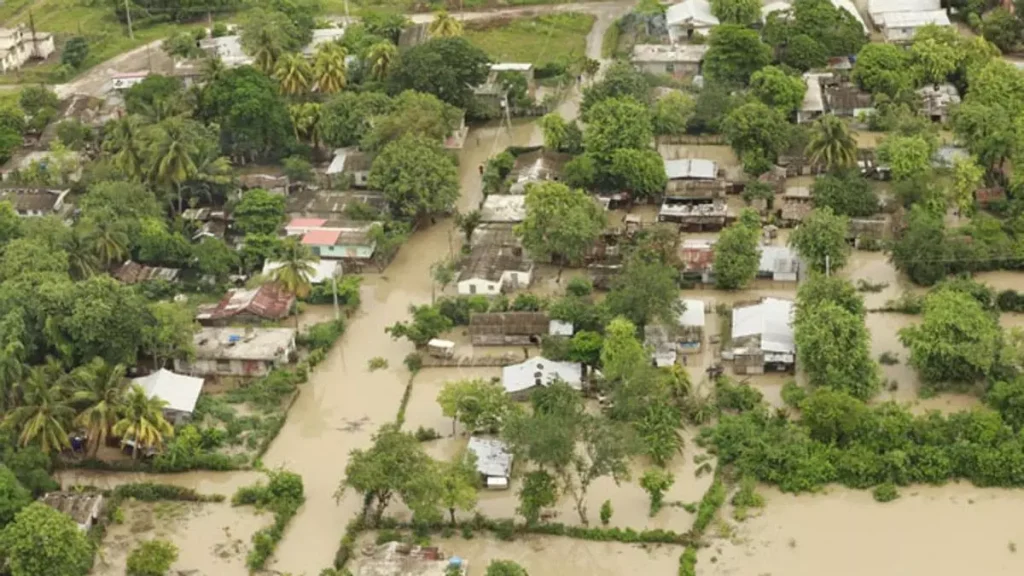
Image of Granma after the passage of Hurricane Melissa. / La Demajagua
EFE/14ymedio, Havana, May 22, 2026 — The Catholic organization Cáritas reported this Thursday that 1,900 hygiene and food kits from a U.S. government aid shipment valued at three million dollars for victims of Hurricane Melissa arrived in Santiago de Cuba this week.
Two flights from Miami transported the donations on Tuesday the 19th and this Thursday to Santiago, where they will be distributed to vulnerable families affected by the hurricane’s passage through the eastern third of Cuba on October 29, Cáritas explained on social media.
The organization recalled that donations from this first package began arriving on January 14 and included food kits, hygiene supplies, and household items purchased and sent by Catholic Relief Services (CRS).
Cáritas clarified that, so far, 82% of this aid has been delivered
Likewise, Cáritas clarified that up to this point 82% of the assistance has been carried out, which the U.S. government stipulated must be distributed by the Catholic Church and under no circumstances by the regime.
The Catholic organization added that the remaining 18% of the assistance will be received this month and that, in total, it will benefit 8,800 families in the affected provinces: Santiago de Cuba, Holguín, Bayamo, and continue reading
Guantánamo.
It also announced that “at the same time, work is beginning on the management and implementation of a new donation which, valued at six million dollars, has been made by the U.S. government for the same purpose.”
As Cáritas previously explained, the beneficiaries are “single mothers with small children, older adults, people with disabilities, and people with limited or no mobility.”
The donations have included rice, beans, oil, sugar, water purification tablets, pots, kitchen utensils, blankets, and flashlights.
Hurricane Melissa crossed the eastern part of the Island on October 29 as a Category 3 storm (out of 5) on the Saffir-Simpson scale, with winds of up to 200 kilometers per hour and rainfall of up to 400 millimeters in some parts of the country.
According to assessments by the Cuban government, the storm caused no fatalities but did cause extensive material damage to more than 116,000 homes, as well as to 600 state medical facilities, more than 2,000 schools, around 100,000 hectares of crops, and infrastructure related to transportation, telecommunications, electricity, and water supply.
Translated by Regina Anavy
______________________
COLLABORATE WITH OUR WORK: The 14ymedio team is committed to practicing serious journalism that reflects Cuba’s reality in all its depth. Thank you for joining us on this long journey. We invite you to continue supporting us by becoming a member of 14ymedio now. Together we can continue transforming journalism in Cuba.
There is no Churchill, no Lincoln, no Adenauer, but boastful leaders abound.
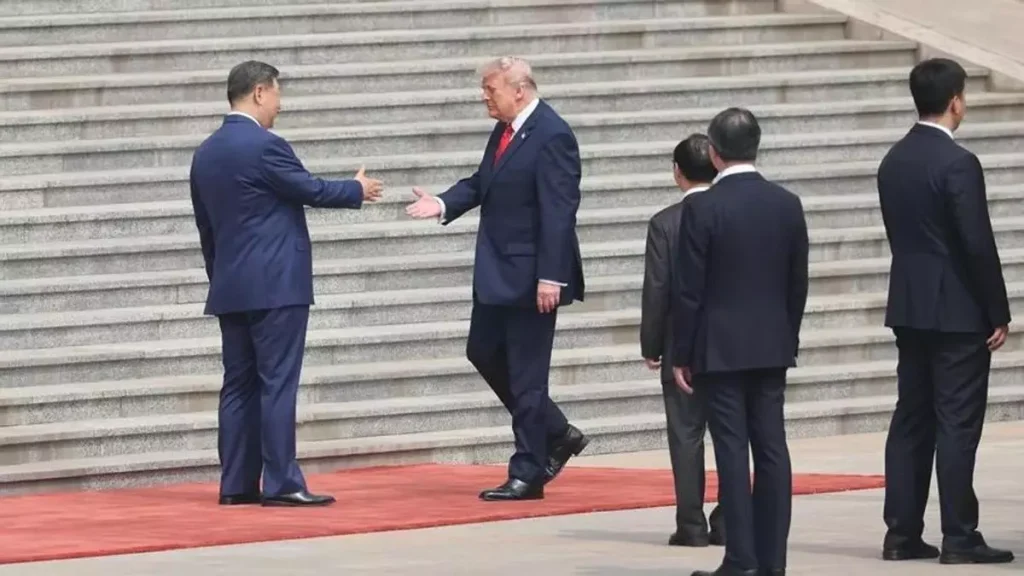
The US president also appeared exhausted in Beijing. / EFE/ Maxim Shemetov
14ymedio, Federico Hernández Aguilar, San Salvador, May 21, 2026 / The world suffers from a dramatic shortage of character. The great personalities of yesteryear have practically disappeared. International politics is a wasteland: the principles of yesteryear have been forgotten; the great ideals, shelved. There is no Churchill, no Lincoln, no Adenauer. But there is an abundance of boastful leaders, bombastic speeches, and ridiculous bravado.
Nicolás Maduro had convinced himself that he would never be held accountable. But within an hour, his dream of unlimited power transformed into a nightmare of reality. Suddenly, the armies of sycophants and the massive demonstrations in the public square evaporated before his eyes.
Meanwhile, other “strongmen”—in Havana and Managua—found their knees trembling. So many years of blaming the “empire” ended, suddenly, in moving calls for neighborly harmony. Nicaraguan President Daniel Ortega, who, through a haze of conscience, recalls his revolutionary days whenever he takes a microphone, now has to be silenced on state television by his paranoid wife, who fears ending up in jail like Cilia Flores, the disgraced Venezuelan first lady.
Barely echos remain, in Cuba, of Fidel’s old rhetoric against the United States. Yesterday, the Florida federal prosecutor’s office filed criminal charges against the nonagenarian Raúl Castro for the downing of two civilian aircraft when he was still the newly appointed head of the Cuban Armed Forces. A nervous breakdown! Even the director of the Central Intelligence Agency—the much-maligned CIA—is being greeted with handshakes in Havana.
While Maduro, Díaz-Canel, and Ortega ceased to be strong overnight, other leaders have needed to engage in stupid wars to realize their weakness.
No one knows what message John Ratcliffe carried with him, but his official visit to Cuba is a complete humiliation. If Fidel were to rise from the grave, he wouldn’t recognize the country he shaped for almost continue reading
half a century. The pride of his heirs didn’t even outlive him by ten years! So much suffering, so many deaths, so much repression… only to come and watch the collapse of a revolution that promised paradise and installed hell.
But if Maduro, Díaz-Canel, and Ortega lost their power overnight, other leaders have needed to become embroiled in senseless wars to realize their weakness. Vladimir Putin was so confident of victory in Ukraine that four years ago, according to internal reports, he told the Russian military leadership that he would take Kyiv in a matter of hours. As of May 2026, those hours have stretched into fifty months, exceeding the time the Soviet Union spent fighting the Nazis during World War II.
Thanks to the Ukrainian debacle, Putin’s political decline has been the worst of his authoritarian career. Independent polls show plummeting approval ratings, exacerbated by public weariness with the war and growing discontent with the unjustifiable internet restrictions. Even the lavish military parade on May 9—commemorating the decisive Soviet victory over Hitler—was threatened by drone strikes over Moscow. Being so far from victory in Kyiv is the closest thing to a major defeat, and Putin has never appeared so weak and subdued.
As for the powerful Donald Trump, who until recently believed himself immune to setbacks, now also has his own disastrous war to contend with. Iran has been the most evident setback in his relentless march toward global hegemony, to such an extent that he has had to fly to China to meet with the only person who can help him bring order to his chaos: Xi Jinping. The resilient Shiite regime, for its part, is rubbing its hands with glee. An official newspaper in Tehran ran the headline: “Trump visits China in the shadow of failure and stagnation.” And it is true.
Donald Trump, who until recently believed himself immune to setbacks, now also has his own disastrous war.
The US president also looked exhausted in Beijing. Striding heavily through the streets of the sprawling Chinese metropolis, he appeared to be weighed down by several burdens: an economic crisis resulting from his tariff madness—the Peterson Institute for International Economics estimates that the White House’s trade policy has cost each American household $1,600 annually—a national debt that last year reached 124% of GDP, with a staggering interest payment already exceeding one trillion dollars (equivalent to 20% of total annual revenue); approval ratings so low that they make him one of the most unpopular presidents in American history; and a foreign policy so misguided that the resulting isolation has ultimately driven him into the arms of his main economic and technological adversary.
Xi Jinping, however, is not invulnerable either. The strength of communist control is also the source of its main economic weaknesses. China has yet to recover from the calamitous effects of the pandemic, insists on state control of production decisions, lacks its own engines to consolidate its technological revolution, and continues to depend on the US and Europe for growth.
No one, therefore, is strong enough to impose their will on the rest of the planet, no matter how loudly they proclaim it. Those who believe themselves strong are, in reality, weaker than they think, and those who at first glance appear weak, in practice, possess more strength than their adversaries would admit.
______________________
COLLABORATE WITH OUR WORK: The 14ymedio team is committed to practicing serious journalism that reflects Cuba’s reality in all its depth. Thank you for joining us on this long journey. We invite you to continue supporting us by becoming a member of 14ymedio now. Together we can continue transforming journalism in Cuba.
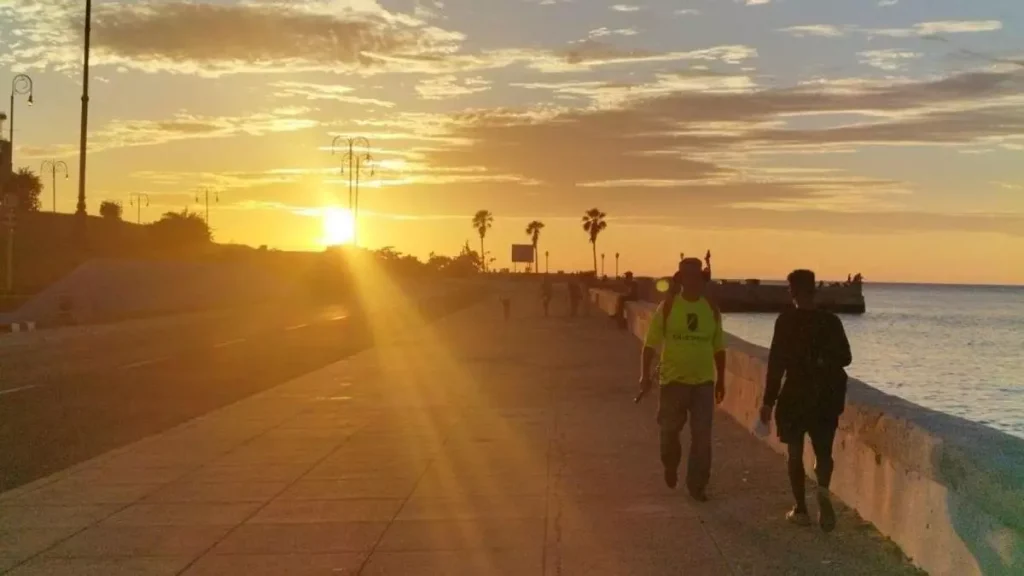
 14ymedio, Reinaldo Escobar, Havana, May 22, 2026 / The urgency of profound change for Cuba is so obvious that all the proposals for transition are essentially the same. With nuances in the tone of the language, be it moderate, academic, or radical, the same thing occurs to all of us: freedom for political prisoners, decriminalization of political dissent, economic opening, a balance between justice and reconciliation, a new Constitution, and, of course, multiparty elections.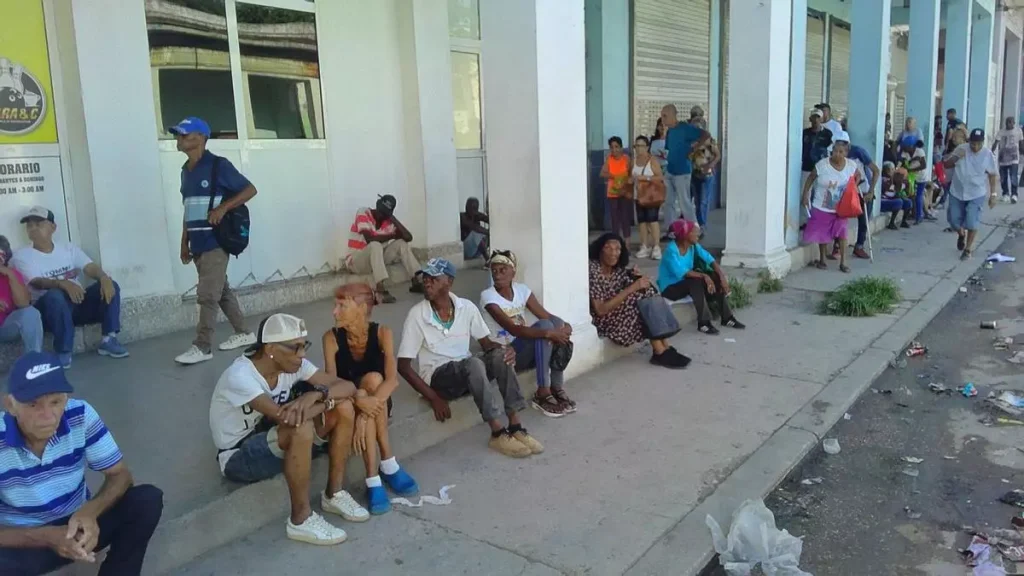
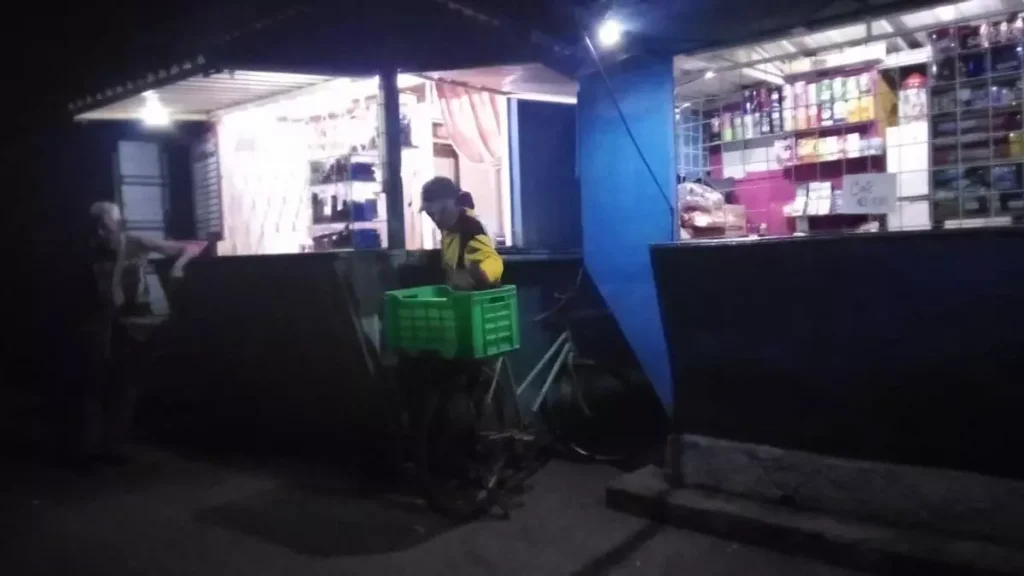
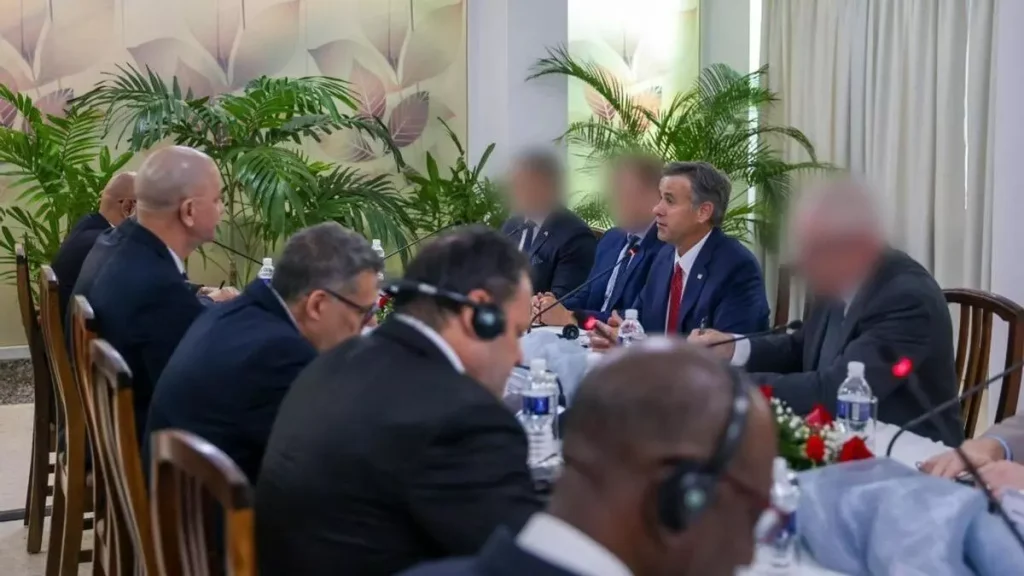
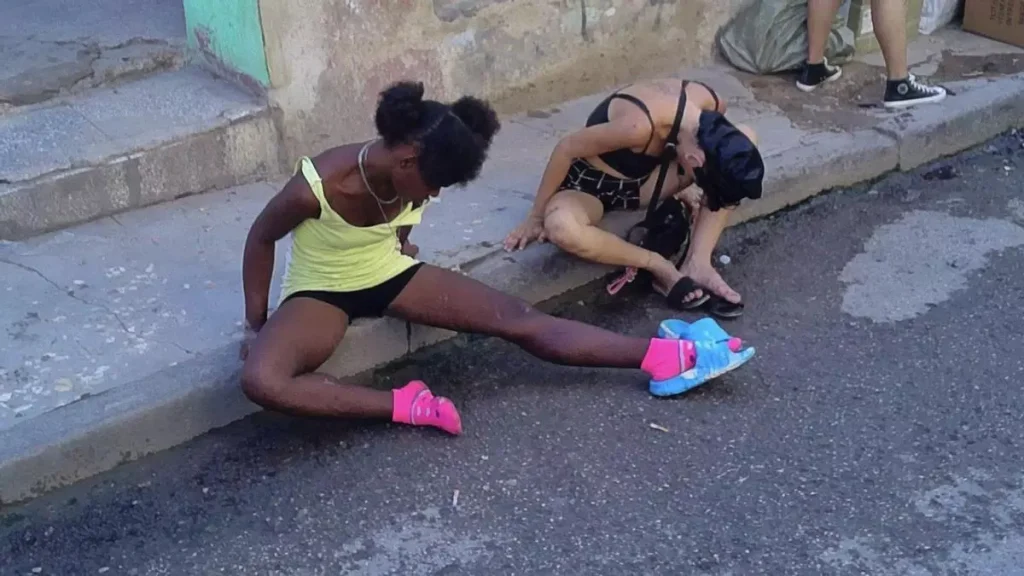
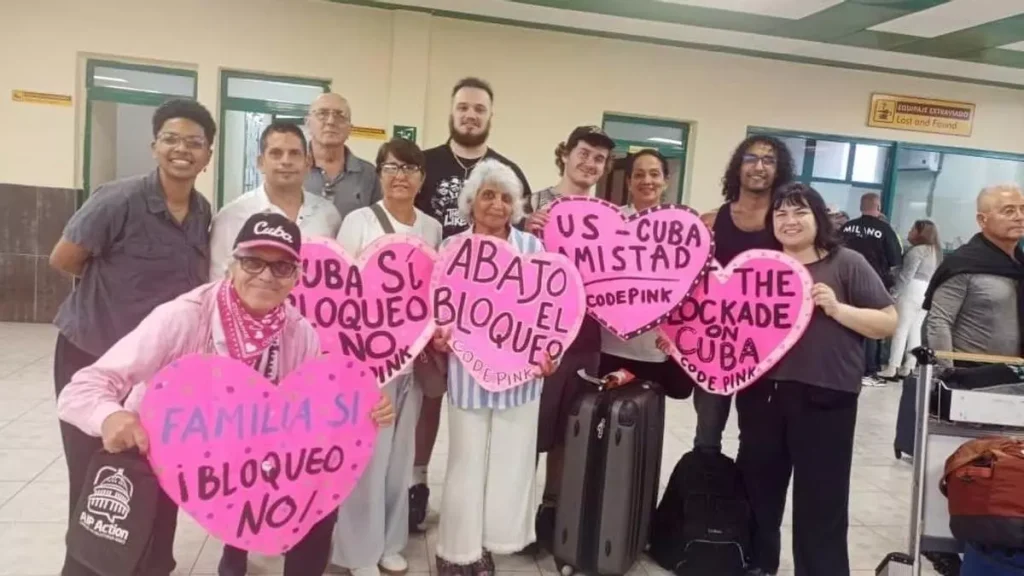
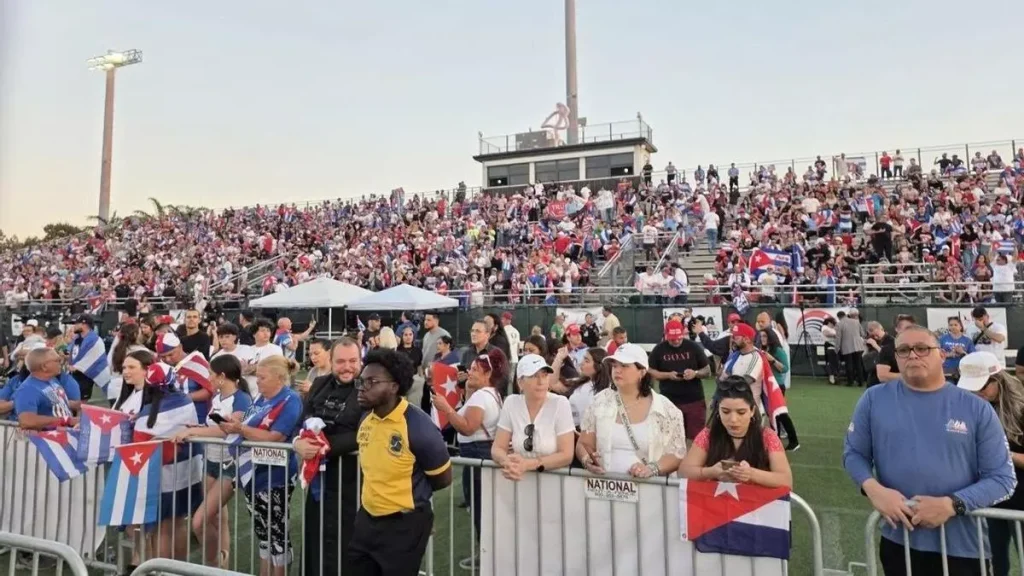
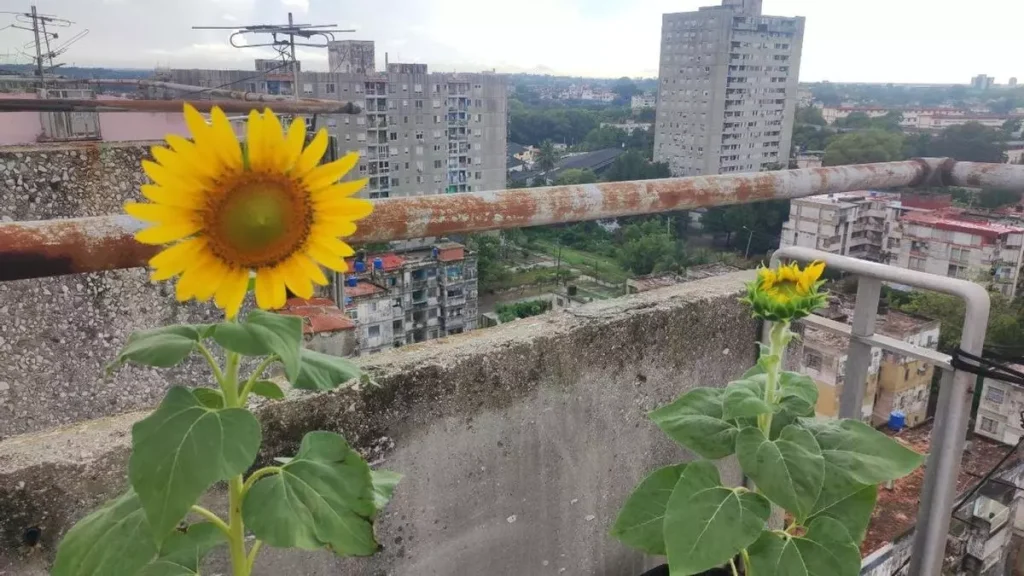
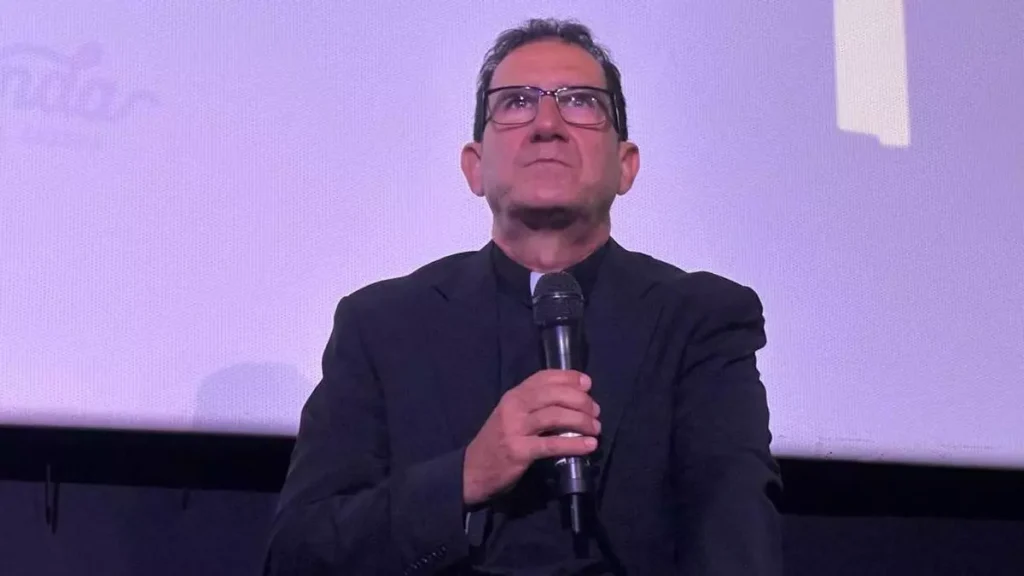
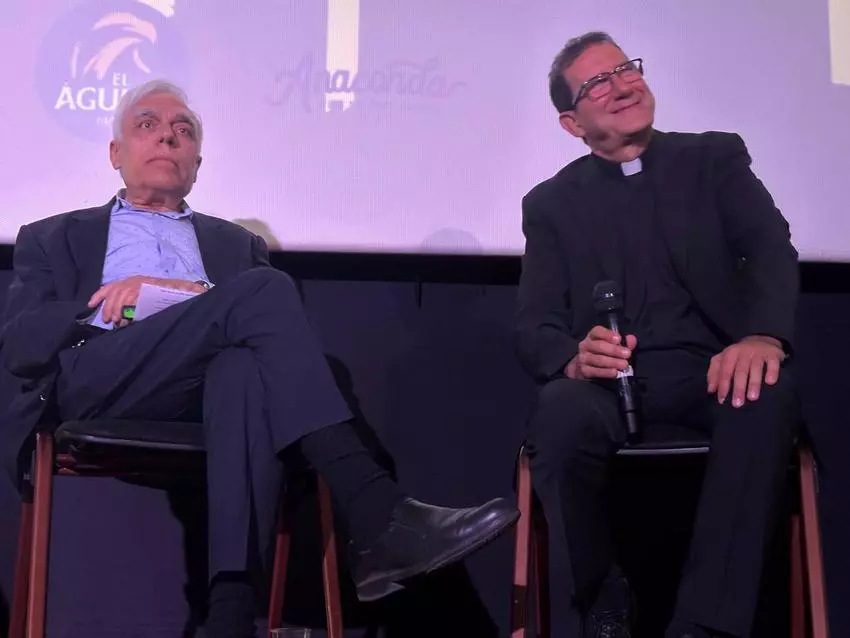
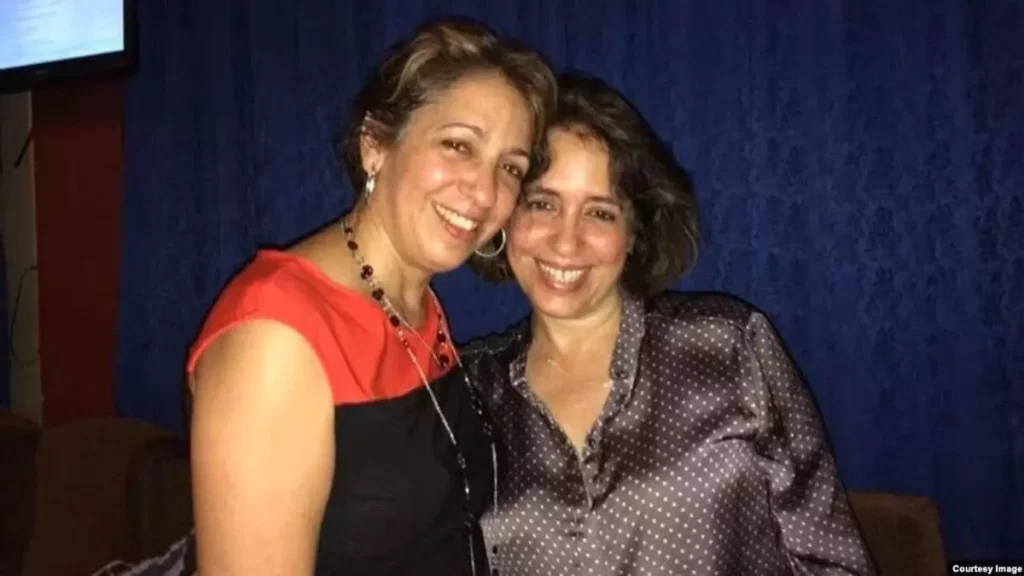
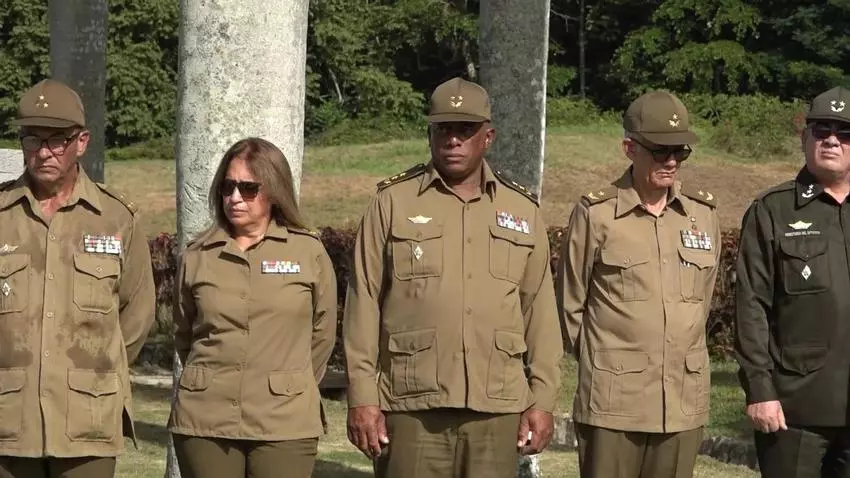
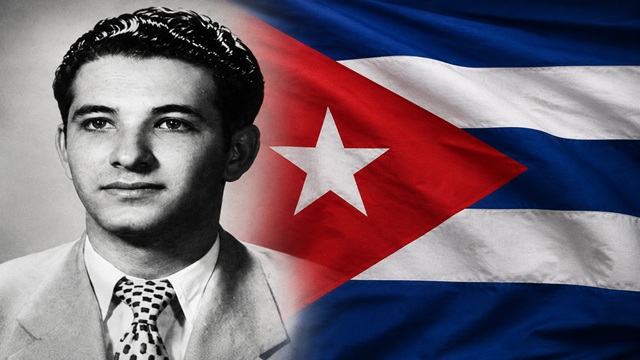
 🖋️Author Julio M. Shiling