The company suspended trading of its shares after the inclusion of its Cuban partner in Minera La Victoria on the U.S. blacklist
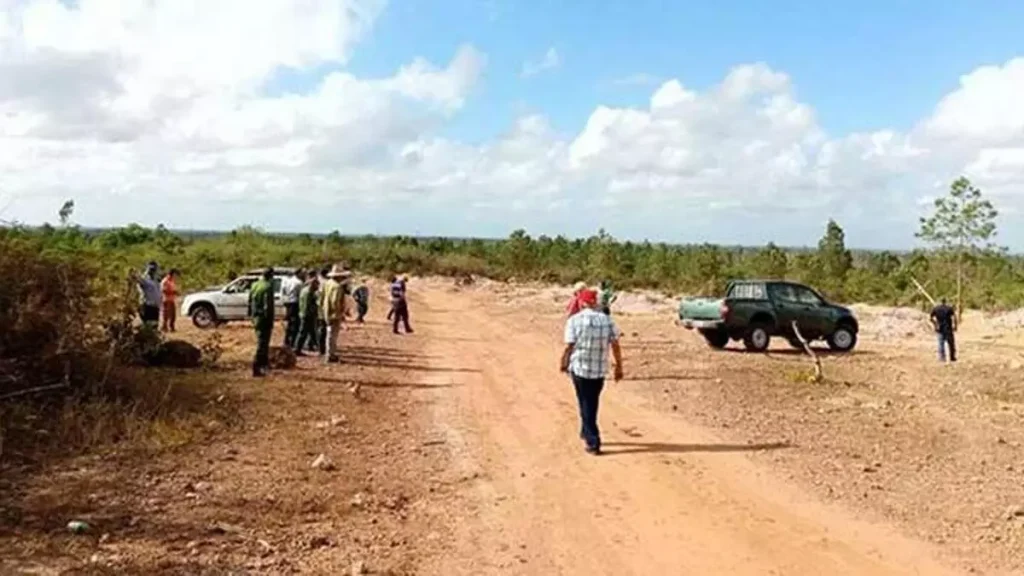
 14ymedio, Havana, June 5, 2026 — Australian mining company Antilles Gold requested the Sydney Stock Exchange on Friday to suspend trading of its shares while it prepares an announcement regarding the impact of the sanctions recently imposed by the United States on Minera La Victoria, the joint venture it created in Cuba with the state-owned GeoMinera to develop the Nueva Sabana deposits in Ciego de Ávila and La Demajagua in the Isle of Youth.
The mining company has not yet detailed the extent of the blow. It merely requested a temporary suspension of its shares while preparing a statement for shareholders regarding the consequences of the sanctions. The trading halt will remain in effect until the report is released or, at the latest, until the opening of trading on June 10.
For William Pitt Wasmer, a Cuban-American businessman and heir to a family that owned mines confiscated by the Cuban government after 1959, the episode confirms the deterioration of a sector that Havana had hoped to present as a future source of foreign currency. “Now, in addition to the problems facing nickel and cobalt mining, gold mining has been added to the list,” he told 14ymedio.
Antilles Gold holds a stake in Minera La Victoria, a 50-50 joint venture with GeoMinera, the state mining company
Pitt believes the Antilles Gold case cannot be viewed in isolation and must be analyzed within the broader context that forced the departure of the Canadian company Sherritt International, which operated nickel mines in Moa. “The other mining companies working in Cuba are facing very similar problems,” he said.
The sanction came at a particularly delicate moment for Antilles Gold. Just one day before the trading halt, the company reported that construction at Nueva Sabana was moving forward and that the Chinese company Xinhai Mining Technology & Equipment was advancing the manufacture of the mine’s concentrator. Antilles Gold itself described Nueva Sabana as “the first stage of its partnership with GeoMinera,” while La Demajagua remained scheduled as a second project for 2027–2028.
The structure of the venture illustrates the extent to which the project was designed to mitigate Cuban risk. Antilles Gold participates in Minera La Victoria, a 50-50 joint venture with GeoMinera, Cuba’s state mining company. The engineering, procurement, and construction contract for Nueva Sabana, awarded to Xinhai, was valued at $29.5 million and covered about 85% of the remaining development costs. Xinhai also offered a $17.1 million credit line, deferring part of its payments.
The Nueva Sabana project was intended to produce gold and copper. Antilles Gold presented it as a relatively small open-pit mine capable of entering production quickly. According to the company’s own estimates, adjusted for recent metal prices, the two Cuban projects, Nueva Sabana and La Demajagua, could generate more than 2.5 billion Australian dollars (US$1.763 billion) in cash surplus attributable to Antilles Gold between 2027 and 2037.
In addition to Gaesa’s extensive control over mining, the shutdown is also linked to “Cuba’s economic situation, with its complete lack of electrical resources and the fuel necessary to operate mining activities”
La Demajagua, located on the Isle of Youth, added another attraction: besides gold and silver, it contains antimony, a mineral considered strategic because of its industrial and military applications. Under Antilles Gold’s plans, the second project was expected to produce gold and arsenic concentrates as well as antimony concentrates or cathodes.
For a small company dependent on external financing, Chinese contractors, and international concentrate buyers, being associated with a Cuban entity placed on Washington’s blacklist may be enough to freeze access to banks, insurers, suppliers, and potential investors.
Pitt himself links the episode to Cuba’s structural crisis. In addition to Gaesa’s overwhelming control over mining, the setback is also due to “Cuba’s economic situation, with its complete lack of electrical resources and the fuel necessary to operate mining,” the expert said.
Pitt also connects the case to Sherritt, which, besides producing nickel and cobalt, participates in Energas, a key company for natural gas processing and electricity generation. “Apparently, only oil extraction continues, and even then we are already seeing Energas and Sherritt beginning to have problems delivering natural gas to the city,” he warned.
“It remains to be seen whether Antilles Gold will follow a path similar to Sherritt’s or whether, given that it does not have a major investment at stake, it will simply let events run their course without doing anything further,” Pitt concluded.
Translated by Regina Anavy
______________________
COLLABORATE WITH OUR WORK: The 14ymedio team is committed to practicing serious journalism that reflects Cuba’s reality in all its depth. Thank you for joining us on this long journey. We invite you to continue supporting us by becoming a member of 14ymedio now. Together we can continue transforming journalism in Cuba.