The pot-banging protests reach the neighborhoods where military personnel, officials and state journalists, “comuñangas” and “sarampionosos” reside
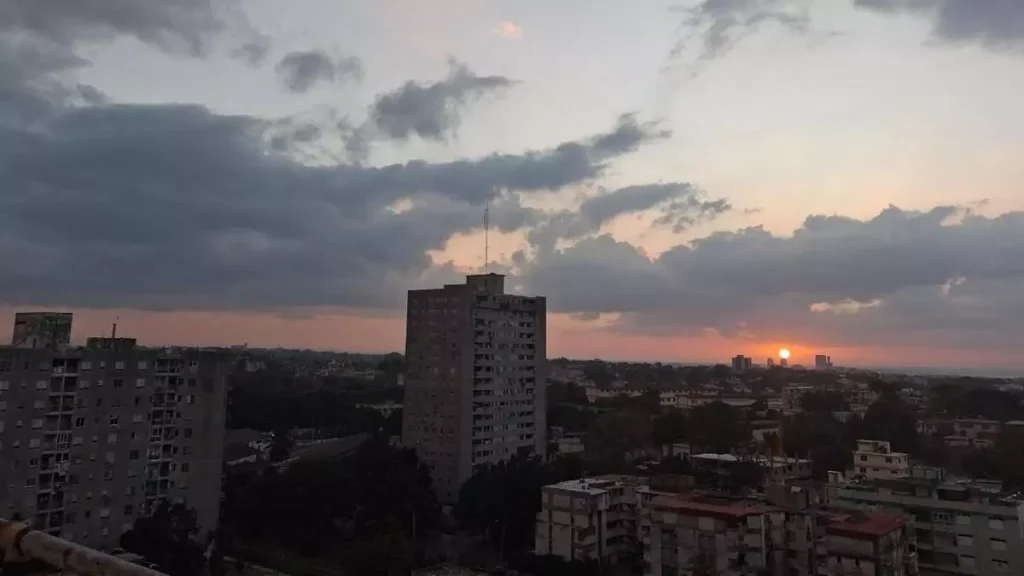
 14ymedio, Yoani Sánchez, Havana, March 20 2026 — “Hold on tight,” the electric tricycle driver manages to say to me before the whole vehicle lurches violently over a pothole. I was lucky, because I managed to board the electric taxi before it started to drizzle again. The young man warns me that this is the last trip he’ll make, that he hasn’t been able to charge the battery due to lack of electricity. “I’m from block five, they don’t give us a break,” he concludes.
The Havana where I grew up used to be divided into municipalities and neighborhoods, but now we’re defined by the blocks the Electric Union has designed for its blackout schedules. I’m no longer from Nuevo Vedado; now I’m from Block 4. When the power goes out, my obsession is to walk as far as I can to get away from the “dark side.” There are days when I take very strange routes, because when I get to a place, the power goes out there too, or I get told the lights have come on back at home, and I decide to return immediately.
My neighbors say we live in the “shit-eaters’ block.” The number of hours without power isn’t the same for all neighborhoods. If there’s a pot-banging protest or a popular demonstration, chances are they’ll restore electricity to that part of the city shortly afterward, and the outages won’t be as long in the following days. My neighborhood has a reputation for being peaceful. When the concrete blocks that characterize it started springing up everywhere, its initial inhabitants were people integrated into the system. For the most part, military personnel, government officials, and state journalists occupied these apartments.
There are no docile areas left in this country. Popular anger knows no postal codes or political-administrative divisions.
But even with an initial proportion of “comuñangas”* and “sarampionosos”* residents, this area has repeatedly erupted in recent days. There are no docile areas left in this country. Popular anger knows no postal code or political-administrative division.
From my balcony, I see the two 20-story buildings that rise on the corner of Tejas. “Those people hardly ever get electricity,” I think. I scan the two towers every night, and it pains me to say it, but they spend most of their time in darkness. That’s not a neighborhood of meek people like mine; they punish them with long blackouts because they’re poor. The energy crisis has united us in our differences. The upscale Casino Deportivo and the troubled El Canal neighborhoods embrace each other in the darkness. La Timba and Nuevo Vedado have become one in this hour of gloom.
They say the residents of Toyo Corner took to the streets last night. That’s no small thing. That intersection was the scene of some of the most intense moments of the 11 July 2021 protests [’11’]. An overturned police car, a bloodstained flag, and young people with faces that seemed to celebrate the future were immortalized in photos and videos. Afterward, terror spread, and many of those protesters ended up joining the ranks of the more than 1,200 political prisoners currently on the island.
I put some bags of water in the freezer to turn them into ice. The idea is that they’ll help preserve the food. Six days later, I poke my finger into the plastic bag and everything inside is still liquid; it hasn’t had time to harden because the refrigerator hasn’t had power for very long. Luckily, I’ve never liked drinking cold water because it gives me a stabbing chill. But I have other urgent matters: a bloody liquid surrounds the package of chicken quarters I bought this week. I’ll have to eat it quickly.
We have become an island of pampering. Every day we all perform the pantomime of being alive.
As I escape the blackout in my neighborhood and search for a building with electricity, I reach the complicated corner where 31st Avenue and 10th Street intersect in Playa. In the middle of the intersection stands a traffic cop whose uniform is a bit too big for him. He goes through the sequence of gestures to warn vehicles coming from one direction or the other because the traffic light is out. I press myself almost up to him and look in all directions. No cars are coming, but the young officer continues his dance of “go,” “wait,” “go now,” “stop.” It’s just him and me, but it feels like we’re at Shibuya Crossing, the most hectic intersection in the world, in Tokyo.
We’ve become an island of pampering. Every day, we all perform the pantomime of being alive. I pretend to connect to the internet even though I have to climb onto the roof, stretch my torso, and raise my arm. My neighbor plays the part of working for the official press, but he hardly ever goes to work and can’t remember the last time he wrote a press release. The shopkeeper on the corner pretends to obey the law, even though behind the scenes he has to pull a thousand and one strings to keep his business open.
A neighbor calls to tell me the power’s back on in my building. I turn around and leave the policeman with his solitary choreography behind me. Last night, the pots and pans were banged in several Havana neighborhoods, so our electricity has been restored ahead of schedule. The “block of shit-eaters” is learning. There’s no postal code separating us anymore. We’re all like Toyo Corner in this hour of darkness.
*Translator’s note: Derogatory terms for ‘communists’
Havana Chronicles:
The Death Throes of ‘Granma’, the Mouthpiece of a Regime Cornered by Crisis
The Anxiety of the Disconnected Cuban
One Mella, Three Mellas, Life in Cuba Is Measured in Thousands of Pesos
It Is Forbidden To Leave Home in Cuba Today Because It Is a “Counter-Revolutionary Day”
Vedado, the Heart of Havana’s Nightlife, Is Now Converted Into a Desert
______________________
COLLABORATE WITH OUR WORK: The 14ymedio team is committed to practicing serious journalism that reflects Cuba’s reality in all its depth. Thank you for joining us on this long journey. We invite you to continue supporting us by becoming a member of 14ymedio now. Together we can continue transforming journalism in Cuba.