Since March, “the presence of the disease in a number of people higher than the usual figure of recent years” has been reported.
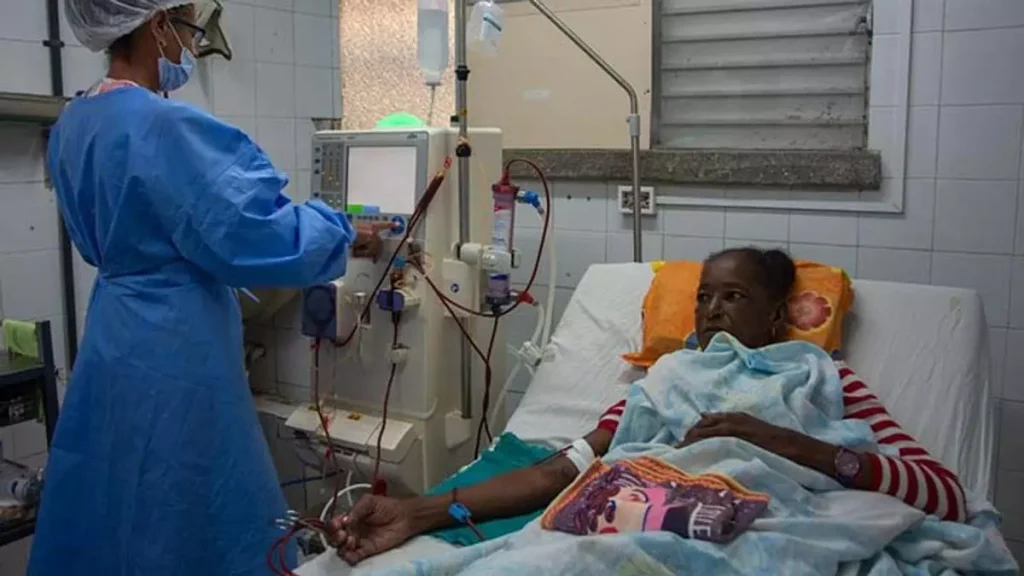
 14ymedio, Havana, June 7, 2026 — Without providing figures, Belkys González Robaina, head of the Digestive Disease Transmission Program in Pinar del Río, reported that the province has experienced “an unusual increase in cases” of hepatitis A. In a report published by Radio Guamá, the specialist warned that outbreaks are most prevalent in the Jagüey Cuyují and Cuba Libre people’s councils in the municipality of Pinar del Río, and in the Urban People’s Council in San Luis.
In statements to the provincial media outlet, the official also explained that the incidence of this disease, as well as other digestive-transmission illnesses, could increase due to rainfall and contamination of groundwater sources.
In light of this, González Robaina emphasized the need to strengthen hygiene and sanitation measures to curb the spread of the virus, which is transmitted primarily through the consumption of contaminated water or food. Recommendations include chlorinating water, applying disinfectant solutions in bathrooms to eliminate fecal and urine residue from patients, properly washing the clothing of infected individuals, and avoiding contact with healthy people.
Health alerts over hepatitis outbreaks in Pinar del Río have accumulated in recent months. Last March, Yusmary Estévez Mitjáns, deputy director of the Provincial Center for Hygiene, Epidemiology and Microbiology, reported an increase in suspected cases in the municipality of Minas de Matahambre and in the provincial capital, specifically in the town of La Coloma.
González Robaina stressed the need to reinforce hygiene and sanitation measures to prevent the spread of the virus.
“In these territories, the presence of the disease in a number of people higher than the usual figure of recent years is likely,” she said at the time, although, as now, she did not provide any figures.
This viral disease, which can be contracted through the consumption of contaminated water or food that has not been properly washed or that has been washed with contaminated water, has also been reported in other parts of the country. In Matanzas, Andrés Lamas Acevedo, director of the Provincial Center for Hygiene, Epidemiology and Microbiology, confirmed in early May the existence of active hepatitis cases in the province, in areas such as Versalles, the Plácido district, La Cumbre, and “isolated cases in all municipalities.”
Although the physician stated in an interview with Girón that all outbreaks were “fairly well controlled,” the same outlet noted at the beginning of its report that, a couple of weeks earlier, “residents of Matanzas Province remain concerned” about the situation.
Regarding the province, the official explained that hepatitis transmission cases had spread “from person to person” and not through water, “as happened 20 years ago in Versalles.” He also attempted to downplay the outbreak: “In reality, there have been few cases.”
Provincial authorities had already announced that epidemiological surveillance had been strengthened in response to the outbreaks
In early April, provincial authorities announced that they had reinforced epidemiological surveillance due to hepatitis outbreaks in several municipalities, with the most critical situation concentrated in the Versalles neighborhood, where 18 active cases were recorded at that time.
Other outbreaks have also been reported in Camagüey. On April 23, provincial television interviewed a health-sector official who acknowledged that there was “an increase in our province of suspected and probable hepatitis A virus cases, mainly concentrated in our municipality.”
In the report, Televisión Camagüey stated that “in a scenario where there are serious problems with solid waste collection, it is urgent to intensify hygiene and sanitation measures.” Despite this situation, the health official interviewed maintained that “at this time, we do not have an outbreak in the municipality of Camagüey, despite a notable increase in the disease.”
“Camagüey has been full of hepatitis cases for months. Where I live, more than 20 people that I know of have had hepatitis. Please, take this seriously,” one user responded to the report published on Facebook. Another commenter also questioned the official message: “Calling them isolated cases is not accurate, because when you diagnose 30 to 40 positive cases in a single day in an emergency room, that is an outbreak.”
“Calling them isolated cases is not accurate, because when you diagnose 30 to 40 positive cases in a single day in an emergency room, that is an outbreak”
At the beginning of the year, health authorities in Ciego de Ávila reported through official media that they were investigating several suspected hepatitis cases detected in different municipalities of the province.
As often happens, no figures were provided, and officials limited themselves to reporting that, after detecting the first patients with symptoms consistent with the disease, the protocols established by the health system had been activated.
Hepatitis is a disease characterized by inflammation of the liver. Among its most common symptoms are fatigue, yellowing of the skin and eyes, nausea, abdominal pain, and dark urine, although it may also occur without symptoms. In severe cases, however, extreme fatigue, fever between 37 and 38 degrees Celsius, headache, muscle aches, loss of appetite, and bleeding gums may occur.
Translated by Regina Anavy
______________________
COLLABORATE WITH OUR WORK: The 14ymedio team is committed to practicing serious journalism that reflects Cuba’s reality in all its depth. Thank you for joining us on this long journey. We invite you to continue supporting us by becoming a member of 14ymedio now. Together we can continue transforming journalism in Cuba.