The promotion of Dorisbel Martin Ojeda to brigadier general places a woman in the generalship of the Ministry of the Interior for the first time
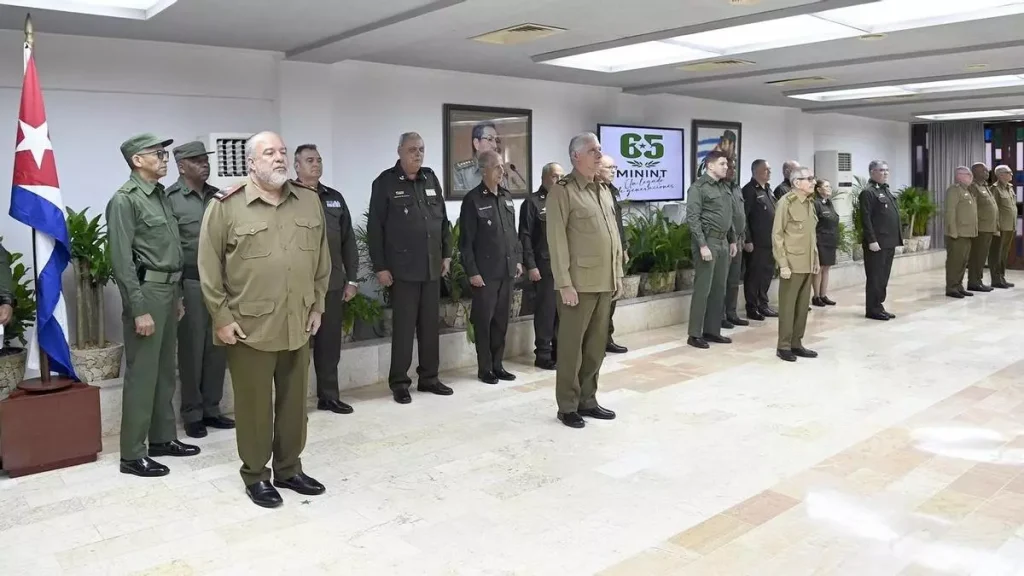
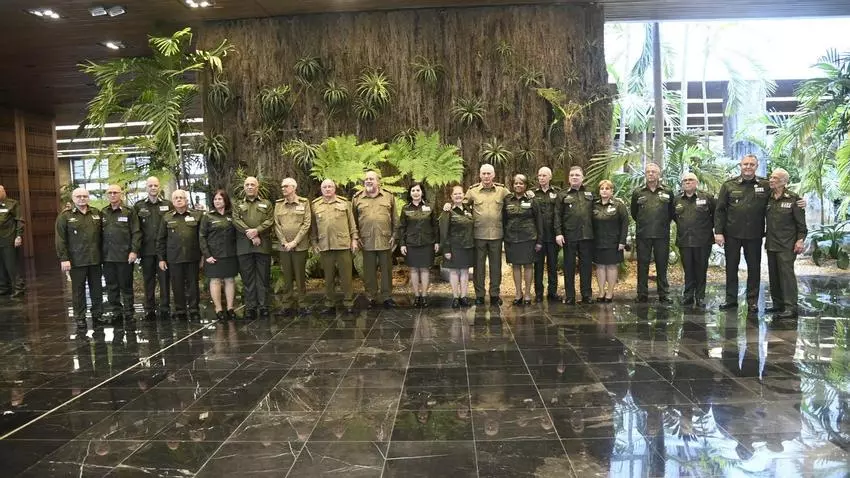
 14ymedio, Havana, 7 June 2026 /The Cuban regime marked the 65th anniversary of the Ministry of the Interior on Saturday with a series of promotions and decorations for officials of the body, in ceremonies headed by Raul Castro and Miguel Diaz-Canel. The main ceremony, presented by the official press as a tribute to the “career trajectory” of the heads of the national security apparatus, also served to reaffirm the central role of that body in internal repression, political surveillance, and population control.
“Together with the Army General and on the occasion of the 65th anniversary of the glorious Ministry of the Interior, we took part in promotion and decoration ceremonies for officers and officials of outstanding career,” Diaz-Canel wrote on X. The ruler congratulated the decorated officials on their “noble and self-sacrificing work” – the standard formula by which the regime presents as public service the functions of State Security, the political police, counterintelligence, the prisons, and the National Revolutionary Police.
The name that stands out most on the day is that of Dorisbel Martin Ojeda, head of the institution in Sancti Spiritus, who was promoted to brigadier general. The province’s official press confirmed the rank in an unusual note dedicated to the presentation of a gift basket to the first baby born on 6 June. It mentioned that the event coincided with the anniversary of the institution, the 95th birthday of Raul Castro, and “the promotion of the head of the Ministry of the Interior in Sancti Spiritus, Dorisbel Martin Ojeda, to the rank of brigadier general.”
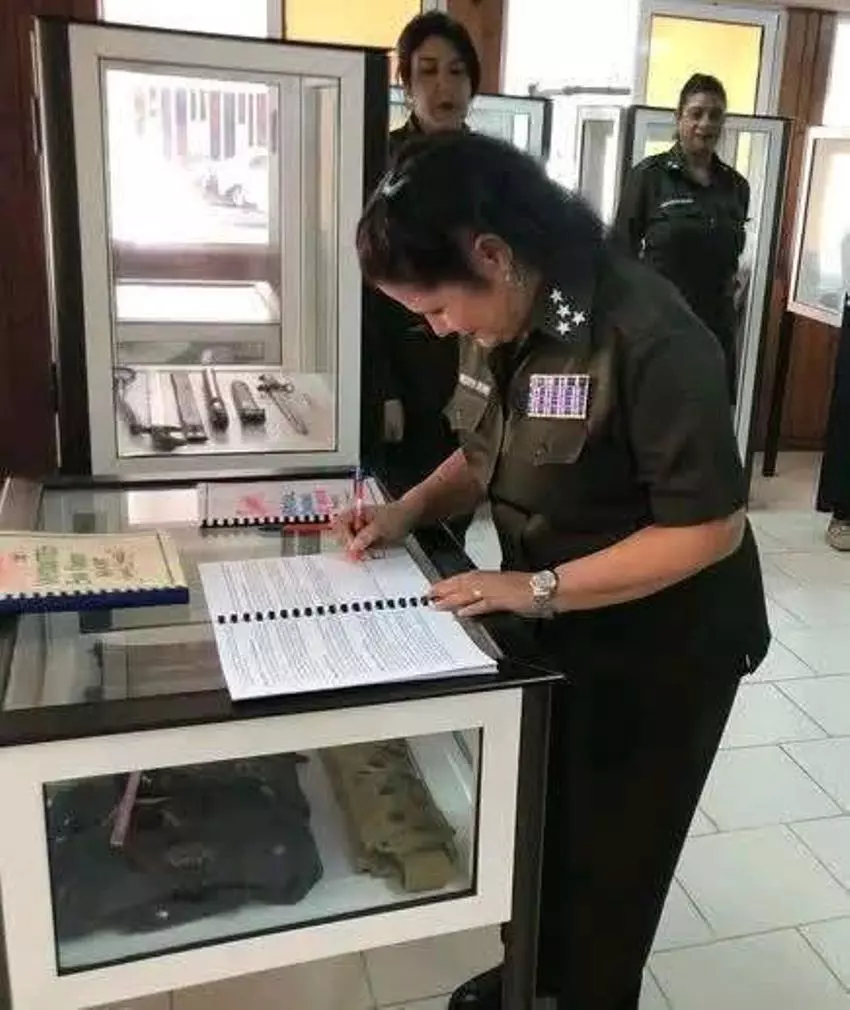
Although the state media have not highlighted it as the central fact of the day, pro-regime profiles celebrated Martin Ojeda as the first female general of the Interior. What is verifiable to date is that her promotion places her in the generalship of a body historically dominated by men and by cadres schooled in political repression. The Foundation for Human Rights in Cuba includes her in its database of repressors and identifies her as head or delegate of the body in Sancti Spiritus since 2016.
In Sancti Spiritus, Martin Ojeda has presided over ceremonies of State Security and Counterintelligence. In March 2024, the newspaper Escambray showed her conferring distinctions on “combatants” during a State Security ceremony. At that same event, three lieutenant colonels with “senior responsibilities in the Counterintelligence Body” were also decorated.
The province she heads is not outside the repressive map either. During 11 July 2021, protests took place in Sancti Spiritus and Trinidad. The official press at the time acknowledged five criminal proceedings against 11 people, while independent organisations documented convictions and subsequent harassment of demonstrators. Among the best-known cases are Luis Mario Niedas Hernandez, sentenced to three years in prison for taking part in the protests, and Alexander Fabregas Milanes, an opposition figure from Sancti Spiritus linked to 11J who was subsequently punished with new criminal charges.
Promotion ceremonies were replicated across several provinces, though without a complete national list of those promoted
Martin Ojeda’s reward therefore does not appear to reflect a province without discontent, but rather a leadership that has managed to keep it contained, dispersed, and with low media cost for the regime. Sancti Spiritus was not one of the national epicentres of 11J, but it did see protests, prisoners, and surveillance of opponents. In the logic of Cuban power, that combination – controlled conflict and territorial obedience – is rewarded.
After weeks away from the public scene and absent even from the open rallies organised in his honour for his 95th birthday, the Army General reappears on two consecutive days at closed, military-profile events: first at the Karl Marx Theatre, surrounded by the regime’s top leadership, and now at a promotion and decoration ceremony of the Ministry of the Interior. His return, far from the crowds convened to celebrate him, takes place only under the protection of uniforms, armed commanders, and security structures.
Promotion ceremonies were replicated across several provinces, though without a complete national list of those promoted. In Camaguey, the newspaper Adelante reported the promotion of Ismael Villalon Labanino to lieutenant colonel and of Yannier Rios Gomez to major. Villalon said the new rank reinforced his “honour” and his duty to remain faithful to the teachings of Fidel and Raul Castro, while Rios Gomez stated that the promotion was an incentive to take on new missions “always in keeping with revolutionary principles.”
In Las Tunas, those mentioned were Rolan Hernandez Perez, head of the Interior in the provincial capital municipality, promoted to lieutenant colonel, and Yanisleydis Alvarez Bello, coordination officer at the criminal investigation body, promoted to captain. Both told the local press that the recognition committed them to continue defending the homeland “under any circumstances” – a phrase which, in official vocabulary, typically encompasses the persecution of opponents, activists, and critical citizens.
In Granma, the official press gave figures but not a complete list: 27 officers promoted to lieutenant colonel and 43 to major. Speaking on behalf of those promoted and decorated was Lieutenant Colonel Mailen Martinez Olivera, though the report did not clarify whether she herself was among those promoted. In other provinces – including Santiago de Cuba, Holguin, Villa Clara, Ciego de Avila, Artemisa, and Isla de la Juventud – reports were limited to references to “officers,” “combatants,” and “outstanding cadres,” without disclosing their specific responsibilities.
The regime does not reward ordinary police work, but the political loyalty of a body that functions as the Communist Party’s first line of defence. Official notes repeat words such as “loyalty,” “missions,” “State Security,” “internal order,” and “revolutionary principles.” These are the keywords of a system that conflates public safety with ideological control.
Translated by GH.
______________________
COLLABORATE WITH OUR WORK: The 14ymedio team is committed to practicing serious journalism that reflects Cuba’s reality in all its depth. Thank you for joining us on this long journey. We invite you to continue supporting us by becoming a member of 14ymedio now. Together we can continue transforming journalism in Cuba.