The case of Adys Lastres Morera reveals how relatives of military power on the Island have used the United States as a destination for migration, business, and property.
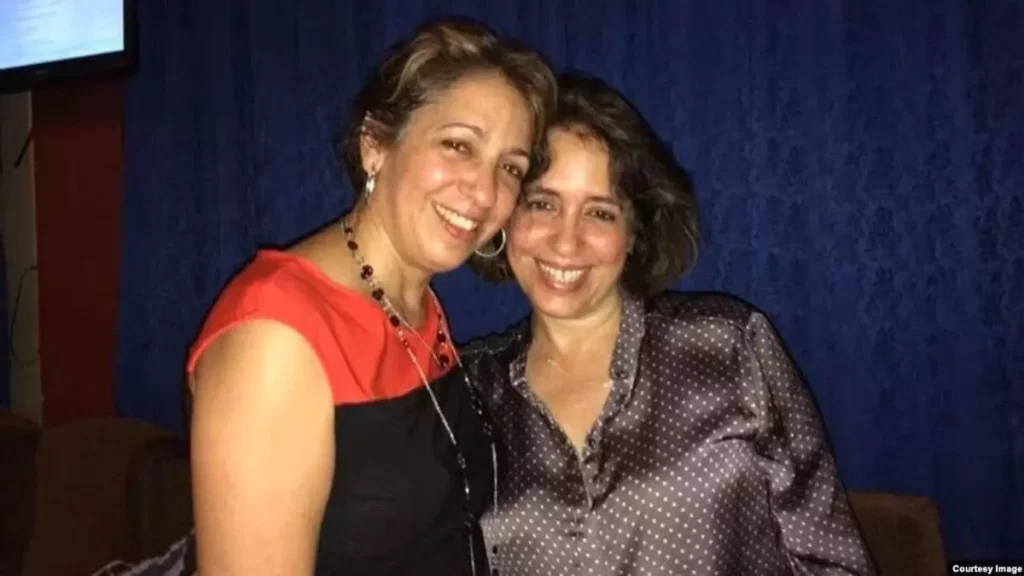
 14ymedio, Havana, May 23, 2026 / The most talked-about news among Cubans this Friday wasn’t the tribute to Raúl Castro in Havana, which the honoree did not attend, but rather an event that occurred on the other side of the Florida Straits. It all began with an arrest by Immigration and Customs Enforcement (ICE), a name lost among immigration files, and two surnames familiar to any informed Cuban: Lastres Morera. The arrested woman was Adys, sister of Ania Guillermina Lastres Morera, CEO of GAESA, the military conglomerate that manages a significant portion of the money flowing in and out of Cuba.
Adys Lastres Morera didn’t enter the United States like thousands of Cubans do each year, with a backpack over her shoulder, a border to cross, and a scary story to tell an immigration officer. She arrived on January 13, 2023, as a legal permanent resident, according to ICE, sponsored by her son, Ernesto Carvajal Lastres, a U.S. citizen who had been living in the country for twelve years. In other words, Adys didn’t arrive through a loophole in the immigration system. She arrived through a family door, legal and perfectly open.
Thousands of people emigrate through family connections and obtain residency in the United States without anyone noticing. But in Adys’s case, there was a piece that changed everything. Her sister wasn’t just any civil servant. Brigadier General Ania Guillermina Lastres Morera took over GAESA after the death, in July 2022, of Luis Alberto Rodríguez López-Calleja, Raúl Castro’s former son-in-law and the architect for more than two decades of the military’s economic empire. She initially assumed the position on an interim basis. In February 2023, she was confirmed as the executive president of the conglomerate that controls a crucial part of the Cuban economy.
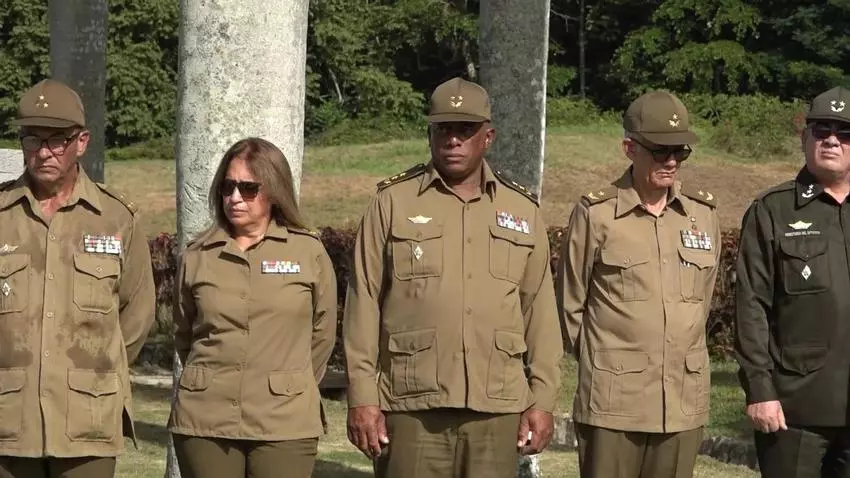
Adys’s path in the United States is also unlike that of so many Cubans who, after obtaining legal status, start from scratch in a restaurant, a warehouse, or a shopping mall. Just over a year after her arrival, her name already appeared in Florida’s corporate records as a registered agent and manager of REMAS Investments LLC, a company created in April 2024 and publicly presented as a real estate investment platform.
On its website, REMAS offered property sales and purchases, renovations, fund management, and projects in areas like Tampa and Lehigh Acres. The language was typical of the South Florida real estate market: fast-paced, optimistic, and full of promises of profitability. The difference lay in the name behind that storefront: a woman directly related to the economic elite of the Cuban dictatorship.
In Cuba, Adys Lastres Morera didn’t appear as a visible official in the state apparatus, but neither did she appear as a humble housewife. A professional profile under her name presented her as a telecommunications engineer. Her most striking trace, however, lay in the private tourism business. Before emigrating, she managed accommodations in Havana, including Casa Verde Habana and Casa Presidente, a 320-square-meter apartment described as “luxury.”
Adys was there, managing or representing real estate companies, while her sister ran the economic heart of the Cuban military.
In Florida, REMAS wasn’t her only business footprint. Her name also appears in STA Elena Investments LLC, a company registered in January 2025. There, she’s listed as a manager alongside Maria E. Gomez Martinez, Jorge Chall Rodriguez, and Jose E. Veliz Gonzalez. Unlike at REMAS, where her position seemed more central, at STA Elena she shared management with other managers. The company purchased at least one lot in Lehigh Acres for $25,000, a minor transaction in real estate terms, but enough to illustrate the type of structure that was beginning to take shape: companies, land, Florida addresses, and names connected by public documents.
Limited liability companies in Florida do not publish balance sheets, profits, or beneficial owners with the level of detail necessary to establish earnings or income. The available records do not reveal who contributed capital, whether there were commissions, whether there were clients, or how much money passed through these structures. The verifiable fact is something else entirely. Adys was there, managing or representing real estate companies, while her sister ran the economic heart of the Cuban military.
How many relatives of Cuban leaders, military personnel, state-owned businesses, or intermediaries have used the United States as a haven for their assets?
Following her arrest, Adys Lastres Morera was taken into ICE custody pending formal deportation proceedings. U.S. authorities assert that her permanent residency was revoked by Secretary of State Marco Rubio, who accused her of living in Florida and managing real estate assets while aiding the communist regime in Havana. ICE has not reported any criminal charges against her, but maintains that her continued presence in the United States contradicts Washington’s foreign policy objectives toward Cuba.
Adys’s son, Ernesto Carvajal Lastres, came to her defense after her arrest. He asserted that the family had done “everything right,” from the initial application to obtaining residency, “like all Cubans.” He also reported that he hadn’t been able to speak with his mother since her arrest and that she was being held in isolation. “I thought I had come to a country where institutions are respected, and apparently not,” he said, questioning how Rubio could revoke a permanent residency without first going through a court.
The question isn’t just what Adys Lastres Morera did. The bigger question is who else has done the same. How many relatives of Cuban leaders, military personnel, state-owned businesses, or intermediaries of power have used the United States as a haven for their assets? How many have bought properties, created companies, or moved capital while in Havana they denounce the “imperialist enemy” and call for resistance from ordinary citizens? How many names still lie dormant in corporate records, property deeds, and immigration files?
______________________
COLLABORATE WITH OUR WORK: The 14ymedio team is committed to practicing serious journalism that reflects Cuba’s reality in all its depth. Thank you for joining us on this long journey. We invite you to continue supporting us by becoming a member of 14ymedio now. Together we can continue transforming journalism in Cuba.