Without internet, without public transport, and with appliances destroyed, Havana seems to be returning to its harshest origins.
 14ymedio, Havana, Yoani Sánchez, May 18, 2026 — “You have to go straight on Carlos III,” a weary-looking state employee tells me when I ask for directions to shop that repairs electric pressure cookers. With no internet on cell phones and phone calls hampered, people have returned to using the most reliable “street map”: asking around. On the wide avenue that runs through Central Havana, that’s easy, because there’s always some activity. The difficult part is distinguishing when someone answers with just anything, without knowing, and when they actually have reliable information.
While I make my way toward Reina Street, a señora, sitting in a doorway tells me she has “Alprazolam, the good stuff,” a powerful benzodiazepine that sells in this city as if it was candy for children. An old man, who has placed some broken objects on the sidewalk to attract customers, gives me further directions, and a stray dog keeps glancing at the vendor selling bread and suckling pig, stationed with his cart on a corner, begging him to throw at least a scrap of skin.
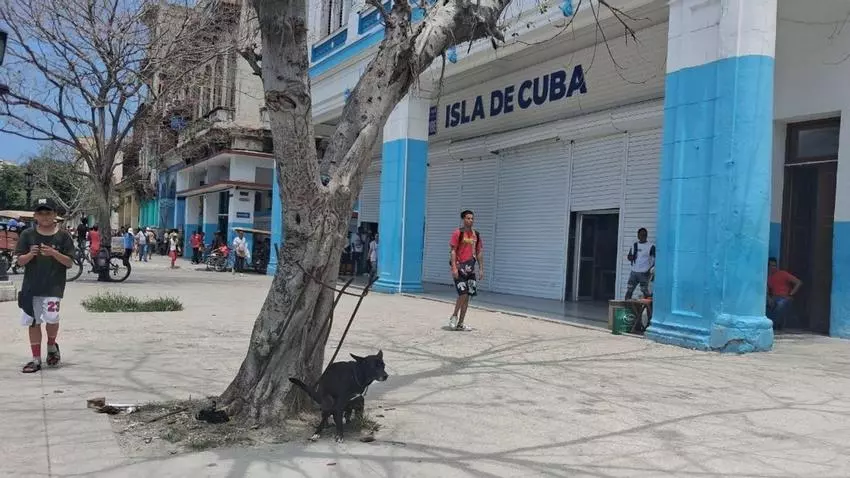
Carlos III Avenue has become a strip of makeshift stalls. The softdrink bottling plant that fascinated me with its sounds in my childhood is closed. The garden of the Economic Society of Friends of the Country, which I loved to wander through, has been fenced off for decades. The cultural center where I learned to draw and first stepped onto a stage barely plans any activities. But the worst is the Plaza, reconverted into a market in dollars as devoid of goods as it is of customers. From its dark interior, neither voices nor laughter ever emerge.
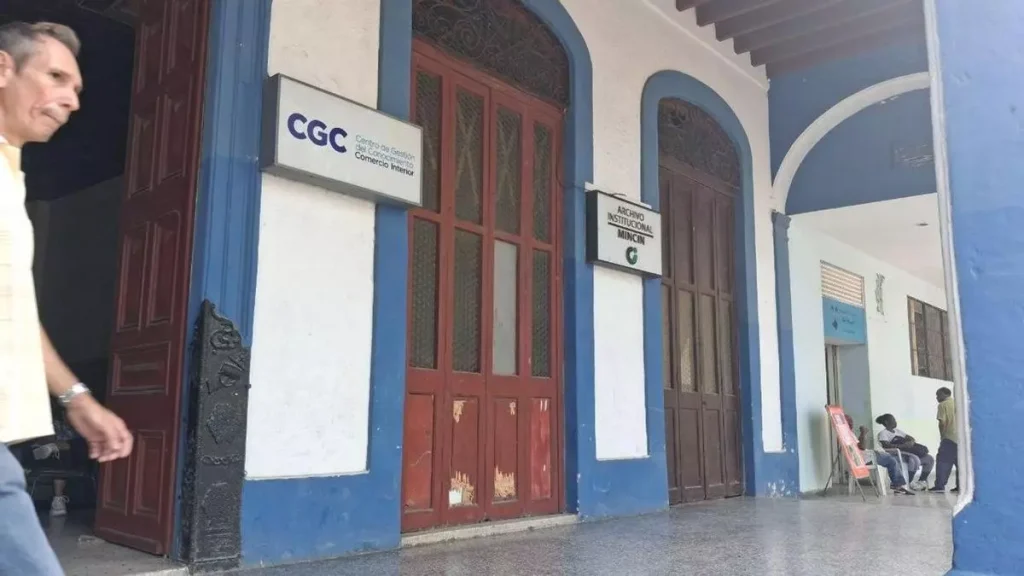
I walk past a sign advertising the Domestic Trade Knowledge Management Center (CGC). “What kind of information will be stored there?” I wonder. Will they teach us how to share our experiences regarding how many peas we consumers in the rationed market get every few months? Will the innovation they promote have to do with how to make smaller, worse-quality bread each day to sell through the ration book? What will future scholars find when they open the archives of this institution? Will they be as empty as the shelves of the corner store in my neighborhood?
These days I’ve been thinking about the planes of Ethiopian. I’ve never been there, but my fascination with every drop of water, every glimmer of light, and every step I take must be very similar to that of those early Homo sapiens, surprised and frightened by so many things they didn’t understand. I chase clouds with my eyes to see if it’s going to rain in my neighborhood so I can fill a bucket, I calculate how long cooked beans will last without refrigeration, and I gauge where the shade will be when I set off on the long walk from anywhere in the city to my house.
I have seen scenes in the streets of Havana that I only knew from ancient history books when they described the harsh survival of our ancestors.
The cave attracts the cave. I’ve seen scenes in the streets of Havana that I only knew from ancient history books, when they described the harsh survival of our ancestors. A couple of young men hunting laurel pigeons with clubs and sacks, just to eat. A young woman preparing, with sacks and bags, a space in a tree trunk to spend the night. A family lighting firewood right in the street to finish cooking their lunch. We’re all becoming somewhat feral, a little wilder every day.
We haveve returned to the origins of basic survival. Given that the elements of modernity that surrounded us are becoming ever more unstable, the wild animal that we are at our core emerges: the reptile that dwells within us. We go out during the day to try to “solve” whatever problems we can. At night, we must avoid setting foot on the street: the sidewalks are dark, muggings are on the rise, and recreational options are so depleted that it’s not worth paying thousands of pesos for round-trip transportation to a private club or bar.
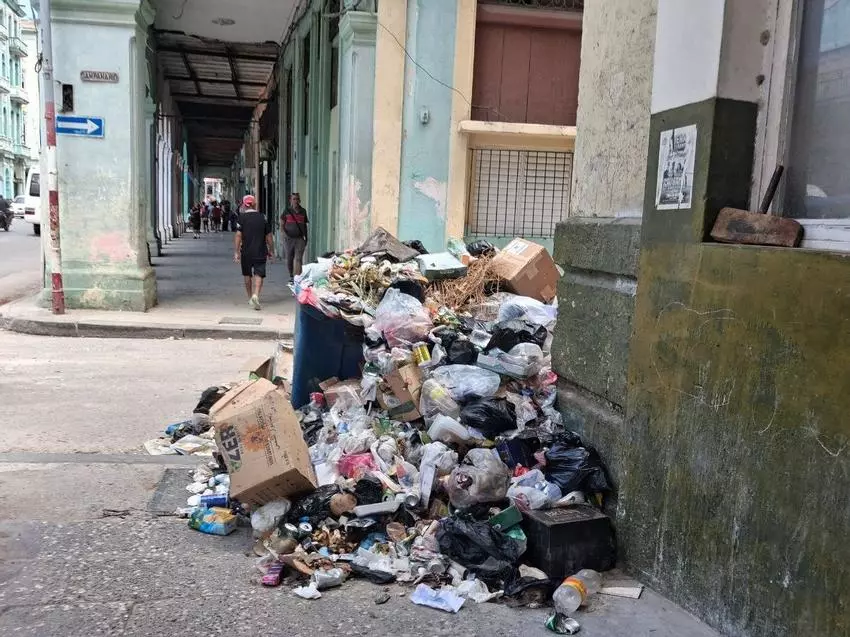
The appliance repairman doesn’t mince words. “This rice cooker is beyond repair,” he tells me minutes after I finally find his small shop on Carlos III Street. A power surge after the electricity was restored sealed the fate of a pot we’d bought more than three decades ago, when my son was born. “It lasted quite a while,” I tell myself, and I leave it for spare parts with the busy entrepreneur, who already has a long line of customers. The blackouts leave a trail of victims in their wake: deep fryers, coffee makers, and pressure cookers that perish from “excessive current” when the power returns.
With my hands now free, I continue along Reina Street to seek the almendrón taxi stand at Fraternity Park. I hope that one day these people will have their own routes with comfortable and efficient buses that run throughout the city. If they’ve managed to create the most effective way to get around Havana under the worst conditions, they deserve to move up. With inspectors harassing them, police demanding ever-larger bribes, fuel shortages, and the old vehicles from the mid-20th century that they drive, the boteros have escaped the clutches of centralism. Many passengers complain about their prices, but we should be grateful that they exist.
You Havana residents are now experiencing what we have been suffering for years.
I climb into the “pisicorre,” an old Willys Jeep painted canary yellow. The young man who sits next to me is from Bejucal, a small town in what is now the province of Mayabeque, once famous for its brass bands. “You Havana residents are now experiencing what we’ve been suffering for years,” he tells me bluntly. “I can’t remember the last time I came home to electricity,” adds the man, who claims to be one of the few in his community who still commutes to the Cuban capital every day for work.
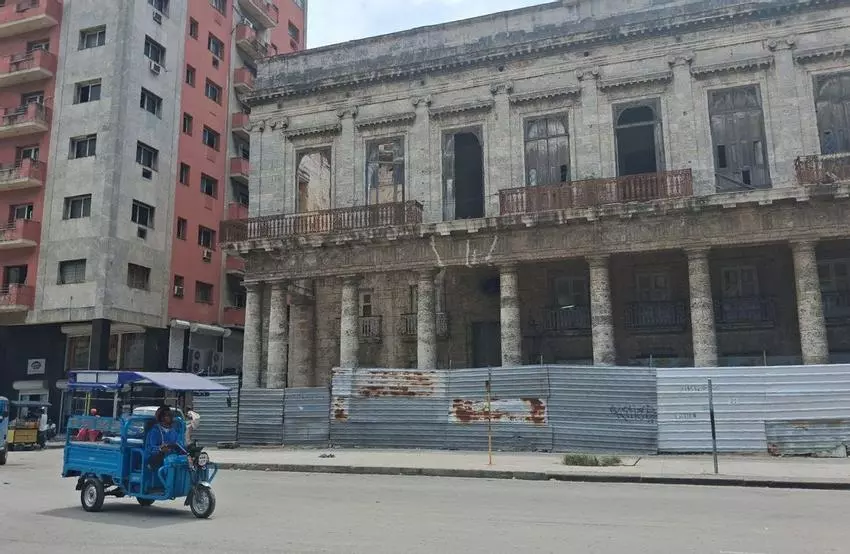
The scene he describes is depressing. “My wife has become an expert at lighting the charcoal for cooking, and many nights we take turns fanning the girls [ages five and eight]” so they don’t get bitten so much by the mosquitoes. What happens in his house is replicated throughout the town, and Bejucal “has become empty because those who didn’t leave through the Darién Gap left under the Law of Grandchildren.” I try to imagine what that place, which dazzled me with its festive rivalry between La Ceiba de Plata and La Espina de Oro, must be like at night, but I can’t quite picture it.
I arrive at my destination. I pass by Estancia Street to buy some basil. The vendor wraps the small bunch in a newspaper. The main headline is about the 2026 Economic and Social Program. Although only a few days have passed since its publication, the phrase seems like something from a distant past, when the State believed it had control over the present and future of every Cuban.
The reptile inside me stirs. It has heard the hum of the Ministry of Transportation’s generator. It’s the signal for the blackout, and it knows it will have to climb 14 flights of stairs. At the 10th floor, I close my eyes, hold onto the handrail, and imagine climbing a tree, crooked and with beautiful foliage, somewhere in the Ethiopian plains.
Previous Havana Chronicles:
Sleeping Is Also a Privilege in Havana
A Desperate Plea in the Middle of the Dark Havana Night: ‘Light!’
Under a Picture-Postcard Blue Sky, the Country is Crumbling
Fatigue Barely Allows One to Enjoy the ‘Lights On’ in Havana
Dollars, the Classic Card, and a Havana Without Tourists
A Journey Through the Lost Names of Havana
The Shipwreck of a Ship Called “Cuba”
Havana Seen From ‘The Control Tower’
In Havana, the Only Ones Who Move Are the Mosquitoes
Reina, the Stately Street Where Garbage is Sold
Searching for Light Through the Deserted Streets of Havana
The Death Throes of ‘Granma’, the Mouthpiece of a Regime Cornered by Crisis
The Anxiety of the Disconnected Cuban
One Mella, Three Mellas, Life in Cuba Is Measured in Thousands of Pesos
It Is Forbidden To Leave Home in Cuba Today Because It Is a “Counter-Revolutionary Day”
Vedado, the Heart of Havana’s Nightlife, Is Now Converted Into a Desert
______________________
COLLABORATE WITH OUR WORK: The 14ymedio team is committed to practicing serious journalism that reflects Cuba’s reality in all its depth. Thank you for joining us on this long journey. We invite you to continue supporting us by becoming a member of 14ymedio now. Together we can continue transforming journalism in Cuba.