A Tale of Two Cities: Havana and Washington on May Day

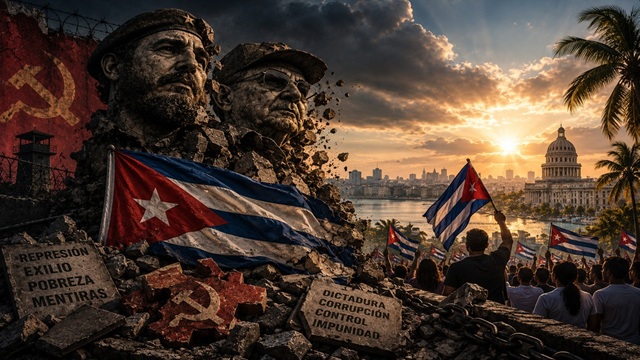
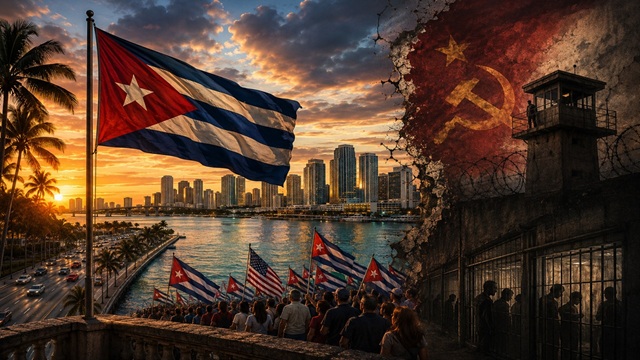
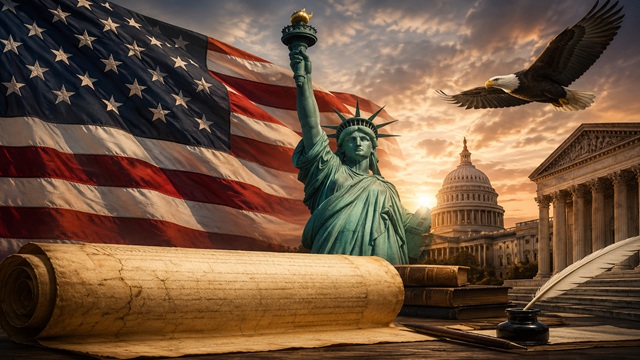
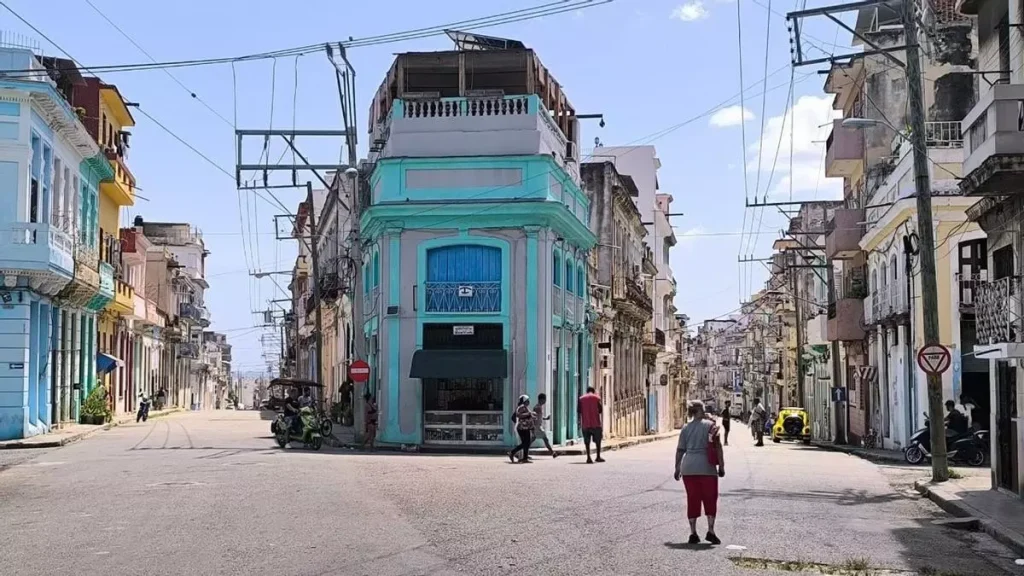
May 1, 2026, exposed two radically opposing political realities unfolding ninety miles apart. In Havana, the Cuban communist dictatorship attempted to stage its annual revolutionary spectacle amid visible fear, militarization, and growing insecurity. In Washington, the United States escalated its confrontation with the Castro-Communist regime through a sweeping executive order targeting the financial, political, and repressive architecture sustaining the dictatorship. The contrast was striking: one government desperately trying to manufacture the illusion of monolithic support; the other formally declaring the Cuban regime a continuing threat to U.S. national security and democratic values.

In Havana, the regime had originally planned a massive May Day mobilization at the Plaza Cívica — the monumental square later renamed Plaza de la Revolución after Fidel Castro consolidated communist rule. Historically, the plaza has served as the dictatorship’s preferred stage for choreographed demonstrations of revolutionary unity, giant propaganda rallies, and displays of ideological obedience. But this year, the regime abruptly relocated the main event to the so-called “Anti-Imperialist Tribune” in front of the U.S. Embassy. The explanation offered by state propaganda was predictable revolutionary theater. The real reasons were far more revealing..

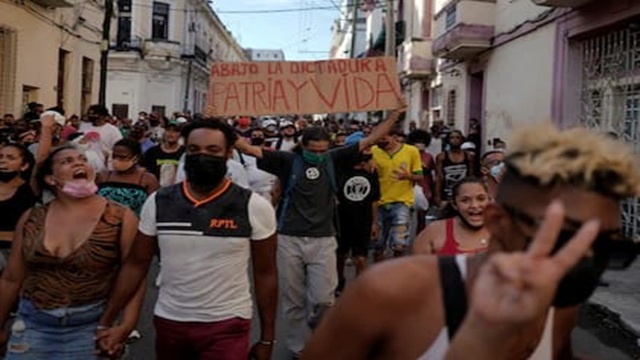
The dictatorship feared poor turnout, despite available mass mobilization mechanisms. It feared images of half-empty plazas circulating across social media and independent outlets. More importantly, it feared the possibility of social unrest and spontaneous protest, particularly after the trauma inflicted on Cuban communism by the July 11, 2021, popular uprising. Thousands of Cubans across the island openly challenged communist rule in the largest anti-government demonstrations in decades. The memory of those protests continues to terrify the ruling elite because they shattered the regime’s carefully cultivated myth of universal revolutionary loyalty.

Security concerns also weighed heavily on the regime’s calculations. The appearance of the visibly frail and decomposing tyrant Raúl Castro beside dictator Miguel Díaz-Canel transformed the event into less a celebration than a display of dictatorial continuity under siege. Castroism’s rhetoric continue reading

was openly defiant and militant, sounding increasingly similar to the revolutionary absolutism and anti-Western hostility associated with the Iranian ayatollah regime, one of Havana’s closest ideological and geopolitical partners. This was not a workers’ celebration. It was a regime fortification exercise.

The communist dictatorship explicitly organized the May Day mobilization within the framework of the newly declared “Year of Defense Preparedness” for 2026. The Castroist regime has announced weekly military exercises, civil defense operations, and plans approved by the National Defense Council for a transition to a wartime footing in the event of conflict or internal instability. The atmosphere surrounding the parade reflected precisely that mentality. It is a state preparing not for prosperity or reform, but for confrontation and survival.

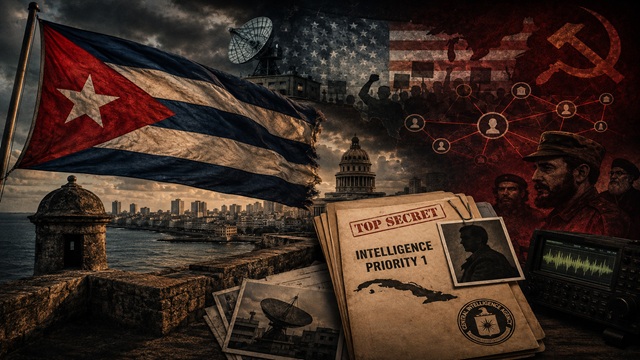
Military personnel, Ministry of the Interior (MININT) officers, intelligence agents, rapid- response brigades, and uniformed security forces maintained a heavy presence throughout the event. The symbolism was unmistakable. The regime increasingly governs Cuba, not as a confident political system, but as an entrenched security apparatus managing a population it fundamentally distrusts. The omnipresent deployment of coercive forces transformed what the dictatorship claimed was a celebration of workers into a demonstration of state intimidation and internal control. Rather than projecting revolutionary vitality, the spectacle exposed a government whose primary political instinct is surveillance, containment, and preparedness against its citizenry.

At the same time, the dictatorship attempted to manufacture legitimacy through mass political coercion. Havana triumphantly announced that more than 6.2 million signatures had been collected for the “Mi Firma por la Patria” (“My Signature for the Homeland”) campaign, a regime-driven initiative supposedly demonstrating national support for Cuban “sovereignty” and resistance to foreign pressure. In a totalitarian system, signatures gathered through workplaces, schools, party committees, unions controlled by the state, neighborhood surveillance networks, and government institutions cannot meaningfully be interpreted as free political expression. Participation in such campaigns is inseparable from intimidation, social pressure, and fear of retaliation. In Cuba, refusing to cooperate with state mobilizations can carry consequences ranging from professional marginalization to harassment, interrogation, or loss of opportunities controlled by the state.

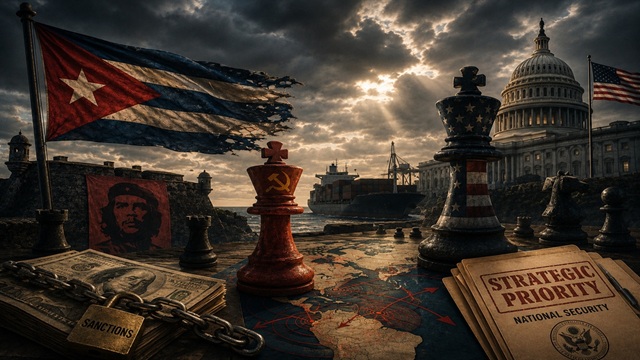
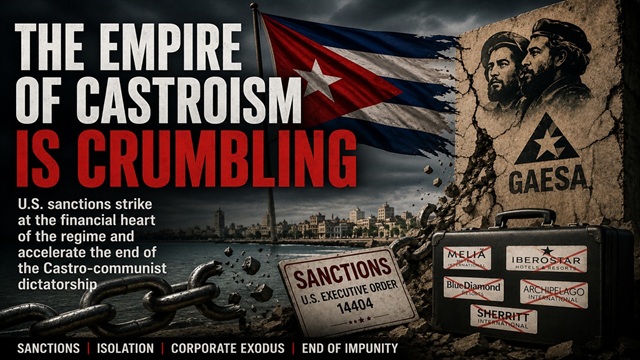
The regime intended to project strength. Instead, it revealed insecurity. While Havana staged ideological rituals and militarized pageantry, Washington moved decisively in the opposite direction. On May 1, President Donald J. Trump signed an executive order titled Imposing Sanctions on Those Responsible for Repression in Cuba and Threats to U.S. National Security and Foreign Policy. The order represents another comprehensive sanction charter directed at the Cuban regime. It significantly expands the legal, financial, and diplomatic pressure against Castro-Communism.

The executive order declares that the actions and policies of the Castro government continue to constitute an “unusual and extraordinary threat” to U.S. national security and foreign policy. It further states that the regime’s conduct is “repugnant to the moral and political values of free and democratic societies.” The sanctions provisions are sweeping in scope. Under Section 2, the United States can block all property and interests in property under U.S. jurisdiction belonging to foreign individuals or entities operating in strategic sectors of the Cuban economy, including defense, energy, mining, metals, financial services, and security. The order specifically targets not only officials of the Castro government but also individuals and entities acting on behalf of the regime, those materially assisting it, and those providing financial, technological, or logistical support.

The order further authorizes sanctions against persons complicit in serious human rights abuses or corruption connected to communist Cuba, including expropriation of private assets, misappropriation of public resources, bribery, and political profiteering by regime officials. Even adult family members of sanctioned individuals may be designated. The message is unmistakable: the United States intends to target not merely isolated actors, but the broader ecosystem sustaining the dictatorship. By extending liability beyond formal state officials to financial enablers, intermediaries, and beneficiaries of regime corruption, the order seeks to penetrate the patronage networks that have long insulated Cuba’s ruling elite from meaningful accountability.

The executive order also dramatically raises pressure on international financial institutions. Foreign banks facilitating significant transactions for sanctioned Cuban individuals or entities may themselves face severe penalties, including restrictions on correspondent banking access in the United States or the blocking of assets under U.S. jurisdiction. These secondary sanctions substantially increase the financial risks associated with doing business with the Cuban regime. In practical terms, the measures are designed to further isolate Havana from global financial networks and deter foreign actors from serving as economic lifelines for the dictatorship.

Additionally, the order imposes a travel ban on foreign nationals tied to sanctionable activities connected to the Cuban government, suspending unrestricted immigrant and nonimmigrant entry into the United States for designated individuals. It also prohibits transactions designed to evade sanctions and authorizes aggressive enforcement under existing emergency powers legislation. The inclusion of immigration restrictions underscores that participation in repression and corruption in Cuba may now carry not only financial consequences, but also personal and diplomatic isolation from the United States.

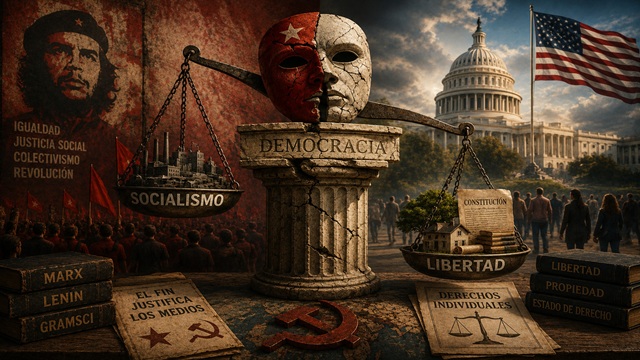
Thus, May Day 2026 became far more than a symbolic holiday. In Havana, the regime attempted to choreograph revolutionary permanence through coercion, militarization, and ideological spectacle. It visibly displayed a deep-rooted fear of its population. In Washington, the United States formally intensified its economic and diplomatic campaign against the structures of Castro-Communist repression. Two cities, two systems, and two entirely different conceptions of political legitimacy.

One clings to power through surveillance, compulsory mobilization, and security-state control. The other increasingly signals that the Cuban dictatorship’s repression, corruption, and destabilizing conduct will face mounting consequences. The juxtaposition of Havana’s militarized choreography and Washington’s expanding sanctions policy underscored the growing collision between a system struggling to preserve totalitarian permanence and an American political environment becoming progressively less willing to tolerate or normalize its existence. Havana’s pathetic May Day spectacle revealed their inability to effectively orchestrate anything convincing. It also underscored their pathological refusal to negotiate themselves out of power. The U.S. must now seize the moment and take its legitimate national security concerns to another level.

Author: Julio M. Shiling

© The CubanAmerican Voice. All rights reserved.
Cuba’s new “Investment” Law: the Castroist Piñata

It is in reality about laundering the billions hidden in tax havens of Castro-communism: it is Cuba’s transition toward Putinism

Havana International Bank has long functioned as the regime’s main money laundering vehicle. / El Carabobeño

14ymedio bigger14ymedio, Julio M. Shiling, Miami, March 23, 2026 – On March 16, 2026, the deputy prime minister and minister of Foreign Trade and Investment of communist Cuba, Óscar Pérez-Oliva Fraga, announced a radical change. Cubans living abroad, regardless of their residency status, can now invest, own, and partner in private businesses on the Island, including large infrastructure projects. The Castro regime presented it as an opening towar the exile and the diaspora. In reality, this decree is the opening act of a carefully orchestrated transfer-of-wealth heist, designed to launder the billions hidden in offshore tax havens of Castro-communism and return them to the Island under the pretext of “legal” private investment. It is Cuba’s transition toward Putinism.

The parallels with post-Soviet Russia are unmistakable. After the collapse of the USSR, the nomenklatura — top Communist Party officials, their families, and the security apparatus — devised a fraudulent “privatization” plan. State assets were auctioned off at bargain prices to insiders who had already moved wealth abroad through shell companies. The result was not capitalism, but kleptocracy: a new oligarchic class emerging directly from the old regime. Cuba is now replicating that model. Members of the regime who have deposited fortunes in offshore vehicles will soon “invest” those same funds in their own country, acquiring legal ownership of businesses while ordinary Cubans remain trapped in poverty. The very financial architecture of the dictatorship makes this plan possible.

Members of the regime who have deposited fortunes in “offshore”vehicles will soon “invest” those same funds in their own country, acquiring legal ownership of businesses while ordinary Cubans remain trapped in poverty

Let us consider the regime’s proven offshore network. Havana International Bank (Havin Bank Ltd.), headquartered in Canary Wharf, London, at 189 Marsh Wall, has long functioned as the regime’s main money laundering vehicle. This Castro-Communist front company is 100% state-owned and linked to the Central Bank of Cuba. It was sanctioned by the U.S. Treasury’s Office of Foreign Assets Control (OFAC) in 2020 precisely for channeling funds to the dictatorial government in Havana. Other entities —ACMEX Management Company in the opaque tax haven of Liechtenstein, Mid-Atlantic structures registered in Luxembourg, and Caroil Transport Marine Ltd. in Cyprus— form an interconnected network of shipping companies and holding firms used to move assets discreetly.

These are not neutral companies. They are instruments of the State. The new law provides the perfect legal excuse: a relative or trusted representative of a high-ranking official, now reclassified as a “Cuban resident abroad,” can channel those offshore millions into Cuban businesses, converting the regime’s illicit capital into “private” property.

There are three possible interpretations of the regime’s sudden generosity. First, it could be the classic Castro “bait-and-switch” strategy. Havana has repeatedly continue reading

offered limited openings, only to reverse course once capital has flowed in and its political usefulness has been exhausted. History suggests this pattern remains likely. Second, the regime may genuinely hope to imitate China’s model: leveraging exile and diaspora capital to drive growth while maintaining political control. This scenario is unlikely for two reasons. The Cuban exile community has consistently refused to invest while the dictatorship remains in place, citing the risk of future confiscation and moral opposition to supporting repression.

More decisively, any significant investment by Cuban Americans or other U.S. persons would still require specific authorization from the OFAC of the U.S. Treasury Department, under the long-standing U.S. embargo against Cuba. The embargo, enforced through the OFAC, generally prohibits direct investment in Cuban businesses by U.S. persons, with very limited exceptions that do not extend to broad commercial participation. Washington is not willing to issue the licenses necessary for large-scale flows that would rescue the regime.

Washington is not willing to issue the licenses necessary for large-scale flows that would rescue the regime

That leaves the third and most plausible explanation: the Russian-style model is now underway. The decree is not economic liberalization; it is legal cover for the mass repatriation and legitimization of hidden communist assets. The regime, aligned individuals, high-ranking officials, their families, and the structural apparatus will obtain “investor” status under the new migratory category. Their foreign holdings will suddenly appear as legitimate diaspora capital, buying stakes in hotels, agricultural enterprises, and micro, small, and medium-sized businesses. The plunder becomes “legal.” The dictatorship shifts from overt state socialism to a Putinist hybrid: nominal private ownership controlled by the same clique that has ruled for sixty-seven years.

The implications are stark. This is not an invitation to genuine entrepreneurs, but a structured operation to convert looted national wealth into protected private fortunes. Once “invested,” these assets will be shielded from future sanctions and international scrutiny under the cover of law. In effect, the looters are not only evading justice but are also legally entrenching their theft for decades to come.

Nominal private ownership controlled by the same clique that has ruled for sixty-seven years

The United States, in shaping its foreign policy in line with the November 2025 National Security Strategy statement, must draw a clear and uncompromising line. No investment law or regulation enacted by the Castro-communist regime deserves even minimal recognition. For the future democratic government of a free Cuba, every transaction, partnership, share transfer, or property claim enabled by this March 2026 decree must be declared null and void from the outset, as it is legally tainted, morally repugnant, and strategically unacceptable. This is not an economic opening. It is the regime’s final piñata party for the nomenklatura, in which the billions hidden and looted from the Cuban people over decades are finally broken open and redistributed among the same ruling clique and its proxies under the thin disguise of “diaspora investment.”

Treating any of these measures as legitimate is handing thieves the keys to their own getaway car and blessing the robbery in real time. The Cuban people (and U.S. businesses and individuals) have already been victims of the mass asset theft carried out in 1959. They should not be forced to watch a second theft unfold without resistance. Democratic governments, international financial institutions, and the exile community itself have a clear duty: reject the plan outright, invalidate every dollar that flows through it, and deny the Castro dynasty the Putin-style rebranding it so desperately seeks. Anything less is complicity in the most cynical heist in history.

Editor’s Note: This text was originally published on the Patria de Martí website.

Translated by Regina Anavy

______________________

COLLABORATE WITH OUR WORK: The 14ymedio team is committed to practicing serious journalism that reflects Cuba’s reality in all its depth. Thank you for joining us on this long journey. We invite you to continue supporting us by becoming a member of 14ymedio now. Together we can continue transforming journalism in Cuba.

How Would Cubans React to U.S. Military Intervention?

Nonviolent resistance in Cuba, while morally admirable and politically necessary, has never brought about the collapse of the regime.

Los cubanos, tanto dentro como fuera de la Isla, que anhelan la libertad, darían la bienvenida a los libertadores / 14ymedio

14ymedio bigger14ymedio, Julio M. Shiling, Miami, January 11, 2026 — For more than six decades, U.S. policy toward Cuba has generally oscillated between containment, engagement, sanctions, and rhetorical support for democratic aspirations. What has remained largely unchanged is the assumption—shared by many well-intentioned observers—that peaceful civic resistance, international pressure, and gradual liberalization could ultimately bring about regime change. History has shown otherwise. In totalitarian systems, particularly Marxist–Leninist regimes modeled on Cuban state doctrine, non-violent strategies alone do not dismantle power. They merely coexist with it.

The Trump administration’s renewed emphasis on reversing communist gains in Latin America reflects a strategic recalibration long overdue. The naval presence in the Gulf of Mexico and Caribbean, combined with decisive action against socialist strongholds in Venezuela and potentially elsewhere in the hemisphere, signals a recognition of a fundamental reality. Force, when legitimate and intelligently applied, remains the only proven mechanism for overthrowing entrenched totalitarian regimes.

Pacifist regime-change strategies have succeeded primarily in democratic or semi-democratic systems. These are states where power holders are constrained by law, public opinion, or institutional accountability. Non-violent movements can compel concessions in such environments because governments fear electoral loss, reputational damage, or judicial consequences. Totalitarian regimes fear none of these. They are afraid only of the loss of coercive control.

Cuba is not an authoritarian system in transition; it is a mature totalitarian state.

Cuba is not an authoritarian system in transition; it is a mature totalitarian state. Its intelligence services, internal security forces, military hierarchy, and political institutions are unified under a single party whose legitimacy rests not on consent but on ideological continue reading

permanence and repression. The regime survived the collapse of the Soviet Union, decades of economic isolation, mass emigration, and recurring social unrest precisely because it is structurally immune to civic pressure. The use of alternate schemes for financing its operations upon the fall of the USSR, such as Venezuelan oil, drug-trafficking income, neo-slave labor leasing, and intelligence information trafficking, has shown that Castro-Communism can be resourceful when it comes to pillaging for survival’s sake.

This is why nonviolent resistance in Cuba, while morally admirable and politically necessary, has never produced regime collapse. Protest movements—from dissident intellectuals to the island-wide demonstrations of July 2021—have exposed the regime’s fragility and brutality, but they have not dislodged it. Instead, they have been met with arrests, exile, amplified surveillance, and expanded repression. In totalitarian contexts, grievance campaigns do not force concessions. They merely test repression thresholds.

That does not render nonviolent action useless. On the contrary, it plays a critical preparatory role. Civic resistance delegitimizes the regime, fractures elite consensus, weakens ideological cohesion, and signals popular willingness for change. But these effects only become decisive when paired with a coercive catalyst—either internal military defection or external force. No communist dictatorship has fallen solely because citizens protested peacefully.

Historical precedent confirms this. From Eastern Europe to Central America, totalitarian systems collapse when force—explicit or implicit—enters the equation. The Reagan Doctrine aggressively challenged Soviet communism. Military action against global Marxism was fought hard and with determination. The fall of the Berlin Wall was no accident. U.S. military interventions in Grenada and Panama dismantled Marxist and kleptocratic regimes that diplomacy could not. In each case, civic resistance mattered—but it was not the ultimate deciding factor.

Cuba today presents conditions uniquely favorable to a limited, intelligence-driven U.S. operation.

Cuba today presents conditions uniquely favorable to a limited, intelligence-driven U.S. operation. The regime faces severe economic exhaustion, demographic decline, energy shortages, and waning ideological loyalty among younger generations. Its international patrons are stretched, distracted, or unreliable. Unlike during the Cold War, Havana no longer enjoys a superpower security guarantee. What remains is a brittle, coercive apparatus holding together a collapsing state.

Crucially, modern military operations need not resemble Cold War invasions or prolonged occupations. Advances in intelligence gathering, cyber capabilities, precision force, and information warfare allow for targeted interventions aimed at decapitating regime leadership, neutralizing security command structures, and enabling a rapid internal transition. The objective is not occupation but disruption, creating a power vacuum that domestic democratic forces, previously suppressed, can fill. In other words, the stage is set for Cuba’s liberation.

With U.S. naval assets already positioned in the Gulf, a precision incursion—targeting key leaders like Miguel Díaz-Canel—would exploit internal fractures. Cubans, both inside and outside the island, long yearning for freedom, would welcome liberators. Intelligence reveals regime vulnerabilities: economic collapse, youth disillusionment, and military defections. Technology ensures low-risk execution—cyber hacks to paralyze defenses, special ops to secure Havana. Cuba is the real measure of the success of the Trump Doctrine.

Opponents of such action argue that military intervention risks instability or backlash. Yet instability already defines Cuba’s trajectory. Managed disruption, followed by an internationally supported transition framework, is less dangerous than indefinite stagnation under a collapsing totalitarian state. Moreover, there is substantial evidence that a decisive intervention would be welcomed by large segments of the Cuban population, including elements within the military whose loyalty is transactional rather than ideological.

There is substantial evidence that a decisive intervention would be welcomed by large segments of the Cuban population.

A U.S. operation against the Cuban communist regime would not be an act of imperialism but a strategic intervention aligned with hemispheric stability and democratic norms. It would signal that totalitarian entrenchment in the Americas is no longer tolerated, and that regimes sustained by repression, not consent, cannot rely indefinitely on diplomatic paralysis. The successful arrest of communist Cuba’s puppet dictator, Nicolas Maduro, and the apparent takeover of the Chavista regime affirm the viability of affirmative U.S. action.

The lesson is clear: pacifism alone does not overthrow communism. It prepares the ground, exposes injustice, and mobilizes conscience. However, the final breach of totalitarian power requires force. If the United States is serious about reversing socialist rule in the Western Hemisphere, neutralizing a key ally of American domestic terrorism, and promoting peace in the region, Castro-Communism must go. Cuba must not be the exception and remain untouched by this bold U.S. foreign and moral policy initiative. Cuba is the paradigmatic test case.

____________

COLLABORATE WITH OUR WORK: The 14ymedio team is committed to practicing serious journalism that reflects Cuba’s reality in all its depth. Thank you for joining us on this long journey. We invite you to continue supporting us by becoming a member of 14ymedio now. Together we can continue transforming journalism in Cuba.