The UN Highlights That Cuba’s Private Sector Is “An Important Partner in the Humanitarian Response”

The World Food Programme obtained 135,000 liters of fuel through partnerships with private individuals authorized to purchase in the United States.
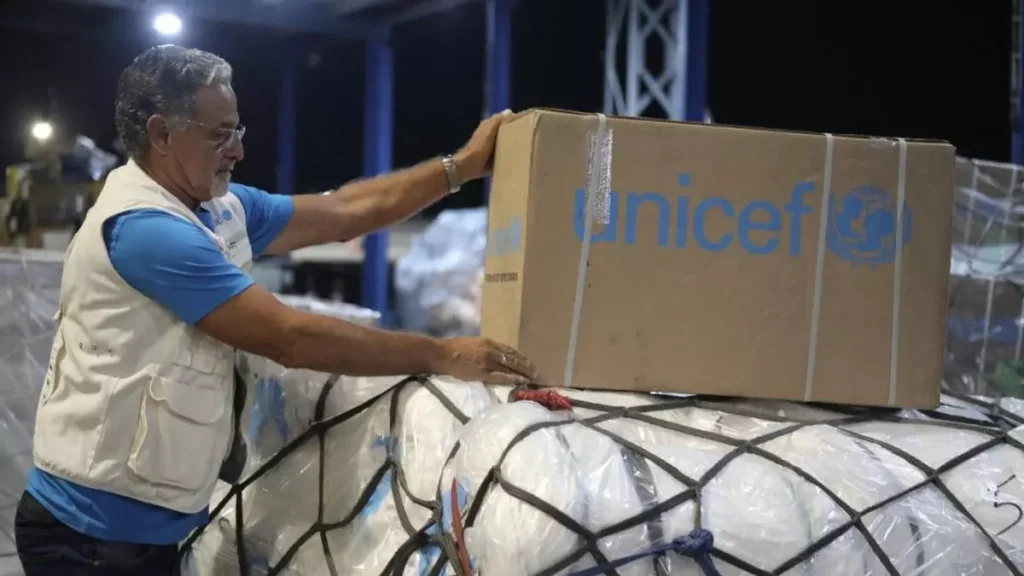

Logistics for the arrival and distribution of UN humanitarian aid are becoming impossible, the organization says. / Unicef

14ymedio bigger14ymedio, Madrid, June 29, 2026 – More than three months ago, Francisco Pichón, the United Nations resident coordinator in Cuba, told the international press that he was negotiating with the United States to bring fuel for humanitarian purposes to the Island so that aid from the agency could be transported. The situation remains stalled at that level (“Up to this moment, there has been no solution”), although the official said this Monday in an interview with elDiario.es that some quantities have been obtained through Cuba’s private sector.

“It is not enough for the implementation of our action plan, but it has allowed us to move many containers that were already at the port or in warehouses around the country and that had arrived as part of the response to Hurricane Melissa,” he explained. The World Food Programme (WFP) first obtained 15,000 liters of fuel through partnerships with private businesses, thanks to authorization from the Cuban regime allowing them to buy fuel and from Washington allowing U.S. companies to sell only to private individuals on the Island.

Now, Pichón added, a second and much larger shipment has been secured, “120,000 liters that are already in the country.” The official said this allows work to continue, but that a “broader” solution is needed, with access to a minimum and predictable fuel supply, something he continues to advocate and negotiate for from UN offices in New York and Geneva.

The official added that this allows work to continue, but that a “broader” solution is needed, with access to a minimum and predictable fuel supply, something he continues to advocate and negotiate for from UN offices in New York and Geneva.

Pichón said that the UN plan for Cuba has a target of $94.1 million, one-third of which has already been secured, although some areas are better funded than others. He also stressed that without fuel, whatever funding is obtained is of little use, which is why he insists on reaching agreements. He said Mexico was one of the countries most interested in contributing, as was Brazil, but these and other states are waiting for the outcome of the talks with the United States, in which, he says, continue reading

he is not personally involved.

“The implementation of the action plan depends on access to fuel, and the plan is essential for identifying the fuel needs required in the humanitarian sphere, not to stabilize the country’s economy, but solely for humanitarian purposes,” he added. The priorities are health, food security, water and sanitation, education, housing, and protection of vulnerable populations.

He also said that the WFP has an estimate of the fuel required to maintain those services and the needs of other international NGOs operating on the Island. Everything depends on the solutions that can be reached.

“We know there are political differences among member states, and governments are the ones that have to work to resolve those differences. But we, as the United Nations system, are focused on people, and our humanitarian action is about people’s rights to life and dignity,” he argued.

In the interview, the official provided some indicators of the humanitarian crisis affecting the Island and how living conditions continue to deteriorate. When asked whether it would technically help if Cuba declared an emergency, he avoided going into detail. “We see that there is recognition of the severity of the situation, and there has also been talk about the resilience of the Cuban population, but due to the accumulated impacts of previous disasters and the contraction of the economy by 15% in recent years, that resilience also has its limits, especially with no fuel solution in sight,” he lamented.

In fact, the official complained that virtually all countries and companies are “overcomplying” because of the threat of being penalized

Pichón believes that if the United States facilitated humanitarian fuel shipments, other countries would be less fearful of sanctions. In fact, the official lamented that virtually all countries and companies are “overcomplying” due to the threat of penalties. “Faced with the threat of sanctions from the executive orders, especially the one issued on May 1, these companies avoid exposing themselves to the risk of being sanctioned. This is reflected in contracts and deliveries that are already underway but suffer delays or uncertainty,” he explained.

According to Pichón, the WFP has purchased 2,900 tons of food, but now it must renegotiate how to bring it into the country. “One thing is for suppliers or shipping companies to face restrictions because of the executive order, but another is for them to apply measures that are not part of the restrictions out of fear of being sanctioned, because that shrinks the space for humanitarian action,” he said, while recalling that international law protects humanitarian activities, which cannot be punished.

Unicef has seven affected shipments, Pichón added, valued at $630,000 and consisting mainly of emergency medical kits, supplies for newborns, and nutritional products for pregnant and breastfeeding women. “Some of these supplies have had to be rerouted along alternative routes, which are always longer and more expensive. In the health sector this is especially delicate because there are medicines that require refrigeration,” he lamented.

Regarding the psychological effects of the situation, the official also expressed concern. The shortages of electricity, water, and other vital services, combined with speculation on social media, are generating feelings of psychological distress and exhaustion among the population, especially among children, adolescents, older adults, and their caregivers. “People are increasingly focused on their day-to-day survival.”

Translated by Regina Anavy

______________________

COLLABORATE WITH OUR WORK: The 14ymedio team is committed to practicing serious journalism that reflects Cuba’s reality in all its depth. Thank you for joining us on this long journey. We invite you to continue supporting us by becoming a member of 14ymedio now. Together we can continue transforming journalism in Cuba.
Repression: 11J Political Prisoner Reaches 13 Days on Hunger Strike in Villa Clara

Leonel Tristá García was detained on June 16 under an order revoking an extrapenal license obtained in 2025

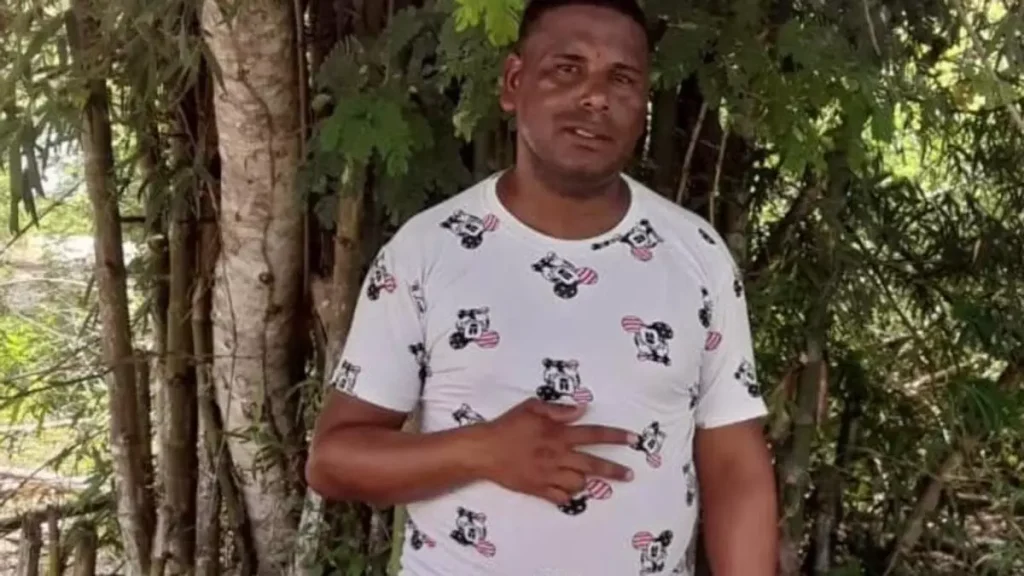
Leonel Tristá García was sentenced to 8 years in prison for the protests of July 2021 / Facebook

14ymedio bigger14ymedio, Havana, June 29, 2026 / Political prisoner from the 11J protests Leonel Tristá García reached his 13th day on hunger strike this Monday while in custody at the Third PNR Station in Santa Clara. The fact was reported by the legal advice center Cubalex, which denounced that the 40-year-old man is at “risk to his life.”

Tristá García, who was sentenced to 8 years in prison for taking part in the mass mobilizations of July 2021, was released from prison in January 2025 thanks to the agreement announced by the Cuban regime with the Vatican. However, on June 16 he was detained at his home in Santa Clara under an order revoking his extrapenal license.

At his home in the El Condado neighborhood, police officers arrived with an alleged search warrant. According to ADN Cuba, Tristá García refused to allow his home to be searched “because he realized that the documentation was not complete.” The police left, but returned in the afternoon to arrest him on alleged charges of breach of public order and contempt.

The hunger strike began that same day. A week later, he suffered two blackouts after stopping the intake of water. Following this, “he was confined to a sealed cell with no adequate medical attention,” Cubalex noted.

A week later, he suffered two blackouts after stopping the intake of water. Following this, “he was confined to a sealed cell with no adequate medical attention.”

Three days later, last Saturday, “he lost consciousness due to his advanced state of weakness.” He was transferred as an emergency to the Arnaldo Milián Castro Provincial Hospital to be hydrated, “but the political Police ordered his immediate return to the sealed cell,” the NGO denounced.

“As he is under state custody, the Cuban State bears a heightened duty of protection over his life, health, and physical integrity,” it stressed. It further indicated that his detention “under aggravated conditions and incommunicado constitutes evidence of cruel, inhuman, or degrading continue reading

treatment.”

In its statement, the organization demanded that the authorities “guarantee specialized and continuous medical attention, respect his dignity without resorting to threats or isolation, and allow immediate access to his family and legal defense.”

The hunger strike has become the most extreme form of protest that various political prisoners on the Island have turned to. In May alone, at least 14 inmates carried out hunger strikes in Cuba, according to a Cubalex count.

In May alone, at least 14 inmates carried out hunger strikes in Cuba, according to a Cubalex count.

One such case was that of political prisoner Daniel Alfaro Frías, who began his hunger strike in Guanajay “while being subjected to psychological torture and constant threats.” Another was that of Walfrido Rodríguez Piloto, “whose strike lasted for weeks; he was transferred to the prisoners’ ward of the National Hospital of Boyeros, where he was handcuffed to his bed until State Security pressured him into ending the protest,” the center sets out in its most recent monthly human rights report on Cuba.

“These actions are not isolated incidents, but rather the desperate response of political prisoners to mistreatment, isolation, and the absence of legal guarantees within the Cuban penal system,” the report stated.

In an analysis published in 2024, the NGO noted that hunger strikes “are an extreme form of protest against the lack of guarantees, abuses, and the absence of effective channels for complaint” in the face of “systematic human rights violations and the direct responsibility of prison authorities.”

It also noted that hunger strikes are a form of protest regulated under various international legal instruments. “Although not specifically mentioned in all cases, the right to protest and freedom of expression are internationally recognized fundamental rights, and the hunger strike may be considered a manifestation of those rights,” it stated.

Translated by GH

______________________

COLLABORATE WITH OUR WORK: The 14ymedio team is committed to practicing serious journalism that reflects Cuba’s reality in all its depth. Thank you for joining us on this long journey. We invite you to continue supporting us by becoming a member of 14ymedio now. Together we can continue transforming journalism in Cuba.
Spanish Hotel Companies Have Lost Between 80 and 100 Million Euros in Cuba After Years of Bonanza

A tourism professional estimates that Meliá, Iberostar and others will prove “indispensable for managing the sectoral transition”

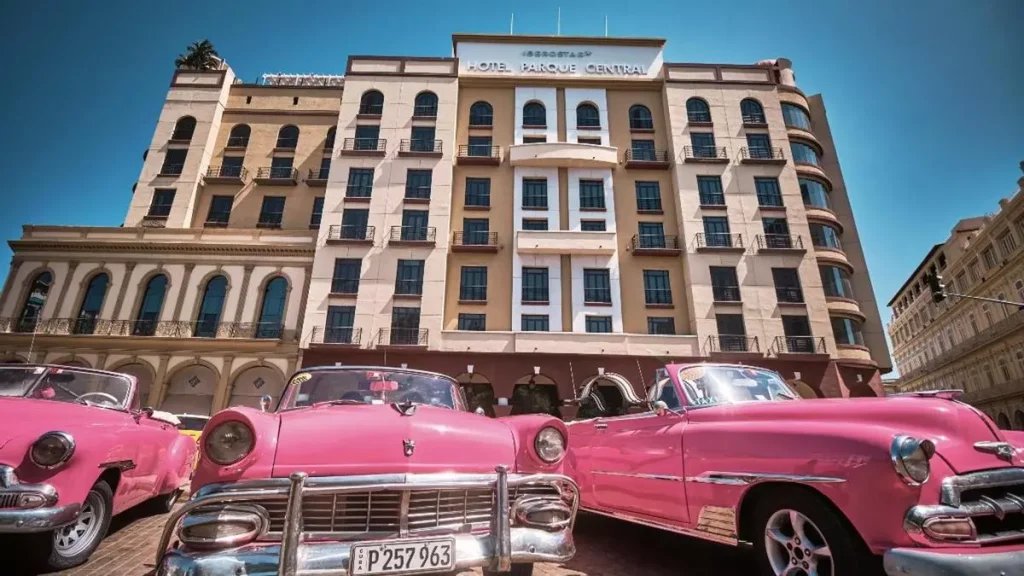
Facade of the Iberostar Selection Parque Central, Havana.

14ymedio bigger14ymedio, Madrid, June 29, 2026 / At 81 years of age, Ignacio Vasallo is one of the foremost authorities on tourism in Spain. Not only does he have an in-depth knowledge of the private sector – he has served on the boards of countless companies in the industry – he has also held numerous public positions, founded Turespaña in the late 1980s, and was the first director of the World Tourism Organization. For this reason, the analysis of the future of the tourism sector in Cuba that El Economista publishes today cannot be overlooked.

The expert does not confine himself to offering his views on what has happened and what lies ahead for the island – he also provides figures that were not previously known. The most significant is his estimate that Spanish hotel companies have lost between 80 and 100 million euros in Cuba as a result of the impossibility of repatriating hard currency, a measure imposed last year that generated enormous frustration among foreign companies. The funds, trapped in the banking system, are considered lost “in the balance sheets of the Spanish parent companies. For them, Cuba has ceased to be a strategic priority,” Vasallo concludes, noting that interest has shifted to the Riviera Maya, Cancun and Punta Cana, currently the undisputed leaders in the Caribbean.

However, the Spanish hotel companies are not going to leave Cuba either, he says categorically, as better times will come. “They have accumulated a body of operational knowledge and institutional relationships that North American corporations – which will want to establish themselves there – simply do not have. When the system changes, no authority or investor will do without the Spanish hotel chains, which will prove indispensable for managing the sectoral transition, replicating the process already seen following the fall of the Soviet bloc in Eastern European continue reading

countries,” he adds.

“They have accumulated a body of operational knowledge and institutional relationships that North American corporations – which will want to establish themselves there – simply do not have”

Vasallo was there at the beginning. His article opens with that memory: in 1990 he was present for the opening of Meliá’s first hotel in Cuba, the Sol Palmeras. He had traveled to Cuba two years earlier and there he enlightened a Fidel Castro who was resistant to tourism, explaining what the sector had meant for Spain’s economic development in the 1960s and how it had helped open the country up. “Castro was reluctant, but the economic situation was forcing him to take measures he would not have taken under normal circumstances,” he recalls.

He also had dealings with Gabriel Escarrer Julia – predecessor and father of the current CEO of Meliá – who had reached an agreement with Cubanacán to bring the Sol chain to the island. The businessman calculated that he would recoup his investment in just two years and believed the risk was offset by extremely high returns. Vasallo gave him a favorable opinion, and the relationship began, paving the way for other Spanish companies. “The cumulative direct investment by these corporations stood at around 160 million euros, a third of the total invested by Spanish companies. During the first two decades, the return on these investments was extraordinary. The profits earned and repatriated far exceeded the initial capital outlay,” he explains.

The expert explains how that partnership worked – the arrangement under which around a hundred hotels were built: the Spanish side held a 49% stake in the joint venture, which became the owner of what was built for an agreed period of between 25 and 50 years. Once that period expired, ownership reverted to the State. “Under this model, the companies contributed the capital for investment in fixed assets, renovations and furnishings, taking on the operational management of the business,” while the land remained in the hands of the Cuban State.

Then came the military conglomerate GAESA which, he explains, had by that point accumulated “sufficient capital to begin building new hotels on its own account.” Gaviota was then created, with which the companies agreed a remuneration structure based on two components: “a fixed percentage for hotel management and a variable incentive linked to profits.”

Gaviota was then created, with which the companies agreed a remuneration structure based on two components: “a fixed percentage for hotel management and a variable incentive linked to profits”

The management-only model and the original joint-venture model coexisted and flourished for years, until the onset of Cuba’s economic difficulties, which were aggravated by the pandemic. After that came the current major crisis, with the accumulation of sanctions – some specifically targeting GAESA – that have forced the current withdrawal of the foreign hotel chains associated with Gaviota. In the specific case of Meliá, following the abandonment of the management of 14 hotels, it is left with just 19. Iberostar, also Spanish, relinquished 6 of 12, and other companies have reduced or eliminated their presence on the island entirely.

Vasallo is unequivocal. The overall balance has been positive, and now all that remains is to wait and see what happens. “The Cuban market has completed its cycle. Today it represents a latent asset managed under damage-limitation criteria, pending the inevitable bright tourism future of Cuba – which appears closer following the reforms set in motion by the regime, including the dismantling of GAESA and its replacement by public limited companies, planned devaluations of the peso, and the authorization of private banks, all of which amounts to a complete overhaul of the economic system.”

Translated by GH

______________________

COLLABORATE WITH OUR WORK: The 14ymedio team is committed to practicing serious journalism that reflects Cuba’s reality in all its depth. Thank you for joining us on this long journey. We invite you to continue supporting us by becoming a member of 14ymedio now. Together we can continue transforming journalism in Cuba.
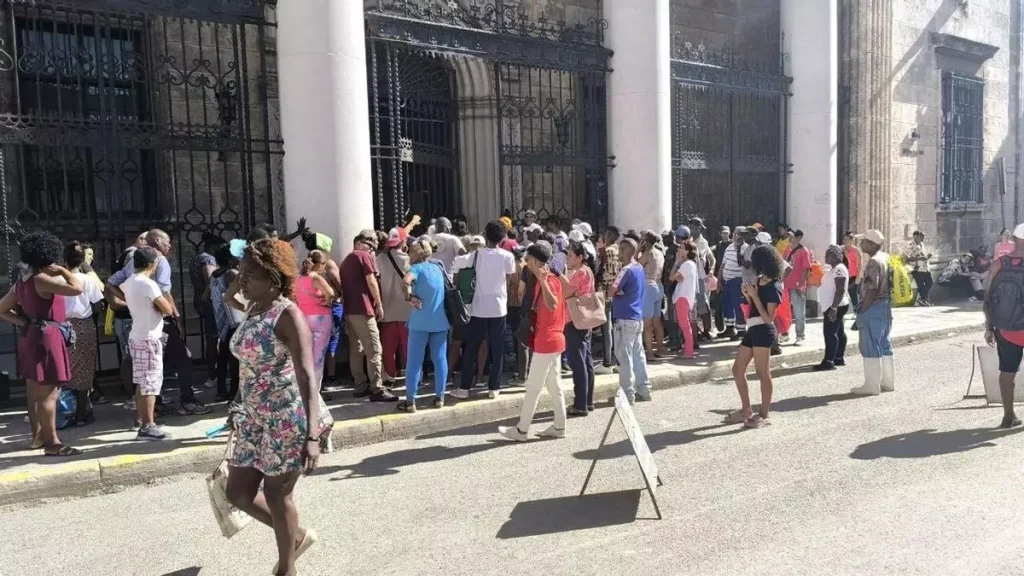
Drones Used in Cuba’s Granma Province to Plant Rice, Although the Harvest Is Minimal

Drying the grain is done outdoors due to “the current challenging energy conditions”

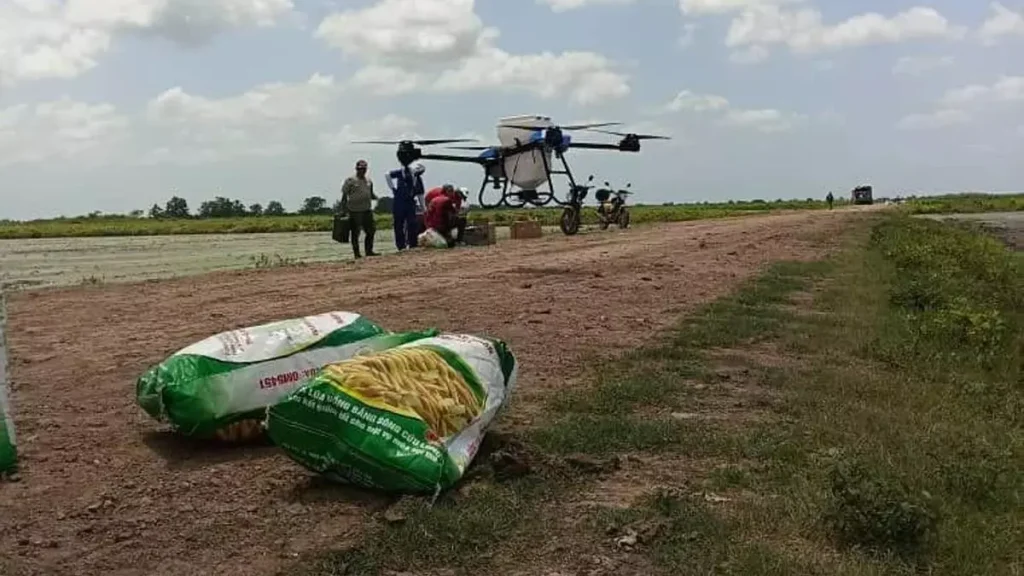
The Fernando Echenique Agroindustrial Company aims to plant 240 hectares. / Facebook

14ymedio bigger14ymedio, Havana, June 29, 2026 — The province of Granma, once among Cuba’s leading rice producers, has launched a rice-planting program using drones in an attempt to improve its diminished production. The project is being carried out by the Fernando Echenique Agroindustrial Company, which aims to plant 240 hectares of the grain in areas belonging to the binational TB Agri Connecting Vietnam-Cuba project, in the Granma municipality of Yara.

At the beginning of May, according to a report in the state press, the project’s first planting was carried out, covering 160 hectares as part of the spring campaign, which began in March and ends in August. The process was even attended by Lehuy Thang, deputy director of the TB Agri project.

In a post, the company stated that it will use drones to optimize the cultivation process and achieve more efficient results. “The combination of innovation and experience promises to transform our agricultural practices and maximize productivity in the fields,” it said.

State media emphasize that collaboration with the Vietnamese company makes possible “the introduction of high-quality rice varieties, technological packages, equipment, and the modernization of industrial grain-processing infrastructure, particularly drying and milling facilities.”

The company itself has revealed on social media that it must perform juggling acts in the face of “the current challenging energy conditions”

Nevertheless, the company itself has revealed on social media that it must perform juggling acts in the face of “the current challenging energy conditions.” One of the crucial processes in harvesting seeds and grains is drying. Although methods such as hot-air drying or intermittent drying are used, both require a facility powered by electricity. continue reading

Fernando Echenique stated in a post that it is carrying out natural rice drying, “which not only allows available resources to be optimized but also contributes to the sustainability of the final product.”

The publication is accompanied by three images showing grains spread out on plastic sheets in the open air. The message concludes by assuring that the initiative reflects the company’s commitment “to adaptation and resilience in difficult times.”

Although the use of drones is innovative, the number of hectares involved pales in comparison to Granma’s historical contribution to national production. Just last year, there were plans to plant 41,000 hectares of rice out of the country’s total 200,000 hectares, although producers were not optimistic.

One reason for their pessimism about reaching that goal was the absence of a package that included imported fertilizers, herbicides, and pesticides, all essential for certain crops, including rice.

The yield from these lands barely reaches two to 2.5 tons per hectare, compared to the five tons achieved in the past.

Last December, Odisnel Traba Ferrales, agricultural director of the Fernando Echenique Agroindustrial Company, stated that they had gone “practically four years without having that technological package.”

As a result, lands that were once highly productive no longer deliver the same results. Yields now barely reach two to 2.5 tons per hectare, compared to the five tons achieved in the past. The figure looks even more modest when compared with the success the Vietnamese are achieving in Pinar del Río, where the company Agri VMA, which holds land under usufruct, exceeds 7.2 tons per hectare.

If one looks at the data from Vietnam’s state-level cooperation, yields are even higher, according to recent figures published by the Cuban Institute for Seed Plant Research, which recorded up to 9.14 tons per hectare in the winter campaign (7 tons in spring) for one of the varieties being cultivated, Viva76.

To the rice harvest process must also be added transportation, which is likewise affected by fuel shortages

Although the state media report does not mention it, transportation is another necessary part of the rice harvest process, and it too is affected by the fuel shortage.

The difficulties in producing the grain have led the regime to propose taking advantage of the shortage to stop eating potatoes and rice. Roberto Caballero, a member of the National Executive Committee of Agricultural and Forestry Technicians, and José Carlos Cordobés, general director of Industrial Policy at the Ministry of Food Industry, argued that achieving food sovereignty would be easier by changing habits that conflict with the reality of Cuban soils and eliminating some products from the regular diet.

“We are not Asians; that is not a Cuban habit,” Caballero emphasized last December on the program Cuadrando la Caja, before suggesting that, although it has become an established tradition, that too could change. “With the shortages that exist, anything you put in the local market will sell,” he assured.

Translated by Regina Anavy

______________________

COLLABORATE WITH OUR WORK: The 14ymedio team is committed to practicing serious journalism that reflects Cuba’s reality in all its depth. Thank you for joining us on this long journey. We invite you to continue supporting us by becoming a member of 14ymedio now. Together we can continue transforming journalism in Cuba.
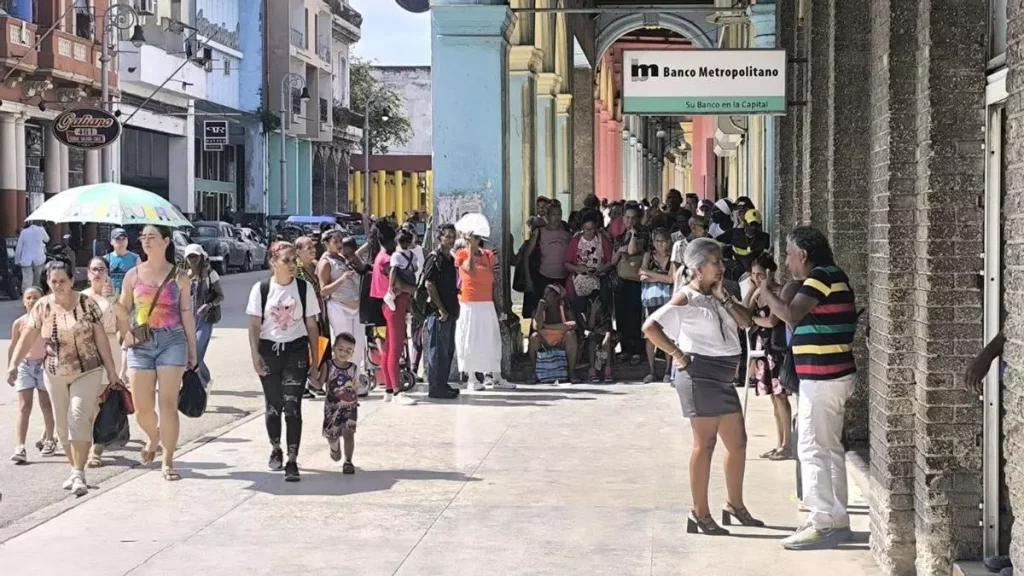
Inspectors and Police ‘Raid’ Cuba’s Private Businesses to Seize Their Cash in National Currency

Cuba’s banks have run out of money, and authorities are carrying out these confiscations supposedly to pay pensions

Long line to withdraw cash at the Banco Metropolitano branch located at the corner of O’Reilly and Compostela in Havana / 14ymedio

14ymedio bigger14ymedio, Havana, June 28, 2026 — “Some inspectors arrived and demanded that all the cash in the register be handed over,” a witness to one of these operations told 14ymedio. Similar incidents have reportedly occurred in several provinces across the country. He witnessed it in Holguín, but other sources describe comparable situations involving private small and medium-sized enterprises (MSMEs) in Matanzas and Camagüey. “In exchange, they make a bank transfer to you, but when you go to withdraw the money from the bank, you can’t get any cash,” he said of one of the operations. “They give you a transfer, but when you try to withdraw the money, there’s no cash available.”

Authorities, who publicly accuse mipymes of hoarding banknotes, have begun forcibly removing the cash accumulated in private business registers and replacing it with bank transfers. Witnesses describe an almost identical procedure, carried out by inspectors, bank officials, and police officers, leaving businesses without money to make change, pay suppliers, or restock merchandise.

Another complaint circulated on Facebook this Friday describes a similar situation in Matanzas and attributes the measure to the inability to pay pensions. “Banks in Matanzas have run out of cash and have not been able to pay retirees,” continue reading

the post begins. It was later shared across numerous profiles and groups.

The text claims that the Provincial Government, the Communist Party, executives from Banco de Crédito y Comercio and Banco Popular de Ahorro, together with police officers and inspectors, are “invading private businesses to seize all the cash on hand at that moment.”

Businesses are left “without cash to operate, not even money to give change”

“Without prior notice to the businesses, they close them down, enter them, count all the cash in the registers, and force them to hand it over,” the complaint states. Afterwards, it adds, officials make “a bank transfer to the business’s fiscal account for the same amount of cash that was taken.”

The post maintains that businesses are left “without cash to operate, not even money to give change,” and attributes the decision to the First Secretary of the Communist Party in Matanzas and the provincial governor. It also claims that some owners who resisted were threatened with fines, the closure of their businesses, or even detention.

The account from Matanzas matches a complaint made by Katia Castello Morgade, a self-employed entrepreneur in Camagüey, who said that Finance inspectors, accompanied by police officers and bank employees, were removing money from private establishments after conducting cash audits.

“During the inspection they count the cash and immediately deposit or transfer it into the banking system, leaving businesses without liquidity,” summarizes one of the videos posted on Instagram.

The entrepreneur clarified that officials do not directly appropriate the money but instead force businesses to deposit it into the bank. The result, however, is that the business loses the banknotes it needs to operate and receives in return an electronic balance that is difficult to use in an economy where many suppliers accept only cash. Added to this are the difficulties of making electronic payments, since power outages prevent such operations for long periods.

The State requires businesses to deposit cash, but the banks do not guarantee that it can be withdrawn later

For years, Cuban authorities have been trying to force the banking of commercial operations. Resolution 111 of 2023 by the Central Bank established limits on cash collections and payments, as well as rules governing the deposit, withdrawal, and possession of cash. The regulation requires economic actors to deposit their daily income but does not explicitly state that inspectors and police officers may remove all the money found during an inspection without leaving even a cash reserve.

The problem has worsened because banking works only in one direction. The State requires businesses to deposit banknotes, but banks do not guarantee that the money can later be withdrawn. State media itself has reported complaints for years about the lack of cash in ATMs and bank branches, restrictions on withdrawing funds—including wages—and the refusal of many establishments to accept transfers.

The reported operations appear to respond to a more immediate need than fiscal discipline. Faced with a shortage of banknotes to pay pensions, salaries, and benefits, the Government appears to be turning to the cash registers of mipymes and self-employed workers as a source of immediate liquidity.

So far, neither the Central Bank, the provincial governments mentioned, nor the Ministry of Finance and Prices has publicly reported on these operations. Nor have they explained what regulation authorizes the temporary closure of a business, the counting of its cash, and the mandatory replacement of banknotes with a transfer that, in practice, cannot be converted back into cash.

Translated by Regina Anavy

______________________

COLLABORATE WITH OUR WORK: The 14ymedio team is committed to practicing serious journalism that reflects Cuba’s reality in all its depth. Thank you for joining us on this long journey. We invite you to continue supporting us by becoming a member of 14ymedio now. Together we can continue transforming journalism in Cuba.
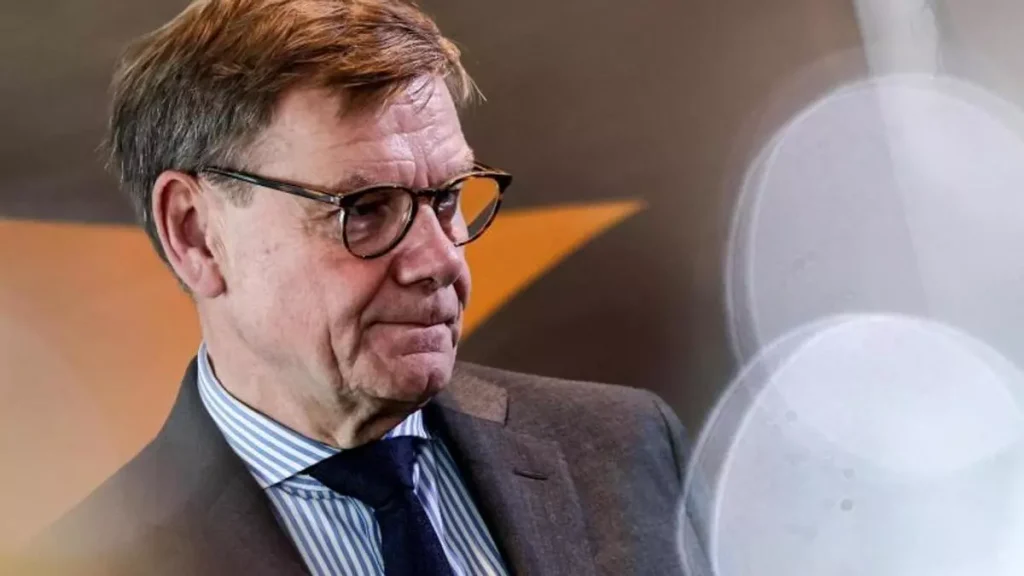
The Cuban Regime Cannot Tolerate Criticism of Its Incompetence

Bruno Rodríguez demands that the German Foreign Minister and the OAS attribute the crisis on the island to the US blockade.

Image of German Foreign Minister Johann Wadephul. / EFE/EPA/Flip Singer

14ymedio bigger14ymedio/EFE, Havana, June 25, 2026 / The Cuban government responded Thursday to German Foreign Minister Johann Wadephul after the Christian Democratic politician attributed the island’s crisis to mismanagement by its authorities. Cuban Foreign Minister Bruno Rodríguez accused Wadephul of being unaware of US sanctions and invited him to learn more about Washington’s policy toward Havana.

“How can we not recognize the imposition of an energy blockade in serious violation of International Law, which constitutes collective punishment, causes humanitarian damage and impedes free trade and freedom of navigation,” Rodríguez wrote on his social media.

The regime’s reaction came after Wadephul stated last Sunday, during a German government open house, that he did not see the blockade described by one of the citizens participating in the meeting. “I don’t see the kind of blockade you describe,” responded the minister, who went further by stating that a “regime of injustice” prevails in Cuba.

For Wadephul, the “decisive prerequisite” for improving the living conditions of the population is that the country be “better governed,” a direct criticism of the responsibility of the Cuban authorities in the deep economic and social crisis that the Island is going through. continue reading

“I don’t see that kind of blockade you’re describing.”

Rodríguez avoided responding to that part of the statements and focused his rebuttal on his favorite narrative: US sanctions. The foreign minister recommended that the German minister familiarize himself with the measures applied to companies and citizens of his country under the Helms-Burton Act. Passed in the United States in 1996, this legislation allows lawsuits to be filed against foreign companies that benefit from properties confiscated by the Cuban government after 1959.

The response to Wadephul comes on top of another protest issued a day earlier by Rodríguez against the Organization of American States. The foreign minister was reacting to a statement from the organization’s General Secretariat, which had expressed concern about the democracy situation in Cuba.

“The OAS General Secretariat claims to be concerned about the situation facing Cuba. However, it is scandalous that it makes not the slightest mention of the escalating US aggression against our country,” Rodríguez stated.

According to the minister, the organization should focus on the impact of US sanctions, which he described as a “ruthless and unjustified” policy and which he blamed for the deterioration of living conditions for Cubans.

Under pressure from the US, Cuban authorities approved a package of reforms aimed at easing some of the obstacles that Cubans often describe as the “internal blockade.”

Havana attributes almost all of the country’s economic problems to the US embargo and, more recently, to restrictions on oil supplies. However, the government avoids mentioning the inefficiency of state-owned enterprises, the lack of structural reforms, the collapse of national production, and the economic decisions made by the regime itself.

Cuba has been experiencing a severe energy crisis for years, with blackouts that in many provinces can last for more than 20 hours. The situation has worsened due to fuel shortages and the deterioration of thermoelectric power plants, affected by decades of explotation, constant breakdowns, and lack of maintenance.

Since the beginning of this year, the Trump administration has intensified economic pressure on Havana, particularly targeting oil supplies and businesses linked to Cuban state entities. Under this pressure, authorities approved a package of reforms aimed at easing some of the restrictions that Cubans often describe as the “internal blockade.”

________________

COLLABORATE WITH OUR WORK: The 14ymedio team is committed to practicing serious journalism that reflects Cuba’s reality in all its depth. Thank you for joining us on this long journey. We invite you to continue supporting us by becoming a member of 14ymedio now. Together we can continue transforming journalism in Cuba.
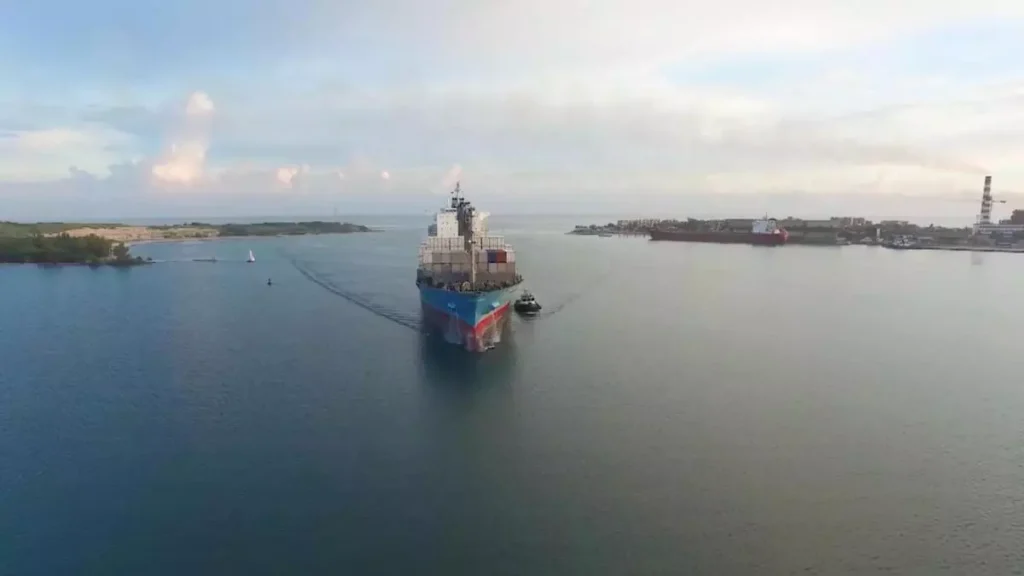
Gaesa Transfers Its Assets in Mariel to Another State Company to Evade U.S. Sanctions

The military conglomerate has also divested itself of the joint venture that managed the Miramar Business Center in Havana.

The reorganization seeks to protect the commercial operations of the Port of Mariel from the sanctions imposed by the United States. / Canal Caribe

14ymedio bigger14ymedio, Madrid, June 28, 2026 — Terminal de Contenedores Mariel S.A. (TCM), owned by the military conglomerate Gaesa and operator of Cuba’s main commercial port, has transferred its assets to Coral Marítima S.A., a state company attached to the Maritime-Port Business Group (Gemar), which falls under the Ministry of Transportation. The move aims to remove a key piece of Cuba’s foreign trade infrastructure from the reach of U.S. sanctions.

The operation was announced through a letter sent on June 25 to the terminal’s clients, a copy of which was obtained by 14ymedio. In the communication, the company states that “Terminal de Contenedores Mariel S.A. sold its assets to the Cuban commercial company Coral Marítima S.A., which established the subsidiary Terminales Portuarias CORAL S.A. to take over the business previously conducted by TC Mariel,” and specifies that the operation is “in the final stages of the corresponding legal procedures.”

The company indicates that the new corporation will assume contractual relationships with clients and that they will be invited to sign new contracts, “ensuring commercial continuity.” It also seeks to reassure customers by stating that “the terminal will continue operating fully throughout this process” and that daily activities will proceed “with complete normality, guaranteeing the execution of the services normally provided.” continue reading

The reorganization is a response to efforts to protect the operations of the Port of Mariel and prevent international companies from being exposed to sanctions

Coral Marítima S.A. develops investments and operations related to maritime transport and port activities. Unlike Terminal de Contenedores Mariel S.A., the company is not part of Gaesa’s corporate network. The reorganization is specifically intended to protect the commercial operations of the Port of Mariel and prevent international companies operating there from being exposed to U.S. sanctions.

Gaesa also recently divested itself of the joint venture that managed the Miramar Business Center in Havana. British investment fund CEIBA Investments Limited announced on June 5 that it had acquired 100% control of Inmobiliaria Monte Barreto S.A., which operates the Miramar Trade Center. Until then, the real estate company had been jointly owned with Cimex S.A., Gaesa’s largest commercial and financial conglomerate. Negotiations for the transaction began in 2017 and were finalized in April 2026.

The decree signed by Trump on May 1 expanded U.S. sanctions on trade with Cuba to include “any foreign person” operating in the sectors of “energy, defense and related materials, metals and mining, financial services, or the security of the Cuban economy, or any other sector of the Cuban economy.”

The consequences of the sanctions began to be felt just weeks after they took effect. Two of the world’s largest shipping companies, the French CMA CGM and Germany’s Hapag-Lloyd, suspended their services to Cuba in May. The decision paralyzed a significant portion of international cargo traffic and forced many operators to review or cancel contracts. The latest transfer appears intended to facilitate the resumption of operations by removing the terminal from Gaesa’s corporate structure.

“The situation in Cuba continues to deteriorate while the Island’s corrupt, brutal, and anti-American communist regime continues to prioritize its absolute control over freedom”

The U.S. sanctions package against the economic pillars of the Cuban regime has also prompted the withdrawal of foreign companies such as the Canadian mining firm Sherritt International and the Australian company Antilles Gold. The tourism sector also suffered a major blow with the departure of foreign hotel chains associated with Gaviota—the tourism group controlled by Gaesa—including Blue Diamond Resorts, Iberostar, Meliá, and Archipelago International.

The measures also affected Financiera Cimex S.A. (Fincimex), another Gaesa-affiliated entity, with the suspension of Visa and Mastercard operations on the Island. On June 11, the inclusion of the state-owned oil company Cupet on the list of sanctioned entities maintained by the Office of Foreign Assets Control (OFAC) derailed plans by Florida-based Vanguard Energy, which had hoped to complete one of the largest private fuel sales to Cuba in recent years.

On June 23, OFAC added five more Cuban companies belonging to the military conglomerate to its Specially Designated Nationals (SDN) List: Almacenes Universales S.A., Banco Financiero Internacional (BFI), Geominera S.A., Empresa Siderúrgica José Martí (Antillana de Acero), and Rafin S.A.

Secretary of State Marco Rubio then posted on X: “The situation in Cuba is devolving as the island’s corrupt, brutal and anti-American Communist regime continues to prioritize its own total control over the freedom, opportunity and basic wellbeing of the Cuban people.”

Translated by Regina Anavy

______________________

COLLABORATE WITH OUR WORK: The 14ymedio team is committed to practicing serious journalism that reflects Cuba’s reality in all its depth. Thank you for joining us on this long journey. We invite you to continue supporting us by becoming a member of 14ymedio now. Together we can continue transforming journalism in Cuba.
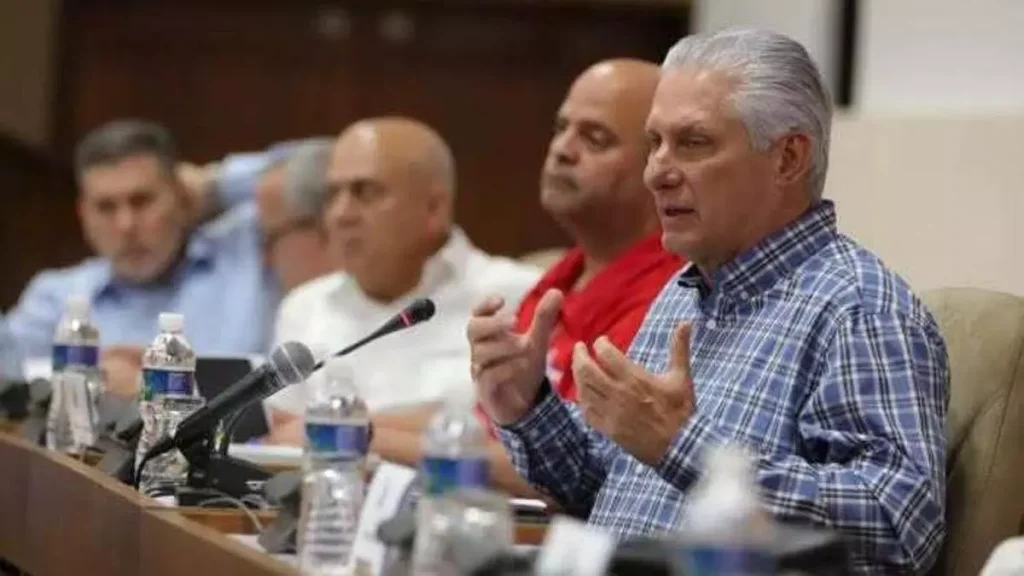
Confusion in Cuba Over the Yo-Yo Effect in the Dollar Exchange Rate

The dollar went on a wild run in June, climbing from 600 to 700 pesos before falling back to 660 this Friday.

Long lines at the Banco Metropolitano branch on Galiano Street in Havana

14ymedio bigger14ymedio, Madrid, June 26, 2026 / The informal foreign currency market is going through turbulent times. Just three days ago, the dollar hit 700 Cuban pesos [CUP], crossing a new psychological threshold and triggering an immediate rise in prices of goods denominated in national currency. The celebrations among currency traders were short-lived: within hours, a sharp drop was recorded, followed by several more, bringing the exchange rate down to 660 CUP this Friday.

It is not the first time the currency market has acted like a yo-yo in response to the extreme volatility of supply and demand in an economy devastated by crisis and producing almost nothing. The energy crisis and the absence of any prospect of improvement have contributed to accelerating the fall of the national currency while simultaneously generating sharp recovery movements driven by cautious behavior on the part of currency buyers.

“A few days ago, when it was rising fast, I had a hard time making exchanges, because the MSMEs [Micro, Small, Medium Enterprises] had put buying on hold,” a Havana-based seller told 14ymedio. “Along with the dollar’s rise in recent days, food and other products also went up. Now I’m seeing they say it’s come down – I hope essential goods come down a bit too,” he added, trying to find a silver lining in his trade.

“The bad thing about this is that now the dollar falls and prices stay where they were when it was at 700.”

Most people are skeptical. “The bad thing about this is that now the dollar falls and prices stay where they were when it was at 700,” one social media user commented. Speculation is keeping the conversation very much alive. Some argue that the speed of the drop is due to the 176 economic reform measures announced by the Government. Others mock the very idea that the regime’s proposals could have any effect. “Nobody invests their money without guarantees. There can be 15,000 measures for change, but if you don’t change the law where it needs to be changed nobody comes. Nobody is going to put their money somewhere where continue reading

the judge is also a party to the case,” another user replied.

Just 24 days ago, the dollar reached what was then seen as an unthinkable record: 600 CUP. Looking back even further — though not that far — it is easy to confirm the relentless depreciation of the national currency. On May 2, one dollar was exchanging for 535 CUP.

US economist Steve Hanke, who frequently updates informal inflation rates and currency depreciation figures for various countries, placed the Cuban peso three days ago as the third most devalued currency in the world at present, having lost 45% of its value over the past year. Although the ranking is volatile — as recently as June 16, the CUP was in fourth place — a persistent presence in the top five has been maintained for some time. On that same day, the expert noted that inflation reached an annualized rate of 84.5%, the third highest rate of price increases in the world. “Socialism and Uncle Sam’s sanctions have proved to be a lethal cocktail,” the expert stated.

“Socialism and Uncle Sam’s sanctions have proved to be a lethal cocktail.”

The official market, meanwhile, continues to operate in its parallel world, today buying the dollar at 585 — a price at which few, if any, are willing to part with a currency that has become far too precious.

In December 2025, the Government launched a floating rate in an attempt to compete with the informal market rate, which had established itself through sheer economic reality among the population. After years of open war with El Toque for publishing an exchange rate far higher than the State’s, the official buying and selling price was set at 410 pesos to the dollar — in addition to the other existing rates of 24 pesos, for state enterprises, and 120, for entities capable of generating foreign currency. Beyond being an attempt to recapture the lost currency market, the regime was trying to contain inflation that continues to climb, albeit more slowly than in 2023 and 2024 — not because the economy has improved, but due to widespread poverty and the scarcity of goods at affordable prices.

At the time the initial rate was approved, the authorities noted that it was not going to please anyone, and so it proved — the US dollar was trading on the informal market for around 440 pesos, a far closer relationship than the current one. The regime’s efforts to contain monetary instability have proved futile, as economists had already warned. To achieve that, they noted, five factors difficult to bring about on the Island would need to be in place, starting with a better macroeconomic environment that today is much further away than it was just a year and a half ago.

Translated by GH.

______________________

COLLABORATE WITH OUR WORK: The 14ymedio team is committed to practicing serious journalism that reflects Cuba’s reality in all its depth. Thank you for joining us on this long journey. We invite you to continue supporting us by becoming a member of 14ymedio now. Together we can continue transforming journalism in Cuba.
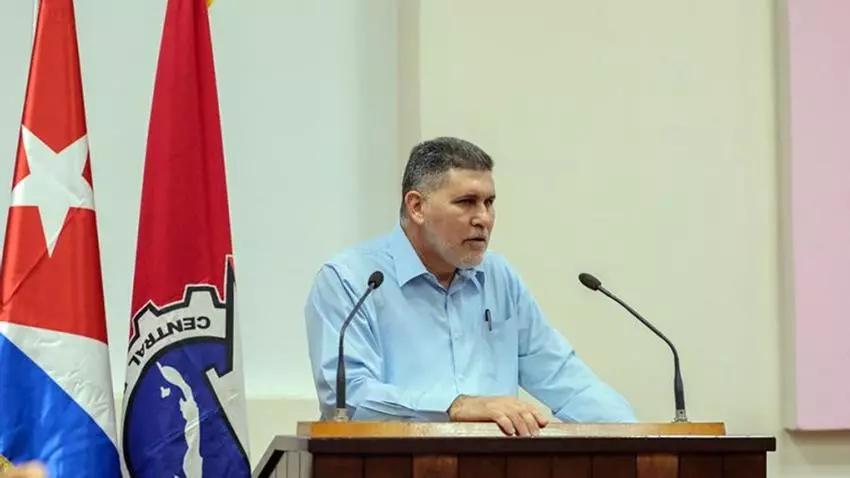
The 176 Reforms Are Not ‘a Return to Capitalism,’ the Cuban Government Tells the Single Trade Union

The Cuban Workers’ Federation wants to bring private-sector workers into its ranks and is studying the draft of the new Labor Code, which the minister responsible described as “revolutionary, novel, and up to date”

The Government wants private actors to invest, generate wealth, and take on risks, but does not appear willing to legally limit the power that determines who may operate and under what conditions / Facebook / CTC

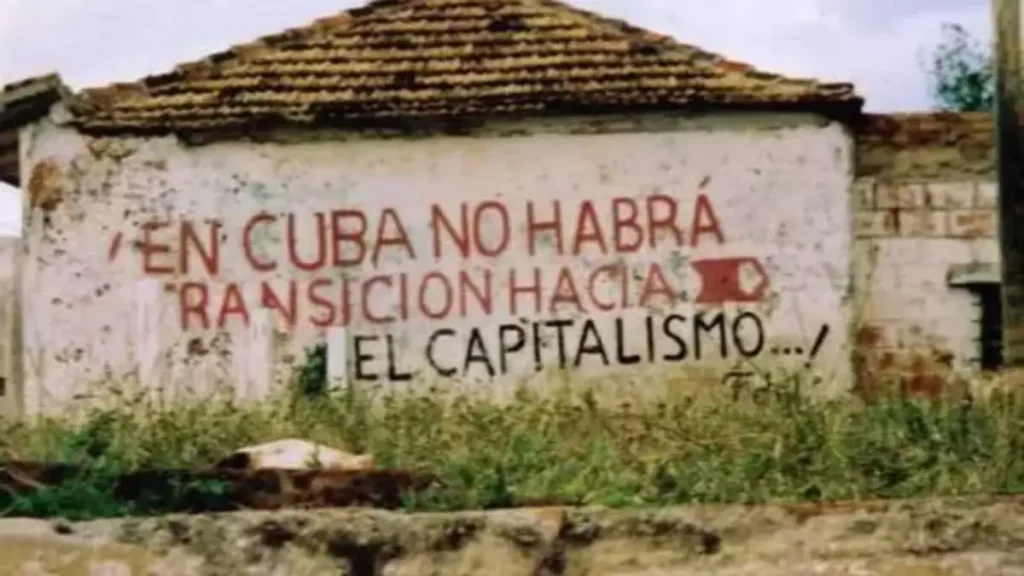
14ymedio bigger14ymedio, Havana, June 27, 2026 / “It is not a neoliberal package, nor is it a return to capitalism.” With that warning, Deputy Prime Minister – and great-grand-nephew of Fidel and Raul Castro – Oscar Perez-Oliva Fraga presented the 176 economic and social reforms to the 22nd Congress of the Cuban Workers’ Federation (CTC) this Friday. The CTC is the island’s only legal trade union and one of the Communist Party’s main transmission belts.

The Government needs to expand the space for private business, attract foreign capital, decentralize decision-making, and allow new financial operations, while insisting that none of this alters the political foundations of the system. According to Perez-Oliva Fraga, the reform does not require amending the Constitution either.

The official, who also heads the Ministry of Foreign Trade and Foreign Investment, stated that “if wealth is not generated, we cannot build the just society we want.” The statement amounts to an acknowledgment that the State no longer has sufficient resources to sustain its social policies, while avoiding any examination of the internal causes of the country’s productive collapse.

Among the standing priorities are control of the fiscal deficit, inflation, price regulation, and banking. The state plan projects a deficit of 74.5 billion pesos for 2026, of which 29.219 billion had already accumulated by the end of May. The Government has also authorized 91 foreign-currency self-financing schemes – a succession of exceptions that benefits companies able to generate hard currency without resolving the broader exchange-rate chaos. continue reading

The state plan projects a deficit of 74.5 billion pesos for 2026, of which 29.219 billion had already accumulated by the end of May. / Cubadebate

Some of the reforms will begin to be implemented within the next 30 days. The timetable includes measures covering economic actors, the Central State Administration, the energy sector, agriculture, prices, wages, trade, catering, services, and the partial dollarization of the economy.

The program also envisages expanding private-sector participation in tourism, foreign trade, and the real estate sector, as well as facilitating foreign investment by Cubans living outside the island. Cooperatives will be permitted to import and sell fuel for their operations, seek external financing, and open bank accounts abroad.

The fine print will depend, however, on numerous regulations still pending. The Government has created a legal working group headed by Esteban Lazo, President of the National Assembly, and a separate “political and communications support” group led by the Party. While the former will be tasked with accelerating the drafting of implementing provisions, the latter will manage the public explanation of measures that may prove unpopular.

Perez-Oliva summed up the philosophy of the process as “unified direction with decentralization of responsibilities.” Havana will retain political command and strategic decision-making, while businesses, municipalities, and workers will be required to generate income and be held accountable for results.

The union, which represents 2,069,285 members, also aims to extend its presence into private-sector companies.

“The implementation of these reforms will not achieve the results we aspire to if our workers are not actively involved,” President Miguel Diaz-Canel told the delegates. The CTC will be expected to transform the government’s program into a political movement, explain it in workplaces, and accompany processes of “labor reorientation” – a term that may encompass layoffs, reassignments, workforce reductions, and the closure of unproductive entities.

The union, which represents 2,069,285 members, also aims to extend its presence into private-sector companies. The unionization of their employees was among the issues debated, alongside wages, productivity, support for retirees, and protection of workers’ rights. No explanation has been offered as to what capacity the CTC would have to stand up to a state or private employer, but it seems clear that workers will not be able to organize outside the Party-controlled federation.

The energy crisis even left its mark on the organization of the congress itself. Of the 759 delegates, 561 participated via videoconference and only 198 gathered in person at the Havana Convention Center. Nearly three in four union members were unable to attend in person the gathering convened to debate the country’s economic recovery.

Delegates also reviewed the draft new Labor Code, which will be submitted to the National Assembly in July. The Minister of Labor and Social Security, Jesus Otamendiz Campos, described the proposal as “revolutionary, novel, and suited to the present day.”

Monreal noted that the verb “to permit” appears 29 times in the document.

Among its new provisions are the exceptional admission to employment of adolescents aged 15 to 18, multiple job-holding, so-called “combined work,” and the possibility of setting workdays of less than eight hours with proportional pay. The authorities did not specify what types of work minors would be permitted to carry out, nor what safeguards would prevent poverty and family breakdown from pushing young people prematurely into the labor market.

Cuban economist Pedro Monreal questioned whether the list can be regarded as a coherent reform at all. The 176 measures are a “monster,” or “perhaps more of a misshapen hybrid,” he wrote on X. In his view, the Government is attempting to incorporate elements of a market economy without recognizing private property as a right protected against state power.

Monreal noted that the verb “to permit” appears 29 times in the document. “‘To permit’ is a permissive stance of power,” he observed, because it preserves the notion that private activity is a concession that the authorities can modify or withdraw.

“Nowhere in the 176 measures is it possible to identify any substantive recognition of the right to private property,” he added. Nor do any clear guarantees appear regarding commercial arbitration, claims, compensation, or dispute resolution.

The Government wants private actors to invest, generate wealth, and take on risks, but does not appear willing to legally limit the power that determines who may operate and under what conditions. The CTC will now be charged with bringing those entrepreneurs and workers into its ranks, while ensuring that the economic opening is not mistaken for a return to capitalism.

Translated by GH.

______________________

COLLABORATE WITH OUR WORK: The 14ymedio team is committed to practicing serious journalism that reflects Cuba’s reality in all its depth. Thank you for joining us on this long journey. We invite you to continue supporting us by becoming a member of 14ymedio now. Together we can continue transforming journalism in Cuba.
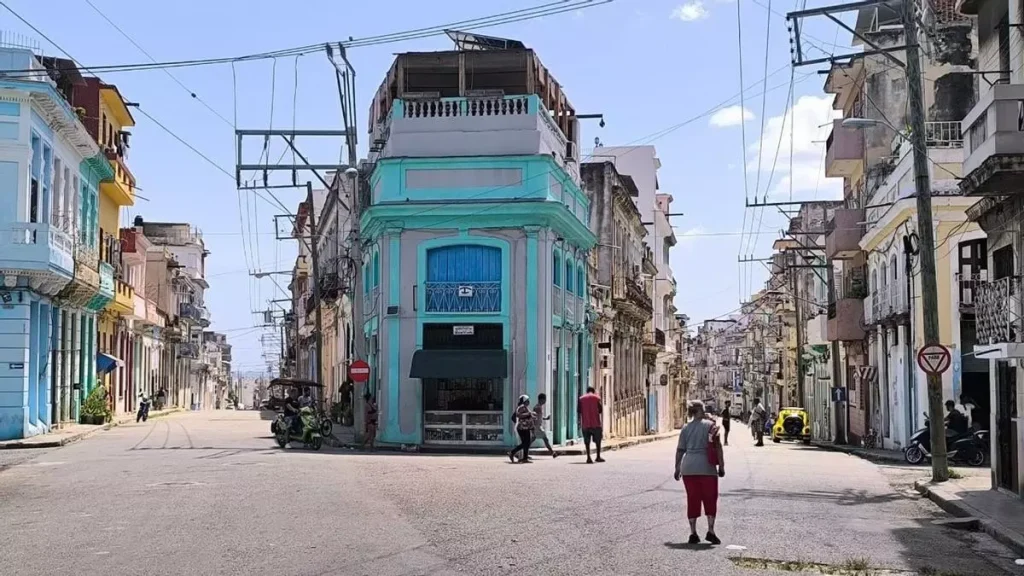
The Castroist “Reforms”: The Potemkin Façade

A free society does not emerge from a totalitarian system simply because private companies are allowed to exist.

The Cuban tragedy lies in the fact that prosperity has been subordinated to a system that denies freedom and accountability. / 14ymedio

14ymedio bigger14ymedio, Julio Shiling, Miami, June 27, 2026 / The Cuban dictatorship’s announcement of 176 economic and social “transformation” proposals should not be mistaken for a historic opening or a genuine abandonment of the failed system that has governed the island for more than six decades. Behind the language of modernization, private enterprise, market mechanisms, and economic renewal lies a carefully calculated strategy of political survival. The Castro-Communist leadership is attempting to construct a Potemkin façade: the appearance of change without the substance of transformation.

The regime understands that the economic model it invented in the 1990s is collapsing. Cuba is facing a profound national crisis marked by prolonged blackouts, inflation, shortages, declining production, financial instability, institutional decay, and an increasing wave of public protests and social unrest. Yet rather than acknowledge that these failures are the inevitable consequences of totalitarian rule and centralized control, Havana has chosen a different narrative: Cuba’s problem, it claims, is primarily economic.

This is the first and most immediate purpose of the announced reforms. The communist government seeks to persuade the United States and the international community that the Cuban crisis is the result of external pressure rather than internal political failure. The regime seeks to shift the debate away from dictatorship, repression, and institutional destruction and toward sanctions, the Helms-Burton Act, and Executive Order 14404. In doing so, it hopes to transform a political legitimacy crisis into a technical economic dispute.

The goal is not to dismantle the power structure but to preserve it under new economic arrangements.

This strategy is not accidental. It is designed to buy time. By presenting itself as a government capable of adaptation and reform, Havana seeks to reduce international pressure, influence continue reading

foreign policymakers, and avoid consequences that could threaten its survival. The objective is not necessarily to resolve Cuba’s crisis but to manage it long enough for political circumstances to become more favorable. The Cuban people, however, do not suffer because there are too few market mechanisms. They suffer because the tyrannical state eliminated independent institutions, destroyed economic freedom, concentrated power, criminalized dissent, and subordinated the entire national economy to political control.

The second purpose of these reforms is to replace the economic structure that emerged after the collapse of the Soviet Union. The system developed during the Special Period was never a transition toward capitalism. It was a survival strategy built upon military control, privileged access, and selective foreign investment. Out of that environment emerged a model of state capitalism in which politically connected actors controlled the most profitable sectors of the economy. The rise of GAESA and similar structures created a military-commercial apparatus that dominated tourism, logistics, finance, commerce, and strategic industries. This system allowed the ruling elite to accumulate wealth while the broader population endured scarcity and dependency. It was not free enterprise. Instead, it was a system of controlled privilege.

The current proposals must therefore be understood in this context. They are not simply an attempt to liberalize the economy. They represent an effort to replace an increasingly exposed and internationally criticized model with a more flexible and acceptable one. The goal is not to dismantle the power structure but to preserve it under new economic arrangements. The language of reform serves as a mechanism of adaptation, allowing the regime to respond to its crisis without surrendering the privileges and networks of control that sustain it. Rather than producing a genuinely free economy, the proposals seek to modernize the instruments through which political power exercises economic influence and expands the kleptocratic apparatus.

Rather than producing a genuinely free economy, the proposals seek to modernize the instruments through which political power exercises economic influence

This explains the third objective of the reforms: to move beyond the GAESA brand while protecting the interests that GAESA represents. The name itself has become associated internationally with the fusion of military authority, political power, and commercial control. It has become a symbol of how the Cuban communist system operates and a mechanism through which foreign companies can be evaluated regarding their relationship with the regime. By introducing joint-stock companies, private entities, new investment structures, and expanded market mechanisms, the government can attempt to obscure these relationships. A new economic architecture allows the same elite networks to continue operating with less visibility and fewer avenues for accountability. It is a barefaced attempt to circumvent the sanctions.

The danger is that the international community, particularly the United States, may confuse economic adaptation with genuine political transformation. History demonstrates that totalitarian systems can introduce markets without embracing liberty. China’s model of “socialism with Chinese characteristics,” Vietnam’s Đổi Mới reforms, and Russia’s post-Soviet oligarchic system all demonstrate that economic liberalization can coexist with political repression. These examples prove that markets alone do not create freedom. A government can permit private businesses while maintaining political monopoly. It can encourage investment while denying citizens basic rights. It can improve material conditions for certain sectors while preserving a system of privilege based on proximity to power.

A free society does not emerge from a totalitarian system simply because private companies are permitted to exist

If the United States accepts a Cuban version of this model as the solution to the island’s crisis, the result would be deeply damaging. It would mean accepting, not the liberation of Cuba, but the permanent adaptation of a Leninist state into a more efficient totalitarian structure. It would represent an accommodation far more consequential than previous Cold War compromises such as the infamous Kennedy-Khrushchev Pact because it would legitimize the continuation of the political system itself.

The final and most important point is that economics cannot be separated from politics and morality. The economic model of a nation must reflect the values of its political and ethical order. A free society does not emerge from a totalitarian system simply because private companies are permitted to exist. Economic freedom requires institutions that protect property, enforce contracts, limit government power, guarantee transparency, and place rulers under the same law as citizens. A dictatorship cannot manufacture liberty through economic regulation. It cannot edify democracy through administrative reform. It cannot erase decades of political repression by changing the structure of business ownership.

The Cuban tragedy is not merely that the island lacks prosperity. It is that prosperity has been subordinated to a system that denies freedom and accountability. The solution is not a redesigned totalitarianism with market features. The solution is a democratic transformation in which economic freedom becomes the consequence of political liberty rather than a substitute for it. The announced reforms should therefore be judged not by the promises they make, but by the system they preserve. They are not the dismantling of Castro-Communism. They are its attempt to survive by changing its appearance.

Editor’s Note: This text was  originally published  on the Patria de Martí website.

______________________

COLLABORATE WITH OUR WORK: The 14ymedio team is committed to practicing serious journalism that reflects Cuba’s reality in all its depth. Thank you for joining us on this long journey. We invite you to continue supporting us by becoming a member of 14ymedio now. Together we can continue transforming journalism in Cuba.
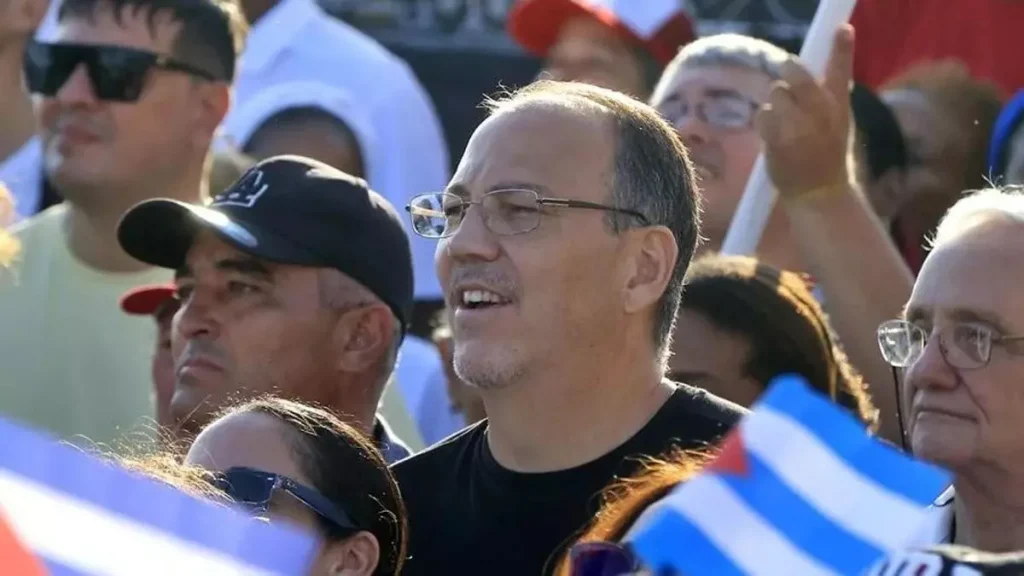
‘If We Lose Total Control of Power, They Will Annihilate Us,’ Is How the Cuban Regime Thinks

A former Obama advisor, Ricardo Zúñiga, believes that frustration with Havana’s intransigence will “probably” lead the US to a military operation.

File photo taken on May 22, 2026, of Alejandro Castro Espín, son of Raúl Castro, in Havana. / EFE / Ernesto Mastrascusa

14ymedio bigger14ymedio, Havana, June 25, 2026 /  For the Cuban leadership, relinquishing power doesn’t mean losing an election or giving up certain privileges, but rather risking everything. This is how Ricardo Zúñiga, one of the main negotiators of the thaw promoted by Barack Obama, interprets the regime’s resistance to undertaking reforms and reaching an agreement with the United States.

The members of the small ruling group see things this way: “Either they stay in power or they’re likely to be annihilated.” They’re not going to risk losing everything, “but they also don’t have any internal solutions to improve the country’s situation,” the former diplomat stated in an interview with journalist Gloria Ordaz, broadcast Wednesday on Telemundo 51.

Zúñiga, who served as Obama’s senior advisor for the Western Hemisphere, paints a grim picture if the economic pressure exerted by the Trump administration does not lead to concessions from Havana. In his view, American frustration could ultimately trigger military action against the island.

The former official presented this possibility as a personal assessment, not as information about a plan already approved by Washington. He also questioned whether an air operation—since he ruled out a ground invasion—could bring about a political transition, especially because the Cuban system does not depend exclusively on a single leader nor does it exhibit the internal continue reading

divisions seen in other regimes.

They are not going to risk losing everything, “but they also don’t have internal solutions to improve the country’s situation.”

The former advisor believes Trump already has sufficient leverage after tightening sanctions against military companies and the Castro family’s associates. “The Trump administration already has the lever. They already have the means to persuade,” he noted. In his opinion, the next step should be to use that power to achieve concrete changes, instead of continuing to punish an already severely damaged economy.

Zúñiga has firsthand knowledge of the Castro regime’s negotiating style. During the secret contacts that led to the announcement of the restoration of diplomatic relations in December 2014, his main interlocutor was Alejandro Castro Espín, son of Raúl Castro and a high-ranking official in the Ministry of the Interior, now sanctioned by Washington.

“He was a very orthodox person, with an education from Fidel Castro’s government and with a worldview that we never shared and that we were never going to share,” he recalled.

Despite these differences, the two delegations were able to make progress because they were acting under the direct instructions of Obama and Raúl Castro and had clearly defined operational objectives. Those talks led to the reopening of embassies and a broad rapprochement process that Havana failed to use to undertake profound economic or political reforms.

“We are talking about a moment where the situation in Cuba is considerably worse than in 2016,” Zúñiga warned. “They already made the wrong decisions after the opening initiated by President Obama. Now they have to improve conditions for the population with measures they previously resisted and which today are probably not even sufficient.”

Zúñiga’s diagnosis, however, questions both the effectiveness of a military intervention and the possibility of repeating the ‘thaw’ negotiation model.

Regarding Raúl Guillermo Rodríguez Castro, alias ” El Cangrejo” (The Crab), Zúñiga asserts that his appearances in spaces linked to the talks should not be interpreted as proof that he is Raúl Castro’s political heir. “He doesn’t rule Cuba,” stated the former advisor, for whom real power is divided among “a consortium” made up of leaders of the Armed Forces—including the military conglomerate GAESA—the Ministry of the Interior, the Communist Party, and “some important bureaucrats in the economic sector.” Therefore, he rules out the possibility of any eventual agreement being negotiated with a single interlocutor.

Referring to Josefina Vidal—Cuba’s Deputy Foreign Minister and one of the main negotiators of the thaw in relations —Zúñiga presents her as a “very capable” official deeply identified with the regime’s official position. He describes her as a firm and experienced negotiator who knows the United States well and can navigate complex conversations effectively, although he emphasizes that “she represents a viewpoint that is no longer appropriate for Cuba.”

Zúñiga’s assessment, however, questions both the effectiveness of a military intervention and the possibility of repeating the negotiation model of the thaw. Unlike then, Washington now faces an exhausted Cuban economy, an entrenched political leadership, and a power structure that perceives any opening as an existential threat. Nor does he believe that the current leadership of the regime is capable of implementing successful reforms.

“I fear there will be frustration in the talks and they may decide to attack (…), but that wouldn’t bring about a change in the situation. I think it’s likely that’s how it will end, although I don’t think that would be the end; it will be much slower, because Cuba is not Venezuela.”

______________________

COLLABORATE WITH OUR WORK: The 14ymedio team is committed to practicing serious journalism that reflects Cuba’s reality in all its depth. Thank you for joining us on this long journey. We invite you to continue supporting us by becoming a member of 14ymedio now. Together we can continue transforming journalism in Cuba.
Seven Arrested, Including Four Minors, After Protests Against Blackouts in Santiago de Cuba

Cubalex warns of escalating repression in the lead-up to the anniversary of  the 11 July 2021 protests, ’11J’

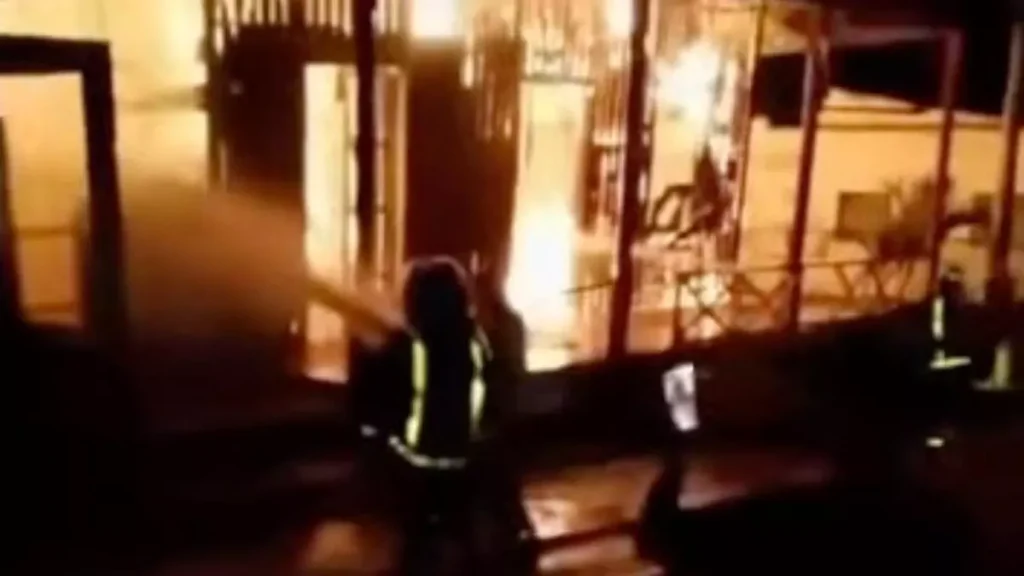
Fire at the Olo Pantoja Museum in Contramaestre, which intensified the police pursuit in Santiago de Cuba. / Social media

14ymedio bigger14ymedio, Madrid, June 26, 2026 / The NGO Cubalex confirmed this Thursday the arrest of at least seven people in the municipality of Contramaestre, four of them minors, after the incidents that occurred on June 21 around the Orlando “Olo” Pantoja Tamayo Memorial House, known as the “Maffo Museum”.

According to a statement released by the organization, while the building burned, neighbors gathered nearby demanded “electricity and freedom,” amid growing discontent over blackouts, food shortages, and the severity of the crisis facing the population. Following the fire, police and state security forces launched a large-scale operation in the La Cuba neighborhood and other areas of Maffo, where arrests began.

Cubalex has managed to confirm the identities of four of those arrested: José Ángel Borrero Zorrilla, 17; José Jorge Menéndez Vázquez, also 17; Luis Alberto Leyva, around 20 years old; and Yordi Daniel Gómez Aguilar, 21. The organization warns that the number is an undercount and does not rule out the possibility of more arrests. continue reading

According to information gathered and disseminated by the NGO, several of these people were transferred to the Versalles Criminal Operations and Instruction Center in Santiago de Cuba, where they remain incommunicado and without official information about their legal status.

In recent weeks, several young people have been subjected to citations, threats, temporary arrests, and other acts of intimidation.

The organization also warned that the arrests are occurring amidst a climate of increasing persecution in Santiago de Cuba. In recent weeks, several young people have been subjected to citations, threats, temporary arrests, and other acts of intimidation—a trend that Cubalex links to the approaching fifth anniversary of the 11 July 2021 protests.

Cubalex emphasized the situation of detained minors. It noted that in Cuba, criminal responsibility begins at age 16, allowing adolescents to be tried in ordinary courts, subjected to initial interrogations without the mandatory presence of lawyers or family members, and sent to pretrial detention—a practice criticized by the United Nations Committee on the Rights of the Child.

Reports of increased repression in Santiago de Cuba had already begun circulating days earlier. The leader of the Patriotic Union of Cuba (UNPACU), José Daniel Ferrer, reported on his social media accounts on June 22 that among those arrested was 16-year-old Cristian Fernández Sarmientos, who was being held at the Versalles detention center.

Ferrer also identified other detainees: Adrián Planché Hierrezuelo, Yodelkis Jay Ramírez, and Alexander Castañeda Alarcón, an X-ray technician at the Southern Children’s Hospital in Santiago de Cuba. The opposition leader, in exile since October 2025, added that the arrests continue and the police are targeting those “suspected of protesting against the blackouts.” He also added that the families of other detainees are refusing to provide information for fear of reprisals.

The arrests come after several consecutive nights of pot-banging protests in various neighborhoods of Santiago de Cuba. Residents of Micro 7, Altamira, Veguita de Galo, Mármol, Antonio Maceo, Chicharrones, and other areas have taken to the streets to demand the restoration of electricity service, in some cases after receiving only two hours of power per day.

The escalating repression coincides with the approach of the fifth anniversary of 11J, a date that keeps State Security on high alert.

Cubalex maintains that, in addition to physical repression, authorities have intensified communication restrictions and internet outages coinciding with citizen demonstrations. This repressive escalation coincides with the approach of the fifth anniversary of July 11—the largest wave of anti-government protests in Cuba since 1959—a date that keeps State Security on high alert, as evidenced by the recent enforced disappearance and death threats against opposition leader Manuel Cuesta Morúa for expressing his support for the protests.

The Cuban Observatory for Freedom of Expression (ICLEP) also denounced the repression of a protest that took place on June 19 in the Barbosa neighborhood of the Playa municipality in Havana, where residents took to the streets after more than 30 hours without electricity. According to the organization, riot police dispersed the demonstration using force. Regarding this protest, Cubalex confirmed the arrests of Yoan Arévalo Álvarez, Yosvan Arévalo Álvarez, Dayron Chamizo, and Héctor Ramón Aroche Olivero. The whereabouts of the four remain unconfirmed.

ICLEP maintains that the operation involved the deployment of several trucks with members of the Rapid Response Brigades and that the total number of detainees could exceed 16, a figure not yet independently verified. The organization also reported that one of those detained, Arévalo Álvarez, sustained significant injuries following the police intervention, and his current health status and whether he has received medical attention or legal representation are unknown.

______________________

COLLABORATE WITH OUR WORK: The 14ymedio team is committed to practicing serious journalism that reflects Cuba’s reality in all its depth. Thank you for joining us on this long journey. We invite you to continue supporting us by becoming a member of 14ymedio now. Together we can continue transforming journalism in Cuba.
Mourning for the Death of Ramiro Valdés Delayed San Juan Celebrations in Matanzas by One Day

Residents took part in a ritual that perfectly reflects the desire of all Cubans: to burn the old and make way for the new.

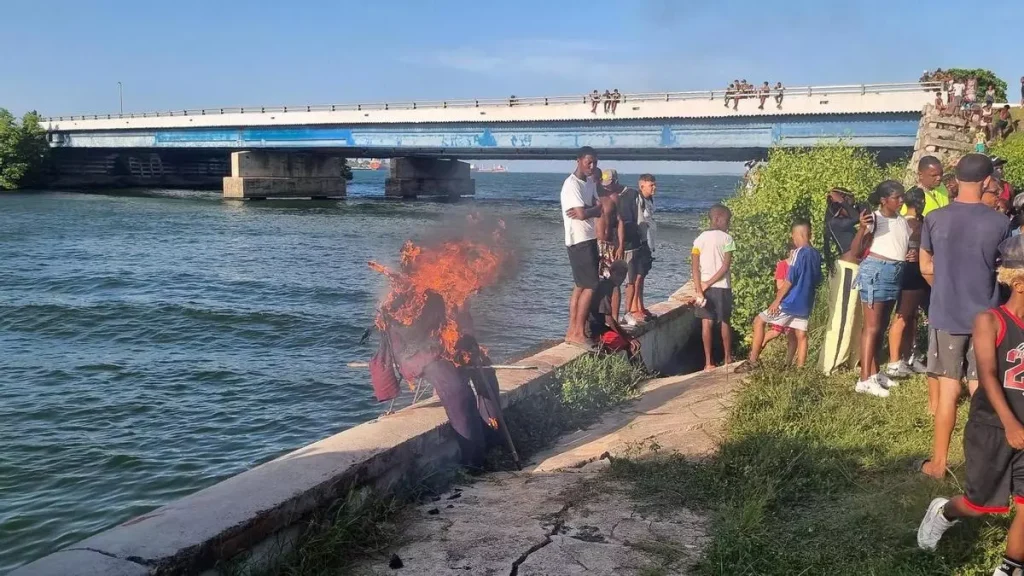
The effigy burned beside the river, following tradition. / 14ymedio

14ymedio bigger14ymedio, Matanzas, Pablo Padilla Cruz, June 26, 2026 — The official mourning period decreed following the death of General Ramiro Valdés postponed the traditional burning of the San Juan effigy in the Pueblo Nuevo neighborhood of Matanzas. The population, exhausted by the lack of electricity and water, the heat, and the mosquitoes, had eagerly awaited a few hours of escape from their grim daily reality and the chance to celebrate one of the festivities that best represents the longing of all Cubans: to burn the old and make way for the new.

“I’ve lived here for 65 years, and the burning of the effigy is a ritual that had disappeared but was revived years ago,” says Ania, a resident of the Callejón de las Tradiciones. “I’m the first to say these aren’t times for celebration, but these little moments are what make everyone equal: the person who has food and the one who doesn’t, the person who has solar panels to watch television during blackouts and the one who doesn’t. People deserve to forget how hard life is,” she argues.

The debate is out in the streets. Not everyone feels like celebrating, and many believe this is more a time for anger than rituals, but Ania sees no contradiction. “Still, one day people may decide to demand what they deserve, but just because they dance a little, even if afterward they don’t have water in their homes, you can’t force them to do what others think is right,” she insists.

Callejón de las Tradiciones, where the San Juan Day procession passes. / 14ymedio

“There isn’t much time for celebrating,” laments Yudania, another resident passing through the Alley, where the procession begins. The San Juan celebration originates in European pagan rites marking the summer solstice, which welcomed the warmth and, with it, good harvests after the cold winter. Fire was used for two reasons: it was believed to strengthen the sun and to purify, driving away evil spirits.

Today, Yudania needs fire for something else. “While some people enjoy themselves, I had to go get charcoal, and now I have to light it to cook. That doesn’t mean I’m against the tradition. It’s just that every year we ask for bad things to leave, but everything gets worse,” she laments. “Fortunately continue reading

, we have our health, and that’s important. Everything else has to improve someday,” she concludes as she heads home carrying a bag of charcoal in her hands.

In Matanzas, where the pagan celebration later Christianized and blended with local culture, the ritual consists of making an effigy symbolizing all the bad things accumulated during the year. At nightfall, residents carry it in procession to the riverbank and set it ablaze in an act of collective purification: a bonfire in which everyday frustrations are burned with the hope that the flames will clear the way for renewal, health, and prosperity.

Along Calzada de Tirry, toward the riverbanks, walks Antonio, an elderly teacher who has spent more than twenty years waiting for a Cuban perestroika and has grown tired of celebrating. “I don’t go many places anymore, not even to the nearby danzón dances, much less to burn an effigy,” he comments.

The debate over whether it was time for celebration was out in the streets. / 14ymedio

“I have nothing against the celebration, but I became disillusioned with the divine a long time ago, although I’m not going to judge anyone. Yesterday I was one of those people dancing to the beat of the conga procession, and although I knew what should be asked of the effigy, I let it pass, just like my generation and the one that came after it. Now it’s up to you to decide what to do: stay beside the conga or bring it to a halt,” he says with an obvious double meaning.

On the night of the 24th, because of the general, the effigy was burned while residents recited:

Fire of San Juan, drive away all evil.

Fire of San Juan, take away all negativity.

Fire of San Juan, bring health and prosperity.

So it is and so it shall be.

Ania smiles when asked what she wishes for.

“I’m sure it’s the same thing you wish for, but instead of saying it aloud, let’s ask San Juan for it. Next year we’ll see whether he listened to us.”

Translated by Regina Anavy

______________________

COLLABORATE WITH OUR WORK: The 14ymedio team is committed to practicing serious journalism that reflects Cuba’s reality in all its depth. Thank you for joining us on this long journey. We invite you to continue supporting us by becoming a member of 14ymedio now. Together we can continue transforming journalism in Cuba.

Havana: When the Water Comes, the Waste Begins

After several days without service, some Havana households leave their faucets running, while neighboring districts depend on sporadic water trucks

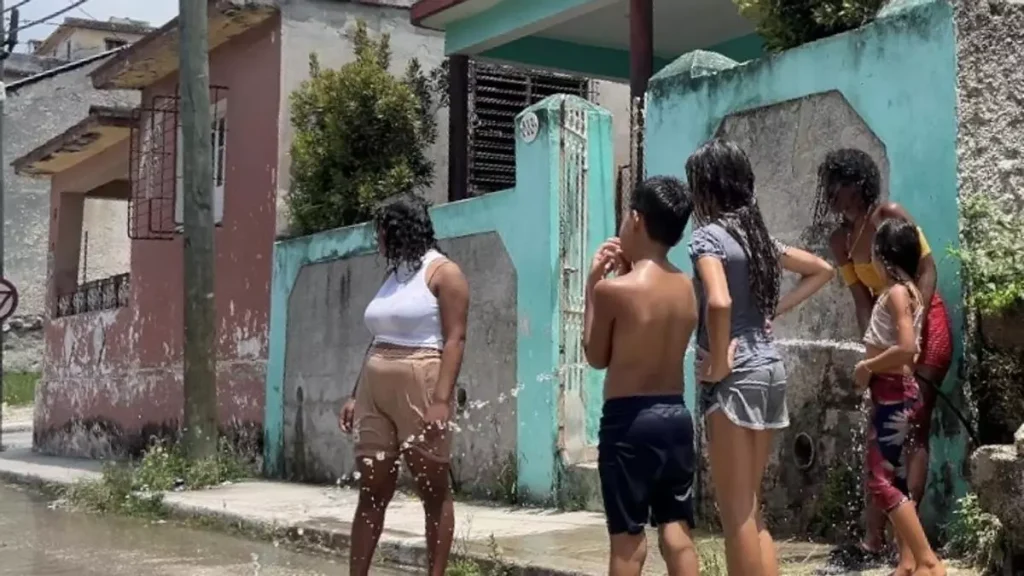
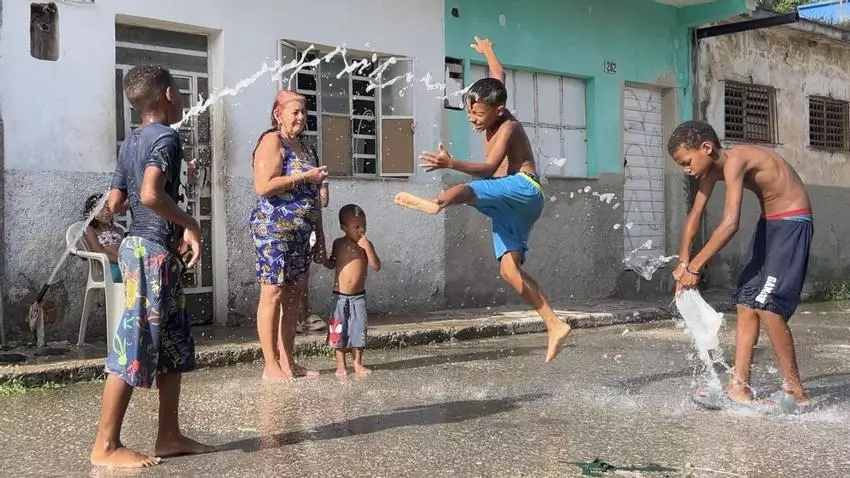
In a street in Guanabacoa, Havana, several children were spraying each other with jets of water this Wednesday. / 14ymedio

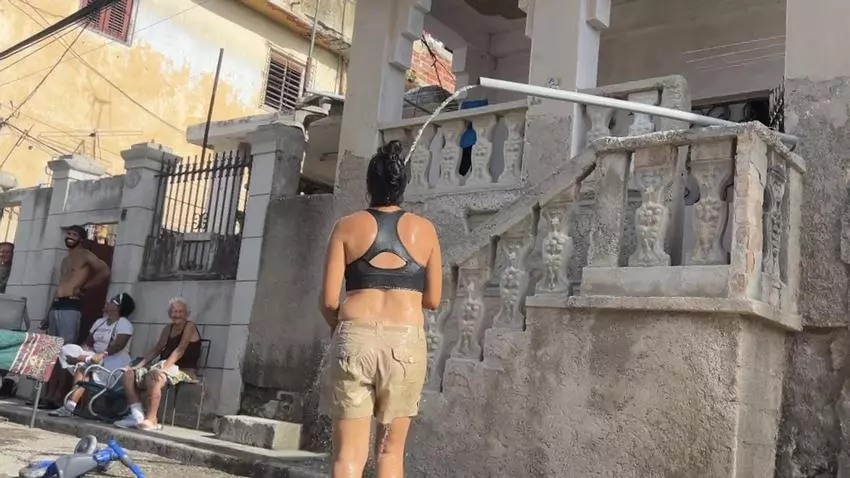
14ymedio bigger14ymedio, Havana, Dario Hernandez, June 25, 2026 / In a street in Guanabacoa, Havana, several children were spraying each other with jets of water this Wednesday and jumping barefoot on the wet pavement. For a few minutes, the return of service looked like a neighborhood party in the middle of June’s suffocating heat. When the water comes back* after so many days of absence, everything changes pace. Buckets, hoses, and basins appear. Floors are scrubbed, clothes are washed if a few hours of electricity happen to coincide, and families take the chance to bathe, fill their tanks, and take care in one go of everything that has piled up during the domestic drought.

“The waste that happens in those hours is like making up for all the days you had nothing,” a resident of the area tells 14ymedio. He understands his neighbors’ euphoria. With the blackouts, the high temperatures, and the long supply interruptions, he admits, “all you want is to stand under the tap and not move.” Yet he confirms that some people leave their faucets running even after filling their tanks or finishing their household chores.

When the water comes back after so many days of absence, everything changes pace. / 14ymedio

“I have some neighbors who just let it run for no reason. They’re not bathing, not cleaning, not watering the plants. They just leave it open for the pleasure of watching it flow,” he laments. In Centro Habana, Regla, and parts of Guanabacoa itself, many families depend on water tanker trucks or go several days without receiving a single drop. This week, residents of Regla took to the streets to protest the water shortage while demanding the arrival of a tanker. continue reading

The problem is not simply one of individual waste. On top of the power outages that shut down pumping stations, there are breakdowns and the deterioration of a water network incapable of holding the water it carries. “Every block has at least two or three leaks,” the resident says.

In earlier times, another neighbor recalls, inspectors would fine anyone who let water run needlessly.

The authorities call on people to save water, but the state’s own pipes pour out for hours quantities of water far greater than any household could waste. In earlier times, another neighbor recalls, inspectors would fine anyone who let water run needlessly. Now, she says, “there’s no oversight anymore.” The absence of enforcement combines with the erosion of a civic culture that can barely survive when every family has to fend for itself when it comes to food, electricity, garbage, and water supply.

The woman insists she is not trying to directly blame those who make the most of the brief water supply. “With this heat and no power, when the water comes it’s only natural to enjoy it,” she repeats. What she is denouncing is the loss of empathy toward those living a few blocks away who have been waiting for days.

“It hurts, because there are people who only see water when a truck comes,” she sums up. For her, the images speak to something that goes far beyond a leak or an open faucet. “In Havana, nobody lives in a community anymore. It’s every man for himself.”

*Go to the link to watch a movie, which refused to load here.

Translated by GH.

______________________

COLLABORATE WITH OUR WORK: The 14ymedio team is committed to practicing serious journalism that reflects Cuba’s reality in all its depth. Thank you for joining us on this long journey. We invite you to continue supporting us by becoming a member of 14ymedio now. Together we can continue transforming journalism in Cuba.
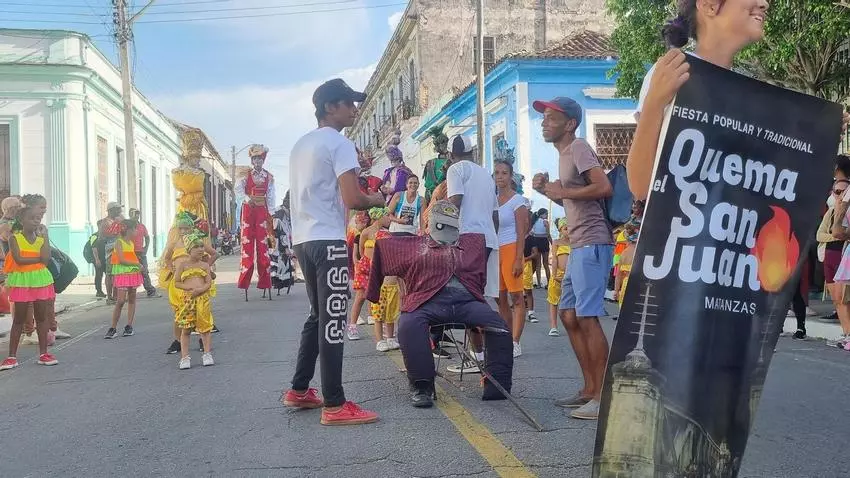
Cuba Needs a Real Capitalist ‘Shock’

It is a fantasy to believe that the new measures pave the way for the Vietnamese or Chinese model

The conditions for this do not exist without changes to the political regime, the author argues / sohu

14ymedio bigger14ymedio, Luis R. Luis, Boston, June 25, 2026 / The 176 measures recently announced by the Cuban Government are intended to bring about a liberalization of the economy through the supposed privatization of companies, openness to investment and foreign trade, energy and agricultural reforms, and the opening up of banking and currency exchange agencies, among many other elements.

However, this is far from being a genuine liberalization of the economy, since no credible framework of conditions is being established to allow markets to function properly or to guarantee legitimate property rights – central elements of a free-enterprise system. The measures do not create the conditions for the investment needed to rebuild and return the economy to healthy functioning. Nor is it clear that the necessary fiscal and monetary adjustments will take place to ensure financial stability and control of the inflation that is decimating families’ purchasing power.

The primary condition required by a free-market economy is the subsidiary role of the State in the productive apparatus and in investment decisions. The new measures do not establish the mechanisms for this to happen. Transparent mechanisms for the assignment of state-owned enterprises that guarantee their autonomy are missing. Genuine financial decentralization is missing. A sound private banking sector requires diversified shareholders who are independent of the State.

In the Chinese case, the size of its market and the very high savings rate were highly favorable conditions for the economy’s takeoff. Vietnamese agriculture had propitious conditions for its reform

Talk has it that the new measures pave the way for the Vietnamese or Chinese model. That is a fantasy. Cuba does not have the structural characteristics of those two countries at the outset of their major reforms. In the Chinese case, the size of its market and the very high savings rate were highly favorable conditions for the economy’s takeoff. Vietnamese agriculture had propitious conditions for its reform and contributed greatly to the country’s initial boom. Cuba appears to be aligning itself more with the new Venezuelan model, in which the State retains control of the productive apparatus without genuine reforms, but with a partial continue reading

opening to foreign capital.

An ideal productive shift toward the free market requires consolidating the subsidiary role of the State, as has occurred in many Eastern European countries. This is not visible in Cuba. It is clear that changes implying a new political regime are needed. There are various modalities for regime change, whether through internal dynamics, system collapse, or popular pressure. This is not predictable.

External pressures such as US sanctions and the energy blockade alter the internal dynamic, but it is not possible to discern the trajectory ahead in terms of political conditions. Again, the example of Venezuela inspires limited confidence that external pressure will provide the crucial impetus for the implementation of economic and political reforms. Perhaps the US Administration will learn a great deal from the recent Venezuelan experience.

External pressures such as US sanctions and the energy blockade alter the internal dynamic, but it is not possible to discern the trajectory ahead in terms of political conditions

Real reforms require an overarching design. The most important point is the role of the State in enabling reforms to be carried out. The realities of various elements of influence within society alter the possibilities for reform and, thereafter, their sequencing. It is possible and healthy to design some optimal sequence of reform, but the most important thing is to create the conditions for its success. Above all, opportunities for opening should not be discarded even when their sequencing is not optimal. The moment of food price reforms is generally not a good one for families. Private funds such as remittances, as well as public funds, will be needed to maintain basic consumption levels on the Island.

In sum, Cuba needs a genuine capitalist shock. What is underway with the 176 measures is the appearance of a major move toward the free market. The conditions for this do not exist without changes to the political regime that guarantee the limited function of the State. This capitalist shock can happen. Perhaps Cuba will achieve it.

———-

Editorial note: The author has served as Chief Economist at the OAS and Director for Latin America at the Institute of International Finance in Washington.

Translated by GH.

______________________

COLLABORATE WITH OUR WORK: The 14ymedio team is committed to practicing serious journalism that reflects Cuba’s reality in all its depth. Thank you for joining us on this long journey. We invite you to continue supporting us by becoming a member of 14ymedio now. Together we can continue transforming journalism in Cuba.