- Dozens of protests over power outages continue across Havana.
- The Government’s response remains repression: Cubalex warns of the enforced disappearance of six protesters in Guantánamo.
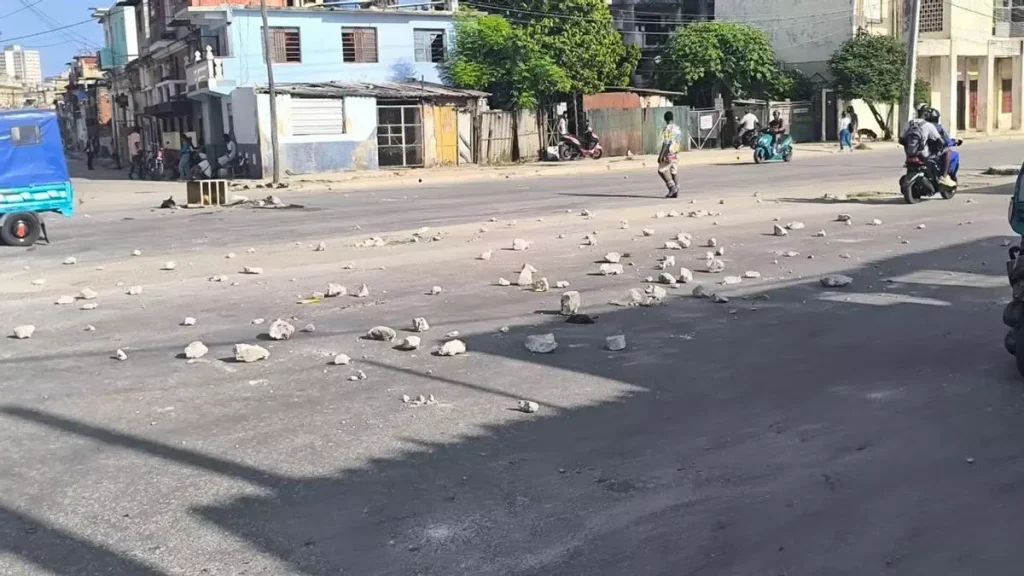
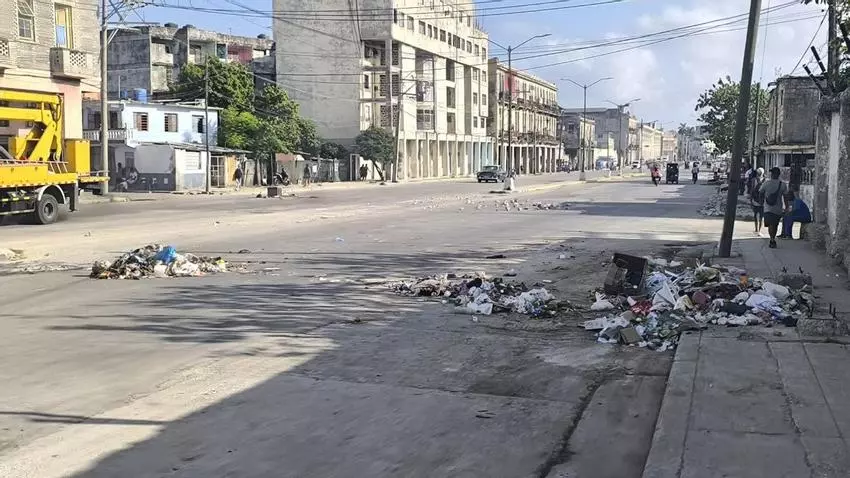
 14ymedio, Juan Diego Rodríguez, Havana, July 17, 2026 – Power outages and protests now go hand in hand in Cuba. This Friday, on México Avenue in Havana’s Cerro municipality, 14ymedio came across the remnants of the previous night’s protest: large rocks, piles of garbage, and even a chair remained in the roadway, forcing vehicles to maneuver around them. As shown in videos shared on social media, dozens of residents took to the streets banging pots and pans and blocked the road after spending 24 hours without electricity. Several hours later, the barricades had still not been removed. When contacted by this newspaper, one resident declined to comment out of fear of police surveillance.
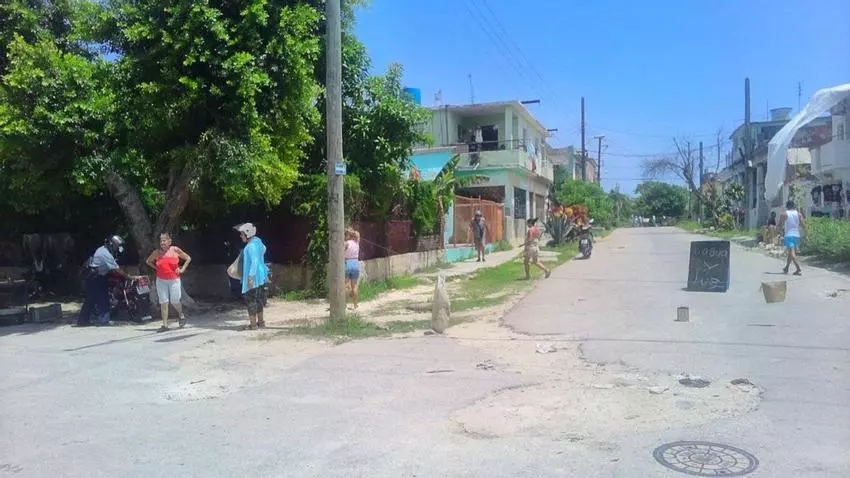
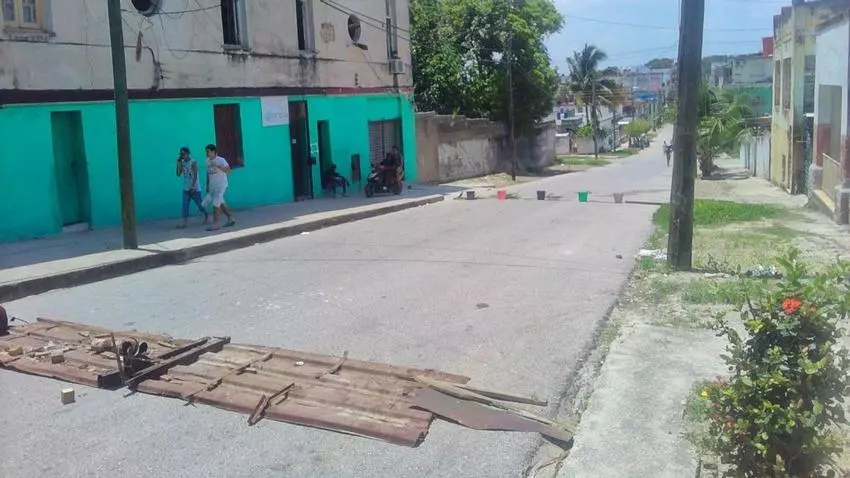
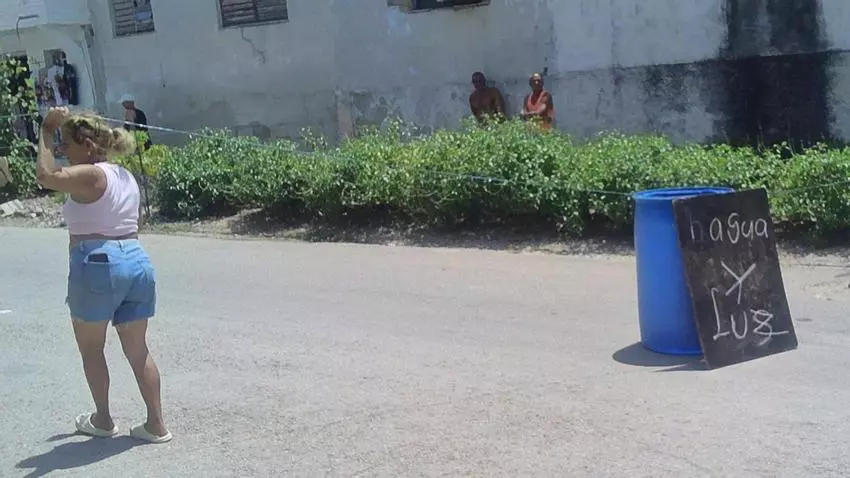
This newspaper also documented another protest in Luyanó this Friday, in broad daylight. Residents who had gone more than 24 hours without electricity blocked several side streets with empty buckets, branches, and metal objects. Their main demand was summed up on a sign: “Water and Electricity.” According to one resident, the lack of water was what angered the neighborhood the most. “I’m about ready to go to the Malecón and drink salt water,” he said. The neighborhood police officer arrived to speak with residents, and shortly afterward electricity service was restored. Authorities promised to send a water tanker, but by midday it had still not arrived. Residents decided to keep one street blocked until it did.
On Thursday night, from the 14ymedio newsroom, loud pot-banging protests could be heard coming from several apartment buildings in Nuevo Vedado, near Boyeros and Conill. Residents had been without electricity for more than 28 hours. Service was restored for only about an hour and a half, by which time refrigerators had already thawed and the building’s water supply had been completely exhausted. When the power went out again, the largest and longest pot-banging protest the neighborhood could remember began, something unusual given that it’s inhabited mostly by government officials and state employees.
In some parts of the capital, blackouts now exceed 72 hours. The lack of electricity has also worsened the water crisis: residents in numerous municipalities report going weeks without water. The outages occur one after another, and the few hours of electricity available are barely enough to recharge batteries, much less pump water.
Along with the energy crisis, reports of illegal payments within the electric utility have also begun to surface. “Corruption in the National Electric Union is running rampant,” a Luyanó resident told this newspaper. “Not long ago, the neighbors here had to pay for workers to come repair a breakdown. We had been without electricity for almost 24 hours and had to pay them to do what is supposed to be their job.” According to residents, the practice of paying to be connected to privileged circuits in order to reduce blackout times has also become widespread.
Residents of San Miguel del Padrón voiced similar complaints during Thursday’s protests, which also took place in broad daylight. Neighbors alleged that some utility workers prioritize restoring power to certain circuits in exchange for money. “People pay them to come restore the electricity, and that’s why other neighborhoods are left without stable power,” one resident told Martí Noticias. “The workers know how desperate we are because of the energy crisis, and they’re charging money.”
Similarly, videos shared from Calabazar, in the Boyeros municipality, show several residents detaining two people who, according to witnesses, were electric utility employees negotiating to prioritize certain circuits in exchange for payment. According to accounts from local residents, the two individuals were later arrested by police. Other videos show dozens of neighborhood residents gathered in the streets chanting slogans demanding the restoration of electricity service and denouncing the lack of transparency in the operations of the state utility.
Guanabacoa was another of the capital’s major flashpoints. There, residents marched through the streets in groups after three days without electricity and one month without water, chanting, “Water and electricity!” According to accounts shared on social media, residents from different neighborhoods joined the same protest. Those posts say that government officials arrived to try to calm the demonstrators and promised that service would be restored.
In San Isidro, Old Havana, videos show residents shouting directly against the Government and Miguel Díaz-Canel, denouncing that they have gone four days without electricity or water. One woman, shouting with a trembling voice, urged the “tough guys” of the neighborhood to bravely stand up to the police.
Engineer and private entrepreneur Yulieta Hernández Díaz also wrote on her social media profile this Friday that residents in her Playa neighborhood held a pot-banging protest that lasted an hour and only ended when electricity returned. According to her account, residents had accumulated nearly 100 hours without power, regained electricity for just two hours, and then endured another 31 hours in darkness. “I think we’ve gone 13 days without water and counting. I’ve already lost track; my neighbors tell me it’s been 16 days. We’ve even collected rainwater,” she wrote.
The Government’s response to the protests continues to be repression. Activist Gisselle Ordoñez, known on social media as Zea Gisselle, wrote a detailed account this Friday explaining that she had been summoned and questioned by State Security agents at a police station in Havana, where she was interrogated about her participation in protests and her social media posts.
“I have no President, no Homeland, and no country; what I have is the neighborhood where I was born, the place where I came into the world and where I grew up, an island, a piece of land”
According to her account, the agents accused her of “exercising leadership” during protests in her neighborhood, documenting police operations, and sharing content on social media that they claimed served opposition interests. The activist denied belonging to any organization or receiving funding but clearly expressed her position: “I have no President, no Homeland, and no country; what I have is the neighborhood where I was born, the place where I came into the world and where I grew up, an island, a piece of land.”
According to the activist, the interview ended with her signing a formal warning. In it, Gisselle wrote that she pledged “not to change her way of thinking” while trying not to commit offenses established in the Penal Code.
Pressure against those who take part in protests has also spread to other provinces. This Friday, the independent organization Cubalex reported the enforced disappearance of at least six people detained after a protest over power outages that took place Tuesday night in the Loma del Chivo neighborhood of Guantánamo. According to the organization, State Security and police officers filmed the protesters and later arrested them.
So far, two of the detainees have been identified: Yeansg Carlos Pérez George and Cristian Jesús Bergondo George. Cubalex says their relatives do not know the whereabouts of any of the six detainees and have remained outside the State Security Department’s Operations Unit in Guantánamo, where they report having been mistreated by authorities.
Translated by Regina Anavy
______________________
COLLABORATE WITH OUR WORK: The 14ymedio team is committed to practicing serious journalism that reflects Cuba’s reality in all its depth. Thank you for joining us on this long journey. We invite you to continue supporting us by becoming a member of 14ymedio now. Together we can continue transforming journalism in Cuba.