The CubanAmerican Voice, Julio M. Shiling, Jul 17, 2026 / In a landmark address before representatives from more than 70 countries at the U.S. State Department’s Ministerial Conference on the Resurgence of Political Terrorism on July 16, 2026, Secretary of State Marco Rubio delivered a clarion call. This marks a decisive shift in American foreign and domestic policy. The United States, Rubio declared, is formally committing to combat far-left extremist movements that have long endangered Western civilization and the American republic itself. For too long, terrorist and violent activities rooted in ideological extremism have received a troubling pass, shielded by sympathetic narratives in media, academia, and elite institutions. That era of indulgence is ending.
Rubio’s speech was both diagnostic and prescriptive. He emphasized that Marxist-inspired groups are not fringe actors operating in isolation but components of a sophisticated, well-coordinated international network dedicated to advancing variants of socialism and undermining democratic societies. Central to this network, Rubio noted—reminding his audience pointedly more than once—is the communist regime in Cuba. For decades, Havana has served as a hub for radical left-wing terrorism, recruiting, training, and backing Marxist and Third-Worldist movements across the hemisphere and beyond. Its “sprawling intelligence and ideological network” helped build the far left in the United States and remains inextricably linked to far-left groups and movements within and beyond the West.
This announcement represents a welcome structural offensive by America against communism’s ongoing war on the West. In many respects, it revives a policy approach that proved largely successful during the Cold War. From the outset of that existential struggle, the United States recognized the subversive threat posed by Soviet and allied forces. Castro’s Cuba stood at the forefront of this assault, exporting revolution through terrorist training camps that prepared tens of thousands of Marxist guerrillas. Groups like the FARC, ELN, Tupamaros, Montoneros, Italy’s Red Brigades, and Germany’s Red Army Faction embodied the violent edge of this ideology. The West confronted these threats with resolve, intelligence cooperation, and ideological clarity.
Tragically, that vigilance waned with the fall of the USSR. A wave of triumphalism led to the mistaken belief that history had ended and that economic liberalization would inevitably produce democracy everywhere. The West, particularly under policies encouraging China’s integration into global markets, bet that market mechanisms would tame communism. That wager failed spectacularly. The Chinese Communist Party adapted, retaining totalitarian control while exploiting global trade. Meanwhile, Marxism reinvented itself through cultural and ideological channels rather than purely economic ones.
Intellectual architects like Antonio Gramsci and the Frankfurt School provided the blueprints. Gramsci’s concept of cultural hegemony urged revolutionaries to capture institutions—education, media, arts, and civil society—rather than seizing state power through confrontation alone. The Frankfurt School’s critical theory dissected Western society as inherently oppressive, laying groundwork for postmodern critiques that eroded confidence in objective truth, tradition, and national identity. These ideas flourished in the late 20th and early 21st centuries, finding expression in identity politics revolutionaries who rebranded themselves as antifascists, radical environmentalists, anticapitalists, and globalists. In some cases, these currents have even blended with strains of Islamic jihadism, creating hybrid threats that exploit grievances under the banner of “liberation.”
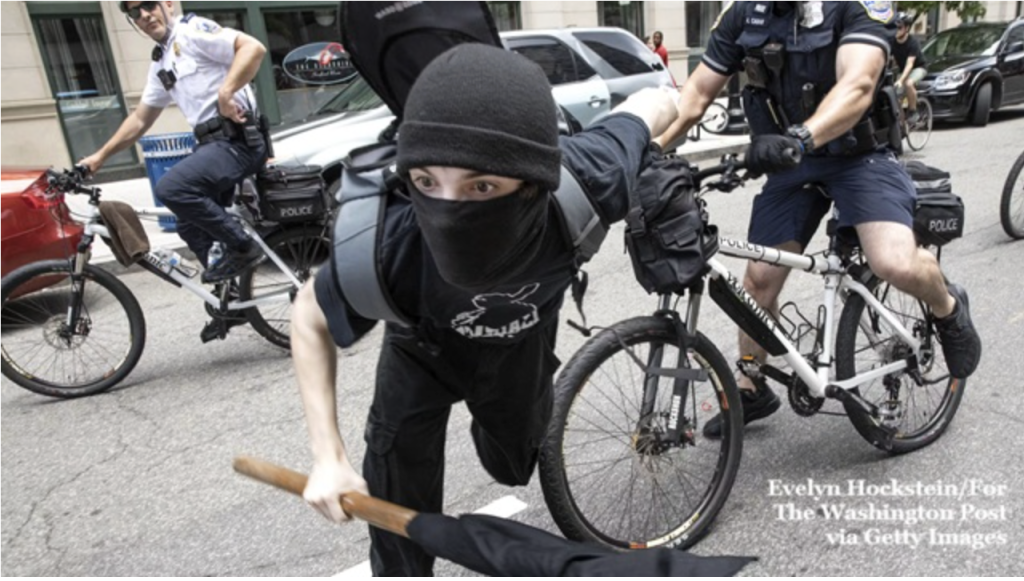
The result has been a sustained incursion into the cultural and political fabric of the West. What began as academic theory manifested in street-level violence, institutional capture, and policies that prioritize division over cohesion. Antifa networks, operating transnationally with encrypted coordination and shared propaganda, exemplify the modern face of this challenge. Rubio highlighted rising far-left violence in Europe, including a more than 40% increase in Germany and the dominance of extreme-left actors in Greek radical incidents. In the U.S., designations of violent far-left groups as Foreign Terrorist Organizations, alongside new sanctions on Cuban entities like the Ministry of the Revolutionary Armed Forces (MINFAR), the Cuban Institute of Friendship with the Peoples (ICAP), and others, signal concrete action.
This 21st-century policy reset arrives at a propitious moment. The Trump administration appears poised to advance regime change efforts in Cuba. Addressing this longstanding source of regional instability and ideological export is crucial. By targeting the financial and operational lifelines of these networks—through sanctions, intelligence sharing, law enforcement workshops (with the next co-hosted by Germany), and Rewards for Justice programs—the U.S. is rebuilding the infrastructure of victory.
Critics may decry this as partisan overreach or an exaggerated threat. Yet history and evidence tell a different story. From Shining Path’s atrocities in Peru to the Red Brigades’ executions and contemporary Antifa-linked disruptions, far-left extremism has consistently cloaked resentment and destruction in the language of justice and equality. Rubio captured it powerfully: it is “a poisonous resentment… an overwhelming need to tear down what greater men have built.” Far-left actors despise the West precisely because of its greatness—its prosperity, freedoms, and achievements.
America’s re-adoption of an assertive stance against these forces is not merely defensive; it is a reaffirmation of civilizational confidence. By forging coalitions across Europe, Latin America, and Asia, even amid skepticism from some allies accustomed to downplaying the threat, the U.S. is leading as it did in the Cold War. The battle is ideological as much as operational. It demands clarity about the incompatibility of Marxist-derived frameworks with individual liberty, rule of law, and human flourishing.
As Secretary Rubio’s address underscores, the United States will no longer tolerate radical Marxist regimes and their proxies exporting subversion. This offensive posture, linking historical lessons to present dangers, offers hope that the West can reclaim the initiative. The stakes could not be higher: the preservation of the civilization that has delivered unprecedented liberty and progress against ideologies that have repeatedly delivered tyranny and ruin. In confronting this networked challenge head-on, America signals that it stands ready once more to defend the principles that define it.