Bruno Rodríguez demands that the German Foreign Minister and the OAS attribute the crisis on the island to the US blockade.
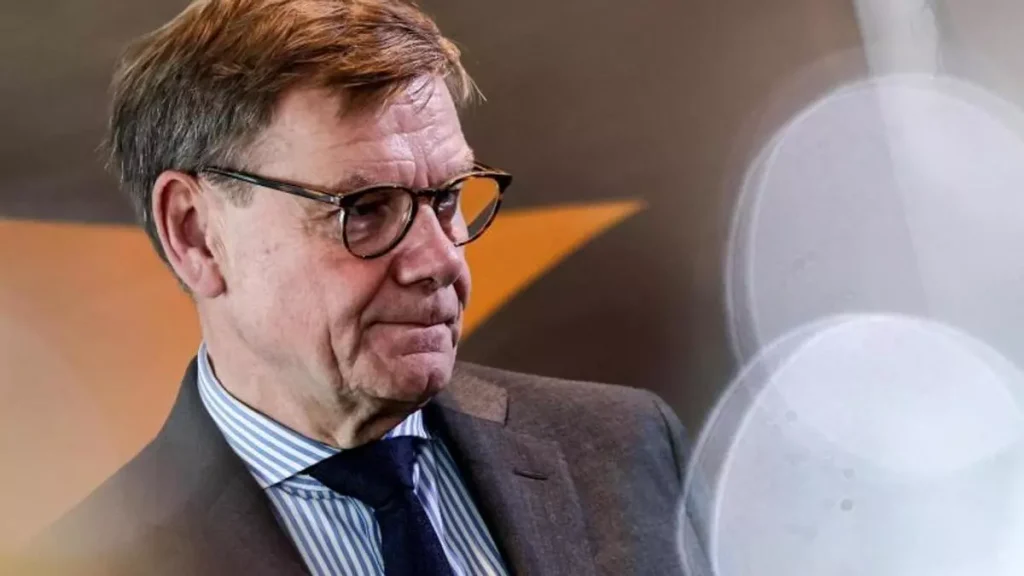
 14ymedio/EFE, Havana, June 25, 2026 / The Cuban government responded Thursday to German Foreign Minister Johann Wadephul after the Christian Democratic politician attributed the island’s crisis to mismanagement by its authorities. Cuban Foreign Minister Bruno Rodríguez accused Wadephul of being unaware of US sanctions and invited him to learn more about Washington’s policy toward Havana.
“How can we not recognize the imposition of an energy blockade in serious violation of International Law, which constitutes collective punishment, causes humanitarian damage and impedes free trade and freedom of navigation,” Rodríguez wrote on his social media.
The regime’s reaction came after Wadephul stated last Sunday, during a German government open house, that he did not see the blockade described by one of the citizens participating in the meeting. “I don’t see the kind of blockade you describe,” responded the minister, who went further by stating that a “regime of injustice” prevails in Cuba.
For Wadephul, the “decisive prerequisite” for improving the living conditions of the population is that the country be “better governed,” a direct criticism of the responsibility of the Cuban authorities in the deep economic and social crisis that the Island is going through.
“I don’t see that kind of blockade you’re describing.”
Rodríguez avoided responding to that part of the statements and focused his rebuttal on his favorite narrative: US sanctions. The foreign minister recommended that the German minister familiarize himself with the measures applied to companies and citizens of his country under the Helms-Burton Act. Passed in the United States in 1996, this legislation allows lawsuits to be filed against foreign companies that benefit from properties confiscated by the Cuban government after 1959.
The response to Wadephul comes on top of another protest issued a day earlier by Rodríguez against the Organization of American States. The foreign minister was reacting to a statement from the organization’s General Secretariat, which had expressed concern about the democracy situation in Cuba.
“The OAS General Secretariat claims to be concerned about the situation facing Cuba. However, it is scandalous that it makes not the slightest mention of the escalating US aggression against our country,” Rodríguez stated.
According to the minister, the organization should focus on the impact of US sanctions, which he described as a “ruthless and unjustified” policy and which he blamed for the deterioration of living conditions for Cubans.
Under pressure from the US, Cuban authorities approved a package of reforms aimed at easing some of the obstacles that Cubans often describe as the “internal blockade.”
Havana attributes almost all of the country’s economic problems to the US embargo and, more recently, to restrictions on oil supplies. However, the government avoids mentioning the inefficiency of state-owned enterprises, the lack of structural reforms, the collapse of national production, and the economic decisions made by the regime itself.
Cuba has been experiencing a severe energy crisis for years, with blackouts that in many provinces can last for more than 20 hours. The situation has worsened due to fuel shortages and the deterioration of thermoelectric power plants, affected by decades of explotation, constant breakdowns, and lack of maintenance.
Since the beginning of this year, the Trump administration has intensified economic pressure on Havana, particularly targeting oil supplies and businesses linked to Cuban state entities. Under this pressure, authorities approved a package of reforms aimed at easing some of the restrictions that Cubans often describe as the “internal blockade.”
________________
COLLABORATE WITH OUR WORK: The 14ymedio team is committed to practicing serious journalism that reflects Cuba’s reality in all its depth. Thank you for joining us on this long journey. We invite you to continue supporting us by becoming a member of 14ymedio now. Together we can continue transforming journalism in Cuba.