The Spanish writer understood in 1971 that the imprisonment of Heberto Padilla was not an isolated mistake, but proof of the Revolution’s authoritarian drift.
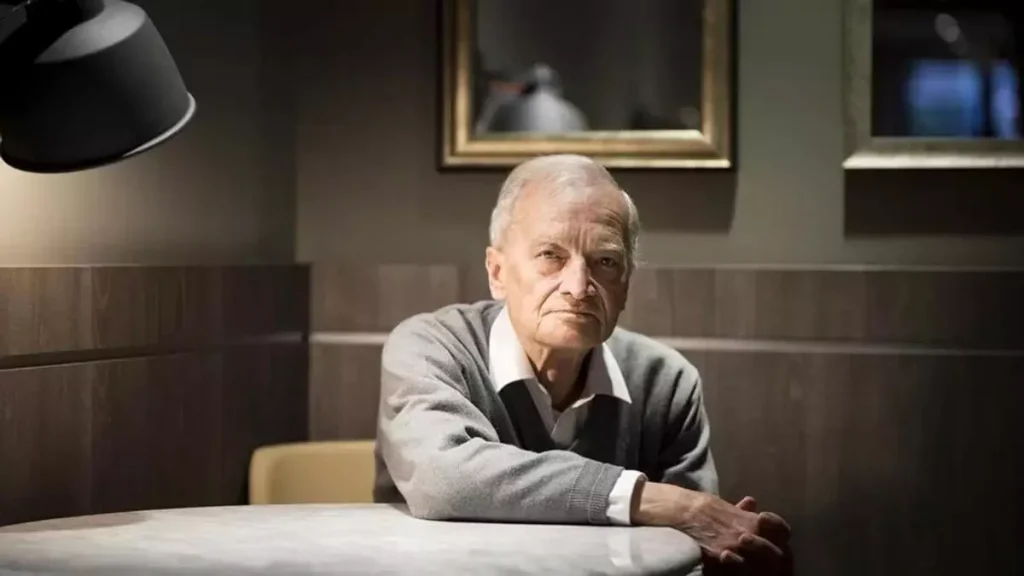
 14ymedio, Noemí Herrera, Miami, July 18, 2026 – The death of Luis Goytisolo, who passed away this week at the age of 91, invites readers to revisit a monumental body of work such as Antagonía, one of the greatest achievements of 20th-century Spanish-language fiction. An experimental writer, member of the Royal Spanish Academy, and a pioneer of contemporary narrative, Goytisolo leaves behind a literary legacy of enormous significance. But from Cuba, it is also worth remembering another aspect of his life, less frequently mentioned in obituaries and yet essential to understanding the intellectual history of the second half of the 20th century.
Luis Goytisolo was one of the writers who helped dismantle the immense moral prestige that the Cuban Revolution had accumulated among the European left. He was not the only one, nor even the most visible. But he was there when part of the intellectual community decided that the time had come to stop justifying the unjustifiable. His background included coming from a family of businessmen of Basque origin who made their way in Cuba, the Island that would once again cross his path.
Luis, by contrast, cultivated a more reserved profile, focused on literature and less inclined toward public exposure
It is important to distinguish between the brothers. Juan Goytisolo occupied a singular place in Spanish literature for decades and became a much better-known public figure internationally, especially because of his constant confrontation with the Franco regime and his cosmopolitan life. Luis, by contrast, cultivated a more reserved profile, focused on literature and less inclined toward public exposure. That difference in temperament has often led people to confuse the two when discussing the so-called Padilla Affair. However, both actively participated in the protest that permanently changed the relationship between much of the European intellectual community and Fidel Castro’s regime.
Until 1971, the Cuban Revolution enjoyed extraordinary prestige within Western cultural circles. The romantic image of the Sierra Maestra continued to captivate writers, philosophers, and artists who saw Cuba as an ethical alternative to capitalism and the Latin American dictatorships. The Island was the laboratory where many wanted to believe a form of socialism different from the Soviet model could be built.
The imprisonment of poet Heberto Padilla shattered that illusion.
His “crime” had been writing uncomfortable verses and expressing criticism of the revolutionary bureaucracy. His arrest, followed by that humiliating public confession at the headquarters of the Union of Writers and Artists of Cuba (Uneac), a scene that evoked the Stalinist show trials, caused a moral earthquake among those who still defended the Cuban Government.
The Goytisolo brothers also participated in drafting a second letter, far more forceful, which openly denounced the regime’s authoritarian drift
It was then that the first open letter addressed to Fidel Castro and published by Le Monde appeared. Among its organizers and signatories were Juan and Luis Goytisolo, together with such prominent figures as Jean-Paul Sartre, Simone de Beauvoir, Mario Vargas Llosa, Susan Sontag, Alberto Moravia, Carlos Fuentes, and Octavio Paz. They called for the poet’s release and warned that imprisoning a writer for expressing his ideas was incompatible with the emancipatory project that Cuba claimed to represent.
Padilla’s release resolved nothing. On the contrary. The spectacle of his public self-criticism deepened the scandal. That forced confession, in which the poet accused himself and denounced colleagues and friends, was far too reminiscent of the old Moscow trials. The Goytisolo brothers also participated in drafting a second letter, far more forceful, which openly denounced the regime’s authoritarian drift. For many cultural historians, that second document marks the true breaking point between the Cuban Revolution and a fundamental part of the Western democratic intellectual community.
Fidel Castro’s reaction was as predictable as it was revealing. The signatories ceased to be fellow travelers and became traitors, agents of imperialism, or victims of bourgeois manipulation. Cuba’s doors began to close to many of them. The so-called “Five-Year Gray Period” consolidated a cultural policy based on suspicion, ideological surveillance, and political obedience.
He was a writer who understood that there comes a moment when silence ceases to be a form of prudence and becomes a form of complicity
For decades, official propaganda attempted to minimize that rupture. It portrayed the Padilla Affair as a foreign conspiracy and turned critical intellectuals into personal enemies of the Revolution. Yet the damage was irreversible. Not because Cuba lost a handful of prestigious visitors, but because it lost something far more difficult to recover: the moral authority that had captivated much of the international progressive intelligentsia.
It is significant that Luis Goytisolo did not build a testimonial monument around that episode. He remained, above all, a novelist. He continued writing, experimenting with narrative forms, and producing a body of work whose summit is Antagonía, that extraordinary exploration of consciousness and of the very act of writing, which occupies a privileged place in contemporary Spanish literature.
Perhaps that is precisely why his role in that rupture deserves to be remembered today. He was not a professional activist or a permanent polemicist. He was a writer who understood that there comes a moment when silence ceases to be a form of prudence and becomes a form of complicity.
Today, more than half a century after the Padilla Affair, it is difficult to imagine the impact of those letters. They did not change the fate of the Cuban Revolution. Nor did they prevent the consolidation of the cultural apparatus that for decades punished dissent. But they did transform something equally important: they brought innocence to an end. After 1971, it was no longer possible to claim that no one knew. The spell had been broken. And Luis Goytisolo, together with his brother Juan and so many others, helped break it.
Translated by Regina Anavy
______________________
COLLABORATE WITH OUR WORK: The 14ymedio team is committed to practicing serious journalism that reflects Cuba’s reality in all its depth. Thank you for joining us on this long journey. We invite you to continue supporting us by becoming a member of 14ymedio now. Together we can continue transforming journalism in Cuba.