The US announced more sanctions against the regime and the deployment of the aircraft carrier ‘Abraham Lincoln’ to “take control” of Cuba
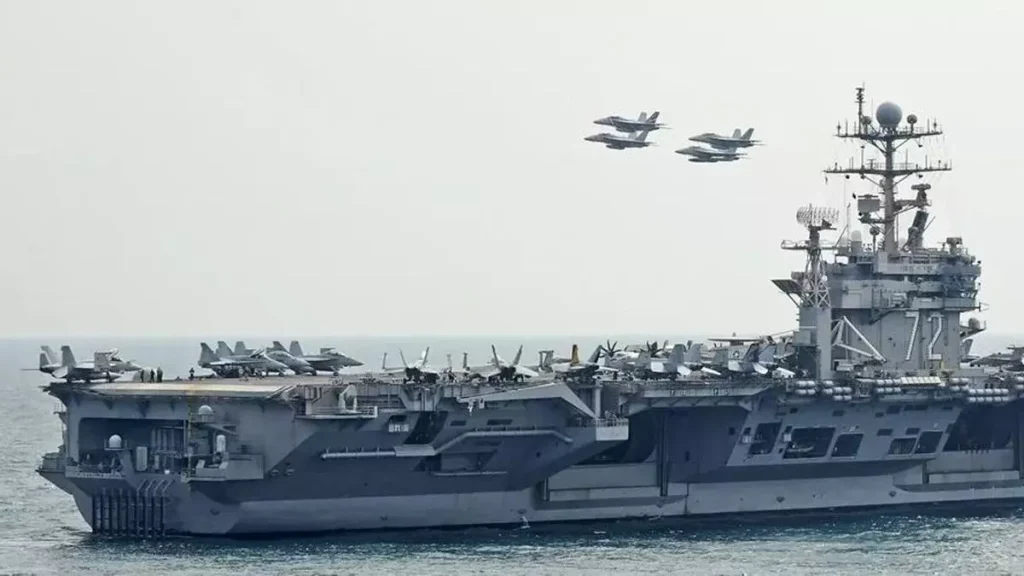
 In response to the US threat to send the aircraft carrier Abraham Lincoln to Cuba, President Miguel Díaz-Canel posted a tweet on Saturday accusing Donald Trump of escalating his “threats of military aggression” against Cuba to a “dangerous and unprecedented” scale. The Cuban president called on the international community and the American people to take note of what he described as a possible “criminal act” intended to satisfy the interests of a “small but wealthy and influential” group with “a thirst for revenge and domination.” Díaz-Canel also asserted that Cuba will not surrender to any aggression and that the country will defend “sovereignty and independence in every inch of its national territory.”
US President Donald Trump said on Friday – as he has done on other recent occasions – that he will “take control” of Cuba “almost immediately” after finishing the “job” in Iran, during his speech as the main speaker at a private dinner at the Forum Club in West Palm Beach, Florida.
The Republican added that he could have the USS Abraham Lincoln aircraft carrier —the largest in the world—travel to the Caribbean and “stop about 100 meters off the coast” of Cuba, from where the islanders, according to his speech, would say “thank you very much, we surrender.”
This Friday, Trump signed an executive order expanding sanctions against the Cuban government and authorizing the freezing of assets.
This Friday, Trump signed an executive order expanding sanctions against the Cuban government and authorizing the blocking of assets belonging to officials, state-owned companies, financial entities, and individuals linked to repression, corruption, or strategic sectors of the island’s economy.
The measure, dated May 1, 2026, is based on the national emergency declared by Washington in January of this year, when the White House stated that the actions of the Cuban government posed a threat to U.S. national security and foreign policy. With this new order, the U.S. administration reinforces that legal framework and opens the door to further designations against individuals and entities linked to Havana.
The text stipulates that all property and interests in property located in, entering, or controlled by U.S. citizens, residents, or companies will be blocked. In practice, those sanctioned will be unable to move funds, receive payments, sell assets, or conduct transactions within the U.S. financial system.
The order directly targets those who operate or have operated in the energy, defense, metals and mining, financial services, and security sectors of the Cuban economy. It also allows the Treasury Department, in consultation with the State Department, to add other sectors if it deems it necessary.
Those potentially affected include high-ranking government officials, company executives, members of administrative boards, state agencies, and entities controlled by Havana
The scope of the measure is not limited to visible officials of the regime. Individuals or entities owned, controlled, or acting on behalf of the Cuban government, directly or indirectly, may also be sanctioned. The order further includes those who provide financial, material, or technological support, or supply goods and services to the Cuban state or to individuals already sanctioned.
Those potentially affected include high-ranking government officials, company executives, members of administrative boards, state agencies, and entities controlled by Havana. The document also mentions individuals responsible for or complicit in serious human rights abuses in Cuba, as well as those involved in acts of corruption, including the embezzlement of public funds, the expropriation of private property for personal or political gain, and bribery.
One of the broadest provisions allows for sanctions against adult relatives of individuals included on the list. The order specifies that it will not be necessary to notify those affected in advance before freezing their assets, to prevent them from transferring assets or withdrawing funds before the measure takes effect.
Entry into the United States is also suspended for those who meet the sanction criteria. The ban applies to both immigrants and non-immigrants, although the Secretary of State may authorize exceptions when he deems that admitting a person is in the U.S. national interest.
One of the broadest provisions allows for sanctions against adult relatives of people included on the list.
The order also contains a message for banks and financial institutions outside the United States. The Treasury Department may impose sanctions on foreign institutions that facilitate significant transactions for sanctioned individuals or entities. These measures can range from restrictions on maintaining correspondent accounts in U.S. banks to the complete freezing of assets under U.S. jurisdiction.
This point could have an impact beyond U.S. borders. Many international transactions pass through correspondent banks or use the dollar, so entities in third countries might avoid ties with Cuban companies or officials to avoid exposing themselves to sanctions.
The document maintains the validity of activities authorized under U.S. regulations concerning Cuba, including Part 515 of the Code of Federal Regulations. This means that certain operations permitted by general or specific licenses may continue, provided they do not conflict with the new restrictions.
The implementation of the order will be handled by the State Department — headed by Cuban-American Marco Rubio — and the Treasury Department, which will be able to issue regulations, guidelines, and licenses to put it into practice. The Treasury Secretary will also be required to submit periodic reports to Congress regarding the national emergency related to Cuba.
The White House maintains that the policies and actions of the Cuban government are “repugnant” to the values of free and democratic societies. The statement accuses Havana of engaging in practices that harm the United States and of posing an external threat to that country’s national security and foreign policy.
______________________
COLLABORATE WITH OUR WORK: The 14ymedio team is committed to practicing serious journalism that reflects Cuba’s reality in all its depth. Thank you for joining us on this long journey. We invite you to continue supporting us by becoming a member of 14ymedio now. Together we can continue transforming journalism in Cuba.