After several days without service, some Havana households leave their faucets running, while neighboring districts depend on sporadic water trucks
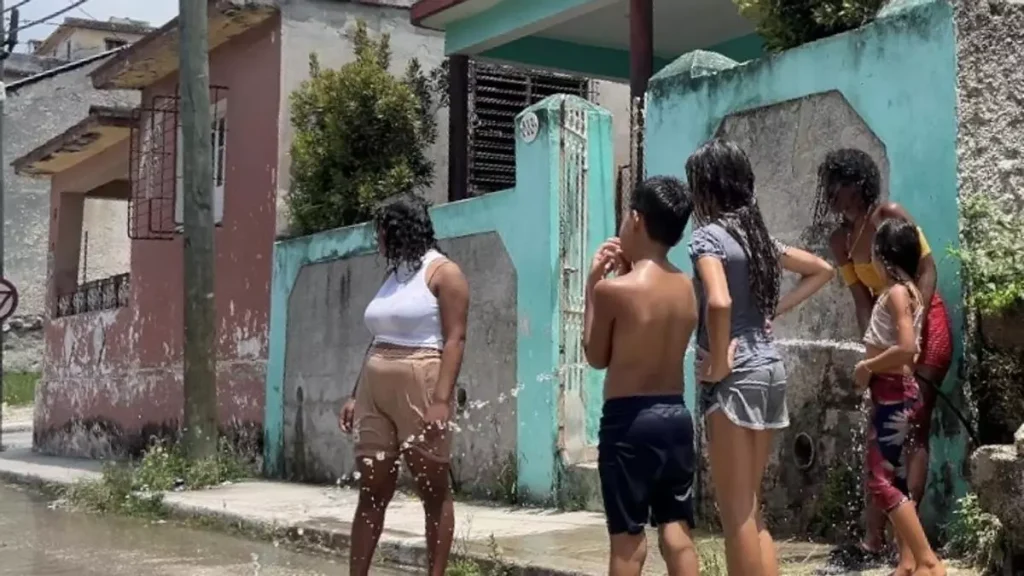
 14ymedio, Havana, Dario Hernandez, June 25, 2026 / In a street in Guanabacoa, Havana, several children were spraying each other with jets of water this Wednesday and jumping barefoot on the wet pavement. For a few minutes, the return of service looked like a neighborhood party in the middle of June’s suffocating heat. When the water comes back* after so many days of absence, everything changes pace. Buckets, hoses, and basins appear. Floors are scrubbed, clothes are washed if a few hours of electricity happen to coincide, and families take the chance to bathe, fill their tanks, and take care in one go of everything that has piled up during the domestic drought.
“The waste that happens in those hours is like making up for all the days you had nothing,” a resident of the area tells 14ymedio. He understands his neighbors’ euphoria. With the blackouts, the high temperatures, and the long supply interruptions, he admits, “all you want is to stand under the tap and not move.” Yet he confirms that some people leave their faucets running even after filling their tanks or finishing their household chores.
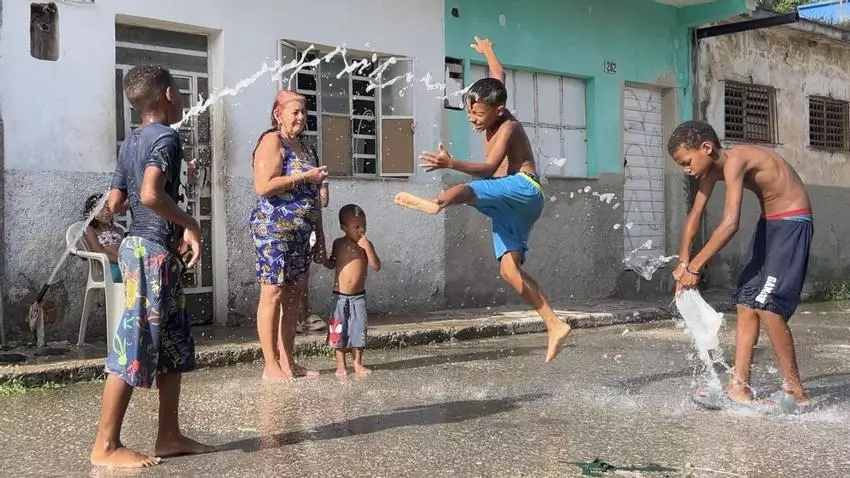
“I have some neighbors who just let it run for no reason. They’re not bathing, not cleaning, not watering the plants. They just leave it open for the pleasure of watching it flow,” he laments. In Centro Habana, Regla, and parts of Guanabacoa itself, many families depend on water tanker trucks or go several days without receiving a single drop. This week, residents of Regla took to the streets to protest the water shortage while demanding the arrival of a tanker.
The problem is not simply one of individual waste. On top of the power outages that shut down pumping stations, there are breakdowns and the deterioration of a water network incapable of holding the water it carries. “Every block has at least two or three leaks,” the resident says.
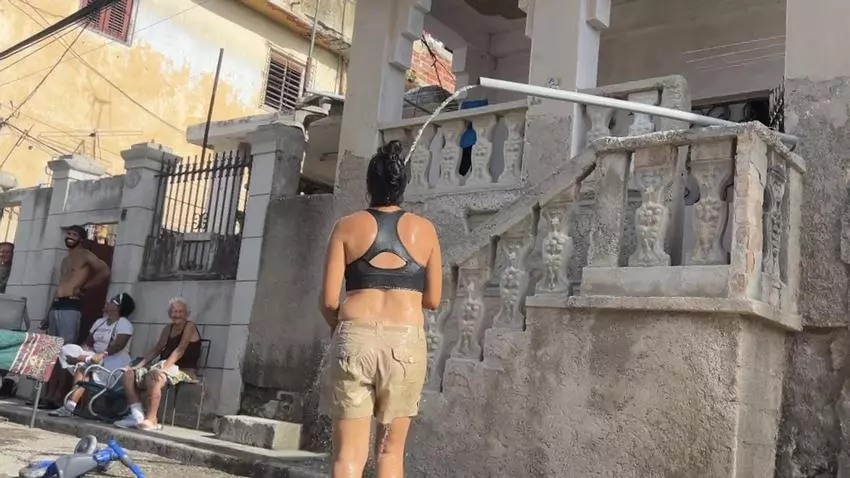
The authorities call on people to save water, but the state’s own pipes pour out for hours quantities of water far greater than any household could waste. In earlier times, another neighbor recalls, inspectors would fine anyone who let water run needlessly. Now, she says, “there’s no oversight anymore.” The absence of enforcement combines with the erosion of a civic culture that can barely survive when every family has to fend for itself when it comes to food, electricity, garbage, and water supply.
The woman insists she is not trying to directly blame those who make the most of the brief water supply. “With this heat and no power, when the water comes it’s only natural to enjoy it,” she repeats. What she is denouncing is the loss of empathy toward those living a few blocks away who have been waiting for days.
“It hurts, because there are people who only see water when a truck comes,” she sums up. For her, the images speak to something that goes far beyond a leak or an open faucet. “In Havana, nobody lives in a community anymore. It’s every man for himself.”
*Go to the link to watch a movie, which refused to load here.
Translated by GH.
______________________
COLLABORATE WITH OUR WORK: The 14ymedio team is committed to practicing serious journalism that reflects Cuba’s reality in all its depth. Thank you for joining us on this long journey. We invite you to continue supporting us by becoming a member of 14ymedio now. Together we can continue transforming journalism in Cuba.