The following companies have been added to the OFAC list: Banco Financiero Internacional, Almacenes Universales, Rafin, Geominera and Antillana de Acero
 The Trump Administration announced on Monday a new round of sanctions against Cuban state entities linked to the military conglomerate Gaesa and against an individual related to the Castro family, following the offensive initiated after the signing of Executive Order 14404 on May 1.
The Office of Foreign Assets Control (OFAC), part of the U.S. Treasury Department, added five Cuban companies to its Specially Designated Nationals List (SDN List): Almacenes Universales SA, Banco Financiero Internacional (BFI), Geominera SA, Empresa Siderúrgica José Martí (Antillana de Acero), and Rafin SA
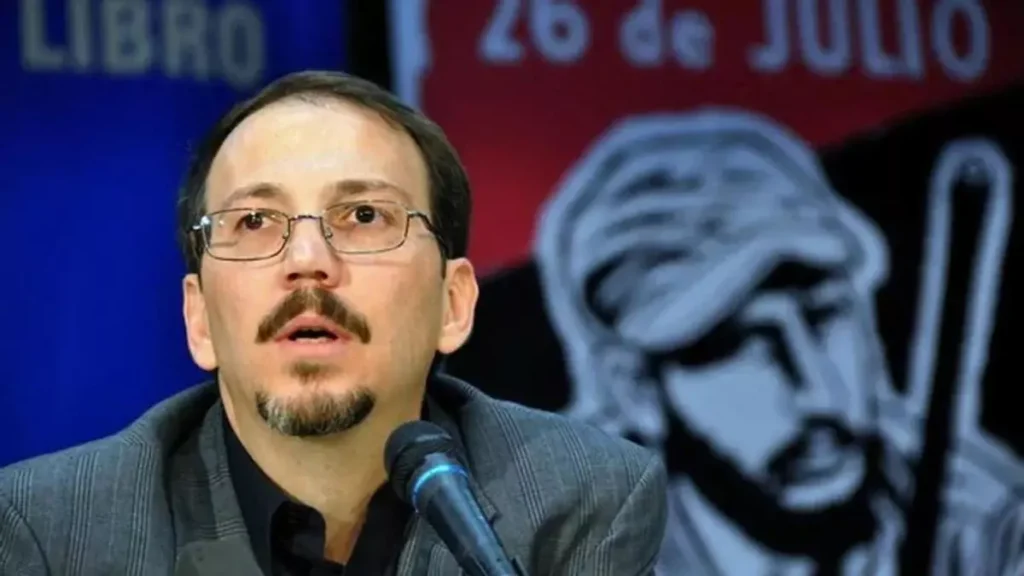
In addition to the companies, the sanctions also include Annalie Lilliam Rueda Cardero, wife of General Alejandro Castro Espín – son of Raúl Castro – who was also sanctioned in early June .
Secretary of State Marco Rubio posted on X: “Today I sanctioned new entities in the Gaesa network linked to both the movement of its funds and the management of its physical assets, as well as entities responsible for exploiting Cuba’s mineral and metallic reserves to obtain illicit profits.”
“The situation in Cuba continues to deteriorate as the island’s corrupt, brutal, and anti-American communist regime continues to prioritize its absolute control over freedom.”
Rubio warned that any person or entity providing services to the sanctioned actors risks being sanctioned as well, and that, therefore, foreign banks and other entities that maintain commercial relationships with these entities must cease their activities immediately.
“The situation in Cuba continues to deteriorate as the island’s corrupt, brutal, and anti-American communist regime continues to prioritize its absolute control over the freedom, opportunities, and basic well-being of the Cuban people,” the Secretary of State said.
With this decision, Washington makes it clear that the economic reforms recently announced by the Cuban government have not altered its strategy or pressure. Although the package of 176 resolutions has been presented as the most significant reform of the Cuban economic structure in decades—including the legalization of private banking, the opening of state-owned enterprises to private and foreign capital, and a greater expansion of private enterprise—the US maintains that the core of the economic system remains under the control of the military leadership.
According to the AFP agency, a US State Department spokesperson dismissed the Cuban government’s package of measures as “smoke signals” and demanded “far more substantial economic and political reforms that make Cuba attractive to investors” and offer its citizens “the freedom, dignity, and opportunities they deserve.”
Washington dismissed the Cuban government’s package of measures as “smoke signals” and demanded “much more substantial economic and political reforms.”
Since the signing of the Executive Order on May 1, 2026, Washington has deployed a strategy of pressure against the economic pillars of the regime.
First, it sanctioned Gaesa, its president, General Ania Guillermina Lastres Morera, and the state-owned mining company Moa Nickel, which precipitated the withdrawal of foreign companies such as the Canadian company Sherritt International and several hotel chains associated with the military conglomerate, including Blue Diamond Resorts, Iberostar, Meliá and Archipelago International.
Major international shipping companies, including France’s CMA CGM and Germany’s Hapag-Lloyd, suspended all services to Cuba in compliance with the new secondary sanctions regime. The decision brought a significant portion of cargo traffic to the island to a standstill and forced operators to abandon routes or renegotiate contracts.
The measures also affected Fincimex, with the suspension of Visa and Mastercard operations on the Island.
In previous actions, Washington had already expanded sanctions to include figures in the political and family circle of power in Cuba, including Miguel Díaz-Canel.
On June 11, the inclusion of Cupet on the OFAC sanctions list thwarted the operation of Florida-based Vanguard Energy, which had hoped to finalize one of the largest private fuel sales to Cuba in recent years. The sanctions against Cupet also led to the withdrawal of Australian oil company Melbana, which boasted of working on one of the most promising crude oil exploration projects, although it never presented convincing data.
In previous actions, Washington had already extended sanctions to figures in the political and family circle of power in Cuba, including Miguel Díaz-Canel, his wife, Lis Cuesta Peraza and his stepson, Manuel Anido Cuesta, as well as Alejandro Castro Espín, among other members of the ruling elite and their support networks.
______________________
COLLABORATE WITH OUR WORK: The 14ymedio team is committed to practicing serious journalism that reflects Cuba’s reality in all its depth. Thank you for joining us on this long journey. We invite you to continue supporting us by becoming a member of 14ymedio now. Together we can continue transforming journalism in Cuba.