It is a fantasy to believe that the new measures pave the way for the Vietnamese or Chinese model
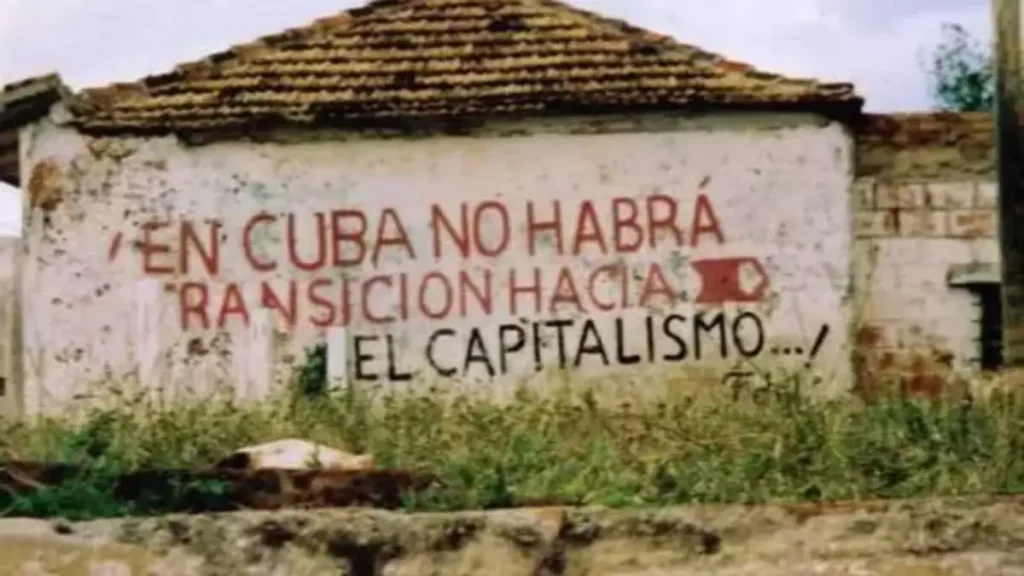
 14ymedio, Luis R. Luis, Boston, June 25, 2026 / The 176 measures recently announced by the Cuban Government are intended to bring about a liberalization of the economy through the supposed privatization of companies, openness to investment and foreign trade, energy and agricultural reforms, and the opening up of banking and currency exchange agencies, among many other elements.
However, this is far from being a genuine liberalization of the economy, since no credible framework of conditions is being established to allow markets to function properly or to guarantee legitimate property rights – central elements of a free-enterprise system. The measures do not create the conditions for the investment needed to rebuild and return the economy to healthy functioning. Nor is it clear that the necessary fiscal and monetary adjustments will take place to ensure financial stability and control of the inflation that is decimating families’ purchasing power.
The primary condition required by a free-market economy is the subsidiary role of the State in the productive apparatus and in investment decisions. The new measures do not establish the mechanisms for this to happen. Transparent mechanisms for the assignment of state-owned enterprises that guarantee their autonomy are missing. Genuine financial decentralization is missing. A sound private banking sector requires diversified shareholders who are independent of the State.
In the Chinese case, the size of its market and the very high savings rate were highly favorable conditions for the economy’s takeoff. Vietnamese agriculture had propitious conditions for its reform
Talk has it that the new measures pave the way for the Vietnamese or Chinese model. That is a fantasy. Cuba does not have the structural characteristics of those two countries at the outset of their major reforms. In the Chinese case, the size of its market and the very high savings rate were highly favorable conditions for the economy’s takeoff. Vietnamese agriculture had propitious conditions for its reform and contributed greatly to the country’s initial boom. Cuba appears to be aligning itself more with the new Venezuelan model, in which the State retains control of the productive apparatus without genuine reforms, but with a partial opening to foreign capital.
An ideal productive shift toward the free market requires consolidating the subsidiary role of the State, as has occurred in many Eastern European countries. This is not visible in Cuba. It is clear that changes implying a new political regime are needed. There are various modalities for regime change, whether through internal dynamics, system collapse, or popular pressure. This is not predictable.
External pressures such as US sanctions and the energy blockade alter the internal dynamic, but it is not possible to discern the trajectory ahead in terms of political conditions. Again, the example of Venezuela inspires limited confidence that external pressure will provide the crucial impetus for the implementation of economic and political reforms. Perhaps the US Administration will learn a great deal from the recent Venezuelan experience.
External pressures such as US sanctions and the energy blockade alter the internal dynamic, but it is not possible to discern the trajectory ahead in terms of political conditions
Real reforms require an overarching design. The most important point is the role of the State in enabling reforms to be carried out. The realities of various elements of influence within society alter the possibilities for reform and, thereafter, their sequencing. It is possible and healthy to design some optimal sequence of reform, but the most important thing is to create the conditions for its success. Above all, opportunities for opening should not be discarded even when their sequencing is not optimal. The moment of food price reforms is generally not a good one for families. Private funds such as remittances, as well as public funds, will be needed to maintain basic consumption levels on the Island.
In sum, Cuba needs a genuine capitalist shock. What is underway with the 176 measures is the appearance of a major move toward the free market. The conditions for this do not exist without changes to the political regime that guarantee the limited function of the State. This capitalist shock can happen. Perhaps Cuba will achieve it.
———-
Editorial note: The author has served as Chief Economist at the OAS and Director for Latin America at the Institute of International Finance in Washington.
Translated by GH.
______________________
COLLABORATE WITH OUR WORK: The 14ymedio team is committed to practicing serious journalism that reflects Cuba’s reality in all its depth. Thank you for joining us on this long journey. We invite you to continue supporting us by becoming a member of 14ymedio now. Together we can continue transforming journalism in Cuba.