A Former Trump Adviser Negotiates the Purchase of Sherritt and Will Request Permission To Operate Its Mines in Cuba

The Canadian company says the State Department has raised no objection to a possible sale of 55% of its shares to American Ray Washburne, owner of Gillon Capital.

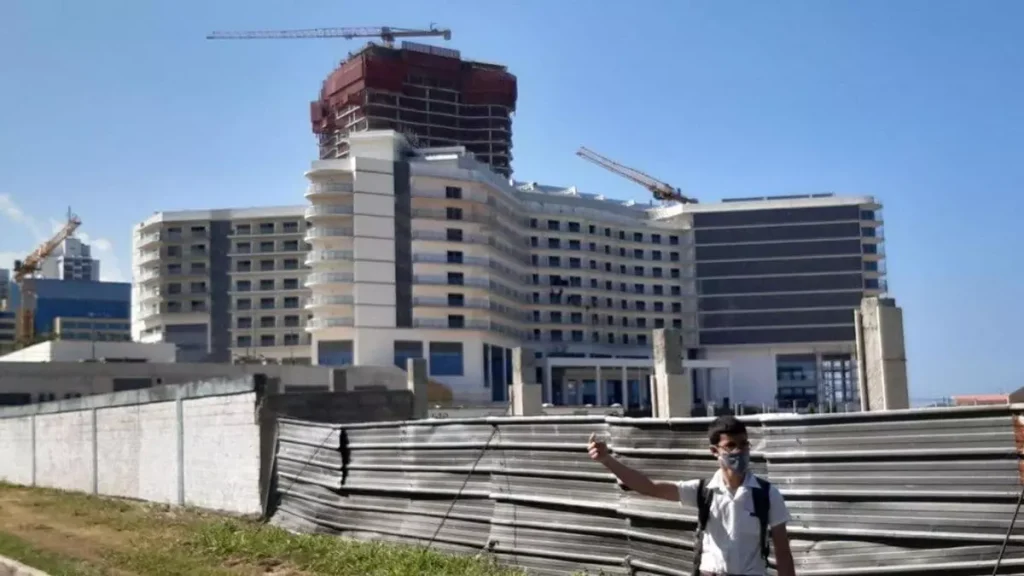
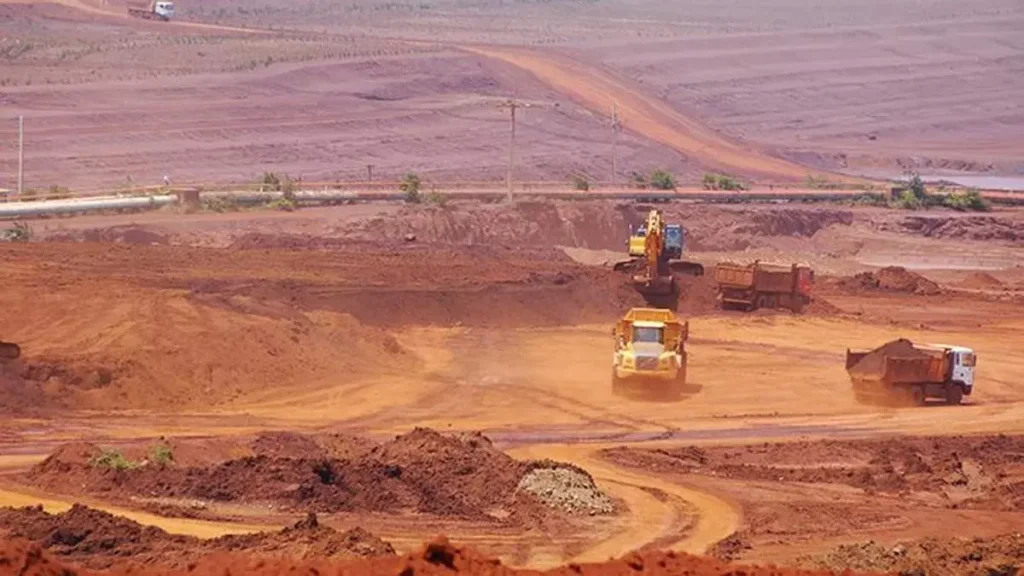
The Moa mines are located on land claimed by the Pitt-Wasmer family. / ACN

14ymedio bigger14ymedio, Madrid, May 20, 2026 – The Canadian company Sherritt International announced this Wednesday that it has signed a preliminary agreement with Gillon Capital, owned by Ray Washburne, former adviser to U.S. President Donald Trump, for a placement of up to 55% of its shares with an option to purchase. If exercised — there is a nine-month deadline — the American investment firm could take control of most of the mining company.

The news comes just one day after Sherritt itself announced that it was suspending the decision to dissolve its interests in Cuba, including the joint venture Moa Nickel S.A., through which it produces nickel and cobalt in mines in Holguín, contrary to what it had announced on May 7, pressured by Trump’s executive order targeting anyone doing business with the Havana regime.

That same day, the State Department reported that on the list of new entities sanctioned by the United States, in addition to the military conglomerate Gaesa and its president, General Ania Guillermina Lastres Morera, was Moa Nickel itself, fully justifying the Canadian company’s statement issued hours earlier.

The Office of Foreign Assets Control can issue a special permit in the case of strategic assets such as nickel and cobalt

If Sherritt were to have majority American capital, as would happen if Gillon exercises its purchase option, the firm would be able to negotiate directly with the Government for a special permit to operate continue reading

on the Island. The Office of Foreign Assets Control (OFAC) of the Treasury Department can issue such a permit in the case of strategic assets such as nickel and cobalt.

A special permit negotiated with OFAC, in fact, was one of the scenarios raised this Wednesday by Discovery Alert for Sherritt to continue its operations in Cuba. The nickel and cobalt deposits in Holguín, the specialized outlet said, “are among the most significant in the Western Hemisphere.” In particular, because of the ease of extracting both minerals, considered critical and used in batteries, from surface deposits.

Discovery Alert also pointed out that although Cuban production is far from that of the Democratic Republic of the Congo — which dominates global cobalt extraction with more than 70% — it still represents “one of the few non-African and non-Chinese-controlled sources of cobalt accessible to Western refineries.” Hence the strong interest from the United States.

The owner of Gillon, meanwhile, is highly trusted by Trump. Washburne was appointed by him in 2017 as director of the Overseas Private Investment Corporation (OPIC) and later as a member of the President’s Intelligence Advisory Board.

In the statement issued today, Sherritt says it has maintained a constructive dialogue with the U.S. State Department, which, according to Reuters, confirmed it has no objections to Gillon Capital’s collaboration with the Canadian company. Neither the State Department nor the Treasury Department, the report continued, considers the negotiations to violate U.S. legislation.

Translated by Regina Anavy

______________________

COLLABORATE WITH OUR WORK: The 14ymedio team is committed to practicing serious journalism that reflects Cuba’s reality in all its depth. Thank you for joining us on this long journey. We invite you to continue supporting us by becoming a member of 14ymedio now. Together we can continue transforming journalism in Cuba.

University Entrance Exams Are Suspended and the School Year Will End a Month Early

The decision is due to the “complex situation” Cuba is facing because of the lack of fuel and transportation

Official discourse wants to erase the image of the previous school year, marked by the students’ rebellion against Etecsa’s rate hike. / 14ymedio

14ymedio bigger14ymedio, Madrid, May 20, 2026 – The unsustainable energy conditions Cuba is experiencing have claimed a new victim: education. On one hand, the school year, which will end approximately one month earlier than planned; on the other, university entrance exams, which are being suspended. Education Minister Naima Ariatne Trujillo Barreto spoke about the first issue when she appeared alongside Higher Education Minister Walter Baluja García this Tuesday on the television program Mesa Redonda. Classes had been scheduled to end on July 24, as announced last September at the start of the school year, but they will now end gradually between June 15 and June 30.

“We are going to continue giving the response that educational institutions are accustomed to giving because of the implication they have for society,” she said, trying to calm families worried about leaving students without a place to be or activities for such a long time. The decision was made, she said, after conducting a “deep and sensitive human evaluation” of the “complex situation” the country faces because of the lack of fuel and the resulting difficulties, such as transportation shortages.

“There has been a need to reduce in each territory, according to its particularities, enrollment, semi-boarding services, and in-person attendance days. Long distances are being walked by children, their families, and teachers,” she added. In addition, to stop rumors about moving exams forward, she said the process would be addressed progressively. continue reading

“Long distances are being walked by children, their families, and teachers”

Another of the most drastic measures taken by the ministry is the elimination of university entrance exams, a measure presented by the head of the sector, Walter Baluja García. “The admissions process will be based on the grade point average or academic index students obtained during their pre-university studies,” he said. In addition, the official emphasized that all applicants “have their place guaranteed.” The assignment process will determine which one.

It is precisely the students who are going to enter university who will be those given priority in secondary education, Trujillo clarified. The minister said that twelfth grade — as well as sixth and ninth grades, since they are terminal years for each cycle — would be protected, relying on the already known “didactic and pedagogical variants,” referring to what already occurred during the pandemic, only under worse conditions, since even technological support has diminished.

Evaluations will be adapted to the systematic monitoring teachers carry out of their students’ progress. “A good teacher accompanied by the families of their own group can probably achieve greater comprehensiveness than an exam that, ultimately, if someone studies hard on the last day, does well and is not the result of what was really learned throughout the entire school year,” she stated.

The minister also recalled the difficult conditions teachers and students face daily. “After a night without electricity, getting the child to school, how to attract him, the class itself is a challenge. And for teachers, who suffer just the same, without electricity or with the problem of whether they have water or don’t have water at home, concentrating on teaching the children has been a huge challenge.”

Trujillo spoke of sensitivity, commitment, sacrifice, and even “daily heroism.” At some moments, she said, between 10,000 and 20,000 students during this school year were unable to attend classes depending on how remote their places of residence were. “For each one we have had to find alternatives,” she added.

The final details of the school year will be wrapped up progressively. On one hand, graduations will take place in neighborhoods, schools, or municipalities. “We cannot limit the possibility of that tremendous event that achieving a grade level implies,” the minister argued. As for special education, whose logistical demands are greater, it will end this month, while schools linked to the National Institute of Sports, Physical Education and Recreation (Inder) and the Ministry of Culture will also finish very soon, although without a fixed date.

Schools, she insisted, will remain open in order to keep the most vulnerable students protected “and guarantee that they do not lose connection with their skills.” Children, the minister said in one of the most surprising phrases of the presentation, “have an exceptional opportunity on this Island full of opportunities and dreams that we all must protect.”

Schools, she insisted, will remain open in order to keep the most vulnerable students protected “and guarantee that they do not lose connection with their skills”

The Higher Education Minister recalled the difficulties of this school year “in which a large part of the university community has faced serious problems regarding connectivity and transportation, making it necessary in many cases to adopt hybrid and distance-learning modalities, with adjustments according to each person’s conditions and special attention to final-year students.”

There was no mention, however, of the days of conflict last March, when around fifty students staged a sit-in protest on the steps of the University of Havana and a police cordon prevented others from joining them. Baluja García went to speak with them to calm tensions, although discontent remained constant for several weeks over the hybrid system decreed for the current academic year. Students demanded suspension because of the impossibility of following normal learning, among other demands that went further, although in the end the authorities managed — once again, as during the protests over Etecsa’s 2025 rate hike — to resolve the situation behind closed doors.

Translated by Regina Anavy

______________________

COLLABORATE WITH OUR WORK: The 14ymedio team is committed to practicing serious journalism that reflects Cuba’s reality in all its depth. Thank you for joining us on this long journey. We invite you to continue supporting us by becoming a member of 14ymedio now. Together we can continue transforming journalism in Cuba.

The Cuban Regime Responds to the Psychological Warfare of the U.S. With Feigned Calm

The state-run ‘Cubadebate’ describes certain media outlets as part of the “propaganda apparatus” serving the Trump Administration

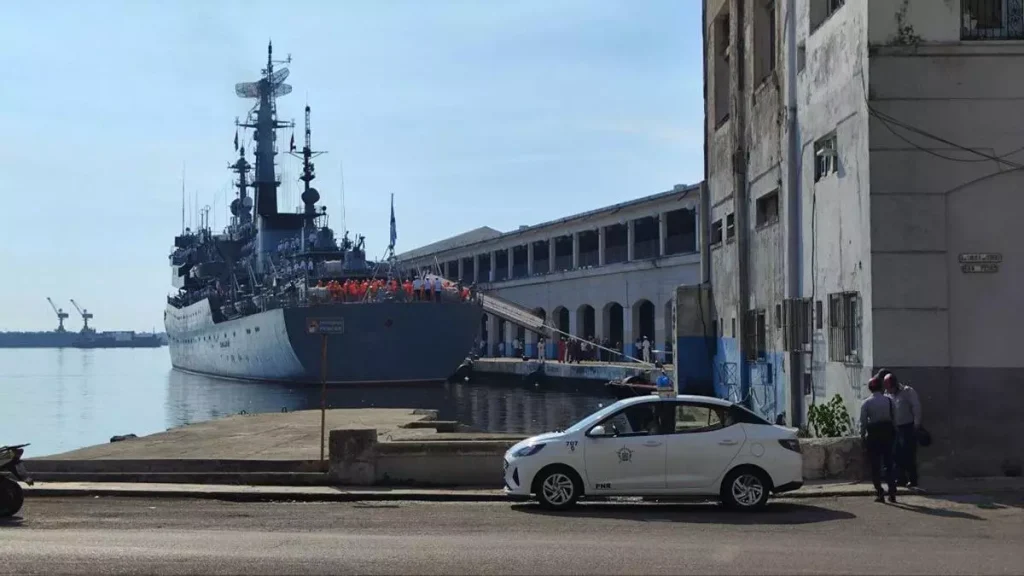
Visit of a Russian frigate to Havana in July 2024, the kind of encounter that the U.S. considers intolerable. / 14ymedio

14ymedio bigger14ymedio, Madrid, May 19, 2026 — The new U.S. sanctions have no practical effect on those targeted, Miguel Díaz-Canel mocked in a post published early Tuesday morning. “Among the leadership of our Party, State, Government, and military institutions, no one has assets or property to protect under U.S. jurisdiction. The U.S. Government knows this perfectly well,” the Cuban leader emphasized on his X account.

In his view, this is so clear that “there is not even any evidence to present,” but “the anti-Cuban rhetoric of hatred tries to make people believe such evidence exists in order to justify the escalation of its total economic war,” Díaz-Canel said. The Cuban president thus downplayed the new measure by the U.S. Treasury Department’s Office of Foreign Assets Control (Ofac), which on Monday added eleven senior political and military officials from the Island to its sanctions list, including three ministers.

The leader believes that the decision, since it has no real implications, is instead part of a series of measures aimed at increasing pressure on the authorities through threats against third parties. “The executive order that persecutes and threatens third parties wishing to sell fuel to Cuba, and that extraterritorializes the embargo to unprecedented levels, penalizing companies that want to invest in Cuba or simply provide us with basic goods such as food, medicine, hygiene products, or others, is immoral, illegal, and criminal,” he added.

“The executive order that persecutes and threatens third parties wishing to sell fuel to Cuba, and that extraterritorializes the embargo to unprecedented levels, penalizing companies that want to invest in Cuba is immoral, illegal and criminal”

Díaz-Canel states that his Government will continue “denouncing, in the strongest and most forceful way, the genocidal siege that seeks to strangle our people,” who are being subjected to an “act of genocide that must be condemned by international organizations,” while also calling for its “promoters” to be prosecuted “criminally.”

That denunciation campaign is consistently carried out by Cubadebate, which for weeks has lamented that U.S. media outlets echo leaks as another continue reading

element of pressure on the regime. This Tuesday, in one of the digital outlet’s increasingly frequent analyses of the role of the press, it focused on publications by Axios, which since February has been leaking information from State Department sources: from the secret talks revealed in February — and admitted by the Cuban Government a month later — to the most recent reports from this very weekend about the alleged purchase of drones, without overlooking the visit of CIA director John Ratcliffe to Havana.

Cubadebate believes that Axios helps shift the debate from the political to the military sphere, so that “the narrative no longer revolves around dialogue between States, but around communication directed toward those whom the U.S. considers the ‘real power.’” The state-run outlet analyzed, using the Zeeschuimer tool (for data capture), the 1,642 reactions generated on social media by the latest Axios article and concluded that they fall into several groups. The largest group sees the U.S. outlet as a “State propaganda apparatus,” accounting for 32% of comments.

They are followed by those expressing distrust toward the Trump Administration, with 26%; those who believe Cuba is the true party under threat and has the right to defend itself, 22%; those who think the groundwork is being laid for an attack on the Island, 12%; and, as a minority group at 8%, those who fear Cuba may indeed pose a threat. Cubadebate admits that comments may sometimes contain one or several premises and that these are not mutually exclusive, although it does not mention that a common trend on social media is to respond critically to what one dislikes and justify it, while support tends to be more passive and limited to a simple “like.”

Be that as it may, the scenario in Cuba is so open and generates so much debate that articles in the U.S. press appear almost daily, although none can determine what will happen. This Monday, Politico published a column by correspondent Nahal Toosi, of Iranian origin and an expert in international relations, in which the reporter argues that the idea of a military attack on the Island is now more likely than months ago, since the Trump Administration sees no progress in a sanctions strategy it had considered capable of producing quick results.

“The initial idea regarding Cuba was that the leadership was weak and that the combination of intensified sanctions enforcement, an oil blockade, and U.S. military victories in Venezuela and Iran would scare Cubans into making a deal. Now, the Iran situation has gone off course and the Cubans are proving much tougher than initially thought. So military action is more on the table than before,” said one official involved in the discussions.

Toosi’s source maintains that the Cuban regime is more monolithic than expected and not even aware of the severity of the economic situation. “They respond to U.S. pressure by offering ideas such as allowing foreign investment in hotels when their real problems are structural, including their crumbling electrical grid,” the source emphasized.

The correspondent also states that Trump might gain little domestically from such a move, since the strongest enthusiasts of military action are already among his supporters

Although the Pentagon continues drafting possible plans, nothing has been decided. A former White House official with extensive knowledge of Cuba warned that the popular support the regime may still retain should not be underestimated and that things may not be so simple. “There are true believers there,” he said. The correspondent also notes that Trump might gain little domestically from such a move, since the strongest supporters of military action are already among his base. Nevertheless, the pressure continues unabated, as reflected in the constant stream of related news.

The situation will continue tomorrow, when the formal indictment against Raúl Castro for the 1996 shootdown of the Brothers to the Rescue planes is expected to be announced. This Monday, the U.S.-Cuba Trade and Economic Council published a report examining possible scenarios arising from the situation, highlighting its firm conviction that Castro will not be arrested, unlike what occurred with Nicolás Maduro in Venezuela.

“The United States Department of Defense will not carry out an operation to extract Raúl Castro from the Republic of Cuba,” they state, adding that the most likely outcome is that the general will die at home. “The Trump-Vance Administration will not condition Cuba’s commercial, economic, financial, military, political, and social reintegration on the extradition of Raúl Castro. They will request it, but they will not enforce it. Therefore, the indictment will be performative,” the document adds. In summary, Washington continues to prioritize psychological warfare.

Translated by Regina Anavy

______________________

COLLABORATE WITH OUR WORK: The 14ymedio team is committed to practicing serious journalism that reflects Cuba’s reality in all its depth. Thank you for joining us on this long journey. We invite you to continue supporting us by becoming a member of 14ymedio now. Together we can continue transforming journalism in Cuba.

The Suspension of Service by CMA CGM and Hapag-Lloyd Affects 60% of Cuba’s Maritime Traffic

The decision by the French and German shipping companies is a consequence of new U.S. sanctions and will mainly affect trade with China

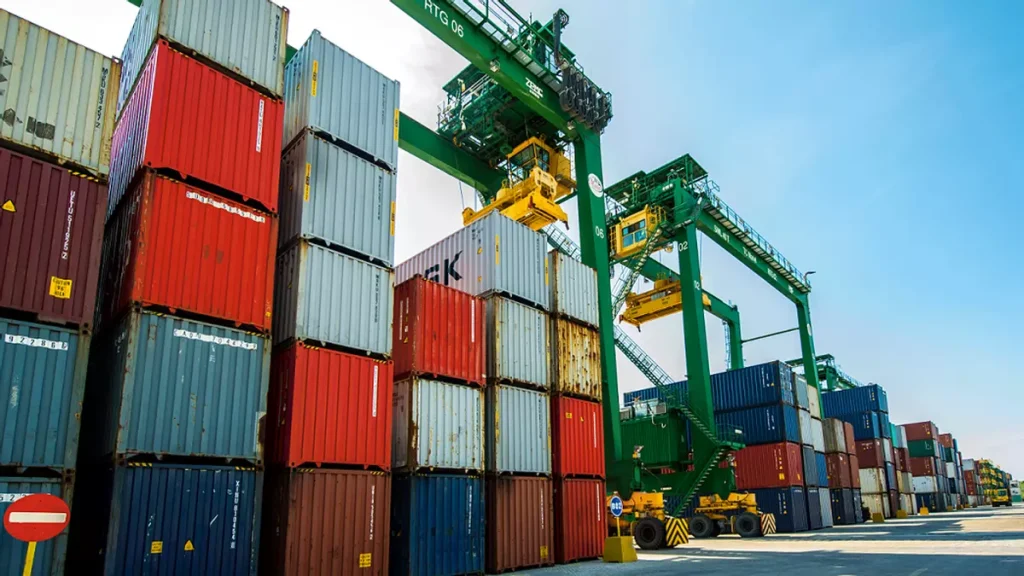
The decision will affect maritime trade with the entire world. / TC Mariel

14ymedio bigger14ymedio, Madrid, May 18, 2026 — International shipping companies CMA CGM and Hapag-Lloyd, French and German respectively, officially confirmed this Sunday the suspension of their shipments to and from Cuba. The information had unofficially emerged last Friday, when sources from both companies informed the Spanish agency EFE, and according to estimates by two experts in a Reuters report, it could mean the loss of 60% of maritime traffic for the Island.

“Following the U.S. decree issued on May 1, CMA CGM has decided to suspend its bookings to and from Cuba until further notice,” the French company said in a statement distributed by email this Sunday. The shipping company indicated that it is closely monitoring the situation and will adapt its decisions to current regulations.

The German company Hapag-Lloyd did the same, stating through a spokesperson that the suspension was due to “the compliance risks associated with the U.S. president’s May 1 decree.”

Specialists also point to Northern Europe and the Mediterranean as heavily affected by the suspension of these shipments

The transport of goods from China would be the most affected by the order, according to sources consulted by Reuters, which warned of the enormous drop in transactions. In a context of generalized shortages such as the one Cuba is experiencing, combined with the oil blockade, the risk is enormous. Specialists also point to Northern Europe and the Mediterranean as heavily affected by the suspension of these shipments, although “all global maritime transport to Cuba would be affected.” According to data from continue reading

the National Office of Statistics and Information, in 2024 — the latest year with complete data — international maritime trade totaled 62.3 million tons.

The decree signed by Trump on May 1 expanded U.S. sanctions on trade with Cuba to include “any foreign person” operating in the sectors of “energy, defense and related materials, metals and mining, financial services or security of the Cuban economy, or any other sector of the Cuban economy.”

Barely a week later came the departure of the Canadian mining company Sherritt International, which had been present on the Island for the past three decades, both in nickel and copper mining operations and in Energás wells in northern Cuba. The company made the decision, which also involved the departure of three board executives, out of fear of being placed on the SDN (Specially Designated Nationals) list of the Office of Foreign Assets Control (OFAC) of the U.S. Treasury Department, a directory that includes sanctioned individuals, companies, or vessels, implying financial blocking and prohibiting Americans from doing business with them.

The sanctions will begin to be applied on June 5, which is why most companies doing business in Cuba are currently evaluating the situation. “No banking entity with a presence or interests in the United States will want to assume the risk of intermediating payments involving a designated [by the United States] party, regardless of the nationality of its client,” said Ignacio Aparicio, managing partner of the law firm Andersen and head of Cuban affairs, consulted by the newspaper El País for a report — similar to one published days earlier by ABC — evaluating the impact on Spanish companies.

According to the report, Meliá, which is under close scrutiny because of its extensive ties with the State, for which it manages 34 hotel establishments, remains silent “due to the high level of uncertainty, although they consider that their activity is not initially included within the five affected sectors.” Although the United States pointed to the specifically mentioned areas, it also refers, in any case, to any sector of the economy.

“Cuba’s Foreign Investment Law, enacted in 2014, establishes a joint venture framework that prevents unilateral withdrawal. Any divestment would in most cases require the approval of the Cuban State”

An anonymous businessman contacted for the report believes the sanctions are a clear warning to leave Cuba. “You can only do business with Gaesa [the military conglomerate that controls the country’s economy], which also has not paid its bills for some time. And now, if the United States discovers that you do business with a Gaesa company, it can fine you,” he argued. The Madrid-based newspaper estimates Spanish presence at more than 60 operations, especially in the tobacco industry, financial services, and wholesale trade, representing investments totaling 442 million euros. In addition, there are 70 hotel management contracts between Gaesa and companies such as Meliá and Iberostar, as well as Roc, Barceló, Valentín, NH, Blau, Axel, and Sirenis.

However, Aparicio warns of one thing. “Cuba’s Foreign Investment Law, enacted in 2014, establishes a joint venture framework that prevents unilateral withdrawal. Any divestment would in most cases require the approval of the Cuban State, turning the process into a prolonged and potentially costly negotiation.” In his view, the most likely outcome is “a slowdown in new investments, corporate adjustments aimed at reducing direct exposure, the search for alternative currencies to the dollar, and greater generalized caution throughout the financial chain.”

Translated by Regina Anavy

______________________

COLLABORATE WITH OUR WORK: The 14ymedio team is committed to practicing serious journalism that reflects Cuba’s reality in all its depth. Thank you for joining us on this long journey. We invite you to continue supporting us by becoming a member of 14ymedio now. Together we can continue transforming journalism in Cuba.

Las Tunas Responds to Increase in Theft From Its Electrical System With ‘Chemical Traps’

After more than 11 crimes so far this year and thousands of residents affected in the province, authorities are intensifying security measures

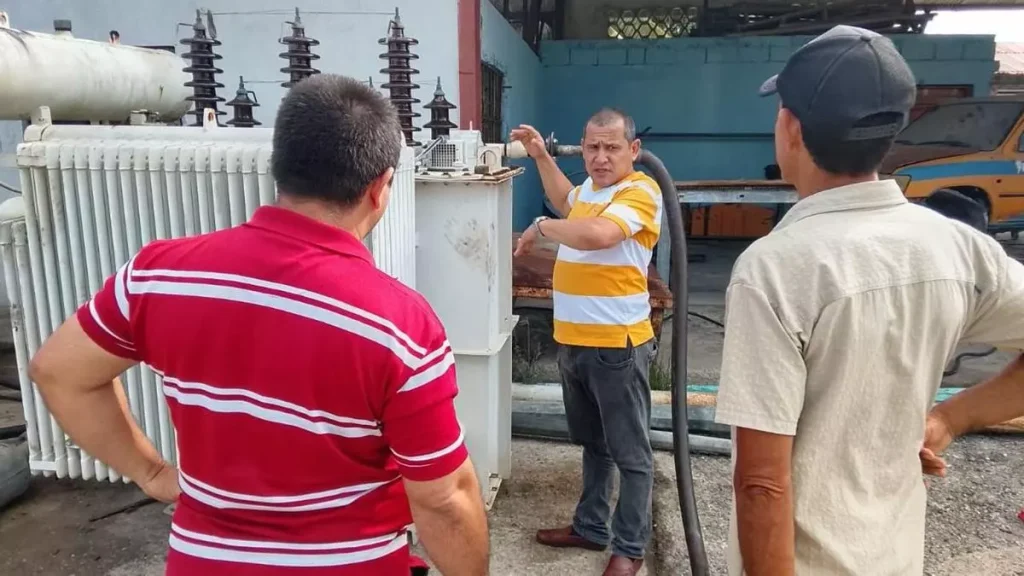
Officials at the Yariguá transformer workshop in Las Tunas. / Facebook/Empresa Eléctrica de Las Tunas

14ymedio bigger14ymedio, Havana, May 18, 2026 — In Las Tunas, authorities have decided to strengthen security measures to prevent the theft of dielectric oil and transformer parts, in response to the rise in criminal activity in the province. In the municipality of Jesús Menéndez alone, 11 cases have been recorded so far this year, according to Anisley Santiesteban Velázquez, technical director of the province’s Electric Company, speaking to the state media Periódico 26.

The package of measures consists of reinforcing security at the 44 substations in the region considered “vulnerable.” It includes technical decisions such as repairing perimeter fences and installing nighttime lighting powered by solar panels, as well as increasing surveillance by assigning four security officers to each substation.

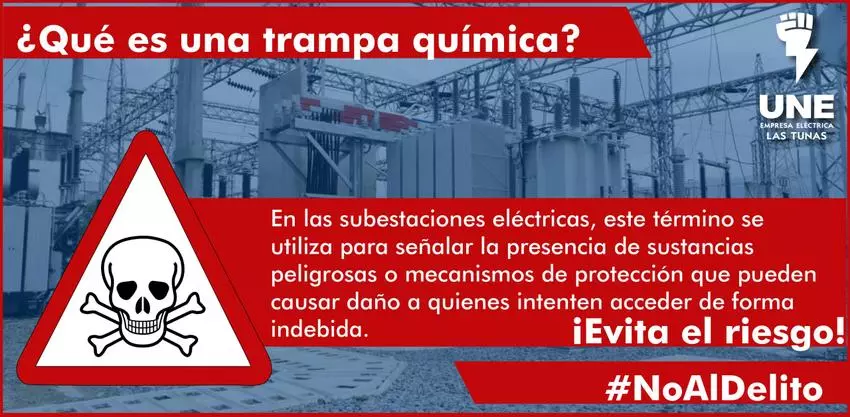
The most striking measure, and one the authorities themselves have publicized as a warning, is the installation of so-called “chemical traps.” This measure was not explained in detail “for security reasons,” although officials did say it is being carried out in cooperation with the Ministry of the Interior.

Warnings published by the Las Tunas Electric Company describe these traps as “the presence of dangerous substances or protective mechanisms that may cause harm to those attempting unauthorized access.”

Official warnings describe these traps as “dangerous substances or protective mechanisms that may cause harm to those attempting unauthorized access”

According to international technical literature from Strategic Directions, the principle behind these traps consists of introducing unique tracers in microscopic quantities into the fluids. These markers allow chemical analysis or simple forensic tests to determine the illicit origin of lubricants and provide judicial evidence against theft and illegal distribution networks.

Warning published by the Las Tunas Electric Company. / Facebook/Empresa Eléctrica de Las Tunas

The repair of perimeter fences at the 44 substations responds to the deterioration and damage these structures had suffered, which facilitated illegal access. The installation of nighttime lighting seeks to prevent perpetrators from acting under cover of darkness. continue reading

Regarding the security officers, Santiesteban Velázquez told the press: “We have the possibility of hiring security and protection agents for the substations. We are taking advantage of this opportunity to call on anyone interested in participating,” although the technical director did not detail the conditions of the offer.

Scarcity, necessity, and the opportunities of a black market that pays what the State cannot guarantee have multiplied thefts of fuel and dielectric oil in recent years. These acts directly affect the population but also endanger the perpetrators themselves, who in some cases have been injured or killed during the theft.

“They are leaving several communities, several towns without electricity”

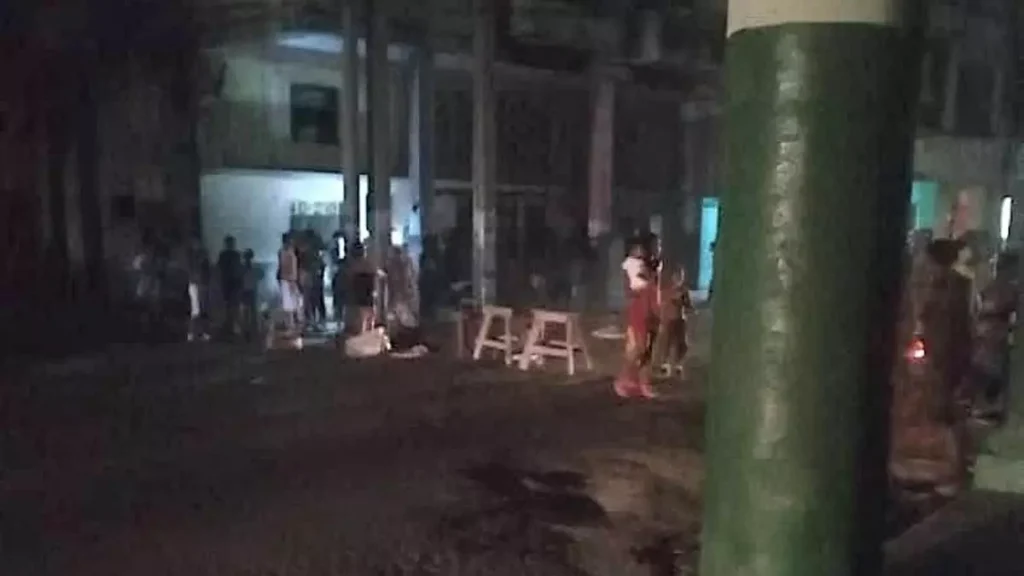
The Periódico 26 article cites as an example the case of 4,000 residents in the Las Tunas locality of Yariguá, who have remained without electricity for four days due to these thefts, compounded by the national electricity generation deficit. The technical director identified these crimes as one of the main causes of the disruptions: “They are leaving several communities, several towns without electricity,” he said, urging residents to organize themselves. “I call for a collective and popular effort to protect our substations.”

Since last April, the Cuban Government has intensified criminal prosecution for any damage related to the national electrical system, when Prime Minister Manuel Marrero Cruz demanded a “heavy hand” against these crimes and increased efforts to combat the theft of fuel and dielectric oil from transformers.

In that context, the state press emphasized, as Periódico 26 also recalled today, that crimes against the national electric power system are considered “sabotage,” classified in the Cuban Penal Code with penalties that, depending on the severity of the act and its consequences, can reach up to 30 years in prison, life imprisonment, or even the death penalty.

This same Monday, in the Havana municipality of Guanabacoa, the arrest of the shift supervisor of the photovoltaic park in the locality of Barreras was reported after he stole more than 40 meters of electrical cable. The theft paralyzed the operation of 24 solar panels, which for several hours stopped generating electricity for the national power grid.

Translated by Regina Anavy

______________________

COLLABORATE WITH OUR WORK: The 14ymedio team is committed to practicing serious journalism that reflects Cuba’s reality in all its depth. Thank you for joining us on this long journey. We invite you to continue supporting us by becoming a member of 14ymedio now. Together we can continue transforming journalism in Cuba.

The Prosecutor’s Office Seeks Up to 13 Years in Prison for Three Women Who Protested a Blackout in Santiago de Cuba

Mileidis Maceo Quiñones, Edilkis León Giraudis and Oneida Quiñones are accused of public disorder and property damage

Pot-banging protests are becoming increasingly common on the Island, sometimes even during the daytime. / Facebook/Lara Crofs

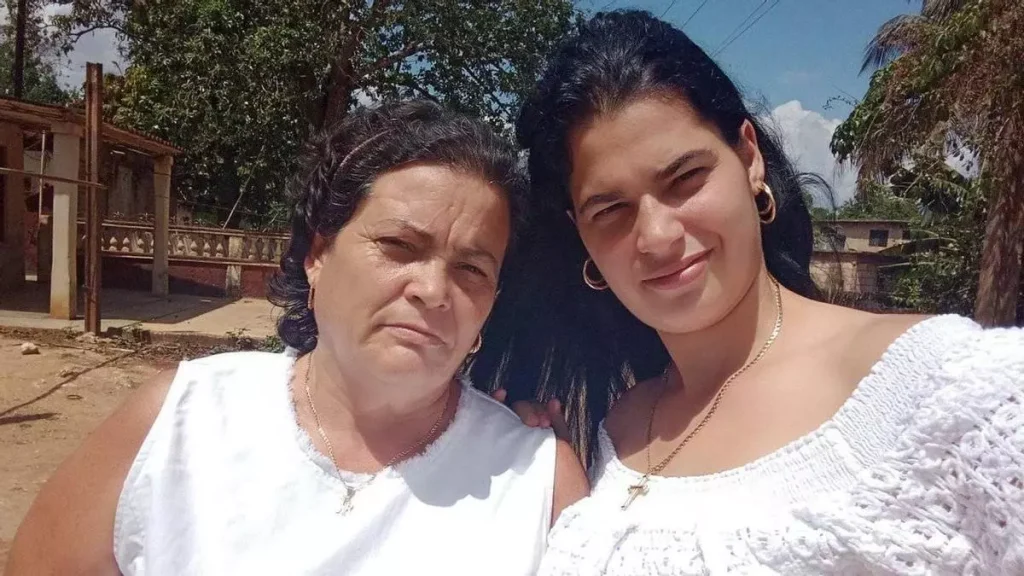
14ymedio bigger14ymedio, Madrid, May 18, 2026 — Three women who were arrested at the end of 2024 in Palmarito de Cauto, Santiago de Cuba, are facing lengthy prison sentences for a protest that erupted during a prolonged blackout. Prosecutors are seeking 13 years in prison for Mileidis Maceo Quiñones, eight for Edilkis León Giraudis, and five years for Oneida Quiñones, all accused of public disorder and property damage.

The information was provided by Elba León Giraudis, sister of one of the accused, to Martí Noticias, which described the Prosecutor’s Office demand as “madness.” “They received the prosecutor’s request about a month and a half ago, but they still haven’t been notified of the trial date. They still haven’t set a date,” she said.

On November 15, 2024, tensions were running very high in eastern Cuba due to the slow restoration following the first major collapse of the national electrical system (SEN) on October 18, when a failure at the Antonio Guiteras thermoelectric plant in Matanzas caused the massive blackout that was the first of several.

“They received the prosecutor’s request about a month and a half ago, but they still haven’t been notified of the trial date. They still haven’t set a date”

The protest began “because of an all-day blackout, like every day when they cut the power at 7 in the morning, so many hours pass and they don’t turn it back on, and mothers have no way to cook for their children. It started in the area called Barrio Guano, which is a central street leading from that neighborhood toward downtown Palmarito, where the town square is, and then they turned back,” a local resident told the independent press at the time.

Dozens of people came out banging pots and demanding electricity. Police officers and State Security agents arrived at the scene, along with local government officials and Communist Party members, who unsuccessfully tried to calm the unrest. “The people became outraged because they were beating Mileidis’s mother, and people started throwing stones and shattered the window of an Operational Guard patrol car,” a witness told Martí Noticias at the time. Mileidis Maceo Quiñones, who is also an activist with the Patriotic Union of Cuba, and her mother were arrested, the latter being an elderly woman who is diabetic and disabled.

Edilkis León Giraudi and a first cousin of Maceo Quiñones, named Rafael, who was 17 years old at the time, were also arrested. The young man was detained a day later when authorities summoned several youths from the neighborhood to the local cultural center for questioning. Although charges were initially brought against him, they were ultimately dropped, reportedly because of his age.

Oneida Quiñones remains under house arrest awaiting trial, while Mileidis Maceo and Edilkis León are being held in the provincial prison. Their families have repeatedly tried to request more favorable measures so the women could remain at home until their responsibility is determined, but all attempts have failed, and they have now spent a year and a half imprisoned without knowing when the trial will take place.

The latest report published by the Madrid-based NGO Prisoners Defenders places the number of political prisoners in Cuba at 1,260

The latest report published by the Madrid-based NGO Prisoners Defenders places the number of political prisoners in Cuba at 1,260, ten more than the previous month. The same report, which warns of intensified repression, puts the number of people detained on the Island for protests against the regime at 2,048 from July 1, 2021 through the end of April 2026.

In addition, 23 prisoners were added to the list in the past month, although 13 people were released from prison, mostly due to completion of their sentences. Regarding the release of 51 prisoners announced by the Government in March and the “humanitarian pardon” of 2,010 inmates initiated in April, the organization states that both processes were marked by “deception, opacity, and the deliberate exclusion of the majority of political prisoners.”

In the first case, 27 of the 51 prisoners were political prisoners, while in the second process there were none, according to the organization’s records.

Translated by Regina Anavy 

______________________

COLLABORATE WITH OUR WORK: The 14ymedio team is committed to practicing serious journalism that reflects Cuba’s reality in all its depth. Thank you for joining us on this long journey. We invite you to continue supporting us by becoming a member of 14ymedio now. Together we can continue transforming journalism in Cuba.

The Ladies in White Lament that Sissi Abascal Had to Leave Cuba to Regain her Freedom

“It’s not the way one would want to be free, but the prisoner and their family are the ones who decide,” says Berta Soler

“Sissi and her mother Annia were two women worthy of respect,” Soler emphasized. / Facebook / Sissi Abascal

14ymedio bigger14ymedio / EFE, Havana, May 16, 2026 – The leader of the Cuban opposition group Ladies in White, Berta Soler, lamented this Friday that political prisoner Sissi Abascal, 28, one of the youngest members of her group, had to leave the country in order to regain her freedom.

“Two brave Ladies in White, Sissi Abascal Zamora and her mother, Annia Zamora, arrived in exile; the choice was to leave Cuba or remain imprisoned,” Soler wrote on social media following the arrival of both dissidents in the U.S. city of Miami.

Soler considered that “it’s not the way one would want to be free, but the prisoner and their family are the ones who decide.”

“With their example, courage, and love for their homeland, they became leaders in this place”

She also highlighted that “Sissi and her mother Annia were two women worthy of respect” in the town of Carlos Rojas in the province of Matanzas, and affirmed that “with their example, courage, and love for their homeland, they became leaders in this place.”

Soler recalled that Abascal is one of the youngest women in the Ladies in White movement, which she joined “at only 16 years old.” continue reading

The independent group Justice 11J, which has been responsible for documenting arrests, judicial proceedings, and human rights violations on the Island, celebrated on social media that “Sissi is out of prison.”

But it also demanded that “all people imprisoned for political reasons be released, without exile being imposed on them as a condition.”

Prisoners Defenders, based in Madrid, recorded 1,260 political prisoners in Cuba

Likewise, the NGO Cubalex emphasized that Sissi Abascal “is being forced to leave Cuba, with her freedom conditioned on exile” and that “she is leaving the country alongside her mother Annia Zamora.”

The organization added that in 2025 Cuban authorities denied Abascal the benefit of being transferred to a minimum-security regime, as well as parole.

“Today, they prefer to grant her the benefit of parole — at the discretion of the authorities — in order to exile her, rather than place her in a less severe regime within Cuba,” Cubalex stated.

Abascal was sentenced to six years in prison for the crimes of “public disorder,” “contempt,” and “assault” for her participation in the anti-government protests of July 11, 2021, the largest in decades in Cuba.

Abascal’s release coincided with the publication of the latest report by the Madrid-based NGO Prisoners Defenders, which recorded 1,260 political prisoners in Cuba.

Translated by Regina Anavy

______________________

COLLABORATE WITH OUR WORK: The 14ymedio team is committed to practicing serious journalism that reflects Cuba’s reality in all its depth. Thank you for joining us on this long journey. We invite you to continue supporting us by becoming a member of 14ymedio now. Together we can continue transforming journalism in Cuba.

Havana After the War

Díaz-Canel is not afraid of ending up like Maduro, but he is terrified of ending up like Ceausescu

The Island reached the postwar period before going through the war. / 14ymedio

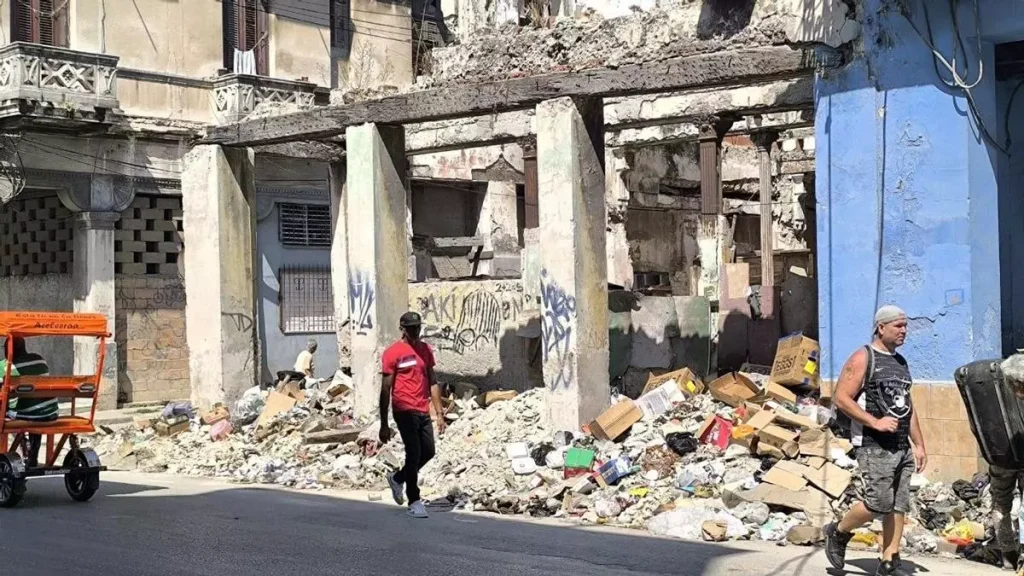
14ymedio bigger14ymedio, Madrid, Yunior García Aguilera, May 16, 2026 – Havana looks like a bombed-out city, even though no enemy has yet signed the order to attack. Buildings split open like broken ribs. Balconies hang over the sidewalk with the stubbornness of the hanged. The city—one of the most beautiful in the region—now looks like a mouth full of cavities. Almost all the photos arriving from the capital seem taken by a war correspondent.

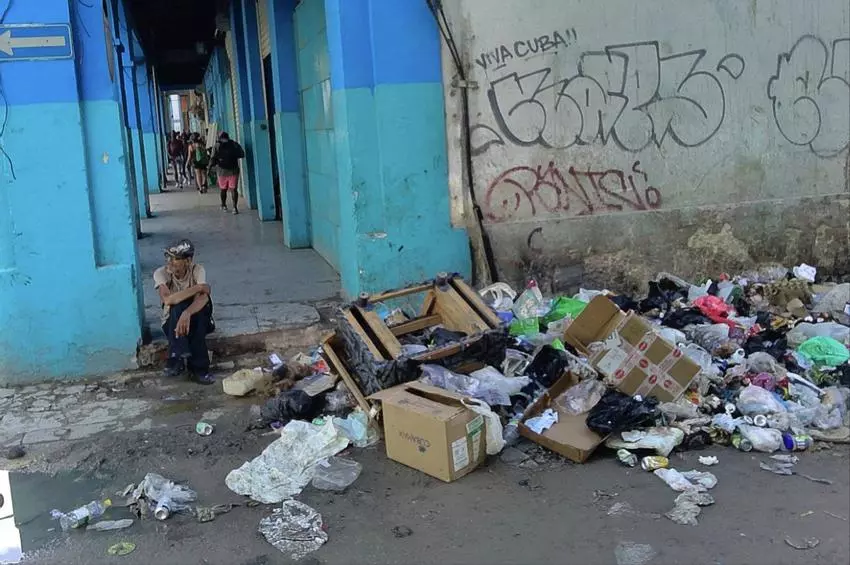
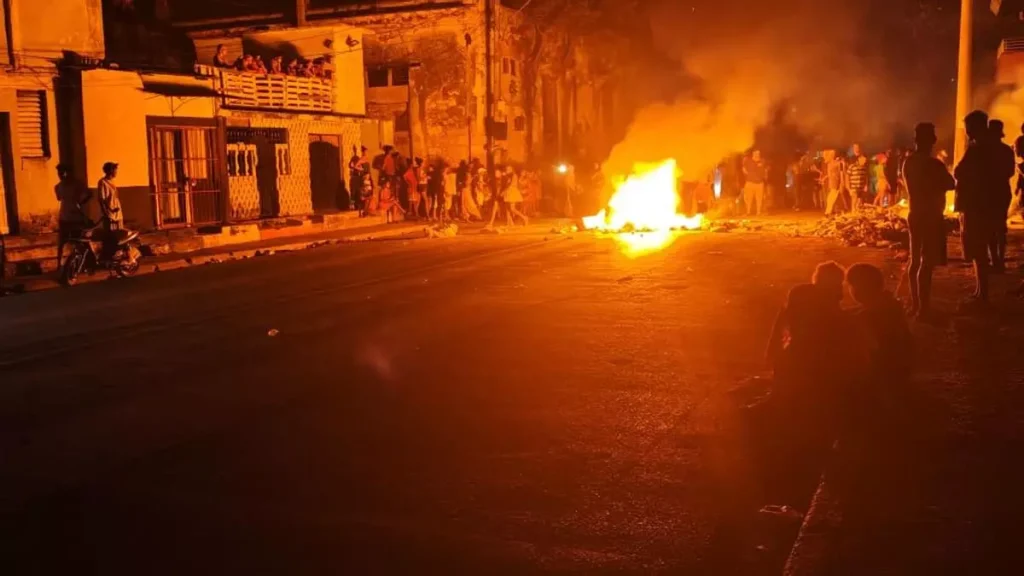
Smoke rises from several corners. Garbage accumulated for days burns in the streets. Plastic burns, rotten food burns, and patience burns. The air seems to come from a diseased factory. People cross those toxic clouds dodging sewage water, loose wires, holes, and rubble. Havana breathes with lungs full of ash.

But the bombs still have not fallen. The Island reached the postwar period before going through the war. The entire country has been devastated by a regime more persistent than white phosphorus.

In that landscape, the external threat appears almost like a gift for those in power. The Trump Administration mixes sanctions, diplomatic pressure, and increasingly harsh warnings. But everything indicates, for now, that Washington prefers to force a negotiation rather than open fire. The regime’s strategists seem to have understood this. That is why they play for time, raise the tone, overact resistance, and transfer—as always—the full weight of the crisis onto the shoulders of the people.

When there is no prosperity left to promise nor future left to administer, there is always the besieged square. / 14ymedio

Díaz-Canel is not afraid of ending up like Maduro. The former Venezuelan dictator, at least until today, remains alive, protected, and turned into a judicial piece rather than a corpse. The gray-haired diva from Placetas fears another kind of ending. He fears ending up like Ochoa, like the de la Guardia brothers, or like Alejandro Gil: devoured by the same machinery he helped sustain. But what truly should keep him awake at night is ending up like Ceausescu, suddenly facing a crowd that no longer obeys or applauds.

That is why the external threat seems less nightmarish to him. It allows him to play the victim, gather international solidarity, and demand absolute loyalty within the borders. The external enemy is the narrative oxygen of every exhausted dictatorship. When there is no prosperity left to promise nor future left to administer, there is always continue reading

the besieged square.

In political science there is a social phenomenon called rally round the flag: the closing of ranks around the flag. John Mueller studied it in 1970 while analyzing spikes in presidential popularity during international crises. William Baker and John Oneal later expanded the debate about its causes. When a community feels attacked from outside, even those who detest the government may lower the volume of their reproaches so as not to appear allied with the aggressor.

Iran offers a recent example. The Islamic Republic has repressed protests, imprisoned dissidents, and governed through terror. However, in the face of attacks or external threats, critical sectors may close ranks in the name of national sovereignty. The external threat does not erase internal discontent, but it can discipline it for a time. It does not convince everyone; it is enough if it paralyzes a few.

A real external threat would allow him to disguise mediocrity as martyrdom

Cuba is not Iran, but the mechanism is similar. Many critical voices inside and outside the Island perfectly recognize Castroism’s responsibility for the national ruin. But faced with the possibility of foreign intervention, some weigh every word, postpone demands, and moderate their tone. They fear appearing, through manipulation or clumsiness, in the invader’s photo. The regime knows that hesitation. It exploits it without scruples. It needs Washington to shout so it can demand silence in Havana.

For Díaz-Canel, a war against the United States could also function as retrospective absolution. His administration has been disastrous. His authority is borrowed. His popularity has never even approached discreetly decent figures. A real external threat would allow him to disguise mediocrity as martyrdom.

And part of the international press would seize the opportunity to tell the worn-out story of the besieged small country, the uncompromising leader, the modern Numancia. That is all the stage scenery Castroism needs to hide hunger, garbage, blackouts, prisons, and fear.

Raúl Castro’s grandson has been closer to the CIA than the most radical of the Cuban opposition

But reality insists on ruining their script. In Cuba, despite the blackmail of the besieged flag, protests are indeed taking place. They are not always massive nor organized. Sometimes they are merely a street standing its ground, a neighborhood shouting, pots and pans banging in the middle of blackouts, a garbage dump in flames, or a mother who cannot take it anymore. But they exist. And that is precisely what terrifies the regime.

Those in power would like to convince the world that every internal protest is an enemy operation. They would like every outraged Cuban to have to choose between patriotic hunger and the foreign missile. They would like to reduce the country to two miserable options: obey the Party or serve as a pretext for Washington. But after decades of accusing us of being “CIA agents,” now it turns out they are the ones sitting comfortably chatting with the ogre from the story. Raúl Castro’s grandson has been closer to the CIA than the most radical of the Cuban opposition.

The scenario the regime fears most is the insubordination of the hungry. Not the aircraft carrier facing the Malecón, but the entire neighborhood facing Party headquarters. Not the attack order signed in Washington, but the intimate, collective, and irreversible decision to lose fear in Cuba. If the social explosion repeats itself, Díaz-Canel will discover that his true ending was not written in English, but in Cuban.

Translated by Regina Anavy

______________________

COLLABORATE WITH OUR WORK: The 14ymedio team is committed to practicing serious journalism that reflects Cuba’s reality in all its depth. Thank you for joining us on this long journey. We invite you to continue supporting us by becoming a member of 14ymedio now. Together we can continue transforming journalism in Cuba.

Drastic Reduction of Transportation in Cuba and Priority Given to the Use of Electric Tricycles

  • Rodríguez Dávila announces “adjustments in public services” while his ministry wastes fuel in its enormous Havana building, where generators run day and night.
  • Starting in June, the frequency of trains to eastern Cuba will be reduced to one trip every two weeks; bus service between Havana and the provinces will be limited to three weekly departures.
While the leaders continue moving around in long car caravans, they are reducing Cubans’ mobility even further. / 14ymedio

14ymedio bigger14ymedio, Havana, May 16, 2026 – The Cuban Government once again asked for sacrifices from a population that already has almost no way to move around. Faced with an “acute fuel shortage,” the Ministry of Transportation announced a drastic reduction in national, railway, and maritime services, while placing electric tricycles, eco-cars, and other alternative means as part of the official response to a crisis that is increasingly paralyzing daily life on the Island.

Minister Eduardo Rodríguez Dávila reported this Friday on new “adjustments in public passenger services” and on the priority that will be given to the transportation of fuel, food, medicines, raw materials, and products intended for export. He also assured that Public Health and Education would receive differentiated treatment, although the package of measures confirms that traveling within Cuba will, from now on, become even more difficult.

The announcement contrasts with the usual image of the Ministry of Transportation itself, housed in an enormous Havana building where, according to residents and passersby in the Nuevo Vedado neighborhood, generators remain running day and night every time the power goes out, for as long as 20 consecutive hours. While Cubans are asked to resign themselves to fewer buses, fewer trains, and fewer maritime trips, the state headquarters maintains fuel consumption that many consider wasteful amid the energy emergency.

Routes to Santiago de Cuba, Guantánamo, Holguín, and Bayamo-Manzanillo will operate with one round trip approximately every two weeks.

National Bus routes will maintain their current schedule only until 11:59 p.m. on June 17, after the minister himself acknowledged in March that only a quarter of provincial buses and one train every eight days were operating. Beginning on the 18th, trips between Havana and provincial capitals will be reduced to three weekly frequencies. Manzanillo and Baracoa will have only one departure per week.

In the case of maritime transportation to the Isle of Youth, the ferry between Nueva Gerona and Batabanó will keep its two weekly trips — Tuesdays and Saturdays — until June 16. Starting on the 20th of that month, the service will be reduced to a continue reading

single weekly frequency, departing Nueva Gerona on Saturdays at 7:00 a.m. and returning from Batabanó at 4:00 p.m.

Rail transportation is also not escaping the cutbacks. National trains will maintain their schedule during the remainder of May and the first half of June, but afterward the routes to Santiago de Cuba, Guantánamo, Holguín, and Bayamo-Manzanillo will operate with one round trip approximately every two weeks. The rest of the interprovincial and local rail services will remain suspended, except for cases such as the railcars of Boquerón and Caimanera, in Guantánamo.

“I know the population wants private drivers to charge 20 pesos and not 500 or 600, but it’s not possible.”

National air links to Santiago de Cuba, Holguín, and Nueva Gerona will remain “as long as operational conditions allow.” Viazul services will also continue, with sales in foreign currency through the Clásica card, an option inaccessible to much of the Cuban population that earns salaries in national currency.

The minister also acknowledged the impact of private transportation prices, whose fares have skyrocketed in recent years amid fuel shortages and a new gasoline sales scheme in dollars that also fails to guarantee supply for private citizens. “I know the population wants private drivers to charge 20 pesos and not 500 or 600, but it’s not possible,” he said, justifying that transport operators must pay for fuel, repairs, and their own compensation.

The crisis will also affect local transportation. Each province will have to decide which urban, suburban, intermunicipal, rural, railbus, and boat routes it considers essential, according to available fuel supplies.

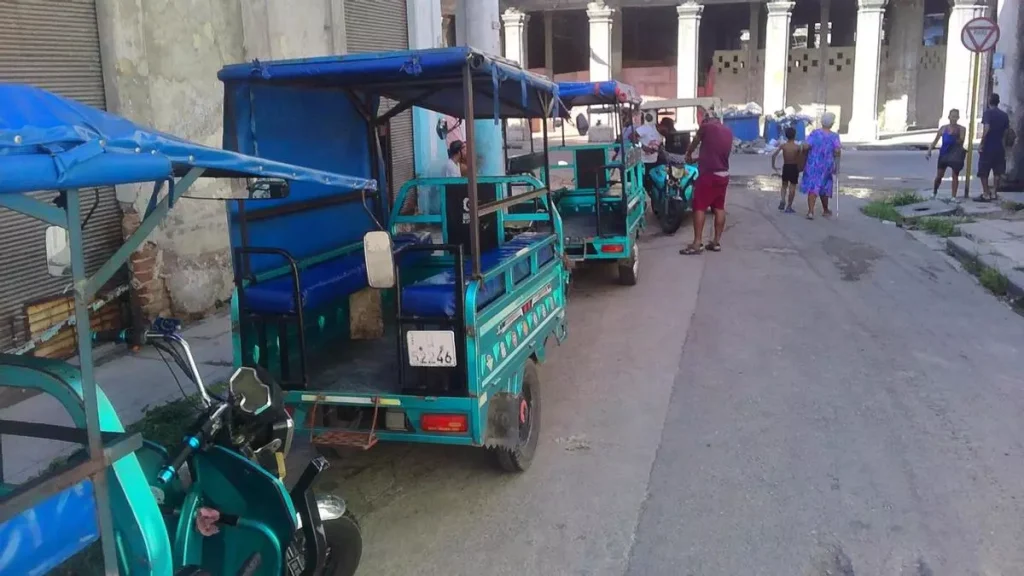
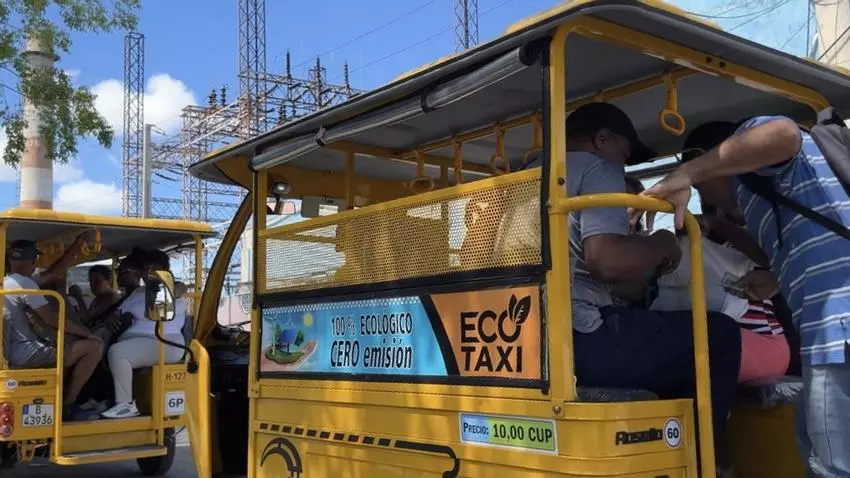
The minister asked to “make the maximum use” of state and private electric tricycles on the routes with the greatest demand. / 14ymedio

The government’s major bet, however, is once again electric mobility. Rodríguez Dávila announced the acceleration of the entry into service of 200 electric cars intended for medical services, currently at port, as well as the incorporation of a final batch of 150 electric tricycles, with priority given to municipalities.

The minister asked to “make the maximum use” of state and private electric tricycles on the routes with the greatest demand, speed up licenses for those providing services with electric vehicles, and put into operation solar charging stations for the country’s 19 electric tricycle and eco-car bases. According to the Government, these bases will operate independently from the national electric system (SEN), in a country where blackouts continue to define daily routine.

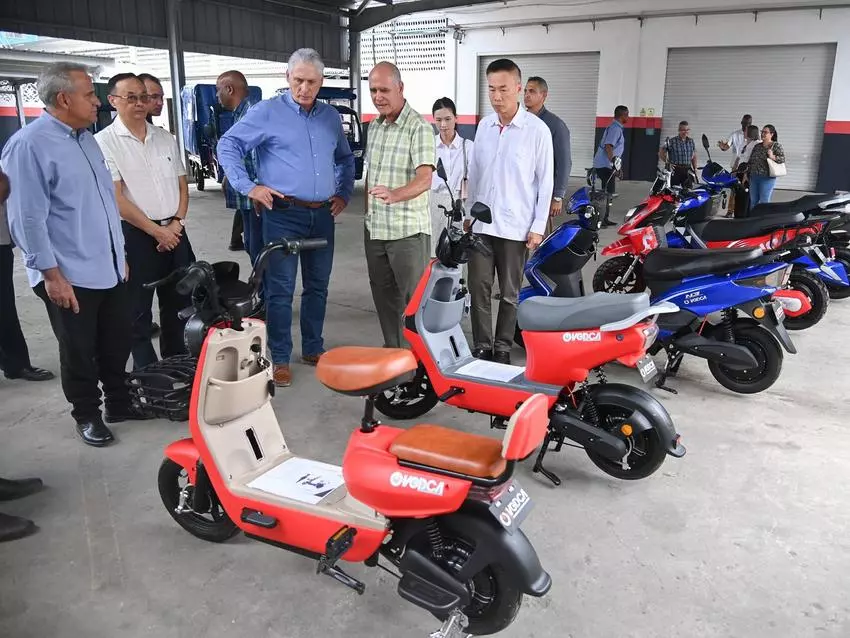
The emphasis on electric vehicles is not coming only from the Ministry of Transportation. Parallel to the announcement of the cutbacks, Miguel Díaz-Canel visited the company Vehículos Eléctricos del Caribe, known as Vedca, an international economic partnership between the Cuban state company Minerva and the Chinese company Tianjin Dongxing. There, the president described the factory as a “little jewel” and called for it to be “protected.”

The company, located in Boyeros, assembled more than 10,000 units last year and billed more than 12 million dollars in 2025, according to its executives. Vedca now aims to transform itself into a mixed enterprise, manufacture metal structures for tricycles in Cuba using laser cutting and robotic welding technology, and introduce electric pickup trucks.

Vedca motorcycles cost more than 1,200 dollars and tricycles range between 3,000 and 5,000 dollars, figures unimaginable for those who depend on a salary in pesos. / Cubadebate

But the commercialization model itself shows the limits of that solution for most Cubans. Vedca sells its products through international payment gateways; that is, with money sent from abroad, and through foreign-currency retail chains. In the available offers, motorcycles exceed 1,200 dollars and tricycles range between 3,000 and 5,000 dollars, figures unimaginable for those who depend on a salary in pesos. The company plans to open mixed TRD-Vedca stores in Havana, Villa Clara, Santiago de Cuba, and Holguín.

The company has 96 workers, an average salary of 16,500 pesos, and plans to enter a system of bonuses paid in foreign currency. Its executives also stated that the partner-administrative building already operates with a photovoltaic system and that by August or September they hope to disconnect the entire facility from the SEN. They also announced that the next tricycles will arrive with built-in solar panels.

During the visit, Díaz-Canel presented the factory as an example of cooperation with China and as part of the country’s so-called “energy transition.” The ambassador in Havana, Hua Xin, promised that Beijing would maintain its support for Cuba in that process. The Cuban leader, for his part, said he would return before the end of the year and asked workers to let him know if “anything gets stuck.”

While the leaders continue traveling in long car caravans, they are reducing Cubans’ mobility even further. The electric tricycle may ease some local routes, but it does not replace a national transportation network or solve the growing isolation between provinces.

Translated by Regina Anavy

______________________

COLLABORATE WITH OUR WORK: The 14ymedio team is committed to practicing serious journalism that reflects Cuba’s reality in all its depth. Thank you for joining us on this long journey. We invite you to continue supporting us by becoming a member of 14ymedio now. Together we can continue transforming journalism in Cuba.

The U.S. Takes Steps Toward Charging Raúl Castro Over the Shootdown of the Brothers to the Rescue Planes

Cuban José Basulto, founder of Brothers to the Rescue, remains “skeptical” about the charges against the former president of the island.

Raúl Castro and his grandson, Raúl Guillermo Rodríguez Castro, “El Cangrejo,” [The Crab] in the former leader’s most recent public appearance on May 1 / Cubadebat
14ymedio bigger14ymedio, Madrid, May 15, 2026 — The United States is preparing a formal indictment against former president Raúl Castro for the 1996 downing of the Brothers to the Rescue planes, according to sources cited by the Miami Herald.

The CBS had already reported on Thursday that the Justice Department was considering filing charges against Fidel Castro’s younger brother in that case, one of the most tense episodes in the relationship between Washington and Havana in recent decades.

According to the Miami Herald, the indictment will be announced during an event at the Freedom Tower in Miami commemorating Cuban Independence Day, following approval by a grand jury. The event will also include a tribute to the four victims of the incident.

Asked about those reports on Friday while returning from China aboard Air Force One, US President Donald Trump declined to comment, saying he did not want to make a statement.

So far, the US government has not officially confirmed the possible indictment.

The case dates back to February 1996, when Brothers to the Rescue aircraft were shot down by Cuban forces in an incident that killed four people and led to a serious diplomatic crisis between the two countries.

Donald Trump declined to comment, saying he did not want to make any remarks.

Florida Governor Ron DeSantis reacted favorably to the information published by CBS and wrote on the X network: “Go ahead, it was about time.”

The possibility of bringing charges against Raúl Castro arises amid the hardening of Washington’s policy towards Cuba since Trump’s return to the White House in January 2025.

Raúl Castro, 94, formally stepped down as head of the Communist Party of Cuba in 2021, although he is still considered an influential figure within the Cuban political apparatus.

His grandson, Raúl Guillermo Rodríguez Castro, alias El Cangrejo [the Crab], has been mentioned in recent contacts between representatives of both countries. continue reading

The information about the possible indictment comes a day after the director of the Central Intelligence Agency (CIA), John Ratcliffe , met in Havana with Cuban leaders, including Castro’s grandson, according to reports divulged about the meeting.

According to these versions, Ratcliffe conveyed Washington’s conditions for handling relations with Cuba, amid pressure exerted by the United States on the island, which includes an oil embargo imposed since last January.

For his part, Cuban José Basulto, founder of Brothers to the Rescue, remains “skeptical” about achieving justice and change on the Island despite reports about the indictment of Castro.

“I am confident that justice will be achieved, a justice that is long overdue, because, I repeat, they have let so much time pass.”

“I remain skeptical until the point where action is taken, and the action to be taken is the criminal prosecution of Raúl Castro, who gave the orders, and of all those who cooperated with Raúl Castro in the assassination,” Basulto said in an interview with EFE in Miami.

The dissident, one of the leaders of the exile community in the US, pointed out that “justice delayed is justice denied” in response to reports that the Administration of Donald Trump is preparing a formal indictment against Castro, then Minister of the Armed Forces of Cuba, for shooting down Brothers to the Rescue planes on February 24, 1996.

Basulto, who founded the organization to help rafters fleeing the island, survived the attack, but has since sought justice for the deaths of American pilots Mario de la Peña, Carlos Costa, and Armando Alejandre Jr., and legal resident Pablo Morales, all of Cuban origin.

“I trust that justice will be achieved, a long-awaited justice, because, I repeat, they have let so much time pass: delegated justice, denied justice. And what can I say? I believe this should have happened a long time ago,” the founder of Brothers to the Rescue insisted.

The Cuban leader responds that “everything is possible” amid the expectation that Castro will face the same fate as the deposed Venezuelan ruler Nicolás Maduro, captured by the United States on January 3 in Caracas following a formal accusation by the Department of Justice.

“Anything is possible, but you’d have to ask the administration of Mr. Trump, who is the one who makes these decisions. I hope the United States decides to take action against this vile act against the pilots,” Basulto replied from his home.

“Anything is possible, but you’d have to ask the administration of Mr. Trump, who is the one who makes these decisions.”

The 85-year-old activist doubts the productivity of the negotiations between Washington and Havana, which include Raúl Castro’s grandson, opining that change would only occur with a “unilateral action” by the United States against the Cuban government.

Meanwhile, the indictment against Raúl Castro must be approved by a grand jury, CBS notes, framing the information in any case within a context of maximum pressure from the US, with an oil blockade that has Cuba on the verge of energy collapse, surviving thanks to the import permit for private entities issued by the Office of Foreign Assets Control (OFAC) of the US Treasury Department.

Because of the downing of the Brothers to the Rescue planes, Florida Attorney General James Uthmeier opened a statewide criminal investigation last March against Raúl Castro, now 94 and then Minister of the Armed Forces of Cuba, who was identified as responsible for ordering the attack.

That day, two twin-engine Cessnas flying over the Florida Straits were shot down by Cuban Air Force MiG-29 fighter jets. Three Americans and one Florida resident, all of Cuban origin, died: Carlos Costa, Armando Alejandre Jr., Mario de la Peña, and Pablo Morales. The tragedy triggered a diplomatic crisis between Washington and Havana and led, weeks later, to the tightening of the embargo with the passage of the Helms-Burton Act.

Brothers to the Rescue was a non-profit organization founded in Miami in the early 1990s. Its members patrolled international waters in search of Cuban rafters attempting to flee the island. Havana accused them of violating its airspace and carrying out political provocations. Washington always maintained that the downed flights were in international airspace, and this was confirmed by reports from the International Civil Aviation Organization (ICAO) and the Inter-American Commission on Human Rights, an autonomous body of the Organization of American States.

The reopening of the case, however, faces legal and practical obstacles.

Subsequent investigations revealed that at least two Cuban agents infiltrated into Brothers to the Rescue provided detailed information about flight routes and schedules to the Cuban government, facilitating the military operation. In 2003, a U.S. federal court indicted a Cuban general and two fighter pilots for the downing. However, no formal charges were ever filed against the Castro brothers.

The 1996 downing marked a turning point in bilateral relations and solidified the perception that the Cuban government was prepared to use lethal force against civilians in the context of the migration conflict.

he reopening of the case, however, faces legal and practical obstacles. Raúl Castro does not reside in the United States, and although an old bilateral extradition treaty exists, it has not been enforced since 1959.

In a social media post Thursday night, responding to the information revealed by CBS, Florida Governor Ron DeSantis wrote: “Let ‘er rip, it’s been a long time coming!”

Translated by Regina Anavy

______________________

COLLABORATE WITH OUR WORK: The 14ymedio team is committed to practicing serious journalism that reflects Cuba’s reality in all its depth. Thank you for joining us on this long journey. We invite you to continue supporting us by becoming a member of 14ymedio now. Together we can continue transforming journalism in Cuba.

A Transition for Cuba Cannot Be Based on Secular Saints

Reflections on Rolando Gallardo’s proposal for the republican refoundation of Cuba

There is exhaustion, disillusionment, anger, and a desire for escape, but the desire for change does not automatically equal the capacity for insurrection. / 14ymedio

14ymedio bigger14ymedio, Málaga, José A. Adrián Torres, May 15, 2026 — I read with great interest Rolando Gallardo’s article on the need for a republican refoundation in Cuba. I agree with much of the diagnosis: speaking of a conventional transition may be insufficient for a country where the regime has degraded not only institutions, but also social trust, personal initiative, public responsibility, and collective hope. Cuba is not facing merely the problem of replacing one government with another; it is facing the much more arduous challenge of rebuilding a political community after decades of fear, dependence, simulation, and moral impoverishment.

Precisely for that reason, the author’s proposal seems lucid in its starting point but overly confident in its development. The idea of a civil council made up of jurists, intellectuals, and figures of proven integrity may be desirable as a goal, but it risks resting on an excessively idealistic premise: that a group of morally qualified individuals, without immediate political ambitions and motivated by patriotism, will be capable of managing a transition of enormous complexity without becoming trapped by interests, factions, external pressures, or internal power struggles.

That assumption recalls, despite all differences, another form of anthropological faith: the belief that a political process can produce new men, selfless, virtuous, and devoted to the common good. Castroism turned that fantasy into revolutionary dogma, and reality ultimately showed something far older and less epic: human beings do not cease to have interests, vanities, fears, loyalties, and appetites simply because they are assigned a historic mission.

The Cuban transition will certainly need valuable people. But it cannot rest on the presumed moral purity of its protagonists

The Cuban transition will certainly need valuable people. But it cannot rest on the presumed moral purity of its protagonists, but rather on rules, limits, oversight, counterweights, and verifiable procedures. The problem is not finding heroes; the problem is building institutions that function even when the heroes grow tired, make mistakes, or begin behaving like continue reading

any ordinary person with a bit of power in their hands.

It is also important not to underestimate the degree of discouragement in Cuban society today. The Cuban people are not incapable, nor do they lack dignity, nor have they completely lost their instinct for freedom. But they are exhausted, impoverished, monitored, fragmented, and for too long accustomed to surviving rather than organizing. To think that a massive, spontaneous, and sustained internal mobilization alone will be enough to bring about change may be as naïve as thinking that a transitional administration led by an enlightened elite will solve the problem from above.

Here emerges a decisive issue that the article does not sufficiently develop: the relationship between internal repression, popular mobilization, and the legitimacy of any external assistance. In other communist regimes with strong police control, such as East Germany or Ceaușescu’s Romania, the fall of the system was preceded by visible, extensive, and difficult-to-hide popular pressure. It was not merely a problem of economic exhaustion or ideological decay: there came a moment when fear stopped functioning as the regime’s cement. The streets, with all their risks, produced an unequivocal image: society had publicly broken the pact of obedience.

The regime no longer convinces, but it still manages fear, fatigue, and social fragmentation. That is no small thing.

In Cuba, by contrast, that rupture has yet to consolidate. There have been significant outbreaks, and the Island-wide protests of 11 July 2021 showed that there was a real reserve of protest and exhaustion. But it also demonstrated the repressive effectiveness of the state apparatus and the extremely high personal cost of challenging it. Since then, protest has appeared fragmented, intermittent, and often absorbed by the daily struggle to survive: obtaining food, electricity, medicine, transportation, or simply escaping. The regime no longer persuades, but it still administers fear, fatigue, and social fragmentation. That is no small thing. The Cuban dictatorship may no longer possess epic appeal, but it still retains police, archives, prisons, informants, and considerable experience in crushing wills.

This absence of massive and sustained internal mobilization greatly complicates any hypothesis of decisive external assistance. A U.S. intervention—military, coercive, humanitarian, or presented as a stabilization operation—would require some kind of internal political legitimization: a widespread uprising, a visible fracture within the Armed Forces, an explicit request from recognizable transitional authorities, or a humanitarian crisis impossible to contain. Without such a trigger, assistance would risk appearing not as aid to an uprising nation, but as an external imposition. And there the regime, even moribund, would find its final propaganda fuel: presenting itself as the defender of national sovereignty against the old imperial enemy.

This point is especially delicate when considering current U.S. policy toward Cuba. Certain sectors, with figures such as Marco Rubio and Donald Trump himself, seem positioned within a logic of maximum pressure and strategic waiting: tightening the siege, hardening the rhetoric, and awaiting an internal situation that would make a more direct intervention politically viable. But that expectation requires a fuse inside the Island. Without a clear sign of popular rebellion, without an organized internal demand, and without a fracture within the power apparatus, any external action would be morally and politically exposed. It would not be enough to claim that Cuba is being helped; it would have to be demonstrable that assistance is being provided to a Cuba that has risen up.

Any intervention raises questions that cannot be solved with anti-Castro enthusiasm: who governs the next day? With what legitimacy? Under what international mandate?

From there arises the most uncomfortable question: the role of the United States and the Cuban diaspora. It is reasonable to admit that any real transition in Cuba will require external backing, economic assistance, security guarantees, technical support, and intense participation from the exile community. To deny this would be to repeat the old nationalist reflex that the regime itself has used for decades to shield itself. But something very different is turning that support into opaque political tutelage or, worse, into a military intervention born from a provoked or instrumentalized crisis.

An intervention by force might appear, in the abstract, to be the quickest solution. But every intervention opens questions that cannot be resolved through anti-Castro enthusiasm: who governs the next day? With what legitimacy? Under what international mandate? For how long? What is done with the Armed Forces? How are looting, revenge, mass flight, or the emergence of new mafia powers prevented? How can wounded nationalism be prevented from turning former oppressors into supposed defenders of sovereignty?

Cuba is not Iraq or Libya, certainly. It has a history, a diaspora, a cultural and family proximity to the United States, and a unique relationship with Miami that make the scenario different. Nor does there seem to exist in Cuba a deep and majority identification with the regime comparable to what other authoritarian systems managed to preserve for longer. There is exhaustion, disillusionment, anger, and a desire to leave. But the desire for change does not automatically equal the capacity for insurrection. Between wanting something to fall and assuming the risk of pushing it lies an enormous distance, especially when the person pushing knows they may end up in prison, in exile, or with their family ruined.

It will not be enough to expel Castroism from power; it will be necessary to prevent it from surviving in practices, fears, corruption, dependence, and the culture of simulation.

For that reason, the solution cannot be conceived solely as the overthrow of the regime. It must be conceived as the reconstruction of legitimate authority. And legitimacy is not imported wrapped in humanitarian aid, nor does it disembark intact at a port under military protection. It is built, negotiated, recognized, and subjected to limits. The exile community can contribute resources, vision, international pressure, and economic experience; the United States can offer guarantees, assistance, and deterrent capacity; but the ultimate legitimacy of Cuba’s refoundation will have to arise, in some way, from Cubans on the Island themselves. Without that anchor, the transition risks appearing as a replacement of tutelage: from Castroist tutelage to external tutelage, even if the latter comes wrapped in flags of freedom.

Therefore, rather than an administration of notables or a military takeover, Cuba would need a transition architecture with international backing, decisive participation by Cubans both inside and outside the Island, security guarantees, institutional purging, transitional justice, orderly economic opening, and a realistic political timetable. It will not be enough to expel Castroism from power; it will be necessary to prevent it from surviving in practices, fears, corruption, dependence, and the culture of simulation.

The Cuban problem, therefore, does not consist solely in designing a transition architecture for the day after. The prior problem is how to reach that day. The author seems to trust that the collapse of the regime will naturally open a space for a supervised civil administration. But that collapse may not occur in a clean or heroic way. It may take the form of prolonged degradation, dispersed social protests, mass migration, energy collapse, internal fractures within the apparatus itself, or a chaotic combination of all these things. In that scenario, the question is not only who will rebuild Cuba, but what type of event will grant legitimacy to the beginning of that reconstruction.

The great difficulty will not only be toppling an exhausted structure. The great difficulty will also be preventing the vacuum from being occupied by the same reflexes that made it possible: caudillismo, clientelism, external dependence, redemptive epic narratives, and contempt for institutions. In this, the article is entirely correct: Cuba needs architecture, not romanticism. But that architecture will have to be designed for real human beings, not administrative heroes or republican saints. And it will have to begin from an uncomfortable truth: without a sufficiently strong, visible, and sustained internal signal, any external assistance risks becoming, in the eyes of many, an intervention. And any intervention without internal legitimacy may end up giving Castroism its final disguise: that of the patriotic victim of foreign aggression.

Translated by Regina Anavy

______________________

COLLABORATE WITH OUR WORK: The 14ymedio team is committed to practicing serious journalism that reflects Cuba’s reality in all its depth. Thank you for joining us on this long journey. We invite you to continue supporting us by becoming a member of 14ymedio now. Together we can continue transforming journalism in Cuba.

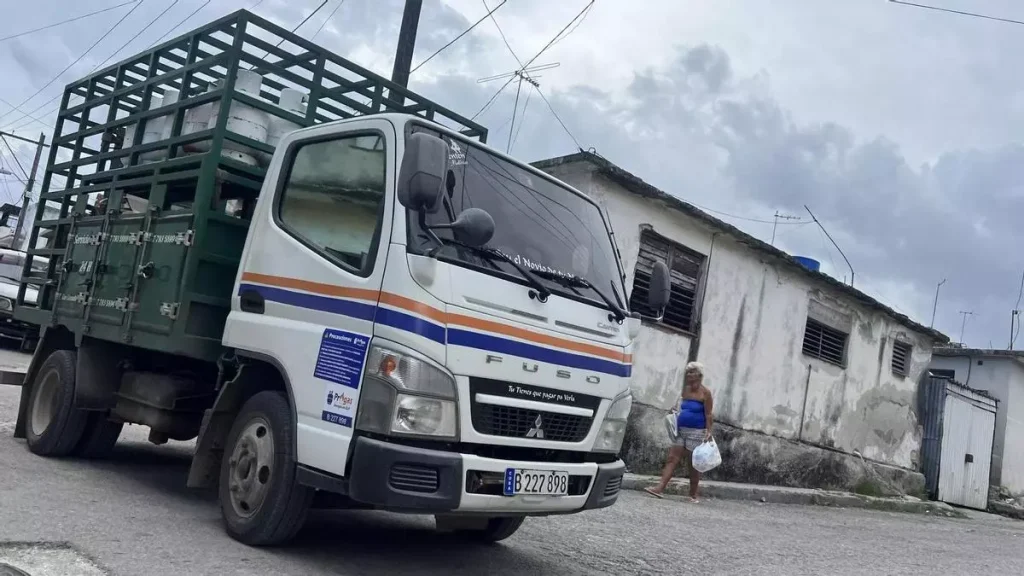
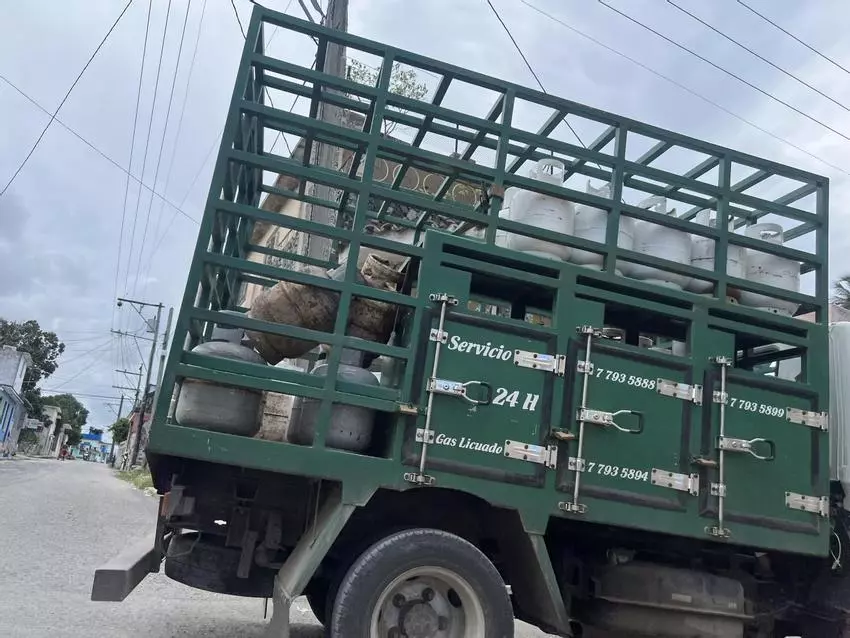
The Gas Cylinders That Aren’t for Everyone in Cuba

Residents of a street in Guanabacoa watch the Supermarket23 delivery truck with longing

The gas cylinders it carries are not for everyone, and even less so for the impoverished pockets of most residents on that block. / 14ymedio

14ymedio bigger14ymedio, Havana, Darío Hernández, May 15, 2026 — A liquefied gas delivery truck passes through Guanabacoa, in Havana, under the longing gaze of most of the neighbors. The gas cylinders it carries are not for everyone, and even less so for the impoverished pockets of most residents on that block of Delicias Street, between Potosí and Gloria.

It is liquefied petroleum gas (LPG) that can be purchased through the online store Supermarket23, in dollars and from abroad, at a price of 29 dollars per cylinder, including home delivery. The recipient is a woman whose son lives in the United States. On the same street, people have no choice but to cook with charcoal, or eat only bread.

The sale of gas cylinders in Cuba recently took a turn when, for the first time, Supermarket23 began offering the product in dollars / 14ymedio

The sale of this fuel in Cuba recently took a turn when, for the first time, the digital sales platform began offering the product in dollars and outside the rationed system, amid this unprecedented energy crisis. This has marked a turning point in the commercialization of a product that, until now, had been tied to a state-regulated distribution system and available only in pesos.

It has also created a new social divide between those who have relatives abroad, who can avoid the long lines and uncertainty of the domestic supply system, and the rest of the population, forced to depend on a completely ineffective system. On this street in Guanabacoa, only one family is privileged.

Translated by Regina Anavy

______________________

COLLABORATE WITH OUR WORK: The 14ymedio team is committed to practicing serious journalism that reflects Cuba’s reality in all its depth. Thank you for joining us on this long journey. We invite you to continue supporting us by becoming a member of 14ymedio now. Together we can continue transforming journalism in Cuba.

Rubio: ‘Wealth in Cuba Is Controlled by a Company of Military Officers Who Keep All the Money’

The U.S. secretary of state again insisted that “additional designations can be expected in the coming days and weeks”

The Gran Muthu Habana was built a few years ago by Gaesa in Playa, Havana. / 14ymedio

14ymedio biggerEFE/14ymedio, Washington, May 14, 2026 — United States Secretary of State Marco Rubio once again lashed out at the Cuban Government this Wednesday, asserting that the Island is “controlled by a company owned by military generals,” in a new criticism amid Washington’s pressure on Havana, which has intensified in recent weeks.

“Wealth in Cuba is controlled by a company owned by military generals who keep all the money,” Rubio stated during an exclusive interview with Fox News, broadcast Wednesday night and recorded aboard Air Force 1 en route to China.

The head of U.S. diplomacy, who has Cuban roots, also warned that people in Cuba are currently “literally eating garbage off the streets” while at the same time the “company” that controls the Island has “16 billion dollars” at its disposal.

The head of U.S. diplomacy, who has Cuban roots, also warned that people in Cuba are currently “literally eating garbage off the streets”

Last week, the United States announced sanctions against the Cuban military conglomerate GAESA, its director, and Moa Nickel, a joint venture with the Canadian company Sherritt International, as part of actions aimed at strangling the Island’s economy amid threats by President Donald Trump to take control of the country.

These new “decisive measures” by Washington seek “to protect the national security of the United States and deprive Cuba’s communist regime and military forces of access to illicit assets,” Rubio said.

“Just 90 miles from U.S. territory, the Cuban regime has continue reading

driven the Island into ruin and auctioned it off as a platform for foreign intelligence, military, and terrorist operations. Additional designations can be expected in the coming days and weeks,” Rubio added.

According to the State Department, the military company GAESA “constitutes the heart of Cuba’s kleptocratic communist system,” controlling “an estimated 40% or more of the Island’s economy” for the benefit of “corrupt elites,” while the Cuban people endure one of the most severe economic crises in the country’s history.

Last March, however, an official close to talks between the United States and Cuba affirmed precisely that the precarious economic situation of GAESA could serve as leverage for change. The information was published by The Economist, which argued that Gaesa’s collapse is due to having invested 70% of its resources over the last 10 years in a tourism sector that is now practically at zero.

“Before the United States tightened restrictions, Gaesa barely had one billion dollars in reserves”

“Before the United States tightened restrictions, Gaesa barely had one billion dollars in reserves. That figure is rapidly declining, as its luxury hotels remain empty,” the article said, estimating Cuba’s international reserves at around 3 billion dollars.

Trump signed a new executive order on May 1 extending the scope of sanctions against Cuba to include almost any non-U.S. person or company doing business with the Island, especially in the energy, defense, security, and financial sectors.

This adds to the oil blockade imposed in January by the American president, who has said he will “take control” of Cuba “almost immediately” and could deploy the USS Abraham Lincoln to Caribbean waters.

On Tuesday, before departing for China, Donald Trump said that Cuba’s situation was that of “a failed country” that “is asking for help, and we’re going to talk!”

Translated by Regina Anavy
______________________

COLLABORATE WITH OUR WORK: The 14ymedio team is committed to practicing serious journalism that reflects Cuba’s reality in all its depth. Thank you for joining us on this long journey. We invite you to continue supporting us by becoming a member of 14ymedio now. Together we can continue transforming journalism in Cuba.

Cuba’s Electric Union Announces a 2,200 MW Deficit After a Turbulent Night of Protests in Havana

The system disconnected early this morning from Ciego de Ávila to Guantánamo, and the Antonio Guiteras thermoelectric plant broke down again

Protests in Marianao, Havana, after more than 20 hours without electricity. / Mario Pentón/Facebook

14ymedio bigger14ymedio, Havana, May 14, 2026 – The night was turbulent in a Havana abandoned even by the breeze, and dawn does not look any better. Cuba’s Electric Union has announced the largest projected deficit in history for today, with 2,202 megawatts of outages expected during peak hours. For that time, and if nothing worsens, generation is estimated at 976 MW against a demand of 3,150.

The Antonio Guiteras thermoelectric plant disconnected again due to a boiler leak, adding its shutdown to that of Felton and creating a perfect storm that only lacked one more aggravating factor: at 6:09 a.m., a partial collapse of the electrical system occurred from the province of Ciego de Ávila to Guantánamo, and recovery efforts are currently underway through isolated energy islands.

All of this comes after a night of widespread protests in the capital, during a month of May already registering high temperatures. In the newsroom of 14ymedio, despite being on the highest floor, the heat was already unbearable yesterday, and summer, which is expected to be intolerable, has not even arrived yet. Even so, in Nuevo Vedado the many pot-banging protests that multiplied throughout the city during a blackout lasting more than 20 consecutive hours were not heard.

The fuse had been lit in San Miguel del Padrón, where in broad daylight yesterday and after 24 continuous hours without electricity, residents took to the streets banging pots and pans, demanding “electricity” and “food” and calling for solutions that ultimately arrived almost simultaneously with arrests. But tensions began spreading from neighborhood to continue reading

neighborhood.

Under cover of darkness, when identifying demonstrators becomes more difficult, the protests intensified. So much so that in the municipality of Playa, a police truck arrived at improvised barricades and bonfires, as shown in a video published by journalist Mario Pentón, to disperse the large group of people occupying the street.

In Diez de Octubre, several piles of garbage were also set on fire while horns blared and pots clanged. “My neighborhood, there’s no fear anymore. We want freedom, they won’t be able to stop an entire people,” wrote a resident in Santos Suárez, where the pot-banging protests were equally loud.

Cubans both inside and outside the Island proudly commented on the many videos circulating on social media when they recognized streets where they live or once lived. “My neighborhood heating up. Fire against the PNR [National Revolutionary Police],” urged a former resident of Lawton and Dolores in response to other images in which only the defiant noise and the powerful chiaroscuro of the bonfires amid another black night without power could barely be distinguished.

Chants and demands were also heard on San Lázaro, near the famous staircase of the University of Havana where, on a very distant day, Fidel Castro railed against Batista’s dictatorship. The same occurred in Guanabacoa, where it is difficult to find a place to charge a phone and even harder to charge a motorcycle in order to get around. “The 4G signal appears, but there is absolutely no connection,” one resident said.

The fact that Nuevo Vedado was calm last night does not mean its residents’ patience is immune to what is happening. On the contrary, the loud pot-banging protests heard Tuesday in the area around the Ministry of Transportation, even if they did not last very long, drew attention. The noise spread toward the area around the 14ymedio newsroom, surrounded by buildings where state officials reside, giving these protests added significance.

It is precisely the Ministry of Transportation that is one of the most effective blackout detectors in the area, since the noise from its generator begins instantly every time the electricity goes out.

Translated by Regina Anavy

______________________

COLLABORATE WITH OUR WORK: The 14ymedio team is committed to practicing serious journalism that reflects Cuba’s reality in all its depth. Thank you for joining us on this long journey. We invite you to continue supporting us by becoming a member of 14ymedio now. Together we can continue transforming journalism in Cuba.

Born to Cuban Parents, Pere Villacorta is a Defender in FC Barcelona’s Youth Academy

The left-footed player, born in 2010, can also play as a left back and defensive midfielder

Pere Villacorta joined Barça’s youth ranks in 2024 from RCD Espanyol / Instagram La Masia Promises

14ymedio bigger14ymedio, Andy Lans, Matanzas, May 13, 2026 — FC Barcelona’s youth academy has adorned Spanish football with great defenders. Names such as Gerard Piqué and Carles Puyol were written in the past in golden letters. Other current players like Pau Cubarsí and Gerard Martín inspire confidence for the present and the future. Meanwhile, another center-back of Cuban descent is being polished at La Masía: Pere Villacorta García.

As 14ymedio was able to confirm, the player born in Barcelona in 2010 has Cuban ancestry. His father is from Cienfuegos, and his mother from Havana. In addition to playing center-back, the left-footed player can also perform as a left back and defensive midfielder. On the field, he stands out for his personality, exquisite technique, and tactical maturity.

In his emerging career, he has passed through three prestigious football institutions in Catalonia

Pere Villacorta arrived at Barça’s youth academy in 2024 from RCD Espanyol, which had signed him in 2022 from CF Damm. As can be seen, in his emerging career he has already passed through three prestigious football institutions in Catalonia.

This season, Villacorta has been one of the key figures in Barcelona Under-16’s title in the Catalan Honor Division, with two matchdays still remaining before the championship concludes. Wearing his usual number 4 shirt and the captain’s armband, Pere has played 21 matches so far in the tournament, with the same number of starts and a pair of goals. Due to his strong performances, he has been rewarded with four call-ups and two appearances in the National Youth League with Barcelona Under-19 B.

Could Pere Villacorta join a Cuban national team? In theory, he is eligible through his parents’ birthplace, but he would need to obtain a Cuban passport and be recruited by the Cuban Football Association.

Translated by Regina Anavy

______________________

COLLABORATE WITH OUR WORK: The 14ymedio team is committed to practicing serious journalism that reflects Cuba’s reality in all its depth. Thank you for joining us on this long journey. We invite you to continue supporting us by becoming a member of 14ymedio now. Together we can continue transforming journalism in Cuba.