After more than 11 crimes so far this year and thousands of residents affected in the province, authorities are intensifying security measures
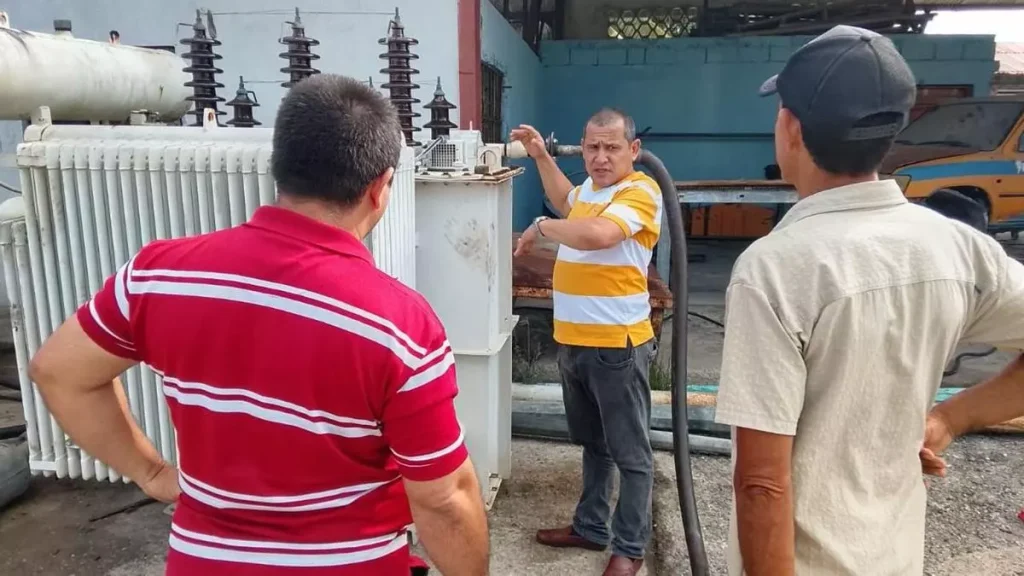
 14ymedio, Havana, May 18, 2026 — In Las Tunas, authorities have decided to strengthen security measures to prevent the theft of dielectric oil and transformer parts, in response to the rise in criminal activity in the province. In the municipality of Jesús Menéndez alone, 11 cases have been recorded so far this year, according to Anisley Santiesteban Velázquez, technical director of the province’s Electric Company, speaking to the state media Periódico 26.
The package of measures consists of reinforcing security at the 44 substations in the region considered “vulnerable.” It includes technical decisions such as repairing perimeter fences and installing nighttime lighting powered by solar panels, as well as increasing surveillance by assigning four security officers to each substation.
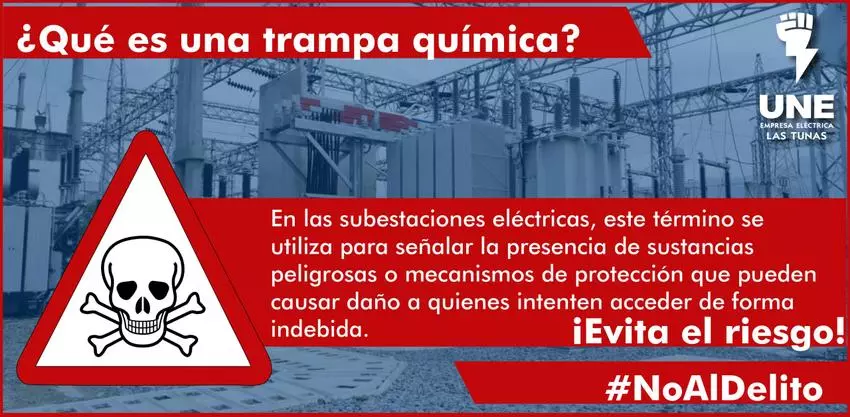
The most striking measure, and one the authorities themselves have publicized as a warning, is the installation of so-called “chemical traps.” This measure was not explained in detail “for security reasons,” although officials did say it is being carried out in cooperation with the Ministry of the Interior.
Warnings published by the Las Tunas Electric Company describe these traps as “the presence of dangerous substances or protective mechanisms that may cause harm to those attempting unauthorized access.”
Official warnings describe these traps as “dangerous substances or protective mechanisms that may cause harm to those attempting unauthorized access”
According to international technical literature from Strategic Directions, the principle behind these traps consists of introducing unique tracers in microscopic quantities into the fluids. These markers allow chemical analysis or simple forensic tests to determine the illicit origin of lubricants and provide judicial evidence against theft and illegal distribution networks.
The repair of perimeter fences at the 44 substations responds to the deterioration and damage these structures had suffered, which facilitated illegal access. The installation of nighttime lighting seeks to prevent perpetrators from acting under cover of darkness.
Regarding the security officers, Santiesteban Velázquez told the press: “We have the possibility of hiring security and protection agents for the substations. We are taking advantage of this opportunity to call on anyone interested in participating,” although the technical director did not detail the conditions of the offer.
Scarcity, necessity, and the opportunities of a black market that pays what the State cannot guarantee have multiplied thefts of fuel and dielectric oil in recent years. These acts directly affect the population but also endanger the perpetrators themselves, who in some cases have been injured or killed during the theft.
“They are leaving several communities, several towns without electricity”
The Periódico 26 article cites as an example the case of 4,000 residents in the Las Tunas locality of Yariguá, who have remained without electricity for four days due to these thefts, compounded by the national electricity generation deficit. The technical director identified these crimes as one of the main causes of the disruptions: “They are leaving several communities, several towns without electricity,” he said, urging residents to organize themselves. “I call for a collective and popular effort to protect our substations.”
Since last April, the Cuban Government has intensified criminal prosecution for any damage related to the national electrical system, when Prime Minister Manuel Marrero Cruz demanded a “heavy hand” against these crimes and increased efforts to combat the theft of fuel and dielectric oil from transformers.
In that context, the state press emphasized, as Periódico 26 also recalled today, that crimes against the national electric power system are considered “sabotage,” classified in the Cuban Penal Code with penalties that, depending on the severity of the act and its consequences, can reach up to 30 years in prison, life imprisonment, or even the death penalty.
This same Monday, in the Havana municipality of Guanabacoa, the arrest of the shift supervisor of the photovoltaic park in the locality of Barreras was reported after he stole more than 40 meters of electrical cable. The theft paralyzed the operation of 24 solar panels, which for several hours stopped generating electricity for the national power grid.
Translated by Regina Anavy
______________________
COLLABORATE WITH OUR WORK: The 14ymedio team is committed to practicing serious journalism that reflects Cuba’s reality in all its depth. Thank you for joining us on this long journey. We invite you to continue supporting us by becoming a member of 14ymedio now. Together we can continue transforming journalism in Cuba.