The question is not whether the regime will fall; it is whether Cuba will survive its own fall.
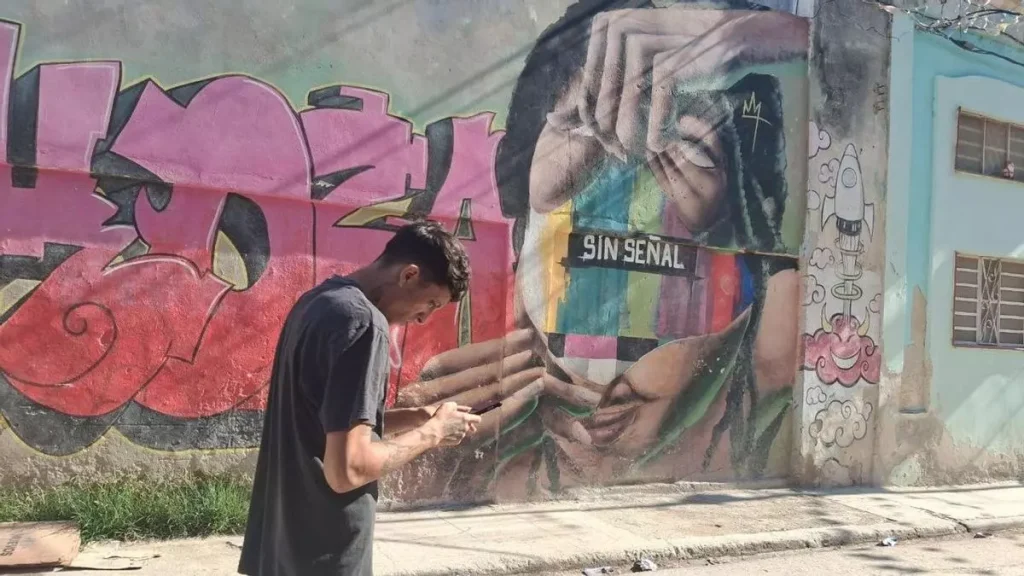
 14ymedio, Rolando Gallardo, Huesca (Spain), May 13, 2026 / There is a recurring fantasy in exile circles and in certain Washington offices: that of a people who one day awaken, take to the streets, and, with the sheer force of their weariness, restore democracy. It is a powerful and understandable image. It is also, at this point, dangerously naive.
The greatest obstacle to change in Cuba is not the longevity of a gerontocracy clinging to power, nor the loyalty of its generals. It is something more difficult to quantify and even more difficult to repair: the damage that 67 years of totalitarianism have inflicted on the very fabric of Cuban society. The regime not only destroyed institutions; it destroyed trust among neighbors. It replaced the social fabric with a network of surveillance and denunciation. It transformed envy of those who prosper into a civic virtue, and collective failure into proof of equality.
The result is profound fragmentation. Internal opposition exists, but it lives in extreme vulnerability, not only to state repression, but also to an environment where suspicion is the everyday language and where any organized alternative is crushed before it can take root. Cuba today does not have an independent civil society. Instead, it has an institutional desert.
What Cuba needs is not a transition, in the conventional sense of the term, but a refounding
Recognizing this is not pessimism. It is the honest starting point for any serious analysis. And from that starting point comes a conclusion that makes many uncomfortable but that the history of the last 130 years clearly demonstrates: what Cuba needs is not a transition, in the conventional sense of the term, but a complete refounding.
The difference is not semantic. A transition implies institutional continuity, which simply does not exist in Cuba. What occurred was not the evolution of a republic toward another form of government: it was the hijacking of a state by a dynasty that administered it as a family patrimony for more than six decades. The constitutional thread was severed. Restoring it requires more than elections; it requires rebuilding from scratch the foundations upon which those elections can have any meaning.
This implies accepting an uncomfortable truth: that Cuba, in the period immediately following the regime, will not be able to govern itself without external support. Not because its citizens are incapable—they are, in fact, extraordinarily resilient—but because the institutions that would make such self-government possible have been systematically destroyed. A country without an independent judiciary, without a free press, without parties with real roots, without a recent tradition of peaceful transitions of power, needs time and structure before it can sustain a functioning democracy.
To prevent the power vacuum from being filled by the same actors who oppress the country today, or by others who are equally violent.
The alternative to external support is not immediate sovereignty. It is chaos. Examples abound and are instructive in their brutality: Libya after Gaddafi, Iraq after Hussein, Somalia after Barre. The collapse of a dictatorship without a replacement structure does not produce freedom; it produces violence, fragmentation, and often the return of some form of authoritarianism under a different label.
For Cuba, the proposal that deserves serious discussion is that of an internationally backed civilian transitional administration—with central participation from the United States and the Cuban diaspora—that provides the necessary order and technical legitimacy while institutions are rebuilt. Not an occupation. Not a colonial-style protectorate. Rather, a temporary framework, explicitly defined in its limits and expiration date, designed to prevent the power vacuum from being filled by the same actors who currently oppress the country, or by others equally violent.
To ensure that this framework does not clash with national pride—which is real and legitimate, and should not be confused with the nationalism manufactured by the regime—its day-to-day operations should be entrusted to a Civil Transition Council composed of Cubans. Not politicians seeking office, but jurists and intellectuals of proven technical integrity, without immediate electoral ambitions and without ties to the factions that will inevitably compete for power in the next stage.
Among those who meet these criteria are names well known to the Cuban legal community: Eloy Viera Cañive, whose precision in dismantling authoritarian legislation is exceptional; Julio Antonio Fernández Estrada, one of the most rigorous experts on Cuban constitutional history; and Laritza Diversent, of Cubalex, whose systematic documentation of abuses has already created an invaluable archive for any transitional justice process. These and other key figures could form a transition council comprised of a cultural elite without overt political ambitions.
Outlaw the Communist Party of Cuba, transform the Armed Forces, and create an Economic Emergency Law that guarantees investment.
Two decisions will be unavoidable, and both will be politically costly.
The first: the outlawing of the Communist Party of Cuba. Not as an act of ideological revenge, nor as a proscription of an idea—ideas cannot be outlawed—but as the dissolution of the organic structure through which the dynasty has exercised total control of the State for more than half a century. Allowing that structure to survive the transition would be like trying to build a new building on the same rotten foundations. The national refounding would be flawed from the outset.
The second: the transformation of the Armed Forces. Here, the temptation to demolish everything is understandable but suicidal. A total dismantling of the military apparatus does not produce security; it creates a vacuum that is filled by mafias, traffickers, and paramilitary groups already operating on the fringes of the regime. What is needed is not destruction but surgery: the removal of the business-oriented generals—those officers who have turned national sovereignty into a holding company for personal businesses—and the promotion of mid-level officers, colonels and lieutenant colonels with a technical background, trained in doctrine but without complicity in the crimes of the system. A republican army, overseen by the Civil Council committed to a new constitutional doctrine, is the only guarantee that the transition will not lead to settling of scores or territorial collapse.
But none of these measures – neither the most sophisticated institutional architecture, nor the best emergency economic legislation – will be sufficient if the deepest damage that the regime has caused is not addressed: the damage that lies within people.
Sixty-seven years of indoctrination leave scars that cannot be erased by a decree. The culture of envy toward those who prosper, the distrust of private enterprise, the dependence on the State as the sole source of certainty… These are not individual aberrations; they are rational responses to decades of systematic conditioning. Reversing them requires time, education, and, above all, the concrete experience that personal effort produces real results.
Therefore, an emergency economic law that provides legal guarantees for investment and eliminates obstacles for small and medium-sized enterprises is not just a technical measure. It is a psychological and cultural intervention. It is the instrument through which Cuban citizens begin to learn, in their own lives, that individual success is not a betrayal of the collective but rather the possible foundation for shared prosperity.
The road from dictatorship to a restored republic will not be short or smooth. It never is. But the first step is to honestly name what Cuba needs: not illusions, but a solid foundation. Not romanticism, but rigor. Not a return to an idealized past, but the patient and deliberate construction of something Cuba has never truly possessed: a functioning republic.
______________________
COLLABORATE WITH OUR WORK: The 14ymedio team is committed to practicing serious journalism that reflects Cuba’s reality in all its depth. Thank you for joining us on this long journey. We invite you to continue supporting us by becoming a member of 14ymedio now. Together we can continue transforming journalism in Cuba.