“These Are the Same ‘Balitas’, But in Dollars”: A New Propane Sales Business Emerges in Cuba

The KMCERO platform appears to be a private small business, but it uses the logistics of the state company Cupet
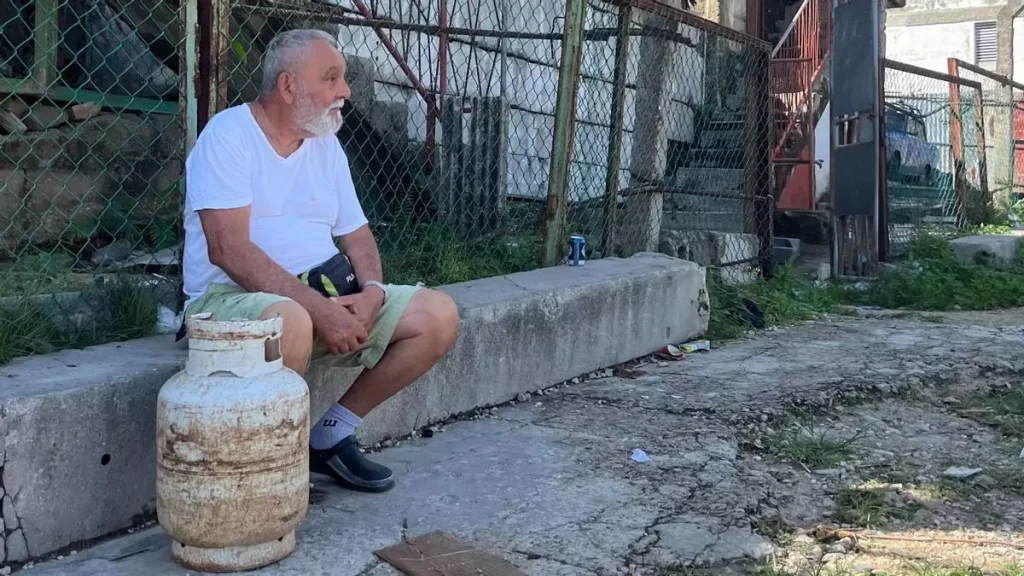

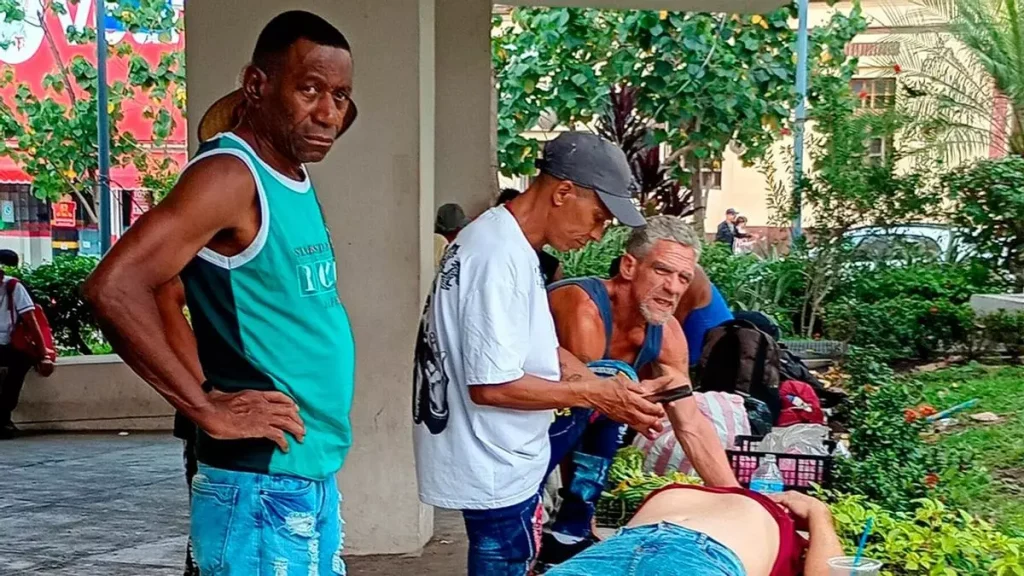
A 10-kilogram liquefied gas cylinder is being offered for 24 dollars. / 14ymedio

14ymedio bigger14ymedio, Havana, Darío Hernández, May 27, 2026 – “Those balitas, just as you see them, are from here. The same ones they distribute through the ration book system. Don’t let them fool you.” The remark came from a woman standing in line in San Miguel del Padrón, in Havana, while several customers waited to pick up a propane cylinder purchased online in dollars. She pointed to the usual balitas, the same ones that for decades have circulated through Cuba’s state liquefied gas distribution network.

In theory, that product arrives through a regulated system. Each contracted customer receives one when their turn comes, hands over the empty one, and waits for the next cycle. But delays are frequent, and many families spend weeks waiting for a delivery that can determine the rhythm of an entire household. Without propane, cooking becomes an obstacle course, especially with the increase in blackouts.

That overloaded and sluggish system now has a parallel outlet. On the KMCERO platform, presented as a digital marketplace for petroleum derivatives, a 10-kilogram liquefied gas cylinder is being sold for 24 dollars. The buyer must hand over another empty cylinder in good condition. Payment is made with Clásica, AIS, Tropical, Visa, or Mastercard cards. The operation excludes the Cuban peso, even though the product is the same one many families are waiting for through the regulated system.
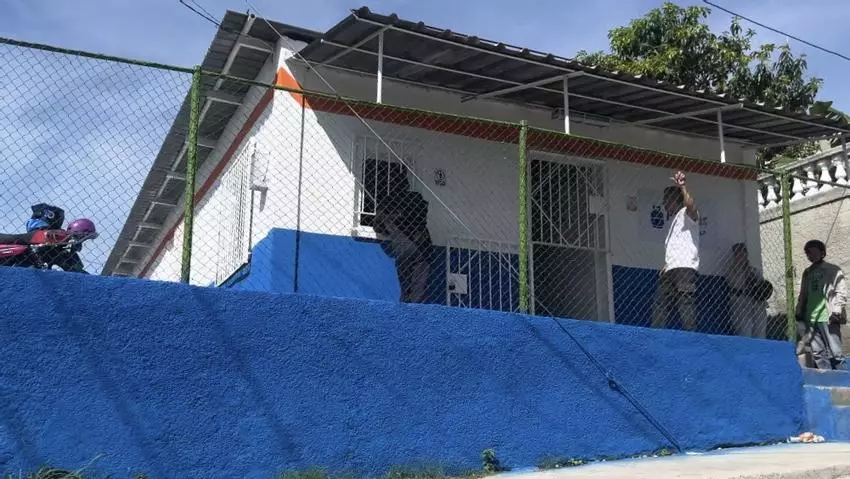
When asked whether other pickup sites would be available, the person in charge replied that there were plans to open one more. / 14ymedio

The only pickup point visible so far is in a small alley at Ciudadmar and 7th Street, in San Miguel del Padrón. When asked whether other pickup sites would be available, the person in charge replied that there were plans to open one more, although it was still “in process.”

About 15 people, each carrying an empty balita, stand in a discreet line. One question circulates among them: if someone buys now in dollars, continue reading

will they later be able to use that same cylinder once distribution through the ration book system resumes?

One woman answered without hesitation. “Last time, as I remember, when they distributed balitas, nobody asked for the numbers anymore. You handed one over and that was it. Besides, if half the population is now going to buy them here, it’s obvious they’ll allow it.” She then added the detail that most concerned those present: “They’re not like the white ones that Supermarket23 used to send; these are the same ones from the regular service.”

The comparison with Supermarket23, another foreign-currency shopping platform used by Cubans inside and outside the Island, helps place the new business in context. There, a balita can cost around 30 dollars. The KMCERO one costs 24, although it requires traveling to the pickup point. For those without a compatible card, the final cost rises. A man sitting at the site explained that he had to buy dollars from a friend through a Clásica card, so he ended up paying more.
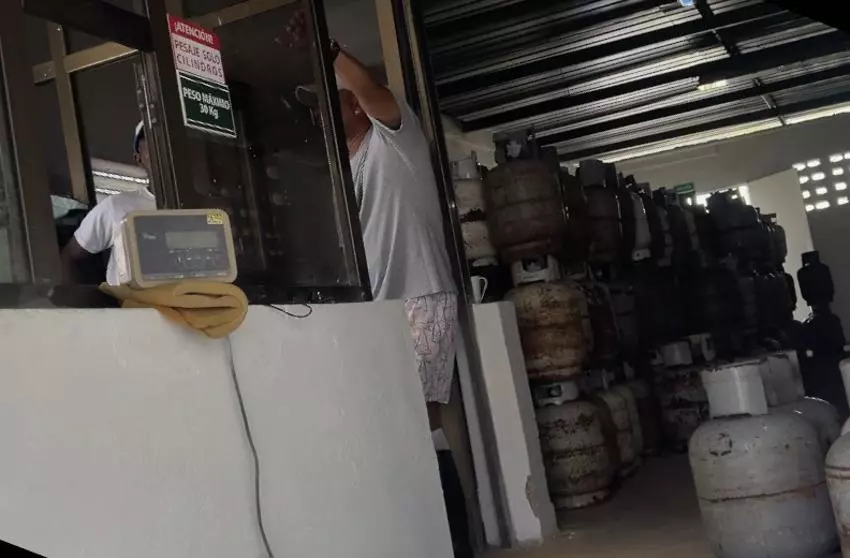
“To get a balita, you have to be ready at 7:00 am, do everything quickly, because the cylinders disappear immediately.” / 14ymedio

The website adds another obstacle: availability. According to reports collected by this newspaper at the delivery point, the cylinders sell out quickly. “To get a balita, you have to be ready at 7:00 am, do everything quickly, because the balitas disappear immediately,” one customer commented. Even after paying, customers do not receive the product right away. Pickup is scheduled for the following day.

The supplier listed on KMCERO is Progas. However, many questions surround that company. The website does not provide a clear explanation of who is behind the operation. The “Who We Are” section is either inaccessible or fails to provide enough information. The commercial brand appears on one side, the platform on another, and the promotion comes from state-linked entities.

That last detail is key. KMCERO was promoted by Tecnomática together with the state SME TM-NEXGEN as a virtual store for purchasing fuels and lubricants in Cuba. Tecnomática is part of the business ecosystem linked to Cupet, the state conglomerate that heads the petroleum sector on the Island. The platform itself markets products associated with fuel, oils, and gas, a business that requires permits, specialized transportation, secure storage, and access to infrastructure rarely available to a small private enterprise.
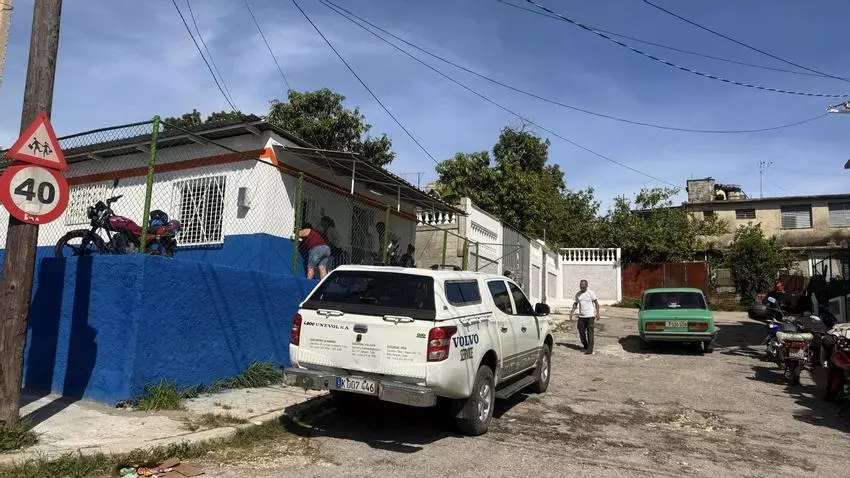
“What exactly does Progas contribute besides a new label and a way to charge in dollars?” / 14ymedio

Suspicion grows when examining the details closely. Customers hand over cylinders identical to those used in the state system and receive similar ones in return. The logistics point to already existing facilities. The transportation observed by neighbors and customers resembles that historically used by Cupet. None of those elements alone proves that Progas is a front for the state company. Together, however, they sketch an operation difficult to present as an independent private business.

“If the product, the cylinders, the logistics, and the promotion belong to the state system, what exactly does Progas contribute besides a new label and a way to charge in dollars?” asks one customer while waiting in line.

Progas appears precisely within a gray area that several observers of the Cuban economy have been pointing out for years: the creation or use of formally private companies to operate where state entities carry a poor commercial reputation or seek to evade U.S. sanctions. Under that model, a company with the appearance of a non-state actor can import fuel, hire services, or present itself to foreign suppliers as an independent business, even though in practice it depends on state assets, permits, logistics, or decisions.
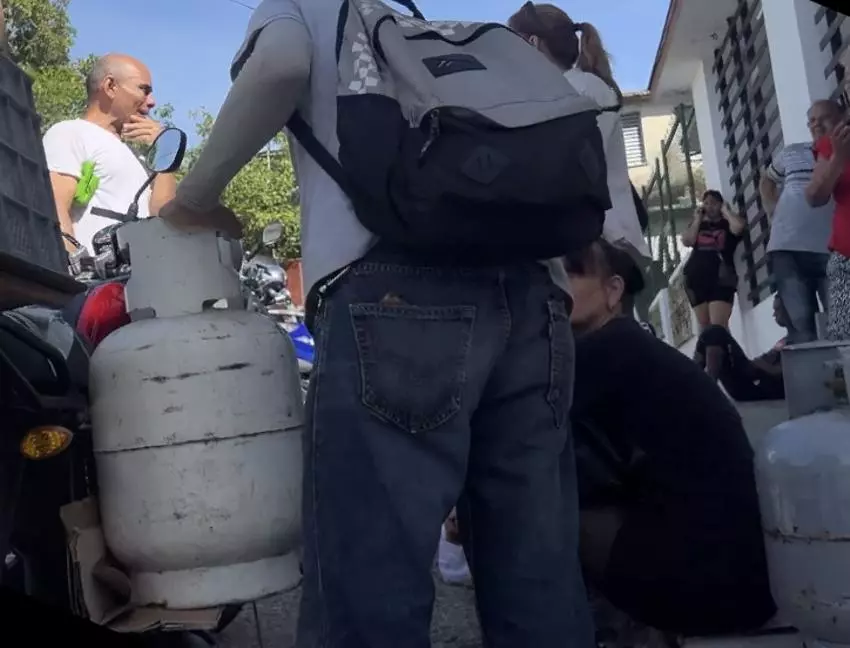
What is clear is that the balitas can no longer be obtained in national currency. / 14ymedio

In strategic sectors such as fuel, where official control has historically been nearly absolute, an opaque brand forces observers to look beyond the commercial name. The question is not only who delivers the cylinder, but who owns the product, the containers, the trucks, the warehouses, and the money entering from each sale.

No one knows where the gas comes from, whether from the Energas plant in Varadero or from a private import operation in partnership with the Cuban state, the only economic actor authorized to charge in dollars. What is clear is that the balitas can no longer be obtained in national currency.

For Cuban families, the immediate answer lies not in corporate documents but in the kitchen. Those with cards, internet access, and foreign currency can try to buy. Those dependent on salaries paid in pesos must continue waiting for the regulated distribution. The balita that once formed part of a rationed system now appears in a digital store, with another name, another currency, and one unanswered question: who is really collecting the money for the gas?

Translated by Regina Anavy

______________________

COLLABORATE WITH OUR WORK: The 14ymedio team is committed to practicing serious journalism that reflects Cuba’s reality in all its depth. Thank you for joining us on this long journey. We invite you to continue supporting us by becoming a member of 14ymedio now. Together we can continue transforming journalism in Cuba.

‘100% Cuban’ Products Sold in Dollars in a New State Store

Wasteful use of lighting and air conditioning in the new store opened in Havana by a state partnership associated with a Slovak company

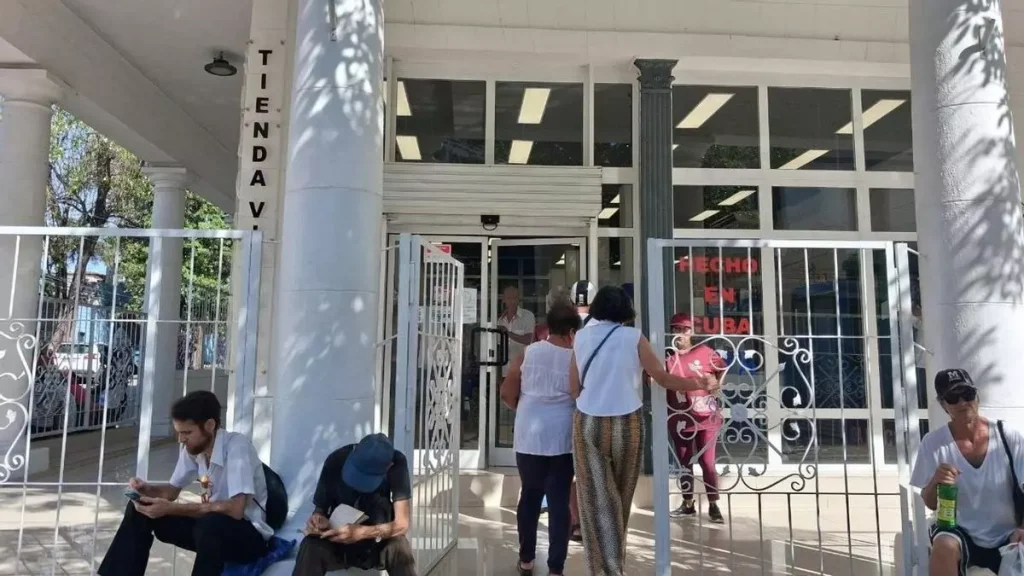
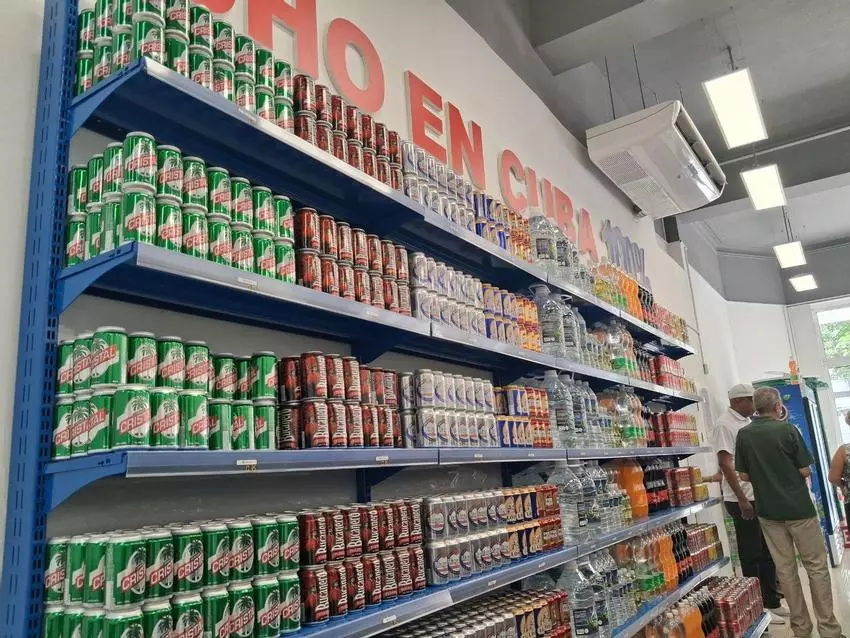
Entrance to the ‘Hecho en Cuba’ [Made in Cuba] store, in Havana’s Cerro municipality. / 14ymedio
14ymedio bigger14ymedio, Havana, Natalia López Moya/Juan Diego Rodríguez, May 28, 2026 – Brightly lit and with the air conditioning running at maximum power, the new Hecho en Cuba 100% store seems oblivious to the severe energy crisis the country is experiencing. The business, located in the Trimagen complex, the film division of the Revolutionary Armed Forces (FAR), in Havana’s Plaza municipality, was inaugurated this Tuesday with great ostentation.

The company’s social media accounts documented the event. The firm appearing to be in charge is Proxcor S.A., a joint venture formed by the Slovak company Proxenta and the Cuban Corporación Alimentaria S.A. (Coralsa), dedicated to the commercialization of food and beverages through companies such as Los Portales, Bucanero, Bravo, Papas & Company, and Stella. The post quickly filled with comments, mainly asking about prices and payment methods, but the replies were unclear.

“If everything is made in Cuba, they should sell according to the salaries we earn in Cuba and of course in national currency,” one user remarked with barely concealed irony. “Thank you for your comment, we will take it into account,” was the response.

The facilities are excellent, but they offer little product variety. / 14ymedio

It is worth remembering that Proxenta arrived in Cuba in 2019 through the creation of Proxcor S.A. in Villa Clara, with a 25-year contract for confectionery production, and later expanded its partnership with the Cuban State by founding Baracocoa S.A. for the processing and commercialization of local cocoa. The decision dealt a blow to local farmers who had temporarily been allowed to enter the cocoa business, a highly profitable sector in foreign currency.

During a visit to the new store on Ayestarán Street this Wednesday, 14ymedio confirmed what commenters feared: the store only sells in dollars, and payment can be made in cash, with foreign cards, or with the Clásica prepaid card. The place has the unmistakable atmosphere of state power, with some employees dressed in Cimex uniforms.

Beers for sale at Hecho en Cuba 100%. / 14ymedio

The facilities are excellent, yes, but they offer few products. “Of course, if they sell what is produced in Cuba, this little bit is all there is,” observed one customer passing shelves packed with the same product. Bravo cold cuts, Cristal and Bucanero beers, Findy mayonnaise, Ciego Montero soft drinks, flour from Unión Molinera de Cuba… The brands, indeed, were not lying: merchandise from the battered national production system.

A woman visiting the establishment for the first time was especially surprised by the variety of Cuban coffee brands, including Cubita, Arriero, and Regil, something unimaginable for a long time in other stores. The selection was completed with small black cups bearing the word Cubita. “It’s been years and years since I saw this for sale!”

The prices, meanwhile, are not for everyone. A tube of ham for 13 dollars or a one-kilogram package of coffee for 16 dollars gives an idea of the costs; an arepa mix costs 4 dollars, and six small cups cost 20.

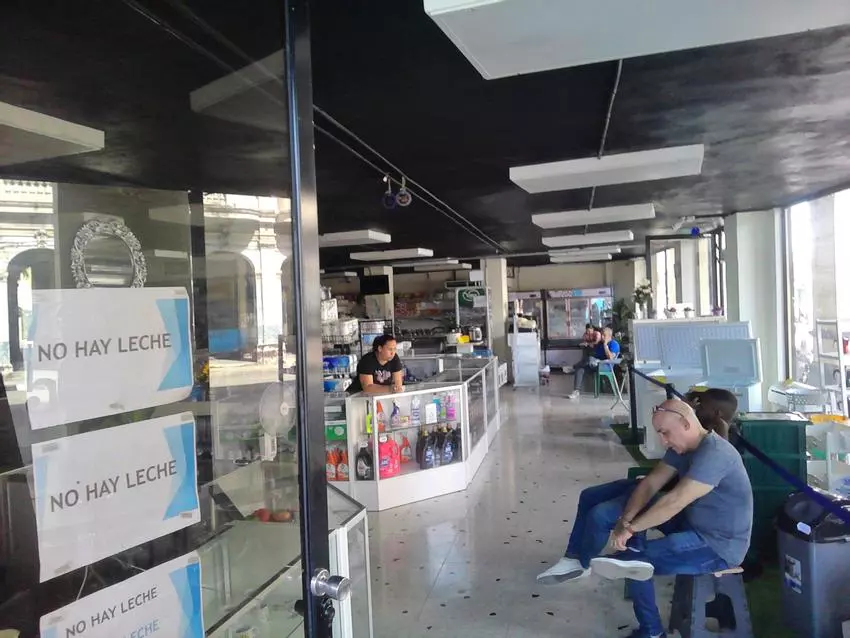
At the Bazar A&M branch on Infanta and Carlos III in Central Havana, employees were sitting idle.  The sign reads: There is no milk”/ 14ymedio

One cashier slowly and carefully wrapped a customer’s purchase. The customer told her: “Don’t take too long, in case the power goes out and I can’t pay with my card,” but the worker reassured her enthusiastically: “The power almost never goes out here, and when it does, they restore it very quickly.” “Do you have a generator?” the shopper asked. “No, but they almost never cut our electricity.”

In contrast to this privileged situation, the commercial heart of Central Havana looked gloomy that same day. At the Bazar A&M branch on Infanta and Carlos III, employees were sitting idle. “No milk,” “no milk,” “no milk,” repeated three signs discouraging customers from asking for anything.

Fress location on Carlos III, without electricity and therefore without cold soft drinks. / 14ymedio

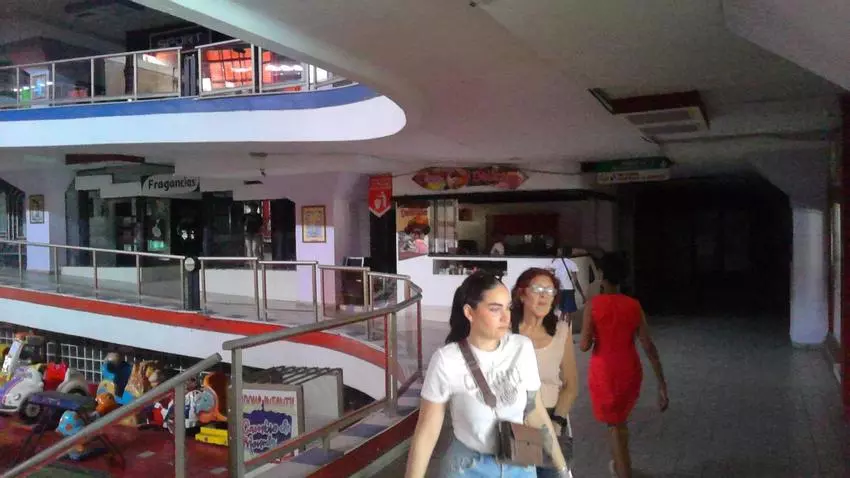
At Plaza de Carlos III, the power went out in the middle of the morning rush of customers. The darkened stores, without cold drinks to relieve the heat of these days, were buzzing with complaints from the workers themselves. One single topic monopolized conversations: the sleepless night caused by the blackout. “We only had twenty minutes of electricity at two in the morning, and we had to start pumping water from the cistern to the tank,” one cashier told a colleague.

At Fress, the first private business established in Plaza de Carlos III, employees said they did not know if they would be able to continue working today. “There’s no fuel for the shopping center’s generator. They say the power went out last night and they couldn’t turn it on again.”

The blackouts, at least in principle, do not distinguish between state and private businesses: they affect everyone equally. Except for Proxcor’s new store.

Plaza de Carlos III in blackout since yesterday. / 14ymedio

Translated by Regina Anavy

______________________

COLLABORATE WITH OUR WORK: The 14ymedio team is committed to practicing serious journalism that reflects Cuba’s reality in all its depth. Thank you for joining us on this long journey. We invite you to continue supporting us by becoming a member of 14ymedio now. Together we can continue transforming journalism in Cuba.
ICE Detains in Florida the Daughter of Cuban General Ulises Rosales del Toro

Doctor Alina Rosales Aguirreurreta arrived in the U.S. in 2023 and was attempting to obtain residency through the Cuban Adjustment Act

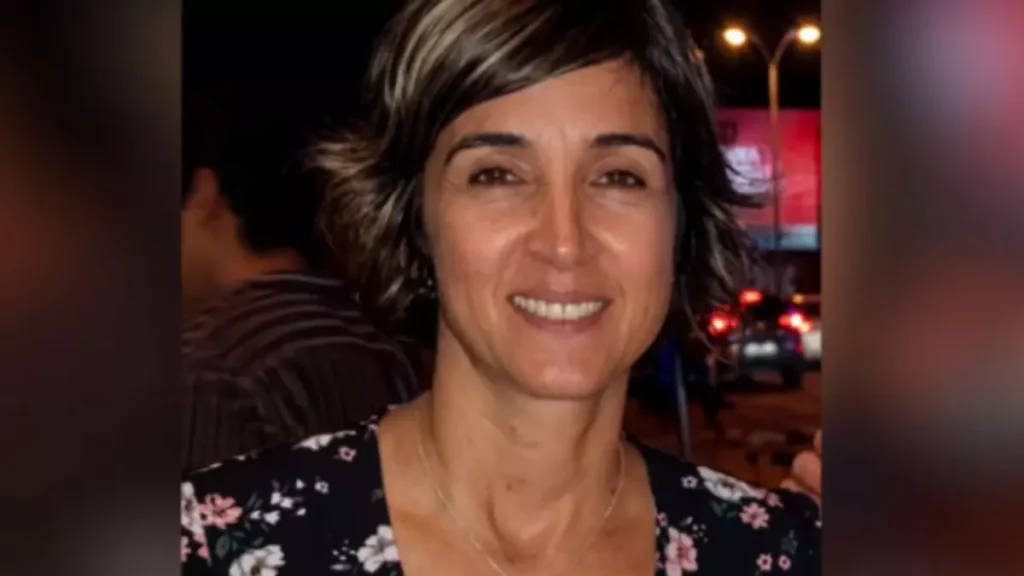
Alina Rosales Aguirreurreta, daughter of General Ulises Rosales del Toro, detained by ICE. / Facebook

14ymedio bigger14ymedio, Madrid, May 27, 2026 — Alina Rosales Aguirreurreta, daughter of Cuban general Ulises Rosales del Toro, has been detained by the U.S. Immigration and Customs Enforcement agency (ICE), according to reports first published Tuesday by the Miami press and as can be verified in the agency’s records, which however do not indicate the facility where she is being held.

So far, no further details about the arrest have emerged. It is known that Rosales, 51 years old and a physician by profession, specializing in plastic surgery and burn treatment (reconstruction of burned tissue), arrived in the U.S. in 2023 on a tourist visa and decided to remain in the country. According to journalist Mario Pentón, the doctor attempted to apply for residency through the Cuban Adjustment Act, but “did not have the opportunity,” he said without clarifying the reasons.

Ulises Rosales del Toro, 84, is a historic figure of the Revolution, in which he participated alongside Fidel Castro. Beginning in 1959, he held high-ranking positions in the Armed Forces and in the leadership of the Communist Party, in addition to holding the honorary title of Hero of the Republic of Cuba.

Since then he has lived away from the public spotlight, although the Florida press has continued scrutinizing the lives of his children, some of whom live outside the Island or have businesses there

Between 1997 and 2009 he served as Minister of Sugar, and from 2008 to 2010 has Minister of Agriculture. In 2009, he was also was appointed Vice President of the Council of Ministers, a position from which he was removed in September 2019. Since then he has lived away from the public spotlight, although the Florida press has continued scrutinizing the lives of his children, some of whom live outside the Island or have businesses there.

Rosales’s case comes days after ICE also detained Adys Lastres Morera, sister of the president of the military conglomerate continue reading

Gaesa, Ania Guillermina Lastres Morera, sanctioned by the U.S. on May 1, the same day the extension of measures against individuals or companies associated with Cuba and “responsible for repression in Cuba and threats to the national security and foreign policy of the United States” was announced.

On that occasion, Marco Rubio said that “Morera was managing real estate assets and living in Florida, while also helping the communist regime in Havana,” without further explanation. The U.S. secretary of state personally claimed responsibility for the cancellation of “her permanent resident status” from his official X account.

Rubio added that Lastres Morera had been arrested on May 20 and placed in ICE custody. “There will be no place on this Earth — much less in our country — where foreigners who threaten our national security can live luxuriously,” he declared.

Translated by Regina Anavy

______________________

COLLABORATE WITH OUR WORK: The 14ymedio team is committed to practicing serious journalism that reflects Cuba’s reality in all its depth. Thank you for joining us on this long journey. We invite you to continue supporting us by becoming a member of 14ymedio now. Together we can continue transforming journalism in Cuba.
A Transnational Network Dedicated to Trafficking Cuban Migrants Is Dismantled

It allegedly facilitated the clandestine entry into Spain of at least 40 people in exchange for 3,000 euros

The investigation remains open and further arrests are not ruled out / EFE

14ymedio bigger14ymedio/EFE, Málaga, May 27, 2026 — The Spanish Police, with the collaboration of Europol and the Serbian Police, dismantled an international network operating in Spain and Serbia that was allegedly dedicated to trafficking people from Cuba, an operation that resulted in eight arrests.

The migrants, some with minors in their care, flew to Belgrade and from there were transported by vehicle to Spain, passing through North Macedonia, Greece, Italy, and France, according to information released this Wednesday by the Police.

The organization allegedly facilitated the clandestine entry into Spain of at least 40 Cuban nationals in exchange for amounts close to 3,000 euros.

Seven people were arrested in the province of Málaga and the eighth was arrested in Zamora

Seven people were arrested in the province of Málaga and the eighth was arrested in Zamora; among those arrested are two of the alleged leaders of the organization.

According to the investigation, the criminal network recruited Cuban citizens by offering them a package called a “travel bundle,” which included airline tickets, invitation letters, medical insurance, and hotel reservations.

Upon arriving in Spain, the objective was to settle there and request international protection, “evading European and Spanish regulations” regarding the entry, transit, and stay of foreigners.

Investigators confirmed that the criminal network took advantage of the migrants’ vulnerable situation.

After a difficult journey, the branch of the network established in Spain transported the migrants mainly to the province of Málaga, where they were instructed on how to regularize their status in Spain. continue reading

Before applying for international protection, they reported their passports as lost

Before applying for international protection, they reported their passports as lost, with the aim of leaving no record of the migration route followed and preventing authorities from verifying their irregular entry into Europe through the stamps placed in their documents upon arrival in Serbia, which could lead to the blocking of any application for international protection in Spain.

After obtaining new passports, during asylum and refugee application interviews the migrants claimed they had only recently arrived in Spanish territory, which allowed them to qualify for that protection.

Agents documented 27 incidents of facilitating illegal immigration through this modus operandi since 2021, through which at least 40 people of Cuban origin allegedly entered Spain irregularly.

Payments were made to Spanish and foreign accounts through money transfer companies, apps, and cryptocurrencies, which prevented the tracking and monitoring of the amounts.

In the investigation, 2,252 money transfers of 380,775 euros by the suspects based in Spain were analyzed.

The investigation remains open and further arrests are not ruled out.

Translated by Regina Anavy

______________________

COLLABORATE WITH OUR WORK: The 14ymedio team is committed to practicing serious journalism that reflects Cuba’s reality in all its depth. Thank you for joining us on this long journey. We invite you to continue supporting us by becoming a member of 14ymedio now. Together we can continue transforming journalism in Cuba.
The U.S. Ambassador to Spain Bought a Plane From Brothers to the Rescue To Turn It Into a Museum in Cuba

“If things are done too soon, blood could be spilled,” says Benjamín León Jr. speaking about Venezuela

Benjamín León at a news breakfast in Madrid. / EFE

14ymedio bigger14ymedio/EFE, Madrid, May 27, 2026 — The United States ambassador to Spain, Benjamín León Jr., said this Wednesday that the war initiated by the U.S. and Israel in Iran “extends” the timeline of the transition outlined by the Administration of Donald Trump for Venezuela following the capture of Nicolás Maduro at the beginning of the year.

“I have no doubt that María Corina Machado’s day will come in Venezuela,” León said confidently at a news breakfast held in Madrid.

At the event, attended by business leaders and politicians, the new U.S. ambassador to Spain since February, recalled that Donald Trump and U.S. Secretary of State Marco Rubio had outlined “the Venezuela issue” in three stages: stabilization, recovery, and transition.

“We are still in stage one. In my personal opinion, the Iran war has extended the time of that first stage”

“We are still in stage one. In my personal opinion, the Iran war has extended the time of that first stage,” he opined and, immediately afterward, stated that continue reading

“it is the responsibility of the United States to protect” the Venezuelan opposition leader and 2025 Nobel Peace Prize winner María Corina Machado.

“If things are done too soon,” León argued, “blood could be spilled and the United States would be guilty of that.”

Thus, the ambassador defended that “the United States is being very cautious and is carrying forward, little by little, step by step, the process of complete and total democratization in Venezuela.”

“The time will come for the people to vote for whichever person they prefer among all those who will run when the time comes,” he predicted, insisting that this would be the final stage of the U.S. plan and refraining from setting a timetable for reaching it.

One would have to ask President Trump or Secretary Rubio “so they could tell us more or less when they think that will happen,” he concluded.

Translated by Regina Anavy

______________________

COLLABORATE WITH OUR WORK: The 14ymedio team is committed to practicing serious journalism that reflects Cuba’s reality in all its depth. Thank you for joining us on this long journey. We invite you to continue supporting us by becoming a member of 14ymedio now. Together we can continue transforming journalism in Cuba.
A Report Warns About the Dramatic Situation of Cubans Deported to Mexico by the U.S.

Human Rights Watch points out that 26% of the 4,453 deportees originating from the Island had no criminal charges at all.

A group of migrants in Miguel Hidalgo square, in Tapachula. / Facebook/VENUS En Línea

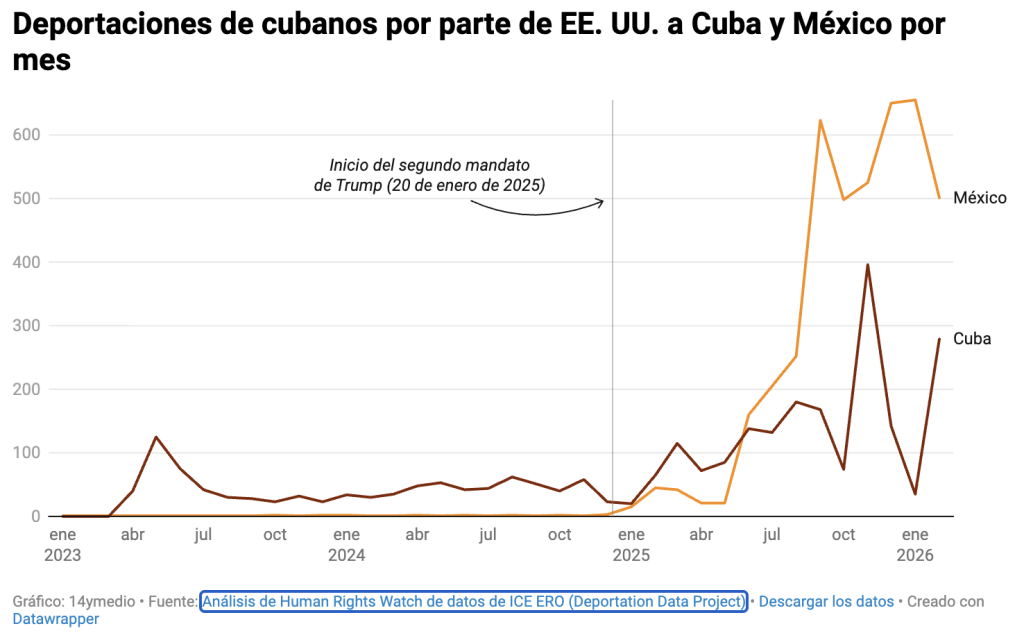
14ymedio bigger14ymedio, Madrid, May 27, 2026 — The deportations of Cubans to Mexico have multiplied exponentially during the second term of Donald Trump, reaching 4,453 when counting from January 2025 through March 2026. Of the total, 55% had criminal records in the United States, 16% had pending charges without conviction, and 26% had no criminal case at all. In addition, only 16% had, as their most serious conviction, a violent or potentially violent crime.

Many of them, moreover, are elderly people with serious health problems who lived many years in the U.S. and now find themselves in Mexico under an opaque agreement signed between both countries, and their situation is one of great helplessness, as denounced by a report by Human Rights Watch (HRW) published this Wednesday. The 66-page document is titled “Casting Us Aside to Die” and includes interviews with citizens from other countries who were also handed over to Mexican authorities, although the majority were from Cuba, a peculiar situation, since never before had the Island accounted for the bulk of deportations.

“The Trump Administration is using Mexico as a dumping ground for people it cannot deport to their countries of origin, including many Cubans who have been in the United States for decades,” said Alcira Silva Hava, HRW researcher, who also extends responsibility to the Mexican Government. “It offers them no pathway to obtain durable legal status outside the asylum system, leaving many in limbo, without housing, without medication, and at the mercy of criminal organizations.” Of the 18,000 deportees, 13,000 were sent to the neighboring country (70%), with Cubans being the nationality with the highest number.

“The Trump Administration is using Mexico as a dumping ground for people it cannot deport to their countries of origin, including many Cubans who have been in the United States for decades”

To prepare the document, 53 people deported to Tapachula (Chiapas) and Villahermosa (Tabasco) were interviewed, of whom 41 were Cuban men. Most had lived for years or decades in Florida, where they arrived fleeing misery and/or the lack of freedoms in Cuba. “Many had created businesses, owned homes, and left relatives in the United States. Most are 60 years old or older and suffer from chronic illnesses requiring continuous medical treatment,” the report specifies, denouncing that none of them even had the opportunity to challenge the deportation, which constitutes a violation of rights and due process, according to U.S. and international law.

Those affected revealed numerous abuses by the U.S. Government. “In immigration detention centers they suffered overcrowding, extreme temperatures, inadequate food, poor access to medical care, and lack of access to information about their cases, as well as physical and verbal violence by guards.” Some interviewees described situations continue reading

in those places as unheard of as consuming contaminated food. “The water was contaminated, it contained feces, and you could see them on the floor when you went to shower… People had spots all over their bodies, their fingers were rotting; that’s what Alcatraz was like,” said a Cuban named Miguel Ángel.

Deportations of Cubans from the US to Cuba and Mexico by month

“Fifteen days without seeing daylight. Fifteen days without going out, without calls, receiving food through a slot in the door. I was alone, isolated. They drive you crazy, they don’t tell you how long you’ll be [in isolation],” another described about the center in El Paso, Texas. In this place, another interviewee, Gonzalo, spoke about a violent incident involving a detainee to whom “they put a foot on his neck,” and who later died from the injuries. The account matches the case of Geraldo Lunas Campos, classified as a homicide caused by “compression asphyxia of the neck and torso” in a forensic report.

Things have not improved much upon arriving in the neighboring country either. “They are leaving us here to die,” said one of the Cubans. “There is no help. We cannot work because we have no papers. They give us nothing, absolutely nothing… How are we supposed to eat, pay rent?” Interviewees revealed problems obtaining work and medical care; in addition, they are in cities struggling to provide basic services and with high levels of violence. The report also denounces that U.S. aid cuts to UNHCR — the U.N. refugee agency — have influenced this situation.

Until April 2026, Mexican law also did not facilitate movement, since valid identification is required to travel through the country in search of better options

Until April 2026, Mexican law also did not facilitate movement, since valid identification is required to travel through the country in search of better options. Asylum has been the only option, but it is difficult to obtain for various reasons, from the complexity of bureaucracy to lack of resources, not to mention the fact that, after decades outside Cuba, many exiles lack the ability to prove a well-founded fear of persecution on the Island.

All the Cubans interviewed, except one, said they had had legal permanent residency at some point, although 35 of them lost it because of offenses that may be considered minor, such as driving after drinking alcohol, falsification of documents, or minor drug-related charges. Six of them had more serious offenses, such as assault or weapons possession. They were never returned to Cuba because of the absence of migration agreements and remained in the U.S.; most rebuilt their lives, obtained work permits, and lived normally — under supervision, some of them — until 2025.

Of all those interviewed, only three agreed to be deported to Mexico, “including two who said they had relatives kidnapped or murdered there.” “If you are 60 or 70 years old, why do they send you here?” Mario, 60, said through tears. “They send us here to die.”

The report includes details from several interviews, such as that conducted with Javier, 62, who arrived in the U.S. at age 18 and combined his studies with a job as a waiter. “I have spent 44 years in the United States. I went to college and kept working nonstop.” When he was detained he had two different jobs, one at a car dealership and another at a convention center. “You know? Some of the people I met [in the ICE detention center] had been in the United States for more than 40 years; it’s incredible,” said Manuel, 63, a resident of West Palm Beach, after leaving Cuba at age six.

“You know? Some of the people I met [in the ICE detention center] had been in the United States for more than 40 years; it’s incredible,” said Manuel

The document contains extensive sections on the background of migration policies in both the U.S. and Mexico, as well as the reasons and methods for leaving Cuba, mostly during the Mariel boatlift. Some also spoke about recent political motives, an occasion HRW uses to recall that “repression continues on the Island, where authorities continue punishing dissent and arbitrarily detaining critics and protesters.” Added to this is the progressive worsening of economic conditions.

The report highlights other issues, such as those who lived for years with deportation orders that were never enforced, contributing to a false perception of security. There is also a meticulous review of their medical problems, since 20 of the 41 interviewees had illnesses, 14 of them chronic and some as serious as cancer. Several have depression and trauma related to their current status.

A significant number of respondents also spoke about their established situation in the U.S., where they left their relatives behind, and the desperation of finding themselves trapped in Mexico without dignified conditions.

The report includes a series of demands for the countries involved. It calls on the United States to guarantee people facing deportation an individualized review, access to evaluations to assess their protection claims, and humane detention conditions if detention is considered necessary.

It demands that Mexico provide emergency access to shelter, medical care, and a pathway toward permanent legal status for the deportees it has received. And for Cuba it also has at least a couple of messages: that it respect the right of its citizens to return to their country, as established by international law; and that it ensure consular authorities in Mexico attend to and provide consular services to those affected, whether they wish to obtain permanent residency in the country or voluntarily return to the Island.

Translated by Regina Anavy

______________________

COLLABORATE WITH OUR WORK: The 14ymedio team is committed to practicing serious journalism that reflects Cuba’s reality in all its depth. Thank you for joining us on this long journey. We invite you to continue supporting us by becoming a member of 14ymedio now. Together we can continue transforming journalism in Cuba.
Medicines From Brazil and 106 Tons of Canned Meat From the WFP: More Donations for Cuba

Treatments for tuberculosis and food donations aim to benefit nearly 10,000 people

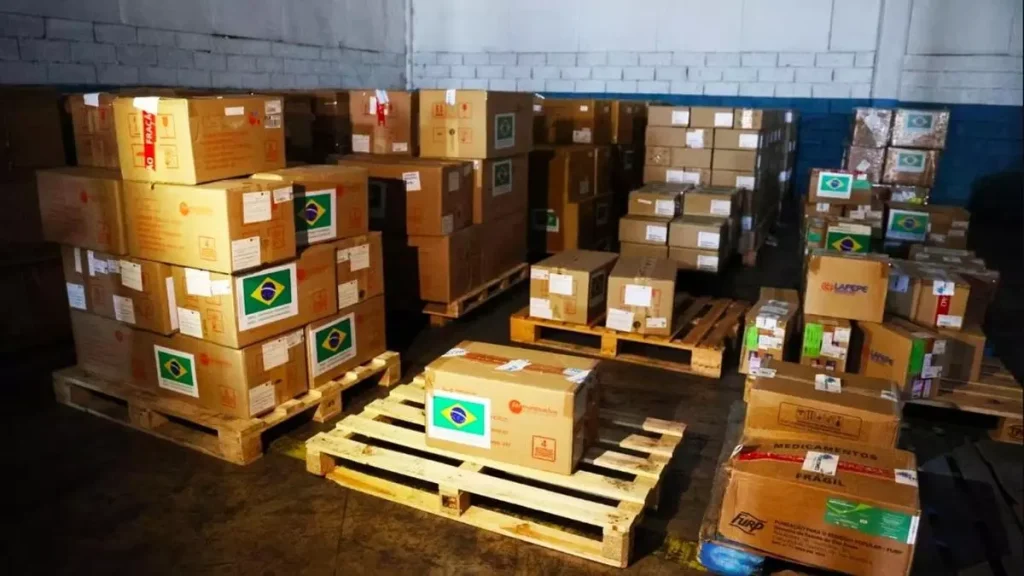
The PAHO announced the delivery of tuberculosis medicines to treat approximately 1,000 patients / PAHO

14ymedio bigger14ymedio, Havana, May 26, 2026 — Donations continue to be the only resource to provide Cuba with a slight reprieve. This Monday, the Pan American Health Organization (PAHO) announced the delivery of tuberculosis medicines donated by Brazil, intended to treat approximately 1,000 patients.

The announcement was made at an official event at the Benéfico Jurídico Pneumology Hospital in Havana, attended by officials from the Ministry of Public Health, Brazilian diplomatic representatives, and PAHO authorities. During the meeting, Cuban authorities pledged to ensure the proper distribution and use of the donated medicines, which will benefit health services in other centers across the country.

Although tuberculosis is a low-incidence disease, with approximately six cases per 100,000 inhabitants, numerous infections and deaths have been reported in the country’s prison system. Just on April 11, common prisoner Alfredo Poll Imber, 50, died from the disease while in state custody at the Guantánamo Provincial Prison. continue reading

Cubalex denounced the deaths of eight prisoners in the Boniato prison in Santiago de Cuba due to malnutrition and tuberculosis

In March 2025, Cubalex denounced the deaths of eight prisoners in the Boniato prison in Santiago de Cuba due to malnutrition and tuberculosis. The legal aid organization stated at the time that Boniato is a detention center where “neglect, unsanitary conditions, and lack of medical care continue to claim lives.” Two years earlier, an outbreak forced staff at the Combinado del Este prison in Havana to quarantine part of the inmate population.

This aid from Brazil adds to that delivered last August. At that time, it sent combined medications for the treatment of tuberculosis in children. According to a report by the Cuban News Agency (ACN), the donation would benefit pediatric care in the provinces of Havana, Villa Clara, and Santiago de Cuba.

As for food donations, this Monday the United Nations World Food Program (WFP) delivered 106 tons of canned meat in the province of Villa Clara, with the goal of supplementing the diet of more than 8,500 vulnerable people served in 130 community kitchens within the family assistance system.

This Monday, the United Nations World Food Program (WFP) delivered 106 tons of canned meat

The protein, the ACN reported, will be added to a basic food basket provided by the program itself, consisting of rice, oil, and peas, highlighting the state’s difficulties in guaranteeing animal protein within regular social assistance.

The donation, funded by the government of the Canary Islands and implemented together with the Ministry of Domestic Trade and the provincial government, adds to other external food aid that partially sustains an increasingly deteriorated social system, such as the 15,000 tons of rice that arrived in the country on Sunday.

Last April, the government of the Canary Islands also made a donation as part of the WFP. At that time, it announced the donation of 75 tons of canned chicken, also for the population of Villa Clara, and it previously sent 48 tons of frozen chicken and 5.5 tons of canned chicken to the same program.

Translated by Regina Anavy

______________________

COLLABORATE WITH OUR WORK: The 14ymedio team is committed to practicing serious journalism that reflects Cuba’s reality in all its depth. Thank you for joining us on this long journey. We invite you to continue supporting us by becoming a member of 14ymedio now. Together we can continue transforming journalism in Cuba.

‘Rather Than Shutting Down and Leaving, Spanish Companies Are Asking Themselves How To Remain in Cuba’

Investors are weighing their business interests in the United States and whether it is worth leaving the Island to preserve those interests or not

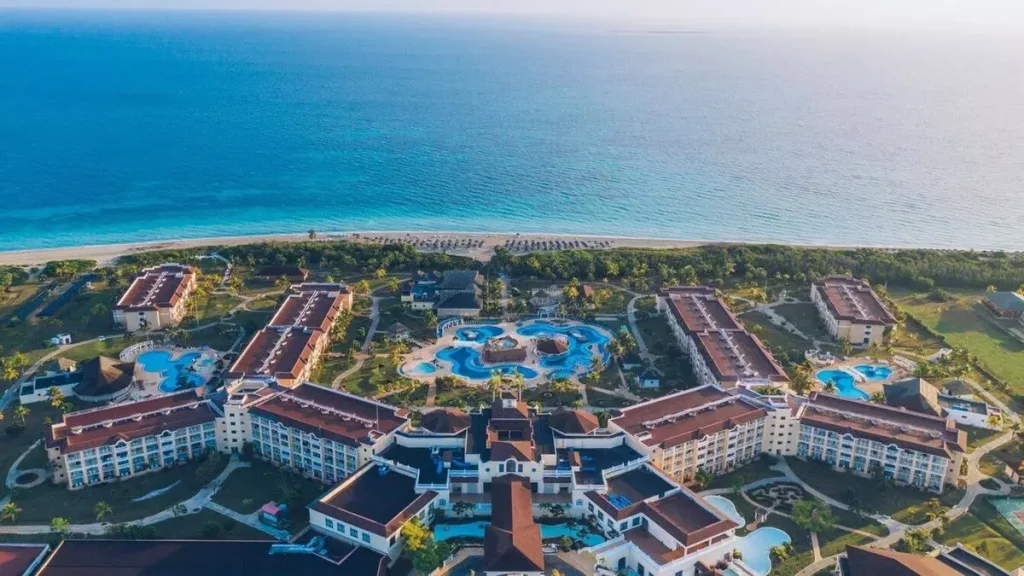
Some companies, such as Iberostar, have had business operations in Cuba for many years. / Facebook/Magdiel Perez Martinez

14ymedio bigger14ymedio, Madrid, May 26, 2026 — Spanish companies with a presence in Cuba are analyzing how to remain on the Island after the United States approved new sanctions against foreign banks and companies operating in key sectors of the Cuban economy. Those that arrived recently are the ones most likely to reduce or suspend their presence, but those with decades of strong involvement in the country are simply studying the best way to continue, according to legal scholar Fátima Rodríguez, head of the criminal law division at the law firm Lupicinio International Law Firm.

In an interview with the Spanish outlet Artículo14, the specialist describes the work her firm has been carrying out in recent weeks to answer questions from clients. Lupicinio is one of the Spanish firms with the greatest experience in international sanctions and with forty years specializing in Cuba, although Rodríguez says that the main concern for business owners today is not so much the executive order itself as its lack of specificity. “That combination of extraterritoriality and regulatory ambiguity means that a decision adopted in Washington can suddenly leave contracts, investments, or financing lines that had functioned without problems for years hanging in the balance,” she explains.

“That combination of extraterritoriality and regulatory ambiguity means that a decision adopted in Washington can suddenly leave contracts, investments, or financing lines that had functioned without problems for years hanging in the balance.”

From what she has observed since the new sanctions were announced, the attorney sees three distinct groups. The first consists of those with recent or limited exposure. “They are clearly in retreat mode: freezing new investments, reducing operations, and, in parallel, designing orderly exit scenarios if the regulatory risk continue reading

continues to escalate,” she explains. The next group includes those with businesses in sectors explicitly targeted by sanctions, such as energy, defense, mining, and financial services. For them, she says, “Cuba is beginning to compete in an internal ranking of ‘difficult countries’ where, at times, it is not the one that wins.”

Finally come the companies that have maintained major business operations in Cuba for many years. Although she does not mention them specifically, the prime example would be Meliá and other hotel chains. “Rather than shutting down and leaving, they are asking themselves how to stay, but in a different way: reducing exposure to particularly sensitive sectors, sharing risk with local or third-country partners, or concentrating on activities clearly protected by humanitarian exceptions. Internally, conversations are no longer revolving around whether to stay or leave, but under what conditions it is responsible to continue.”

Rodríguez says some investors must also weigh their business interests in the United States and decide whether it is worthwhile to leave the Island in order to preserve those interests. She notes that Spanish business owners are coldly analyzing the risks, focusing mainly on who their partners are in Cuba, and she adds that their greatest concern is whether the sanctions will affect them financially on the international level. “The fear is no longer limited to receiving a fine, but to being internally categorized by banks and global suppliers as a ‘high-risk client linked to Cuba,’ which can translate into account closures, canceled insurance policies, restricted credit, and much more intense scrutiny of any operation, no matter how legally sound it may be,” she summarizes.

At her law firm, she says, the work being done has two dimensions. On one hand, the technical side: determining what is and is not permitted, redesigning contracts, structures, or logistics chains to comply with the new requirements. On the other hand, there is what she describes as the human side: “supporting local management and business teams in difficult decisions, where it is necessary to balance responsibility to headquarters with commitment to the country and to Cuban workers themselves.”

On the other hand, what she describes as the human side: “supporting local management and business teams in difficult decisions, where it is necessary to balance responsibility to headquarters with commitment to the country and to Cuban workers themselves.”

The focus, she says, is on ensuring as much as possible that there are no links to risky sectors or individuals. “They are implementing Cuba-specific policies, sector risk maps, reinforced approval processes, and screening systems that automatically block operations with entities or individuals connected to the sanctioned network. Added to this are deeper and periodic due diligence audits, as well as impact reports,” she explains.

That caution, she says, is the first line of defense against sanctions, because it allows companies to demonstrate that they monitored operations and reacted quickly. “It often makes the difference between an exemplary sanction and a more proportionate resolution,” she emphasizes, while also mentioning the European tools available to national companies, including the Blocking Statute, which allows foreign laws to be rendered ineffective. “They are not magic solutions, but they do remind us that companies are not completely defenseless against unilateral decisions by third countries,” she adds.

Although tourism is not among the sectors explicitly mentioned in the May executive order, Rodríguez recalls that sanctions directly affecting other sectors, particularly energy, inevitably affect tourism and others as well. “If access to fuel, financing, and certain technological inputs is strangled, not only do those sectors suffer, but all activity dependent on them suffers too: from retail commerce to food refrigeration chains and the functioning of hospitals and schools.”

There are projects, she says, that were already difficult to finance and are now impossible. “Banks that previously accepted working under certain exceptions are beginning to close their doors out of pure fear of violating the executive order. And a domino effect emerges: suppliers withdraw; insurance policies are not renewed; shipping costs rise; routes disappear; and there is a growing perception that any activity linked to those sectors can end up contaminating the rest of a company’s business,” she argues.

“The paradox is that the harsher the sanctions become, the more this logic of ‘waiting while prepared’ is reinforced, even though the official message continues to be one of maximum pressure rather than openness.”

Asked whether they observe movements by American companies preparing the ground to invest in Cuba, Rodríguez points to a paradox. “In a context like the current one, at first glance it is difficult to imagine. However, anyone familiar with the history of bilateral relations knows that strategic and economic interest in the Island has never disappeared.” The attorney recalls that active export licenses already exist from which many companies benefit, including food and vehicle companies, and that this could multiply in the future.

“More than visible movements, what is perceived today, and what business circles tell us, is very close observation: market studies, scenario analysis, discreet contacts, and the conviction that if a window for normalization ever opens, nobody will want to be left out. The paradox is that the harsher the sanctions become, the more this logic of ‘waiting while prepared’ is reinforced, even though the official message continues to be one of maximum pressure rather than openness.”

Translated by Regina Anavy

______________________

COLLABORATE WITH OUR WORK: The 14ymedio team is committed to practicing serious journalism that reflects Cuba’s reality in all its depth. Thank you for joining us on this long journey. We invite you to continue supporting us by becoming a member of 14ymedio now. Together we can continue transforming journalism in Cuba.
The Dominance of Meliá and Iberostar in Cuba Is Threatened by the Possible Arrival of U.S. Investors

“Spanish hotel companies could discover that their historical advantage rests on a more fragile foundation than it seemed,” says an expert

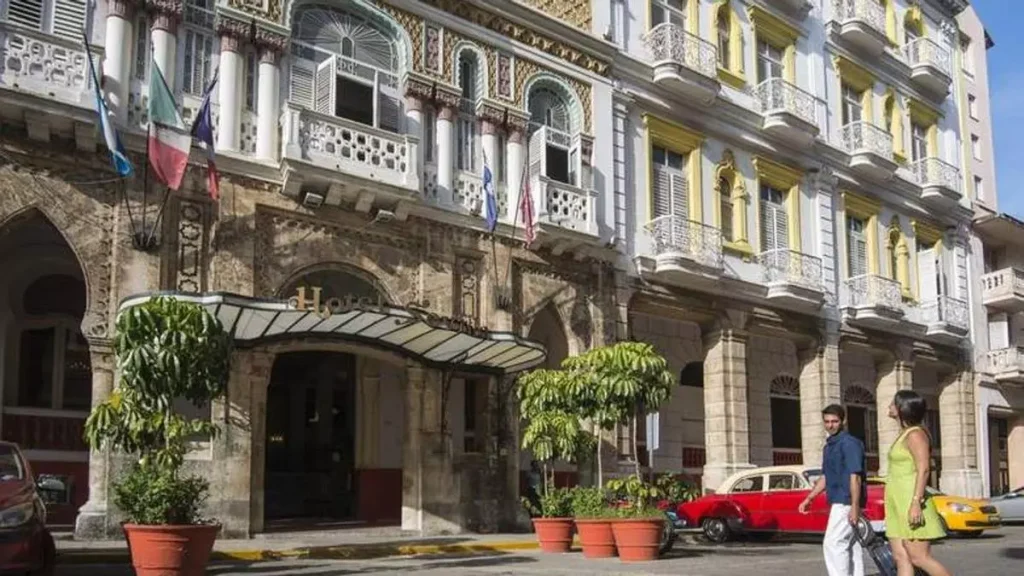
Hotel Sevilla Habana Affiliated by Meliá, another Cuban government establishment managed by the company. / Meliá

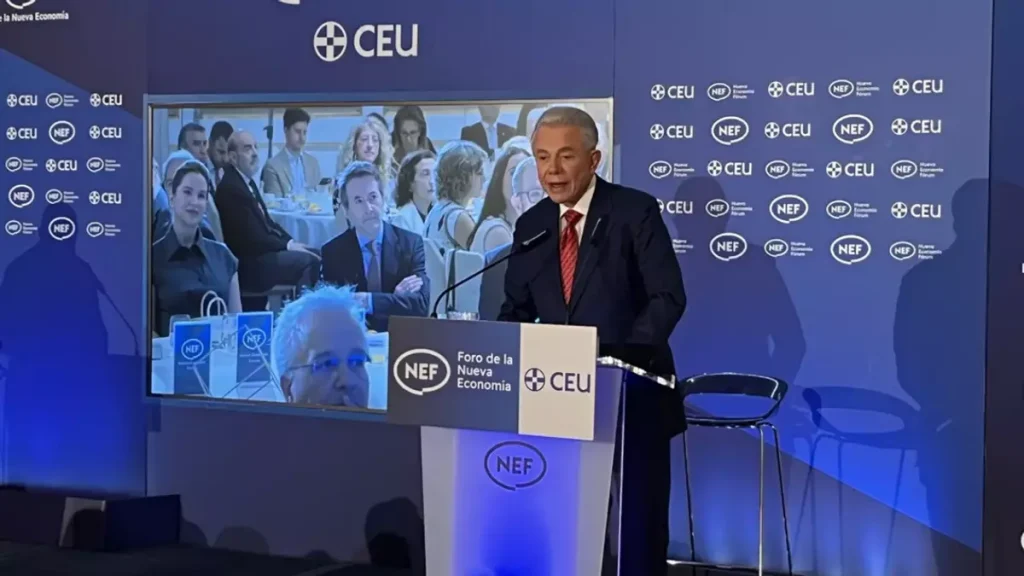
14ymedio bigger14ymedio, Madrid, May 26, 2026 — Decades of investments by Spanish companies in Cuba could be reduced to ashes if Donald Trump’s administration demands the tourism sector as spoils in its negotiations with the Island. The theory is laid out in a report published this Tuesday by El Confidencial, which starts from the undeniable premise that no foreign hotel company actually owns the establishments it manages.

“It would be very easy, under pressure, for a new Cuban government to terminate the contract with a Spanish company and give the contract to an American company,” says Paolo Spadoni, professor at Augusta University in the United States and an expert on Cuban tourism. The specialist reinforces the newspaper’s argument by considering tourism the only sector capable of producing immediate returns.

“Few things appeal to Trump more than a grand luxury hotel,” writes the reporter, who begins the article by discussing the U.S. president’s need for a quick and effective victory after the fiasco in Iran. In Venezuela, it became clear that the objective was control of the oil industry, the article continues, and in Gaza there was even a presentation of a far-fetched project to build a luxury resort after the signing of a peace agreement.

Cuba has nothing, the article says, except one thing: its global brand as a paradisiacal tourist destination.

Cuba has nothing, the article says, except one thing: its global brand as a paradisiacal tourist destination. “If the United States succeeds in forcing Cuba’s economic opening and lifts travel restrictions, the impact would first reach airlines, cruise companies, booking platforms, tour operators, vacation rental businesses and, of course, hotel chains,” the expert says, referring to a market continue reading

that Spanish entrepreneurs have dominated for decades.

Meliá, Iberostar, Barceló and NH “learned how to operate on the Island, assumed the political cost of doing so and positioned themselves in one of the few Cuban sectors capable of generating foreign currency,” the article argues, maintaining that the goal was to be well positioned when change finally arrived in Cuba. However, things could change overnight if Washington claims the prize.

“American companies would arrive late, but with the backing of the actor that forced the change. The Spanish companies, meanwhile, could discover that their historical advantage rests on a more fragile foundation than it seemed.”

The article addresses the relationship with the military conglomerate Gaesa, the main actor with whom the Spanish companies had to negotiate and which is now completely tainted by sanctions. Most companies operate within this scenario, according to an interview also published today in the Spanish press.

The article focuses on the shrinking arsenal of legal defenses currently available to European companies. When the Helms-Burton Act was approved in 1996, the European Union responded by creating the Blocking Statute, which protects European companies from extraterritorial measures. There was also a diplomatic offensive that led to the suspension of Titles III and IV of that law, which were activated by Trump’s first administration two decades later.

Now, since 2023, the European Union has another weapon: the Anti-Coercion Instrument, better known as the “trade bazooka,” which allows direct commercial retaliation if authorities determine that measures are intended to influence EU policies or those of its member states. What remains uncertain is whether the 27 EU countries would decide to enter that battle while they already face more significant disagreements with the U.S. administration, including the war in Ukraine and Washington’s decision not to enter the conflict with Iran.

“Spanish hotel companies do not have much room to maneuver in this. They are at the mercy of whatever happens”

“Spanish hotel companies do not have much room to maneuver in this. They are at the mercy of whatever happens,” says Spadoni. The expert believes there is only one obstacle to the possible American plan to seize control of the tourism sector: the need to completely transform all of the Island’s infrastructure, from airports to payment systems, telecommunications networks, roads, electricity and countless other things.

In the Dominican Republic, the professor says, tourism eventually pulled the rest of the economy along with it, but in Cuba it will not be so easy. There are factors dragging everything down, such as the weak presence of the private sector in a country where every large company is state-owned and also dependent on imports. “Tourism in Cuba is not embedded in an economy capable of creating productive linkages. It is an exhausted, inefficient and overly centralized economy, and that is why tourism cannot play the same role it does in other countries,” he warns.

The article concludes on a pessimistic note for the population, as the expert adds that it will take “a very long time” for improvements to translate into salaries, consumption and opportunities for ordinary citizens. “Until then, Rubio’s promised new Cuba could look far too much like the old one: an Island where dollars enter through the hotel door, but rarely make it to the street.”

Translated by Regina Anavy

______________________

COLLABORATE WITH OUR WORK: The 14ymedio team is committed to practicing serious journalism that reflects Cuba’s reality in all its depth. Thank you for joining us on this long journey. We invite you to continue supporting us by becoming a member of 14ymedio now. Together we can continue transforming journalism in Cuba.
The Media Turn to Detective Fiction to Tell the Story of the CIA Director’s Trip to Cuba

“I present to you the paramilitary man who killed your people in Venezuela,” Ratcliffe told his counterpart in Havana, according to CBS

The CIA usually protects the identity of its operatives with extreme secrecy, especially if they participated in sensitive operations. / X / CIA

14ymedio bigger14ymedio, Havana, May 24, 2026 — The report published by CBS News about CIA director John Ratcliffe’s visit to Havana contains all the ingredients of a scene designed to shock: a U.S. intelligence chief sitting before senior Cuban officials and, beside him, a paramilitary operative who allegedly participated in the capture of Nicolás Maduro. According to the report, Ratcliffe not only brought him to the meeting, but introduced him as the man responsible for the deaths of the 32 Cuban military personnel during the January operation in Venezuela.

The detail is explosive. Imagining that the CIA presented this supposed paramilitary operative before the heads of the Cuban security apparatus as “the man who killed your people” carries an obvious theatrical charge, difficult to accept without reservations.

The scene described by CBS sounds more like dramatized intimidation than secret diplomacy. It may have happened, but it is also possible that the story was inflated by sources interested in projecting an image of extreme toughness in negotiations with Havana.

In CIA language, “paramilitary” can refer to special activities operators linked to covert missions or direct-action forces

The word “paramilitary” itself requires caution. In the Latin American world, the term refers to irregular armed groups, illegal squads, or structures operating parallel to the State. In CIA language, however, it can refer to special activities operators connected to covert missions or direct-action forces. Translated without context, the expression can distort public continue reading

perception for the audience targeted by the American media report.

CBS states that Ratcliffe met, among others, with Raúl Guillermo Rodríguez Castro, grandson of Raúl Castro. The outlet identifies him as “Raulito,” a nickname used in family and diplomatic circles, though among Cubans he is better known as “El Cangrejo” (“The Crab”).

The presence of Rodríguez Castro at the meeting confirms, at least, his role as a direct link to the family core that has ruled Cuba for more than six decades. His prominence also reinforces the idea that Washington’s message would not be aimed at Miguel Díaz-Canel’s formal Government, but at the heart of real power: the military, the security services, and the Castro family.

The only American serviceman publicly identified for participating in Maduro’s capture is Eric Slover

Even so, the story of the paramilitary operative raises eyebrows. Until now,
the only American serviceman publicly identified for his participation in Maduro’s capture is Eric Slover, a U.S. Army helicopter pilot decorated by Donald Trump with the Medal of Honor during the State of the Union address.

But Slover has not been described as a CIA paramilitary operative, but rather as an American serviceman. If the “paramilitary” mentioned by CBS is in fact a covert operator, it is difficult to believe Washington would want to display him before Cuban officials, even as an intimidation tactic.

The story also has a problem of operational logic. The CIA usually protects the identity of its operatives with extreme secrecy, especially if they participated in a mission as sensitive as the capture of a foreign head of state. Bringing one of them to Havana, identifying him before historic adversaries, and directly associating him with the deaths of Cuban military personnel would imply an unnecessary risk. Cuba maintains intelligence ties with Russia, China, and Iran. It also still keeps its embassy active in Venezuela and operates special flights between Havana and Caracas. Exposing an operative of that profile before Havana would amount to handing information to half of Washington’s adversarial intelligence community.

Exposing an operative of that profile before Havana would amount to handing over information

That does not mean the report is false. The meeting took place. The tension exists. The pressure on Cuba is real. Maduro’s fall altered the regional chessboard. But the scene of the paramilitary operative presented like a human trophy before the Cubans seems too novelistic even for a psychological warfare leak.

In any case, the report reveals that Washington is trying to make Havana understand that the old regional balance has been broken. Venezuela is no longer the shield it once was. The Castros, even in biological retreat, remain interlocutors of power. And Cuba once again finds itself at the center of a confrontation that mixes intelligence, oil, sanctions, threats, and the memory of the Cold War.

Translated by Regina Anavy

______________________

COLLABORATE WITH OUR WORK: The 14ymedio team is committed to practicing serious journalism that reflects Cuba’s reality in all its depth. Thank you for joining us on this long journey. We invite you to continue supporting us by becoming a member of 14ymedio now. Together we can continue transforming journalism in Cuba.
145 Organizations Are Accused of Lobbying in the U.S. in Favor of the Cuban Regime

US authorities summon streamer Hasan Piker and Susan Medea Benjamin over their trips to Cuba

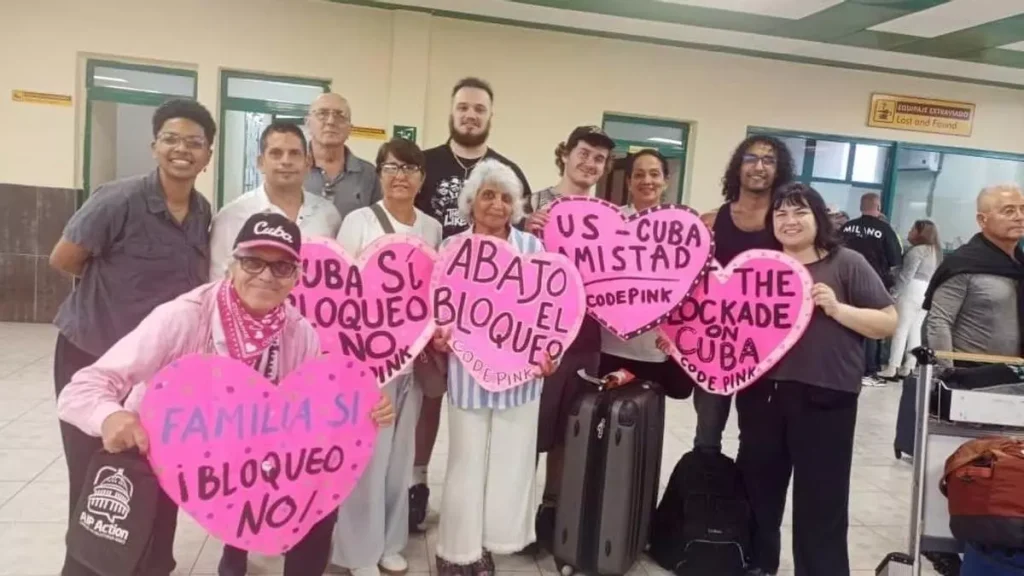
CodePink delegation upon its arrival in Holguín last week. / X/@codepink

14ymedio bigger14ymedio, Madrid, May 24, 2026 — A total of 145 organizations established in the United States have been identified by Fox News as part of the network of influence that Donald Trump’s Administration suspects the Government of Havana has built on U.S. territory. The network reported this in a feature story on Saturday, announced as part of a series dedicated to the subject.

As part of the investigation, the Treasury Department’s Office of Foreign Assets Control (OFAC) has cited Marxist influencer Hasan Piker and CodePink co-founder Susan Medea Benjamin, who traveled to Cuba last March to deliver humanitarian aid as part of the Our America Convoy .

Fox News also reports that the activities of Olivia DiNucci, CodePink’s Washington, D.C., coordinator, are being examined. The network states that 40 other Americans are under investigation by federal authorities for allegedly coordinating with Cuban regime officials to transport goods and supplies to the island in convoys and flotillas.

“A coordinated rapid response network was already being mobilized across the United States to defend Castro and the Communist Party of Cuba.”

The lengthy Fox News report focuses on the analysis of numerous messages issued in response to the formal indictment against former Cuban president Raúl Castro for the 1996 shootdown of two Brothers to the Rescue planes last Wednesday. Just nine minutes after the news became public, Fox News states, “a coordinated rapid-response network was already mobilizing across the United States to defend Castro and the Communist Party of Cuba.” continue reading

Some of the slogans were: “Baseless indictment against Raúl Castro,” “A pretext for another war,” “We will not hand over Raúl,” or “Cuba is not a threat to the world. The United States is a threat to the world. The world supports Raúl Castro, hero of the Cuban Revolution. The world turns its back on Donald Trump, clown of human destruction.” This last message, the news channel notes, was shared by Manolo de los Santos, executive director of The People’s Forum, a New York-based NGO, and by leaders of CodePink.

Both organizations, according to another investigation carried out by Fox News last March, are part of an international leftist network financed largely by Shanghai-based American tech businessman and supporter of the Chinese regime Neville Roy Singham. Other groups within the network include Answer Coalition, Liberation News and Party for Socialism and Liberation, International People’s Assembly, Venceremos Brigade, Hatuey Project, BreakThrough News, Tricontinental Institute, IFCO, and Pastors for Peace.

Aside from the Singham network, Fox News names six more structures within the “ecosystem” of support for Cuba: unions such as United Union of Roofers or Waterproofers and Allied Workers Local 36, aid brigades and delegations such as Global Exchange or the Convoy Nuestra América, Marxist organizations such as the Communist Party USA or the African People’s Socialist Party, media outlets such as BT News or Liberation News, academic and professional networks such as the National Lawyers Guild, and humanitarian and infrastructure aid campaigns such as Global Health Partners.

In total, the network identifies 145 groups, including NGOs, unions, and other activists, whose annual revenues reach one billion dollars.

For Homeland Security officials investigating the influence of foreign governments on U.S. territory, this kind of “rapid response” campaign is evidence of Havana’s influence, disguised as “solidarity” with the Island.

“It is neither extraordinary nor a violation of any international or U.S. law for Cuban diplomats to interact with civil society”

Asked about the matter, the Cuban Embassy in Washington denied any improper activity to Fox News and, through a spokesperson, stated that “Cuban diplomats strictly comply with the Vienna Convention on Diplomatic Relations,” whose Article 41 establishes that diplomats have the duty not to interfere in the internal affairs of a State.

The spokesperson also stated that “part of diplomatic work” consists of “promoting friendly relations” and “interacting with organizations and institutions of civil society in the State to which they are accredited.” The Cuban mission continued: “It is neither extraordinary nor a violation of any international or U.S. law for Cuban diplomats to interact with civil society,” concluding that this “does not encourage Americans to overthrow or act against the constitutional order of the United States.”

Sources close to the government investigation told Fox News that they are examining the activities of several prominent activists and organizers linked to the Cuba solidarity movement, including Twitch streamer Hasan Piker, CodePink cofounder Medea Benjamin, and CodePink coordinator in Washington D.C., Olivia DiNucci. Likewise, they are investigating another 40 Americans who allegedly coordinated with Cuban Government officials to bring goods and supplies to the Island in “convoys” and “flotillas” earlier this year.

This past Saturday, the Cuban official press echoed the “denunciations” made by CodePink — one of the organizations in the “Singham network” — and Democratic Party senators against Donald Trump’s Government over the increasing pressure on the Island. “We must stop this madness. Cubans, and not politicians in Washington nor hardline fanatics in Miami, should decide Cuba’s future,” was one of the CodePink messages circulated by several state media outlets, which praised the civil organization for warning “about the danger of a new war” and demanding “an end to the unilateral coercive measures that threaten the sovereignty and living conditions of the Cuban people.”

Translated by Regina Anavy

______________________

COLLABORATE WITH OUR WORK: The 14ymedio team is committed to practicing serious journalism that reflects Cuba’s reality in all its depth. Thank you for joining us on this long journey. We invite you to continue supporting us by becoming a member of 14ymedio now. Together we can continue transforming journalism in Cuba.
The Return of 500,000 Cubans Is Among the Points Being Negotiated by Washington and Havana

Joe García describes eight issues on the table, including political prisoners, the embargo, confiscated properties, internal reforms, and financial reintegration

According to García, the talks would not point toward an immediate expulsion, but rather a gradual scheme. / 14ymedio

14ymedio bigger14ymedio, Madrid, Yunior García Aguilera, May 24, 2026 — Much has been speculated in recent weeks about the secret agenda between Havana and Washington. But now, for the first time with this level of detail, a source with access to officials from both Governments is laying out a concrete roadmap. Businessman and former Democratic congressman Joe García speaks of eight points ranging from the release of political prisoners to the lifting of the embargo. At the center of this possible negotiation, however, appears an issue more thorny than any diplomatic gesture: the return to the Island of up to 500,000 Cubans currently living in the United States.

The figure alone is enough to shake both sides of the Florida Straits. Half a million people is not an abstract category in a federal file. They are families, workers, people who arrived under humanitarian parole, asylum seekers, and individuals with pending cases. It would also include individuals considered inadmissible because they committed crimes. Mixing everyone into the same bag may be politically useful, but humanly dangerous.

In an article published by The Palm Beach Post, García identifies eight main points in the conversations between the United States and Cuba: the release of more than 1,000 political prisoners, economic reforms, compensation for confiscated properties, political reforms, lifting the embargo, readmission of the Island into multilateral organizations, Most Favored Nation status, and the repatriation of hundreds of thousands of Cubans.

The release of political prisoners would be the minimum moral condition needed to sell any agreement to the exile community and to Congress

It would, therefore, not be a simple immigration arrangement, but rather a return to the entire chessboard of the bilateral relationship. Speaking with 14ymedio, García acknowledges that the issue of the half million migrants “is the one that moves the heart,” but he considers the other seven aspects also very “specific” and constituting “a fairly large movement.”

The release of political prisoners would be the minimum moral condition needed to sell any agreement to the exile community and to Congress; economic reforms would open the door to investments that today collide with state and military control over strategic sectors; compensation for continue reading

expropriations would touch an open wound dating back to 1959 and would require the creation of legal and financial formulas for American and Cuban claims; and political reforms would be the most sensitive point for Havana, because any real opening would call into question the monopoly of the Communist Party.

García’s statements rest on an old rule of American foreign policy: sometimes only a hawk can negotiate with the enemy without being accused of weakness. Nixon was able to open the door to China because his anti-communist record protected him from suspicion. Reagan was able to sit down with Gorbachev after having called the Soviet Union “the evil empire.” And George H. W. Bush was able to manage the Soviet collapse without turning it into a public humiliation that would push Moscow toward chaos. In all those cases, the rapprochement was not sold as

The Official Press Acknowledges an Increase in Crime in Artemisa, Especially Theft with Force

In the province, 560 criminal acts were committed, 28 more than the previous year.

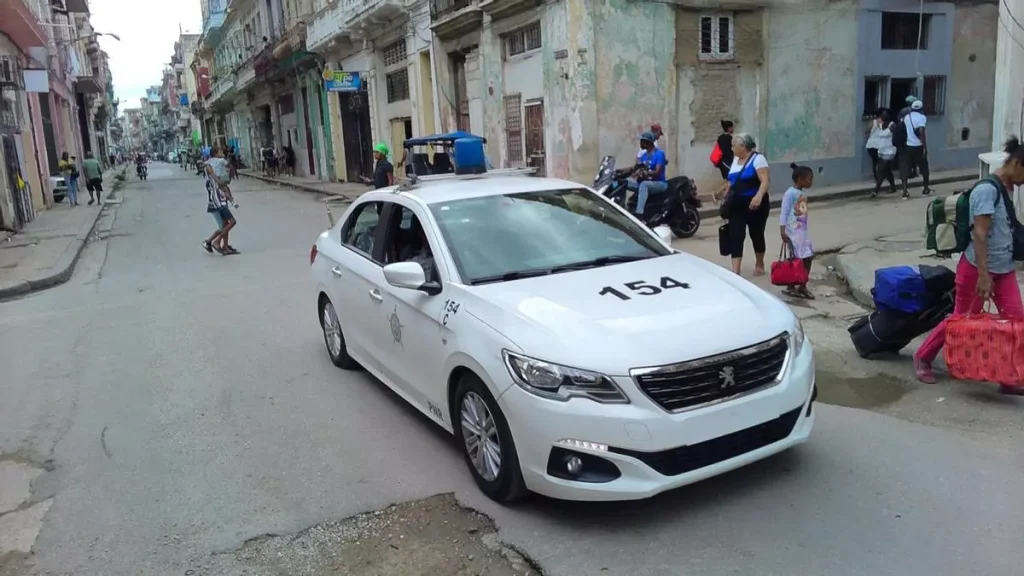
Police patrol on Neptuno Street in Havana. / 14ymedio

14ymedio bigger

14ymedio, Madrid, May 22, 2026 — Not all official media outlets are reproducing the news about the new National Exercise for the Prevention and Combating of Crime — the fifth of its kind — currently taking place in Cuba with mere vagueness, voluntarist prose, or exemplary stories. In Artemisa, for example, they admit that crimes have increased.

Specifically, 560 criminal acts were committed in the province, 28 more than the previous year, and most of them (426) were theft with force. These occurred mainly, El Artemiseño reported, in the local districts of Los Pinos, San Cristóbal 1, Taco Taco, and José Martí.

The most frequent type of theft, said Lieutenant Colonel Víctor Abat García, delegate of the Ministry of the Interior, is cattle theft. The military official also reported the theft in the municipality of San Cristóbal of 1,656 liters of dielectric oil from transformers, which he described as an “unacceptable phenomenon at the present time.” This type of crime, he warned, “must generate greater severity at a time when the U.S. Government is intensifying its energy blockade against Cuba.”

The remarks by the municipal governor of Artemisa, Idalmys Quiñones González, nevertheless revealed that “greater effectiveness is still needed” in the prosecution of crimes. continue reading

In Santiago de Cuba, a “rigorous follow-up” is being carried out on “ten cases of alleged crimes and administrative corruption”

Meanwhile, in Santiago de Cuba, officials at the meeting regarding the Exercise — which is taking place between May 18 and 23 — reported that they are carrying out a “rigorous follow-up” on “ten cases of alleged crimes and administrative corruption that have had a significant impact on the province.” They said more details on the matter would be provided this Friday.

On Tuesday, the Provincial Court of Matanzas sentenced three citizens to prison terms ranging from 10 to 15 years for “robbery with violence or intimidation against persons in the degree of attempt,” in an “exemplary” trial framed within the same initiative to combat “irregularities.”

The three defendants, whose names were not released, were inside a home in the town of Máximo Gómez, in the municipality of Perico, intending to seize valuables when they were surprised by one of the residents, whom they “attacked and caused multiple bodily injuries.”

The Court, in accordance with the classification presented by the Prosecutor’s Office, sentenced two of the accused to 15 years in prison each, and the third to 10 years. As additional penalties, they were stripped of certain rights and subjected to a travel ban.

In addition, the Prosecutor’s Office requested “compensation for the victim’s wife for medical treatment and transportation expenses resulting from the injuries inflicted on her husband during the criminal incident.” The report does not specify the amount, but it highlights the socioeconomic problems on the Island, where healthcare is supposed to be free.

The deployment of the current Exercise, the official state newspaper Granma said in an article, “is taking place under circumstances of special complexity, as a consequence of the intensified economic, commercial, and financial blockade, the oil embargo, the increase in sanctions, hostility, psychological warfare, and threats of military action by the United States government against Cuba.”

The previous campaign of this kind concluded with thousands of inspections that led to the immediate closure of nearly 70 businesses, mainly for violations of banking regulations. Tax violations amounting to 1.1098 billion pesos were also identified, and fines were imposed that rapidly recovered nearly 53 million pesos.

In addition, dozens of exemplary trials were held through which the authorities attempt to project an image of control and security amid a situation that increasingly demonstrates the opposite.

Translated by Regina Anavy

______________________

COLLABORATE WITH OUR WORK: The 14ymedio team is committed to practicing serious journalism that reflects Cuba’s reality in all its depth. Thank you for joining us on this long journey. We invite you to continue supporting us by becoming a member of 14ymedio now. Together we can continue transforming journalism in Cuba.
New Donations From the U.S. Arrive in Santiago de Cuba for Victims of Hurricane Melissa

According to Cáritas, the shipment consists of 1,900 hygiene and food kits, part of aid valued at three million dollars.

Image of Granma after the passage of Hurricane Melissa. / La Demajagua

14ymedio biggerEFE/14ymedio, Havana, May 22, 2026 — The Catholic organization Cáritas reported this Thursday that 1,900 hygiene and food kits from a U.S. government aid shipment valued at three million dollars for victims of Hurricane Melissa arrived in Santiago de Cuba this week.

Two flights from Miami transported the donations on Tuesday the 19th and this Thursday to Santiago, where they will be distributed to vulnerable families affected by the hurricane’s passage through the eastern third of Cuba on October 29, Cáritas explained on social media.

The organization recalled that donations from this first package began arriving on January 14 and included food kits, hygiene supplies, and household items purchased and sent by Catholic Relief Services (CRS).

Cáritas clarified that, so far, 82% of this aid has been delivered

Likewise, Cáritas clarified that up to this point 82% of the assistance has been carried out, which the U.S. government stipulated must be distributed by the Catholic Church and under no circumstances by the regime.

The Catholic organization added that the remaining 18% of the assistance will be received this month and that, in total, it will benefit 8,800 families in the affected provinces: Santiago de Cuba, Holguín, Bayamo, and continue reading

Guantánamo.

It also announced that “at the same time, work is beginning on the management and implementation of a new donation which, valued at six million dollars, has been made by the U.S. government for the same purpose.”

As Cáritas previously explained, the beneficiaries are “single mothers with small children, older adults, people with disabilities, and people with limited or no mobility.”

The donations have included rice, beans, oil, sugar, water purification tablets, pots, kitchen utensils, blankets, and flashlights.

Hurricane Melissa crossed the eastern part of the Island on October 29 as a Category 3 storm (out of 5) on the Saffir-Simpson scale, with winds of up to 200 kilometers per hour and rainfall of up to 400 millimeters in some parts of the country.

According to assessments by the Cuban government, the storm caused no fatalities but did cause extensive material damage to more than 116,000 homes, as well as to 600 state medical facilities, more than 2,000 schools, around 100,000 hectares of crops, and infrastructure related to transportation, telecommunications, electricity, and water supply.

Translated by Regina Anavy

______________________

COLLABORATE WITH OUR WORK: The 14ymedio team is committed to practicing serious journalism that reflects Cuba’s reality in all its depth. Thank you for joining us on this long journey. We invite you to continue supporting us by becoming a member of 14ymedio now. Together we can continue transforming journalism in Cuba.
Amelia Calzadilla Presents a Liberal Party in Madrid for “The Day After” in Cuba

The Cuban activist says the Cuban Classical Liberal Party was born as “a challenge to tyranny” and promises to prepare proposals for a democratic transition.

Calzadilla this Tuesday in Madrid during the presentation of the party / 14ymedio

14ymedio bigger14ymedio, Madrid, May 21, 2026 – At the Casino de la Reina in Madrid, before nearly fifty Cubans, activist Amelia Calzadilla presented this Tuesday the Cuban Classical Liberal Party (Partido Liberal Clásico Cubano, PLC), a political organization opposed to the Havana regime that aspires to bring together Cubans inside and outside the Island around a proposal for a future democratic transition.

The event served to officially launch a project that Calzadilla had announced weeks earlier as the Cuban Orthodox Liberal Party. The new name, its promoters explained, seeks to better define its ideology: classical liberalism, defense of private property, reduction of state control, separation of powers, and rule of law.

“This is, above all, a challenge to tyranny,” Calzadilla said during the presentation. “Here we are, free Cubans, organized, trying to defend what belongs to us.” The activist insisted that the opposition cannot limit itself to denouncing the regime but must begin preparing answers for the future. “Governing a country is not a prize, it is a responsibility,” she stated.

The activist insisted that the opposition cannot limit itself to denouncing the regime but must begin preparing answers for the future

Calzadilla, known for her social denunciations from within Cuba and for her later exile, sought to distinguish political commitment from improvisation. The new party, she said, was not created to distribute positions or feed vanity, but to think about the “day after” the dictatorship. Its proposal, she explained, starts from the idea that the State must stop occupying everything. “The State is not a decision-maker; it is a servant. The decision-makers are the citizens,” she argued. continue reading

“We are not center-right, but right-wing,” said Lucio Enríquez Nodarse, the party’s treasurer, repositioning the party, which Calzadilla had originally described as centrist. The definition, he explained, does not imply an extremist position nor the complete disappearance of the State, but rather a clearer defense of classical liberalism.

“We believe the State has to participate in some very controlled aspects,” he said. A physician by profession, Enríquez used healthcare and education in a future Cuba as examples: “We need a strong healthcare system, and the healthcare system as we conceive it is mixed: public and private. So there is a social component there. As you can see, there is no extremism there.” The same, he added, should apply to education. According to Enríquez, the party does not rule out State participation in certain areas, always with the aim of helping the most vulnerable people.

Registration in Spain places the PLC in a unique situation. Legally it is a Spanish party, but politically Cuban and diasporic in its social base. Calzadilla made clear that she does not plan to run in any electoral process in Spain, something Spain’s Party Law does not require, although it does require political activity.

The presentation brought together several well-known figures from the Cuban exile communities in Madrid and Miami. Among those present were journalist Juan Manuel Cao, activist Elena Larrinaga, and playwright and dissident Yunior García, along with activists, journalists, and supporters of the new project. Also attending were Ileana Álvarez, director of Alas Tensas, and Francis Sánchez, director of Árbol Invertido, as well as collaborators and figures linked to independent media outlets such as CubaNet, Diario de Cuba, and 14ymedio.

One of the most significant attendees was physician and Cuban exile Tony Guedes, former leader of the Cuban Liberal Union and a figure close to the liberalism of Carlos Alberto Montaner

One of the most significant attendees was physician and Cuban exile Tony Guedes, former leader of the Cuban Liberal Union and a figure close to the liberalism of Carlos Alberto Montaner. His presence, together with that of Linda Montaner, widow of the Cuban intellectual, gave the event a sense of continuity between the exile’s liberal tradition and a new generation of activists trying to organize politically around Calzadilla.

According to the statutes published by the organization, the PLC presents itself as a Spanish political party representing the Cuban diaspora, headquartered in Madrid until it can register in Cuba. The document also contemplates the creation of branches in other countries where legally possible. The organization defines itself as a right-wing liberal democratic party focused on individual freedom, the market economy, equality before the law, and limits on State power.

The provisional leadership is headed by Calzadilla as president. Activist and journalist Iliana Hernández serves as vice president; Lucio Enríquez Nodarse is listed as treasurer; Emilio Arteaga Pérez and Avana de la Torre were introduced as board members. Omar Antonio Díaz Peña appears in charge of digital infrastructure.

As collaborators or initial supporters, Lázaro Mireles Galbán, Yoelkis Torres Tápanes, Maribel García González, Antonio F. Díaz Hernández, and Raidel Argudín Pose were mentioned. Calzadilla stated that the party had already received more than one hundred membership applications, many from people inside Cuba. For those cases, she explained, a private registry would be used to protect those living under regime surveillance.

“Limiting information is the best resource we can use today to protect Cuban citizens who are inside Cuba and want to participate in the party,” she said.

“Limiting information is the best resource we can use today to protect Cuban citizens who are inside Cuba and want to participate in the party,” she said

The launch, however, has not been free of criticism. Some sectors of the exile community question the proliferation of opposition organizations without a verifiable structure inside Cuba. Others reproach Calzadilla for the speed with which she moved from social media activism to creating a political party. Independent media and social networks have repeatedly raised doubts about the project’s viability, its territorial base, and its ability to coordinate with political prisoners, relatives, and activists within the Island.

Calzadilla herself referred to the personal attacks she has received. “To tell you I handled it well would be to lie to you. And I don’t like deceiving anyone. Nobody feels good when they are attacked,” she said. However, she assured that the messages she receives from the Island have ended up functioning as a counterweight to the criticism. “Every person who writes to me from Cuba saying ‘I want to belong to your party’ creates an emotional shield in me.”

Translated by Regina Anavy

______________________

COLLABORATE WITH OUR WORK: The 14ymedio team is committed to practicing serious journalism that reflects Cuba’s reality in all its depth. Thank you for joining us on this long journey. We invite you to continue supporting us by becoming a member of 14ymedio now. Together we can continue transforming journalism in Cuba.