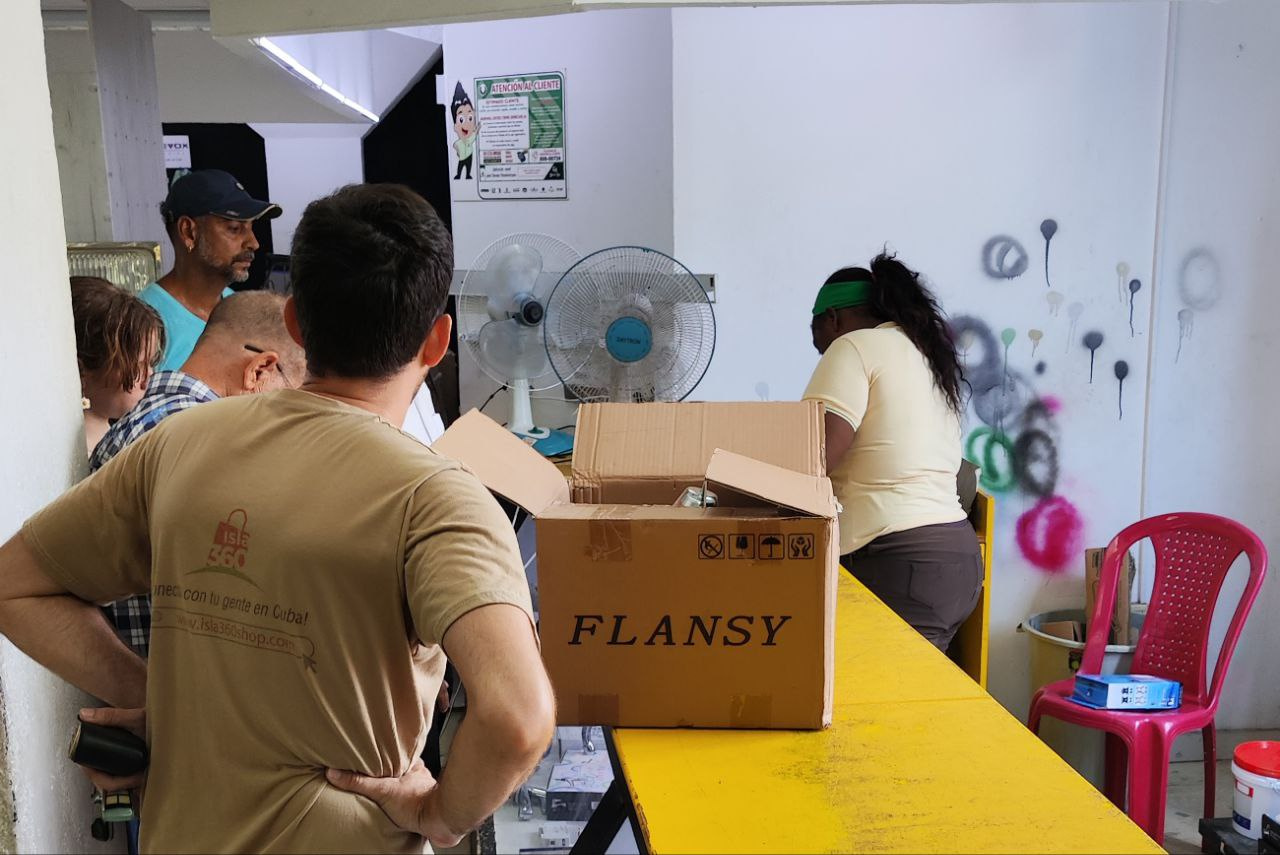
“You Open the Tap and a Murky and Fetid Water Comes Out” in the Houses on Pocito Street, in Havana

Also in Mulgoba, in the municipality of Boyeros, the residents have had a similar situation since April.
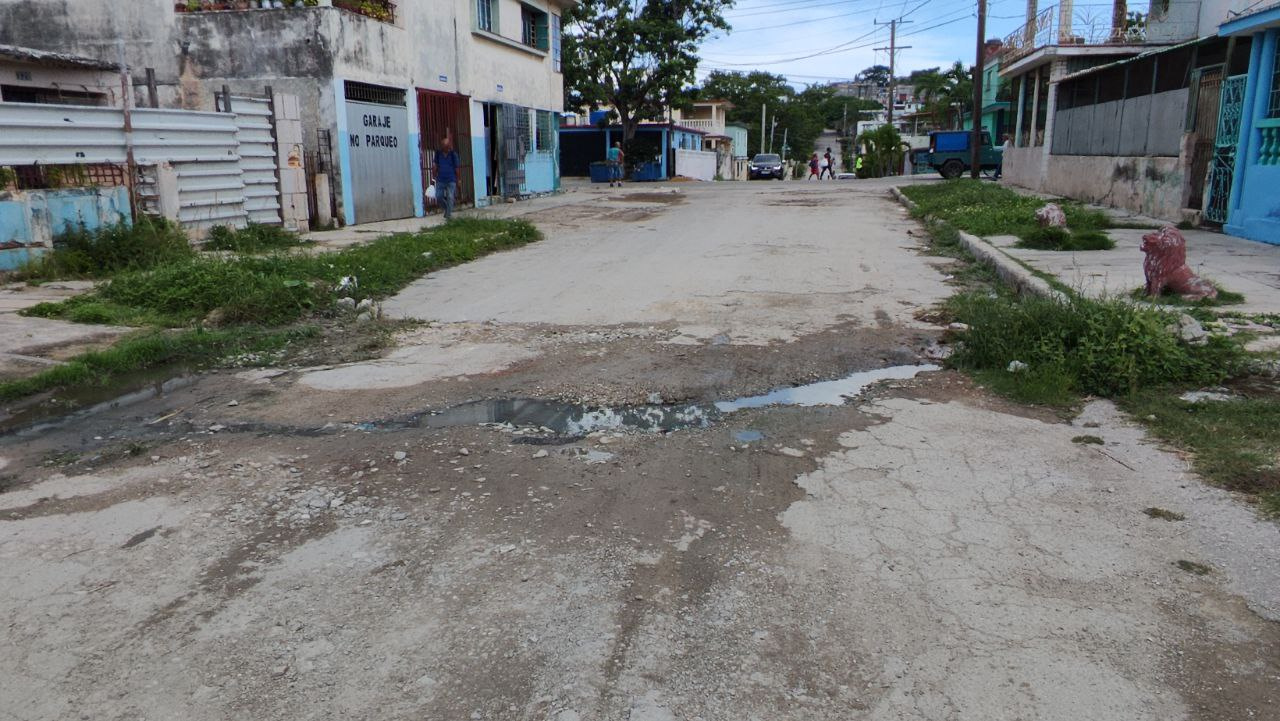

“The neighbors have gone to all the municipal and provincial authorities, without any response.” / 14ymedio

14ymedio bigger14ymedio, Juan Diego Rodríguez, Havana, 11 July 2025 — “It’s in the tap, it’s in the sea, it falls from the sky and returns to the sky,” says a children’s riddle. The answer, however, is beginning to be difficult for residents of Havana, a city hit hard by a lack of drinking water. In a small amount and with bad quality, what arrives these days in parts of the Lawton neighborhood brings more concern than relief.

Pocito Street looks like a road in a war zone, where bombs have been
launched into the streets. But the overflowing septic tanks and potholes that dot the street are just one visible part of the problems faced by residents in the area. Through the pipes, a sinuous enemy enters the houses and sickens the residents: contaminated water.

“My father now has an infection attributed directly to drinking or contact with this bad water”

“You open the tap and a murky and fetid water comes out, which has made it impossible for families to cook, bathe or perform basic necessities,” a woman born in the Diez de Octubre municipality tells 14ymedio. The situation has caused health problems among the residents of Pocito Street, especially among 11 and 12-year olds. “My father now has an infection attributed directly to drinking or contact with this bad water.”

The source of contamination could be anywhere. At the corner of Pocito with Dolores runs a river of black water that, from taking so long to drain, has caused the growth of moss and abundant vegetation reminiscent of what is found on river banks. Near Buenaventura, also on the worn asphalt, is a stream that feeds from the waste of toilets, showers and the sinks of nearby houses.

In the area of Mulgoba, in the municipality of Boyeros, residents are also literally “posting signs to ask for water.” / 14ymedio

The panorama is repeated as you follow the road and cross Porvenir Avenue. The houses become more modest, more deteriorated, and people of poorer appearance peek out from the doorways. It looks like this section of the road has not been renovated in decades, nor has a single investment been made to improve the lives of its inhabitants.

“Most of the water pipes here are made of porous iron, and the sewer water gets in,” says Oscar, a resident who keeps the door of his house closed for much of the day to avoid the smells emanating from the dark stream. The continue reading

main pipes that supply the neighborhood branch off in a tangled network of pipes, many more than 50 years old, that end up supplying each house.

Oscar keeps the door of his home closed to avoid the smells that emanate from the dark stream.

“Where the sewer water accumulates for a long time, everything passes through it, so it contaminates the pipes, reaches the cisterns, goes to the tanks, and when you turn on your tap, it’s now in the glass of water that you’re drinking,” says the neighbor. But he recognizes that he can only speculate on the origin of the filth and the bad smell that makes them turn their faces away and avoid drinking the water that comes from the tap.

“We have lodged complaints on all sides and no one responds to us; no Havana Water or Public Health official comes to investigate what’s happening on this street,” says Oscar. “The neighbors have gone to all the municipal and provincial authorities, to no avail.”

“No Havana Water or Public Health official comes to investigate what’s happening.”

The man points a finger at the broken sidewalk in front of the childcare center, another sign of the abandonment suffered by the whole area. Putting together all the pieces of the puzzle that make up the idleness and lack of resources in Pocito, the resident has only one word to summarize what they experience: “Negligence.”

“The water here is contaminated; yesterday the water truck came so that people could fill some buckets, at least for drinking,” says the owner of a small private cafe who also has to deal with supply problems to keep the business afloat. “There are people who are boiling it to be able to drink it, but I don’t recommend this; it’s better to buy bottled water.”

The recommendation, however, clashes with the high cost of a product that a few years ago was consumed only by tourists but whose demand has soared, precisely because of supply problems. One litre of the Ciego Montero brand, nationally produced, exceeds 350 pesos in private establishments and $1.50 in State stores. “There are many people with diarrhea and not just on this street. There have also been cases of people around the corner who got sick by drinking water from the tap.”

“There are many people with diarrhea and not just on this street.”

Competing with Pocito Street in neglect, in the area of Mulgoba, municipality of Boyeros, are residents who are literally “posting signs to ask for water.” Since last April the supply crisis has increased the indignation of the inhabitants. The critical situation of those days is far from being resolved, and although “a little water has arrived, you can no longer trust that you will be able to bathe,” says Moraima, with a modest house a few meters from the Polyclinic.

The main cause of that collapse was a breakdown in pumping equipment, but when it was put into operation a few weeks later, the problem still wasn’t resolved. “There is no water in the houses but then you go out to the street and see all the leaks dribbling and bubbling,” complains the woman. “There are areas where the sewer water mixes with the clean water, and you can see that they are contaminating the pipes that pass through there and then continue to other houses.”

“It’s in the tap, it’s in the sea, but be careful, you can’t drink it,” would be the conclusion about the water of any clever child living on Pocito or in Mulgoba.

Translated by Regina Anavy

____________

COLLABORATE WITH OUR WORK: The 14ymedio team is committed to practicing serious journalism that reflects Cuba’s reality in all its depth. Thank you for joining us on this long journey. We invite you to continue supporting us by becoming a member of 14ymedio now. Together we can continue transforming journalism in Cuba.
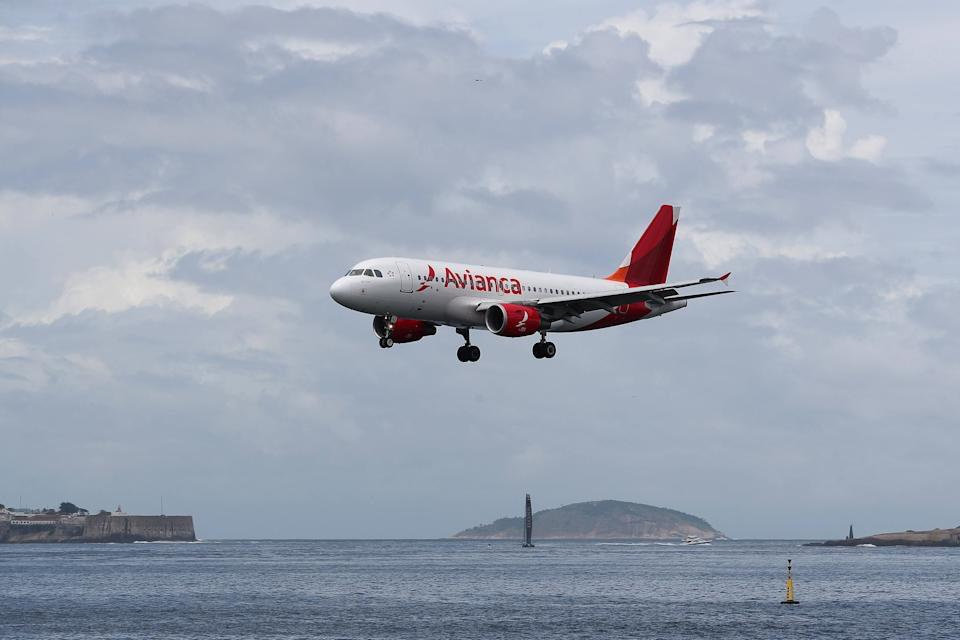
Avianca Will Stop Flying to Cuba in August Due to Lack of Passengers

Canadian WestJet will add another route to Havana in December.

The route, which Avianca had recovered in December, lasted a little more than eight months. / EFE

14ymedio bigger14ymedio, 13 July 2025 — The Colombian airline Avianca will abandon its route between Bogota and Havana from the 31st of August, in anticipation of the high season of tourism on the island.  The specialized media have referred to the low occupancy of the flights as the reason for the suspension of the route, which would leave Wingo as the only company offering direct trips between both cities from September.

The route, resumed by Avianca last December after stopping it in 2020, lasted a little more than eight months, with a daily frequency and 2,500 seats weekly. However, specialized aviation media had already predicted a possible disappearance of the route, which will make its last flight from El Dorado to Terminal 3 of José Martí on August 30 at 12:35.

Last April, Reportur said that the demand for flights between Colombia and the Island had plummeted and that, according to an expert, the airlines operating the route were flying “with less than 70%” of capacity. The numbers, stressed the portal, are not profitable for the Panamanian Copa and the Colombian Wingo and Avianca, but then none had given signs of wanting to suspend their route.

For airlines to make a profit, flight occupancy must exceed 80%, “with a good average fare of at least 300 dollars.”

For airlines to make a profit, flight occupancy must exceed 80%, “with a good average fare of at least 300 dollars.” According to Reportur, at the beginning of the year Cuba had experienced some hotel recovery – mainly thanks to foreign companies importing their own resources and food – but this did not translate into an increase in passengers, at least not from continue reading

Colombia. “The demand has not recovered.”

The connection has also lost potential travelers with the closure of the southern border of the United States and the prohibition on Cubans to travel to Colombia without a visa. And since 2023, the US has imposed sanctions on all airlines and officials involved in smuggling migrants from the Island to Nicaragua. Because of the restrictions, several airlines have already had to suspend flights between destinations, and some have even been penalized by Washington.

Despite the crisis in tourism and the cancelation of several routes in recent months, some airlines continue to bet on Cuba. This July, the Canadian airline WestJet announced that it plans to include a new flight to Havana from Toronto in its winter itineraries for 2025-2026, with two weekly frequencies, and that it will operate from December 18 to April 23 of next year. In an official statement, the Cuban Aviation Corporation welcomed the announcement as another way to strengthen relations with Canada.

In an official statement, the Cuban Aviation Corporation welcomed the announcement as another way to strengthen relations with Canada.

WestJet will also increase the frequency of some of its existing connections to the Island. This is the case of the route from Toronto to Varadero, which will increase to 11 weekly frequencies from this Monday; there will be seven flights a week from Montreal to Cayo Coco (Ciego de Ávila); and from Montreal to Santa Clara there will be five.

Although Canada is still the hen that laid the golden egg for Cuba in terms of tourism, the number of travelers arriving on the Island from that country follows the same downward trend as the sector. According to data from the National Bureau of Statistics and Information (ONEI), 387,404 Canadians arrived in Cuba between January and May 2025, almost 30% fewer than in the same period in 2024.

Translated by Regina Anavy

____________

COLLABORATE WITH OUR WORK: The 14ymedio team is committed to practicing serious journalism that reflects Cuba’s reality in all its depth. Thank you for joining us on this long journey. We invite you to continue supporting us by becoming a member of 14ymedio now. Together we can continue transforming journalism in Cuba.
Etecsa’s ‘Tarifazo’ Forces Cubans To Return to Dangerous Parks with WiFi

In Matanzas, users recount the difficulties of connecting to the network and thefts of accounts by hackers.

The connection’s strength isn’t a reason to jump for joy. / 14ymedio

14ymedio bigger14ymedio, Pablo Padilla Cruz, Matanzas, 12 July 2025 — The ‘tarifazo’ [huge price increase] imposed by Cuba’s State telecommunications monopoly Etecsa has suddenly returned hundreds of Cubans to the past and the search for a Wi-Fi hotspot that would allow them an internet connection. But also, due to time, those places are no longer what they once were. Blackouts and the widespread increase in theft and violence make those who are forced to resort to this option vulnerable, due to a lack of effective connections at home and the expensive and poorly managed data.

“I study,” says Yusmari sitting on a bench in Paseo Martí, in the Versalles neighborhood of Matanzas. “It’s not that all I do on the internet is study, but most of the time the so-called 6 GB extra for students, at least in the university Camilo Cienfuegos, is slow,” she says. Homework doesn’t wait, explains the young woman, who points out how small the packages are. “The 500 MB per month that we are given in school expire in no time, because a PDF enquiry can use more than 50 MB easily, and you have to get a turn for time at the computer. The only thing left is the park wifi,” she says.

But Yusmari knows that the landscape is not the same as it was a decade ago. “Now there is an atmosphere of insecurity; in addition, the street lighting almost never works because of the blackouts, so you have to be careful about coming alone. Nothing has ever happened to me, but if someone can snatch your cell phone in broad daylight, what will they do at night?” continue reading

“Now there is an atmosphere of insecurity; in addition, the street lighting almost never works because of the blackouts.”

The connection’s strength isn’t a reason to jump for joy.  “There are parks that are better or worse,” says Orestes, who uses the wifi to download files while waiting for his transport to Varadero, where he works as a musician. “Everything depends on the users; in my case it’s the worst since there is not much signal in this area, and people point their phones at the park so they don’t have to leave the house. Many times in less than an hour the phone is disconnected more than 10 times, and you have to restart the authentication process,” he says. The average download speed on fixed broadband is 2.73 Mbps with an upload speed of just 0.96. These results place Cuba in 159th place out of 159 countries evaluated, according to SpeedTest.

Orestes complains that it is sometimes impossible to even enter the Etecsa user portal. “And to top it off there are cloned portals that steal your account and password with total impunity. In the end, with patience, it is resolved, and at least something lets you upload, but it’s a constant struggle.”

The young musician says that the insecurity is not only physical but also due to the hackers. “Several people have complained,” says a worker from a nearby point of contact. “Mostly elderly people, but I can’t do anything, only raise their complaints to the managers. My functions as a company worker are only commercial.” Etecsa’s investment in cybersecurity appears to be nil, they both claim.

The great alternative to public wifi areas were, before data worked, the hotels. In the case of Matanzas, many people approached the Velasco and the Louvre, in the center of the city, for their good options to get online. Being service networks abroad, the speed was much better – up to 4 MB of data transfer – and all you had to do was create an Etecsa account, but that only worked in those hotels.

The great alternative to public wifi areas were, before data worked, the hotels. In the case of Matanzas, many people approached the Velasco and the Louvre.

“The option no longer exists, at least for those Cubans who used it,” says Reinaldo, who works as a freelancer. “One day, without further ado, they told me that they could not top up my account because the service was only for guests, even though we are the Cuban customers who fill the lobby and the bar, both at the Velasco and the Louvre.”

“And every day, I spent more than three hours there and consumed enough, even had lunch several times a week. But now that network is under-exploited, and many people who are creating new ways of bringing foreign exchange into the country have to look for other paths. We all lost in this,” he says with resignation.

One of the employees at the Louvre confirms that if you are not a customer, you cannot have an account to connect to the internet in the hotel. “I don’t know the reason, and it’s not that I personally want it, but one day that law came from above and remained,” he says. “As a worker, I must comply, although it seems extreme. More so now, with the controversy over mobile data.” The employee claims that before, under the pretext of connecting to the internet, the bar was filled with domestic customers who are now mad. “Sometimes, he recalls, we couldn’t even keep up.”

Translated by Regina Anavy

____________

COLLABORATE WITH OUR WORK: The 14ymedio team is committed to practicing serious journalism that reflects Cuba’s reality in all its depth. Thank you for joining us on this long journey. We invite you to continue supporting us by becoming a member of 14ymedio now. Together we can continue transforming journalism in Cuba.

Washington Denounces the Torture of José Daniel Ferrer and Requests Proof of Life From the Cuban Regime

Since his return to prison last April, the opponent has suffered brutal ill-treatment and beatings, as reported by his family.

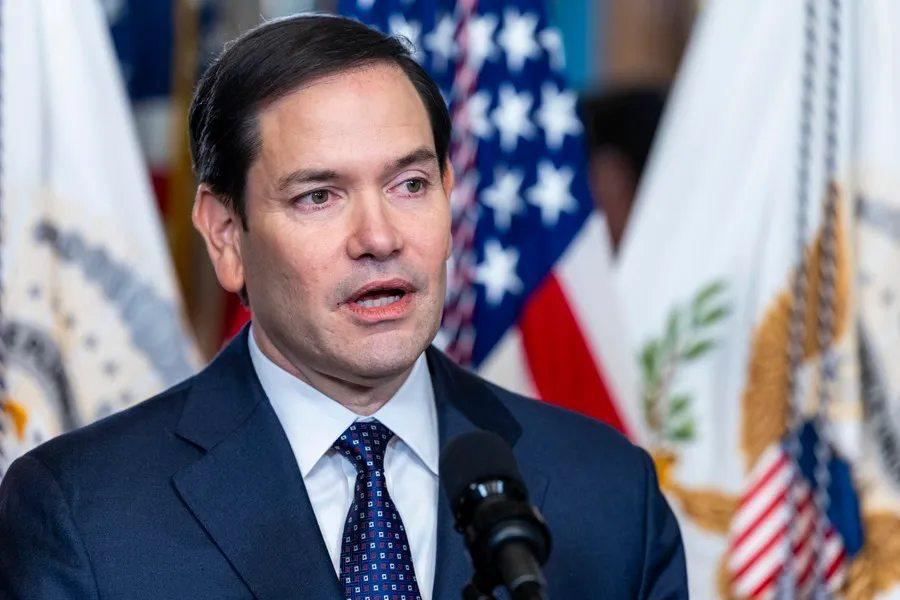
Secretary of State Marco Rubio also called for the release of political prisoners / EFE

14ymedio bigger14ymedio, Havana, July 12, 2025 — US Secretary of State Marco Rubio asked the Cuban regime on Friday for proof of life for opponent José Daniel Ferrer. The leader of the Patriotic Union of Cuba (UNPACU) was returned to prison in April, and since then both his family members and human rights organizations have denounced the torture he is subjected to at the Mar Verde prison in Santiago de Cuba.

“The Cuban regime continues to torture democracy activist José Daniel Ferrer. The United States demands an immediate proof of life and the release of all political prisoners,” Rubio wrote on his X account.

Just a few days ago, the Foundation for Human Rights in Cuba included five officers from the prison where Ferrer is serving his sentence in a database of Cuban repressors for their participation in acts of torture against the opponent.

Nelva Ismarays Ortega Tamayo, Ferrer’s wife, reported that the UNPACU leader had been brutally beaten on June 25 after declaring a hunger strike. Ferrer was protesting against ill-treatment, and he refused to wear the uniform of a common prisoner. “He was beaten everywhere: head, arms, legs, abdomen, back, kicked, slapped and punched, until he defecated,” said Ortega, who visited him on July 5. continue reading

The attack was led by Lieutenant Colonel Vladimir Pineda Guerra, head of the prison, and involved Colonel Adalberto Andreu Chacón, second in command

The attack was led by Lieutenant Colonel Vladimir Pineda Guerra, head of the prison, and involved Colonel Adalberto Andreu Chacón, second in command; Captain José Miguel Hechavarría Gorguet, head of Internal Order; Major José Luis Yáñez Herrera, head of Educational Treatment; and Captain Livan Laugart Riquelme, head of the Collective. All five officials have been added to the Foundation’s list of Cuban repressors.

The platform denounced other ill-treatment of Ferrer and said that six common prisoners had been used as “hitmen” to continue the attacks, in what it calls “a systematic repressive pattern against dissidents.” His fingers and wrists were also twisted; he was forced to drink milk in order to interrupt the strike, and toilet access was denied for two days. “The case of Ferrer once again shows that the Cuban penal system is not designed for reintegration or justice, but as a tool of political punishment,” said the Foundation.

Earlier this month, UNPACU also denounced the “systematic torture” of its leader and stated that he was in “grave danger.” “Severe beatings,” “simulated asphyxiation,” “denial of food, hygiene products and medicine,” “exposure to contagious diseases” and “death threats” were some of the abuses listed by the organization.

This Friday, on the fourth anniversary of the 11 July 2021 protests, the White House imposed sanctions against Miguel Díaz-Canel

Marco Rubio’s message not only comes at a time of tension over the abuse of the opposition leader, but follows the policy of putting pressure on the Cuban government that has been implemented by Washington in recent weeks.

This Friday, on the fourth anniversary of the 11 July 2021 protests, the White House imposed sanctions against Miguel Díaz-Canel for “serious human rights violations” for having ordered the repression of the demonstrators who protested throughout the Island on that date. This is the first time that the Cuban leader has been subjected to personal sanctions by Washington, which also affect the minister of the Revolutionary Armed Forces, Álvaro López Miera, and the Interior minister, Lázaro Alberto Álvarez Casas. All of them, including their immediate family members, are prohibited from entering the United States.

Translated by Regina Anavy

____________

COLLABORATE WITH OUR WORK: The 14ymedio team is committed to practicing serious journalism that reflects Cuba’s reality in all its depth. Thank you for joining us on this long journey. We invite you to continue supporting us by becoming a member of 14ymedio now. Together we can continue transforming journalism in Cuba.

Cuba Will Focus Its Efforts on the 2032 Olympics if It Can’t Participate in Los Angeles in 2028

INDER favors hiring abroad because athletes need to leave the Island to have access to better facilities.

The industry has lost the ability to make materials, and the sports base is lacking / EFE

14ymedio bigger14ymedio, Madrid, 11 July 2025 — Cuban sport apparently assumes that it will not attend the 2028 Olympic Games in Los Angeles. The statements of the first vice president of the National Institute of Sports, Physical Education and Recreation (INDER), Raúl Fornés, delve into a thesis already advanced by the Cuban Volleyball Federation (FCV) when, at the end of June, the US denied visas to the players of the national team. “If the US government maintains its policy of denying visas, as it has been doing by preventing us from attending competitions on its territory, we will simply not go and will do other things. It wouldn’t be the first time. We already missed Los Angeles in 1984; that city is unlucky for us,” he told Cubadebate.

The official gave an extensive interview to the official media on the eve of the approval, in the National Assembly next week, of the new sports law. He breaks down some of the novelties of the regulation, saying he will try to recover a splendor that is in the past, after ranking fifth in medals won by Cuban athletes at Barcelona 1992. The results, if he is successful, would be noticeable in Brisbane 2032, because – admits the official – he will have to go to Los Angeles with what there is. If he can.

“We’re focusing on it, training to be back among the top countries in the world”

“We are fully prepared to attend. We are focusing on it, training to be back among the top countries in the world. It’s a difficult and complex goal, but it’s our intention,” he said, settling the issue.

The new policy is based mainly on an increase in training in two areas: recruitment abroad and the recovery of the Higher Schools for Athletic Development (ESPA), which were deactivated in 2010.

Fornés says that this measure was an error of astronomical proportions whose results have very concrete figures. “We were losing about 1,500 talents every year. Every year. About 1,500. These are not invented or preliminary numbers: they’re concrete.” The official says that once athletes finish their training at the School of Sports Initiation (EIDE), they have only two paths: join a national team or leave the sport. The ESPA schools were a continue reading

natural link for young people from 18 years of age to adapt to professionalization, but their elimination has led them to a change of paradigm.

The new regulation will seek to “rebuild a training system that respects the natural processes of athletic development, avoiding abrupt leaps”

“We have already seen that this method does not always give good results; it happened to us and today is costing us dearly. Now we are going to rescue it; we intend to save it,” he said, pointing out that the new regulation will help “to rebuild a training system that respects the natural processes of athletic development, avoiding abrupt leaps which have proved counter-productive.”

Another fundamental point of the new policy is recruitment abroad, which Fornés has explained in detail, with special emphasis on the fact that INDER does not keep any remuneration corresponding to the athlete. “The athletes receive 100% of the contract and income. The Federation receives nothing from that part. What it does negotiate with the club that hires the athlete is between 10% and 20% for training rights,” he explained. The official mentioned this practice, common in many sports – among which is soccer, approved by FIFA – for which the club or federation that has invested years in the development of an athlete receives compensation.

“That’s something I wanted to clarify, because I know there is a lot of talk about it. Some think that the athletes contribute part of their salary, but that’s not true,” he remarked, avoiding comparisons with Cuban doctors on international missions, from whose salaries the government subtracts up to 90%, “to contribute to the health system,” it claims.

The balance towards the competitive result in international events is not yet up to par

According to the official, this system has worked well since it began to be implemented, but the results do not fully satisfy the authorities. “We have grown in the hiring of athletes and have improved the quality of many we hired, but the balance towards the competitive result in international events is still not up to par at this time. We continue to project; we are not going to give up,” he says. The scope of the shortages on the Island is such, argues Fornés, that it is necessary for athletes to leave Cuba to have access to better facilities, the appropriate technology and even competitive rivals.

The situation of the facilities is now in the eye of the hurricane after photos of some training centers went viral, including those of an EIDE facility, practically in ruins. “When I entered in 1997, in the middle of the Special Period, it was a hundred times better than now, 28 years later,” said INDER teacher Adriana Lazaga, regretting the oblivion to which athletes are subjected.

“Our best facilities date back to 1991, and even those no longer meet current requirements,” says Fornés in the interview. The official explains that the sports equipment industry, which was central to grassroots sport, is also among the many things that have collapsed. “That too must be admitted as an accumulated reality. For more than eight years, almost nine, we have been unable to guarantee basic sports resources for the teams,” he admitted.

There are currently 37 high performance sports in Cuba, something that is “impossible to maintain properly”

Since the means are not enough, and although the authorities have promised that the legislation will be accompanied by an economic endowment – which in the midst of the crisis is hard to believe – a very relevant point of the new sports policy will be the “prioritization” of disciplines. Currently, there are 37 high performance sports in Cuba, something that is “impossible to maintain adequately,” especially “when the elite of the world do not all receive medals, which is what ultimately positions Cuba internationally.”

The authorities will therefore focus their efforts on sports that have recently yielded results. “Today we are clearly establishing which sports will be prioritized; basically, those that place Cuba among the medalists of the Central American, Pan American and Olympic Games. These will receive real and consistent attention throughout their development pyramid,” said Fornés, without specifying a list, which should include wrestling, boxing, judo, taekwondo and athletics.

“If skating has never been practiced in Guantánamo, we cannot force them to skate”

As part of the strategy, the “regionalization principle” will also be used. “That is to say, a new concept, a new dimension.” For example, “If in Guantánamo, let’s say, skating has never been practiced, we cannot force them to practice skating nor tell them that ’you have to enroll in skating’.” The same applies to extremely expensive sports, such as hockey, which will have to remain in quarantine for lack of budget.

In recent years, Cuba has lost hundreds of athletes who prefer to try to make a living off the Island, which has decimated the teams and, consequently, the successes of national sport. The report of Cubadebate ends with the experiences of some hired abroad. In their messages, it is well understood why the number of athletes decreases, as happens in almost all professions. Some cite technical issues in their disciplines, but others measure the depth of the problem, like this statement by pitcher Liván Moinelo, who, speaking about the conditions, celebrates that in Japan, where he competes, “they have baseballs.”

Translated by Regina Anavy

____________

COLLABORATE WITH OUR WORK: The 14ymedio team is committed to practicing serious journalism that reflects Cuba’s reality in all its depth. Thank you for joining us on this long journey. We invite you to continue supporting us by becoming a member of 14ymedio now. Together we can continue transforming journalism in Cuba.

Five Officers Identified for Beating José Daniel Ferrer Are Included on the List of Cuban Repressors

The Foundation for Human Rights in Cuba denounces their direct involvement in acts of torture against the opposition.

Ferrer was brutally beaten on June 25, after declaring a hunger strike / UNPACU

14ymedio bigger14ymedio, Havana, July 10, 2025 — The Foundation for Human Rights in Cuba has included five prison officials from Mar Verde, Santiago de Cuba, in its database of Cuban Repressors for their direct participation in acts of torture against the opposition and prisoner of conscience José Daniel Ferrer García.

According to the wife of the leader of the Patriotic Union of Cuba (UNPACU), Nelva Ismarays Ortega Tamayo, Ferrer was brutally beaten on June 25, after declaring a hunger strike in protest of ill-treatment and to assert his refusal to wear the uniform of a common prisoner. “He was beaten everywhere: head, arms, legs, abdomen, back, kicked, slapped and punched, until he defecated on himself,” said Ortega after visiting him on July 5.

All five officials have been added to the list of Cuban Repressors

The attack was led by Lieutenant Colonel Vladimir Pineda Guerra, head of the penitentiary, and involved Colonel Adalberto Andreu Chacón, second in command; Captain José Miguel Hechavarría Gorguet, head of Internal Order; Major José Luis Yáñez Herrera, head of Educational Treatment; and Captain Livan Laugart Riquelme, head of the Collective. All five officers have been placed on the list of Cuban repressors.

In addition to the initial beating, Ferrer was subjected to more physical and psychological punishment. According to the complaint, six common prisoners were allegedly used as “hitmen” to continue the aggression, as “a systematic repressive pattern against dissidents.” His fingers and wrists were also twisted; he was forced to drink milk in order to stop fasting, and he was deprived of basic hygiene for at least 48 hours. continue reading

They are accused of violating Rule 1 of the UN Mandela Rules

“They are accused of crimes against humanity by torture and persecution for political reasons, in addition to violating Rule 1 of the UN Mandela Rules and Article 5 of the Universal Declaration of Human Rights,” said the Foundation.

The Foundation sees these abuses as a reprisal by the Cuban regime for the humanitarian campaign that Ferrer launched from his home in the Altamira neighborhood of Santiago de Cuba, before his re-incarceration in April this year. At that time, his release from prison in January, awarded as part of an agreement brokered by the Vatican, was revoked.

Lieutenant Colonel Vladimir Pineda Guerra has already been on the list of Cuban Repressors since 2023, when he was held responsible for keeping Ferrer incommunicado for more than three months.

The Foundation attaches the files of each officer with detailed documentation and photographs

In its publication, the Foundation attaches the files of each officer with detailed documentation and photographs. It charges them with beatings, physical abuse, intimidation, threats and violations of international humanitarian law.

Since its inception, the Foundation has sought to make visible those directly responsible for repression on the Island. Inclusion in its database means that these individuals could face future legal consequences if they are tried in international courts for their actions.

“Ferrer’s case once again shows that the Cuban penitentiary system is not designed for reintegration or justice, but as a tool of political punishment,” concludes the report.

Translated by Regina Anavy

____________

COLLABORATE WITH OUR WORK: The 14ymedio team is committed to practicing serious journalism that reflects Cuba’s reality in all its depth. Thank you for joining us on this long journey. We invite you to continue supporting us by becoming a member of 14ymedio now. Together we can continue transforming journalism in Cuba.

A Book Rescues the Memory of More Than 600 Victims of Forced Disappearance in Cuba

Historian Daniel I. Pedreira exposes how Castroism literally erased those who opposed it.

Images of Andrew de Graux Villafaña, a US citizen on his father’s side, who joined the Escambray guerrillas to fight against Castroism. / Martí Noticias

14ymedio bigger14ymedio, Yunior García Aguilera, Madrid, July 11, 2025 — In Los desaparecidos del castrismo, Cuba desde 1959 (The Disappeared of Castroism, Cuba since 1959), historian Daniel I. Pedreira delivers a work as painful as it is essential. Against the tide of silence imposed by the Cuban regime, Pedreira delves into one of the darkest and least documented aspects of the Island’s contemporary history: the forced disappearance of citizens opposed to Fidel Castro’s regime.

Through more than 600 cases, the author exposes how Castroism has used disappearances as a tool of repression and social control, publicly denying their existence while threatening and persecuting those who try to clarify the truth. Pedreira stresses that the majority of the victims were young people, which represents not only a human tragedy but also a mutilation of the future of the Cuban nation. The book aims to rescue their memory, break the imposed silence and pave the way for justice and national reconciliation.

The work is based on collaboration with organizations such as Archivo Cuba, the Instituto de la Memoria Histórica Cubana contra el Totalitarismo and the Asociación de Familiares de Cubanos Desaparecidos, as well as key witnesses. Despite the impossibility of accessing official documents of the regime, the author has managed to gather a solid basis of evidence with historical, judicial and forensic value. Pedreira hopes the book will reach international human rights institutions in order to dismantle the official narrative of continue reading

Castroism and raise awareness about the magnitude of the phenomenon. Its publication and presentation in Miami, at the Encuentro Internacional con el Libro Cubano Exiliado, on July 19-20, marks a milestone in documenting the human cost of repression on the Island.

The author has managed to gather a solid basis of evidence with historical, judicial and forensic value

Far from being limited to political denunciation, the author builds a solid investigation that disproves the myth that ideological regimes like the Cuban do not commit extrajudicial crimes or systematic disappearances. Pedreira reveals how the absolute control of institutions has allowed Castroism to literally erase those who oppose it, often without leaving a physical or documentary trace.

One of the most moving cases is that of Andrew de Graux Villafaña, a young guerrilla fighter who, at just 18 years old, was wounded, captured and eventually disappeared by the regime’s forces. The history, reconstructed from family and medical testimonies, exposes the machinery of concealment and dehumanization that characterizes this type of regime. The tireless struggle of his sister Mary Louise, even decades later, is a symbol of moral resistance to institutionalized oblivion.

Pedreira delves into one of the darkest and least documented aspects of the Island’s contemporary history / Courtesy

The work also includes the names and stories of other missing persons such as the brothers Pedrozo and Becerra, Orlando Collazo, Lázaro Fernández, Carlos M. Ibáñez and Alberto Sigas. Each case, accurately and respectfully reported, contributes to a portrait of collective pain that has been systematically silenced.

Pedreira points out that disappearances continue in present-day Cuba, either through direct repression or as a result of the conditions imposed by the dictatorship, which forces thousands of people to migrate along dangerous routes. Young people recruited for wars by others, migrants who disappeared at sea or in the jungle, citizens who never reached their destination: all of them are victims of a system that continues to take lives.

One of the book’s great successes is its dual approach. On the one hand, it provides concise data -dates, names, places- making it an invaluable source for researchers, historians, lawyers and human rights defenders. On the other, it does not forget the human component. Each entry is an act of memory, a symbolic tombstone for those who did not have a burial.

Disappearances continue in present-day Cuba, either through direct repression or as a result of the conditions imposed by the dictatorship.

The work is also part of a wider tradition of recovering historical memory in dictatorial contexts, as happened in former East Germany or in the Latin American Southern Cone.

Pedreira recognizes the limitations imposed by the regime’s permanence in power, but he establishes an ethical and historiographical starting point for the future.

The Disappeared of Castroism is a necessary book. Not only for its documentary contribution, but because it rescues from oblivion those whom the regime wanted to erase. With this work, Pedreira returns a face, voice and dignity to hundreds of Cubans who disappeared because they dreamed of a different country. As the author warns, many of them were young people, representatives of “the Cuba of the future,” and with them, a part of that future also disappeared.

Translated by Regina Anavy

____________

COLLABORATE WITH OUR WORK: The 14ymedio team is committed to practicing serious journalism that reflects Cuba’s reality in all its depth. Thank you for joining us on this long journey. We invite you to continue supporting us by becoming a member of 14ymedio now. Together we can continue transforming journalism in Cuba.
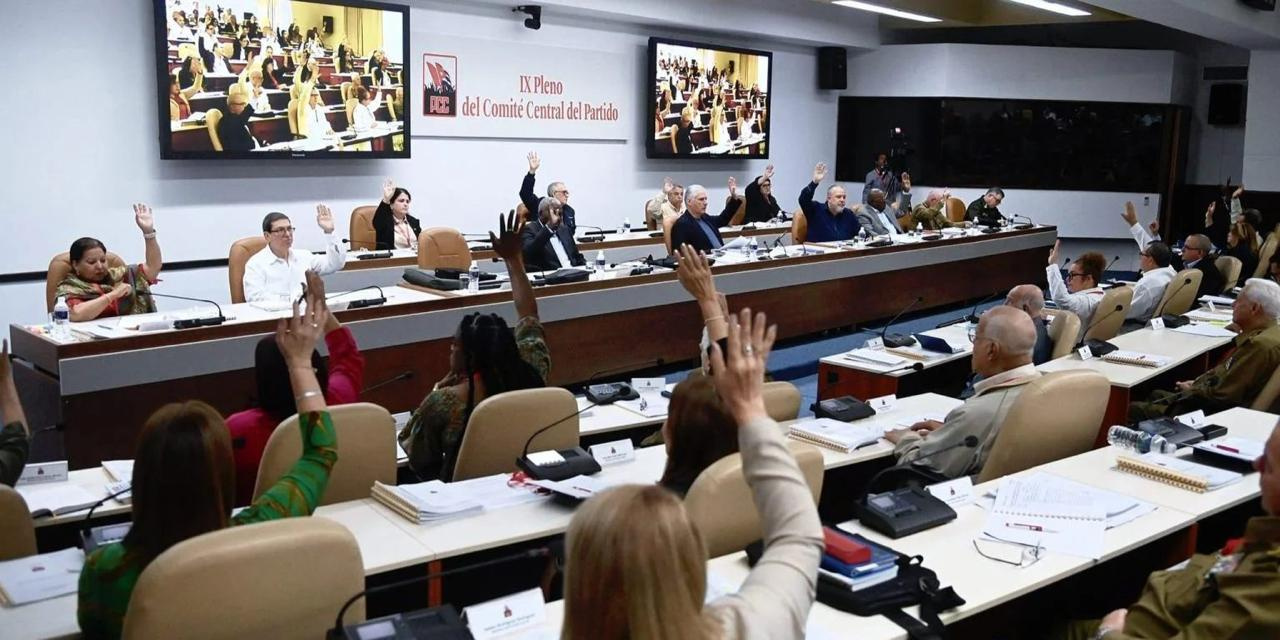
Is a Third Alternative for Cuba Possible?

At the beginning of the revolutionary process it was said that the means of production belonged to the workers and that the land belonged to those who worked it.

Only 20 or 30 people in the Party-State leadership have a real productive interest in the Cuban economic model / Cubadebate

14ymedio bigger14ymedio, Ariel Hidalgo, Miami, 12 July 2025 — In 1988, when the collapse of the socialist camp and the failure of the model implemented by the communist parties were already visible, Francis Fukuyama drew attention with a dissertation which he later published in book form. The End of History? stated categorically that “the end point of the ideological evolution of humanity” had occurred, and that, except for capitalism, there was no “alternative political-economic structure” that could resolve fundamental human contradictions.

But two years later, three US airlines went out of business in the middle of labor conflicts, and in the following decade, a global economic crisis as severe as that of the Crash of 1929 broke out. Capitalism has an intrinsic contradiction between capitalists who pursue greater profits, and wage earners who desire better wages.

However, this model, even with its conflicts, has been able to sustain itself. This is not the case of centralized economies.

Why did countries in Eastern Europe like Yugoslavia, Hungary, Czechoslovakia and Poland rebel and break away from the socialist camp, with Soviet troops having to invade or threaten an invasion? They all ended up returning to a capitalist economy.

Why did the Soviet Union resort to a perestroika reform and then disintegrate, only to take each village on a path away from the ideals of the hammer and sickle?

Why did China and Vietnam have to abandon the intransigent fanaticism that kept them in poverty and then move closer to the West and implement free market elements? continue reading

Why did China and Vietnam have to abandon the intransigent fanaticism that kept them in poverty and then move closer to the West and implement free market elements?

And in return, why is it that a country like Cuba, which was the first sugar producer in the world; the third largest livestock-producing country of Latin America after Argentina and Uruguay; with the Cuban peso on par with the dollar; a per capita higher than countries like Spain, Austria and Japan; with more American immigrants than Cuban emigrants in the United States, is today the poorest country on the continent?

All these questions have an answer: because the model they shared, which some still maintain, is irrational and counterproductive for economic development. When the State absorbs all means of production, it is forced to generate a caste of thousands of officials that it can’t control and thus becomes a bureaucratic monster. In audits, words such as “missing” and “diversion of resources” are very common.

Since these officials are not the owners of these enterprises, they lack a real productive incentive, but they exploit them as if they were their own and waste the resources as if they were someone else’s. In technical terms, we could say that a contradiction is created between State ownership and the private appropriation by these officials. So you understand why Fidel Castro, already on the threshold of the end of his life, recognized: “The Cuban model doesn’t work, not even for Cubans.”

Who, then, are the only ones who really have a true productive interest in this model? Because, at most, there are only 20 or 30 people in the leadership of the Party-State, whereas in capitalism there are hundreds or thousands of people who have a real interest: the capitalists. This comparison is not mine; it comes from the liberals, in particular the late Cuban writer, Carlos Alberto Montaner.

If capitalism has an intrinsic contradiction between capitalists and wage earners, in these regimes of monopolistic State centralism there are two, because not only does the contradiction exist between the true owner, that is, the State, and the workers, but also the one generated between that State and its bureaucrats.

However, taking to its ultimate consequences the comparison of Montaner between that supposed socialism with only 20 or 30 interested in productivity and the hundreds or thousands of capitalism, we could ask: How will it be when this productive interest has millions, and there is not one or two internal contradictions, but none?

If capitalism has an intrinsic contradiction between capitalists and wage earners, in these regimes of State monopolistic centralism there are two

But… would such a society be possible?

Generally in a capitalist economy the result of the total value obtained in each production cycle can be divided into three parts:

– Productive capital, which is used to secure everything needed for the next cycle, such as raw materials, wages, wear and tear of labor instruments, and the surplus product that is reinvested to expand the value of the next cycle.

– Profit capital, the part devoted to covering all the private expenses of the capitalist.

– And taxes, for the maintenance of the collective needs of the whole community.

In an economy almost totally nationalized, there would be no capitalists, and there is supposed to be no profit capital, so we could say that the tax and this profit capital merge into one destination: the State, which supposedly represents the whole society.

At the beginning of the revolutionary process it was said that the means of production belonged to the workers and that the land belonged to those who worked it, phrases which were gradually replaced by another: “The property of all society.” Who represented that society? Well, the State. In practice, what was done was to replace the monopolies with a single one and the private landowners with an absolute one: that State, which concentrated 70 per cent of arable land in its hands.

Well, if the workers were the owners of the factories, that lucrative capital previously received by the capitalists should have been distributed among these workers, who should also have representatives in the administrations, something which can still be implemented in State enterprises.

If the farmers are to be the owners of the land, there should not be a monopoly that forces them to sell to the State at the price imposed by the State, since it is unusual for a buyer to force a seller to become an exclusive or main customer, with the price of the goods also imposed by force. This is called unfair treatment, and the result is the absence of a real productive stimulus. Here is the definition of monopoly given by Martí: “The monopoly is an implacable giant sitting at the gates of all the poor.”

If land is distributed with a guarantee that it will not then be expropriated, and farmers are given the freedom to sell their products to those they choose and at a price agreed between producer and buyer; if they are provided with farming implements, seeds, fertilizers and all other inputs, as well as agricultural transport so that the fruits do not rot in the fields, the markets will be filled with fruits and vegetables, which by their number will have an affordable price, and there will be no plate in any household that is empty at mealtime.

When the country claims to not have enough resources to provide every agricultural worker with all these means, we must answer them once and for all: “Liars!”

When the country claims to not have enough resources to provide every agricultural worker with all these means, we must answer them once and for all: “Liars!” Because less than 3% of the national budget is allocated to agriculture, while more than 30% is devoted to tourism, whose failure is increasingly evident by the decreasing number of visitors. Why? Because the network of luxury hotels, like isolated oases in the middle of a desert, belie that fantasy.

Any autonomous production practice, be it self-employment, independent cooperatives or self-management groups, where no one is exploited by other human beings, be they capitalists, State bureaucrats or other workers, is the third alternative.

What would Cuba be like with such a model in not many years?  The consequences of these benefits would be not only for workers, but for society as a whole. Without exaggerating, the only problem we Cubans would have is that of the migratory waves, which instead of crossing the Rio Grande, would try to cross the Caribbean Sea to reach the Island.

Translated by Regina Anavy

____________

COLLABORATE WITH OUR WORK: The 14ymedio team is committed to practicing serious journalism that reflects Cuba’s reality in all its depth. Thank you for joining us on this long journey. We invite you to continue supporting us by becoming a member of 14ymedio now. Together we can continue transforming journalism in Cuba.
The US arrests 10 Cubans with I-220A and sends them to Alligator Alcatraz

Jhon Eduardo Hernández, Denis Durán Dávila and Hermes Sánchez López were arrested after appearing in Immigration Court in Miami.

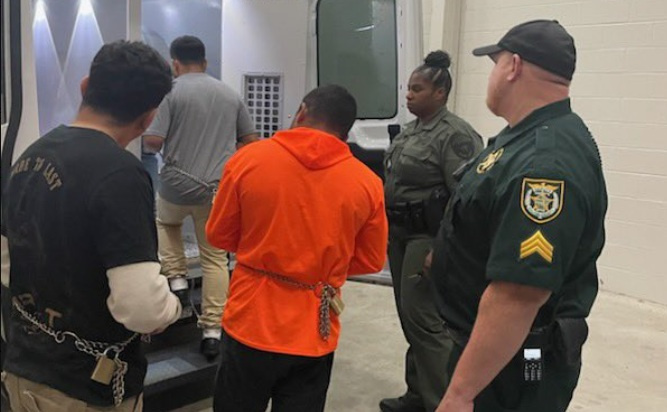
Migrants with chains and padlocks prior to their transfer to the Alligator Alcatraz prison / X/@AGJamesUthmeie

14ymedio bigger14ymedio, Havana, 11 July  2025 — “If he’s deported to Cuba, he’ll kill himself,” says the wife of Cuban Jhon Eduardo Hernández, who was arrested last Wednesday after going to the immigration court in Miami and was then taken to “Alligator Alcatraz.” According to Adriana Rodríguez, that same day they arrested nine other Cubans with Form I-220A, known as the Order of Parole, including Denis Durán Dávila and Hermes Sánchez López. “It is quite inhumane what is happening with people who are working, paying taxes, doing everything correctly,” the woman stated.

None of the Cubans get bail, so they will have to appeal their case for asylum while in prison. Hernandez is afraid of being deported. He has told his wife that he has talked to some of the prisoners, and most agree that “there is no solution for them” and that “they won’t be released.” In addition, the conditions under which they are held are depressing.

Cuban reggaeton artist Leamsy Izquierdo, La Figura, who is also being held in the new immigration detention center, reported previously that they “are being treated like dogs.” Inmates are “given only one meal a day, sometimes with worms,” and the “lights stay on for 24 hours.” Also, “the mosquitoes look like elephants, and there is no water for bathing or flushing the toilets, which are overflowing.”

According to attorney Wilfredo Allen, the Trump administration is “creating fear and threatening people.” The lawyer told Univision journalist Javier Díaz that the US government has issued an order to arrest 3,000 people a day. continue reading

Data obtained by the Cato Institute reveal that “two thirds of the migrants admitted to the detention centers of the Immigration and Customs Control Service (ICE) during this fiscal year had not been convicted of any crime” and that “most do not pose a serious threat to public safety.”

A group of migrants detained by ICE in Florida / X / @AGJamesUthmeier

The Cato Institute stresses that “violent criminals, such as murderers, rapists and pedophiles, accounted for less than 7% of ICE’s arrests.” The figures confirm that immigration authorities increased the number of arrests of persons without criminal convictions from 448 per day to 927 per day in the first two weeks of June.

Cuban real estate agent Denis Duran Davila was arrested after going to the court. The case of this young man went viral on social networks after his mother knelt before ICE agents to beg them not to deport him. Attorney Wilfredo Allen stated that his client, a person who “has no criminal offenses, is producing, giving to society and following the rules of the game, was arrested.”

The wife of Hermes Sanchez Lopez confirmed her husband’s arrest after attending the court in Miami. She pointed out that the migrant entered the US in 2020 and has no record, and ICE transferred him to Alligator Alcatraz.

ICE arrests have been reported by several groups, such as Detention Resistance in San Diego. Barbara Stone, an American, is a member of the group and was arrested last Tuesday for recording a video with her cell phone of the transfer of a migrant. A female ICE officer reported the 71-year-old woman for pushing her.

Stone was handcuffed and held for eight hours. Upon being released, she told NBC 7 that her cell phone had not been returned. She showed a bruise to the media and said she felt “mentally and physically traumatized.”

Ruth Méndez, another Detention Resistance volunteer, noted that “fear is very, very real here. Every American should know that this is how their taxpayers’ money is being spent, and it’s really a shame. The people who are really suffering are those seeking asylum.”

Translated by Regina Anavy

____________

COLLABORATE WITH OUR WORK: The 14ymedio team is committed to practicing serious journalism that reflects Cuba’s reality in all its depth. Thank you for joining us on this long journey. We invite you to continue supporting us by becoming a member of 14ymedio now. Together we can continue transforming journalism in Cuba.

Washington Sanctions Cuban President Miguel Díaz-Canel for the First Time, on the Fourth Anniversary of the ’11J’ Protests

  • The measures also affect the Ministers of the Interior and the Armed Forces and restrict the entry into the US of their relatives.
  • Foreign Minister Bruno Rodriguez says that Washington “does not have the capacity to bend the will of the people or its leaders.”
The Cuban president, appointed by Raúl Castro, unleashed a brutal repression after saying “the order of combat has been given”/ Screen capture

14ymedio biggerEFE/14ymedio, Washington/Havana, 11 July 2025 — The United States government imposed sanctions on Cuban president Miguel Díaz-Canel this Friday for his direct responsibility in “serious human rights violations” after ordering the repression of the 11 July 2021 Island-wide social outburst (’11J’). The measure, announced by the State Department, marks the first time that the Cuban president – hand-picked by Raúl Castro and head of the Communist Party – is subject to personal sanctions from Washington for having unleashed a brutal repression after announcing, four years ago on national television, that “the order of combat has been given.”

The restrictions also affect the Minister of the Revolutionary Armed Forces, Álvaro López Miera, and the Minister of the Interior, Lázaro Alberto Álvarez Casas. All of them, including their immediate family members, are prohibited from entering the United States.

The sanctions are imposed under a section of the State Department Appropriations Act for fiscal year 2025

“The United States will never forget the tenacity of the Cuban people four years ago in demanding freedom and a future free from tyranny,” a senior State Department official told the Miami Herald. According to the official statement, sanctions are imposed under a section of the State Department’s Appropriations Act for fiscal year 2025 that denies entry to foreign officials involved in significant corruption or human rights violations.

Díaz-Canel, who had so far avoided personal sanctions despite repeated condemnations of the Cuban regime for repression and censorship, thus becomes the highest official sanctioned by the US since the 11J protests. continue reading

Until this Friday, the measures had been addressed to police, military leaders, and prosecutors, but not to the president.

For its part, the regime dismissed the sanctions and said that Washington “has no capacity to crush” the Cuban people and their leaders. “The US is capable of imposing migratory sanctions against revolutionary leaders and maintaining a prolonged and ruthless economic war against Cuba,” denounced the Minister of Foreign Affairs, Bruno Rodríguez, on the social network X.

The action coincides with a new wave of repression on the eve of the anniversary of the protests. In municipalities such as San Antonio de los Baños -where the uprising began in 2021- several demonstrators released from prison have been harassed, threatened and subjected to police surveillance. Arrests and strong street surveillance are also reported in many provinces.

The US visa restrictions announced this Friday also affect judicial and prison officials who are “responsible for or accomplices of unjust detention and torture” of the demonstrators. For confidentiality, their names were not disclosed.

Among those now included are luxury hotels recently opened in Havana, such as the controversial Torre K

As part of the new sanctions package, the State Department also added 11 Cuban hotels to its Prohibited Accommodation List, which includes facilities controlled by the Gaesa military conglomerate. Among those now included are luxury hotels recently opened in Havana, such as the controversial Torre K [Tower K], managed by the Spanish Iberostar, whose construction was widely criticized for coinciding with the food and health crisis of the country.

Since the outbreak of the 11J protests, more than 1,400 people have been arrested according to human rights organizations, and 421 are still serving long sentences, while hundreds more live under constant harassment. The international community has repeatedly denounced the use of fabricated charges, summary trials and inhuman conditions in Cuban prisons.

“The Cuban regime must know that the cost of repression is not forgotten and does not disappear,” said the US official. “These sanctions are a clear message: those who commit abuses will pay a price.”

Translated by Regina Anavy

____________

COLLABORATE WITH OUR WORK: The 14ymedio team is committed to practicing serious journalism that reflects Cuba’s reality in all its depth. Thank you for joining us on this long journey. We invite you to continue supporting us by becoming a member of 14ymedio now. Together we can continue transforming journalism in Cuba.

The Guatemalan Police Arrested 25 Cubans Who Were Trying To Reach the US

Migrants were arrested in two separate operations and handed over to immigration authorities.

One of the groups of Cubans arrested during their crossing through Guatemala / @PNCdeGuatemala

14ymedio bigger14ymedio, Mexico City, July 10, 2025 — The National Civil Police (PNC) of Guatemala arrested 25 Cubans and two Cameroonians who illegally entered the country in two separate operations. “The migrants were transported in inhuman conditions,” they said on social networks. In addition, two coyotes were arrested.

The first group was intercepted at kilometer 140 on the route connecting with El Salvador. Officers from the Ports, Airports and Border Posts Division stopped the vehicle with P-126KLP plates for a routine check. The driver, who identified himself as Aníbal “N”, 31 years old, was arrested for the crime of illegal trafficking of persons.

Six undocumented Cubans were found inside the vehicle and handed over to the Guatemalan Migration Institute. The immigration authorities specified that the Cubans, who must have a visa to transit through the Central American country, will be able to process the document in the facilities where they are held.

Gelver, a coyote, was arrested while transporting 17 Cubans and two Cameroonians / @PNCdeGuatemala

Also, at kilometer 162 on route CA2 from Mazatenango, in Suchitepéquez, police from the Directorate-General for the Analysis of Narcotic Information stopped a Toyota Rav4 truck with registration number P879DNG, in which they found 17 Cubans and two Cameroonians who were trying to reach the United States. “Among the group were three minors who were dehydrated.”

According to data provided by the Guatemalan authorities, the driver of the van, 26-year-old Gelver, was arrested for the crime of smuggling migrants. “He had a pistol with a license to carry and two cell phones.”

Guatemala is reviewing the identity of all migrants who enter the country illegally and are intercepted. Their security protocols also affect aliens entering legally by air, land or sea. The review determines whether or not entry into Guatemalan territory is authorized.

Lack of a visa, presentation of a false visa, having a passport of dubious origin or a history of child sexual abuse can be grounds for non-admission, according to the authorities.

Translated by Regina Anavy

____________

COLLABORATE WITH OUR WORK: The 14ymedio team is committed to practicing serious journalism that reflects Cuba’s reality in all its depth. Thank you for joining us on this long journey. We invite you to continue supporting us by becoming a member of 14ymedio now. Together we can continue transforming journalism in Cuba.

In the Cuban National Health System, Those Who Do Not Pay Either Wait or Die

A report by Casa Palanca reveals concrete data on the structural corruption that extends from the orderly to the doctors.

Cuba spends just 2.1% of the state budget on health and social assistance / Casa Palanca

14ymedio bigger14ymedio, Madrid, 10 July 2025 — Under the title Silent Privatization: Practices of Corruption in the Cuban National Health System, the independent platform Casa Palanca has published exhaustive and demolishing research that unmasks the structural deterioration of the health system on the Island, and documents with names, data and witness statements the transition from “guaranteed right” to “conditional service.”

The work is based on a national survey of 2,141 people prepared by Cubadata, dozens of interviews with patients, doctors, nurses and family members, as well as official statistical sources and current legal documents. Its central finding is not new, but it is striking: the National Health System (SNS), formally free and universal, operates de facto under a highly corrupt market logic, where those who do not pay either wait or die.

According to the report, 74.3 per cent of respondents reported having had to pay for services or medicines allegedly free of charge, and 78 per cent admitted using personal contacts to obtain medical care. Corruption is not an anecdote, but an installed structure: from stretcher-bearers and food workers to doctors and service managers. continue reading

More than half of respondents (56.9%) said they make these payments “always or often,” with Havana leading the way (66.6%). By region, it is as follows: West (58.8%), East (55.8%) and Center (51.9%).

The most informal “priced” services are obtaining medicines, surgical procedures and diagnostic tests with medical equipment

The most informal “priced” services are obtaining medicines (57.6%), surgical procedures (27.9%) and diagnostic tests with medical equipment (10%). Even interventions such as cesarean sections, abortions or treatment of fibroids require the disbursement of sums between 25,000 and 45,000 CUP (65 to 117 dollars, depending on the black market exchange rate), without counting the inputs that must be purchased from outside the system.

The paradox is brutal. Cuba allocates just 2.1% of the state budget to health and social assistance, but maintains 24,000 doctors working in 56 countries, which in 2022 reported revenues of $4.882 billion, according to official data. Of these, between 75% and 90% of the salaries paid by the recipient governments remain in the coffers of the Cuban State.

Meanwhile, national pharmacies have a shortage of more than 50% of the basic list of medicines, and hospitals show signs of abandonment, with collapsed ceilings, rodents, closed rooms and poor hygiene, documented in multiple independent reports.

The report intersperses the figures with shattering testimonies: an anesthesiologist who operates with stored supplies “for my own family,” a neonatal nurse who admits delaying care to patients without “recommendations,” or a patient who had to give two pigs to the doctors for a hernia operation. Others, like Alexis Dominguez, are waiting for urgent surgery while paying up to $150 just to be put on a list.

The situation of women is even more outrageous. The chapter dedicated to gynecology and obstetrics documents payments for cesarean sections, abortions, regulation of periods and even a minimum medical protocol during delivery. A young woman, for example, paid 10,000 pesos to have her cesarean section performed because her baby was in danger, after 36 hours of labor. “Paying gives you the ability to be demand,” she says bluntly.

The research highlights that the most alarming thing is not the existence of corruption, but its normalization. Almost 83% of respondents believe that corruption in health is “widespread” or “very widespread,” and more than 52% say they have stopped seeking medical care due to illegal payments.

The report qualifies this phenomenon as a form of institutionalized violence, which is exercised not only by action but also by omission

The report qualifies this phenomenon as a form of institutionalized violence, which is exercised not only by action (improper charges, mistreatment and negligence) but also by omission (inefficiency, endless waiting and lack of resources). “What used to be a right is today a privilege,” she summarizes crudely.

The authorities, for their part, have chosen to minimize the problem. Miguel Díaz-Canel acknowledged in April 2025 that there are “negative trends” such as the illegal sale of services, but he limited himself to calling for them to be addressed “forcefully.” In the absence of a structural strategy, the government only punishes isolated cases, without admitting that corruption is the direct result of low wages, lack of resources and chronically low investment by the state.

The study concludes that the Cuban SNS is not being privatized in the classical sense, but in practice. Health no longer depends on the state, but on the patient’s pocket or contacts. And what is more worrisome, even newly graduated doctors are deserting, invalidating their degrees rather than practicing in these conditions. Between 2021 and 2023, more than 63,800 health professionals left the system.

“Your health service is free… but it costs money.” The poster at the entrance of some hospitals might seem like a cruel joke. But in Cuba, where pain and disease have become a product of the black market, that irony is already an undeniable truth.

Translated by Regina Anavy

____________

COLLABORATE WITH OUR WORK: The 14ymedio team is committed to practicing serious journalism that reflects Cuba’s reality in all its depth. Thank you for joining us on this long journey. We invite you to continue supporting us by becoming a member of 14ymedio now. Together we can continue transforming journalism in Cuba.

While Protecting Criminals, Havana Updates Its List of ‘Terrorists’, Which Includes ‘Influencers’

In total, the government identifies 62 individuals and 20 organizations, mostly based in the US.

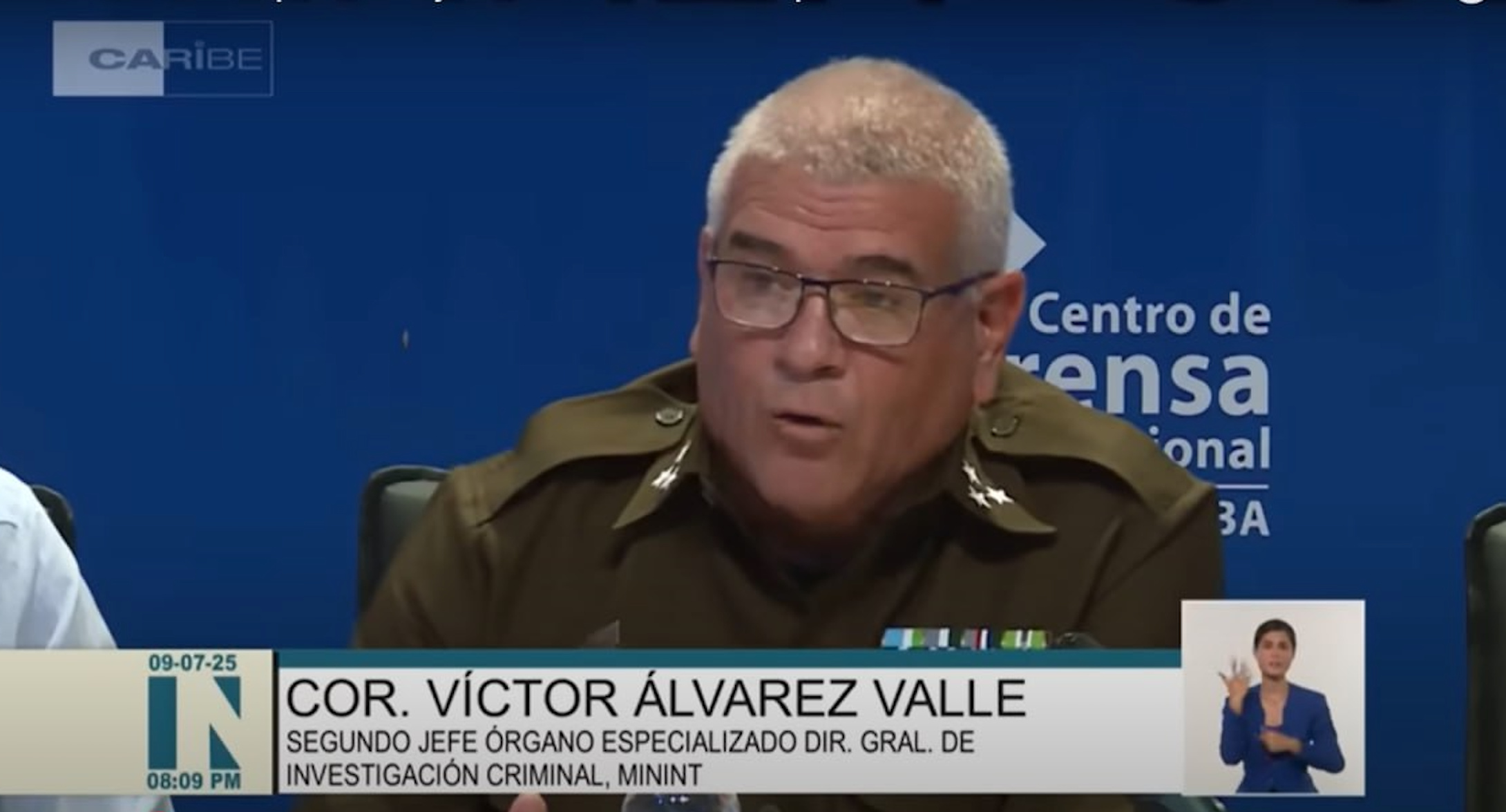
Víctor Álvarez presented the updated list to the international press / Screen capture

14ymedio bigger14ymedio/EFE, Havana, 10 July 2025 — This Wednesday, the government of Cuba gave the secretary general of the UN, António Guterres, an updated list of people whom it considers terrorists, which includes activists, historical leaders in exile and foreign-based influencers. The Cuban regime asks the countries with which it has relations to cooperate in their arrest and extradition.

At a press conference with foreign media, the authorities stated that a version already existed, published in the Official Gazette in December 2023. Four names of people who died last year have now been deleted, and some new ones have been added.

In total, the Government identifies 62 individuals and 20 organizations, mostly based in the United States, as terrorists. Among the new entities is the Council for the Anti-Communist War of the Cuban opponent Manuel Milanés. The list repeats influencers and YouTubers like Álex Otaola, Paparazzi Cubano, Ultrack and Eliécer Avila.

The document also includes a wide range of names of people investigated for the explosions in hotels and resorts in Cuba in the nineties, such as Pedro Ramón Crispín Rodríguez and José Francisco Hernández Calvo, and historical political leaders from the Miami exile community, such as Orlando Gutiérrez Boronat, coordinator of the Assembly of the Cuban Resistance. continue reading

Among the new names are Armando Labrador and Seriocha Humberto, of the organization Cuba Primero, as well as Rolando Miguel Pérez Ruiz and Leordan Cruz Góme

Among the new names are Armando Labrador and Seriocha Humberto, of the organization Cuba Primero; Rolando Miguel Pérez Ruiz and Leordan Cruz Gómez, accused of “introducing weapons, ammunition and equipment along the north coast of Matanzas”; and Hamlet Pedraza Rivas, related to acts of sabotage in Villa Clara.

The deputy chief of the Specialized Body of the Criminal Investigation Directorate of the Ministry of the Interior, Víctor Álvarez, told the press that all the names have open trials or are in expert stages within the country.

Although he did not mention them directly, Alvarez charged the influencers on the list, saying that they carry out acts of “cyberterrorism” with an “excessive use of social networks to incite violence” and generate “opinion matrices” contrary to the Government. Similarly, several of them were singled out for allegedly financing violent activities in the country.

Also, Josefina Vidal, Deputy Minister of Foreign Affairs, accused the US of “inaction” for not collaborating with Cuba in the fight against terrorism.

“The US government, in particular the Secretary of State [Cuban-American Marco Rubio] has put these mechanisms in a standstill, which showed in the past that, despite differences, it is possible to cooperate against a scourge of global scope,” she stated.

Vidal also accused the US of having a “cynical” attitude and “paradoxically” designating Cuba as a state sponsor of terrorism (…) when any astute and impartial observer can conclude which government is actually encouraging, supports and tolerates terrorism, and which country is confronting it and fighting it at the same time that it has been a victim of this scourge for over 60 years.”

Washington bases its decision on Havana’s refusal to extradite members of the ELN who were in Cuba negotiating peace when the organization attacked the Bogota Cadet School

The US has kept Cuba at different times on the list of states that sponsor terrorism and says that the Island doesn’t cooperate against terrorism. The list ,which has more consequences, has been in effect since 2017 to the present. During the last week of the Biden administration, there was an agreement between Washington and Havana, mediated by the Vatican and never recognized by the parties, in which the Regime committed to releasing more than 500 prisoners. More than half of the beneficiaries were ordinary prisoners, and three of the political prisoners who left prison have been returned: Donaida Pérez, José Daniel Ferrer and Félix Navarro.

Washington bases its decision on Havana’s refusal to extradite members of the ELN who were in Cuba negotiating peace when the organization attacked the Bogotá Cadet School, killing 23 people. Also on the Island are William “Guillermo” Morales, a Puerto Rican independence activist who was sentenced to ten years in prison in 1979 for making bombs-one of them killed four people at a tavern in New York in 1975- and Joanne Chesimard, known as Assata Shakur, sentenced for the murder of a New Jersey state policeman in 1973, who also found refuge in Castro’s Cuba and for whom Washington offers up to $2 million for information leading to her capture.

Translated by Regina Anavy

____________

COLLABORATE WITH OUR WORK: The 14ymedio team is committed to practicing serious journalism that reflects Cuba’s reality in all its depth. Thank you for joining us on this long journey. We invite you to continue supporting us by becoming a member of 14ymedio now. Together we can continue transforming journalism in Cuba.
Sweating or Being Cool, the Dollar Makes a Difference in the Carlos III Shopping Center

“The fans aren’t functioning, but they are for sale so you can take your chances,” says an employee of Plaza del Calzado, which will soon be selling in dollars.

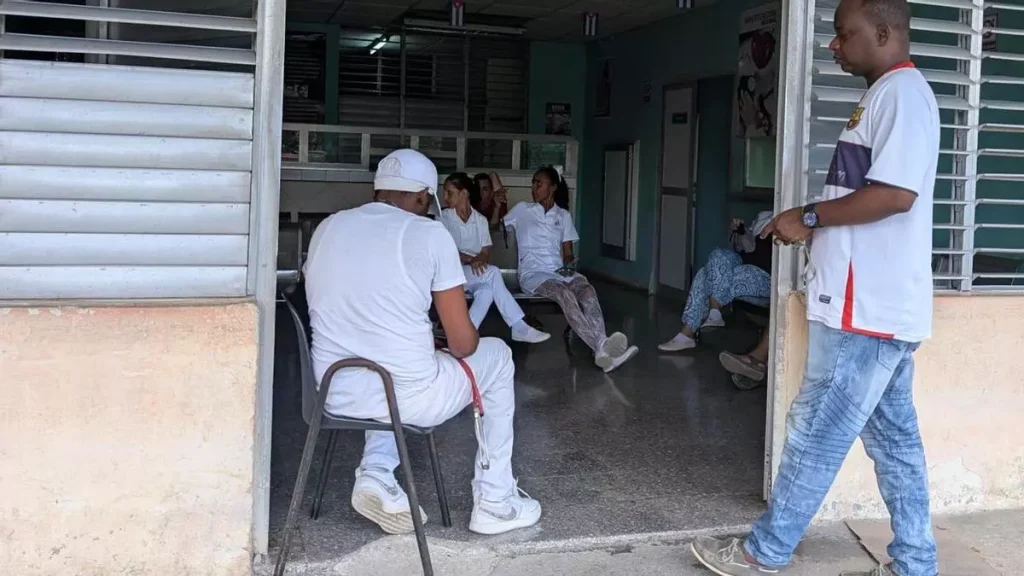
In El Taller, a hardware store nestled in the Carlos III shopping center, there are only two broken fans to buy / 14ymedio

14ymedio bigger14ymedio, Juan Diego Rodríguez, Havana, July 9, 2025 — At El Taller, a hardware store nestled in the Carlos III shopping center, a saleswoman fans herself vigorously on Wednesday morning, not so much to cool off as to shoo away the stifling steam filling the shop. Nearby are two fans, one in better shape than the other, but the weak breeze they produce is barely noticeable if you move even slightly away from the counter.

One floor below, at the Sport store, employees and customers enjoy air conditioning. The difference between one place and another mirrors the divide among Cubans in countless aspects of daily life: whether it’s food, clothing or air-conditioned spaces, in Cuba only those who pay in fulas (US dollars) can access such privileges.

“This is like a pot for steaming people,” complains a customer at Casa Nueva, another store in the shopping center that has not yet undergone dollarization and therefore lacks air conditioning. Painted a bright lime green that seems to amplify the heat, the store is supplied by Italsav, the same Italian company that stocks Casalinda, at Galiano and San Rafael. Yet this sibling relationship hasn’t ensured equal conditions: one enjoys a steady 26ºC (79ºF) while the other remains “a revolutionary oven.”

In order to survive the summer days, the employee at Casa Nueva relies on a rickety fan that “seems to be older than she is,” a customer quips. With its scorched plastic and missing grille, the fan creaks loudly every time the blades turn and seems ready to give its “last gasp.” continue reading

Painted bright lime green, Casa Nueva also lacks air conditioning

The employees are well aware of the state’s favoritism toward dollar stores. At Plaza del Calzado or “the affordable shoe store” as customers call it – comparing it to pricier dollar shops like Sport – salespeople are eagerly awaiting the day they can escape the sauna the store becomes when the sun starts blazing.

“The ACs are broken, and the ones they’ve put in are ’for where it’s needed.’ Our turn will come,” a saleswoman whispers to 14ymedio, hopeful that soon their cash register will take only foreign currency, and the air conditioning will be magically repaired. The store has even begun to clear out some of its merchandise. “They’re selling off the old and ugly stuff, and some sandals are going for as little as 4 MLC* [‘freely convertible currency’]. But besides being hideous, they’re made of plastic and look uncomfortable,” says a woman.

The discomfort and sweat that come with summer in Cuba are part and parcel of shopping in any MLC* store, or in the near-extinct peso shops. This is true not only at Carlos III, but in any non-dollarized store in Havana.” After coming here I need a proper shower,” said a customer at Isla de Cuba, on Monte Street. “With this heat, you don’t feel like buying fabric; you feel like walking around naked,” joked another shopper at Belinda Modes on the San Rafael pedestrian boulevard.

Instead of buying fabric, the heat of Belinda Modas makes people want to walk around naked

In the dollar stores, on the other hand, customers seem to be in better spirits. At least until it’s time to pay. “I can’t afford to buy anything, but I like to stand near the door of these stores to feel the cold air coming out. Nor am I the only one. People gather around, and you see them sighing. God knows how long it’s been since they last felt air conditioning,” confesses Yasel, a young Havana resident who repeats this trick every time he finds an air-conditioned space.

Compared to the lavish coolness of dollar stores, the government’s energy-saving appeals seem like a bad joke.”Its not enough to ask people to endure blackouts; they also want workers in banks, hospitals and other essential services to go without air conditioning, even when they’re stuck in offices without windows,” says Yasel.

Also, they don’t seem to care about the consequences of running air conditioners all day at very low temperatures, which affects not only electricity consumption but also increases the emission of harmful gases. The same pattern plays out in hotels and tourist facilities, highlighting the government’s overriding priority: to attract hard currency above all else.

Translated by Regina Anavy

_____________

*Note to TranslatingCuba readers: We could not constrain ourselves from sharing this completely idiotic explanation of what/why MLC is, offered by a company that operates ‘Cuban tours’. We had no idea it is simply a “hygiene” measure.

What is an MLC Card [Source – the ever resourceful internet]

“Due to hygiene concerns, the Cuban government would like to avoid cash transactions, so are offering prepaid debit cards at the airport. Known as MLC cards, these cards are being sold in denominations of $200, $500, and $1000. MLC stands for Moneda Libremente Convertible (Freely Convertible Money), which in essence means foreign currency. Although MLC can be EUR, USD, GBP, etc, it is treated as if it’s a currency itself. Bank cards are used for transactions in MLC. Many of the better stocked stores in Cuba only accept MLC. You can have the remaining balance of your MLC card refunded at the airport upon departure.”

____________

COLLABORATE WITH OUR WORK: The 14ymedio team is committed to practicing serious journalism that reflects Cuba’s reality in all its depth. Thank you for joining us on this long journey. We invite you to continue supporting us by becoming a member of 14ymedio now. Together we can continue transforming journalism in Cuba.
The Cuban Government Minimizes Severe Toxic Dust Contamination at the Moa Nickel Plant

Reports of respiratory disorders abound, mainly in infants.

Independent studies show lower life expectancy compared to other Holguín municipalities and a high prevalence of respiratory and dermatological diseases / Facebook

14ymedio bigger14ymedio, Havana, July 9, 2025 — While dozens of residents continue to report on social media a serious pollution crisis caused by toxic dust in Moa, Holguín, the Ministry of Energy and Mines responded with a report in Cubadebate seeking to minimize the environmental impact. Its explanation points to failures in the gas cleaning system at the Ernesto Che Guevara plant, but assumes no responsibility for emissions.

The official report states that the visible increase in suspended particles was the result of a planned shutdown on July 7, to clean the ducts and repair equipment. The shutdown was estimated to last 48 hours but was executed in 24 hours. The industry is dedicated to the exploitation of nickel and cobalt. The authorities attribute the situation to “deterioration of the gas cleaning system” (electrofilters), and they envision an improvement as part of an improvement project.

The explanation does not satisfy citizens, who report a constant emission of dust, visible on streets, houses and faces, long before Monday’s incident

However, this explanation does not satisfy the citizens, who report a constant emission of dust, visible on streets, houses and faces, long before last Monday’s incident. continue reading

Authorities mention compliance with Law 150 Natural Resources and Environment and the standards on air and waste emissions. They also highlight achievements such as sleeve filters that reduced dust emissions to 1.4 mg/m³ monitoring systems and restoration projects with the reforestation of the Cuban pine and international partnerships.

But independent media testimonies and Facebook posts contradict this narrative. Testimonies abound with images of black dust on skin and clothes, and reports of cases of respiratory disorders, mainly in infants. All this describes an alarming reality despite the alleged environmental measures.

“It’s like we’re breathing poison”

Journalist Mario J. Pentón collected heartbreaking statements: “Every day we have to endure a substance that falls from the sky. You clean and then everything’s dirty again. What comes out of your throat is black. It’s like breathing poison. These people are slowly killing us,” wrote a resident of that area, in the province of Holguín. “Today Moa’s Facebook page was lit up, with many people complaining about the same thing. There is despair, frustration and a growing rage,” he added.

The ministry highlights the existence of four environmental monitoring stations in residential areas and epidemiological surveillance protocols. According to Joel Queipo Ruíz, first secretary of the Communist Party in Holguín, there has been no identifiable increase in medical care for respiratory or allergic conditions in recent weeks. But citizens claim the opposite: children suffering from chronic cough and persistent dust on their skin and clothes. The official explanation does not match the daily reality in Moa.

Allegations of a “slow death” in Moa are not new

Allegations of a “slow death” in Moa are not new. Independent studies recall years of exposure to toxic gases, lower life expectancy compared with other Holguín municipalities, and a high prevalence of respiratory and dermatological diseases. In addition, recent flood waters from the Cabaña river aggravated exposure to pollutants in neighborhoods such as Ecrin, Cabaña and La Veguita, where neighbors suffer from both the climate crisis and industrial pollution.

The response of the Ministry of Energy and Mines is simplistic and reactive. An isolated incident does not explain a chronic crisis. They talk about technology and monitoring without showing tangible results. There are no real comparisons of pollutant levels before and after, nor public health data to support their position.

Viral photos, citizen voices and local health reports reinforce the perception of being in the forefront of an announced ecocide. The government boasts about laws and open dialogue. However, the authorities’ indolence in the face of decades of environmental deterioration, the lack of verifiable data and the urgency of the testimonies reveal the absence of real commitment.

Translated by Regina Anavy

____________

COLLABORATE WITH OUR WORK: The 14ymedio team is committed to practicing serious journalism that reflects Cuba’s reality in all its depth. Thank you for joining us on this long journey. We invite you to continue supporting us by becoming a member of 14ymedio now. Together we can continue transforming journalism in Cuba.