Since his return to prison last April, the opponent has suffered brutal ill-treatment and beatings, as reported by his family.
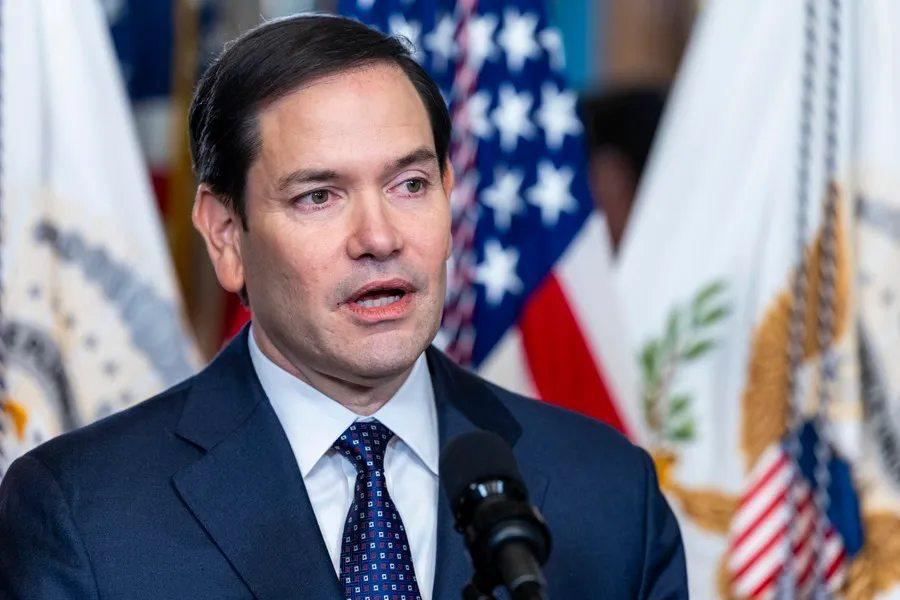
 14ymedio, Havana, July 12, 2025 — US Secretary of State Marco Rubio asked the Cuban regime on Friday for proof of life for opponent José Daniel Ferrer. The leader of the Patriotic Union of Cuba (UNPACU) was returned to prison in April, and since then both his family members and human rights organizations have denounced the torture he is subjected to at the Mar Verde prison in Santiago de Cuba.
“The Cuban regime continues to torture democracy activist José Daniel Ferrer. The United States demands an immediate proof of life and the release of all political prisoners,” Rubio wrote on his X account.
Just a few days ago, the Foundation for Human Rights in Cuba included five officers from the prison where Ferrer is serving his sentence in a database of Cuban repressors for their participation in acts of torture against the opponent.
Nelva Ismarays Ortega Tamayo, Ferrer’s wife, reported that the UNPACU leader had been brutally beaten on June 25 after declaring a hunger strike. Ferrer was protesting against ill-treatment, and he refused to wear the uniform of a common prisoner. “He was beaten everywhere: head, arms, legs, abdomen, back, kicked, slapped and punched, until he defecated,” said Ortega, who visited him on July 5.
The attack was led by Lieutenant Colonel Vladimir Pineda Guerra, head of the prison, and involved Colonel Adalberto Andreu Chacón, second in command
The attack was led by Lieutenant Colonel Vladimir Pineda Guerra, head of the prison, and involved Colonel Adalberto Andreu Chacón, second in command; Captain José Miguel Hechavarría Gorguet, head of Internal Order; Major José Luis Yáñez Herrera, head of Educational Treatment; and Captain Livan Laugart Riquelme, head of the Collective. All five officials have been added to the Foundation’s list of Cuban repressors.
The platform denounced other ill-treatment of Ferrer and said that six common prisoners had been used as “hitmen” to continue the attacks, in what it calls “a systematic repressive pattern against dissidents.” His fingers and wrists were also twisted; he was forced to drink milk in order to interrupt the strike, and toilet access was denied for two days. “The case of Ferrer once again shows that the Cuban penal system is not designed for reintegration or justice, but as a tool of political punishment,” said the Foundation.
Earlier this month, UNPACU also denounced the “systematic torture” of its leader and stated that he was in “grave danger.” “Severe beatings,” “simulated asphyxiation,” “denial of food, hygiene products and medicine,” “exposure to contagious diseases” and “death threats” were some of the abuses listed by the organization.
This Friday, on the fourth anniversary of the 11 July 2021 protests, the White House imposed sanctions against Miguel Díaz-Canel
Marco Rubio’s message not only comes at a time of tension over the abuse of the opposition leader, but follows the policy of putting pressure on the Cuban government that has been implemented by Washington in recent weeks.
This Friday, on the fourth anniversary of the 11 July 2021 protests, the White House imposed sanctions against Miguel Díaz-Canel for “serious human rights violations” for having ordered the repression of the demonstrators who protested throughout the Island on that date. This is the first time that the Cuban leader has been subjected to personal sanctions by Washington, which also affect the minister of the Revolutionary Armed Forces, Álvaro López Miera, and the Interior minister, Lázaro Alberto Álvarez Casas. All of them, including their immediate family members, are prohibited from entering the United States.
Translated by Regina Anavy
____________
COLLABORATE WITH OUR WORK: The 14ymedio team is committed to practicing serious journalism that reflects Cuba’s reality in all its depth. Thank you for joining us on this long journey. We invite you to continue supporting us by becoming a member of 14ymedio now. Together we can continue transforming journalism in Cuba.