In total, the government identifies 62 individuals and 20 organizations, mostly based in the US.
 14ymedio/EFE, Havana, 10 July 2025 — This Wednesday, the government of Cuba gave the secretary general of the UN, António Guterres, an updated list of people whom it considers terrorists, which includes activists, historical leaders in exile and foreign-based influencers. The Cuban regime asks the countries with which it has relations to cooperate in their arrest and extradition.
At a press conference with foreign media, the authorities stated that a version already existed, published in the Official Gazette in December 2023. Four names of people who died last year have now been deleted, and some new ones have been added.
In total, the Government identifies 62 individuals and 20 organizations, mostly based in the United States, as terrorists. Among the new entities is the Council for the Anti-Communist War of the Cuban opponent Manuel Milanés. The list repeats influencers and YouTubers like Álex Otaola, Paparazzi Cubano, Ultrack and Eliécer Avila.
The document also includes a wide range of names of people investigated for the explosions in hotels and resorts in Cuba in the nineties, such as Pedro Ramón Crispín Rodríguez and José Francisco Hernández Calvo, and historical political leaders from the Miami exile community, such as Orlando Gutiérrez Boronat, coordinator of the Assembly of the Cuban Resistance.
Among the new names are Armando Labrador and Seriocha Humberto, of the organization Cuba Primero, as well as Rolando Miguel Pérez Ruiz and Leordan Cruz Góme
Among the new names are Armando Labrador and Seriocha Humberto, of the organization Cuba Primero; Rolando Miguel Pérez Ruiz and Leordan Cruz Gómez, accused of “introducing weapons, ammunition and equipment along the north coast of Matanzas”; and Hamlet Pedraza Rivas, related to acts of sabotage in Villa Clara.
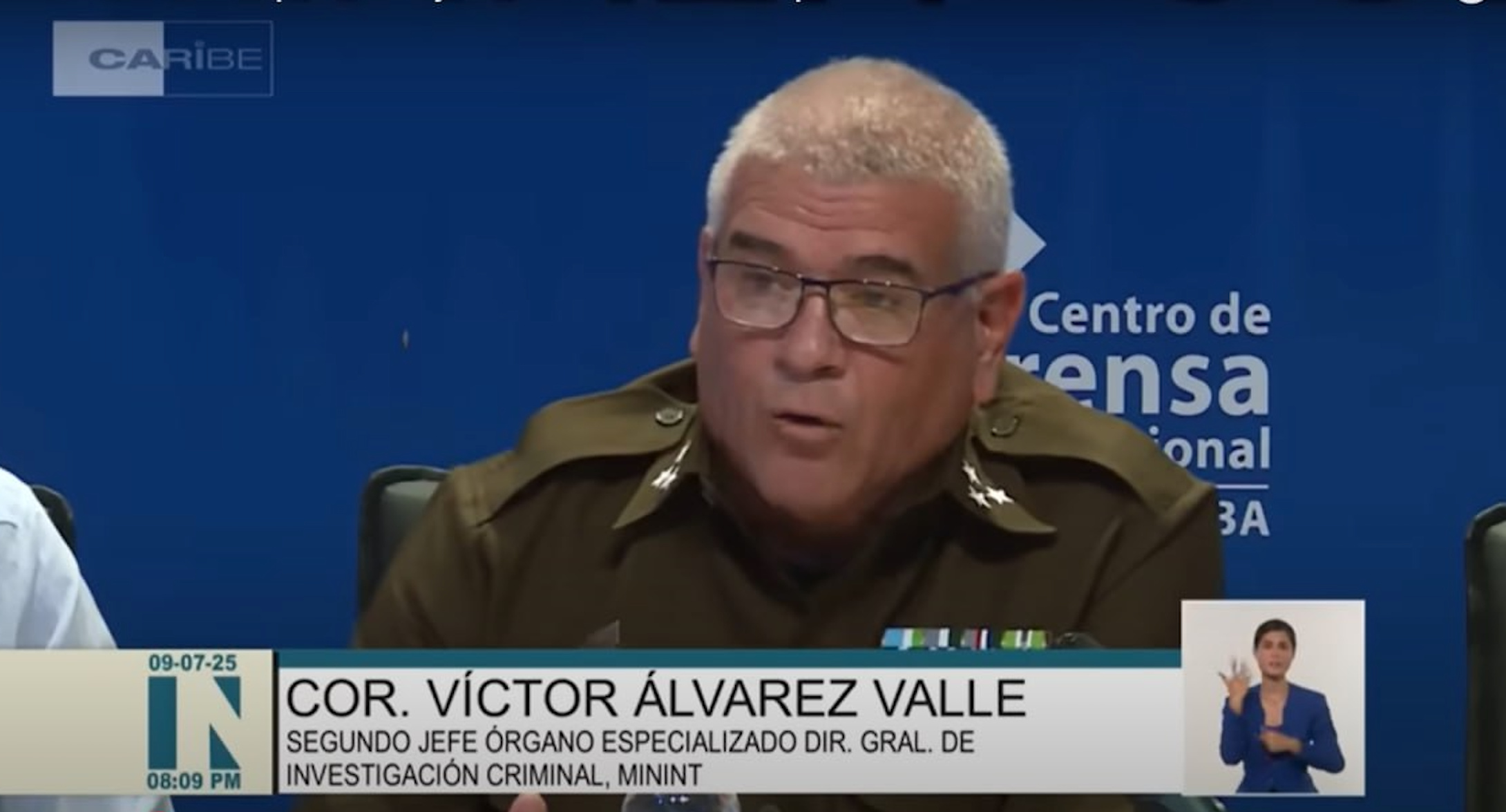
The deputy chief of the Specialized Body of the Criminal Investigation Directorate of the Ministry of the Interior, Víctor Álvarez, told the press that all the names have open trials or are in expert stages within the country.
Although he did not mention them directly, Alvarez charged the influencers on the list, saying that they carry out acts of “cyberterrorism” with an “excessive use of social networks to incite violence” and generate “opinion matrices” contrary to the Government. Similarly, several of them were singled out for allegedly financing violent activities in the country.
Also, Josefina Vidal, Deputy Minister of Foreign Affairs, accused the US of “inaction” for not collaborating with Cuba in the fight against terrorism.
“The US government, in particular the Secretary of State [Cuban-American Marco Rubio] has put these mechanisms in a standstill, which showed in the past that, despite differences, it is possible to cooperate against a scourge of global scope,” she stated.
Vidal also accused the US of having a “cynical” attitude and “paradoxically” designating Cuba as a state sponsor of terrorism (…) when any astute and impartial observer can conclude which government is actually encouraging, supports and tolerates terrorism, and which country is confronting it and fighting it at the same time that it has been a victim of this scourge for over 60 years.”
Washington bases its decision on Havana’s refusal to extradite members of the ELN who were in Cuba negotiating peace when the organization attacked the Bogota Cadet School
The US has kept Cuba at different times on the list of states that sponsor terrorism and says that the Island doesn’t cooperate against terrorism. The list ,which has more consequences, has been in effect since 2017 to the present. During the last week of the Biden administration, there was an agreement between Washington and Havana, mediated by the Vatican and never recognized by the parties, in which the Regime committed to releasing more than 500 prisoners. More than half of the beneficiaries were ordinary prisoners, and three of the political prisoners who left prison have been returned: Donaida Pérez, José Daniel Ferrer and Félix Navarro.
Washington bases its decision on Havana’s refusal to extradite members of the ELN who were in Cuba negotiating peace when the organization attacked the Bogotá Cadet School, killing 23 people. Also on the Island are William “Guillermo” Morales, a Puerto Rican independence activist who was sentenced to ten years in prison in 1979 for making bombs-one of them killed four people at a tavern in New York in 1975- and Joanne Chesimard, known as Assata Shakur, sentenced for the murder of a New Jersey state policeman in 1973, who also found refuge in Castro’s Cuba and for whom Washington offers up to $2 million for information leading to her capture.
Translated by Regina Anavy
____________
COLLABORATE WITH OUR WORK: The 14ymedio team is committed to practicing serious journalism that reflects Cuba’s reality in all its depth. Thank you for joining us on this long journey. We invite you to continue supporting us by becoming a member of 14ymedio now. Together we can continue transforming journalism in Cuba.