Yúnior García Aguilera: 27N, Archipiélago and the Future of Cuba
Screen shot below. Link to watch it here.
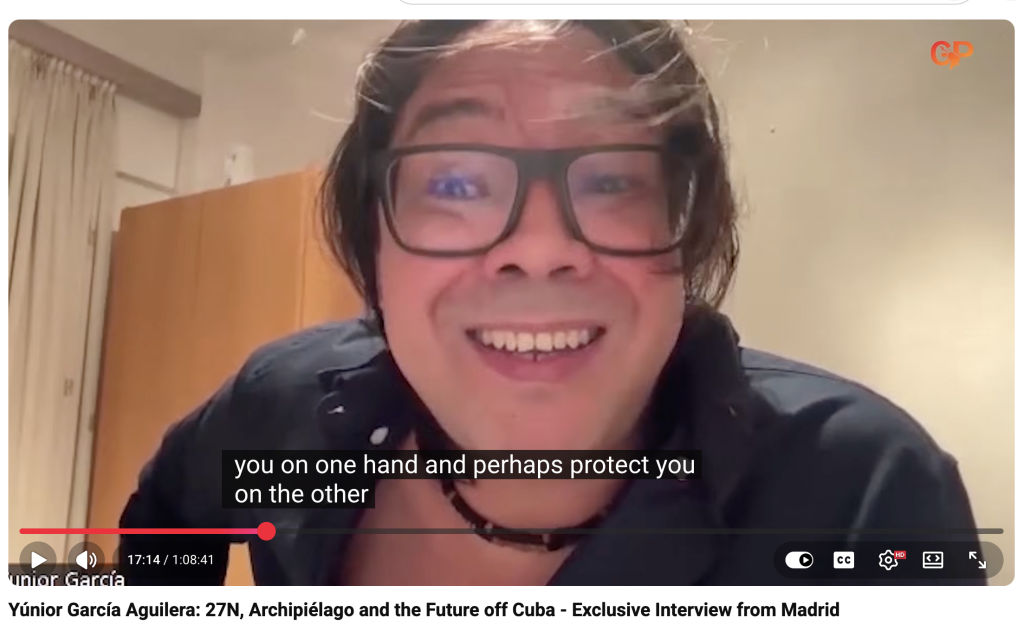 A link to the interview video subtitled in English.. . ENJOY!
Note: TranslatingCuba did not contribute to this post.
English Translations of Cubans Writing From the Island
Yúnior García Aguilera: 27N, Archipiélago and the Future of Cuba
Screen shot below. Link to watch it here.
A link to the interview video subtitled in English.. . ENJOY!
Note: TranslatingCuba did not contribute to this post.
The lack of cash has become an everyday problem that affects consumers and merchants alike
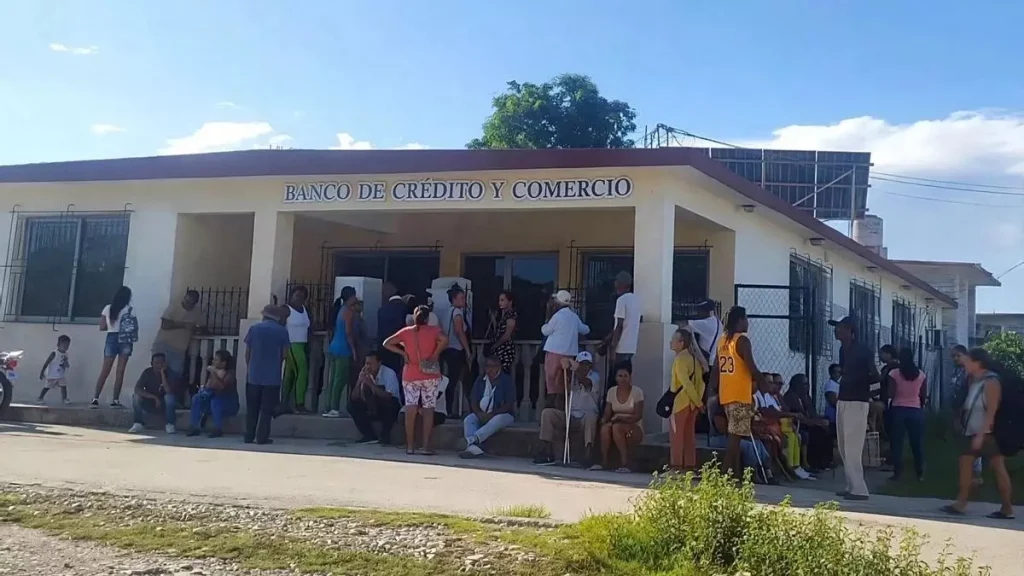
 14ymedio, Guantánamo, Dayamí Rojas, October 18, 2026 / The line starts before the bank doors open. Some have brought a bag to sit on, others carry a bottle of water, and almost all of them look at their watches with the same worry: that the cash will run out before they reach the window. In Guantánamo, withdrawing money from a bank account has become a task that can take up an entire morning and end with empty hands.
Marcelo, 78, knows that uncertainty well. At his age, collecting his pension should be a simple procedure, but every month he has to calculate how much time he will spend looking for the bills he needs to live. “They made bancarization compulsory, but they didn’t create the conditions for it to work first,” he declares.
The complaint sums up a contradiction that runs through the city. The authorities promoted electronic transfers as a solution to reduce the use of cash, but a large part of everyday commerce still depends on bills. The result is that money can appear on a phone screen and yet be useless at the counter. continue reading
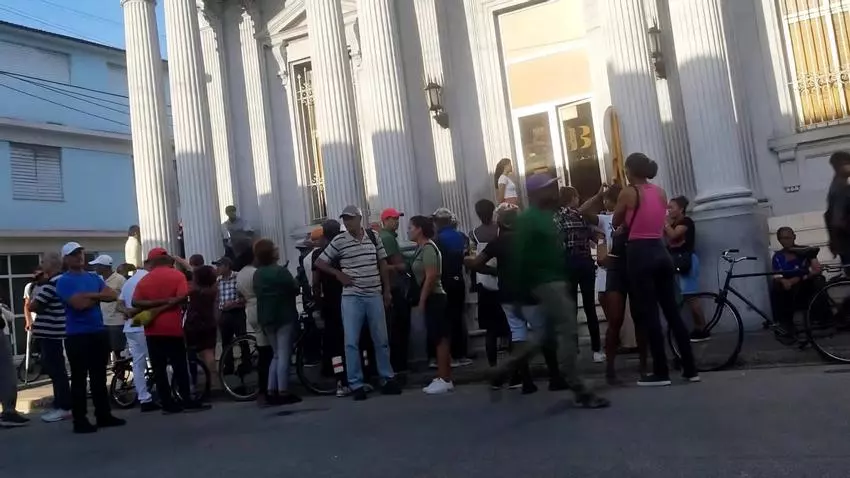
A retired woman from Guantánamo describes her pilgrimage through the shops: “I go business by business and one by one they tell me they don’t accept payment by transfer, and when they do accept it, it’s at 40 and 50%. Having money on the card is just for show, it’s no use at all.”
In the streets near the center, where small private businesses, street vendors and state establishments coexist, the question is repeated before any purchase: “Do you accept transfers?” The answer can determine whether someone goes home with food or has to keep walking under the Guantánamo sun.
Niuber sells pizzas and sandwiches on a central street corner. His problem is not a lack of customers, but the difficulty of turning his digital income into usable money. The flour, ingredients and other supplies he needs cannot always be paid for through a bank transaction.
“The fines against private businesses that don’t accept transfers don’t solve the problem. Bancarization has been a failure throughout the country, because they haven’t managed to make it possible for us to withdraw cash from the bank when we need it. My account is crammed with money that’s no use for buying the raw materials I work with,” he explains.
The paradox is bitter: the more he sells through transfers, the larger the balance frozen in his account can become. If his suppliers demand bills, his earnings remain trapped in an electronic circuit that does not respond to the needs of small businesses.
The blackouts add another difficulty. When there is no electricity, ATMs can be out of service and digital transactions stumble over dead phones, unstable connections or establishments without the means to process payments. The promised modernization ends up depending on something as basic as there being power.
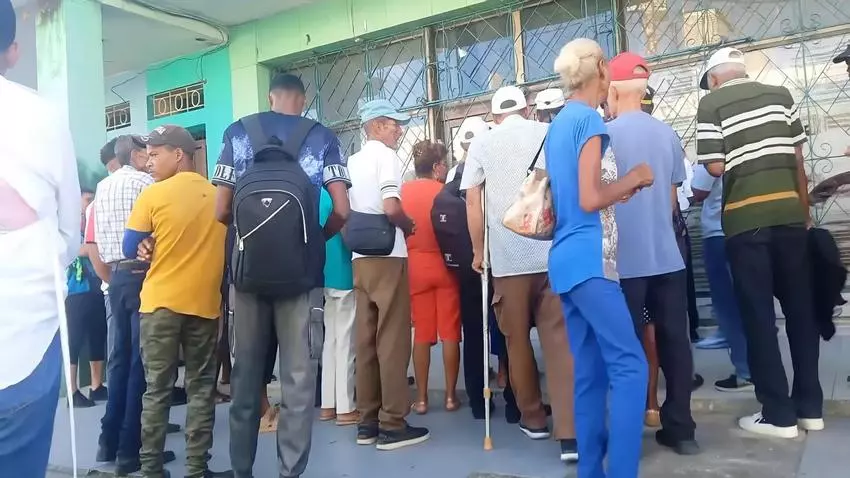
Nor is it enough to find a working ATM. Most of the time it has no bills or imposes withdrawal limits that force people to come back again. For retirees, especially those who have difficulty walking or live far from the branches, each attempt represents a physical effort and an additional expense for transportation.
In rural areas the impact is more dramatic. The day laborers who sweat over the furrows to plant or harvest food “have to be paid in cash because most of them are very humble people who don’t even have a cell phone,” explains a farmer who owns a small farm where root vegetables and other produce are grown.
The lack of cash has gone from being an occasional nuisance to an everyday problem that affects consumers and merchants alike.
“When I have to hire people, I can’t tell them I’m going to pay by transfer. If I do that, the sweet potatoes stay in the field,” the farmer adds. “What works here is money in your hand,” he declares.
Guantánamo’s official newspaper Venceremos has addressed the difficulties of bancarization and the payment of pensions, a sign that the discontent is impossible to hide even in the state media. The lack of cash has gone from being an occasional nuisance to an everyday problem that affects consumers and merchants alike.
Meanwhile, the bill takes on a value that goes beyond the printed figure. Whoever has it can negotiate, buy and get by; whoever has only a bank balance has to ask, wait and sometimes accept abusive conditions, such as a percentage added to the price of a product.
“The pound of beans that was going to cost you 400 pesos, you have to pay 450 for if all you have is money on your phone,” warns Marcelo. For the retiree, “bancarization is a punishment, and those of us who are poorest and oldest are the ones paying for it.”
Translated by GH
______________________
COLLABORATE WITH OUR WORK: The 14ymedio team is committed to practicing serious journalism that reflects Cuba’s reality in all its depth. Thank you for joining us on this long journey. We invite you to continue supporting us by becoming a member of 14ymedio now. Together we can continue transforming journalism in Cuba.
It will be screened on November 16 at the 39th International Documentary Film Festival Amsterdam, one of the most prestigious in the world
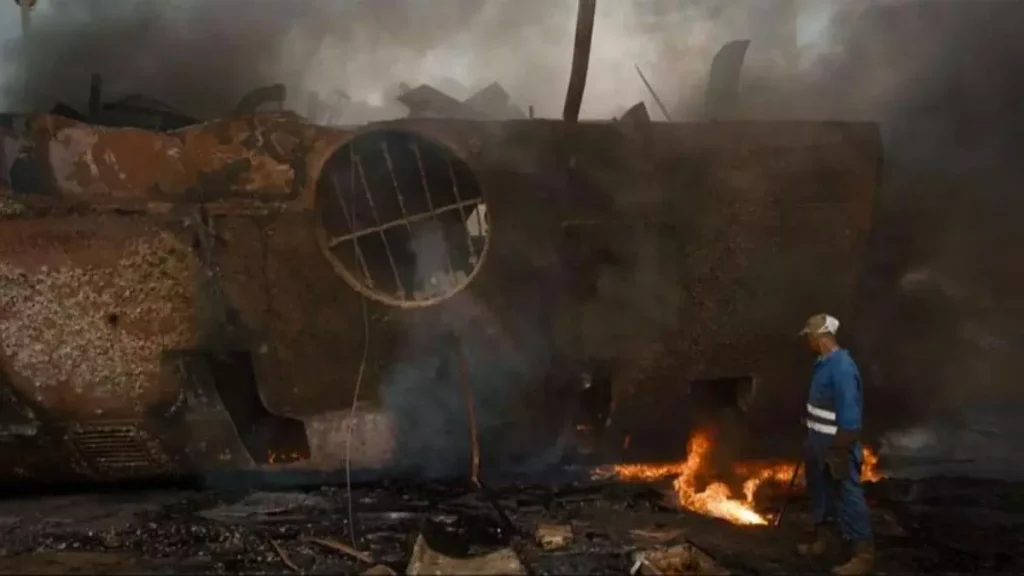
Bahía Honda (2026), the second feature film by independent Cuban director Alejandro Alonso, will have its world premiere this November 16 at the 39th International Documentary Film Festival Amsterdam (IDFA), one of the most prestigious festivals in the world, which will be held from the 10th to the 22nd of that month.
Produced by Estudio ST, Vega Alta Films and Folk Film, with the collaboration of the Norwegian Embassy in Cuba – one of the great promoters of non-institutional cinema on the island – Bahía Honda was filmed in the ship graveyard and scrapyard of the town of the same name in Artemisa province, and contains the last images the filmmaker shot in Cuba before emigrating to Spain in 2021.
The director conceives of his film as “a kind of journey.” And he tells 14ymedio: “Initially, our first wish was to make a portrait of this place. It was a paradox to have found this place where they destroy ships, and what that meant at a time when, in Cuba, this other great wave of migration was also beginning.”
“This place is a kind of bubble because there are hardly any spaces like this left in the world,” Alonso remarks. The director explains that there are currently very few ship scrapyards because of their environmental impact, but that Cuba “skips all those laws, all those protocols.” The chosen place, he says, “is somewhat left to its own devices when it comes to labor and environmental protection policies.” continue reading
“He’s someone who destroys ships by day and at night, with the parts, tries to put together his own boat. There was something there that seemed very powerful to me”
After the initial fascination with the scrapyard, the filmmaker recounts, what changed his way of looking at the place and relating to it was getting directly close to the workers, in particular Raudel González Cordero, Pitufo, “with all the baggage he brought, all that desire to leave, to escape.” The filmmaker explains that his character is “someone who destroys ships by day and at night, with the parts, tries to put together his own boat. There was something there that seemed very powerful to me.” It is on the basis of that “desire” that Alonso has built the entire story.
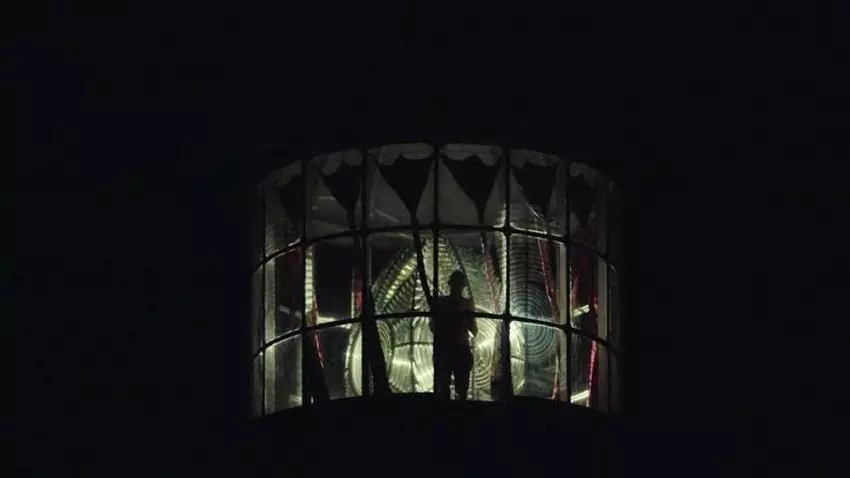
The images filmed in this place, at once so strange, fascinating and gloomy, came to light years earlier in the short film Abisal (2021), which won the Coral Award for Best Short Documentary at the 43rd edition of the Havana International Festival of New Latin American Cinema in December 2022.
But this distinction did not prevent its director from being censored by the Cuban Institute of Cinematographic Art and Industry, when its officials vetoed the screening of a recorded acceptance message that Alonso sent from Spain. The director mentioned the Cuban migratory stampede at the time, and in a way “closed” the protagonist’s story outside the film, revealing that he too had emigrated from Cuba.
These “unwanted” words would have tarnished the spotless image of the regime that was being projected, after the veto of the feature film Vicenta B. (2022) by Carlos Lechuga and some “provocative” words by Cuban actress Andrea Doimeadiós at the opening of the event.
This is one of many examples that explain why filmmakers as key to Cuban cinema as Alejandro Alonso are not recognized by the island’s “general public”
The whitewashing of that edition included, in addition to the censorship of Alonso’s words, the presentation of the Honorary Coral to Silvio Rodríguez, almost the only person authorized to make statements that night (“Down with the blockade!”), since not even the jurors were allowed to approach the microphones during the awards ceremony.
This is one of many examples that explain why filmmakers as key to Cuban cinema as Alejandro Alonso (along with Rafael Ramírez, Luis Alejandro Yero, Miguel Coyula, Marcel Beltrán, Violena Ampudia, Raydel Araoz, Carlos Quintela, Orlando Mora, Josué García, Heidi Hassan, Carla Valdés, Carlos Melián, Armando Capó and so many others that they would make this paragraph extremely long) are not recognized by the island’s “general public” – which depends to a large extent on what the official institution screens, with the proper authorizations and ideological filters, in its already scarce movie theaters.
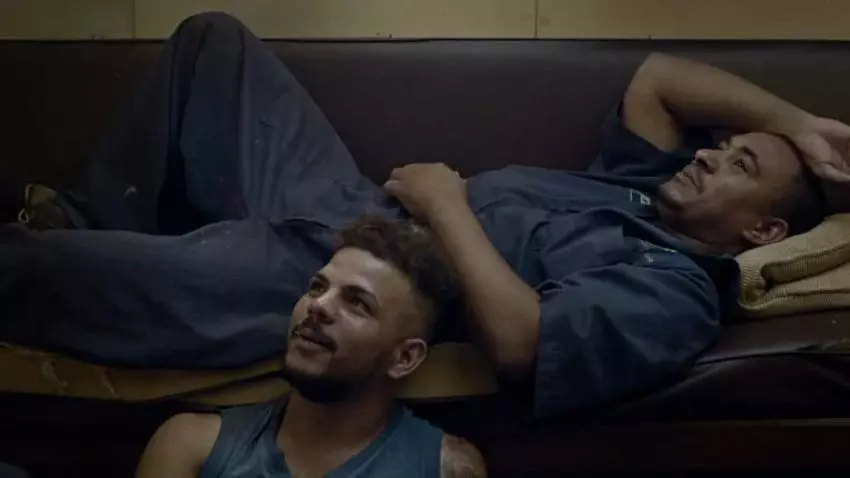
“We always conceived of Bahía Honda as an expansion of the universe presented in Abisal,” says Alonso. “They are films that are connected by the protagonist, by the place, but now there is an attempt to take the universe and the imaginary of the ship-breakers somewhat to the limit. I feel that the film establishes a dialogue between that universe of theirs and my own imaginary.”
Alonso is no stranger to film platforms in the Netherlands. In 2021 he won the Hivos Tiger Award for Short Film with Terranova (2020), co-directed with the Spaniard Alejandro Pérez, at the equally important International Film Festival Rotterdam, where shortly afterward he gave the world premiere of his short film La historia se escribe de noche (2024). The latter is an existential reflection on life in the blackouts, with its burden of dread, mystery and anxiety.
As in these other films, two of his most representative titles, ‘Bahía Honda’ subscribes to the sensory cinematic creed that defines Alonso’s style and audiovisual discourse
As in these other films, two of his most representative titles, Bahía Honda subscribes to the sensory cinematic creed that defines Alonso’s style and audiovisual discourse. He always places the expressive force of the image above didactic narrative, impression above description, and the free association of images above “logical” articulation. These are films that must be read and felt like poems, with all their enigmas, challenges and invitation to complex dialogue.
Although this feature film is described by Alonso as “a much more atmospheric film. It’s a bit of a glimpse into that world, into this whole universe.” Alonso explains that Bahía Honda aims to be much more narrative, to explore other resources and to try to paint a much more complex portrait of Pitufo. “Above all, of the imaginary of his desire to emigrate.”
The filmmaker also says that Bahía Honda is a “very participatory” film that was built up from the research, because they had very little time to shoot. “I’d say three or four weeks,” he explains. “And of course, as we discovered the place, as we understood what we wanted to do, as we got to know our protagonists, we kept filming.”
For its director, Bahía Honda “seems like it’s going to be one thing, then it mutates toward another place and finally moves into more fictional territory.” Alonso explains that, although the film starts out “very tangible, very much about texture, very much about metal, very much about the body,” as it progresses “it moves more toward the universe of dreams, of desires.”
Bahía Honda is not an “easy” film. It is not a film to laugh at or to escape from reality. It is the story of an escape, but, thanks to the eye of Alonso and his film crew, the scrapyard becomes an almost monstrous landscape, a circle of Hell in which its protagonist and the other characters seek to survive until a possible escape.
Translated by GH.
______________________
COLLABORATE WITH OUR WORK: The 14ymedio team is committed to practicing serious journalism that reflects Cuba’s reality in all its depth. Thank you for joining us on this long journey. We invite you to continue supporting us by becoming a member of 14ymedio now. Together we can continue transforming journalism in Cuba.

The CubanAmerican Voice, Julio M. Shiling / On October 2, 2026, the U.S. Coast Guard announced the interdiction of the M/V Grace, a vessel caught in an international enforcement operation for illicit fuel trafficking bound for Cuba. Authorities noted its use of “dark fleet” tactics—deceptive navigation, concealed cargo, and practices designed to evade scrutiny. Fuel was found stowed unsafely in ballast tanks and containers. Months earlier, on June 28, the Coast Guard stopped the M/V Jaira Provider, a substandard offshore supply vessel registered in St. Kitts and Nevis, carrying more than 200,000 gallons of fuel toward the island. These are not random seizures. They form part of a deliberate, targeted effort to interrupt a decades-old pattern: the Cuban communist dictatorship’s systematic conversion of preferential or illicit oil into hard currency, while the Cuban people endure chronic shortages.
This is not a humanitarian blockade. It is a filter. Washington seeks to control ownership, sale, and ultimate beneficiaries of petroleum entering Cuba so that oil is consumed on the island rather than arbitraged abroad for dollars and euros. This helps sustain the regime’s repressive machinery, intelligence apparatus, and export of subversion. The alternative—unrestricted flows—has long allowed Havana to claim domestic scarcity while monetizing surplus or diverted product. The policy’s restraint is deliberate: some fuel continues to reach entities, including MIPYMES linked to the dictatorial state, precisely to avert social collapse. Total denial would risk calamity; controlled entry prevents the regime from remaining the principal oil hustler. continue reading
The practice is historical, not hypothetical. During the Soviet era, Cuba received oil under highly preferential terms through CMEA arrangements and barter deals that overvalued Cuban sugar. Domestic consumption left a surplus that was re-exported—or never even landed—into Western markets for convertible currency. Studies of the period, drawing on Banco Nacional de Cuba data, show that in 1983–1985 petroleum reexports accounted for more than 40 percent of Cuba’s hard-currency earnings, outstripping sugar. The mechanism was pure arbitrage: acquire cheap or soft-currency oil, sell the excess at world prices. Preferential resources in, hard currency out. Cargo splitting and reexport became a core revenue model.
The pattern repeated with Chavista Venezuela. Preferential or politically motivated shipments arrived; portions were diverted or structured for resale. Satellite tracking and shipping data documented the practice. In one clear case involving the M/T Skipper in December 2025, the tanker loaded Venezuelan crude, transferred a portion near Curaçao to a vessel bound for Cuba, and continued toward China with the bulk. Supertankers loading in Venezuela would make brief Caribbean stops, offload shares destined for Havana, and proceed eastward. The Cuban government could simultaneously assert fuel shortages at home while converting the differential into foreign exchange. That differential has funded state conglomerates such as GAESA, the security services, and external political operations far more reliably than sugar or tourism ever could.
Critics who attribute today’s hardships solely to the U.S. embargo, Trump Executive Orders 14380 through 14404, or related sanctions erase both chronology and agency. Cuba’s economic deterioration began in 1959 with the imposition of central planning, expropriation, and the rejection of market incentives. It deepened through successive decades of inefficiency, isolation from productive capital, and prioritization of regime survival over citizen welfare. The mass emigration since 2021—roughly 20 percent of the population, heavily weighted toward the young—reflects cumulative failure, not a sudden external shock. Blaming Washington for the consequences of Castro-Communist economics is the regime’s preferred propaganda line; it is also factually inverted. The United States is not the author of Cuba’s misery. It is responding to a durable revenue strategy that has prolonged that misery by financing the apparatus that enforces it.
The current approach recognizes reality without surrendering principle. Fuel is sold under controlled conditions, even when the recipient is regime-linked, because uncontrolled scarcity risks humanitarian disaster. Yet the same policy blocks the cargo-splitting and dark-fleet channels that turn oil into unrestricted hard currency for the elite and the security state. The interdictions of the Grace and the Jaira Provider illustrate the distinction: they target illicit, deceptive movements rather than legitimate commercial supply. Washington is not attempting to starve the island of energy; it is attempting to starve the dictatorship of an easy arbitrage racket that has subsidized repression for generations.
Oil under Cuban communism has never been primarily about powering hospitals, factories, or households. It has been a dirty business—a scam searching for funds. From Soviet reexports that once supplied over 40 percent of convertible earnings to Venezuelan cargo-splitting documented by satellite imagery, the model has been consistent: preferential inflow, selective domestic allocation, external monetization. The heist of Venezuelan oil, before January 3, witnessed anywhere from 60-80% of oil shipments being resold by communist Cuba to Asia or other friendly regime markets. The U.S. decision to police entry while still permitting measured flows is both strategically coherent and morally defensible. It denies the regime the unfettered ability to convert petroleum into the hard currency that sustains its power, without imposing the total cutoff that would collapse civilian life. Those who ignore this history and this evidence in favor of reflexive blame on the United States are not defending the Cuban people. They are, whether intentionally or not, recycling the official narrative of a dictatorship that has always preferred currency for control over fuel for its citizens.
© The CubanAmerican Voice. All rights reserved.
The lack of fuel and state transportation affects passengers, students, and farmers in Guantánamo alike.

14ymedio, Dayamí Rojas, Guantánamo, September 26, 2026 – Outside the Guantánamo bus terminal, where travelers once looked for a bus route that would take them closer to their municipality, they now wait for an electric three-wheeler, a private car, a motorcycle, or, if the destination and distance allow, even a horse-drawn carriage. There are passengers asking questions, drivers negotiating, and small vehicles where every seat counts.
“The price of a liter of gasoline here is above 2,500 pesos and diesel is 1,900, so that drives up all the prices for these vehicles,” a driver of an old Ford that travels from the station to other towns in the province explains to 14ymedio. “People depend on this because state buses no longer leave from here to get to those little towns.”
The transportation crisis, severe within the city of Guantánamo, takes on another dimension when one looks toward the municipalities and rural communities. There, it is not simply a matter of arriving late to work or walking several stops: the lack of vehicles affects school attendance, a medical appointment, and even the possibility of getting a harvest out of the countryside before it spoils.
“There is no pocket that can withstand it”: the daily ordeal of getting around Guantánamo.
Juan Carlos, 59, has been doing the math for days. His daughter is hospitalized in a hospital in the provincial capital and he needs to visit her every day. “A three-wheeler costs you 500 or 600 pesos,” he laments. In addition to visiting her, he has to bring her food. “Every day you have to bring her food, so that’s 500 pesos there and 500 pesos back; there is no pocket that can withstand that.” continue reading
On the streets of Guantánamo, electric three-wheelers have become an essential means of transportation. Some are blue, some black, with canopies to protect passengers from the sun and modifications made on the fly. Small groups gather around them, waiting for a seat or asking the price before getting in. The scene is repeated as state bus routes have practically disappeared and mobility has been left in the hands of private transport operators.
For those who live outside the city, the problem begins much earlier. Ramona lives in Cuneira, a rural community in the municipality of El Salvador located 23 kilometers from Guantánamo, and she must regularly travel to the provincial capital to receive treatment related to her diabetes. Each trip has become an operation requiring money, time, and luck.
“I have a horse-drawn carriage with a mare and I pick up passengers, but I also transport root vegetables and fruit to Guantánamo, where my brother has a pushcart for selling them”
“We used to have the train, but now not even that; we depend on the three-wheelers all the time,” she says. For students in those areas, especially those who must travel to schools far from their homes, the transportation shortage also turns the school day into an obstacle course. Getting to the classroom often depends on finding a vehicle, having money to pay for it, or walking part of the way.
But the crisis does not only affect the transportation of people. It also leaves products stranded in the fields that should end up in the city’s markets.
“I have a horse-drawn carriage with a mare and I pick up passengers, but I also transport root vegetables and fruit to Guantánamo, where my brother has a pushcart for selling them,” explains a resident of El Salvador. The animal-drawn vehicle, associated for decades with short trips and rural areas, is once again gaining prominence because of the lack of fuel.
“The guajiro who doesn’t have something like this or hasn’t bought an electric three-wheeler has his food rotting in the field because there is no fuel to get it out,” he sums up.
The consequence ultimately reaches the consumer as well. If transporting a sack of produce costs more, that expense ends up incorporated into the selling price. Expensive fuel, the lack of state transportation, and the need to resort to private alternatives form a chain that begins in the furrow and ends in the consumer’s pocket.
Translated by Regina Anavy
______________________
COLLABORATE WITH OUR WORK: The 14ymedio team is committed to practicing serious journalism that reflects Cuba’s reality in all its depth. Thank you for joining us on this long journey. We invite you to continue supporting us by becoming a member of 14ymedio now. Together we can continue transforming journalism in Cuba.
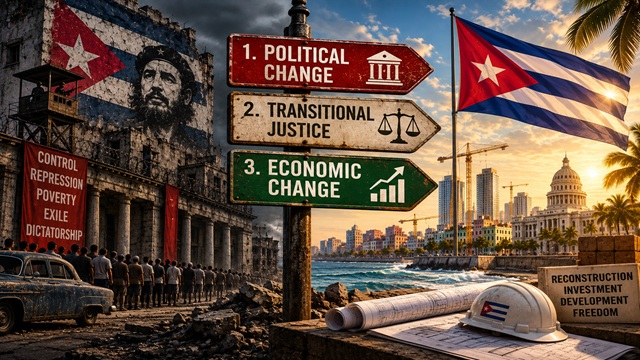
The CubanAmerican Voice, Julio M. Shiling , September 25, 2026 / For more than six decades the Castro-Communist dictatorship has survived by weaponizing scarcity, fear, and the patient calculation that democratic nations eventually tire of principle. That calculation is now under pressure. American foreign policy continues to treat the removal of this regime as a matter of national security for the United States, for the West, and for Latin America itself.
Recent evidence is plain: President Trump’s direct indictment at the United Nations of Havana’s role in fostering communist subversion; the Army Reserve’s quiet examination of whether it can supply Southern Command with police, medical, and support units on short notice; and the State Department’s continuous round of sanctions targeting Cuba’s elites, financial channels, and resource-extraction apparatus. These are not gestures. They are the concrete instruments of a long-held strategic judgment.
Cuban exiles have answered in kind. In Miami—the second-largest Cuban city after Havana—an impressive coalition of Cuban-American business leaders has convened to announce the creation of the Cuban-American National Chamber of Commerce and to declare readiness to underwrite the island’s post-communist reconstruction. Their message is clear and welcome: the exiled nation is prepared to foot the bill for a free Cuba. Washington notices. Regime change suddenly looks more fiscally attractive. continue reading
Yet attraction is not the same as wisdom. The central truth that both the American government and the Cuban-American community must keep in mind is this: in Cuba, political change must come before economic change. Under a totalitarian system, the two cannot safely proceed in tandem during the opening phase of transition. A market order does not create democracy; it operates under the political order that already exists. China, Vietnam, and post-Soviet Russia stand as enduring reminders. Capital can flow, private enterprise can flourish, and the same dictatorial structures—or their recycled successors—can remain firmly in control.
Castroism is not merely a set of inefficient policies. It is an institutional, epistemic, and hegemonic system that has colonized every formal and informal structure of Cuban life. Courts, universities, security organs, media, labor organizations, and even the language of daily discourse have been shaped to preserve the regime’s monopoly. Opening investment coffers while those structures remain intact would not liberate Cubans; it would subsidize the very apparatus that has kept them captive. The result would not be a democratic market economy but a hybrid despotism—capitalism without liberty, enrichment without accountability, and a new generation of nomenklatura wearing different suits.
What is required first is a deliberate period of transitional justice. This is essential. It is the systematic uprooting of the toxicity that totalitarianism leaves behind: the purging of compromised institutions, the recovery of historical truth, the dismantling of networks of privilege and surveillance, and the establishment of the rule of law as something more than a slogan. Only after that cleansing can genuine economic reconstruction begin without the risk of communism returning in recycled form. Emergency humanitarian aid and basic measures to alleviate suffering must arrive immediately. But the larger capital flows—the reconstruction that Cuban-American wealth, as well as foreign investors, is prepared to finance—should cautiously wait until the political foundations have been secured.
The belief that capitalism by itself will automatically produce democracy is a comforting illusion that history has repeatedly refuted. Markets are instruments. They amplify the purposes of the political order that directs them. When that order remains totalitarian or even a soft authoritarian variant, markets become tools of elite enrichment and regime longevity rather than engines of popular freedom. The Soviet collapse itself demonstrated the cost of premature economic liberalization without parallel political and institutional purification: the emergence of oligarchic and dictatorial successors that still menace the region.
Cuban exiles have preserved, across generations of departure, the best of the nation’s history, culture, and democratic aspirations. That inheritance now places upon them a dual responsibility: to support the material reconstruction of the homeland and, more urgently, to insist that reconstruction not become the mechanism by which Castroism survives under another name. The American government, for its part, must resist the temptation to treat capital as a substitute for the harder work of supporting genuine political rupture and transitional justice.
The sequence is non-negotiable. Political change first. Institutional cleansing next. Only then the full force of Cuban-American capital and Western engagement. Reverse that order, and Cuba risks exchanging one form of captivity for another—more prosperous for a few, still unfree for the many, and still a strategic liability for the hemisphere. The opportunity before us is historic. Squandering it by confusing investment with liberation would be a tragedy of our making.
© The CubanAmerican Voice. All rights reserved.
The trial was held last June 30 at the Las Tunas Provincial Prison, due to “lack of fuel,” the Court said.
14ymedio, Havana, September 9, 2026 – After more than two years in provisional detention without a trial, the Provincial Popular Court of Las Tunas imposed prison sentences of seven and eight years on eight dissidents from Las Tunas for the crime of “propaganda against the constitutional order.” The sentence, handed down last September 1, was revealed Tuesday by the legal advisory center Cubalex.
The longest sentence was imposed on Guillermo Carralero López, who was sentenced to eight years in prison. The other seven sentenced –Javier Reyes Peña, Maikel Hill Ramírez, Carlos Manuel Santiesteban Saavedra, Carlos Alberto McDonald Ennis, Enrique González Infante, Pedro Carlos Camacho Ochoa and Adisbel Mendoza Barroso– each received seven years in prison. In the case of McDonald Ennis, he is being prosecuted on bail because of the serious deterioration of his health, due to a cancerous maxillary tumor that was detected in August of last year, while he was already in prison.
According to the sentence, the opponents –whom the regime links to Cuba Primero, a group considered by Havana to be “terrorist” and “criminal,” based in the United States, “which organizes, finances, provides means and carries out actions against the security of the Cuban State”– participated in the recording of videos and the publication of content on social media continue reading
There were restrictions on access for relatives and observers, “effectively turning it into a closed-door trial”
The trial was held last June 30 at the Las Tunas Provincial Prison, known as El Típico, according to the organization’s report. At that time, there was a large deployment of State Security agents and other regime forces, and there were restrictions on access for relatives and observers, “effectively turning it into a closed-door trial and violating the principle of publicity governing criminal proceedings.” That day, the Court justified holding the trial inside the prison due to a “lack of fuel.”
Originally, the Prosecutor’s Office had requested sentences ranging from six to nine years, arguing at the time, in addition, assessments of the defendants’ “moral and social conduct,” such as being “in disagreement with the revolutionary process,” elements that – Cubalex denounced at the time– reinforce the “ideological, stigmatizing and discriminatory nature of the accusation.” Furthermore, the accusation did not contain a single line describing acts of or calls for violence.
“We warn about the use of the criminal justice system to criminalize dissent and restrict freedoms of expression and association. Sentences of up to eight years in prison for actions linked to activism and the expression of critical opinions demonstrate the severity with which any form of opposition in Cuba is punished,” Cubalex condemned.
“We warn about the use of the criminal justice system to criminalize dissent and restrict freedoms of expression and association”
“These sanctions deepen the persecution and seek to generate fear in order to inhibit other expressions of dissent and political participation,” the organization added.
The case, it said, reflects “repeated patterns of criminalization of the exercise of fundamental rights, such as freedom of expression, association and political participation.” Regarding the application of the crime of “propaganda against the constitutional order,” formulated broadly and ambiguously, it “allows the State to punish peaceful expressions of dissent and nonviolent civic activism,” the legal advisory center stressed.
According to the organization Prisoners Defenders’ most recent report, in July there were 1,327 people behind bars in Cuban prisons for political reasons, representing a record number of prisoners, in a month marked by the fifth anniversary of the mass protests of 11 July 2021.
Translated by Regina Anavy
______________________
COLLABORATE WITH OUR WORK: The 14ymedio team is committed to practicing serious journalism that reflects Cuba’s reality in all its depth. Thank you for joining us on this long journey. We invite you to continue supporting us by becoming a member of 14ymedio now. Together we can continue transforming journalism in Cuba.
Trigueros, where the scattered pieces of a country can sit together again around the same table
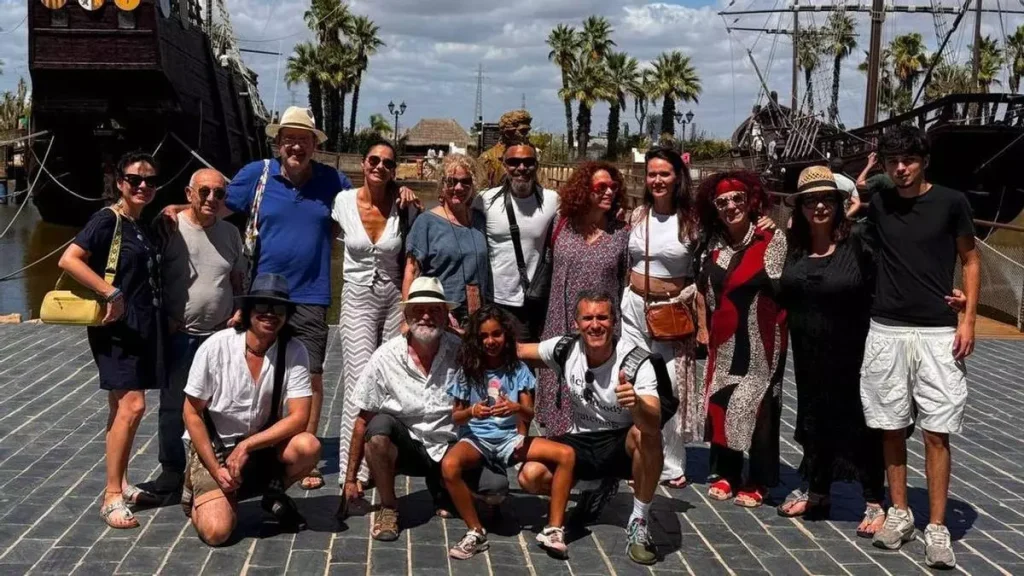
14ymedio, Dayana Prieto Espinosa, Trigueros (Huelva), August 27, 2026 / For eight days, a small town in Huelva became a meeting point for an increasingly scattered Cuban culture. From August 19 to 26, the XIII edition of Cubacultura brought together in Trigueros musicians, writers, filmmakers, actors, and visual artists living both on and off the island, in a program inevitably shaped by emigration, memory, and reunion.
At the center of nearly everything is Harina de Otro Costal, a space that resists easy categorization. The home of cultural manager Lourdes Santos and artist Juan Manuel Seisdedos was built around an old mill, whose machinery today shares space with works of art. Together with actress Laura de la Uz and photographer and writer Héctor Garrido, the couple make up the foursome that has, for thirteen years now, sustained a festival dedicated to building bridges between Cuba and Andalusia.

Walking into Lourdes and Juan’s house carries something of the fascination Federico García Lorca felt on discovering the Loynaz siblings’ residence in Havana. The poet ended up calling that Vedado mansion “my enchanted house.” Cuban artists today feel something similar as they wander through Harina de Otro Costal, where the mill’s old machinery shares space with paintings, books, beds for friends, and tables always set to stretch out the conversation.
By day, Trigueros seems like a town suspended in time – closed doors, silent streets, roosters announcing dawn and siesta alike. But once night falls, Harina de Otro Costal transforms everything. Visitors arrive from Huelva, Seville, other Spanish cities, and even Portugal, and the old mill fills with conversation, music, and accents.
This edition opened with three photography exhibits: Retrospectiva inconclusa (Unfinished Retrospective), by Alberto Díaz Korda; Otra música (Another Kind of Music), featuring photographs by Silvio Rodríguez; and Cuba iluminada: 10 años (Cuba Illuminated: 10 Years), by Héctor Garrido. The first night ended with La Dame Blanche, a project by Cuban artist continue reading
Film picked up next. Al oeste, en Zapata (West, in Zapata), by David Bim, offered a look at a Cuba far removed from postcard images, while A media voz (In a Half Voice), by Heidi Hassan and Patricia Pérez, placed emigration at the center of the screen. Built on the correspondence and archives of two friends who left the island and ended up living in different countries, the documentary speaks to loneliness, the unexpected trades of exile, motherhood, and that sense of having left parts of oneself scattered across different cities.
“We Cubans are like fragments of a broken mirror, like pieces of a puzzle we still haven’t managed to put together,” one audience member summed up. For a few days, Cubacultura made it possible to try to put some of those pieces back together.
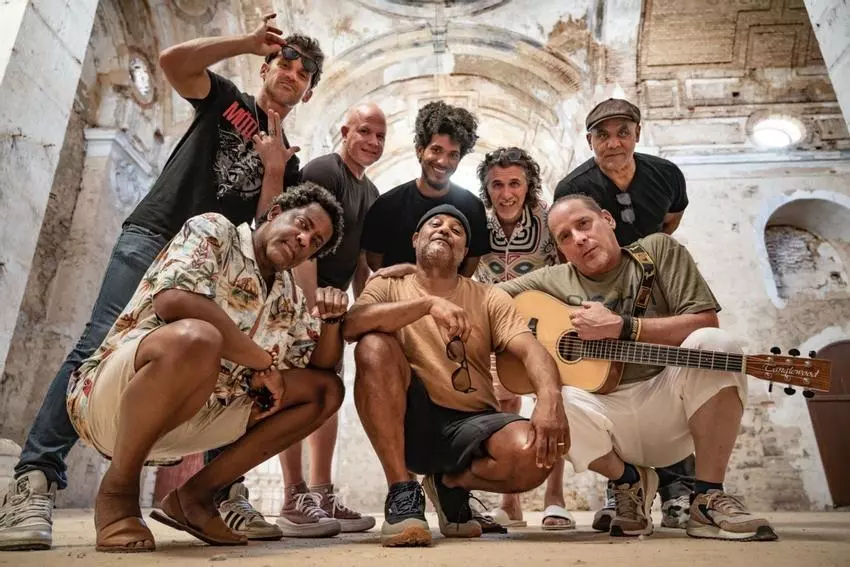
Music carried that same experience into other registers. Habana Abierta took over the old Convent of Santa Catalina on Saturday. Founding members Alejandro Gutiérrez, Vanito Brown, and José Luis Medina – La Liebre – were joined by Roberto Carcassés, Ernesto Blanco, José Raúl Machado, Fernando Favier, and Pedro Pablo Rodríguez.
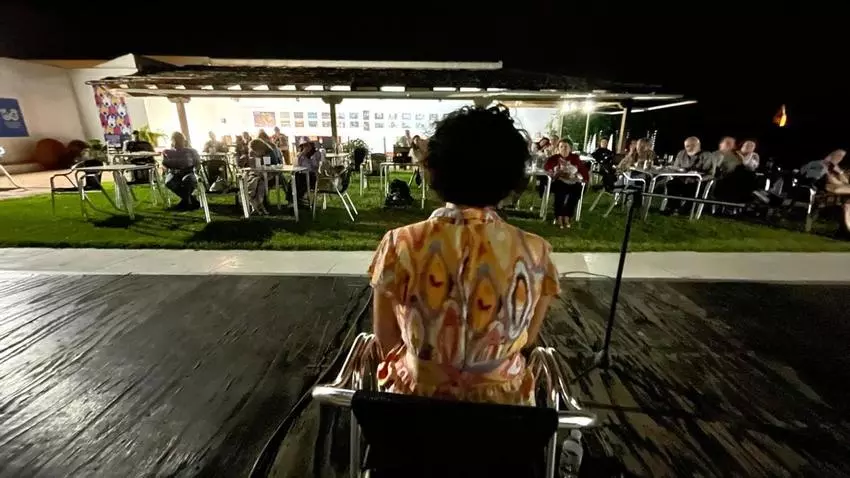
Theater arrived two nights later with Jacuzzi, by Yunior García Aguilera, performed by the author himself alongside Claudia Álvarez and Yadier Fernández. More than a hundred audience members followed a story in which friendship, love, fear, and politics all end up trapped in the same space. It was then that political debate jumped from the stage into the audience. A member of a Spanish organization sympathetic to the Cuban government took the floor to repeat against García the narrative used by State Security, which years earlier had tried to portray him as part of a foreign operation aimed at pushing a “soft coup” in Cuba.
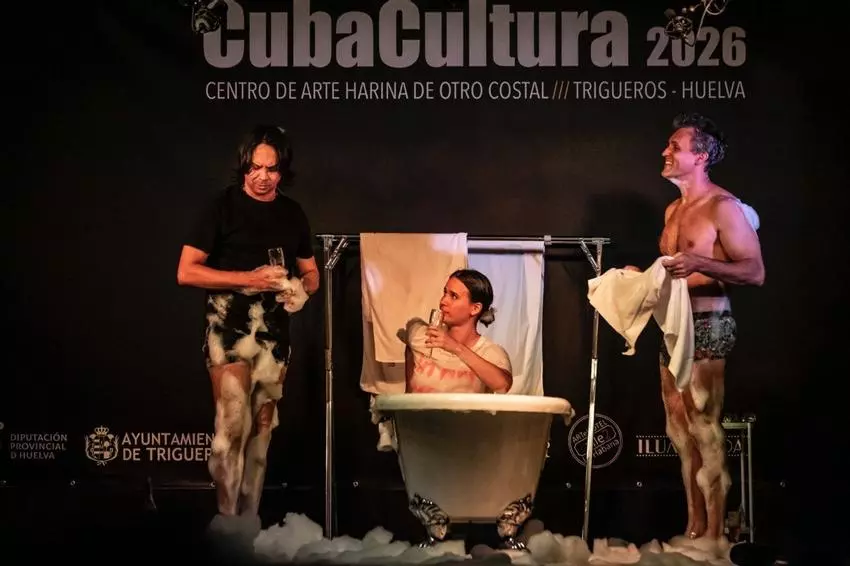
The attempt to steer the discussion toward that narrative met with a calm response. García thanked the audience for the debate and noted that a discussion like that would be practically impossible on the island, given censorship and the government’s monopoly on public speech. Laura de la Uz then spoke up: “You have the freedom in Spain to say everything you think. But we, as Cubans, have it too.”
The audience quickly returned to Jacuzzi. Comments focused on the emotion and sincerity of the piece, and some attendees mentioned the miles they had traveled to see it. The incident ended up demonstrating, almost inadvertently, one of the festival’s distinctive traits: no one needed to banish the dissenter or silence him in order to defend their own ideas.
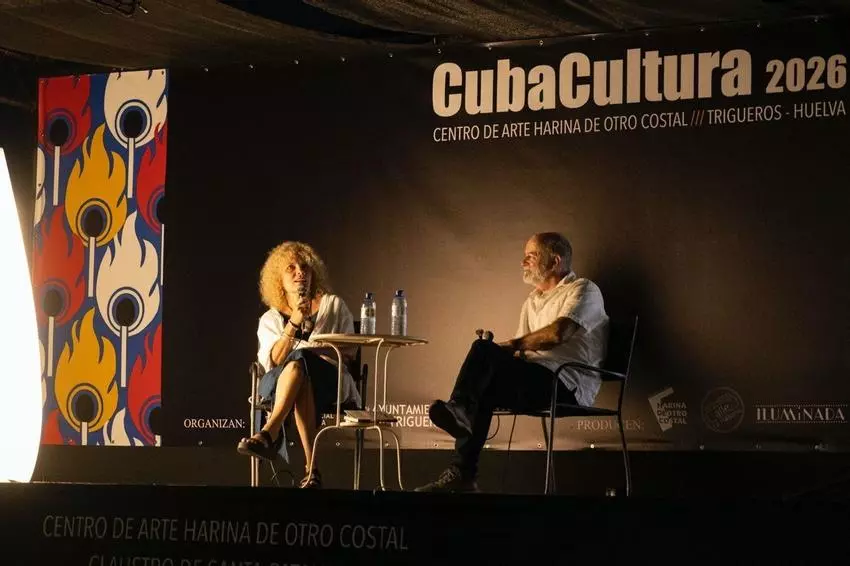
Literature continued that same dialogue between departures and returns the following day. Karla Suárez and Héctor Garrido presented Objetos perdidos (Lost Objects) and Habitación con cielo (Room with a Sky) in an unconventional conversation, almost a gathering among friends. The stories seemed to move in opposite directions only to end up meeting. Garrido, who is Spanish, writes about Havana after choosing to live in Cuba; Suárez, a Cuban who emigrated very young, sets in Barcelona a novel in which seemingly insignificant bracelets end up holding the emotional chronology of years of farewells and reunions.
The closing fell to musician X Alfonso, who brought the event to a triumphant close alongside Ernesto Blanco and Frank Durand. Hundreds of people had reserved their tickets, and the venue had been sold out for two days beforehand. In a small format of guitar, bass, piano, and percussion, the musicians switched instruments with startling ease during a concert as intimate as it was powerful.
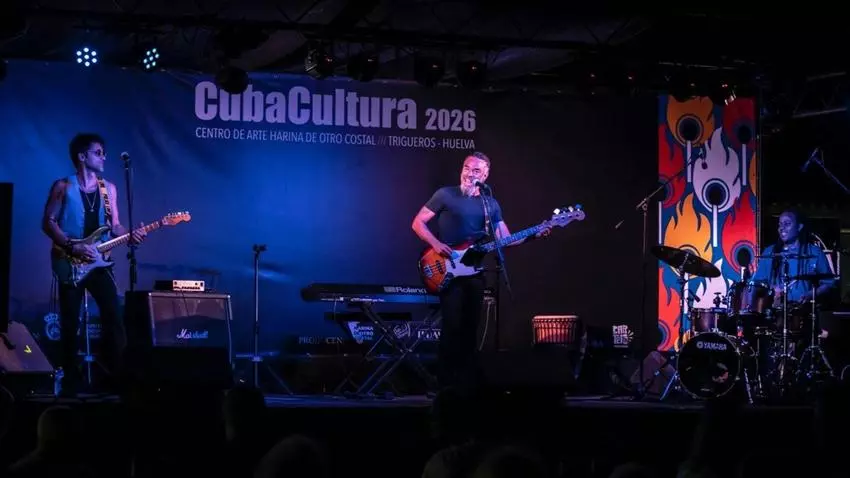
There’s something of a Renaissance artist about X. It’s hard to confine him to music alone. Composer, performer, photographer, filmmaker, and cultural manager, he has managed to bring together disciplines that others tend to keep apart. That vocation perhaps finds its most visible expression in Fábrica de Arte Cubano, the space he has championed for years in Havana as a meeting point for the arts, even amid the shortages and obstacles that come with sustaining a project like that in Cuba.
Central to that endeavor has been Sandra Lusitana, his wife, producer, and cultural manager, one of those people capable of solving any setback. In Trigueros, she wasted no time joining the invisible machinery that keeps the festival running. But if anyone ended up taking ownership of the event, it was Mar, X and Sandra’s young daughter. With the ease children have for abolishing formality, she renamed several of those present and lit up every corner of Trigueros with her personality.
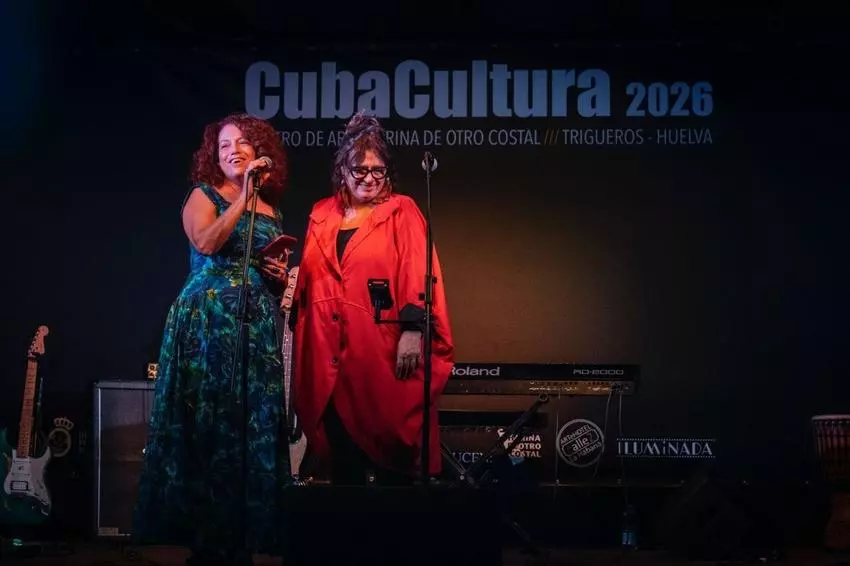
What makes Cubacultura unique isn’t only its program. It’s in the hospitality. In those who cook for the artists, wash a costume at the last minute, fix a technical problem, offer a beer, or make room around a table. In Lourdes and Juan Manuel, after more than half a century together; in Laura de la Uz, also revealed as a tireless cultural organizer; in the hospitality of Garrido and of a team – made up of Lola, Chari, Vito, Parra, Alfonso, and Antonio – for whom almost no setback seems impossible to solve.
For eight days, Harina de Otro Costal was exactly that: another way of understanding Cuba. One where artists from different fields can share the same program; where someone can defend their ideas without triggering an act of repudiation; and where the scattered pieces of a country can sit together again around the same table. It isn’t yet the Cuba that exists. But for one week, in an old mill in Trigueros, it came close to a rehearsal of the Cuba we dream of.
Translated by GH
______________________
COLLABORATE WITH OUR WORK: The 14ymedio team is committed to practicing serious journalism that reflects Cuba’s reality in all its depth. Thank you for joining us on this long journey. We invite you to continue supporting us by becoming a member of 14ymedio now. Together we can continue transforming journalism in Cuba.
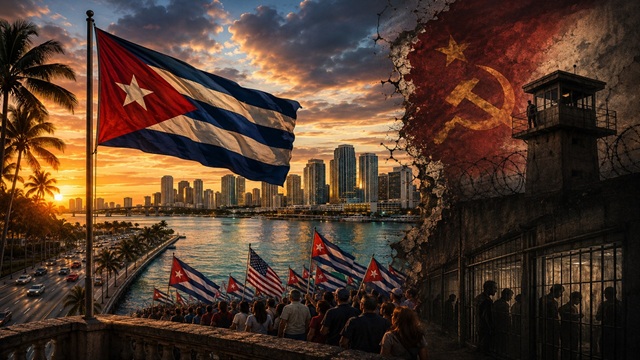
The CubanAmerican Voice, Julio M. Shiling / The Cuban nation has two great cities. One is Havana, the historic capital that today remains captive under the weight of a Marxist-Leninist dictatorship. The other is Miami, a city within the territorial jurisdiction of the United States but one that has, over the decades, become no less Cuban than Havana itself. If Havana embodies the tragedy of an occupied republic, Miami represents the continuity of the Cuban nation in freedom. It is there that a vigorous exile community has preserved the ideals of constitutional government, individual liberty, and democratic restoration. It has become the political, intellectual, cultural, and economic center of a Cuba that refuses to surrender.
For more than six decades, the Cuban nation beyond the island has maintained a remarkably consistent position. The crisis of Cuba cannot be solved through cosmetic reforms, administrative adjustments, or economic openings designed merely to prolong the life of the existing regime. Genuine national reconciliation requires something far more profound: the complete dismantling of the totalitarian system and the restoration of a democratic republic governed by the rule of law. Whether the Castro-Communist state were to imitate the economic models of China, Vietnam, or post-Soviet Russia would not alter the fundamental reality that a Leninist political monopoly remains incompatible with liberty.
It is precisely this unwavering position that has become one of the dictatorship’s greatest strategic obstacles. Since 1959, Castro-Communism has devoted enormous resources to influencing, dividing, infiltrating, and neutralizing the Cuban nation abroad. Opposition organizations, academic circles, cultural institutions, political networks, business communities, and media platforms have all, at various times, become targets of influence operations designed to weaken support for democratic change. The objective has rarely been to persuade the exile community to embrace communism outright. A far more attainable goal has been to cultivate neutrality, resignation, ambiguity, or fatigue regarding regime change itself. That effort has largely failed. continue reading
If anything, Miami has become the principal democratic reserve of the Cuban nation. It has generated the political leadership, institutional memory, economic resources, and international advocacy that continue to expose the true nature of Castro-Communism before the world. Recognizing this reality, the dictatorship has steadily refined its methods. Since the 1990s, the campaign to domesticate Miami has accelerated considerably. Each passing decade has witnessed increasingly sophisticated efforts to normalize the dictatorship, blur moral distinctions, and redefine what constitutes acceptable discourse about Cuba. Today, with a U.S. administration placing renewed attention on Cuba and a Cuban-American Secretary of State helping shape Washington’s policy toward the island, the strategic importance of neutralizing the external Cuban nation has become even greater from Havana’s perspective.
It is within this broader strategic context that certain carefully cultivated narratives deserve thoughtful scrutiny. One fact is beyond serious dispute. Cuba’s political prison system has, for decades, been documented by former prisoners, families, international organizations, and countless eyewitnesses as a system characterized by severe deprivation, psychological coercion, physical abuse, arbitrary punishment, prolonged isolation, and systematic violations of human dignity. This is not an isolated allegation but the overwhelming historical record. It constitutes the rule rather than the exception.
History also teaches that exceptions exist. Throughout the history of communist prison systems, some inmates have accepted varying degrees of accommodation with prison authorities and, in return, experienced treatment less severe than that imposed upon the majority. Such cases have appeared in many authoritarian systems. Their existence does not invalidate the brutality of the system itself; rather, they underscore the discretionary power of totalitarian institutions to dispense privilege selectively whenever doing so serves institutional interests.
Against this well-established backdrop, accounts involving the production of thousands of works of art during incarceration, the regular enjoyment of exceptional food, privileged access unavailable to ordinary inmates, or other unusually favorable circumstances naturally invite legitimate public questions. Such anomalies cannot simply be detached from the broader realities of a prison system whose defining characteristic has long been repression. Extraordinary experiences within an extraordinarily cruel prison system demand extraordinary explanation.
One need not allege formal recruitment or conscious collaboration to recognize how authoritarian intelligence services operate. Modern influence operations frequently rely not upon overt agents but upon situations, narratives, personalities, and circumstances that objectively advance strategic objectives. An individual need not intend to serve propaganda for propaganda to derive benefit from the individual’s public image, testimony, or conduct.
The objective is not necessarily to persuade observers that Cuba’s prisons are humane. Such a claim would collapse under the weight of thousands of testimonies accumulated over more than six decades. Rather, the purpose is subtler: to introduce confusion where moral clarity once existed; to normalize exceptional cases until they appear representative; to replace overwhelming historical evidence with carefully amplified anomalies; and, above all, to transform the extraordinary into the ordinary. This is the banality of evil in another form—not the outright denial that oppression exists, but its gradual dilution through selective storytelling until the exceptional overshadows the rule.
The dictatorship has long understood that every successful totalitarian project requires more than police power. It requires the construction of a cultural environment in which citizens begin to question realities that were once self-evident. It seeks not merely obedience but the redefinition of truth itself. What has been accomplished over decades inside Cuba is now pursued, by different methods, beyond its shores. The battlefield is no longer confined to the island; it now extends into the institutions, media, and cultural life of the free Cuban nation.
For that reason, Miami must remain intellectually vigilant. The response cannot mirror the intolerance of the dictatorship. Every individual possesses the right to speak freely, to create art freely, to express unpopular opinions freely, and even to employ language or behavior that others may regard as vulgar or offensive. These freedoms distinguish democracy from totalitarianism and must remain inviolate. Yet freedom of expression has never implied freedom from public examination. Others possess an equal right to question extraordinary claims, analyze improbable circumstances, criticize public conduct, and evaluate narratives against the accumulated evidence of history. Democratic discourse demands precisely that exercise of reasoned judgment.
The battle for Miami is therefore not merely geographical. It is a battle over historical memory, moral clarity, political legitimacy, and the future identity of the Cuban nation itself. Havana understands that as long as Miami remains intellectually unconquered, the democratic aspirations of the Cuban people remain alive. In the end, the most consequential work of art has not been painted on canvas. The real painting, in this recent case, has been painted by Castro- Communism.
Studies rule out the effectiveness of electronic repellents, bracelets, and citronella candles against insects.
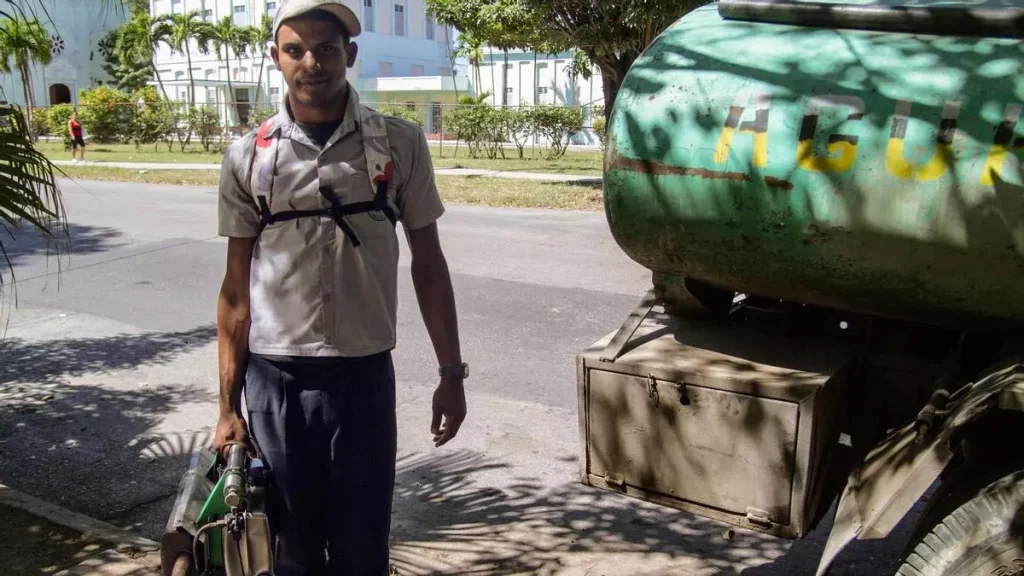
14ymedio/SINC/Javier Yanes, Madrid, July 25, 2026 – Mosquitoes transmit about 78 diseases that, according to some estimates, cause up to one million deaths each year, 600,000 of them from malaria. In Cuba, where mosquito control campaigns were a public health priority for decades, the economic crisis and the deterioration of public services have weakened that response capacity.
The dengue and chikungunya epidemic that swept across the Island beginning in 2025 found favorable conditions due to the lack of fumigation, the accumulation of garbage, and difficulties in diagnosing and treating patients. In February of this year, the Pan American Health Organization reported two new chikungunya deaths in January, bringing the total number of deaths recorded by the organization to 67, along with 1,457 cases of the disease during that month.
How can we protect ourselves from mosquitoes? While science searches for new weapons against this pest, the best option remains to rely on methods whose effectiveness has been proven. Despite their popularity, this does not include certain remedies that have been shown to be useless. continue reading
DEET “remains the most widely used, the most effective, and the least expensive in the world”
During World War II, troops deployed in tropical regions suffered from mosquito-borne diseases. Sixty percent of U.S. soldiers in the Pacific contracted malaria, while another 5% came down with dengue. In total, 1.2 million suffered from one or both infections. Although mortality was low, the impact on military operations was so severe that it forced the U.S. government to seek solutions.
At the time, insect repellents such as citronella oil (lemongrass) were already in use, but they were not effective enough. Beginning in 1942, scientists such as chemist Samuel Gertler of the Department of Agriculture tested more than 7,000 compounds in search of new formulas to protect against insects. That was how Gertler discovered DEET (diethyltoluamide). Patented in 1946, after the war, it was kept as a closely guarded military secret until civilian use was authorized in 1957.
DEET has stood the test of time: eighty years later, it remains the benchmark repellent. “It is still the most widely used in the world, the most effective, and the least expensive,” Claudio Lazzari, a biologist specializing in disease-carrying insects at the University of Tours (France) and the University of Buenos Aires, told SINC.
Higher concentrations are recommended for regions at risk of malaria and other mosquito-borne diseases
DEET is the reference standard against which any new candidate is measured. It is sold under numerous brand names and in different concentrations; higher concentrations provide longer-lasting protection, up to eight or nine hours, although protection does not appear to increase significantly beyond 50%. Higher concentrations are recommended for regions at risk of malaria and other mosquito-borne diseases.
DEET’s long history also supports its safety, and it can even be used on babies as young as two months old. According to Lazzari, at very high concentrations, around 75%, “it has been associated with allergic reactions and some toxicity,” but “no commercial repellent contains that much in its formulation.”
In addition, although it is moderately harmful to aquatic organisms, it biodegrades slowly and therefore does not tend to accumulate.
In short, DEET is the closest thing we currently have to the perfect repellent. But it has one major drawback: it is unpleasant to use. Its oily texture leaves the skin greasy, and, even worse, it dissolves plastic, meaning it can damage many objects or materials that come into contact with the skin, including bracelets, sandals, watchbands, sunglasses, nail polish, or synthetic fabrics such as elastane or Lycra.
“Alternatives, especially natural ones, tend to be more expensive, provide less protection, and are not usually completely harmless”
This shortcoming of DEET leaves room for other options, although, Lazzari warns, “alternatives, especially natural ones, tend to be more expensive, provide less protection, and are not usually completely harmless.” These other repellents include traditional citronella oil, Merck’s IR3535, or distilled oil of lemon eucalyptus (OLE), enriched with an active ingredient called para-menthane-3,8-diol (PMD). However, this is not the essential oil extracted directly from the plant, which is sometimes falsely marketed as a repellent.
However, study after study reaches the same conclusion: the protection provided by citronella oil and other plant oils fades quickly because of their high volatility, dropping by half after two hours, whereas DEET’s protection remains. Although PMD is an option, DEET’s strongest competitor is picaridin, also known as icaridin, developed by Bayer in the 1980s. It is the only repellent that has matched DEET’s performance in tests, without damaging plastics or leaving a greasy feel. Concentrations of 20% provide the same level of protection as DEET.
It is possible that new repellents will be discovered in the future, but this search faces a major obstacle: despite DEET’s long history, scientists have still not resolved exactly how it works. “There is no general model explaining why repellents repel,” Lazzari points out. There are at least three hypotheses, each supported by experimental evidence: “That they block mosquitoes’ ability to detect us, that they are toxic and affect the nervous system, and that mosquitoes smell them and avoid them.”
“The more we understand how mosquitoes process odors, the better we will be able to design more precise repellents”
This last idea is supported by a recent study led by Lazzari that revealed a surprising result: mosquitoes exposed to a puff of DEET while feeding can learn to associate its smell with food, causing the repellent to become an attractant for them.
It is the classic conditioning demonstrated by Pavlov’s dogs, which salivated in response to a stimulus associated with food. This indicates that, for mosquitoes, DEET’s action is not purely mechanical but also has a cognitive component.
Humanity’s battle against pests has repeatedly encountered this kind of obstacle: over time, one way or another, our enemies eventually find ways to resist, avoid, or tolerate the weapons we use against them.
Although DEET remains widely effective for now, “the fact that we do not know exactly why mosquito behavior changes in this way is a major obstacle to the search for new molecules,” says Lazzari.
In recent years, research has delved deeper into the mosquito’s systems that guide it toward humans, beginning with the odor of substances we emit, such as carbon dioxide from our breath, lactic acid, and other metabolic products and skin bacteria. “The more we understand how mosquitoes process odors, the better we will be able to design more precise repellents,” Floris van Breugel, a researcher at the University of Nevada, Reno, whose studies have shed light on this field, told SINC.
“The fact that we do not know exactly why mosquito behavior changes in this way is a major obstacle to the search for new molecules”
Researchers are therefore looking for compounds that interfere with mosquitoes’ sense of smell or confuse them, enhancing the effect of repellents. Although more extensive testing is still needed, substances have already been identified that provide longer-lasting protection than DEET.
According to Lazzari, this knowledge makes it possible to design “rational strategies,” such as the one he is developing through a collaborative project between Argentina and France. “The idea is to test molecules that are likely to trigger an avoidance response, such as bitter substances.”
Repellents are a primary resource in areas at risk of mosquito-borne diseases, but they are not the only means of personal protection. The most traditional basic measure is a physical barrier such as a mosquito net, especially one treated with widely available insecticides such as permethrin. The World Health Organization has recently added a new recommendation for malaria control: the use of so-called emanators, or spatial repellents, systems that gradually release insecticides into the air.
On the other hand, environmental concerns argue against ultraviolet mosquito lamps. Studies have shown that they attract very few mosquitoes but many beneficial insects, such as moths. In one sample, only 31 out of 13,789 insects killed in the trap were mosquitoes.
“Many of the products marketed as repellents that have been tested do not reduce mosquitoes’ attraction to humans.”
As for other types of measures, at best they may provide slight help; at worst, they are completely useless. One example is one of the most popular supposed mosquito defenses available in stores every summer: citronella candles. Although citronella oil works as a repellent when applied to the skin, there is absolutely no guarantee that burning wax mixed with this substance will repel insects.
In fact, it does not. A study by New Mexico State University comparing various mosquito control methods concluded that “the citronella candle has no effect whatsoever.” The authors added that “many of the products marketed as repellents that were tested do not reduce mosquitoes’ attraction to humans.”
Among these major failures are two other popular products: repellent bracelets and electronic ultrasonic mosquito repellents.
“Our hypothesis is that the concentrations released by the tested bracelets are too low to have any effect”
As for the bracelets, one study found a 30% reduction in bites when using a DEET-treated bracelet, but only on the arm wearing it. Regarding bracelets containing citronella or other plant extracts, the New Mexico study found no benefit.
“Our hypothesis is that the concentrations released by the tested bracelets are too low to have any effect,” the authors wrote, emphasizing that a compound that works in one form does not necessarily work when used differently—for example, a topical repellent incorporated into bracelets.
Even worse are electronic devices that claim to repel mosquitoes with ultrasound. Time and again, tests have shown that they do not deter mosquitoes at all.
“Field entomological studies confirm that electronic mosquito repellents have no effect whatsoever in preventing bites,” wrote the authors of a review of the available studies.
“Field entomological studies confirm that electronic mosquito repellents have no effect whatsoever in preventing bites”
The same applies to smartphone apps. According to the New Mexico study, any system claiming to repel mosquitoes with sound is “the modern equivalent of snake oil,” a reference to fraudulent remedies.
The list of false anti-mosquito claims is endless. For example, some people claim that certain foods or supplements, such as vitamin B1 (thiamine), yeast, or garlic, protect us from mosquito bites.
According to National Taiwan University entomologist Matan Shelomi, who reviewed the available studies, “the scientific consensus is unequivocal that oral repellents do not exist. Despite extensive searches, no food, supplement, medication, or condition has ever been proven to make people repellent to mosquitoes.” The New Mexico study also tested vitamin B1 patches applied to the skin. The verdict: they do not work either.
The same drawer of failed remedies also includes so-called repellent plants, as emphasized by medical entomologist Cameron Webb of the University of Sydney.
This expert also warns about mosquito-repellent clothing. Although garments treated with permethrin or other insecticides provide better protection than untreated clothing, “they are unlikely to prevent mosquito bites on exposed areas of the skin.” Furthermore, “after washing, any protection these garments provide is likely to decrease.” At the very least, covering the entire body remains a measure that never fails.
Translated by Regina Anavy
______________________
COLLABORATE WITH OUR WORK: The 14ymedio team is committed to practicing serious journalism that reflects Cuba’s reality in all its depth. Thank you for joining us on this long journey. We invite you to continue supporting us by becoming a member of 14ymedio now. Together we can continue transforming journalism in Cuba.
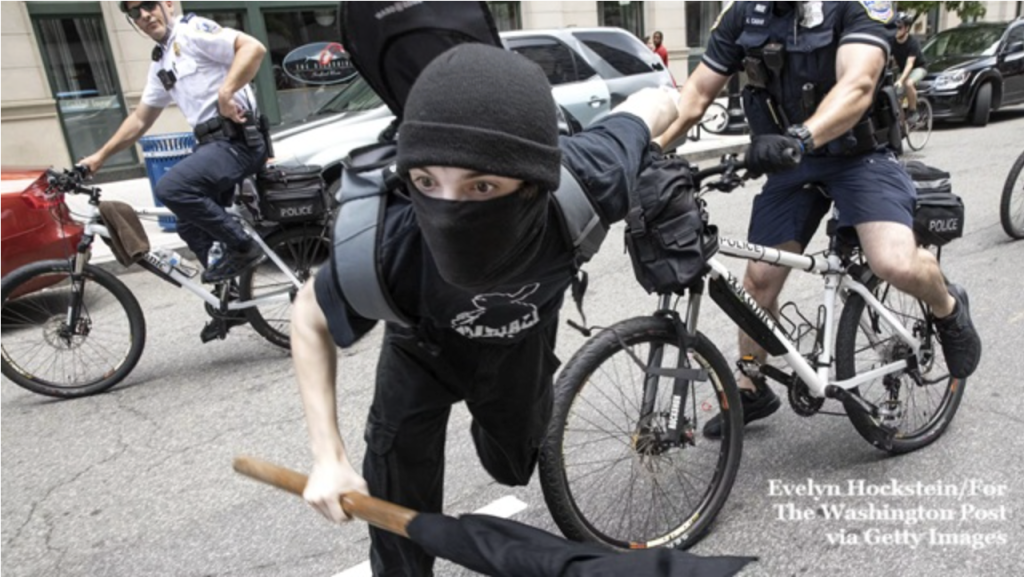
The CubanAmerican Voice, Julio M. Shiling, Jul 17, 2026 / In a landmark address before representatives from more than 70 countries at the U.S. State Department’s Ministerial Conference on the Resurgence of Political Terrorism on July 16, 2026, Secretary of State Marco Rubio delivered a clarion call. This marks a decisive shift in American foreign and domestic policy. The United States, Rubio declared, is formally committing to combat far-left extremist movements that have long endangered Western civilization and the American republic itself. For too long, terrorist and violent activities rooted in ideological extremism have received a troubling pass, shielded by sympathetic narratives in media, academia, and elite institutions. That era of indulgence is ending.
Rubio’s speech was both diagnostic and prescriptive. He emphasized that Marxist-inspired groups are not fringe actors operating in isolation but components of a sophisticated, well-coordinated international network dedicated to advancing variants of socialism and undermining democratic societies. Central to this network, Rubio noted—reminding his audience pointedly more than once—is the communist regime in Cuba. For decades, Havana has served as a hub for radical left-wing terrorism, recruiting, training, and backing Marxist and Third-Worldist movements across the hemisphere and beyond. Its “sprawling intelligence and ideological network” helped build the far left in the United States and remains inextricably linked to far-left groups and movements within and beyond the West.
This announcement represents a welcome structural offensive by America against communism’s ongoing war on the West. In many respects, it revives a policy approach that proved largely successful during the Cold War. From the outset of that existential struggle, the United States recognized the subversive threat posed by Soviet and allied forces. Castro’s Cuba stood at the forefront of this assault, exporting revolution through terrorist training camps that prepared continue reading
Tragically, that vigilance waned with the fall of the USSR. A wave of triumphalism led to the mistaken belief that history had ended and that economic liberalization would inevitably produce democracy everywhere. The West, particularly under policies encouraging China’s integration into global markets, bet that market mechanisms would tame communism. That wager failed spectacularly. The Chinese Communist Party adapted, retaining totalitarian control while exploiting global trade. Meanwhile, Marxism reinvented itself through cultural and ideological channels rather than purely economic ones.
Intellectual architects like Antonio Gramsci and the Frankfurt School provided the blueprints. Gramsci’s concept of cultural hegemony urged revolutionaries to capture institutions—education, media, arts, and civil society—rather than seizing state power through confrontation alone. The Frankfurt School’s critical theory dissected Western society as inherently oppressive, laying groundwork for postmodern critiques that eroded confidence in objective truth, tradition, and national identity. These ideas flourished in the late 20th and early 21st centuries, finding expression in identity politics revolutionaries who rebranded themselves as antifascists, radical environmentalists, anticapitalists, and globalists. In some cases, these currents have even blended with strains of Islamic jihadism, creating hybrid threats that exploit grievances under the banner of “liberation.”
The result has been a sustained incursion into the cultural and political fabric of the West. What began as academic theory manifested in street-level violence, institutional capture, and policies that prioritize division over cohesion. Antifa networks, operating transnationally with encrypted coordination and shared propaganda, exemplify the modern face of this challenge. Rubio highlighted rising far-left violence in Europe, including a more than 40% increase in Germany and the dominance of extreme-left actors in Greek radical incidents. In the U.S., designations of violent far-left groups as Foreign Terrorist Organizations, alongside new sanctions on Cuban entities like the Ministry of the Revolutionary Armed Forces (MINFAR), the Cuban Institute of Friendship with the Peoples (ICAP), and others, signal concrete action.
This 21st-century policy reset arrives at a propitious moment. The Trump administration appears poised to advance regime change efforts in Cuba. Addressing this longstanding source of regional instability and ideological export is crucial. By targeting the financial and operational lifelines of these networks—through sanctions, intelligence sharing, law enforcement workshops (with the next co-hosted by Germany), and Rewards for Justice programs—the U.S. is rebuilding the infrastructure of victory.
Critics may decry this as partisan overreach or an exaggerated threat. Yet history and evidence tell a different story. From Shining Path’s atrocities in Peru to the Red Brigades’ executions and contemporary Antifa-linked disruptions, far-left extremism has consistently cloaked resentment and destruction in the language of justice and equality. Rubio captured it powerfully: it is “a poisonous resentment… an overwhelming need to tear down what greater men have built.” Far-left actors despise the West precisely because of its greatness—its prosperity, freedoms, and achievements.
America’s re-adoption of an assertive stance against these forces is not merely defensive; it is a reaffirmation of civilizational confidence. By forging coalitions across Europe, Latin America, and Asia, even amid skepticism from some allies accustomed to downplaying the threat, the U.S. is leading as it did in the Cold War. The battle is ideological as much as operational. It demands clarity about the incompatibility of Marxist-derived frameworks with individual liberty, rule of law, and human flourishing.
As Secretary Rubio’s address underscores, the United States will no longer tolerate radical Marxist regimes and their proxies exporting subversion. This offensive posture, linking historical lessons to present dangers, offers hope that the West can reclaim the initiative. The stakes could not be higher: the preservation of the civilization that has delivered unprecedented liberty and progress against ideologies that have repeatedly delivered tyranny and ruin. In confronting this networked challenge head-on, America signals that it stands ready once more to defend the principles that define it.
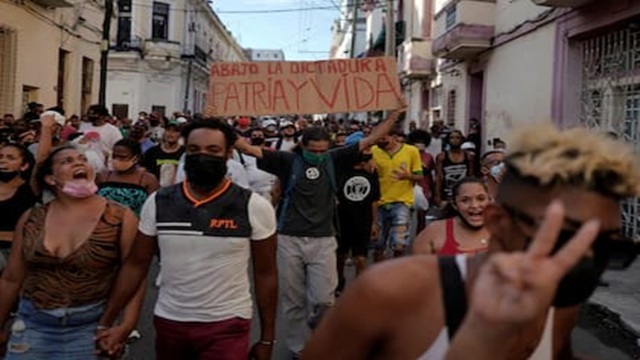
The Cuban American Voice, Julio M. Shiling, July 10, 2026 / Five years have passed since July 11, 2021 (11J), when thousands of Cubans took to the streets in the largest nationwide uprising since the establishment of the Castro-Communist dictatorship. The demonstrations shattered one of the regime’s most enduring myths: that the Cuban people had accepted communist rule. Instead, 11J exposed a nation exhausted by more than six decades of political repression, economic ruin, and systematic violations of fundamental human rights.
The events of 11J revealed two enduring realities. First, the overwhelming majority of Cubans are profoundly dissatisfied with the existing political system. The spontaneous nature of the demonstrations—erupting simultaneously across dozens of cities and towns without centralized leadership—demonstrated that discontent had reached every sector of society. Cubans marched not merely because of shortages of food, medicine, or electricity, but because they recognized that these hardships were symptoms of a deeper disease: an irredeemably failed totalitarian system.
Second, 11J confirmed that Castro-Communism can survive only through the continued exercise of state terrorism. The regime’s immediate response was not dialogue or reform but repression. Peaceful demonstrators were beaten, arbitrarily arrested, subjected to summary trials, and sentenced to extraordinarily harsh prison terms. Communist Cuba’s revolving door political prison system, according to Prisoners Defenders’ July report, holds the number at 1,306. Many of these are young people, women, and individuals who would never have faced prosecution in any civilized democratic society. Reports of torture, psychological abuse, denial of medical treatment, and inhumane prison conditions continue to emerge with alarming regularity.
The dictatorship’s reaction unfolded through three distinct, but complementary strategies designed to preserve its monopoly on power. The first was a brutal nationwide crackdown. Security forces, the Ministry of the Interior (MININT), state security agents, and pro-regime paramilitary groups rapidly suppressed the demonstrations through overwhelming force. The subsequent judicial process became an extension of political repression rather than an instrument of justice. During this period, questions also arose surrounding the unexplained deaths of numerous senior officials within the Revolutionary Armed Forces (FAR) and MININT, events that have never received transparent public explanation.
The second strategy sought to neutralize the momentum generated by 11J through political manipulation. The proposed November 15 (15N) demonstrations organized by the Archipiélago movement initially appeared capable of becoming a second nationwide mobilization. Instead, the regime effectively penetrated, monitored, and ultimately neutralized the initiative through its extensive intelligence apparatus, depriving the opposition of the momentum that might have transformed 11J into a sustained civic movement.
The third response relied upon a familiar instrument that the Castro regime has repeatedly employed throughout its history: facilitating mass emigration. Through Nicaragua’s visa-free policy and migration routes through Central America and Mexico, hundreds of thousands of Cubans departed the island, with many ultimately entering the United States. This massive exodus relieved internal social pressure while simultaneously exporting the consequences of Cuba’s political failure abroad. The migration crisis became another mechanism for preserving the dictatorship rather than addressing the causes that compelled Cubans to flee.
Despite these efforts, the spirit of 11J has not disappeared. Smaller demonstrations have continued across the island during the past five years, particularly in response to prolonged blackouts, food shortages, and deteriorating living conditions. Having been caught by surprise in July 2021, however, the regime has adapted. Security services now intervene preemptively, deploying surveillance, preventive detentions, intimidation, internet restrictions, and rapid response forces to prevent localized protests from evolving into another nationwide uprising. Repression has become more sophisticated but no less brutal.
Meanwhile, the contrast between Cuba’s ruling elite and ordinary citizens grows increasingly stark. The regime has evolved into what many scholars describe as a sultanistic kleptocracy centered around an extended ruling family and a narrow political aristocracy. While ordinary Cubans endure chronic scarcity, collapsing infrastructure, and near-total economic despair, those connected to the centers of power continue to enjoy privileged access to wealth, imported goods, exclusive facilities, and opportunities unavailable to the overwhelming majority of the population. The ideological rhetoric of equality has long since given way to an unmistakable reality of political privilege.
Beyond Cuba’s borders, the dictatorship remains a source of regional instability. Successive American administrations have recognized that the Castro regime presents challenges extending beyond the island itself. Havana continues to serve as an important hub for anti-democratic movements throughout Latin America while maintaining close strategic relationships with China, Russia, Iran, and North Korea. Cuba’s intelligence services have historically exercised influence well beyond the country’s size, making the island a strategic platform for geopolitical rivals seeking greater influence in the Western Hemisphere.
Today, the regime increasingly speaks of economic “reforms” while carefully avoiding any discussion of genuine political liberalization. Such proposals misunderstand—or deliberately obscure—the nature of Cuba’s crisis. The fundamental problem is not economic but political. Economic adjustments administered by a totalitarian state cannot produce meaningful freedom, justice, or national reconciliation. Without independent courts, free elections, freedom of expression, private property protected by law, and genuine constitutional government, economic tinkering merely prolongs dictatorial rule. A system built upon absolute political control cannot be reformed through administrative modifications alone.
As America commemorates the 250 th anniversary of its struggle for independence, history offers an instructive reminder. The United States did not secure its liberty in isolation. French military intervention proved decisive at Yorktown, while Spanish financial assistance also contributed materially to the American cause. This is just one example of foreign intervention that substantively benefited the United States. It can well be argued and should be remembered by Washington that without French military help, America likely would have ended up like Canada. Successful struggles for freedom quite often depend on the support of democratic allies willing to confront tyranny.
The Cuban people have already demonstrated their desire for freedom. They did so courageously on July 11, 2021, and they continue to demonstrate it through their daily resistance despite extraordinary risks. Five years later, the lesson of 11J remains unmistakable. Cuba’s dictatorship never had the consent of its people, as a democracy demands. It governs only through fear, coercion, and repression. The unfinished task before the democratic world is not to encourage cosmetic reforms that prolong Castro-Communism, but to support the restoration of liberty, justice, constitutional government, and national sovereignty for the Cuban people.
© The CubanAmerican Voice. All rights reserved.
While finding any transportation in pesos has become an ordeal, the private company offers routes across the Island to those who can pay in foreign currency.
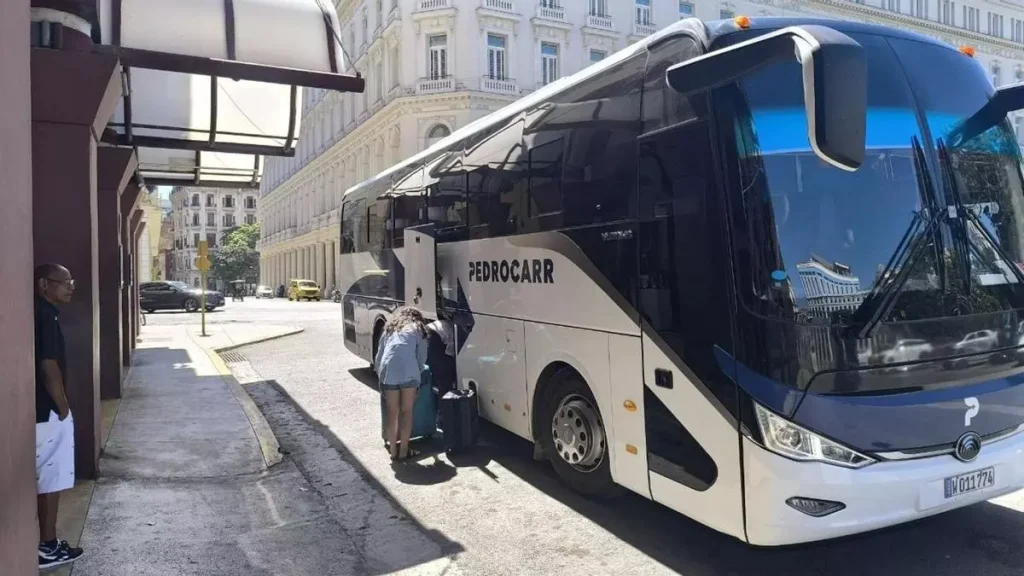
14ymedio, Havana, Juan Diego Rodríguez / Alejandro de Cañas, July 2, 2026 – A large PedroCarr bus, with the company’s logo prominently displayed on its side, left passersby in Central Havana astonished this Thursday. In the midst of Cuba’s transportation crisis, seeing luggage being loaded and passengers about to board is nothing short of a miracle.
PedroCarr, a private small and medium-sized enterprise (SME), has just opened a much easier option for those who can pay from abroad. On Wednesday, the company launched a digital platform to book interprovincial trips, hotel transfers, and transportation from Cuban airports, with fares listed in euros.
“Travel through Cuba with us,” the private company announces in a social media campaign. Through its new website, PedroCarr promises “fast and secure” reservations, bus rentals for excursions and events, as well as connections between the Island’s main cities and tourist destinations.
The company says its regular services in Cuban pesos will continue operating “under the same conditions and accessibility as always.” However, the launch is clearly aimed at Cubans living abroad who pay for their relatives’ travel and foreign tourists—two groups with access to hard currency in a country where the average state salary barely covers a fraction of the cost of any trip sold in euros. continue reading
PedroCarr also offers a downloadable 28-page fare schedule explicitly labeled “Viazul Service Fares”
The most striking aspect is not only the announcement itself but also the documents available on the website. PedroCarr allows users to download a 28-page fare schedule explicitly titled “Viazul Service Fares,” listing routes from airports, provincial capitals, hotels, and tourist destinations across the country.
From Terminal 3 of José Martí International Airport, for example, a transfer to Old Havana costs 10 euros. A trip to Las Tunas is listed at 44 euros, Holguín at 50 euros, Santiago de Cuba at 60 euros, and Baracoa at 74 euros. The fares include two suitcases and vary for children, round trips, and multi-destination itineraries.
The document is virtually identical to the one used by Viazul, the service operated by the state-owned National Bus Company, traditionally aimed at tourists and passengers paying in foreign currency. PedroCarr does not explain in its announcement whether it acts as an intermediary, a ticketing agency, or a transportation contractor for Viazul, nor does it specify what portion of the fare remains with the private company.
The platform presents itself as a bus transportation management and reservation system, but the network of routes it offers covers virtually the entire country, from Viñales to Baracoa, as well as airports, island resorts, and hotel complexes.
PedroCarr is not a newly created company. Cuba’s Ministry of Economy and Planning included it in its official registry of new economic actors as a private SME based in the municipality of Las Tunas, dedicated to ground passenger transportation. It was authorized in 2022 during the first major wave of small and medium-sized enterprises approved by the Government.
In February of this year, the company’s own fleet consisted of ten Yutong buses and seven Foton minibuses, in addition to another 17 leased vehicles.
Behind the business is Pedro Yosvany Carbonell Fernández, known as El Chino. The official Las Tunas newspaper 26 identified him in 2022 as the manager of what was then called Pedrocar y Socio, noting that the project began on May 8 of that year. Its original goal was to transport passengers between Las Tunas and Havana.
A Prensa Latina report published in February of this year refers to him as president of PedroCarr and states that the company operated the Havana–Puerto Padre and Havana–Las Tunas routes with fares in Cuban pesos. To acquire its buses, the private company obtained financing through an unidentified Spanish institution, arranged via Consultoría Internacional. PedroCarr also worked with foreign suppliers, including China’s Yutong Bus and Mexico’s Sunshine Best.
At that time, the company’s own fleet consisted of ten Yutong buses and seven Foton minibuses. Those 17 vehicles were supplemented by another 17 leased from the state-owned National Bus Company, giving PedroCarr a total of 34 vehicles under its management. The launch of a platform offering connections throughout the Island now points to a further expansion of its operations.
The service exists, the bus and fuel appear without problems, and reservations can be made without long lines… but in euros.
The private company’s growth has therefore taken place hand in hand with public institutions. PedroCarr has marketed transportation capacity through state bus terminals and has operated in a sector where fuel shortages, lack of spare parts, and vehicle scarcity have left numerous state-run routes paralyzed.
For a Cuban living on the Island, paying 44 euros for a trip from Havana Airport to Las Tunas amounts to tens of thousands of pesos on the informal market. For a relative paying from Miami or Madrid, however, it may be a quick solution when state-run tickets are impossible to obtain.
That contrast summarizes the direction much of the Cuban economy has taken. The service exists, the buses and fuel are readily available, and reservations can be made without long lines, but only if someone, usually from abroad, has euros.
Translated by Regina Anavy
______________________
COLLABORATE WITH OUR WORK: The 14ymedio team is committed to practicing serious journalism that reflects Cuba’s reality in all its depth. Thank you for joining us on this long journey. We invite you to continue supporting us by becoming a member of 14ymedio now. Together we can continue transforming journalism in Cuba.
As the fifth anniversary of ’11J’ approaches, an increase in patrols is evident across several municipalities.
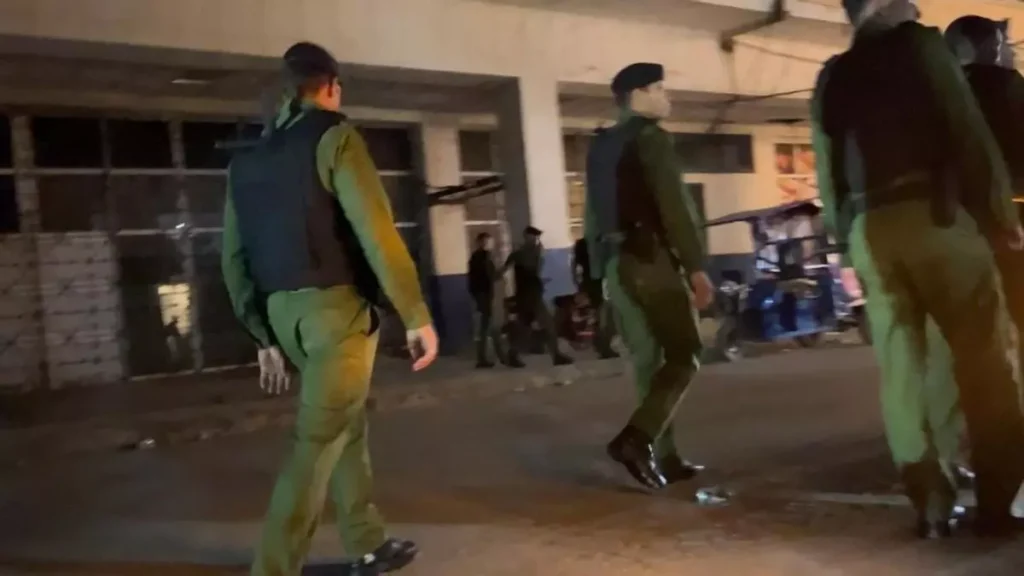
14ymedio, Havana, Diego Hernández, 22 June 2026 / The weekend has given no respite to the Havana municipality of Regla. Hours of heat, lack of water and absence of electricity have been piling up, made worse, perhaps, by a transformer breakdown on Sunday. Or perhaps not, since the day before, pots and pans were banging in protest again across the area in broad daylight after 30 consecutive hours without power. That movement is under the microscope. The authorities are doing everything in their power to prevent a new 11J whose fifth anniversary is fast approaching. That explains the reinforced military and police presence right in the heart of the capital.
“The guards were patrolling up and down the busiest spots, and especially in front of the People’s Power offices. You saw them on every corner. They were going past the cafeterias and bars on Calle 24 de Febrero and just staring at you. They’ve been at it for about three days now,” a resident of the area tells 14ymedio as an abnormal presence of olive green is visible in the streets. These images were taken by this newspaper on Saturday night through to Sunday, though they could not be sent to the editorial office until the following day, as the lack of power has kept communications at a bare minimum for many weeks now.
Protests in Regla have been recurring in recent days. On Thursday, around thirty residents demonstrated outside the Communist Party headquarters, and the following day they overturned rubbish bins and set them alight.
The regime’s fear of an explosion is plain to see. The conditions are ripe and the police presence is multiplying as a constant reminder of what can happen to anyone who protests. What happened this Sunday in El Vedado is another example. At least four patrol cars and several police motorcycles gathered in front of the Malecon, where a handful of young people had gone to take a dip. Images taken from the Giron building have gone viral, and although several people have welcomed the idea of officers removing people continue reading
“Once again the police are acting as a repressive instrument against kids who have no water, no electricity, and probably no food in their homes. They weren’t doing any harm to anyone – they were simply swimming at the Malecon. For this there’s fuel. The people against the people,” said a witness who reported that at least one person was detained over the incident.
“If they saved all the fuel burned daily on police deployments, we wouldn’t have so many electricity problems,” wrote one social media user. “Yes, because the deployment is across all of Cuba, not just Havana,” they added.
That was not an idle observation. On Friday, Cuban President Miguel Diaz-Canel paid a visit to the very same area in his capacity as president of the National Defence Council. “The Defence Zone must be the Party and the Government of every community, both in times of peace and in times of war – that is what the complex situation Cuba is living through demands,” said the leader, who made reference to the high population density of the Carmelo neighbourhood in El Vedado.
On Friday, Miguel Diaz-Canel visited the area in his capacity as president of the National Defence Council
Diaz-Canel spoke of periodic military exercises that must be carried out, while highlighting defence plans including the protection of vulnerable people and “citizens’ prior knowledge of shelters to ensure a smooth evacuation.” Jorge Luis Aneiros Alonso, president of that defence zone, said it is important for citizens to know “in the event of an aggression against the country, where they can go to be better protected. The first thing is to identify and verify the locations available to us in the zone that offer safety… making use, above all, of basements, semi-basements and certain tunnels,” he explained.
The sight of uniformed personnel, however, is not reassuring to a population focused primarily on carrying out the most basic tasks of survival – eating, drinking, sleeping – in the midst of unbearable blackouts. On Sunday, the state electricity company Union Electrica dedicated its social media accounts to paying tribute to the recently deceased commander Ramiro Valde’s Menendez through numerous messages in his honour, including one praising him for leading “the Government programme, together with the country’s highest authorities, for the recovery of the National Electricity System and actions related to the energy transition.” “RIP, but I want to talk about something else,” responded users exhausted by hours without power and the company’s failure to provide any answers.
In the early hours of this Monday, the Antonio Guiteras thermoelectric plant in Matanzas – Cuba’s largest – began restarting after its most recent breakdown, which took it offline for the fifteenth time this year. But not even that gives anyone hope any more. With it or without it, a deficit of 2,000 megawatts has become virtually permanent on the Island, and the regime is mobilising its control apparatus to ensure that no new mass protest like the one five years ago erupts – one that would first trigger repression on its part and, ultimately, a possible response from the United States.
Translated by GH.
______________________
COLLABORATE WITH OUR WORK: The 14ymedio team is committed to practicing serious journalism that reflects Cuba’s reality in all its depth. Thank you for joining us on this long journey. We invite you to continue supporting us by becoming a member of 14ymedio now. Together we can continue transforming journalism in Cuba.
Father Alberto Reyes points out that “the people want and expect” international intervention. Many Cubans say they “prefer a horrific end to endless horror.”
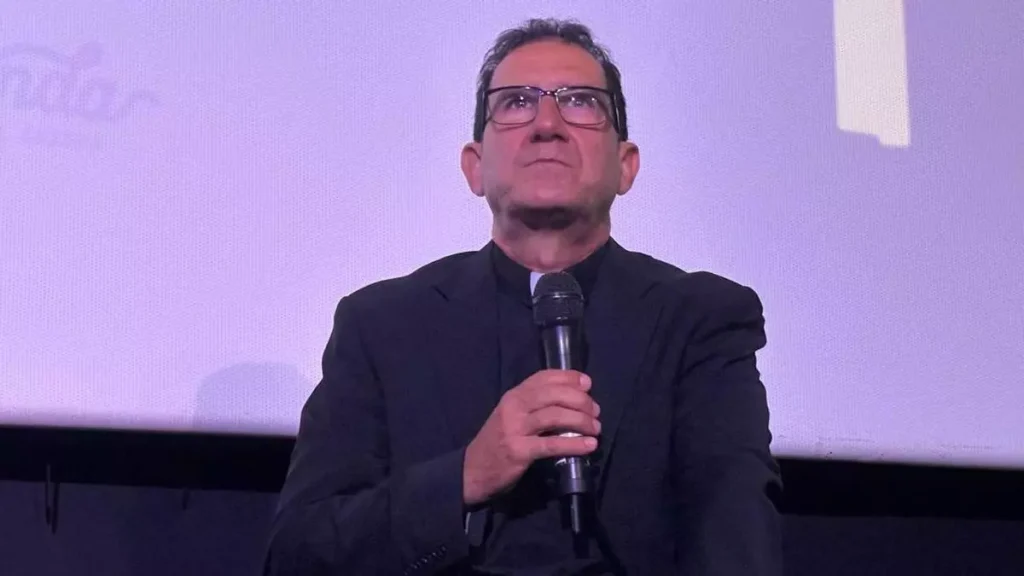
14ymedio, Dayana Prieto, Madrid, May 23, 2026 / “Cuba is not that happy, Caribbean, beautiful paradise of propaganda.” The phrase, uttered by Cuban priest Alberto Reyes before a packed auditorium in Madrid this Friday, summed up the sense of despair felt by a large part of Cuban society. Amid applause, laughter, and tears, the audience experienced the bitter realization of a country where, according to the priest from Camagüey, “life is unlivable” and “misery is insurmountable.”
The Palacio de la Prensa in Madrid hosted the presentation of the documentary Cuba’s Eternal Night on May 22nd. The film is by British-American filmmaker, journalist, and human rights advocate Jordan Allott, founder of In Altum Productions and senior advisor to the organization In Defense of Christians. The screening of the film—whose title is inspired by Oswaldo Payá’s famous quote, “The night will not be eternal”—was followed by a discussion of more than two hours with Reyes, one of the most critical Catholic voices in Cuba.
🇨🇺 “Life in Cuba is unlivable”: Father Alberto Reyes’ testimony shakes Madrid / 14ymedio
The event was part of the Fourth Wall project, organized by “It’s Time to Think”, also known as “the thought movement.” The hall, with a capacity of about 200 people, was completely filled with Cubans, Spaniards, and people from various other countries. Before it began, the priest personally greeted the attendees at the entrance, in a gesture that combined pastoral warmth and a sense of community.
One of the most harrowing stories is that of Emilio, a father of three who participated in the La Güinera protests.
Cuba’s Eternal Night delves into the aftermath of 11 July 2021, when thousands of Cubans took to the streets chanting “freedom.” The documentary follows several families marked by repression, exile, surveillance, and imprisonment. In a video submitted for the presentation, Allott explained that he met Reyes in Mexico and, from that moment on, knew that his testimony had to be included in the film.
Among the stories collected is that of Ariadna, a protester on July 11th and mother of two girls. After the protests, she had to leave the island after authorities threatened to imprison her or harm one of her daughters if she continue reading
Also featured is Camila Acosta, a journalist for Cubanet and contributor to the Spanish newspaper ABC, arrested on July 12, 2021, and still subjected to surveillance and persecution by State Security in Cuba. And Raúl appears, the son of an evangelical pastor, who participated alongside his father in the demonstrations and is presented as a young man who believed, for a few hours, that Cuba could become free.
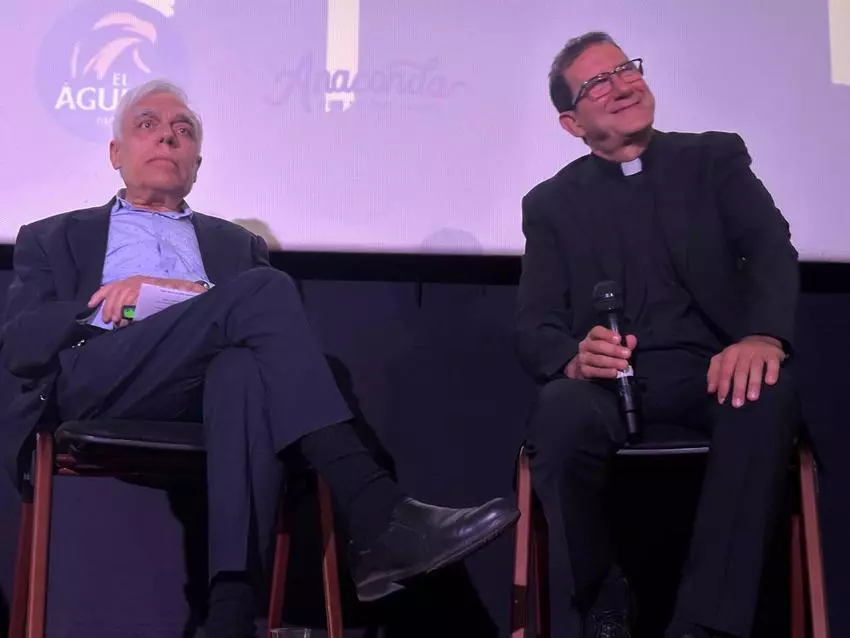
But one of the most harrowing stories is that of Emilio, a father of three who participated in the protests in La Güinera—on the outskirts of Havana—one of the neighborhoods hardest hit after July 11. His daughter was the one who came to the aid of Diubis Laurencio, shot in the back by the police. Then came the punishment. Emilio’s three children were sentenced to ten years in prison.
Since then, that father’s life has become a pilgrimage through prisons, scarcity, and exhaustion. He must find food in a country where everything is in short supply, pack bags, scrape together money for transportation, and travel from one end of the country to the other to visit his children. One daughter is incarcerated in a women’s prison, one of his sons is in a juvenile detention center, and another is in a men’s prison. The sentence, in practice, didn’t fall only on them. It also fell on the father, who grows old standing in lines, traveling, carrying packages, and trying to support three lives unjustly imprisoned.
The figure of Alberto Reyes plays a central role in the film. The images show him in his pastoral work in the province of Camagüey, in remote and hard-to-reach villages, delivering medicine and humanitarian aid to communities in need, but also denouncing human rights violations. In Madrid, the priest once again dismantled one of the regime’s favorite arguments: the constant justification of the disaster by blaming “the blockade.”
“Something in Jonathan Muir has already died. Something of his innocence, of his childhood, has already died, and no one has been able to do anything about it.”
“Cuba has very effectively exploited the technique of the external enemy,” he stated. “In Cuba we say this phrase: if Yankee imperialism hadn’t existed, Fidel would have invented it.” For Reyes, the embargo—“blockade, embargo, whatever we want to call it”—functions as “the easy excuse to justify the unjustifiable.”
The priest maintained that Cuba trades with numerous countries and that the United States itself sells products to the island, on the condition that the government pays in cash. “The chicken consumed in Cuba comes from the United States,” he noted. “So, in reality, the embargo is a justification.”
The conversation turned to the possibility of a U.S. intervention. Reyes didn’t sugarcoat what, according to him, is being said on the street. “What does the average Cuban say? They want it and they’re waiting for it. That’s the reality of my people.” To explain, he used a simple image: if an eight-year-old is bullied by another child of the same age, they can stand up to them; but if the aggressor is a 16-year-old, it takes “a higher power” to stop them.
“We prefer a gruesome end to a horror without end.”
“There is no rule of law in Cuba,” he said. “Civil society is extremely vulnerable.” He then mentioned the case of Jonathan Muir, a 16-year-old who went out with his father to demand freedom. He is imprisoned, has a health condition, is accused of sabotage, and faces an eight-year sentence. “He was beaten the other day,” Reyes reported. “I think he’s a broken child. He’ll get out of prison, he’ll get through this, but something inside Jonathan Muir has already died. Something of his innocence, of his childhood, has died, and no one has been able to do anything about it.”
That sentence silenced the room. Because Jonathan is not just a court case. He is, above all, a warning. To young people, to parents, to churches, to anyone who thinks that demanding freedom can come without consequences.
As the night drew to a close, there were no easy answers. Nor does the documentary offer them. Cuba’s Eternal Night portrays an island where repression is inherited, imprisonment extends to the family, and exile begins long before the airport. But it also reveals something that the regime has failed to silence: the voice of those who still dare to speak out.
Reyes left the Press Palace in Madrid with several masses scheduled for the weekend in the Spanish capital. Many approached to greet him. Others remained in their seats, some in tears, others in silence. Many were left with the phrase that, according to Reyes, is heard throughout the island: “We prefer a horrific end to a horror without end.”
______________________
COLLABORATE WITH OUR WORK: The 14ymedio team is committed to practicing serious journalism that reflects Cuba’s reality in all its depth. Thank you for joining us on this long journey. We invite you to continue supporting us by becoming a member of 14ymedio now. Together we can continue transforming journalism in Cuba.