With all the problems one has, I prefer the secret police in their “bad guy” mode
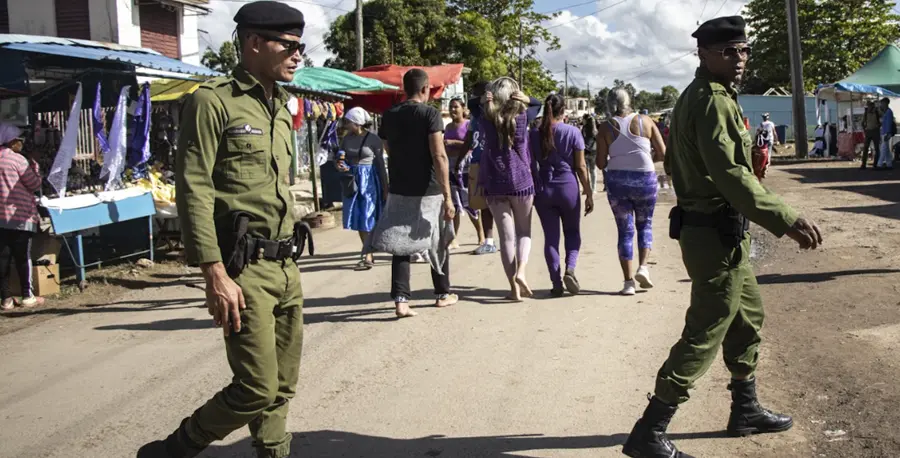
Cuban military personnel (stock photo: CubaNet)
Cubanet, Luis Cino, Havana, 30 April 2026. — A few days ago, an official from State Security showed up at my house and, in no more than 15 minutes that we talked while standing at my door, augured for me–in varying tones–a future even darker than that which his fellow repressors predict when they have this type of conversation with me.
Imprisonment, misery, hardship, death, are what he predicted for me. As if I didn’t already know that I’ve had a little of each of those things for a long time. Even death, because even though I am blessed with good health, the life we Cubans live is no kind of life. As Solzhenitsyn wrote, “If in order to live it is necessary not to live, is it worth it?”
For starters, the Lieutenant warned me that “tolerance is over; with the threats from the yanquis, this is no time for your antics,” and he assured me that “if there is an attack, all counterrevolutionaries will be taken out of circulation.”
The official did not specify if the withdrawal from circulation–or disappearance (as they have called it to various oppositionists)–means that they will kill us. But it doesn’t matter, because if the official (who is convinced that the conflagration will occur within a matter of days) is to be believed, it is likely that before they have time to “pick me up preventively,” I would be one of the first victims of the US missiles.
“You’d better pray that Trump will not decide to attack us,” he told me, “because you, who live less than a couple of kilometers from the Western Army* General Command, won’t stand a chance when the bombs start continue reading
flying.”
After he got apocalyptic, he put his hand on my shoulder and counseled me to “get out of that independent journalism, because with your age and how skinny you are, you wouldn’t last in jail.” Right away he got into good-guy mode, as if he were a friend worrying because I smoke a lot, taking interest in my family problems and my future.
“Why didn’t you stay one of those times when you went to the US? What a mistake you made, what a blunder!” he lamented. “Here you have no future. You have one foot on the street and the other in jail. But, supposing that you don’t end up in jail, can you imagine when you get even older, your mind not working, and not being able to write anymore? What will you live on? At that point you won’t have the strength to work in construction or agriculture. And you don’t have a pension. I see you scavenging the dumpsters for cans and bottles.”
Then suddenly, as if illuminated from heaven, he gave me the solution to my problems: “You need to set up a business, become a self-employed worker.” Then he got indignant and before long called me an ingrate when I told him that, if I were to set up a business, then I really would be vulnerable–not as they officially or euphemistically refer to the disabled–but rather because I would be continuously subjected to the multi-thousand-peso fines imposed by the inspectors, who would sometimes be deployed by the very same State Security as a way to harass me without it seeming for political reasons.
He didn’t finish listening to me. He turned around, got on his Suzuki, cranked it up, and went back the way he came.
Truly, with all the problems one has, I prefer the secret police when they come in their bad-guy mode. When they mix their bullying with friendly advice, they make my head spin.
______________
Translator’s Notes:
*The Western Army of Cuba’s Revolutionary Armed Forces is headquartered in Havana and covers the strategic western end (the region closest to the US) of the Island.
Luis Cino biography: Born Havana, 1956. He worked as an English teacher, in construction, and in agriculture. He began working in independent journalism in 1998. He was a member of the editorial board of the magazine De Cuba and deputy director of Primavera Digital. A regular contributor to CubaNet since 2003, he writes about art, history, politics, and society. He lives in Arroyo Naranjo. He dreams of being able to dedicate himself fully and freely to writing fiction. He is passionate about good books, the sea, jazz, and blues.
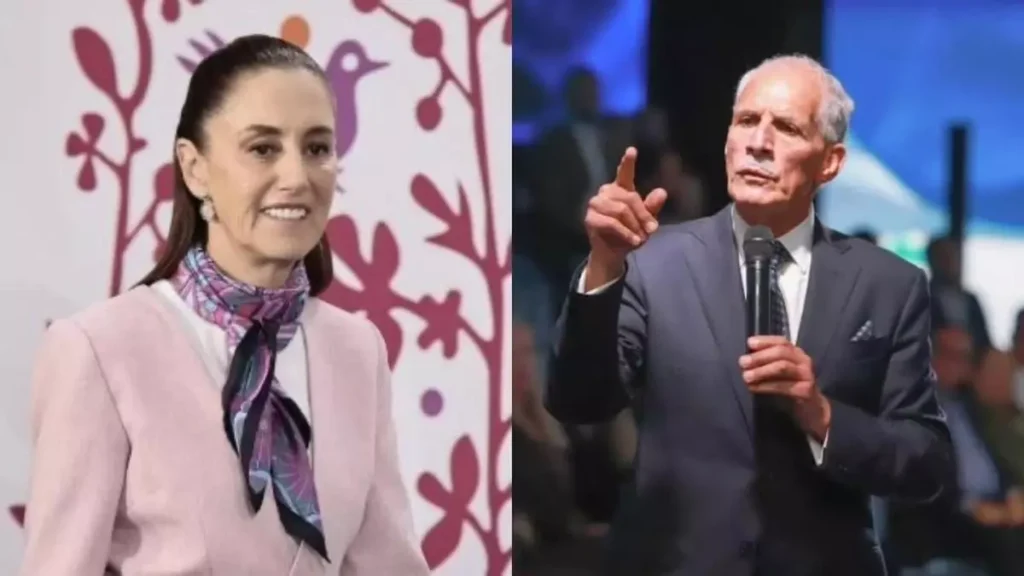
Claudia Sheinbaum resists handing over her corrupt officials to the U.S.; in Central America, critics point to the complicity of Nasry Asfura’s new government with Washington’s interventionism
Sheinbaum and Asfura are at the center of the continent’s attention, for different reasons. / Collage
14ymedio, San Salvador, Federico Hernández Aguilar, May 11, 2026 — Two enormous scandals are currently shaking Hispanic America: the so-called Hondurasgate, in the country located at the very center of the continent, and the formal request by the United States to Mexico to extradite a group of senior officials from the ruling party, Morena, in the state of Sinaloa. Both cases are of enormous importance and could demonstrate the existence of extensive criminal networks and political clientelism in the region.
Perhaps because the media outlets that have reported Hondurasgate are clearly ideological in the way they handle the news — something I allow myself to point out with the same ease with which those same outlets label opposing media as “conservative” or “far-right” — the revelation of compromising audio recordings involving former president Juan Orlando Hernández and current Honduran president Asfura, along with other public figures in that country, has not had in Central America the impact it should have had. And that is a shame.
A media outlet’s political subjectivity is not sufficient reason to ignore everything it says, especially when it presents evidence. Nor should we be naive and think that large media conglomerates tend toward objectivity by definition. What is regrettable is that ideological tug-of-war intervenes so deeply in journalism that colleagues accuse each other of “pushing agendas,” each forgetting that free expression protects their work and that people themselves, according to their own conscience and education, will reward each outlet with their attention and preference.
A media outlet’s political subjectivity is not sufficient reason to ignore everything it says, especially when it presents evidence
In the case of Hondurasgate, for example, the recordings can be freely heard on the very platform that published them. And it is very difficult to deny the credibility of these 37 leaks. The voices of those involved are there, clear, with their unmistakable tones and inflections. In those exchanges, Hernández and Asfura appear willing to facilitate the installation of a network of U.S. and Israeli interventionism in Honduras, something that would explain why Donald Trump pardoned the former and supported the latter in the most recent presidential election.
Certainly, the shameless way in which the President of the United States supported Asfura at the end of last year’s campaign, almost at the same time continue reading
he released Hernández — sentenced to nearly half a century in prison for drug trafficking crimes — would have a real underlying reason: turning Honduras into a regional hub for systematic interventionism, including electronic surveillance, lucrative investments, political interference, and citizen control.
The matter goes much further and would prove several hypotheses. Former president Xiomara Castro, of course, would like us to buy the thesis that fraud was committed against her party, but the truth is that Libre candidate Rixi Moncada never gained traction in the polls and barely managed a distant third place, with less than 20% of the vote. No. What these conversations reveal is that the old Honduran two-party system, made up of the National Party (of Hernández and Asfura) and the Liberal Party (now in opposition), is susceptible to corruption at the highest level, involving electoral authorities, legislators, businessmen, and even gangs of drug traffickers and hitmen.
From this entire plot there would also emerge a supposed warning to Mexico, because the broader plan allegedly includes the creation of digital structures for attacks and smear campaigns against the “progressive” governments of Claudia Sheinbaum in Mexico and Gustavo Petro in Colombia. There is no doubt that Trump does not sympathize with Sheinbaum, but let us be frank: he does not need any sophisticated machinery to undermine her government. She herself seems willing to do that work without her adversaries even asking. To illustrate this, let us look at the clumsy way the president is handling her own domestic scandal.
In force since 1980, the United States and Mexico have an extradition treaty that stipulates the procedures through which criminals will be exchanged between the two nations. Using this historic bilateral agreement, a formal 34-page indictment issued by a Grand Jury in the Southern District of New York and therefore not subject to manipulation by the White House is now asking Mexico for the arrest and extradition of about ten public officials from the state of Sinaloa.
In force since 1980, the United States and Mexico have an extradition treaty that stipulates the procedures through which criminals will be exchanged between the two nations.
Just as in 2025 other alleged perpetrators of crimes related to drug trafficking, bribery, and organized crime — Ismael ‘El Mayo’ Zambada, the Treviño brothers, or Abigael González, to mention a few — were sent through the same process, today the Mexican Attorney General’s Office should proceed with the arrests of those accused without demanding any additional evidence beyond the indictment itself, because the legal cycle of accusation does not require any further element, since the evidence will naturally be presented during the corresponding trials.
But now Claudia Sheinbaum, instead of taking advantage of the opportunity to rid herself of so many discredited figures, has chosen to wrap herself in the Mexican flag, claiming sovereignty, and with a speed worthy of a better cause has backed the Attorney General’s Office over which she does have influence in demanding proof from its northern neighbor against the officials from her party who are implicated. The scandal threatens to grow and become the Watergate of Mexico’s ruling establishment.
As things appear to be unfolding, simple moral principles may end up being more decisive than stale ideologies. “Left” and “right” are merely labels, wrappers, shells… The old misery of human nature prevails.
Translated by Regina Anavy
______________________
COLLABORATE WITH OUR WORK: The 14ymedio team is committed to practicing serious journalism that reflects Cuba’s reality in all its depth. Thank you for joining us on this long journey. We invite you to continue supporting us by becoming a member of 14ymedio now. Together we can continue transforming journalism in Cuba.
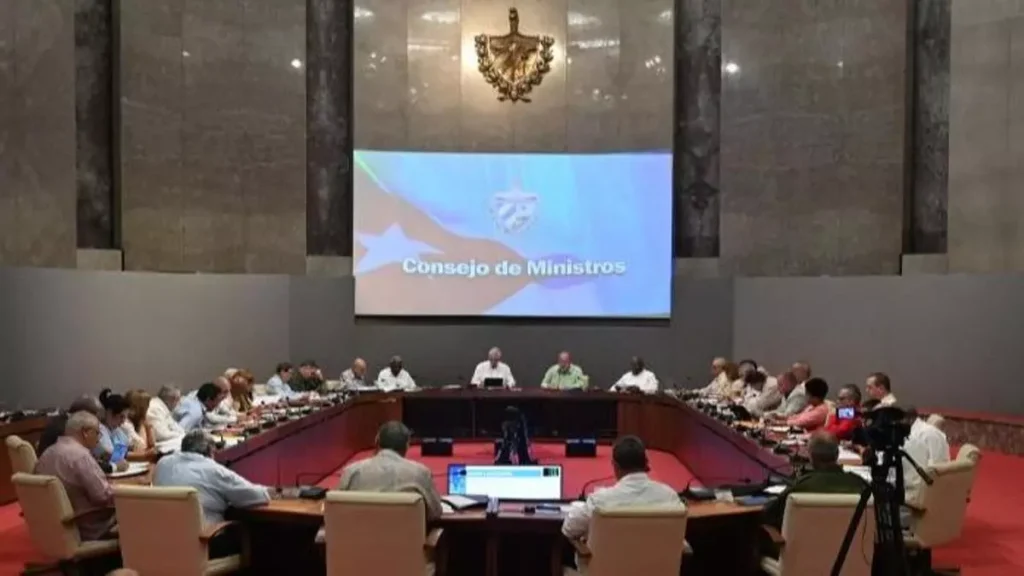
Cuba’s Council of Ministers proposes reducing the number of state entities from 27 to 21, although it has not yet revealed which ones will disappear or be merged.
The announced reduction may be a sign of belated rationality or merely a cosmetic operation. / Granma
14ymedio, Havana, Alejandro de Cañas, 10 May 2026 / The Cuban government has decided to downsize its own machinery, though instead of a chainsaw it is using garden shears. The Council of Ministers approved a draft bill to reduce the number of agencies in the Central State Administration from 27 to 21, a pruning of six entities in a country where bureaucracy has grown for decades at the same pace as inefficiency. The measure is not yet in effect; it must still be approved by the National Assembly, but it already marks the first concrete step in a restructuring announced weeks ago.
The news was published on May 9 in Granma, the official newspaper of the Communist Party. The article does not identify which agencies will disappear, be absorbed, or be merged—a significant omission in a reform presented as a fundamental redesign of the state apparatus.
In presenting the proposal, legal expert Andry Matilla Correa stated that “this is not merely a structural change, but rather a redesign of each of the Bodies of the Central State Administration (OACE).” Prime Minister Manuel Marrero Cruz was even more direct: “A small country, a country with such a complex situation, cannot have such a large structure, so much bureaucracy, which makes processes inefficient, and therefore requires a different design.”
For a country with fewer than ten million inhabitants, the structure seems bloated even when compared to governments of larger countries.
The decision didn’t come out of nowhere. In April, Miguel Díaz-Canel had already announced that the regime was preparing a “restructuring” of the state apparatus. In an interview with RT, the president stated: “We are also considering a restructuring of the entire state, administrative, and business apparatus; that is, reducing bureaucracy. This isn’t just about the structures themselves, because even a small structure can be bureaucratic. We have to work in both directions.” He also announced the goal of achieving “fewer continue reading
ministries and fewer intermediate structures between the territories and the country.”
That April announcement also had a regulatory precedent. On the 9th of that month, Decree 127 on budgeted institutions was published, officially presented as a regulation intended to “resize the Central State Administration,” improve its structures, and reduce the administrative burden on the public budget. In other words, before the proposed figure of 21 agencies was known, the Government had already begun to prepare the legal and rhetorical groundwork for streamlining its apparatus.
The reform is late, but not for lack of signals. Cuba currently maintains 22 ministries and five non-ministerial agencies within the 27 existing State Administrative Bodies (OACE), according to the institutional list published by the Presidency. For a country with fewer than ten million inhabitants, an impoverished economy, a chronic shortage of foreign currency, and deteriorating public services, the structure seems bloated, even when compared to the governments of larger countries.
If we consider only the number of ministries, Cuba has 22, the same number as Spain and more than Mexico, with 21 state secretariats; Colombia, with 19 ministries; and Argentina, which, after Javier Milei’s “chainsaw” reshuffle, reduced its cabinet to eight ministries. There is no standardized global ranking , because each country classifies its portfolios and agencies differently, but Cuba clearly ranks among the top countries when compared to several leading governments in Latin America.
The big question is which six organs will be affected.
For years, the Cuban regime presented itself as a model of rational planning, but it has maintained a cumbersome, fragmented, and costly state architecture inherited from the former Soviet Union. Even the official press now admits that this structure hinders processes and multiplies bureaucracy. This acknowledgment comes as the Cuban economy is experiencing one of its worst crises in decades, with blackouts, inflation, declining productivity, and a state increasingly unable to guarantee basic necessities.
The great unknown is which six agencies will be affected. Officially, this hasn’t been announced yet. Granma only reported the total reduction from 27 to 21. Logically, the possible candidates include the Institute of Information and Social Communication, which could be integrated into the Ministry of Communications; the National Institute of Territorial Planning and Urbanism, which could be absorbed by the Ministry of Construction; and the National Institute of Hydraulic Resources, which could be transferred to the Ministry of Science, Technology, and Environment.
Among the ministries, the mergers that would make the most administrative sense would be Education with Higher Education, Industries with the Food Industry, or, more debatable, Domestic Trade with Foreign Trade and Investment. For now, all of this remains in the realm of conjecture, not a published decision.
The announced reduction may be a sign of belated rationality or merely a cosmetic operation. The decisive factor will not be how many titles disappear from the organizational charts, but how many procedures, layers of command, and spaces of irresponsibility and corruption disappear with them.
______________________
COLLABORATE WITH OUR WORK: The 14ymedio team is committed to practicing serious journalism that reflects Cuba’s reality in all its depth. Thank you for joining us on this long journey. We invite you to continue supporting us by becoming a member of 14ymedio now. Together we can continue transforming journalism in Cuba.
“This work had such great significance in Cuba in 2009, and unfortunately, the conditions of censorship are repeated throughout time and the world.”
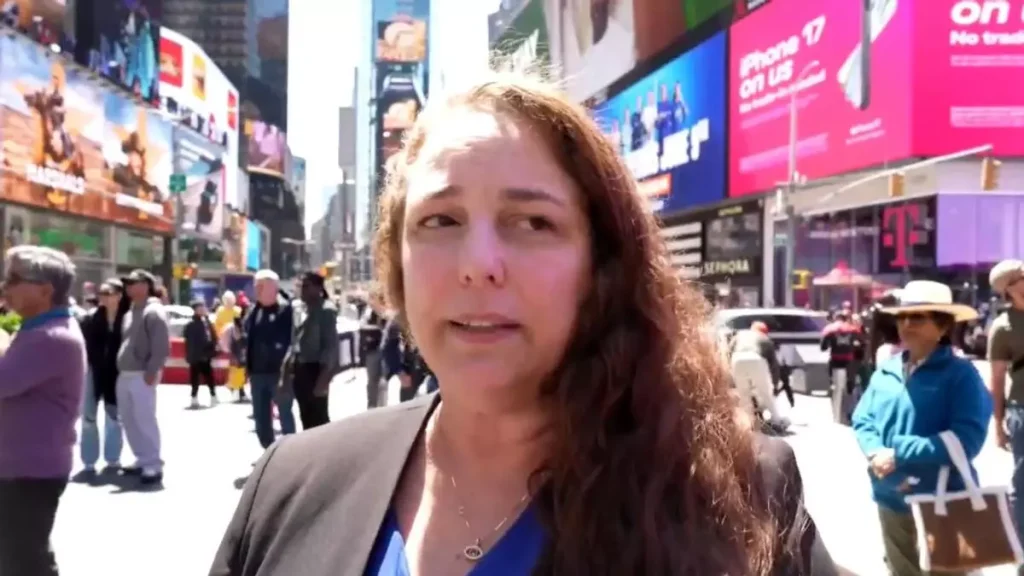
“We are in a time of rising autocracies and dictatorships worldwide,” the artist stated. / EFE / Screenshot
EFE/Nora Quintanilla (via 14ymedio), New York, May 2, 2026 / Above the hustle and bustle of Times Square, words against authoritarianism, labor exploitation and the mistreatment of immigrants were heard this Friday from an ephemeral stage, the work of Cuban artist Tania Bruguera, who warned EFE of a “freedom of expression in danger.”
Bruguera (b. Havana, 1968) performed at the most famous intersection in the United States a variation of her performance Tatlin’s Whisper #6, in which she offers a platform and a microphone to anyone, on the occasion of May 1st, International Workers’ Day, at a time that worries her.
“This work had such great significance in Cuba in 2009, and unfortunately the conditions of censorship are repeated throughout time and the world,” explained the artist, whose work caused great controversy at the Havana Biennial, where blogger Yoani Sánchez, among other participants, demanded freedom and democracy.
“We are in a time of the rise of autocracies and dictatorships in the world, not only in the United States, where freedom of expression is in danger,” said Bruguera, who observed a rather subdued audience and closed the event by exclaiming “Down with the dictatorship in Cuba.”
Each participant who dared to take the stage received a white dove and could speak for one minute, flanked by two imposing security agents, dressed in black and wearing sunglasses, who, when the time was up, placed their hand on their shoulder in a threatening manner.
Bruguera said she heard someone censoring themselves because the event would be broadcast online.
Throughout the hour-long performance, there were silences in which no one took the microphone, but most respected the times and ways to make complaints of all kinds, although one man went up twice and continued speaking, defiantly in front of his guards, about “the power of the people.”
Another man took the opportunity to promote a Spanish-language comedy event at the World Cup, another sang ” We Shall Overcome” with a guitar, another lamented the persecution of the LGBT community and proclaimed “Free Palestine,” and a woman defended the labor movement and human empathy.
Bruguera said she heard someone self-censor because the event would be broadcast online, and acknowledged that people are “very aware that the internet is a storehouse that always exists and that they can twist things whenever they want,” but reaffirmed the power of speaking out.
She compared the situation to that of Cuba, where recently “a person who wasn’t even a dissident, just a normal person who went out with a sign that said ‘freedom,’ was imprisoned,” and stressed that “art helps to prevent, to make us think before things have happened and become final.”
Sin pelos en la lengua — without mincing words — this artist, famous for her social interventions and as a professor and head of media and performance at Harvard University, also reflected on what it is like to be part of the Cuban community in exile, emphasizing that “the regime is not the people.”
For Bruguera, Cuba is in a “tense moment where people have placed a lot of hope,” because, she maintained, Cuban civil society “is more than prepared to lead that country.”
“It is a distinction that must be made in order to be fair to the entire struggle and the voice of a people who are not heard,” she said, pointing to the protests on social media and in the streets against the propaganda, with mothers who face “empty refrigerators” and remembering their “minor children imprisoned.”
For Bruguera, Cuba is in a “tense moment where people have placed a lot of hope,” because, she argued, Cuban civil society “is more than prepared to lead that country” and make changes, including the thousands of qualified Cubans and workers who are around the world.
“They can return to Cuba and build a Cuba that will definitely be better, because anything they do will be better than the garbage they are doing now, the Cuban regime, which is starving the people to death,” she added.
The initiative was coordinated by Times Square Arts, which manages public art in the square, and Fall of Freedom, an entity that has organized some 300 cultural activities, from museums to theaters and concert halls, to “unite in defiance of the authoritarian forces that are sweeping” the US.
The writer Laura Raicovich, one of the creators of Fall of Freedom, considered Bruguera’s work important today, when “people in the US and around the world are looking for those in power to understand that that power really resides in us, the workers, the ordinary people who do ordinary things.”
______________________
COLLABORATE WITH OUR WORK: The 14ymedio team is committed to practicing serious journalism that reflects Cuba’s reality in all its depth. Thank you for joining us on this long journey. We invite you to continue supporting us by becoming a member of 14ymedio now. Together we can continue transforming journalism in Cuba.
April 27 marks the 55th anniversary of the event, which was a true watershed moment, a turning point, both inside and outside the Island.
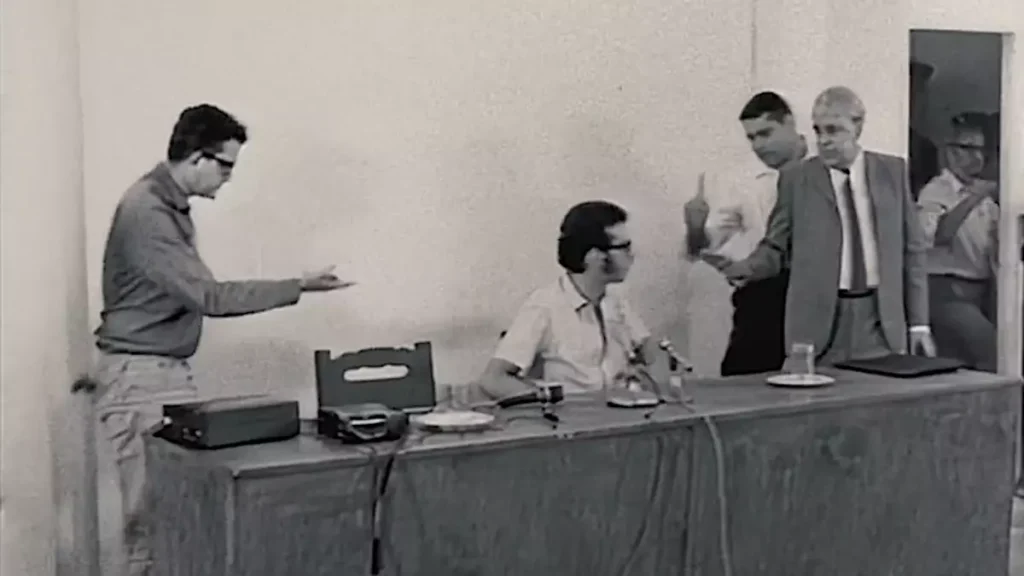
Padilla gives up his seat to State Security Lieutenant Armando Quesada, who “corrects” Norberto Fuentes’s statement. In the background, José Antonio Portuondo. / Screenshot
14ymedio, San Salvador, Federico Hernández Aguilar, 23 April 2026 — When night falls on April 27, it will mark 55 years since the most despicable event that Castro’s totalitarian regime carried out on Cuban art and culture: the sadly famous “self-criticism” of the poet Heberto Padilla (1932-2000) before a group of prominent members of the Union of Writers and Artists of Cuba (Uneac), after spending 37 days in prison accused of holding critical views against the Revolution. [Transcript, in English, here.]
The Padilla Case (as it has been known ever since) was a true watershed moment, a breaking point, both on and off the island. Authors who until then had remained steadfast in their support of the revolutionary process suddenly and painfully understood that Castroism was no better than Stalinism in its tolerance of intelligent dissent and creative disapproval. Even those who remained loyal to Caribbean socialism, whether out of emotion or pragmatism, began to question how far Cuba had gone in imposing limits on art and culture within its supposedly democratic system.
And it is not as if there had been a lack of warnings, of course. Besides the infamous speech of June 1961 in which Fidel Castro made clear how he conceived the “responsibility” of artists and intellectuals within the framework of the historical project he led —“…Within the Revolution, everything; against the Revolution, nothing”— it is sometimes forgotten that quite some time before, in October 1959, the Film Study and Classification Commission had been formed, attached to the Cuban Institute of Cinematographic Art and Industry (ICAIC), an entity that began to censor films considered “problematic” because of their content.
In October 1959, the Film Study and Classification Commission was formed, attached to the Cuban Institute of Cinematographic Art and Industry (ICAIC), an entity that began to censor films considered “problematic” due to their content.
Works such as Alberto Roldán’s Una vez en el puerto (Once in the Port) and Fausto Canel’s Un poco más de azul (A Little More Blue ) were banned from distribution on the island in 1964. Roldán’s film was banned because it realistically documented life in Havana’s seaside neighborhoods, while Canel’s film addressed the ever-sensitive topic of exile. Both filmmakers, of course, suffered the consequences of their “reactionary” actions: they were expelled from ICAIC (the Cuban Institute of Cinematographic Art and Industry), which they had helped found, their freedom of expression was restricted, and they ultimately left Cuba. (Roldán died in Miami in 2014 at the age of 81, and Canel lived in France and Spain before settling in the United States, where he currently resides.)
The hardest blow to creative freedom, however, was the one suffered in 1961 by the documentary PM by Orlando Jiménez Leal and Sabá Cabrera Infante, banned and confiscated by the authorities, who accused it of offering “a biased portrayal of Havana’s nightlife” because, “far from giving the viewer a correct vision of the existence of the Cuban people in this revolutionary stage, it impoverished, distorted, and misrepresented it…” It was precisely in the wake of the scandal caused by the condemnation of this short film, barely 14 minutes long, that Fidel Castro himself brandished his fearsome “ Words to the Intellectuals.” continue reading
The regime’s terrifying “all or nothing” approach found its next victim in Heberto Padilla, whose excellent poetry collection, Fuera del juego (Out of the Game), had been recognized by the UNEAC (somewhat reluctantly) with the 1968 National Prize. Despite having received the award by unanimous decision of the jury, the organization made a strange “statement” indicating that the book would be published—along with Antón Arrufat’s in the theater category—with a note “expressing its disagreement” because they considered them “ideologically opposed to our revolution (sic).”
Three years later, in January 1971, Padilla dared to give a reading at the UNEAC (National Union of Writers and Artists of Cuba) of his new book, Provocaciones (Provocations ). And indeed, his attitude was considered provocative. A few weeks later, on March 20, Heberto and his wife, the writer Belkis Cuza Malé, were arrested by State Security agents and taken to the Villa Marista prison. The charge against them was “subversive activities against the government.”
“Did you think you were untouchable, the rebel artist…?” Padilla recalled the henchmen saying to him in prison. “Did you think we were going to forgive all your counterrevolutionary shenanigans?”
“Did you think you were untouchable, the rebel artist…?” Padilla recalled the henchmen saying to him in prison. “Did you think we were going to forgive all your counterrevolutionary shenanigans?” After the brutal interrogation, during which the poet was beaten, he awoke in a military hospital where he received an unexpected visit from Fidel himself. “Yes,” Heberto says in Bad Memory (1989), “we had time to talk, or for him to talk and expound to his heart’s content, and shit on all the literature in the world.”
The writer was then “suggested” that he draft a lengthy text listing his “errors,” a document he recited from memory 55 years ago at that private meeting at the UNEAC (National Union of Writers and Artists of Cuba). The recorded material of this “self-criticism” finally came to light in 2022, when Cuban filmmaker Pavel Giroud rescued it and used it to create an extraordinary documentary titled The Padilla Case, which was nominated for several prestigious film awards.
At this time, the three and a half hours of the writer’s confession can be viewed on YouTube, something I would recommend to anyone who wants to delve deeper into the censorship processes that Castroism instituted to turn art into propaganda and writers into obligated spokespeople for a revolution that ended up devouring their illusions.
______________________
COLLABORATE WITH OUR WORK: The 14ymedio team is committed to practicing serious journalism that reflects Cuba’s reality in all its depth. Thank you for joining us on this long journey. We invite you to continue supporting us by becoming a member of 14ymedio now. Together we can continue transforming journalism in Cuba.
Jorge Gómez / Moncada group (Photo: Prensa Latina / blogspot)
Cubanet, Luis Cino, Havana, 24 March 2026 — There is much talk about Jorge Gómez Barranco, leader of the band Grupo Moncada, who died on March 23—and it’s almost always good talk, because there is no doubt that Gómez was a good person and much loved by many in the cultural sphere, particularly music and television.
What is not talked about (it seems that few remember or prefer not to remember) is how in 1971, when Gómez, a young philosophy professor at the time, fell out of favor with the regime because of his connection to the magazine, Pensamiento Crítico (“Critical Thinking”).
This publication, which brought together left-wing intellectuals—veritable human think tanks but who differed from the Soviet line, such as Aurelio Alonso and Fernando Martínez Heredia—was shut down shortly after that infamous and misnamed “Congress of Education and Culture” that ushered in, on orders from Raúl Castro, the Five Grey Years. Castro, then-Minister of the Revolutionary Armed Forces, labeled the periodical, along with the University of Havana philosophy department, “a bastion of revisionists and counterrevolutionaries.” All because they dared to dabble in the ideas of Marcuse, Gramsci, Sartre—and, perhaps, even Bakunin and Trotsky—precisely at a time when the Castro regime, still reeling from the failure of the Ten Million Ton Sugar Harvest, didn’t want to upset the Kremlin, to whose chariot they had hitched themselves so that the Soviets could pull them out of the crisis.
Jorge Gómez, like most of his colleagues at Critical Thinking and in the philosophy faculty, preferred to forget that time of closed-mindedness and censorship of intellectuals, to downplay its importance. He even ignored the controversy that led a recalcitrant commissioner to accuse him, playing on his second surname*, of wanting to send Marxism tumbling off a cliff.
After all, the end of his foray into philosophy allowed Jorge Gómez, who had learned to play the piano as a child, to return to music, his great passion. In 1972, along with several university students, he formed a group that continue reading
combined Cuban son with Andean music, and which he named Moncada in honor of his uncle, the poet Raúl Gómez García, who died in the attack on the Santiago barracks on July 26, 1953.
Years later, after replacing the influence of Quilapayún and Inti Illimani with more pop and catchy tunes—and the overly serious Alberto Falla and Manuel Calviño, first with Carlos Enríquez and then with other long-haired, handsome and younger singers—Moncada managed to become popular in the 1980s and mainly during the years of the Special Period, when his concerts packed the steps of the University of Havana.
Music lovers, and especially rock fans, have Jorge Gómez to thank for his 80s television program, Perspectiva, where we had the opportunity—unusual at that time when prohibitions on rock music remained staunchly in place—to see groups like Pink Floyd, Deep Purple, etc. on the small screen.
Ten years ago, on August 30, 2016, when singer-songwriter Amaury Pérez interviewed Jorge Gómez on his TV show, Con dos que se quieran (“With Two Who Love Each Other”)—a kind of confessional for the singer-songwriter’s big and little friends—Pérez asked Gómez how the philosophy department came to be terminated and why Critical Thinking magazine was shut down.
When asked that question, Jorge Gómez dodged it, sidestepping the issue. He said the magazine “had been gradually losing circulation,” excusing this development by saying that “these things happen in revolutions.” It would have been too presumptuous for the obsequious Jorge Gómez to say more and thus jeopardize his moment in the spotlight as a successful musician within the mainstream culture.
Besides, I would think, why would he look for trouble by stirring up the past? What for? After all, most guests on With two who love each other—when asked this type of confrontational question by Amaury Pérez—far from complaining about grievances and reprisals, evade the issue, choose forgiveness, and almost always end up proclaiming their devotion “to Fidel and the Revolution.”
Jorge Gómez preferred to forget ‘the mistakes of the past,’ to turn the page, as did some of his Critical Thinking colleagues, who after being rehabilitated, became tin-pot repairmen dedicated to reinventing socialism.
* A “barranco” is a narrow, winding river gorge.
Translated by: Alicia Barraqué Ellison
Author’s biography:
Luis Cino. Born Havana, 1956. He worked as an English teacher, in construction, and in agriculture. He began working in independent journalism in 1998. He was a member of the editorial board of the magazine De Cuba and deputy director of Primavera Digital. A regular contributor to CubaNet since 2003, he writes about art, history, politics, and society. He lives in Arroyo Naranjo. He dreams of being able to dedicate himself fully and freely to writing fiction. He is passionate about good books, the sea, jazz, and blues.
With a monthly pension of 3,000 pesos, a grandfather in charge of his grandson, because the parents left the country, cannot guarantee a child’s food.
The responsibility of feeding students during the school day falls exclusively on families. / 14ymedio 14ymedio
14ymedio, Guantánamo, Dayamí Rojas, March 28, 2026 – The morning bustle gathers every day in front of a primary school in the Caribe neighborhood, in the city of Guantánamo. At that hour, children arrive with their backpacks slung over their shoulders and a small additional bundle in their hands: their snack. Some bring a piece of bread, others a small bag with cookies, and a few barely carry a bottle with an instant drink. Behind each of those portions there is a story of domestic sacrifice and inflation.
In most schools in Guantánamo there has not been a school snack distributed by the educational center itself for decades. That practice, which in other times included a bottle of soda or a portion of sweets, disappeared during the years of economic crisis and was never restored. Since then, the responsibility of feeding students during the school day has fallen exclusively on families, who must figure out each day what to put in the child’s backpack.
But in recent months, the rise in the cost of basic products has turned that daily task into a real obstacle course. The increase in the price of bread, cookies, and all flour-based products has driven up snack costs, while inflation and the devaluation of the Cuban peso continue to erode the purchasing power of salaries and pensions.
Private vendors offer baguette-style bread early in the morning. The loaves are displayed in plastic boxes or improvised baskets, and they disappear quickly. The price changes depending on availability and demand pressure. What used to cost a few dozen pesos has now become a significant expense for any family with school-age children.
“If you add lunch and dinner, each child needs between 300 and 400 pesos daily so that, at least, they do not go hungry” / 14ymedio
“Ensuring breakfast and a snack for a child today in Guantánamo costs, at a minimum, between 100 and 150 pesos daily,” a father, who also works as a teacher, explains to 14ymedio. “If you add lunch and dinner, each child needs between 300 and 400 pesos daily so that, at least, they do not go hungry.” continue reading
His words summarize a reality that is repeated in many households in the province, where family incomes do not grow at the same rate as prices. In a context marked by inflation and shortages, every purchasing decision
becomes a complex calculation. Parents and grandparents compare prices among different vendors, reduce portions, or substitute more expensive products with lower-quality ones.
On a corner in the San Justo neighborhood, Saúl waits his turn in front of a private sales point. He holds a crumpled bill in his hand and keeps his eyes fixed on the tray where the bread is piled up. He has two children in primary school and every morning he must go out early to secure the day’s snack.
“A baguette costs you 250 pesos, if you can find it at that price, because in my neighborhood they already sell them for 350. Soft drinks have also gone up, everything is very expensive,” the man from Guantánamo tells this newspaper.
What used to be an occasional purchase now represents an expense that many families cannot afford frequently
The increase in prices is not limited to bread. Cookies, sweets, and juices have followed the same trend, driven by the shortage of flour, rising sugar prices, and the higher cost of the inputs needed for their production. Many of these products are sold on the informal market or in small private businesses, where prices constantly adjust depending on the availability of goods.
Around several schools, street vendors have become a common presence. They offer small doughnuts, bread with cheese, and sweet cookies, aimed specifically at students. However, what used to be an occasional purchase now represents an expense that many families cannot afford frequently.
The situation becomes even more difficult in households where children are left in the care of grandparents, an increasingly common reality in Guantánamo due to the parents’ emigration. In those cases, an elderly person’s pension must cover all the child’s expenses, including daily food.
“A grandfather who is in charge of his grandson, because the parents left the country, and who has a monthly pension of 3,000 pesos cannot guarantee a snack every day for that child,” explains a resident of Guantánamo living in the city center.
Insufficient nutrition not only affects children’s physical well-being, but also their academic performance
The figure is revealing when compared with current food prices. With a pension that barely covers basic household expenses, allocating daily money for a school snack becomes an almost impossible challenge. In some cases, children attend classes with a minimal snack or nothing to eat, making it difficult for them to last until the end of the school day.
Inside classrooms, teachers closely observe this reality. Some students share their snacks with classmates who have nothing, while others try to stretch time so that hunger does not interfere with concentration. Insufficient nutrition not only affects children’s physical well-being, but also their academic performance.
In a school in the Los Maceo neighborhood, a teacher comments that it is increasingly common to see students arriving without snacks or with very small portions. The scene repeats itself during recess, when the yard fills with children who open their backpacks and compare what each was able to bring that day. The next day, the family will have to start the same battle again: finding and paying for something the student can eat mid-morning, in the middle of their classes.
Guantánamo: Cuban families and the daily challenge of school snacks
Translated by Regina Anavy
______________________
COLLABORATE WITH OUR WORK: The 14ymedio team is committed to practicing serious journalism that reflects Cuba’s reality in all its depth. Thank you for joining us on this long journey. We invite you to continue supporting us by becoming a member of 14ymedio now. Together we can continue transforming journalism in Cuba.
Between the rising price of horse feed and fines of up to 16,000 pesos, drivers are barely surviving.Cases have increased by more than 23% this week, although there is optimism for December. / Archive/ 14ymedio
14ymedio, Dayami Rojas, Guantánamo, 8 March 2026 — In Guantánamo, the sound of hooves on asphalt has once again become part of the everyday landscape. Where Lada and Moskvich engines or small private trucks once roared, now horse-drawn carriages slowly make their way, carrying passengers, sacks of food, water tanks, or any merchandise that needs to be moved around the city. The fuel crisis has brought these animal-drawn vehicles back into the spotlight, but the lives of those who drive them are far from easy.
Mid-morning, on a corner near Martí Park, Rodolfo holds the reins of his horse while waiting for customers in the sun. The animal shakes its head, shooing away flies, and the wooden carriage creaks each time someone climbs onto the running board after asking the fare.
“Before, I charged between 20 and 50 pesos for a short trip, but now I have to ask for more. Otherwise, I can’t afford to keep the horse,” the coachman explained to 14ymedio. The fare increase has led to frequent arguments with passengers. “People complain, and I understand them, but nobody sees what it costs to run this business.”
The scene repeats on several streets throughout the city. At makeshift stops, passengers negotiate the price before getting into the car. A woman with several shopping bags protests when she hears the price the driver is asking to take her to the Caribe neighborhood.
“That’s an abuse, chico. They raise the price every day,” she mutters. But she ends up settling into the back seat because she doesn’t have many alternatives. The buses hardly ever run, and private taxis are paralyzed by the lack of gasoline. In Guantánamo, as in many cities across the country, horse-drawn carriages have gone from being a quaint form of transportation to becoming an essential part of the urban landscape.
However, for the coachmen, the work has become increasingly complicated. Rodolfo lists the problems without letting go of the reins. “Horseshoes are incredibly expensive, feed is almost impossible to find, and you have to go far to find hay,” he says. Feeding the animal can turn into an extra day’s work. Many coachmen head out at dawn to nearby rural areas to cut grass or buy a sack of feed.
“If you don’t eat, you can endure it, but the horse can’t. And if the horse gets sick, the job is over,” he adds. continue reading
Restrictions on driving on certain streets have also reduced opportunities to find customers. In recent months, municipal authorities have limited the routes these vehicles can use, citing concerns for health and public aesthetics.
Feeding the animal can become an extra day of work. / 14ymedio
“They’re making us go around in circles like we’re in a maze,” Rodolfo complains. “There are streets we used to go down that are now prohibited. That means more detours, more fatigue for the horse, and fewer passengers.”
At a nearby stop, another coachman meets him. Leaning against the side of his carriage, he observes the almost nonexistent morning traffic. “What they want is to get us off the streets,” he says bitterly. “But when there’s no gasoline, who’s going to get people around?”
Fines are also part of the routine. Municipal inspectors check documents, authorized routes, and vehicle condition. A violation can cost up to 16,000 Cuban pesos, an amount that many find impossible to pay.
“A fine like that will bankrupt you,” says Rodolfo. “Some people have had to sell things from their homes to pay them.” The fear of theft is another constant worry. Horses have become a coveted target for butchers who slaughter them illegally to sell the meat.
“I sleep here, next to my horses,” Javier, a resident of Guantánamo, explains to this newspaper. He spends his early mornings away from his bed because he fears his animals will be stolen. Vandalism particularly targets those who own cows, pigs, or other animals that could end up being sold on the black market.
Javier usually spends the night in a small, makeshift shed in the yard. “If you leave him alone, he can be stolen. And without a horse, there’s no car or food for the family,” he explains.
Feeding the animal can become an extra day of work. / 14ymedio
Some of his colleagues have already decided to temporarily abandon the trade. The cost of supplies, fines, and traffic restrictions have made the work increasingly less profitable.
“There are coachmen who have stopped operating and are waiting for things to change,” Javier says. “But in the meantime, the city still needs transportation.”
Throughout the day, his carriage travels along dusty avenues, potholed streets, and corners where passengers raise their hands, searching for an empty seat. On each journey, the complaints of the passengers mingle with the worries of the driver.
“We keep people moving,” Rodolfo insists. “But nobody helps us.” The horse snorts as the coachman climbs into the front seat. A couple of passengers approach, asking if he can take them to the hospital. The coachman calculates the price and looks at the animal before answering. Then he gives a small tug on the reins, and the vehicle begins to move slowly down the street.
______________________
COLLABORATE WITH OUR WORK: The 14ymedio team is committed to practicing serious journalism that reflects Cuba’s reality in all its depth. Thank you for joining us on this long journey. We invite you to continue supporting us by becoming a member of 14ymedio now. Together we can continue transforming journalism in Cuba.
The good news for the United States and the world is that democratic institutions will outlive the current president.
Donald Trump, of course, in denouncing the Supreme Court’s decision, has been particularly rude to the two justices he appointed. / EFE
14ymedio, Federico Hernández Aguilar, San Salvador, 27 February 2026 — In April 2025, in this same opinion column, we shared our astonishment at the US president’s threat to impose barriers to free trade on much of the world. Calling it “inexplicable,” we warned that the “reasons” given by the White House to justify its tariff offensive were, in reality, mere excuses, because neither the logic of bravado as a tool of intimidation nor the hypothetical desire to lower interest rates on US debt through recession made sense. The potential benefits of these measures would not outweigh the risks involved.
The three outcomes we predicted came to pass exactly as predicted: increased bilateral trade responses; new alliances centered around development hubs alternative to the United States; and an inflationary wave that has devastated the stability of thousands of American households. Trump’s argument regarding supposed “trade balances” was untenable, aberrant, and illiberal. That is why its effects are hurting the president in the polls and creating unnecessary holes in his country’s image as a reliable partner.
Trump’s argument regarding supposed “trade balances” was untenable, aberrant, and anti-liberal.
However, the icing on the cake was still missing. Was the Supreme Court going to rule against Trump’s economic agenda, overturning his tariff strategy? Because the truth was that no president before him, at least in the last half-century, had gone so far in challenging judicial independence. Just last September, we recalled that the courts were flooded with executive orders and that, of twenty-one cases brought before the Supreme Court, only in three had the Court not ruled in favor of granting the president greater leeway at the expense of the lower court’s decisions.
While none of the above yet constituted a flagrant violation of the Constitution, it was clear that Trump was undermining the system. In his second term, therefore, only the bulwark of the rule of law could prevent him from abusing his power, in the manner of autocrats in South America or sub-Saharan Africa. continue reading
On February 20, finally, with a majority of six to three, the justices of the highest court did their job, reminding Donald Trump that the independence of the branches of government is a pillar of American democracy and that his executive powers cannot exceed the legal framework in which those powers originate.
At the end of his concurring opinion, Justice Neil Gorsuch, alluding to the need for Trump to abide by constitutional procedures, wrote: “Yes, legislating can be hard and take time. And, yes, it can be tempting to bypass Congress when some pressing problem arises. But the deliberative nature of the legislative process was the whole point of its design. Through that process, the Nation can tap the combined wisdom of the people’s elected representatives, not just that of one faction or man. There, deliberation tempers impulse, and compromise hammers disagreements into workable solutions. And because laws must earn such broad support to survive the legislative process, they tend to endure, allowing ordinary people to plan their lives in ways they cannot when the rules shift from day to day.”
Three justices whom the American press calls “conservatives”—John Roberts, Amy Coney Barrett, and Gorsuch—have offered the world proof of what makes the United States great: its institutional strength. And they did so, not out of animosity toward President Trump or a desire to give more power to Congress, but because they understand that posterity will judge them harshly for their decisions, decisions that must be grounded in the Constitution and the tradition of great liberal values.
Aside from sending a message to members of Congress (mostly Republicans) to understand and defend their legislative power, the Supreme Court was consistent in respecting the letter of the law.
Joining the majority of the Court’s justices, Justice Ketanji B. Jackson emphasized that U.S. legislative history provides clear evidence of what Congress intended when it enacted the International Emergency Economic Powers Act (IEEPA), on which Trump sought to base his tariff offensive. Jackson added, “Given that evidence, we need not speculate or, worse, step into Congress’s shoes and formulate our own views about what powers would be best to delegate to the President for use during an emergency.”
In other words, aside from sending a message to members of Congress (mostly Republicans) to understand and defend their legislative power, the Supreme Court was consistent in respecting the letter of the law and avoiding encroaching on the constitutional powers of the Capitol, which would have been a huge inconsistency.
Donald Trump, of course, in denouncing the Supreme Court’s decision, has been particularly rude to the two justices he appointed: Barrett and Gorsuch. As is typical of his rhetoric, he targets the reputations of those he cannot defeat with arguments. But his furious diatribe is also aimed at members of his own party in Congress, who will now have to provide the president with a legal recourse just months before they themselves are up for reelection in November.
Whatever happens, the good news for the United States and the world is that American democratic institutions will survive Donald Trump.
______________________
COLLABORATE WITH OUR WORK: The 14ymedio team is committed to practicing serious journalism that reflects Cuba’s reality in all its depth. Thank you for joining us on this long journey. We invite you to continue supporting us by becoming a member of 14ymedio now. Together we can continue transforming journalism in Cuba.
Dozens of exiles line up with boxes and bags of food, toilet paper, and other basic necessities at parcel delivery companies in Miami’s Little Havana
Cuban citizens wait next to boxes and bags of food and basic supplies to send to their families on the island this Friday in Miami, Florida. / EFE/Alberto Boal
14ymedio, Pedro Pablo Cortés (EFE), Miami, 13 February 2026 — Cubans in the United States are accelerating shipments of food and medicine to their families, who depend on this aid to survive as the crisis on the Island worsens, but they express to EFE their support for President Donald Trump to increase restrictions so that “the regime falls.”
Dozens of exiles line up with boxes and bags of food, toilet paper and other basic necessities at shipping companies in Miami’s Little Havana, motivated by power cuts in Cuba and the feeling that things will evolve quickly. Among them is Manuela Labori, who is sending aid to her 90-year-old mother.
“What she’s eating is from the three of the children she has here, and we have to send her the medicine she needs as well. She can’t even walk because her knees are damaged; the cartilage and bone have worn away, and the hospitals have nothing to relieve her pain or perform surgery,” she tells EFE.
“There should be a complete blockade, shutting down everything so we can’t even send anything, because that’s the only way the communist regime will fall.”
The UN Human Rights Office warned on Friday that Washington is “failing” to comply with international law with the sanctions it imposed in January to prevent oil supplies to Cuba, which is causing the “dismantling” of the food, health and water supply systems.
But Labori, who has lived in Florida for over 40 years, considers Trump’s measures “excellent” and asks for more, even if it means no longer sending aid to her family.
“It should be a complete blockade, shutting everything down, preventing us from sending anything, because that’s the only way the communist regime will fall. Communism has no place anywhere. They should end it for good,” she exclaims.
Humanitarian donations from the US to Cuba nearly doubled in 2025, with an estimated value of $130.9 million compared to $67.8 million the previous year, including food, medicine and clothing, according to a report by the US-Cuba Trade and Economic Council. continue reading
Although many on the island “depend heavily” on the exiles, former political prisoner Ángel de la Fana, leader of the Los Plantados group, points out that “the vast majority do not have relatives in exile who can send them help.”
“[We need to] increase the pressure because it’s not enough for us in exile to send aid to our families. What we need is for the Cuban people to be free, to have the freedom to create wealth, to be able to produce food,” he argues.
Cuban-American lawmakers in Florida have asked Trump to ban remittances to Cuba, as well as flights, and business licenses for companies “doing business with the regime,” while the cities of Miami and Hialeah investigate hundreds of companies with possible ties to the Cuban government, including parcel services.
José Daniel Ferrer, a Cuban opposition leader who arrived in the United States last October, believes that the shipment of “basic supplies” should “still be allowed.”
José Daniel Ferrer, a Cuban opposition leader who arrived in the United States last October, believes that the shipment of “basic supplies” such as “food, medicine and hygiene products” should still be allowed because “many need them,” but he calls for a ban on other “luxury, entertainment or pleasure” items.
During a tour of several shipping agencies, service employees and immigrants refused to speak to EFE for fear of reprisals from the Cuban government or U.S. authorities.
Others, like Usmara Matamoros, fear that the US restrictions will not bring changes to the island and will only mean that their relatives will not have the products they are sent from Miami.
“No, I don’t agree because imagine how they’re going to live,” he told EFE. “They’re nothing without us.”
Some send whatever they can regardless of the political context or whether there are requests for help, like Teresa Martínez, who sends “medicine, rice, milk, anything that can be food” whenever she has the opportunity.
“They don’t ask me, I send them things because I know they need everything, and there are two little children that I send to every month,” she says through tears.
______________________
COLLABORATE WITH OUR WORK: The 14ymedio team is committed to practicing serious journalism that reflects Cuba’s reality in all its depth. Thank you for joining us on this long journey. We invite you to continue supporting us by becoming a member of 14ymedio now. Together we can continue transforming journalism in Cuba.
Dozens of exiles line up with boxes and bags filled with food, toilet paper, and other basic goods at shipping companies in Miami’s Little Havana.
Cuban citizens wait beside boxes and bags containing food and essential supplies to send to their relatives on the Island this Friday in Miami, Florida. / EFE/Alberto Boal
14ymedio, Miami, Pedro Pablo Cortés (EFE), February 13, 2026 – Cubans in the United States are accelerating shipments of food and medicine to their families as the crisis on the Island deepens, where many depend on this aid to survive. At the same time, they told EFE they support President Donald Trump increasing restrictions if it means that “the regime falls.”
Dozens of exiles stand in line with boxes and bags containing food, toilet paper, and other essential goods at shipping companies in Little Havana, motivated by power cuts in Cuba and the sense that events may unfold quickly. Among them is Manuela Labori, who sends aid to her 90-year-old mother.
“What she’s eating is thanks to the children she has here—there are three of us—and the medicines she uses, we have to send them from here. She can’t even walk because of her knees; the cartilage is gone, it’s bone on bone, and in the hospitals there’s nothing to give her relief or to perform surgery,” she told EFE.
“It should be a total blockade, where everything is shut down, not even allowing us to send this, because that’s the only way the communist regime will fall.”
The UN Human Rights Office warned Friday that Washington is “failing to comply” with international law through the sanctions decreed in January to prevent the supply of oil to Cuba, which are causing the “dismantling” of the food, health care, and water supply systems. continue reading
But Labori, who has lived in Florida for more than 40 years, considers Trump’s measures “excellent” and calls for more, even if that means no longer being able to send aid to her family.
“It should be a total blockade, shutting everything down, not even allowing us to send this, because that’s the only way the communist regime will fall. Communism has no place anywhere. It should be ended forever,” she exclaimed.
U.S. humanitarian donations to Cuba nearly doubled in 2025, reaching an estimated value of $130.9 million compared to $67.8 million the previous year, including food, medicine, and clothing, according to a report by the U.S.-Cuba Trade and Economic Council.
Although many on the Island “depend heavily” on the exile community, former political prisoner Ángel de la Fana, leader of the group Los Plantados*, noted that “the vast majority do not have relatives in exile who can send them help.”
“Pressure must be increased because it’s not enough for those of us in exile to send aid to family. What we need is for the Cuban people to be free, to have the freedom to create wealth, to produce food,” he argued.
Cuban-American lawmakers from Florida have asked Trump to ban remittances to Cuba, flights, and licenses for companies “doing business with the regime,” while the cities of Miami and Hialeah are investigating hundreds of companies with possible ties to the Cuban government, including shipping agencies.
José Daniel Ferrer, a Cuban opposition leader who arrived in the United States last October, believes that shipments of “basic supplies” should “still be allowed”
José Daniel Ferrer, a Cuban opposition leader who arrived in the United States last October, believes that shipments of “basic supplies” such as “food, medicine, and hygiene products” should “still be allowed” because “many people need them,” but he calls for banning other items considered “luxury, entertainment, or pleasure.”
During a visit to several shipping agencies, employees and immigrants declined to speak with EFE out of fear of reprisals from the Cuban government or U.S. authorities.
Others, like Usmara Matamoros, fear that U.S. restrictions will not bring change to the Island and will only mean their relatives are left without the products sent from Miami.
“No, I don’t agree because just imagine how they’re going to live,” she told EFE. “Without us, they have nothing.”
Some send whatever they can regardless of the political context or specific requests for help, like Teresa Martínez, who sends “medicine, rice, milk, anything that can serve as food” whenever she has the chance.
“They don’t ask me; I send it because I know they need everything, and there are two little children I send things to every month,” she says through tears.
*Translator’s note: “Plantado’ — literally ’planted’ — is a term with a long history in Cuba and is used to describe a political prisoner who refuses to cooperate in any way with their incarceration.
Translated by Regina Anavy
____________
COLLABORATE WITH OUR WORK: The 14ymedio team is committed to practicing serious journalism that reflects Cuba’s reality in all its depth. Thank you for joining us on this long journey. We invite you to continue supporting us by becoming a member of 14ymedio now. Together we can continue transforming journalism in Cuba.
Bone remains from 5,500 years ago provide new clues about the evolution of a global pathogen
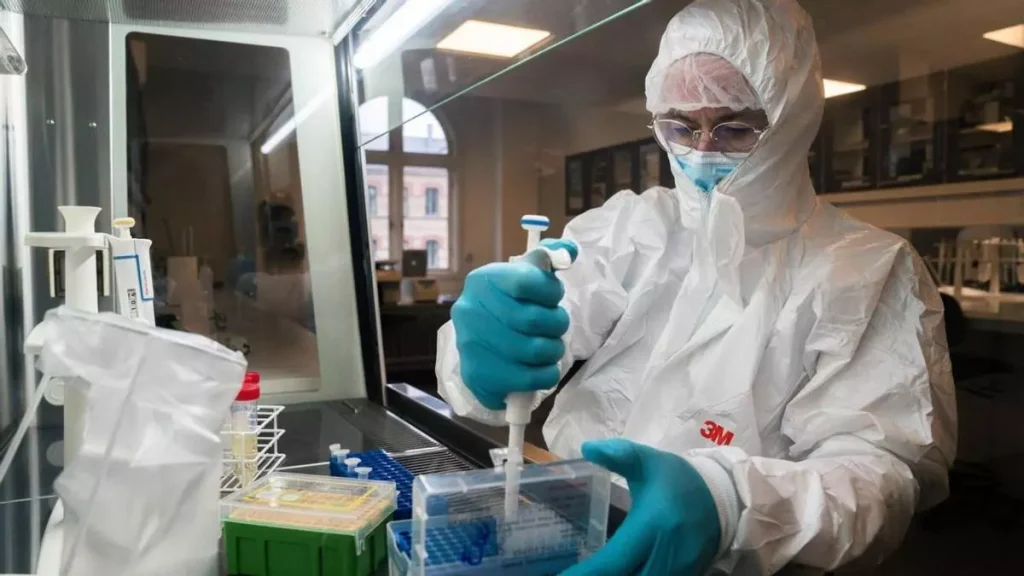
Ancient DNA provides unique information about past microbial infections. / HHMI Tangled Bank Studios
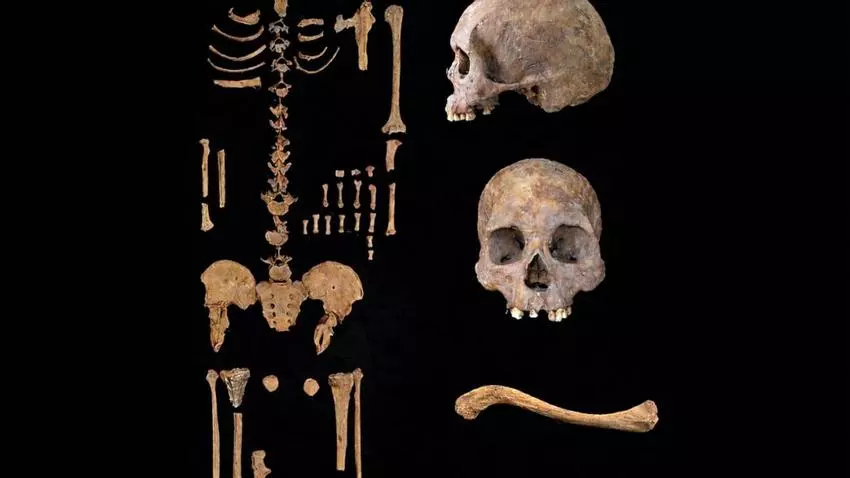
14ymedio, Federico Kukso/SINC Agency, January 24, 2026 — Some 5,500 years ago, a hunter died about 30 kilometers southwest of what is now Bogotá, Colombia. He wasn’t tall—barely five feet three inches—and was a little over 45 years old, a considerable age for his time. Following the rites of his people, his family placed his body in a rock shelter that, centuries later, would be called Tequendama I.
No one knows this man’s name, what his voice sounded like, or the exact cause of his death. The only thing scientists have been able to confirm, after meticulous paleogenetic analysis, is that his skeleton held a secret all that time. “To our surprise, we found DNA from the bacterium Treponema pallidum, responsible for several diseases such as syphilis, yaws, and bejel, in a leg bone,” Colombian archaeologist Miguel Delgado, one of the authors of the research, told SINC.
In a study published in the journal Science, this researcher from the National University of La Plata (Argentina) and a team of Italian, American, German, and Swiss geneticists reveal that this is the oldest known molecular evidence of this pathogen in humans on a global scale. The finding redefines what was previously known about one of the infectious diseases that has most affected populations worldwide. continue reading
“Understanding the evolutionary history of this disease helps us to understand it in depth,” adds Delgado, known for his study of the peopling of the Americas. “It allows us to better understand its manifestation and its current spread.”
The Tequendama I archaeological site is located in the Bogotá Savannah in the eastern highlands of Colombia, a region that played a key role in the early human expansion in South America. Since 1969, archaeologists like Gonzalo Correal Urrego have recovered stone tools, rock art, animal bones, and hundreds of well-preserved human remains there, some dating back as much as 12,000 years. Among them is the bodyof this 1.58-meter-tall man, identified as TE1-3.
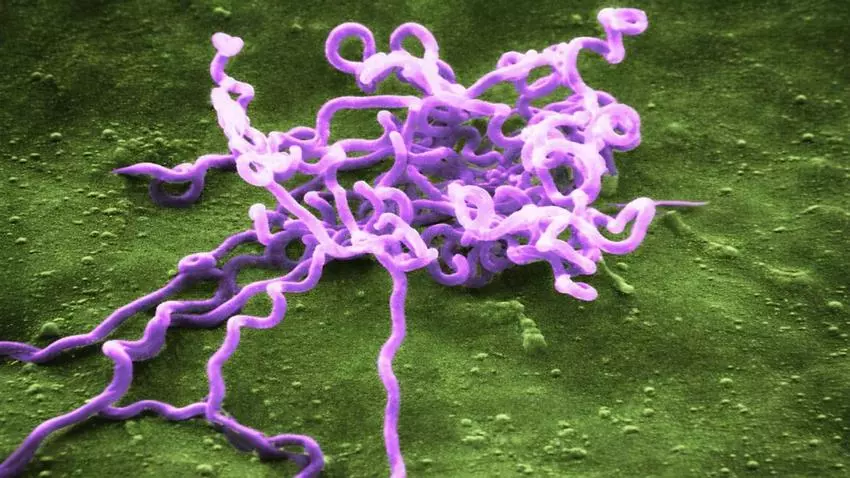
False-color electron microscope image of the spiral bacterium ‘Treponema pallidum’, which causes syphilis. / David Cox | CDC
Radiocarbon dating indicates that he lived approximately 5,500 years ago. There are no clear signs as to the cause of his death: no evidence of violence or complex diseases. “It was probably a natural death, a consequence of an extremely harsh lifestyle and a poor diet,” the archaeologist suspects.
The discovery of this bacterium’s DNA was, in a way, fortuitous, scientists explain. To reconstruct the evolutionary history of populations and the diseases they suffered, paleogeneticists usually examine DNA preserved in the inner ear or teeth, where the greatest amount of prehistoric genetic material is preserved. “However, when we took the samples, we had neither teeth nor a skull,” notes Delgado, a scientist at CONICET in Argentina.
After obtaining a license from the Colombian Institute of Anthropology and History (ICANH) – the regulatory body for archaeological heritage in Colombia – the researchers decided to take the risk and sent samples of this hunter’s tibia to different laboratories to perform ancient DNA analysis.
First, they sent the sample to the Human Paleogenomics Laboratory of German biological anthropologist Lars Fehren-Schmitz at the University of California, USA. Then, they sent it to the Population Genomics Group of paleogeneticist Anna-Sapfo Malaspinas at the University of Lausanne, Switzerland. Upon sequencing the material, the scientists noticed a type of DNA that did not belong to the individual, but rather to a helical bacterium: Treponema pallidum.
“It was truly surprising,” says molecular anthropologist Elizabeth A. Nelson of Southern Methodist University in Dallas, one of the authors of the article. “Recovering DNA from ancient pathogens is always a challenge, and Treponema pallidum is particularly difficult to detect. This is because, during the stages of skeletal lesion formation, the pathogen is usually present in the body at very low levels.”
This discovery extends the complex evolutionary history of this pathogen: it is three thousand years older than the human remains with T. pallidum found on the southeast coast of Brazil – reported in 2024 – and five thousand years earlier than the arrival of Europeans to the continent.
It is also one of the sexually transmitted infections that causes the most concern.
The geographic origin, evolution, and spread of treponemal diseases—each caused by subspecies of the diverse Treponema family of microbes —remain one of the most persistent debates in the history of infectious diseases. Without treatment, syphilis can lead to devastating neurological consequences: blindness, deafness, mental disorders, and even death.
It is also one of the sexually transmitted infections that causes the most concern: according to the World Health Organization, its global incidence is increasing year after year. Yaws, on the other hand, primarily affects the skin and bones and is transmitted through direct contact in warm, humid regions. Bejel and pinta, meanwhile, cause mouth ulcers and bone lesions.
Where and when the pathogens that have affected human societies first appeared remains a great mystery. Recent technological advances and reduced sequencing costs have enabled unprecedented study of the evolution of bacteria, viruses, and parasites.
In particular, research into ancient DNA (aDNA) of pathogens provides unique information about past microbial infections. This genetic material acts as a time capsule: it possesses remarkable stability, can be analyzed even after millennia, and allows us to observe how pathogens have genetically changed over time.
“The field of ancient DNA took off with the arrival of high-throughput sequencing in 2008,” recalls Argentine molecular biologist Nicolás Rascován, from the Pasteur Institute in Paris. “In 2011, the genome of an ancient pathogen was recovered for the first time from archaeological samples: that of the bacterium Yersinia pestis, responsible for the plague. It was then that the study of past diseases through DNA sequencing gained momentum.”
“By studying the DNA of ancient pathogens, we can trace their evolution as they developed.”
From that moment on, the burgeoning science of paleogenomics made it possible to reconstruct the deep history of the pathogens responsible for human infectious diseases, such as tuberculosis (Mycobacterium tuberculosis), smallpox (Variola virus), and hepatitis B (HBV). Various studies show that these infections emerged around 6,500 years ago, coinciding with the beginning of close contact between humans and domesticated animals, a change that increased the risk of zoonosis, that is, the transmission of pathogens from animals to people.
“By studying the DNA of ancient pathogens, we can trace their evolution as they developed,” explains Italian computational biologist Davide Bozzi of the University of Lausanne. “This can give us insights into how pathogens adapted to infect humans or how they became virulent. This knowledge is an essential first step in understanding and controlling the emergence of new viruses and bacteria or the reemergence of past diseases.”
In the spring of 1495, the French king Charles VIII invaded the Kingdom of Naples, driven by his desire to become emperor. After a brief period of success, his mercenary troops began to succumb to an invisible enemy: a disfiguring disease previously unknown to the world. Medical chronicles of the time describe fever, widespread skin eruptions, genital ulcers, intense bone pain, and a high mortality rate.
The French called it “the Neapolitan disease.” For the Italians, it was “morbus gallicus” (French disease). The Russians knew it as “the Polish disease,” and the Poles, “the German disease.” For the inhabitants of Flanders and North Africa, it was “the Spanish disease,” while for the Spanish, it was “the buboes.”
Within a few months, the disease spread across Europe along military and trade routes, leaving many survivors with neurological damage and permanent deformities. Today, this episode is considered the first documented historical record of syphilis in the Old World.
Some believed it was divine punishment. For astrologers, the epidemic was a consequence of two solar eclipses and the conjunction of Mars and Saturn. Others, however, blamed the sailors who returned from America with Christopher Columbus in 1493. “It is possible that 15th-century syphilis was the first globalized emerging infectious disease and a harbinger of all subsequent ones, from HIV/AIDS to COVID-19,” say anthropologists Molly K. Zuckerman and Lydia Bailey of Mississippi State University.
The term syphilis was coined only in 1530 by the Italian physician and poet Girolamo Fracastoro, in his poem Syphilis sive Morbus Gallicus (Syphilis, or the French Disease). In it, the shepherd Syphilius offends the god Apollo and, as punishment, unleashes a plague that ravages his people. The disease is named after him.
“It is possible that syphilis in the 15th century was the first globalized emerging infectious disease and a harbinger of all subsequent ones, from HIV/AIDS to COVID-19.”
Since then, several competing hypotheses have sought to explain its origin. The “Columbian hypothesis” maintains that syphilis was already widespread in the human populations of the Americas before the European conquest. The “pre-Columbian hypothesis,” on the other hand, states that the bacterium T. pallidum circulated in Eurasia during the medieval period and possibly earlier, but was mistaken for other diseases. The current consensus is that it was present on both continents, but in the Americas, a variant evolved into venereal syphilis. European contact would have accelerated its rapid global spread.
“The question of the origin of disease has been raised for centuries because people wanted to blame someone,” notes anthropologist Nasreen Broomandkhoshbacht of the University of California. “These narratives are harmful; they can be used to justify violence and the dehumanization of entire groups of people.”
Since its discovery in 1905, this bacterium has intrigued microbiologists, especially because it cannot be cultured in the laboratory. In 1943, penicillin revolutionized the treatment of syphilis. In 1998, its entire genome was sequenced. At the time, it was thought that this achievement would pave the way for the development of preventative vaccines. That has not happened.
Ancient T. pallidum DNA, identified in the tibia of this hunter-gatherer who lived 5,500 years ago in Colombia, provides valuable clues to understanding the evolution of the disease. By comparing this genetic material with that of modern strains of the same pathogen, it is possible to trace the changes it has undergone over time. In this case, phylogenetic analysis reveals that the genome of this bacterium corresponds to a previously unknown branch of Treponema pallidum, which diverged before the common ancestor of the current subspecies.
Although it clearly falls within the T. pallidum species, the TE1-3 strain exhibits remarkable genetic diversity and is distinct from modern strains. “What we found cannot be classified as syphilis,” cautions Broomandkhoshbacht.
False-color electron microscope image of the spiral bacterium ‘Treponema pallidum’, which causes syphilis. / Colombian Institute of Anthropology and History (ICANH)
“Syphilis, bejel, and yaws are very different diseases, and all are much more closely related to each other than to the pathogen we described in our research. We now know that in the past there was an even greater diversity of these pathogens, which could mean there was even greater variation in their behavior. Historical records of syphilis show that it has changed dramatically over the last 500 years, so even if what we found was a direct ancestor of syphilis (which it isn’t), we could assume that it behaved quite differently,” he adds.
The findings also suggest that T. pallidum predates the emergence of agriculture in the Americas. “This individual lived about 5,500 years ago, in a Middle Holocene hunter-gatherer community, long before the intensification of agriculture or the demographic changes of the colonial era—two factors often associated with the spread of infectious diseases,” Nelson adds.
In contrast, the TE1-3 lineage appears to be linked to the social and ecological conditions typical of hunter-gatherer societies: high mobility, interactions in small communities, and close contact with wild animals.
Even so, scientists find it striking that the remains of the studied individual show no visible signs of disease. “We cannot determine whether the absence of skeletal pathology reflects an early or latent phase of the infection,” they state.
Many questions remain unanswered. “We still don’t know how this ancient lineage was transmitted, whether animals played a role as reservoirs in the past, or whether the pathogen we identified represents an early or extinct lineage,” explains Elizabeth Nelson.
In addition to continuing their research in Colombia, the scientific team is expanding the scope of their work southward into the Andes, in collaboration with Peruvian colleagues. “To understand how the Treponema lineage identified in Tequendama evolved, it is essential to study other individuals over time and in different regions,” says anthropologist Lars Fehren-Schmitz. “Likewise, to better understand the ecology of diseases, research should not be limited to the remains of human ancestors, but should also extend to the analysis of animal remains.”
____________
COLLABORATE WITH OUR WORK: The 14ymedio team is committed to practicing serious journalism that reflects Cuba’s reality in all its depth. Thank you for joining us on this long journey. We invite you to continue supporting us by becoming a member of 14ymedio now. Together we can continue
 Cubanet, Luis Cino, Havana, 30 April 2026. — A few days ago, an official from State Security showed up at my house and, in no more than 15 minutes that we talked while standing at my door, augured for me–in varying tones–a future even darker than that which his fellow repressors predict when they have this type of conversation with me.


 Cubanet, Luis Cino, Havana, 24 March 2026 — There is much talk about Jorge Gómez Barranco, leader of the band Grupo Moncada, who died on March 23—and it’s almost always good talk, because there is no doubt that Gómez was a good person and much loved by many in the cultural sphere, particularly music and television.