The price of the video game and slow internet speeds put one of the most eagerly anticipated releases out of reach for players on the Island.
 14ymedio, Madrid, November 21, 2026 – In Luxembourg, it takes 53 minutes to download the video game Grand Theft Auto (GTA) VI. In Cuba, under the best hypothetical circumstances, it would take two days, ten hours, and 20 minutes.
The calculation comes from the SpeedGeo website, which compared the game’s download time in 146 countries based on average fixed broadband speeds between January and November 2026. Cuba ranks second to last, in 145th place, ahead of only Syria (61 hours and 24 minutes) and behind Afghanistan (53 hours and 38 minutes).
The website warns that these are theoretical times, assuming a continuous connection throughout the entire download. On the Island, where electricity and data signals constantly go down, that assumption is impossible to sustain. The average power outage in Cuba lasts 20 hours a day, and it is unlikely that the internet connection, which is already terrible to begin with and is managed by the state telecommunications monopoly Etecsa, could remain stable for so many consecutive hours.
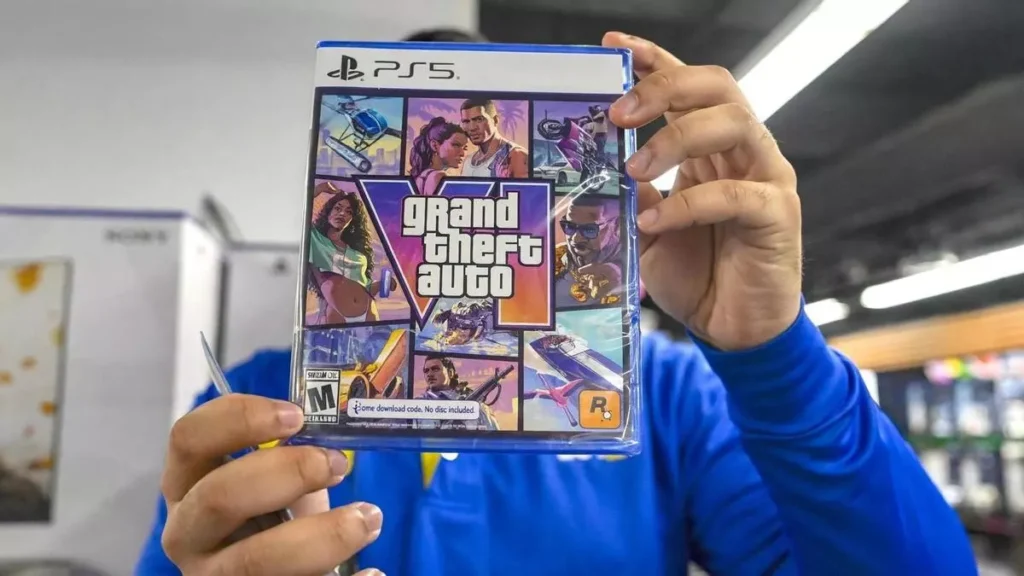
The sixth main installment in Rockstar Games’ GTA series, published by the American company Take-Two, went on sale last Thursday for PlayStation 5 and Xbox Series X|S, 13 years after GTA V. It is an open-world action game set in the fictional state of Leonida, with its central setting in Vice City, a city inspired by Miami. The standard edition costs $79.99, while the Ultimate edition costs $99.99.
Cuba ranks second to last, in 145th place, with 50 hours and 20 minutes, ahead of only Syria
The game is full of references to Cuban culture. Back in 2002, GTA: Vice City featured a Little Havana, the Café Robina, and Umberto Robina, the leader of a Cuban gang. The new installment adds a neighborhood called Little Cuba, with bakeries and immigrant residents. Its soundtrack includes Celia Cruz, Gloria Estefan, Willy Chirino, and Camila Cabello, on radio stations such as Radio La Ola, dedicated to salsa and Caribbean sounds.
There is also a Cuban presence in the game’s artwork itself. Havana tattoo artist Roberto Ramos Mori, known as Robertiko, is credited in the tattoo section of the official credits. The artist is co-founder of the La Marca studio, which opened in Old Havana in 2015 and is considered the country’s first professional tattoo studio. He was one of more than 75 artists recruited for Rockstar. The company required that its artwork be based on real people rather than artificial intelligence.
Posts have also gone viral on social media featuring gamers outside Cuba who, while playing GTA VI, encounter characters speaking in Cuban street slang, expressions that only someone from the Island would immediately recognize.
Whether a gamer on the Island actually ends up playing GTA VI is another matter. On Revolico, the game is being offered for $120, about $40 above the official price, while a PlayStation 5 console costs between $600 and $850 on the informal market, prohibitive prices for the average citizen.
The technical alternative exists, but the Government is cracking down on it: Starlink, SpaceX’s satellite service, would not depend on Etecsa’s networks.
Periódico Cubano calculated the cost in terms of working hours for Cubans. Based on the minimum wage established in July 2026—3,210 pesos a month, or 16.84 pesos an hour—a worker would need approximately 4,489 hours to pay for the standard edition and 5,610 hours for the Ultimate edition. That amounts to 561 and 701 eight-hour workdays, respectively: more than two years of work for the first and almost three for the second, without spending a single peso on anything else.
The official purchasing channels are also inaccessible to gamers on the Island; Cuba is among the countries without access to PlayStation Network or its store. The “physical” copies of the game do not come with a disc, but rather a download code. This brings buyers back to the same bottleneck: 210 GB that must be downloaded through Etecsa.
Private video game rooms, which charge by the hour, could offer many gamers on the Island a way to play. A Cuban programmer told Martí Noticias that this alternative is feasible and described how some entrepreneurs are already preparing with backup power systems, solar panels, and “alternative internet connections.”
The technical alternative exists, but the Government is cracking down on it. Starlink, SpaceX’s satellite service, would not depend on Etecsa’s networks. In March, Elon Musk acknowledged that “it works in Cuba, you just can’t sell it there.” But the regime continues to prohibit the importation and use of its terminals, even by foreign embassies.
Etecsa, Cuba’s only telecommunications operator, maintains a monopoly over telephone and internet services on the Island and is controlled by the military conglomerate Gaesa
This newspaper has already reported on the police crackdown against Starlink, which includes a “block-by-block” search to identify who has the service. On October 24, several antenna sellers in Santa Clara were sentenced to between four and five years in prison, and authorities seized 37 devices during searches of the homes of sellers and buyers. This week, according to a pro-government social media account, police confiscated three antennas in Placetas, Villa Clara.
Nevertheless, Cuba was reelected this week as a member of the Council of the International Telecommunication Union (ITU), although it received the lowest vote count among countries in the region. That did not stop Cuban Foreign Minister Bruno Rodríguez from celebrating the development on social media: “This election reaffirms our country’s commitment to continuing to defend universal, inclusive, and equitable access to information technology and telecommunications.”
Etecsa, Cuba’s only telecommunications operator, maintains a monopoly over telephone and internet services on the Island and is controlled by the military conglomerate Gaesa. The company has faced constant criticism for the poor quality of its services, its high rates, and its role in censoring and filtering content, as it is subordinate to the priorities of the State rather than the needs of its customers. Numerous websites belonging to independent media outlets and organizations critical of the Government remain blocked on its network, and users in Cuba can access them only through VPNs.
At times of heightened political tension, the company has carried out Government orders to restrict internet access and block communications, as happened during the massive protests of July 11, 2021, as well as through the selective blocking of telephone lines belonging to activists and opposition figures.
Translated by Regina Anavy
______________________
COLLABORATE WITH OUR WORK: The 14ymedio team is committed to practicing serious journalism that reflects Cuba’s reality in all its depth. Thank you for joining us on this long journey. We invite you to continue supporting us by becoming a member of 14ymedio now. Together we can continue transforming journalism in Cuba.