It will be screened on November 16 at the 39th International Documentary Film Festival Amsterdam, one of the most prestigious in the world
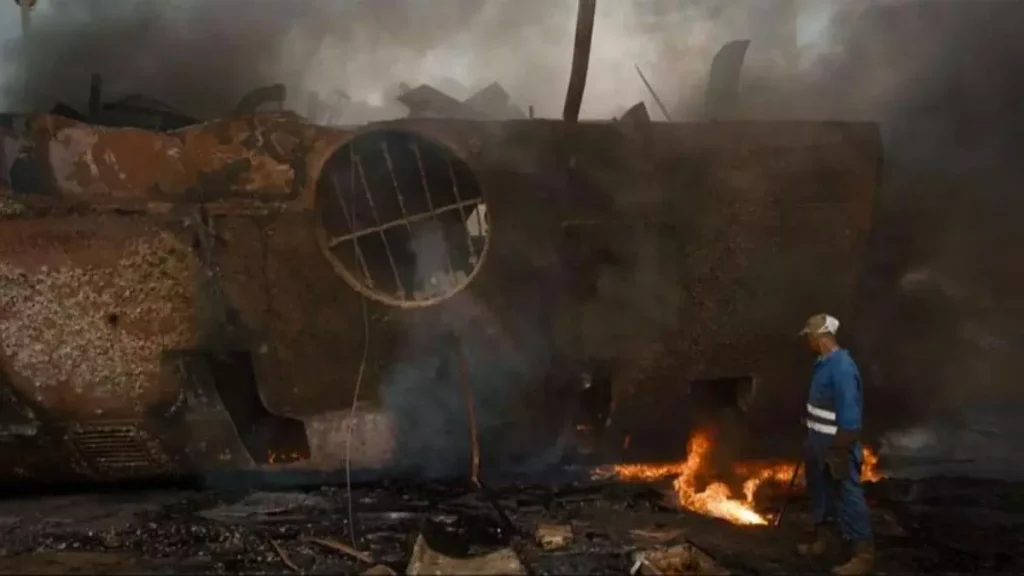
 Bahía Honda (2026), the second feature film by independent Cuban director Alejandro Alonso, will have its world premiere this November 16 at the 39th International Documentary Film Festival Amsterdam (IDFA), one of the most prestigious festivals in the world, which will be held from the 10th to the 22nd of that month.
Produced by Estudio ST, Vega Alta Films and Folk Film, with the collaboration of the Norwegian Embassy in Cuba – one of the great promoters of non-institutional cinema on the island – Bahía Honda was filmed in the ship graveyard and scrapyard of the town of the same name in Artemisa province, and contains the last images the filmmaker shot in Cuba before emigrating to Spain in 2021.
The director conceives of his film as “a kind of journey.” And he tells 14ymedio: “Initially, our first wish was to make a portrait of this place. It was a paradox to have found this place where they destroy ships, and what that meant at a time when, in Cuba, this other great wave of migration was also beginning.”
“This place is a kind of bubble because there are hardly any spaces like this left in the world,” Alonso remarks. The director explains that there are currently very few ship scrapyards because of their environmental impact, but that Cuba “skips all those laws, all those protocols.” The chosen place, he says, “is somewhat left to its own devices when it comes to labor and environmental protection policies.”
“He’s someone who destroys ships by day and at night, with the parts, tries to put together his own boat. There was something there that seemed very powerful to me”
After the initial fascination with the scrapyard, the filmmaker recounts, what changed his way of looking at the place and relating to it was getting directly close to the workers, in particular Raudel González Cordero, Pitufo, “with all the baggage he brought, all that desire to leave, to escape.” The filmmaker explains that his character is “someone who destroys ships by day and at night, with the parts, tries to put together his own boat. There was something there that seemed very powerful to me.” It is on the basis of that “desire” that Alonso has built the entire story.
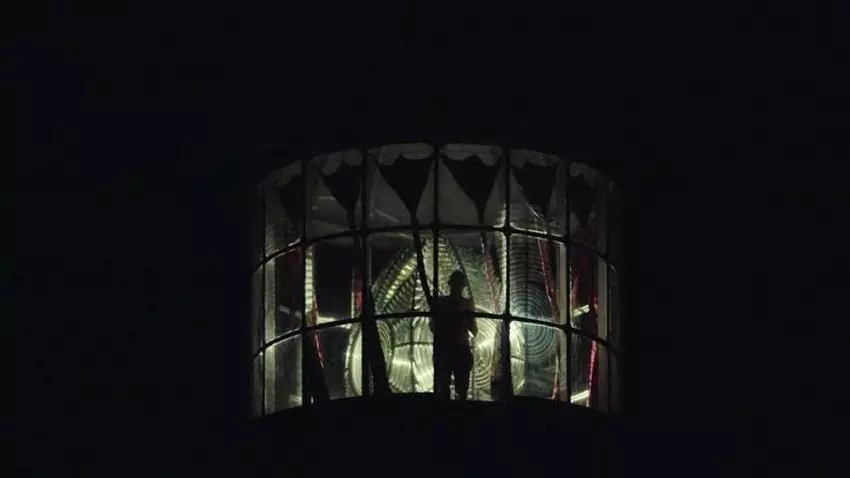
The images filmed in this place, at once so strange, fascinating and gloomy, came to light years earlier in the short film Abisal (2021), which won the Coral Award for Best Short Documentary at the 43rd edition of the Havana International Festival of New Latin American Cinema in December 2022.
But this distinction did not prevent its director from being censored by the Cuban Institute of Cinematographic Art and Industry, when its officials vetoed the screening of a recorded acceptance message that Alonso sent from Spain. The director mentioned the Cuban migratory stampede at the time, and in a way “closed” the protagonist’s story outside the film, revealing that he too had emigrated from Cuba.
These “unwanted” words would have tarnished the spotless image of the regime that was being projected, after the veto of the feature film Vicenta B. (2022) by Carlos Lechuga and some “provocative” words by Cuban actress Andrea Doimeadiós at the opening of the event.
This is one of many examples that explain why filmmakers as key to Cuban cinema as Alejandro Alonso are not recognized by the island’s “general public”
The whitewashing of that edition included, in addition to the censorship of Alonso’s words, the presentation of the Honorary Coral to Silvio Rodríguez, almost the only person authorized to make statements that night (“Down with the blockade!”), since not even the jurors were allowed to approach the microphones during the awards ceremony.
This is one of many examples that explain why filmmakers as key to Cuban cinema as Alejandro Alonso (along with Rafael Ramírez, Luis Alejandro Yero, Miguel Coyula, Marcel Beltrán, Violena Ampudia, Raydel Araoz, Carlos Quintela, Orlando Mora, Josué García, Heidi Hassan, Carla Valdés, Carlos Melián, Armando Capó and so many others that they would make this paragraph extremely long) are not recognized by the island’s “general public” – which depends to a large extent on what the official institution screens, with the proper authorizations and ideological filters, in its already scarce movie theaters.
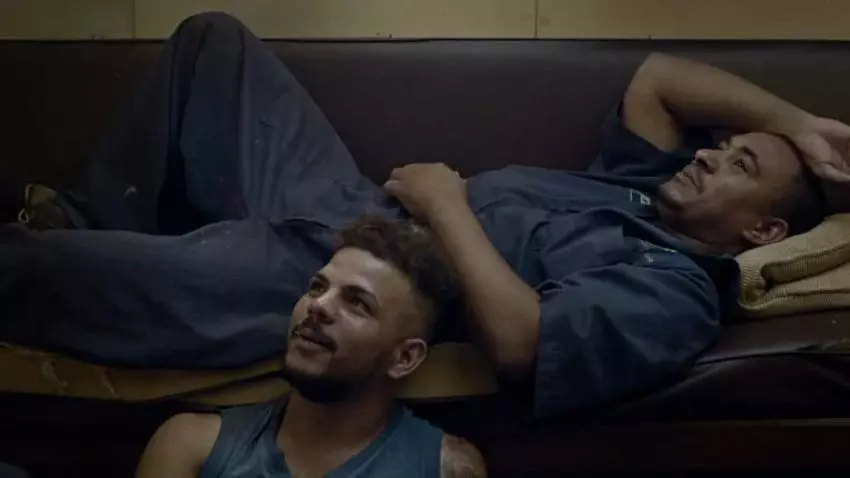
“We always conceived of Bahía Honda as an expansion of the universe presented in Abisal,” says Alonso. “They are films that are connected by the protagonist, by the place, but now there is an attempt to take the universe and the imaginary of the ship-breakers somewhat to the limit. I feel that the film establishes a dialogue between that universe of theirs and my own imaginary.”
Alonso is no stranger to film platforms in the Netherlands. In 2021 he won the Hivos Tiger Award for Short Film with Terranova (2020), co-directed with the Spaniard Alejandro Pérez, at the equally important International Film Festival Rotterdam, where shortly afterward he gave the world premiere of his short film La historia se escribe de noche (2024). The latter is an existential reflection on life in the blackouts, with its burden of dread, mystery and anxiety.
As in these other films, two of his most representative titles, ‘Bahía Honda’ subscribes to the sensory cinematic creed that defines Alonso’s style and audiovisual discourse
As in these other films, two of his most representative titles, Bahía Honda subscribes to the sensory cinematic creed that defines Alonso’s style and audiovisual discourse. He always places the expressive force of the image above didactic narrative, impression above description, and the free association of images above “logical” articulation. These are films that must be read and felt like poems, with all their enigmas, challenges and invitation to complex dialogue.
Although this feature film is described by Alonso as “a much more atmospheric film. It’s a bit of a glimpse into that world, into this whole universe.” Alonso explains that Bahía Honda aims to be much more narrative, to explore other resources and to try to paint a much more complex portrait of Pitufo. “Above all, of the imaginary of his desire to emigrate.”
The filmmaker also says that Bahía Honda is a “very participatory” film that was built up from the research, because they had very little time to shoot. “I’d say three or four weeks,” he explains. “And of course, as we discovered the place, as we understood what we wanted to do, as we got to know our protagonists, we kept filming.”
For its director, Bahía Honda “seems like it’s going to be one thing, then it mutates toward another place and finally moves into more fictional territory.” Alonso explains that, although the film starts out “very tangible, very much about texture, very much about metal, very much about the body,” as it progresses “it moves more toward the universe of dreams, of desires.”
Bahía Honda is not an “easy” film. It is not a film to laugh at or to escape from reality. It is the story of an escape, but, thanks to the eye of Alonso and his film crew, the scrapyard becomes an almost monstrous landscape, a circle of Hell in which its protagonist and the other characters seek to survive until a possible escape.
Translated by GH.
______________________
COLLABORATE WITH OUR WORK: The 14ymedio team is committed to practicing serious journalism that reflects Cuba’s reality in all its depth. Thank you for joining us on this long journey. We invite you to continue supporting us by becoming a member of 14ymedio now. Together we can continue transforming journalism in Cuba.