English Translations of Cubans Writing From the Island
Civil Records Preserved in Deplorable Conditions at the Santiago de Cuba Archive Are in Danger
Concern is growing over files piled up outside the building to protect them from flooding and humidity at a facility inaugurated just six years ago.
Exterior of the Provincial History Archive of Santiago de Cuba/ Facebook / Luis Joaquín Rodríguez
14ymedio, Madrid, November 20, 2026 – The National Archive of the Republic of Cuba has acknowledged that the headquarters of the Provincial Historical Archive of Santiago de Cuba, built specifically to safeguard documents and inaugurated in 2020, has construction defects and an “unsuitable” geographical location, a situation “aggravated by persistent rainfall.” In a statement published on Facebook this Thursday, officials responded to concerns expressed on social media about the deterioration of several archival storage units, attributing it to flooding, although they did not specify the extent of the damage.
The statement repeats the style of blind optimism in the face of adversity. It describes a building barely six years old, designed to preserve documents, poorly planned and poorly located by its own admission, and incapable of withstanding rainfall that is entirely predictable in a tropical country. It also portrays tireless workers, ready to confront the adversities generated by the very authorities they serve, without acknowledging that fact. It names no one responsible and offers no explanation of who decided on the location.
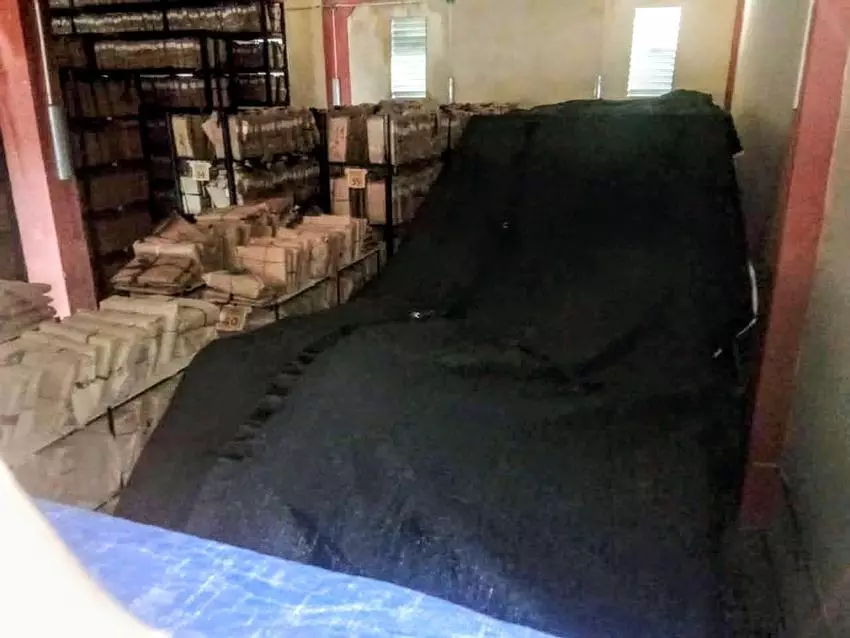
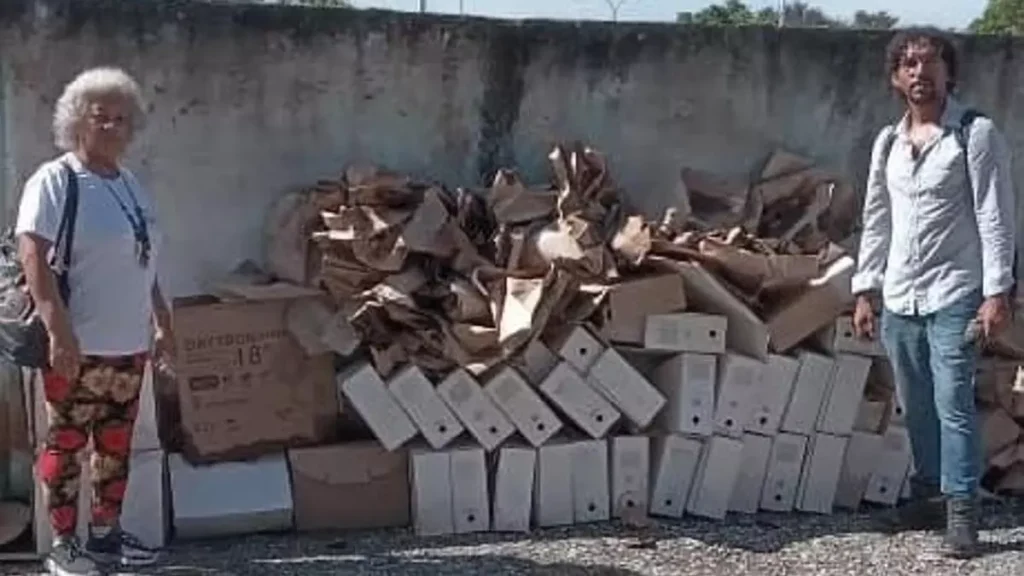
On November 17, artist Luis Joaquín Rodríguez published photographs on Facebook showing damaged papers and files piled up outside the Santiago institution, warning that historical information would be lost if no one acted responsibly. In that post, Moraima Betancourt Revilla wrote that when she saw where the archive had been located, “I knew it was going to be disastrous.” Those familiar with the city clearly saw it coming. The authorities evidently did not.
The archives hold documents that many Cubans need in order to emigrate or apply for foreign citizenship. / Facebook / National Archive of the Republic of Cuba
But what is at stake extends far beyond Santiago. The archives hold documents that many Cubans need in order to emigrate or apply for foreign citizenship. Behind every file is a chain of documents: the applicant’s birth certificate, that of their father or mother, their grandfather’s, and the marriage certificate linking them. If even one link is missing, the process comes to a halt. These records are kept in paper books, exposed to humidity, mold, and neglect, and digital copies do not always exist. A volume damaged by water or lost through negligence can leave an entire family unable to prove its origins. Poor management of a building can thus close the door to those who depend on a certificate.
The Santiago case is not isolated. At the Trinidad Historical Archive, documents dating back to 1724 are crammed together amid termites and leaks, and some applicants for Spanish citizenship have been unable to validate their family connections because of the deplorable condition of the files. In Las Tunas, the Civil Registry’s duplicate-records department, which holds the original birth, marriage, and death records for the entire province, including some Spanish citizenship records, was closed “for hygiene reasons.” An official said that the Minister of Justice knows about the problem and “has requested support, but nothing has happened.”
Without digital copies, a deteriorated record is more difficult to verify. No fraud connected to the deterioration in Santiago has been reported, but there are precedents of document forgery on the Island. This newspaper reported on the trial of more than 20 people accused of forging internal migration documents, with a Housing Office in the Cerro municipality serving as the epicenter. Disasters of this kind open the door to legal insecurity for citizens and expand the range of criminal services associated with the irregular handling of documents.
The statement itself acknowledges that maintaining optimal preservation conditions is “a constant challenge.” It lists the building’s structural condition, equipment for controlling temperature and humidity, archival storage materials with neutral pH purchased on the international market, and supplies for restoration and digitization. It is an entire inventory of what is generally lacking in the country’s archives.
Digitization, which protects original documents from water and pests, is progressing slowly. In August, the Ministry of Justice had digitized 895 volumes of birth records from Havana’s Unified Registry using 16 scanners donated from Madrid, compared with approximately 72,000 books held by the Island’s civil registries. All the scanners financed by the Madrid-based association would cost approximately $7,500 at the manufacturer’s price. There is no known national plan, with deadlines and a budget, to digitize all the records. In this area, the country remains anchored in the 20th century. The legal framework exists, under Decree-Law 3 of 2020; what is missing is the money and the political will to implement it.
Translated by Regina Anavy
______________________
COLLABORATE WITH OUR WORK: The 14ymedio team is committed to practicing serious journalism that reflects Cuba’s reality in all its depth. Thank you for joining us on this long journey. We invite you to continue supporting us by becoming a member of 14ymedio now. Together we can continue transforming journalism in Cuba.
 14ymedio, Madrid, November 20, 2026 – The National Archive of the Republic of Cuba has acknowledged that the headquarters of the Provincial Historical Archive of Santiago de Cuba, built specifically to safeguard documents and inaugurated in 2020, has construction defects and an “unsuitable” geographical location, a situation “aggravated by persistent rainfall.” In a statement published on Facebook this Thursday, officials responded to concerns expressed on social media about the deterioration of several archival storage units, attributing it to flooding, although they did not specify the extent of the damage.