The trial was held last June 30 at the Las Tunas Provincial Prison, due to “lack of fuel,” the Court said.
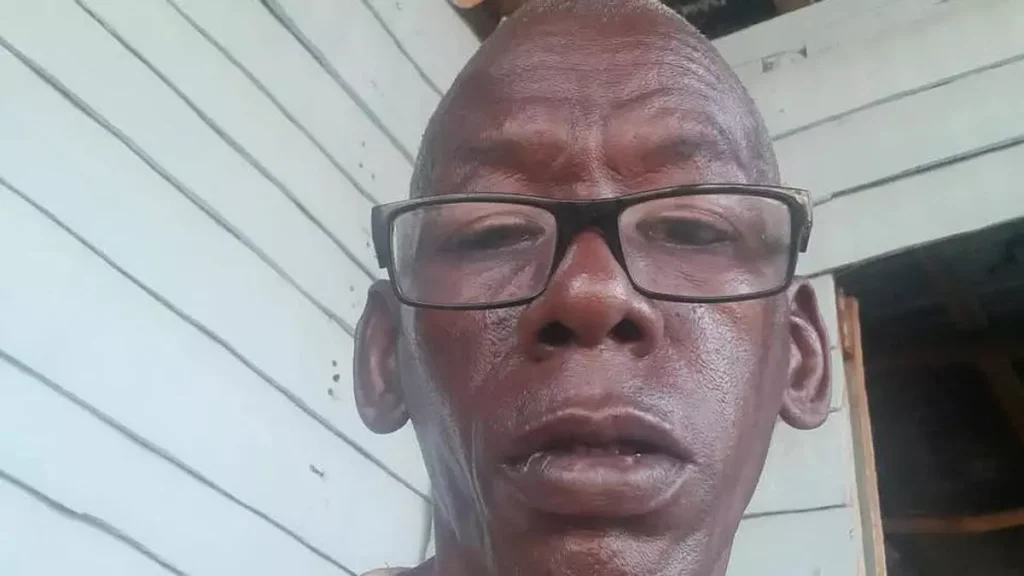
 14ymedio, Havana, September 9, 2026 – After more than two years in provisional detention without a trial, the Provincial Popular Court of Las Tunas imposed prison sentences of seven and eight years on eight dissidents from Las Tunas for the crime of “propaganda against the constitutional order.” The sentence, handed down last September 1, was revealed Tuesday by the legal advisory center Cubalex.
The longest sentence was imposed on Guillermo Carralero López, who was sentenced to eight years in prison. The other seven sentenced –Javier Reyes Peña, Maikel Hill Ramírez, Carlos Manuel Santiesteban Saavedra, Carlos Alberto McDonald Ennis, Enrique González Infante, Pedro Carlos Camacho Ochoa and Adisbel Mendoza Barroso– each received seven years in prison. In the case of McDonald Ennis, he is being prosecuted on bail because of the serious deterioration of his health, due to a cancerous maxillary tumor that was detected in August of last year, while he was already in prison.
According to the sentence, the opponents –whom the regime links to Cuba Primero, a group considered by Havana to be “terrorist” and “criminal,” based in the United States, “which organizes, finances, provides means and carries out actions against the security of the Cuban State”– participated in the recording of videos and the publication of content on social media linked to the organization, whose objective was to “destabilize the constitutional order and overthrow the Cuban political system.”
There were restrictions on access for relatives and observers, “effectively turning it into a closed-door trial”
The trial was held last June 30 at the Las Tunas Provincial Prison, known as El Típico, according to the organization’s report. At that time, there was a large deployment of State Security agents and other regime forces, and there were restrictions on access for relatives and observers, “effectively turning it into a closed-door trial and violating the principle of publicity governing criminal proceedings.” That day, the Court justified holding the trial inside the prison due to a “lack of fuel.”
Originally, the Prosecutor’s Office had requested sentences ranging from six to nine years, arguing at the time, in addition, assessments of the defendants’ “moral and social conduct,” such as being “in disagreement with the revolutionary process,” elements that – Cubalex denounced at the time– reinforce the “ideological, stigmatizing and discriminatory nature of the accusation.” Furthermore, the accusation did not contain a single line describing acts of or calls for violence.
“We warn about the use of the criminal justice system to criminalize dissent and restrict freedoms of expression and association. Sentences of up to eight years in prison for actions linked to activism and the expression of critical opinions demonstrate the severity with which any form of opposition in Cuba is punished,” Cubalex condemned.
“We warn about the use of the criminal justice system to criminalize dissent and restrict freedoms of expression and association”
“These sanctions deepen the persecution and seek to generate fear in order to inhibit other expressions of dissent and political participation,” the organization added.
The case, it said, reflects “repeated patterns of criminalization of the exercise of fundamental rights, such as freedom of expression, association and political participation.” Regarding the application of the crime of “propaganda against the constitutional order,” formulated broadly and ambiguously, it “allows the State to punish peaceful expressions of dissent and nonviolent civic activism,” the legal advisory center stressed.
According to the organization Prisoners Defenders’ most recent report, in July there were 1,327 people behind bars in Cuban prisons for political reasons, representing a record number of prisoners, in a month marked by the fifth anniversary of the mass protests of 11 July 2021.
Translated by Regina Anavy
______________________
COLLABORATE WITH OUR WORK: The 14ymedio team is committed to practicing serious journalism that reflects Cuba’s reality in all its depth. Thank you for joining us on this long journey. We invite you to continue supporting us by becoming a member of 14ymedio now. Together we can continue transforming journalism in Cuba.