Cuba: A New Law Shields Socialist Ownership of Land, Though It Opens the Door to Foreigners as Usufruct Holders

Producers will face restrictions on leaving Cuba if they want to retain ownership or use of their land.


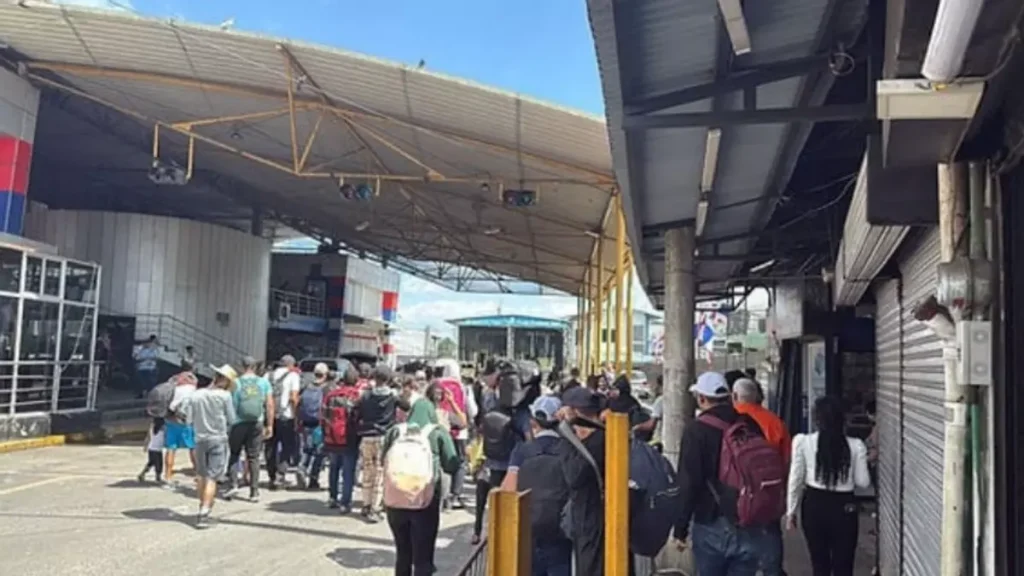
“The land was in poor condition and we had to prepare it with our own hands,” say the farmers. / 14ymedio

14ymedio bigger14ymedio, Madrid, June 9, 2026 — Foreigners will be allowed to buy a home in Cuba, but not own land. That is one of the conclusions drawn from the publication this Monday of the draft Agricultural and Forestry Land Law, a measure that consolidates as many as 25 previous laws and is expected to be approved by the National Assembly during its next session in July. The legislation safeguards socialist ownership, except for land belonging to private individuals or agricultural cooperatives (13% and 7%, respectively, while the State owns 80%).

The law is explicit regarding the “protection of land against any transfer of ownership in favor of foreigners,” although interested parties may gain access to land through usufruct by two avenues. As private individuals, this applies to those who have effective residence in Cuba; for foreign or joint-venture companies, authorization will be granted provided they have a legal basis and are aligned with the development strategies of the area.

This is precisely how the Vietnamese company AgriVMA established itself on the Island. Between late November 2024 and January 2025, it obtained 308 hectares of land in Pinar del Río for rice cultivation, becoming the first experience of its kind since 1959. The project has performed well, achieving crop yields far above national averages, and as early as June 2025 the company requested an expansion of its land holdings. Nevertheless, it is still considered almost a unique case.

One of the significant changes compared with previous regulations is the introduction of inheritance agreements, which will allow people to decide during their lifetime who will inherit ownership of the land

One of the significant changes compared with previous regulations is the introduction of inheritance agreements, which will allow people to decide during their lifetime who will inherit ownership of the land, replacing the previous system in which wills were the only means of transferring it. However, it remains mandatory that the land continue to follow the socialist principle that it belongs to those who work it. The new owner must demonstrate continue reading

active involvement—or ensure that others are involved—in making the land productive, applying good agricultural practices, and delivering to the State what has been agreed upon.

These agreements may be revoked if the heir fails to fulfill the obligations assumed with the owner. At the same time, the owner is prohibited from selling or donating the land to a third party while the agreement remains in force; otherwise, compensation must be paid to the heir. Such agreements cannot be verbal and must be registered before a notary and in the corresponding registry.

Another sensitive issue is the treatment of land owned by emigrants. The law divides them into two categories depending on whether they left the country before or after July 2024. Those who emigrated before that date, when the Migration Law was approved but not published until a few weeks ago and still not in force, retain ownership of their land as long as it was not confiscated. However, they lose the right to transfer it, meaning that upon their death the land passes to the State, according to an additional provision of the law.

The only concession to heirs is that they will have a preferential right to obtain the land in usufruct if it is determined that they have no other means of livelihood. In that case, and if authorized by the Municipal Commission on Agrarian Affairs, family members will receive preferential rights to use the land.

The second group consists of emigrants who left after July 2024 and are already subject to the current regulations. It is presumed that they benefited from the elimination of the “automatic confiscation of assets upon permanent departure from the country,” although this was never confirmed because the law remained unpublished for two years. In their case, the determining factor is effective migratory residence, meaning they may lose their land if they fail to keep it actively productive.

If an owner exceeds the permitted absence period without legal justification, it will be considered “abandonment of the land,” triggering sanction procedures that may lead to confiscation of both the land and agricultural assets

The current law imposes travel and residency restrictions abroad on landowners, tied directly to the productivity of the land. Farmers may remain outside Cuba for a maximum of one year and must grant a notarized power of attorney authorizing someone else to temporarily manage the farm during that period. The only exception is in cases of force majeure.

If the owner remains absent beyond the allowed period without legal justification, the situation will be classified as “abandonment of the land,” activating sanctions that may result in the seizure of the land and agricultural assets for failing to fulfill the social function of production.

For producers who do not own their land but hold it in usufruct, the restrictions are even stricter, since the land belongs to the State and their contract requires active use. These farmers must also grant a notarized power of attorney authorizing another person to manage the land, but only for a maximum period of six months. If that period is exceeded without justification, the usufruct contract is terminated and the State reclaims the land.

Translated by Regina Anavy

______________________

COLLABORATE WITH OUR WORK: The 14ymedio team is committed to practicing serious journalism that reflects Cuba’s reality in all its depth. Thank you for joining us on this long journey. We invite you to continue supporting us by becoming a member of 14ymedio now. Together we can continue transforming journalism in Cuba.
Another Donation of Basic Necessities Arrives in Cuba from Mexico and Belize

Interior Trade Minister Betsy Díaz and President Miguel Díaz-Canel have thanked both countries for their support of the Island.

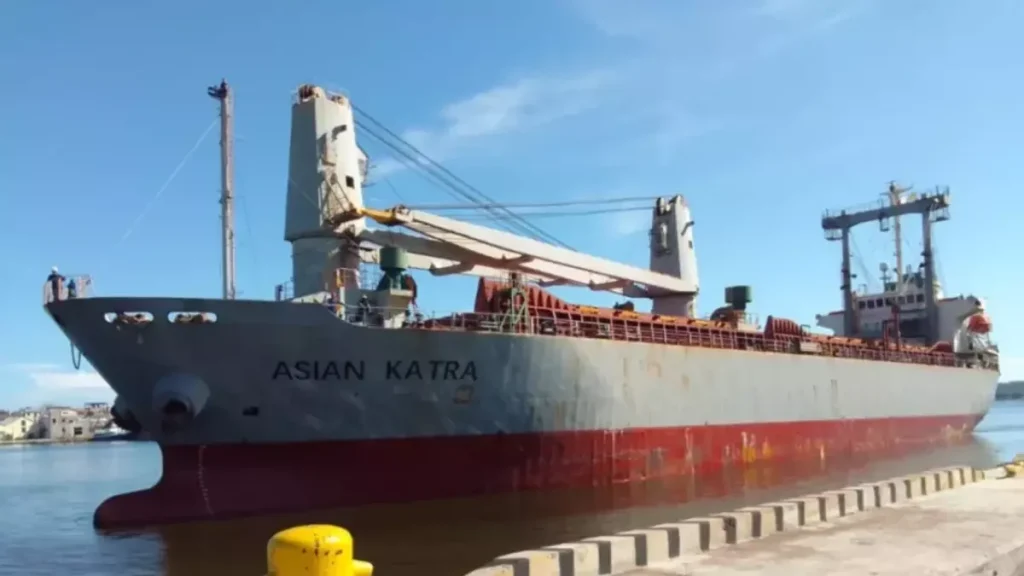
The commercial vessel Asian Katra docked this Sunday at the Port of Havana. / EFE

14ymedio biggerEFE/14ymedio, Havana, June 8, 2026 / Cuba received a donation of 1,700 tons of food and other basic necessities this Sunday from Mexico and Belize, intended to help alleviate the shortages affecting most of the Island’s population as a result of the energy and economic crisis.

State media reported that the commercial vessel Asian Katra arrived at the Port of Havana carrying the humanitarian aid shipment as a “demonstration of cooperation and solidarity from the governments and peoples of Mexico and Belize.”

They also indicated that solidarity organizations supporting Cuba, Cuban residents in both countries, and a campaign launched by the Mexican newspaper La Jornada, among other participants, contributed to “managing, organizing, and assembling” the operation.

Upon receiving the donation, Interior Trade Minister Betsy Díaz highlighted Mexico’s “unconditional and historic” assistance and thanked the authorities, public figures, and organizations of both nations for their support of the Island.

Solidarity organizations supporting Cuba, Cuban residents in both countries, and a campaign launched by the Mexican newspaper La Jornada, among other participants, contributed to “managing, organizing, and assembling” this operation

President Miguel Díaz-Canel also expressed his gratitude on social media. “The ship carrying 1,700 tons of food and supplies from Mexico and Belize is now continue reading

in Havana. An effort by both governments, solidarity groups, Cubans residing in those sister nations, and La Jornada. We are grateful for this embrace of solidarity in such difficult times. #CubaNoEstáSola [#CubaIsNotAlone],” he posted.

In recent years, Mexico has established itself as one of Cuba’s most active regional partners in humanitarian assistance, sending fuel shipments and several cargoes of essential goods.

The arrival of this shipment adds to other aid operations received from Spain, Brazil, Uruguay, China, South Korea, Japan, Canada, United Nations agencies, and a shipment sent by Colombia, which has announced that it is currently en route to the Island.

In March and April, the Convoy Nuestra América, made up of activists from several countries in Europe, Mexico, and the United States, also delivered several tons of food, medical supplies, solar panels, photovoltaic systems, and educational materials.

The Island, already burdened by six years of deep economic crisis, is now virtually paralyzed by fuel shortages, from hospitals to gas stations, and from public transportation to state-run enterprises, with medicine shortages, high inflation, partial dollarization, and blackouts that affect large regions of the country for more than 20 hours a day.

Translated by Regina Anavy

______________________

COLLABORATE WITH OUR WORK: The 14ymedio team is committed to practicing serious journalism that reflects Cuba’s reality in all its depth. Thank you for joining us on this long journey. We invite you to continue supporting us by becoming a member of 14ymedio now. Together we can continue transforming journalism in Cuba.
Residents Block the Vía Blanca in Havana After Three Days Without Electricity

Protests are multiplying during one of the worst weeks for Cuba’s electrical system, which is unable to meet more than one-third of national demand.

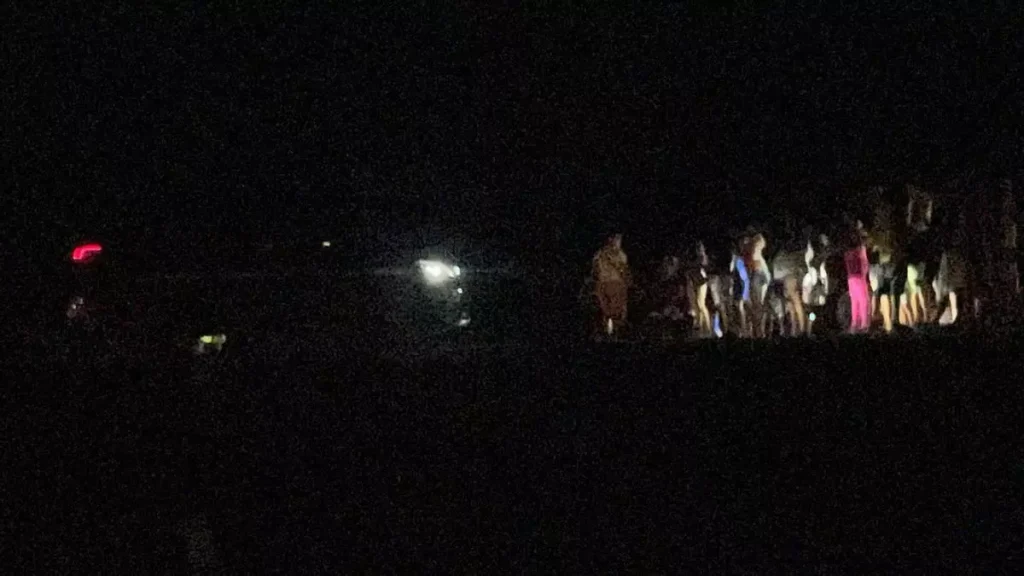
Protesters block the Vía Blanca in Havana as a demonstration against power outages. / 14ymedio

14ymedio bigger14ymedio, Havana, June 8, 2026 — More than 50 people blocked the Vía Blanca in Havana this Sunday, according to documentation obtained by this newspaper, which witnessed the police deployment in the protest area. Residents demonstrated against the lack of electricity service, which they said they had been without for three days, according to one participant’s testimony.

Women, teenagers, and children were the main participants in the protest. Standing on the roadway and blocking one of the main highways connecting the capital to Matanzas, demonstrators banged pots and pans to express their discontent. After nearly half an hour, several police patrol cars arrived in the area to persuade protesters to end the traffic disruption.

Protesters block the Vía Blanca in Havana as a demonstration against power outages. THE VIDEO CAN BE VIEWED AT THIS LINK / 14ymedio

Scarcity and desperation are pushing more and more citizens to take to the streets and protest, even in broad daylight, despite the usual police response and the arrests that often accompany these demonstrations.

The energy crisis affects virtually every aspect of daily life on the Island. Power outages also interrupt water service, make food preservation difficult, prevent sleep during hot, humid nights filled with mosquitoes—carriers of diseases such as dengue—and complicate medical care in hospitals.

Scarcity and desperation are pushing more and more citizens into the streets despite police responses and arrests

Cuba’s Electric Union (UNE) has spent weeks reporting disruptions affecting more than 60% of national demand during peak consumption hours after sunset. This situation has resulted in blackouts lasting more than 48 consecutive hours in some parts of the country and more than 20 hours per day in Havana. continue reading

Yesterday, Sunday, eleven of the country’s 16 thermoelectric generating units—most of which operate on domestically produced crude oil—were out of service due to breakdowns or maintenance work. Forecasts for Monday are very similar, with 10 units offline.

Among them is the Antonio Guiteras thermoelectric plant, the Island’s largest power generator, which had been contributing 220 MW. It disconnected from the National Electric System (SEN) last Friday for the thirteenth time this year, and repairs will still “take the necessary time under established controls,” according to its director, Román Pérez Castañeda.

The structural problems affecting thermoelectric plants, which are responsible for 40% of electricity generation, stem mainly from decades of operation beyond their intended service life and from a chronic lack of investment.

Protests are recurring frequently in different parts of Havana and other provinces, with pot-banging demonstrations, garbage fires, and road blockades

These incidences are compounded by generation limitations caused by fuel shortages. A total of 106 distributed-generation plants remain out of service, creating a deficit of 890 MW. The Turkish floating power plant [“patana“] in Regla is in the same situation.

According to the UNE report, electrical service was affected by insufficient generating capacity throughout all 24 hours on Sunday, and the disruption continued during the early morning hours, reaching a maximum deficit of 1,953 MW at 9:20 p.m. For Monday, a deficit of 2,045 MW is forecast during peak hours, equivalent to nearly 67% of the estimated demand of 3,050 MW.

Protests were also reported on Sunday in the municipality of Regla during the daytime. Demonstrations have become frequent in different areas of Havana and other provinces, especially during blackout nights, involving pot-banging protests, the burning of garbage piles, and road blockades. Many of these demonstrations have ended with police repression and the detentions of participants.

Translated by Regina Anavy

______________________

COLLABORATE WITH OUR WORK: The 14ymedio team is committed to practicing serious journalism that reflects Cuba’s reality in all its depth. Thank you for joining us on this long journey. We invite you to continue supporting us by becoming a member of 14ymedio now. Together we can continue transforming journalism in Cuba.
 

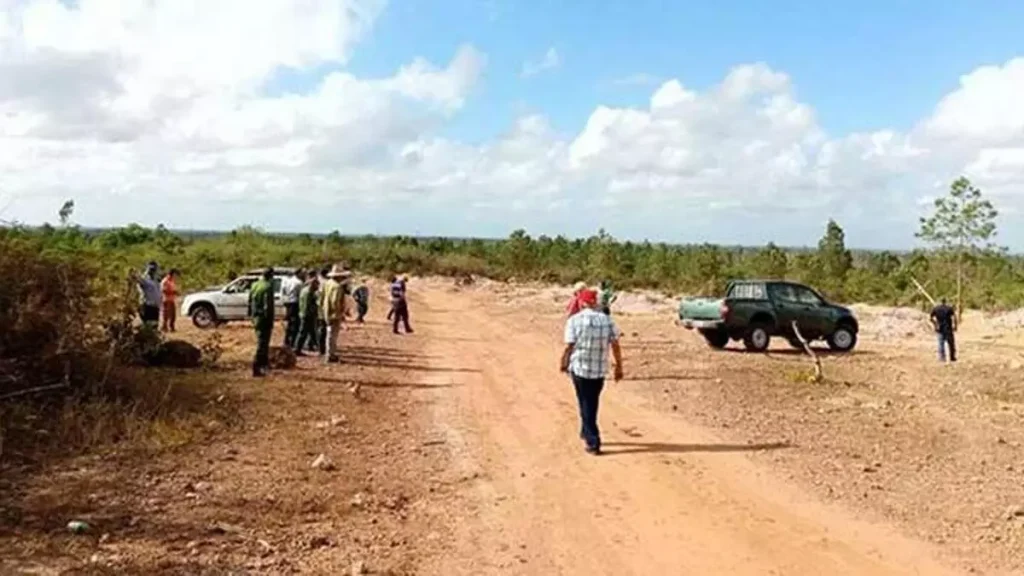
Authorities Warn of an ‘Unusual Increase in Cases’ of Hepatitis A in Pinar del Río

Since March, “the presence of the disease in a number of people higher than the usual figure of recent years” has been reported.

Authorities indicate that the incidence of this disease could surge this month. / Tele Pinar

14ymedio bigger14ymedio, Havana, June 7, 2026 — Without providing figures, Belkys González Robaina, head of the Digestive Disease Transmission Program in Pinar del Río, reported that the province has experienced “an unusual increase in cases” of hepatitis A. In a report published by Radio Guamá, the specialist warned that outbreaks are most prevalent in the Jagüey Cuyují and Cuba Libre people’s councils in the municipality of Pinar del Río, and in the Urban People’s Council in San Luis.

In statements to the provincial media outlet, the official also explained that the incidence of this disease, as well as other digestive-transmission illnesses, could increase due to rainfall and contamination of groundwater sources.

In light of this, González Robaina emphasized the need to strengthen hygiene and sanitation measures to curb the spread of the virus, which is transmitted primarily through the consumption of contaminated water or food. Recommendations include chlorinating water, applying disinfectant solutions in bathrooms to eliminate fecal and urine residue from patients, properly washing the clothing of infected individuals, and avoiding contact with healthy people.

Health alerts over hepatitis outbreaks in Pinar del Río have accumulated in recent months. Last March, Yusmary Estévez Mitjáns, deputy director of the Provincial Center for Hygiene, Epidemiology and Microbiology, reported an increase in suspected cases in the municipality of Minas de Matahambre and in the provincial capital, specifically in the town of La Coloma.

González Robaina stressed the need to reinforce hygiene and sanitation measures to prevent the spread of the virus.

“In these territories, the presence of the disease in a number of people higher than the usual figure of recent years is likely,” she said at the time, although, as now, she did not provide any figures.

This viral disease, which can be contracted through the consumption of contaminated water or food that has not been properly washed or that has been washed with contaminated water, has also been reported in other continue reading

parts of the country. In Matanzas, Andrés Lamas Acevedo, director of the Provincial Center for Hygiene, Epidemiology and Microbiology, confirmed in early May the existence of active hepatitis cases in the province, in areas such as Versalles, the Plácido district, La Cumbre, and “isolated cases in all municipalities.”

Although the physician stated in an interview with Girón that all outbreaks were “fairly well controlled,” the same outlet noted at the beginning of its report that, a couple of weeks earlier, “residents of Matanzas Province remain concerned” about the situation.

Regarding the province, the official explained that hepatitis transmission cases had spread “from person to person” and not through water, “as happened 20 years ago in Versalles.” He also attempted to downplay the outbreak: “In reality, there have been few cases.”

Provincial authorities had already announced that epidemiological surveillance had been strengthened in response to the outbreaks

In early April, provincial authorities announced that they had reinforced epidemiological surveillance due to hepatitis outbreaks in several municipalities, with the most critical situation concentrated in the Versalles neighborhood, where 18 active cases were recorded at that time.

Other outbreaks have also been reported in Camagüey. On April 23, provincial television interviewed a health-sector official who acknowledged that there was “an increase in our province of suspected and probable hepatitis A virus cases, mainly concentrated in our municipality.”

In the report, Televisión Camagüey stated that “in a scenario where there are serious problems with solid waste collection, it is urgent to intensify hygiene and sanitation measures.” Despite this situation, the health official interviewed maintained that “at this time, we do not have an outbreak in the municipality of Camagüey, despite a notable increase in the disease.”

“Camagüey has been full of hepatitis cases for months. Where I live, more than 20 people that I know of have had hepatitis. Please, take this seriously,” one user responded to the report published on Facebook. Another commenter also questioned the official message: “Calling them isolated cases is not accurate, because when you diagnose 30 to 40 positive cases in a single day in an emergency room, that is an outbreak.”

“Calling them isolated cases is not accurate, because when you diagnose 30 to 40 positive cases in a single day in an emergency room, that is an outbreak”

At the beginning of the year, health authorities in Ciego de Ávila reported through official media that they were investigating several suspected hepatitis cases detected in different municipalities of the province.

As often happens, no figures were provided, and officials limited themselves to reporting that, after detecting the first patients with symptoms consistent with the disease, the protocols established by the health system had been activated.

Hepatitis is a disease characterized by inflammation of the liver. Among its most common symptoms are fatigue, yellowing of the skin and eyes, nausea, abdominal pain, and dark urine, although it may also occur without symptoms. In severe cases, however, extreme fatigue, fever between 37 and 38 degrees Celsius, headache, muscle aches, loss of appetite, and bleeding gums may occur.

Translated by Regina Anavy

______________________

COLLABORATE WITH OUR WORK: The 14ymedio team is committed to practicing serious journalism that reflects Cuba’s reality in all its depth. Thank you for joining us on this long journey. We invite you to continue supporting us by becoming a member of 14ymedio now. Together we can continue transforming journalism in Cuba.
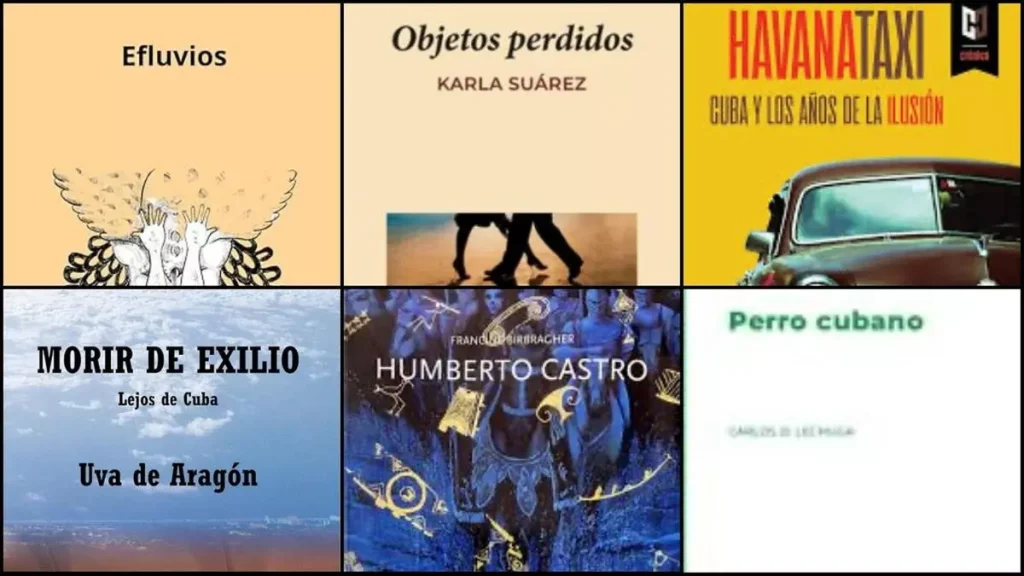
Memory, Exile, and Disillusionment in Cuban Books of May

Publishing releases related to Cuba moved between poetry, testimony, novels, and essays to narrate a nation marked by diaspora and uprootedness.

The books of May reflect a shared concern with preserving memory and understanding the human consequences of exile. / Collage

14ymedio bigger14ymedio, Havana, June 7, 2026 — Memory, the wounds of exile, and the mass exodus that has redefined the Cuban nation both inside and outside the Island dominated many of the literary publications and presentations linked to Cuba during May. From poetry to novels, as well as testimonial essays, art criticism, and anthropological research, the month’s new releases confirmed an increasingly visible trend in contemporary Cuban intellectual production: the need to tell the story of a national experience fragmented by emigration, distance, and the profound social transformations of recent decades.

Among the most notable releases is Efluvios (Effluvium), by Cuban poet Joaquín Gálvez. The work arrives with a foreword by writer and journalist José Hugo Fernández, who has noted that the volume, “dispensing irreverence and professional rigor in equal measure, transcends the philosophical, the literary, and the introspective to illustrate how poetry often rises above human frailties and reaches its zenith.”

Writer and filmmaker Carlos D. Lechuga presented in Madrid his most recent book, Perro cubano (Cuban Dog), a work preceded by winning the 2026 Franz Kafka Essay/Testimony Prize

Living in the United States for many years, Gálvez is a recognized figure within Cuban exile poetry. In addition to his creative work, he has carried out intense activity as a cultural promoter, editor, and organizer of literary projects that have helped maintain ties among Cuban writers scattered across different countries. Efluvios brings together reflection, personal experience, and a mature perspective on the existential dilemmas that run through much of contemporary Cuban literature.

Also in May, writer and filmmaker Carlos D. Lechuga presented in Madrid his latest book, Perro cubano [Cuban dog], a work that comes after receiving the 2026 Franz Kafka Essay/Testimony Prize. Defined by jury member Ernesto Menéndez Conde as a “non-book,” the volume moves between personal memory, social observation, and political reflection.

Lechuga, internationally known for films such as Melaza and Santa y Andrés, transfers many of the concerns that have marked his filmmaking into his writing. The result is a text charged with existential weight that explores the fractures of contemporary Cuban society from an intimate continue reading

and deeply subjective perspective. In a time of mass emigration and collective disillusionment, Perro cubano joins a current of works seeking to document, through individual experience, the emotional and social transformations taking place on the Island.

Morir de exilio: Lejos de Cuba (To Die in Exile: Far from Cuba), by Uva de Aragón, returns this year in an expanded edition published by Eriginal Books

The memory of exile also occupies center stage in Morir de exilio: Lejos de Cuba, by Uva de Aragón, which returns this year in an expanded edition published by Eriginal Books to mark the twentieth anniversary of its original publication. The work brings together nearly ninety articles and biographical sketches dedicated to Cuban figures who died outside their native country.

More than a collection of biographical profiles, the book functions as an extensive emotional map of the Cuban exile experience. Writers, artists, activists, academics, and public figures are portrayed in texts that reconstruct individual trajectories while documenting a collective history marked by separation, nostalgia, and the rebuilding of identities far from Cuba.

Another significant publication is the bilingual monograph devoted to Cuban-American painter Humberto Castro, written by art historian and critic Francine Birbragher. The volume examines in detail the three fundamental stages of the artist’s career: his formative years in 1980s Cuba, where he became one of the leading figures of the so-called Golden Generation of visual arts; his period in France during the 1990s; and his subsequent creative development in the United States.

Throughout May, Objetos perdidos (Lost Objects), the new novel by Karla Suárez published by Editorial Comba in Spain, continued its publishing journey

The study allows readers to explore a complex body of work that engages with mythology, memory, displacement, and the cultural tensions of contemporary life. Beyond its artistic value, the book offers a valuable perspective on the many ways in which the migratory experience has shaped Cuban visual production over the past decades.

Although officially released in April, Objetos perdidos, the new novel by Karla Suárez published by Editorial Comba in Spain, continued to gain attention throughout May. The story follows Giselle, a Cuban dancer who becomes stranded in Barcelona after losing her handbag and being forced to survive for several days in the area surrounding the Sagrada Familia.

The search for documents, memories, and objects laden with sentimental meaning becomes a much deeper exploration of identity, shattered dreams, emigration, and the need to rebuild oneself. With restrained and effective prose, Suárez once again addresses some of the themes that have defined her fiction: uprootedness, memory, and the fragility of personal projects. It is no coincidence that the novel has been enthusiastically received by critics, who have highlighted both the strength of its protagonist and the sensitivity with which it approaches the visible and invisible losses that accompany human displacement.

Through conversations held inside a taxi, Wig documents decisive events

Finally, May continued to consolidate the impact of Havana Taxi: Cuba y Los años de ilusión (Havana Taxi: Cuba and the Years of Illusion), by Norwegian anthropologist Ståle Wig. The result of several years of field research in Havana, the book reconstructs the everyday lives of three Cuban individuals during a decade marked by expectations of change and subsequent disappointment.

Through conversations he conducted inside a taxi, Wig documents decisive events such as the expansion of the internet, the diplomatic rapprochement between Cuba and the United States, the death of Fidel Castro, and the protests of July 11, 2021. The result is a work that combines anthropological rigor with a remarkable narrative ability to capture the tensions between hope and stagnation that have defined the recent Cuban experience.

Taken together, May’s publishing releases reflect a shared concern with preserving memory and understanding the human consequences of exile, migration, and social transformation. From poetry to academic research, and from novels to testimonial writing, the books published or presented during the month paint a portrait of a nation geographically dispersed, yet determined to tell its own story.

Translated by Regina Anavy

______________________

COLLABORATE WITH OUR WORK: The 14ymedio team is committed to practicing serious journalism that reflects Cuba’s reality in all its depth. Thank you for joining us on this long journey. We invite you to continue supporting us by becoming a member of 14ymedio now. Together we can continue transforming journalism in Cuba.
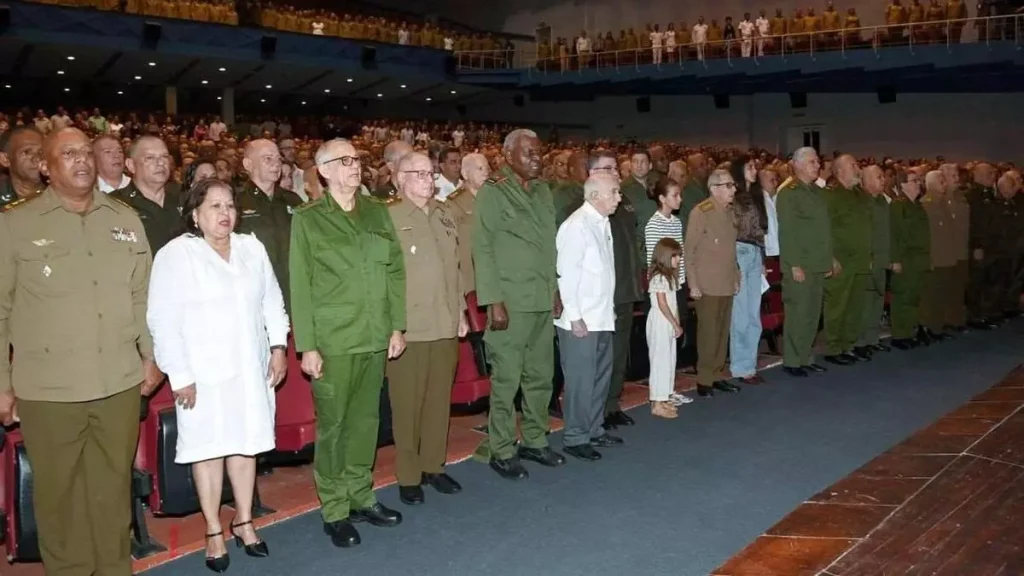
U.S. Sanctions Reach Cuban Gold and Australia’s Antilles Gold

The company suspended trading of its shares after the inclusion of its Cuban partner in Minera La Victoria on the U.S. blacklist

The company had estimated that its two Cuban projects, Nueva Sabana and La Demajagua, could generate more than $1.763 billion over ten years. / Invasor

14ymedio bigger14ymedio, Havana, June 5, 2026 — Australian mining company Antilles Gold requested the Sydney Stock Exchange on Friday to suspend trading of its shares while it prepares an announcement regarding the impact of the sanctions recently imposed by the United States on Minera La Victoria, the joint venture it created in Cuba with the state-owned GeoMinera to develop the Nueva Sabana deposits in Ciego de Ávila and La Demajagua in the Isle of Youth.

The mining company has not yet detailed the extent of the blow. It merely requested a temporary suspension of its shares while preparing a statement for shareholders regarding the consequences of the sanctions. The trading halt will remain in effect until the report is released or, at the latest, until the opening of trading on June 10.

For William Pitt Wasmer, a Cuban-American businessman and heir to a family that owned mines confiscated by the Cuban government after 1959, the episode confirms the deterioration of a sector that Havana had hoped to present as a future source of foreign currency. “Now, in addition to the problems facing nickel and cobalt mining, gold mining has been added to the list,” he told 14ymedio.

Antilles Gold holds a stake in Minera La Victoria, a 50-50 joint venture with GeoMinera, the state mining company

Pitt believes the Antilles Gold case cannot be viewed in isolation and must be analyzed within the broader context that forced the departure of the Canadian company Sherritt International, which operated continue reading

nickel mines in Moa. “The other mining companies working in Cuba are facing very similar problems,” he said.

The sanction came at a particularly delicate moment for Antilles Gold. Just one day before the trading halt, the company reported that construction at Nueva Sabana was moving forward and that the Chinese company Xinhai Mining Technology & Equipment was advancing the manufacture of the mine’s concentrator. Antilles Gold itself described Nueva Sabana as “the first stage of its partnership with GeoMinera,” while La Demajagua remained scheduled as a second project for 2027–2028.

The structure of the venture illustrates the extent to which the project was designed to mitigate Cuban risk. Antilles Gold participates in Minera La Victoria, a 50-50 joint venture with GeoMinera, Cuba’s state mining company. The engineering, procurement, and construction contract for Nueva Sabana, awarded to Xinhai, was valued at $29.5 million and covered about 85% of the remaining development costs. Xinhai also offered a $17.1 million credit line, deferring part of its payments.

The Nueva Sabana project was intended to produce gold and copper. Antilles Gold presented it as a relatively small open-pit mine capable of entering production quickly. According to the company’s own estimates, adjusted for recent metal prices, the two Cuban projects, Nueva Sabana and La Demajagua, could generate more than 2.5 billion Australian dollars (US$1.763 billion) in cash surplus attributable to Antilles Gold between 2027 and 2037.

In addition to Gaesa’s extensive control over mining, the shutdown is also linked to “Cuba’s economic situation, with its complete lack of electrical resources and the fuel necessary to operate mining activities”

La Demajagua, located on the Isle of Youth, added another attraction: besides gold and silver, it contains antimony, a mineral considered strategic because of its industrial and military applications. Under Antilles Gold’s plans, the second project was expected to produce gold and arsenic concentrates as well as antimony concentrates or cathodes.

For a small company dependent on external financing, Chinese contractors, and international concentrate buyers, being associated with a Cuban entity placed on Washington’s blacklist may be enough to freeze access to banks, insurers, suppliers, and potential investors.

Pitt himself links the episode to Cuba’s structural crisis. In addition to Gaesa’s overwhelming control over mining, the setback is also due to “Cuba’s economic situation, with its complete lack of electrical resources and the fuel necessary to operate mining,” the expert said.

Pitt also connects the case to Sherritt, which, besides producing nickel and cobalt, participates in Energas, a key company for natural gas processing and electricity generation. “Apparently, only oil extraction continues, and even then we are already seeing Energas and Sherritt beginning to have problems delivering natural gas to the city,” he warned.

“It remains to be seen whether Antilles Gold will follow a path similar to Sherritt’s or whether, given that it does not have a major investment at stake, it will simply let events run their course without doing anything further,” Pitt concluded.

Translated by Regina Anavy

______________________

COLLABORATE WITH OUR WORK: The 14ymedio team is committed to practicing serious journalism that reflects Cuba’s reality in all its depth. Thank you for joining us on this long journey. We invite you to continue supporting us by becoming a member of 14ymedio now. Together we can continue transforming journalism in Cuba.
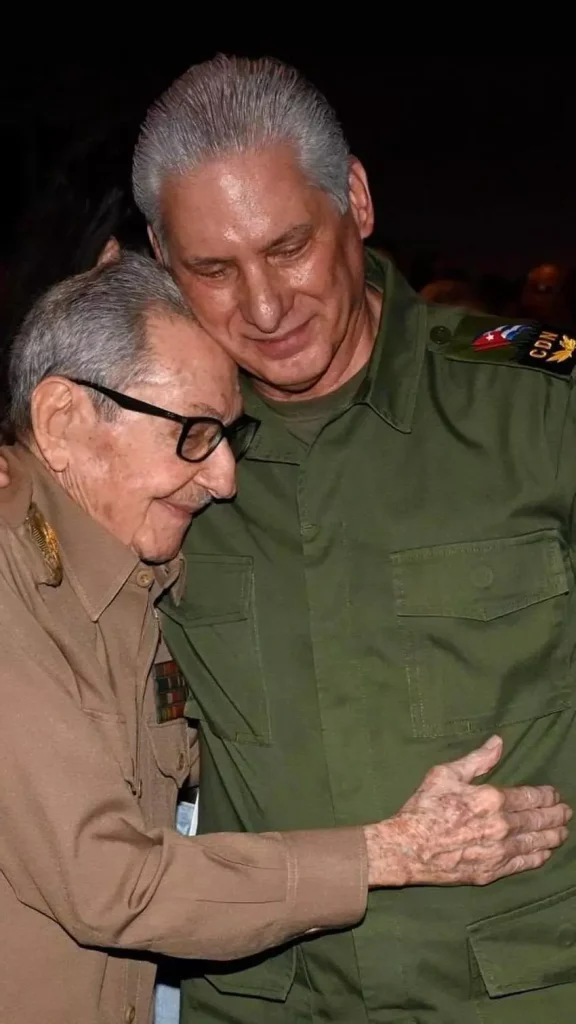
Raúl Castro Appears in Public for the First Time Since His Criminal Indictment in the U.S.

At the Karl Marx auditorium, packed with uniformed military personnel, Miguel Díaz-Canel celebrated the general’s 95th birthday and the 65th anniversary of the Ministry of the Interior with a totalitarian slogan: “Raúl is Cuba, and Cuba is untouchable!”

Miguel Díaz-Canel—dressed in olive green—presented the nonagenarian general not only as a historic leader, but also as the spiritual founder of Cuba’s security apparatus. / Cubadebate

14ymedio bigger14ymedio, Havana, June 6, 2026 — Raúl Castro reappeared this Friday in Havana wearing a military uniform and surrounded by the Cuban power elite and its repressive forces, at an event the Government presented as a tribute to his 95th birthday and the 65th anniversary of the Ministry of the Interior. The ceremony, held at the Karl Marx Theater, marked the Army general’s first public appearance since U.S. authorities criminally charged him in May over the deaths of the four crew members of two Brothers to the Rescue aircraft shot down in international waters in 1996.

The former ruler did not speak. Seated in the front row, he sent a message that was read by Minister and Army Corps General Lázaro Alberto Álvarez Casas. In the text, Castro congratulated the institution’s “officers, combatants, civilian workers, and students,” describing it as “an indispensable bastion in the defense of the sovereignty and tranquility of the Cuban nation.” He also praised their “unwavering loyalty” and urged them, in the “current historic moment,” to continue working with “order, control, and responsibility.” The message concluded with a call to “continue defending with honor and commitment the work of the Revolution and the future of the country.”

Miguel Díaz-Canel—dressed in olive green—presented the nonagenarian general not only as a historic leader but as the spiritual founder of Cuba’s security apparatus at the age of 27. Díaz-Canel recalled that the State General Staff Secret Service Corps of the Frank País Second Eastern Front had been created to confront “anything that could affect, compromise, or endanger the security of our rebel forces.”

Díaz-Canel asserted that the United States is targeting Gaesa “because it knows of its effectiveness in the face of the permanent economic siege” and because “the contributions of its companies to the country’s socioeconomic development are significant.”

The scene appeared designed less to respond to Washington than to urgently appeal to the loyalty of internal forces. Díaz-Canel called Castro the “leader of the Cuban Revolution,” the “teacher, guide, and inspiration” of both the Armed Forces and the Ministry of the Interior, elevating the slogan of recent days into an all-encompassing formula: “Raúl is Cuba, and Cuba is untouchable!” The message sought not only to shield the aging general from external pressure but also to remind the military and security apparatus that, according to the official narrative, loyalty to Raúl is equivalent to defending the nation itself. continue reading

The reappearance came two days after the United States imposed new sanctions on Díaz-Canel, his wife Lis Cuesta, several members of the Castro family circle, and regime entities, including the Ministry of the Interior and the Ministry of the Revolutionary Armed Forces. Washington had already intensified its offensive in May against Cuba’s economic and military apparatus, particularly against Gaesa, the military-controlled conglomerate.

In that context, Díaz-Canel devoted a substantial portion of his speech to defending Grupo de Administración Empresarial S.A. “The attack on Gaesa is no coincidence; it is not just another media campaign,” he said. According to the ruler, the United States is targeting the business system “because it knows of its effectiveness in the face of the permanent economic siege” and because “the contributions of its companies to the country’s socioeconomic development are significant.” He also denied the existence of corruption or enrichment within the military elite, dismissing such accusations as “another great lie,” despite numerous indications regarding Gaesa’s opaque management of billions of dollars in funds.

What he did not mention, however, is that those “infiltrators” were Cubans residing in the United States and that the episode remains shrouded in considerable opacity

“The reaction of several companies leaving Cuba these days is the result of coercive measures by the U.S. government,” Díaz-Canel said. He did not name any hotel chain or company specifically, but framed those departures as part of a broader offensive that, according to him, seeks to cut off fuel, investment, credit, trade, food, medicine, and basic supplies.

The speech also revived a military tone. Before Raúl, Interior Ministry commanders, and Armed Forces chiefs, Díaz-Canel recalled the 32 Cubans “who fell in Venezuela on January 3.” According to his account, those men “went into combat” despite the “element of surprise” and the enemy’s “superiority in weapons and forces.” Their deaths, he said, left “a clear message of how millions of Cubans would act in defense of the homeland if it were attacked.”

He then referred to another episode presented by the Government as evidence of armed infiltration. Five Border Guard Troops members, he said, neutralized a group of ten men who intended to establish themselves in Cuban territory with “a considerable cache of military weapons.” “Five defeated ten!” he exclaimed, before highlighting that the commander of the vessel, though seriously wounded, “never abandoned his mission.” What he failed to mention, however, is that those “infiltrators” were Cubans living in the United States and that the incident remains surrounded by significant unanswered questions.

Díaz-Canel recalled the counteroperation known as Candela, which allegedly made it possible to “preserve Raúl’s life and publicly expose” Washington. / Cubadebate

The closing remarks took the ceremony to Guantánamo. Díaz-Canel invoked Operation Patty, an alleged 1961 CIA plot to assassinate Raúl Castro in Santiago de Cuba and stage an attack against the U.S. Naval Base at Guantánamo in order to justify military intervention. According to Díaz-Canel, the newly created Ministry of the Interior dismantled the operation through a counterplan called Candela, which “preserved Raúl’s life and publicly exposed” Washington.

The reference is directly linked to a recent event. On May 29, the commander of the U.S. Southern Command, General Francis Donovan, met at the perimeter of the Guantánamo Naval Base with General Roberto Legrá Sotolongo, chief of the General Staff and first deputy minister of the Revolutionary Armed Forces. According to reports, both sides discussed operational security matters and agreed to maintain communication channels.

Díaz-Canel thus linked past and present in a tense speech marked by nervous gestures. Operation Candela, the Guantánamo enclave, the 32 deaths in Venezuela, the intercepted boat, the sanctions, the departure of companies, and fuel shortages were all woven into a single narrative of a besieged nation.

“If the homeland is attacked, we will respond in legitimate self-defense,” he warned. “And if they attempt to enter, let there be no doubt: there will be determined and resolute combat!”

Translated by Regina Anavy

______________________

COLLABORATE WITH OUR WORK: The 14ymedio team is committed to practicing serious journalism that reflects Cuba’s reality in all its depth. Thank you for joining us on this long journey. We invite you to continue supporting us by becoming a member of 14ymedio now. Together we can continue transforming journalism in Cuba.
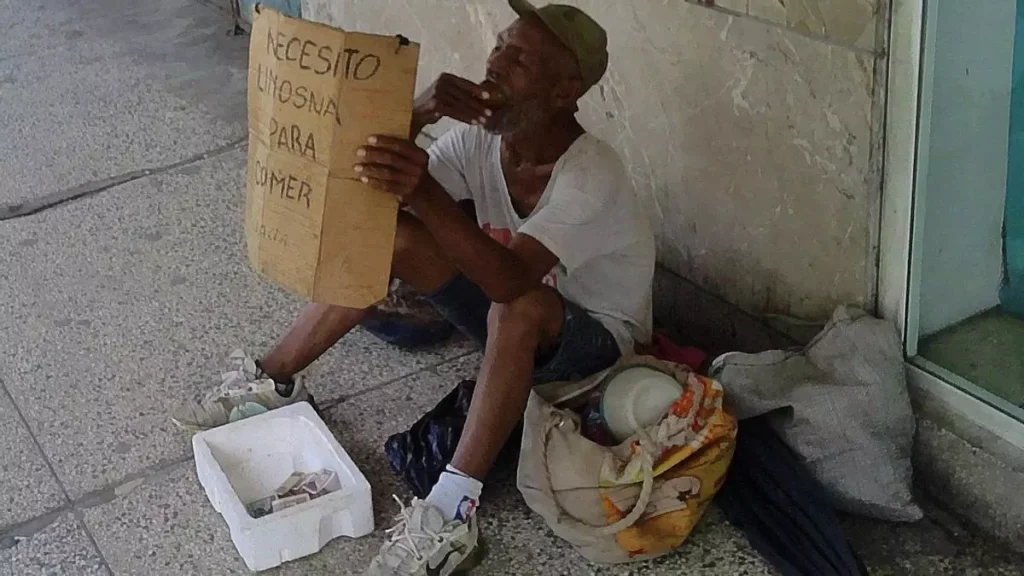
The OCDH Asks the European Union To Create an International Fund for Victims of Communism

The NGO states that the mechanism it proposes “could compensate victims with the resources embezzled and plundered from the Cuban people by the Havana regime”

“”Assets stolen from Cubans should be used to compensate Cubans,” says the OCDH. / 14ymedio

14ymedio bigger14ymedio/EFE, Havana, June 5, 2026 – The Cuban Observatory for Human Rights (OCDH) formally urged the authorities of the European Union (EU) to participate in the creation of an “International Compensation Fund for the Victims of Crimes Against Humanity of the Cuban Communist Regime,” according to a statement issued this Thursday.

The OCDH delivered its petition to the Madrid office of the representations of the European Commission and the European Parliament in Spain, according to the statement.

The NGO states that the mechanism it proposes “could compensate victims with the resources embezzled and plundered from the Cuban people by the Havana regime,” because “assets stolen from Cubans should be used to compensate Cubans.”

The petition is addressed to the principal European authorities, including European Commission President Ursula von der Leyen.

“The Havana regime confiscated the people’s property and concentrated the assets in what is now known as Gaesa”

“It is wealth extracted from the sweat of Cubans,” denounced OCDH Executive Director Alejandro González Raga, explaining that “the Havana regime confiscated the people’s property and concentrated the assets in continue reading

what is now known as Gaesa [Business Administration Group S.A.], an opaque military structure.”

According to the statement, the United States Department of State “estimates the illicit assets of that conglomerate deposited in foreign accounts at up to 20 billion dollars.”

The petition comes after the U.S. Executive Order of May 1, which provides for sanctions against individuals and companies that maintain business relations with the Cuban state, and the sanctioning, one week later, of Gaesa.

“Every dollar frozen from Gaesa is a dollar available to compensate victims,” the OCDH states.

The Observatory emphasizes the need for action by the EU, since, in its view, it has the necessary legal mechanisms to carry out the requested action, and urges its participation as a founding organization in the Compensation Fund with an initial contribution and technical assistance.

“Europe was conceived as a community of values, not only of interests; the time has come to prove it,” González Raga concluded.

Translated by Regina Anavy

______________________

COLLABORATE WITH OUR WORK: The 14ymedio team is committed to practicing serious journalism that reflects Cuba’s reality in all its depth. Thank you for joining us on this long journey. We invite you to continue supporting us by becoming a member of 14ymedio now. Together we can continue transforming journalism in Cuba.
Confirmation of the 28-Year Sentence Against Álvaro Uribe’s Brother for Creating a Paramilitary Group

The former president respects and adheres to the decision of the Supreme Court but reaffirms his argument that Santiago Uribe is innocent

The Court believes that rancher Santiago Uribe created and financed the paramilitary group The Twelve Apostles. / Justice for Colombia

14ymedio bigger14ymedio/ EFE, Bogota, June 5, 2026 – The Criminal Chamber of the Supreme Court of Justice confirmed this Thursday the sentence of 28 years and three months in prison against rancher Santiago Uribe, the brother of former Colombian president Álvaro Uribe (2002-2010). for creating and financing the paramilitary group The Twelve Apostles.

“Dr. Jaime Granados (the Uribe family’s attorney) informs me that the newspaper information tells him that the Supreme Court confirms the conviction against my brother Santiago, a devastating issue for my family,” expressed the former president in a message published on X.

The Court confirmed that Santiago Uribe committed the crimes of conspiracy and homicide, both aggravated, by participating in the formation of The Twelve Apostles, a paramilitary group that was born in the municipality of Yarumal, department of Antioquia (northwest), and was also involved in the 1994 murder of Camilo Barrientos.

The Full Chamber confirmed “the judgment delivered on November 25, 2025 by the Superior Court of Antioquia, whereby it convicted Santiago Uribe Vélez as a co-perpetrator criminally responsible for aggravated felony conspiracy and aggravated homicide, as a combination of crimes against humanity,” a decision against which “no appeal is possible.” continue reading

Uribe’s defense was led by attorney Jaime Granados, who is also the lawyer for the former president in his judicial cases. He said on several occasions that there were false witnesses and even media manipulation in the trial.

“Judicial decisions must be respected and complied with. However, through the legal mechanisms enshrined in the legal system, we will continue to defend the innocence of Santiago, because the 16 years of knowledge of this case allow us to warn that he is being unjustly condemned,” Granados stated.

Allí added that he and his team will study “the full content of the decision and the votes,” after which they will announce “more details.”

Former President Uribe, meanwhile, has been denounced for his alleged links with the paramilitaries in his years as governor of Antioquia

Former President Uribe, meanwhile, has been denounced for his alleged ties with the paramilitaries in his years as governor of Antioquia (1995-1997), including one that indirectly links him to the massacre at El Aro, in which 17 farmers were killed in October 1997.

Commenting on the events, Colombian president Gustavo Petro assured that Colombia must “free itself from the paramilitary governance left in the northern region of Antioquia” by the group of The Twelve Apostles.

“I want to turn that page and ensure the creation of a national agreement so that this era does not repeat itself. Differences between Colombians are not resolved by weeding out the other, but by building a safe and permanent path of coexistence. The methods of Santiago Uribe Vélez must not be repeated again in Colombia,” added Petro.

Translated by Regina Anavy

______________________

COLLABORATE WITH OUR WORK: The 14ymedio team is committed to practicing serious journalism that reflects Cuba’s reality in all its depth. Thank you for joining us on this long journey. We invite you to continue supporting us by becoming a member of 14ymedio now. Together we can continue transforming journalism in Cuba.
Cuba’s Central Bank’s Decision Is Brought Forward to Thursday: Visa and Mastercard Can No Longer Be Used in Cuba

Customers who went shopping at the Vima store today were unable to make purchases and were very upset.

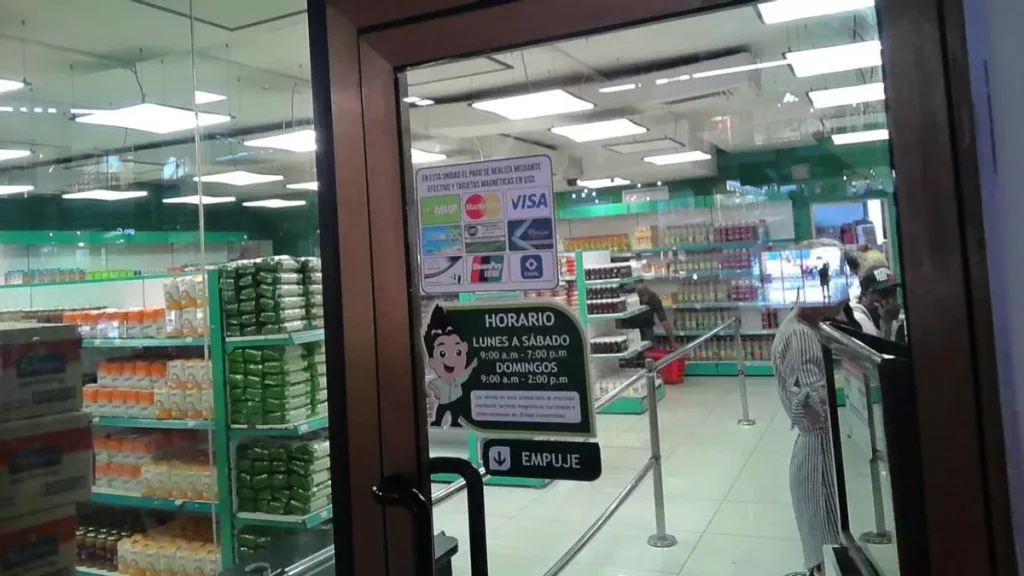
At Carlos III Plaza, signs are still displayed on the doors stating that Visa and Mastercard are accepted, but that is no longer possible. / 14ymedio

14ymedio bigger14ymedio, Havana, Juan Diego Rodríguez, June 4, 2026 / Although the Central Bank of Cuba (BCC) announced on Wednesday that Visa and Mastercard cards could no longer be used starting June 6, stores stopped accepting them today. Fincimex announced it yesterday in a late-afternoon social media post, but the vast majority of people only found out today when they arrived at the stores.

At Vima—a partnership between the Spanish food company and Cimex—an employee said that Saturday is “when the bank withdraws,” referring to the foreign institution that authorities have never identified by name. However, Fincimex must carry out its periodic reconciliation with the foreign bank and, for that reason, “they closed operations yesterday at two in the afternoon.” In fact, he added, “when we try, the card comes up invalid; it’s not that we don’t want to accept it, it’s that we can’t.”

The explanation matches the brief statement issued by the financial arm of the military conglomerate Gaesa, which reported that, “in order to avoid possible additional economic impacts,” operations were halted at 2:00 p.m. on Tuesday. It continued: “Normally, transactions using these cards through POS terminals require 72 hours for settlement from abroad, so financial operations carried out today would complete their processing after the termination date of the agreements signed with the foreign bank and would represent financial losses for Cuba.”

“When we try, the card comes up invalid; it’s not that we don’t want to accept it, it’s that we can’t”

In this way, the statement concluded, “due to the illegitimate actions of the U.S. Government, a commercial operation that for 32 years allowed Visa and Mastercard cards to operate in Cuba according to international standards has been interrupted.”

The explanations, given without advance notice, have been of little comfort. Customers who had gone to shop at Vima today, relying on the deadline announced by the BCC, were visibly upset. “Then why do they say it starts on Saturday if you already can’t use them today?” protested one woman, pulling at her hair and wringing her hands. continue reading

At Carlos III Plaza, staff are giving the same explanation, although, unlike Vima, signs are still displayed on the doors stating that Visa and Mastercard can be used.

According to the brief BCC statement released yesterday, the reason international cards were being withdrawn from the Island was that the “foreign bank that processes transactions carried out in Cuba using Visa and Mastercard cards” ended its relationship with Fincimex on Tuesday.

That “interruption,” the statement continued, was “directly” related to the executive order issued by U.S. President Donald Trump on May 1, which opened the door to new sanctions against officials, institutions, and companies linked to the regime and which the Central Bank describes as “part of its strategy of suffocation against the people of Cuba.”

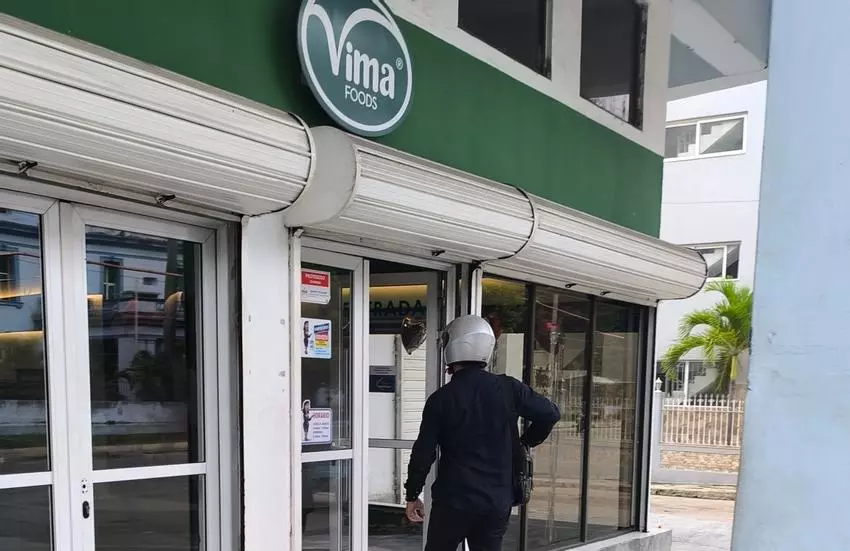
Entrance to Vima, on Infanta Street in Central Havana, now without the notice about those international cards. / 14ymedio

“The foreign bank announced that, beginning June 6, the date on which the Empire’s measure comes into force, it becomes unlawful and impossible to continue carrying out the agreements with the Cuban entity,” the notice stated, without mentioning whether Visa and Mastercard themselves had taken any action. It did indicate that the “100% national” prepaid cards Clásica and Tropical, as well as Russia’s Mir card and China’s UnionPay, could continue to be used, along with cash.

The BCC statement attempted to project normalcy at the end, but the list of alternatives confirmed the scale of the problem, since replacing those cards with the permitted options is far from equivalent. Visa and Mastercard are the most widely used payment instruments among European, Latin American, and Canadian travelers. Mir has limited reach and operates in the context of international sanctions against Moscow, while UnionPay has a broader global presence but is not part of the payment habits of most Western tourists visiting Cuba.

For many foreign residents, international cards provided direct access to these stores without depending on the informal currency market. A significant percentage of ordinary Cubans who shop in dollar stores also do so with cards obtained abroad by relatives.

The decision by this mysterious “foreign bank” adds to the actions of numerous companies that have been leaving the Island in recent weeks or ending contracts with the Business Administration Group (Gaesa), which has been specifically sanctioned by the United States. This Wednesday, the Spanish hotel company Meliá Hotels International confirmed its withdrawal from 15 of the 34 hotels it manages on the Island, those owned by Gaesa. Earlier, Iberostar stopped operating and marketing 12 hotels, and Blue Diamond Resorts announced the complete cessation of its operations in Cuba.

Meanwhile, Sherritt International, one of the largest foreign investors in Cuba, suspended in May its direct participation in its joint ventures on the Island and announced the repatriation of its personnel after Washington sanctioned Moa Nickel S.A., the company it shares with the state-owned Compañía General de Níquel. The multinational later paused its plan to dissolve its Cuban operations while reporting that it is negotiating with a former Trump adviser for the purchase of a majority of its shares.

Translated by Regina Anavy

______________________

COLLABORATE WITH OUR WORK: The 14ymedio team is committed to practicing serious journalism that reflects Cuba’s reality in all its depth. Thank you for joining us on this long journey. We invite you to continue supporting us by becoming a member of 14ymedio now. Together we can continue transforming journalism in Cuba.
Marco Rubio Proposes the Czech or Polish Model for a Transition in Cuba

“There are people within the Government’s technocratic sphere who could play some role in this, but we do not have names,” the Secretary of State said.

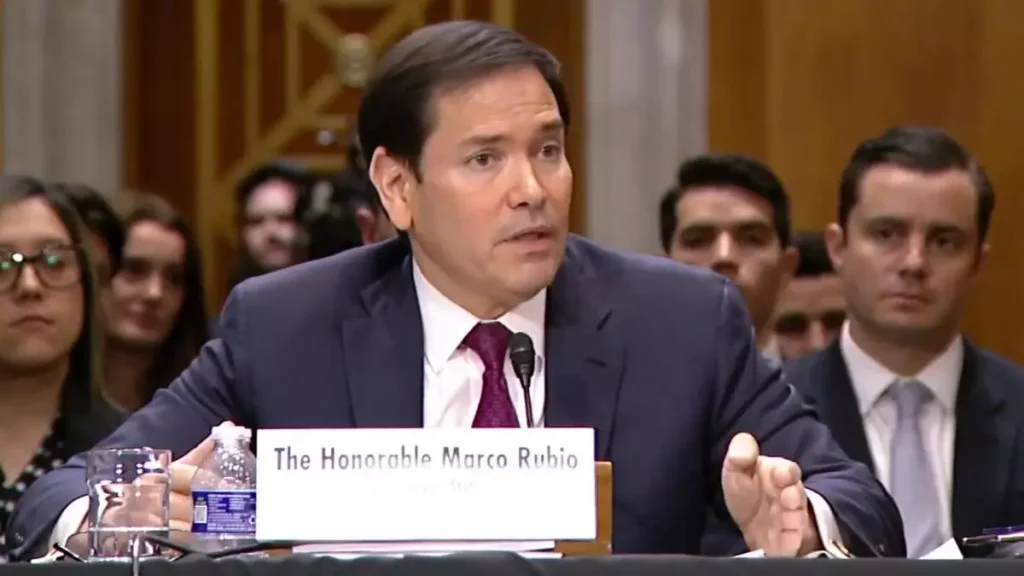
Marco Rubio, during an appearance before the U.S. Senate / X @SecRubio

14ymedio bigger14ymedio, Madrid, June 4, 2026 – Cuba once again took center stage on the second day of Marco Rubio’s appearance before a U.S. House of Representatives committee, where the Secretary of State affirmed on Wednesday that there are people within the regime with whom a transition can be negotiated.

“There are people within the Government’s technocratic sphere who could play some role in this. But if you ask me whether there is an individual we would trust and who would support us in leading this transition from beginning to end, I cannot give you that name right now,” Rubio said.

Although he refrained from giving any indication of who that person might be, he did suggest that it would not be someone from the highest ranks. “That becomes a little more difficult the higher up the ranks you go, because of the ideological inclination some of them have,” he added.

“That becomes a little more difficult the higher up the ranks you go, because of the ideological inclination some of them have”

The head of U.S. diplomacy was responding to questions from Cuban-American congresswoman María Elvira Salazar, who pressed him on whether the Venezuela model could be replicated in Cuba, referring to the idea of finding a figure from within the regime, akin to Delcy Rodríguez, to help bring about change. Rubio acknowledged that continue reading

the situation on the Island is of particular interest to him and stressed that his goal was to avoid chaos.

“Clearly, there are individuals within the power structure who understand that what they have is not sustainable and that it must be rebuilt. But they have no power. And if they do have it, they do not know how to do it,” he insisted.

Rubio again criticized the Government by referring to the military conglomerate Gaesa, saying that he would not “allow them to benefit from the game they have been playing, in which they steal money from the Cuban people for the benefit of that conglomerate at the expense of the people of Cuba.” He nevertheless emphasized a negotiated path.

“I think we want to look at models like the Czech Republic or Poland, how they made the transition. And one of the things they did was preserve some institutions in their society to provide stability and longevity to the project,” he explained. His remarks continued the message he delivered the previous day when, while discussing the Island’s precarious situation and its affinity with states supposedly hostile to the United States, such as China and Russia, he argued that change required a new system, inseparable from new leadership.

“They need serious systemic reform,” he said before asking and answering whether the country could take care of itself. “I think the answer is yes, they can, but I do not believe this system is capable of reforming itself unless new people take control or a new mindset is imposed,” he emphasized.

“We have spoken with them, we have offered them what I believe needs to happen for their economy to recover,” he said, without providing further details.

In recent months, the international press has cited as part of the negotiations Raúl Guillermo Rodríguez Castro, the grandson of the former president and who is known as El Cangrejo [The Crab], reportedly having spoken directly with Rubio. Another name mentioned has been Alejandro Castro Espín.

Venezuela also came up during the hearing when Rubio was asked about possible elections in the South American country, precisely five months after the capture of Nicolás Maduro.

“We would like to see them as soon as possible, but remember that only five months have passed: not five years, not 50 months,” he said regarding elections in Venezuela.

“We would like to see them as soon as possible, but remember that only five months have passed: not five years, not 50 months. Five months is not a long time for a country that has gone through what that country has gone through, but clearly we need a new electoral commission,” he declared.

Salazar, speaking after the hearing, suggested that elections in Venezuela could be held in 2027, although she said that 2028 would also be acceptable if that ensured the proper conditions for legitimate elections.

“I am betting on elections being held in 2027, but if it is in 2028, that is fine. These are processes that need to be properly established so that the results are good,” she maintained.

Translated by Regina Anavy

______________________

COLLABORATE WITH OUR WORK: The 14ymedio team is committed to practicing serious journalism that reflects Cuba’s reality in all its depth. Thank you for joining us on this long journey. We invite you to continue supporting us by becoming a member of 14ymedio now. Together we can continue transforming journalism in Cuba.
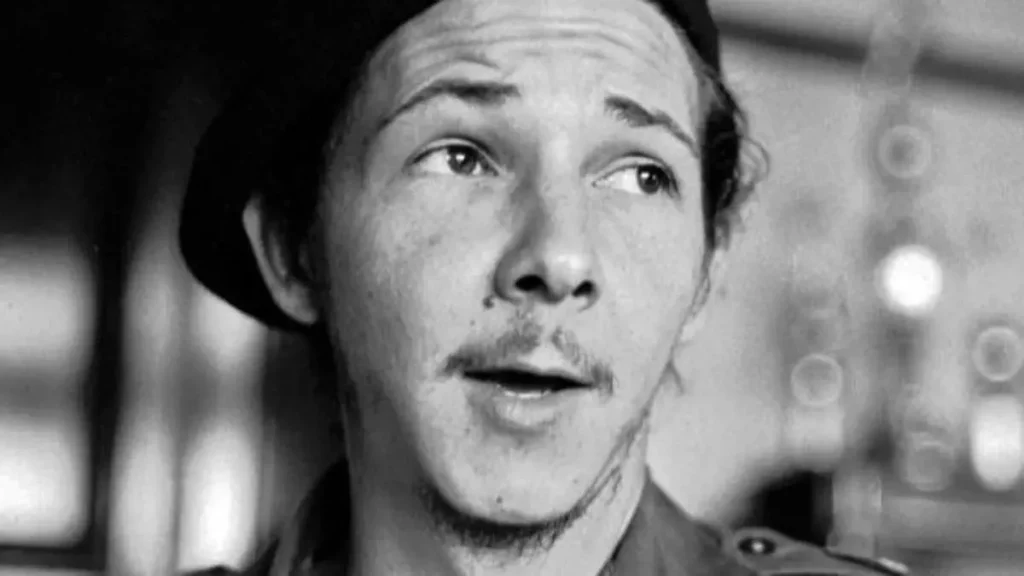
Raúl Castro, the Enforcer ‘Time Magazine’ Saw Born Alongside the Revolution

In January 1959, while half the world was still celebrating Batista’s downfall, Fidel’s younger brother was already appearing in the international press as an architect of terror.

The image contradicts the later narrative that sought to portray him as a pragmatic administrator, less charismatic but more rational than Fidel. / Adelante

14ymedio bigger14ymedio, Havana, June 3, 2026 — “Quarrelsome and envious” was how a Jesuit priest described the younger brother who accompanied Fidel Castro at a Catholic school in Santiago de Cuba. Time Magazine recorded it in a report published on January 26, 1959, barely three weeks after Fidel Castro’s triumphant entry into Havana.

The article, titled The Vengeful Visionary, was not yet a retrospective reading of Castroism, but rather a snapshot taken in the heat of the moment. The text portrayed, with remarkable clarity, the birth of the Revolution, its euphoric crowds, and at the same time the machinery of death that was beginning to operate in the name of revolutionary justice.

Although the explicit protagonist of the cover story was Fidel Castro, Time’s text offers an early key to understanding Raúl. He appears there less as his older brother’s shadow than as the executor of a policy already defined by revenge and by the normalization of exemplary punishment. The magazine described the first executions as the moment when the victors, who had promised democracy, justice, and honest government, “clung to the arrogant instruments of dictatorship.”

While Fidel estimated that fewer than 450 men would be executed, his younger brother boasted that “a thousand might die”

The harshest passage is the one devoted to Santiago de Cuba. According to Time, the revolutionary tribunals operated with rebels serving simultaneously as prosecutors, defense attorneys, and judges. Sentences were handed down in summary proceedings and carried out just as quickly. In Santiago, the magazine added, “the show was under the personal command of Raúl, Fidel’s 28-year-old brother, a slant-eyed man who had already executed 30 ‘informers’ during two years of guerrilla warfare.”

The publication portrays him with a coldness that remains striking today. The context was that of mass executions, with priests continue reading

available to hear the condemned men’s final confessions before they faced the firing squad. While Fidel estimated that fewer than 450 men would be executed, his younger brother boasted that “a thousand might die.”

The scene at Santiago’s firing range reads like a preview of the country that was to come. A trench twelve meters long, three meters wide, and three meters deep; prisoners transferred before dawn from Boniato prison; confessions heard by six priests; condemned men with their hands tied; and bodies falling into the pit. One rebel murmured: “Let it end quickly. I have pain in my soul.” By noon, according to the account, 70 prisoners had died.

In that architecture of terror, Raúl Castro does not appear as an improviser, but as an enforcer. Fidel justified the repression with fiery speeches and appeals to the suffering of Batista’s victims. Raúl, by contrast, embodied the administrative side of violence: organizing, commanding, carrying out, and sustaining the mechanism. That difference would define much of his later career within the regime. Fidel needed to present violence as exceptional justice. Raúl seemed comfortable with violence as a method of power.

“Let it end quickly. I have pain in my soul”

Time’s account does not absolve Batista. It describes with stark detail the corruption, torture, and police sadism of his regime. But that is precisely what makes the reading more disturbing. The magazine acknowledges the previous horrors and yet warns that the new government was nullifying the Constitution, holding summary trials, and turning revenge into a public spectacle. The dilemma was not whether Batista had been brutal, but whether the Revolution was prepared to establish the rule of law or a new dictatorship of terror.

Raúl Castro is placed firmly on that second path. Before becoming Minister of the Armed Forces, before formally inheriting power, before becoming the face of Castroist continuity, he was already there: in Santiago, beside the mass graves, in command of the rifles. The image contradicts the later narrative that sought to portray him as a pragmatic administrator, less charismatic but more rational than Fidel.

What Time saw in 1959 was something else: the birth of a political culture in which obedience was imposed at gunpoint and the law could be suspended “in the name of the people.” Raúl Castro was not merely an observer of that drift. He was one of its first visible enforcers, and the magazine portrayed him even then as a man who took pleasure in pulling the trigger and filling graves with corpses.

Translated by Regina Anavy

______________________

COLLABORATE WITH OUR WORK: The 14ymedio team is committed to practicing serious journalism that reflects Cuba’s reality in all its depth. Thank you for joining us on this long journey. We invite you to continue supporting us by becoming a member of 14ymedio now. Together we can continue transforming journalism in Cuba.
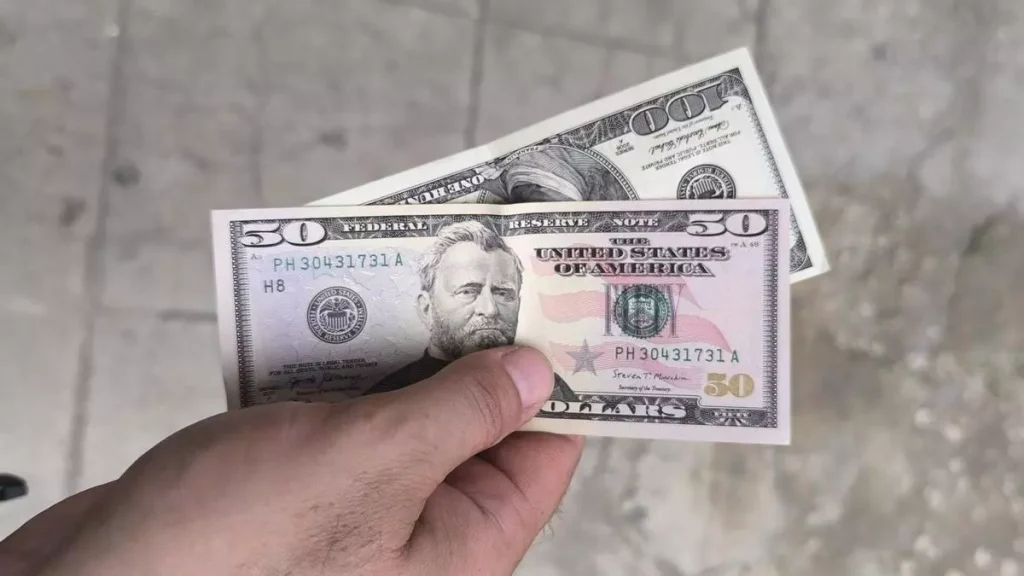
The Dollar Reaches a Record 600 Cuban Pesos on the Informal Currency Market

Those who receive remittances are celebrating the rise, but prices have also increased significantly, and people on the street are noticing.

The official exchange rate stands this Wednesday at 524 pesos per dollar. “Nobody sells to the State,” says Roberto. “It’s like stealing from yourself.” / 14ymedio

14ymedio bigger14ymedio, Havana, June 3, 2026 — The day Laritza had been waiting for has arrived. For weeks, this retired Havana resident has been holding on to the 100 dollars she received from relatives abroad, waiting for the informal exchange rate to reach the magic number of 600 pesos per dollar. “Although they never give you the exact amount listed, the best will change at 5 or 10 pesos below,” she admits with satisfaction.

Exactly one month ago, the U.S. currency was trading at 535 CUP, but the acceleration has been surprising even for a currency that has spent years trapped in a spiral of devaluation. “The situation for the Cuban Government is worsening, and no understanding with the United States that could bring improvement is in sight. The main indicators of the Cuban economy continue in free fall, and their impact is reflected in the depreciation of the Cuban peso over the last five years,” stated the May bulletin of the Observatory of Currencies and Finance (OMFi), directed by Pavel Vidal.

That analysis was released in mid-May, when the dollar was trading at 540 pesos, according to El Toque’s informal exchange rate. On June 2, the currency jumped eight points and reached 600.

The more they earn, the more everything around them becomes more expensive. “And there are also the hard-currency stores, where shopping becomes more expensive too”

“For those of us who receive remittances, it benefits us in a certain way, although food, toiletries, and everything else go up in price. So in the end, it makes no difference,” says Roberto, a reseller in Havana who echoes not only the fears of the poorest Cubans continue reading

but also the concerns of people like himself who do business. The more they earn, the more everything around them becomes more expensive. “And there are also the hard-currency stores, where shopping becomes more expensive too,” he adds.

Prices have risen significantly, and people are noticing. “The imported garlic bulbs that I bought a few weeks ago for 50 pesos are now 150. Cristal beer already costs 400 pesos in the neighborhood’s private markets, and all imported products are going up,” María told this newspaper.

In December 2025, the Government launched a floating exchange rate in an attempt to compete with the informal market rate, which had become the real benchmark among the population. After years of open warfare with El Toque for publishing an exchange rate far higher than the State’s, the official buying and selling price was set at 410 pesos per dollar—in addition to the other existing rates of 24 for state enterprises, and 120 for entities capable of generating foreign currency. Besides being an attempt to recapture the lost foreign-exchange market, the regime was also trying to contain inflation, which continues to climb, although less dramatically than in 2023 and 2024, not because of economic improvement, but because of generalized poverty.

The official exchange rate stands this Wednesday at 524 pesos per dollar. “Nobody sells to the State,” Roberto insists. “It’s like stealing from yourself,” he says mischievously. María agrees. “The other day I overheard an argument about that between a neighbor and a cousin who had just arrived from Europe and made the mistake of exchanging a few hundred dollars at the Havana airport when he landed. ‘Boy, you don’t do that, you lost out every way possible,’ the one who lives here in our building told him,” she recalls. “Any vendor at the farmers’ market will give you more pesos for that amount of dollars. Here people will come looking for you, carry your bags, and even shine your shoes if it means you’ll sell them your dollars,” she adds.

Private business owners sometimes use that trick to justify only a tiny portion of all the dollars they handle

Although it is not always easy. “You have to go to several places looking for someone who will pay a better price. Some small and medium-sized businesses want to take them 30 or 40 pesos below the El Toque rate, so you go from one business to another until you find a better deal,” Roberto explains.

“There’s a self-employed businessman here who buys dollars and always posts ‘five pesos below El Toque‘, so it’s still above the State’s rate. Serious guy, money neatly bundled in groups of 1,000 pesos, and a trusted clientele. No lines, and you don’t even have to show your ID card. So who would go to the State with that other offer?” the reseller argues.

For Laritza, some people do, but they are the minority. “The naïve, the newly arrived, or people who need a record of the transaction. Private business owners sometimes use that trick to justify only a tiny portion of all the dollars they handle. That way they have a receipt to show inspectors to justify purchases of certain goods in dollar stores,” she says.

The retiree, who resells to a “mule” who brings merchandise from Panama, speaks about the mixed blessings of these increases in the value of foreign currency. “She’s always chasing us around asking whether we have a Cabezón (the 100-dollar bill with Benjamin Franklin’s face on it). She’s told us she has had to raise the prices of all the products in her little shop because, with the current dollar exchange rate, the merchandise she brings in has become more expensive. As an added advantage—and we don’t know how she does it—she always pays in cash and with large bills, but other informal currency traders are having a very hard time obtaining enough cash to give their customers,” she notes.

Translated by Regina Anavy

______________________

COLLABORATE WITH OUR WORK: The 14ymedio team is committed to practicing serious journalism that reflects Cuba’s reality in all its depth. Thank you for joining us on this long journey. We invite you to continue supporting us by becoming a member of 14ymedio now. Together we can continue transforming journalism in Cuba.
The Cuban Regime Presents Gaesa as the Entity That Has Made It Possible to Save the Revolution

In a statement defending the corporation, Havana denies accusations of “opacity” and claims it has always reported its activities “to the Party, the State, and the Government.”

Image of a Cimex office, part of Gaesa, in Holguín. / Granma

14ymedio bigger14ymedio, Madrid, June 2, 2026 — The Cuban Government has issued an institutional statement, published by the official press, defending the military conglomerate Gaesa, which has come under intense pressure from Washington over the past month. In the text, the regime argues that the group has provided “countless” services to the nation by generating foreign currency that was later used to “confront the economic war” waged by the United States.

In describing the company’s role, the Government focuses on investments made by the Business Administration Group (Gaesa) in the public sector, while overlooking one of the main reasons many Cubans resent the conglomerate: the high percentage of resources it devoted to hotel construction even as the tourism business was in clear decline. “Its objective has always been to bring together companies capable of generating foreign currency and resources that the State requires to maintain and develop social achievements and contribute to the advancement of sectors and branches of national life,” the statement argues.

To support its case, the statement cites the construction of more than 10,000 homes throughout the country

To support its case, the statement cites the construction of more than 10,000 homes throughout the country despite a housing deficit exceeding 600,000 units, the creation of a children’s pioneer camp and vacation programs, and “the way the Cuban economy was sustained during the pandemic years,” without specifying exactly what that means.

The foreign currency collected by Gaesa has also been used, the statement continues, to invest in the severely deteriorated continue reading

Lidio Ramón Pérez thermoelectric plant in Felton, Holguín; major hydraulic projects such as the East-West and North-South water transfer systems; as well as polyclinics, family doctor offices, and schools.

The statement attempts to strongly counter accusations of opacity surrounding the company, though it falls short by merely asserting that its activities have been “systematically reported to the leadership of the Party, the State, and the Government” and have been subject to maximum oversight and auditing by authorities. However, Gaesa does not even publish a basic annual activity or financial report, as would be expected from a company seeking to rebut allegations of “opacity” or “secrecy,” both terms explicitly mentioned in the text.

The statement suggests that information is withheld in order to avoid what the regime has often described as persecution. “Thousands of men and women, over the last 30 years, have been discreet guardians of the country’s resources and deserve recognition. Although their work has not been told often enough, it speaks for itself and rises above the state-sponsored slander orchestrated from Washington,” the text adds.

The defense of the military conglomerate occupies the second half of the statement, while the opening paragraphs appear aimed more directly at Miami than Washington. The White House is not spared criticism, however, being accused of “acting with deliberate intent” to destroy the Revolution, including its historical and current leaders, and thereby confuse both domestic and international public opinion. But the true architects of this strategy, the statement claims, are “ideologues of the Cuban-American far right, who pride themselves on being creative and unpredictable.”

But the true architects of this strategy, the statement claims, are “ideologues of the Cuban-American far right, who pride themselves on being creative and unpredictable

The statement says that the May 1 executive order, which opens the door to sanctions against foreign companies cooperating with Gaesa, “constitutes the most intense, disproportionate, and dangerous escalation in the recent history of relations” between the two countries, because it seeks to “isolate the country diplomatically, commercially, financially, and energetically; undermine the nation’s sustainability; condition dialogue; and evaluate options for military aggression.”

Since the announcement of the measure, several international companies have severed ties with the military corporation in sectors ranging from logistics to tourism. This comes in addition to earlier actions, such as pressure to end Cuba’s international medical missions and restrictions on oil shipments, under which only two fuel tankers have arrived in Cuba so far this year: one from Mexico in early January and another from Russia in March, after the new order had already been issued.

“The GAE”—as the statement refers to the company, omitting the final initials corresponding to “Corporation” (Sociedad Anónima)—“is not the product of secrecy, nor of elites, much less a vehicle for the enrichment of a few,” the document states. In recent weeks, U.S. Secretary of State Marco Rubio has estimated Gaesa’s reserves at $18 billion, based on financial information published by the Miami Herald in August 2025. However, The Economist argued last March that the military conglomerate is on the verge of bankruptcy precisely because of its excessive investments in tourism. “Before the United States tightened restrictions, Gaesa barely had one billion dollars in reserves,” the publication said.

Translated by Regina Anavy

______________________

COLLABORATE WITH OUR WORK: The 14ymedio team is committed to practicing serious journalism that reflects Cuba’s reality in all its depth. Thank you for joining us on this long journey. We invite you to continue supporting us by becoming a member of 14ymedio now. Together we can continue transforming journalism in Cuba.

Costa Rica Announces a Regularization Program for Thousands of Cuban Asylum Applicants

Nicaraguans, Venezuelans, and Colombians are also included in the measure, which aims to ease pressure on an overwhelmed system.

The regularization program opens the door for hundreds of thousands of asylum seekers whose applications are either pending or have been denied. / Jesuit Migrant Service

14ymedio bigger14ymedio, Madrid, June 2, 2026 — Costa Rica announced on Monday the creation of an extraordinary regularization program for Cuban, Nicaraguan, Venezuelan, and Colombian asylum seekers whose applications are still pending or have been rejected.

“They may apply for the special temporary category for Nicaraguan, Venezuelan, Cuban, and Colombian nationals whose applications for refugee status recognition are pending resolution or have been denied,” states Article 1 of the resolution approving the measure, which was confirmed by Costa Rica’s General Directorate of Migration and Immigration (DGME) to the local press.

The official information refers to the “challenges and possible delays in the refugee status determination system” and notes that there is a “large number of people” from those nationalities with asylum cases awaiting resolution. This has led authorities to consider a regulation of this kind necessary in order to provide a “mechanism aimed at the protection and legal stay” of these individuals.

The greatest advantage of the resolution is that it will allow beneficiaries to work legally and thereby contribute to the formal economy, as specified in Article 2.

The greatest advantage of the resolution is that it will allow beneficiaries to work legally and thereby contribute to the formal economy, as specified in Article 2. “The beneficiary of this special category will have unrestricted authorization to engage in any paid employment activity, whether self-employed or working for an employer.”

The measure may benefit people who have continue reading

been living in the country illegally for many years, since it applies to those who applied for asylum between June 1, 2014, and May 7, 2026. The DGME will verify on its own that the application was filed and that applicants do not hold any other valid immigration status or have any regularization process other than an asylum claim.

The category will authorize residence in Costa Rica for a period of two years, renewable indefinitely for additional periods of the same length. “However, before the document is renewed, the foreign national’s migration movements will be verified in accordance with Article 36 of the General Migration and Immigration Law,” the resolution states.

Beneficiaries of the measure will be able to enter and leave Costa Rica subject to the usual controls. However, if irregular travel movements are detected, the individual must provide documents and evidence explaining “the reasons why such movement does not appear in the records. If the reasons are not justified, renewal will not be authorized.”

The DGME also warned that this status may be revoked if it is determined that the person poses a threat to public security or fails to meet the requirements for renewal. It will also be lost if the individual has been convicted of a crime within the previous ten years.

Estimates by the Costa Rican press place the number of Cubans residing in the country at between 10,000 and 15,000

The resolution also establishes that anyone who fails to renew the document within three months after its expiration will automatically lose the immigration benefit without further proceedings.

Costa Rica has traditionally served as a transit country for Cubans traveling from South America to the United States. However, thousands have settled in the country, one of the most politically and economically stable in the region, with high levels of security and quality of life. Estimates by the Costa Rican press suggest that between 10,000 and 15,000 Cubans currently reside there.

The DGME reports approximately 7,300 pending asylum applications from Cubans, making them the second- or third-largest nationality group seeking asylum, behind Nicaraguans—whose pending applications numbered around 190,000 in the summer of 2025—and, at times, Venezuelans.

Translated by Regina Anavy

______________________

COLLABORATE WITH OUR WORK: The 14ymedio team is committed to practicing serious journalism that reflects Cuba’s reality in all its depth. Thank you for joining us on this long journey. We invite you to continue supporting us by becoming a member of 14ymedio now. Together we can continue transforming journalism in Cuba.