The other measures published this Tuesday in the official ‘Gazette’ will come into effect within 180 days
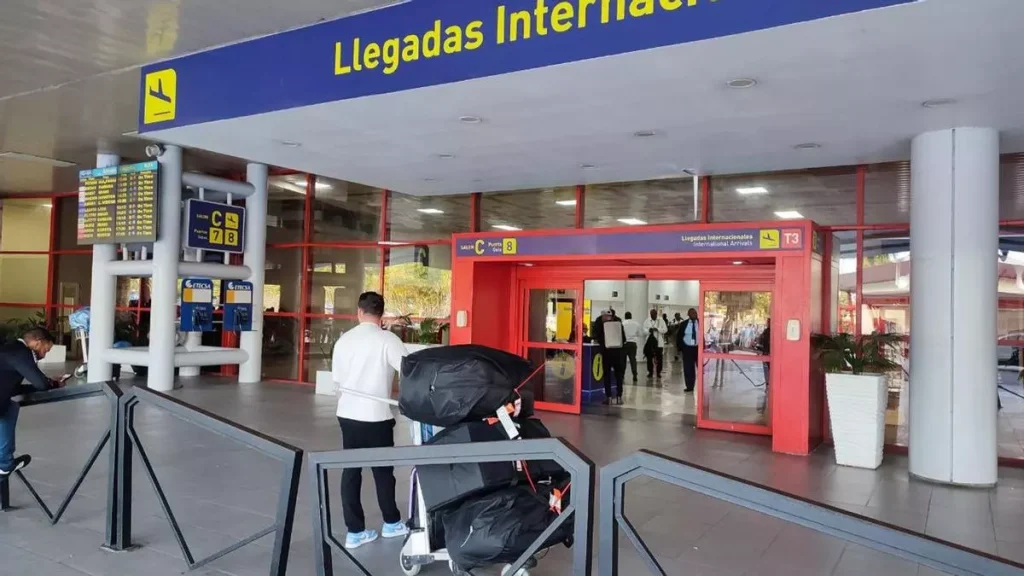
 14ymedio, Madrid, May 5, 2026 / This Tuesday, almost two years after approving the new Migration, Citizenship, and Foreigners Laws, the Government published them in the Official Gazette. This occurred on the same day that the state bulletin issued an additional, extraordinary edition to disseminate two decrees and a resolution activating a new immigration category that allows Cubans residing abroad to begin investing on the island immediately .
The regime has not explained its unusual delay in publishing an approved regulation, nor why Tuesday’s Gazette lists it as “given” on September 10, 2025. It does, however, explain in the preamble to today’s resolutions why these latter resolutions are not included in the laws approved on July 19, 2024: the general regulations—unlike the 1976 Migration Law, which, they clarify, is still in force—already contain the Investor and Business migration category, “but in its final provisions establishes a period of one hundred and eighty days after publication for its entry into force.”
The urgent need to attract foreign investment, therefore, clashes with the law’s entry into force in six months. Hence the extraordinary measures that, at the same time, implement the legal framework outlined in March by Deputy Prime Minister and Minister of Foreign Trade and Foreign Investment, Oscar Pérez-Oliva Fraga, who stated in a television interview that the government would allow Cubans residing abroad to “participate in or own private companies” within the country.
This status is granted to citizens who “request it and participate in the Cuban economic model, in accordance with the established regulations.”
From now on, all Cuban passport holders living abroad who wish to do business in Cuba can apply for this option, called “investor and business status,” according to the brief decree-law issued this Tuesday, which takes effect upon publication. The regulation consists of just two articles, stating that this status is granted to citizens who “request it and participate in the Cuban economic model, in accordance with the established regulations.”
As the preamble also recalls, the 1976 Migration Law considered that any Cuban who remained outside the Island for 24 uninterrupted months lost their resident status and, with it, the rights derived from it – something that changes with the new migration law.
Given that Cuban citizens residing abroad are required to identify themselves in Cuba with their national passport and are not recognized as having foreign citizenship, they could not invest on the island under the foreign investment law. Their only option, until now, was to partner with a permanent resident.
The pandemic had jeopardized the deadline for Cubans living abroad to cease being considered residents, since, due to travel restrictions imposed by air travel closures during the coronavirus pandemic, many were unable to return to the island even if they wished to. In this context, the regime began suspending these time limits and drafting a new Immigration Law, which was approved in July 2024. This law stipulates that Cubans residing abroad can retain ownership of their properties on the island, even if they have been away for more than two years, and that those who spend more than 24 consecutive months without returning to Cuba are no longer considered “emigrants.”
The extraordinary ‘Gazette’ finally includes a Resolution from the Ministry of Finance and Prices to establish the fee to be paid for the issuance of the new status, which is set at 3,500 pesos.
“It is the will of the Cuban State –says the Decree-Law of the Extraordinary Gazette– to implement the measures approved by the Government of the Republic of Cuba and to offer the necessary legal security to Cuban citizens residing abroad who show their interest in participating in the national economy, for which reason it is necessary to institute the migratory status of Investors and Businesses that supports said decision, until the aforementioned Law 171 comes into force.”
This decree is accompanied by another that regulates the procedure and explains that the application can be submitted at any embassy or consulate abroad, as well as at the offices of the Ministry of the Interior if submitted from Cuba. The application must be submitted in writing along with a letter of support from the organization or company located on the island with which the applicant wishes to do business.
Within a maximum of three days, immigration authorities must receive the documentation and have one month to resolve and notify the applicant of the granting—or denial—of their new immigration status. “Cuban citizens with the Investor and Business immigration status, with respect to the exercise of their rights, are treated the same as Cuban citizens residing in the national territory, while they are in the Republic of Cuba and hold this immigration status,” the decree specifies, also effective immediately.
Finally, the extraordinary Gazette includes a Resolution from the Ministry of Finance and Prices to establish the fee to be paid for the issuance of the new status, which is set at 3,500 pesos*.
The measure announced in March by Pérez-Oliva Fraga was part of a context of negotiations—then just a rumor—with the U.S. government, two months after its intervention in Venezuela. The scope of these talks to facilitate economic liberalization, later confirmed by both sides, remains unknown, as leaks about meetings and potential agreements constantly alternate with threatening messages.
Despite the new offers from the Cuban regime, very few residents abroad have shown interest.
The US president said last Friday that he could “take over” Cuba almost immediately, just hours after new sanctions were announced against individuals or entities abroad that contribute to the Cuban state’s profits. Although Cuban authorities reacted with immediate fury and renewed their promise to fight back, some voices in Washington maintain that Marco Rubio is leading the task and favors agreements, not intervention.
Despite the new offers from the Cuban regime, very few of the residents abroad have shown any desire to leave – especially at this time of uncertainty – given the lack of legal security and guarantees, as well as the unease they feel at the idea of being asked for help after decades of insults.
Things have changed, in any case, since the National Assembly of People’s Power approved the package of laws on Migration, Citizenship, and Foreigners almost two years ago. At the time, a high-ranking official from the Ministry of the Interior presented them to Parliament as a method to control the “Cuban migration process,” a euphemism for the exodus from the island in recent years.
The new regulations, authorities also said, aim to “design procedures” for Cubans leaving the island and also to control the “increase in the number and diversity of migratory irregularities involving foreigners.”
The Citizenship Law states that “enlisting in any type of armed organization with the objective of attacking the territorial integrity of the State” will result in the loss of nationality
In addition to the substantial changes to the Migration Law regarding Cubans abroad, the Citizenship Law states that “enlisting in any type of armed organization with the objective of threatening the territorial integrity of the Cuban State” will result in the loss of nationality. Furthermore, the document allows for the possibility of a Cuban citizen holding multiple citizenships—already recognized by the 2019 Constitution—provided they do not use their foreign citizenship while in Cuba. Méndez noted that Cuban citizenship can be acquired by birth or naturalization.
Regarding the renunciation of citizenship, only those over 18 years of age who live abroad and can prove they hold another citizenship are eligible. Those who owe money to the Cuban state or are being “persecuted for committing a crime” are not eligible. Several NGOs and human rights advocates have warned about the potential political use of denationalization in Cuba, citing Nicaragua as a recent example.
Regarding the Immigration Law, applicable to all foreigners who are –temporarily or permanently – on the Island, including diplomats, it proposes to “regulate the care, protection and documentation of foreigners who settle in national territory.”
Foreigners will be able to reside in Cuba as “provisional residents,” a new category that represents a prelude to permanent residence or that of “humanitarian resident,” for “refugees, stateless persons and political asylees” that the Government considers as such.
“The exercise of the rights of foreigners in Cuba is only limited by the rights of others, for reasons of national defense and security, public order, health, exceptional situations and disasters, and by force majeure, with prior approval from the competent authorities,” the document warns, regarding the “conduct of respect” to the regime that foreigners must maintain.
*Translator’s note: Roughly $145 US at today’s exchange rates.
______________________
COLLABORATE WITH OUR WORK: The 14ymedio team is committed to practicing serious journalism that reflects Cuba’s reality in all its depth. Thank you for joining us on this long journey. We invite you to continue supporting us by becoming a member of 14ymedio now. Together we can continue transforming journalism in Cuba.