In January 1959, while half the world was still celebrating Batista’s downfall, Fidel’s younger brother was already appearing in the international press as an architect of terror.
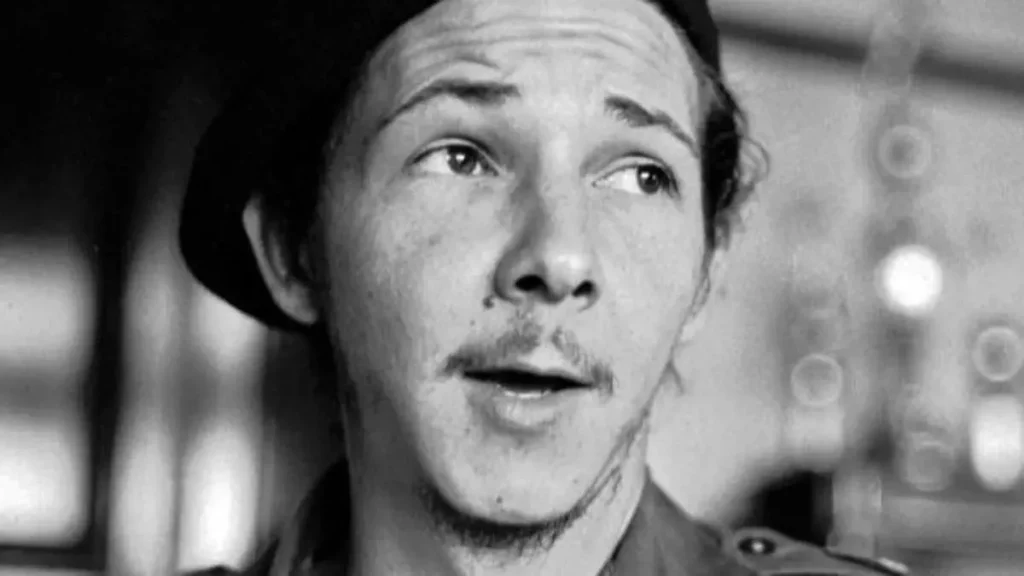
 14ymedio, Havana, June 3, 2026 — “Quarrelsome and envious” was how a Jesuit priest described the younger brother who accompanied Fidel Castro at a Catholic school in Santiago de Cuba. Time Magazine recorded it in a report published on January 26, 1959, barely three weeks after Fidel Castro’s triumphant entry into Havana.
The article, titled The Vengeful Visionary, was not yet a retrospective reading of Castroism, but rather a snapshot taken in the heat of the moment. The text portrayed, with remarkable clarity, the birth of the Revolution, its euphoric crowds, and at the same time the machinery of death that was beginning to operate in the name of revolutionary justice.
Although the explicit protagonist of the cover story was Fidel Castro, Time’s text offers an early key to understanding Raúl. He appears there less as his older brother’s shadow than as the executor of a policy already defined by revenge and by the normalization of exemplary punishment. The magazine described the first executions as the moment when the victors, who had promised democracy, justice, and honest government, “clung to the arrogant instruments of dictatorship.”
While Fidel estimated that fewer than 450 men would be executed, his younger brother boasted that “a thousand might die”
The harshest passage is the one devoted to Santiago de Cuba. According to Time, the revolutionary tribunals operated with rebels serving simultaneously as prosecutors, defense attorneys, and judges. Sentences were handed down in summary proceedings and carried out just as quickly. In Santiago, the magazine added, “the show was under the personal command of Raúl, Fidel’s 28-year-old brother, a slant-eyed man who had already executed 30 ‘informers’ during two years of guerrilla warfare.”
The publication portrays him with a coldness that remains striking today. The context was that of mass executions, with priests available to hear the condemned men’s final confessions before they faced the firing squad. While Fidel estimated that fewer than 450 men would be executed, his younger brother boasted that “a thousand might die.”
The scene at Santiago’s firing range reads like a preview of the country that was to come. A trench twelve meters long, three meters wide, and three meters deep; prisoners transferred before dawn from Boniato prison; confessions heard by six priests; condemned men with their hands tied; and bodies falling into the pit. One rebel murmured: “Let it end quickly. I have pain in my soul.” By noon, according to the account, 70 prisoners had died.
In that architecture of terror, Raúl Castro does not appear as an improviser, but as an enforcer. Fidel justified the repression with fiery speeches and appeals to the suffering of Batista’s victims. Raúl, by contrast, embodied the administrative side of violence: organizing, commanding, carrying out, and sustaining the mechanism. That difference would define much of his later career within the regime. Fidel needed to present violence as exceptional justice. Raúl seemed comfortable with violence as a method of power.
“Let it end quickly. I have pain in my soul”
Time’s account does not absolve Batista. It describes with stark detail the corruption, torture, and police sadism of his regime. But that is precisely what makes the reading more disturbing. The magazine acknowledges the previous horrors and yet warns that the new government was nullifying the Constitution, holding summary trials, and turning revenge into a public spectacle. The dilemma was not whether Batista had been brutal, but whether the Revolution was prepared to establish the rule of law or a new dictatorship of terror.
Raúl Castro is placed firmly on that second path. Before becoming Minister of the Armed Forces, before formally inheriting power, before becoming the face of Castroist continuity, he was already there: in Santiago, beside the mass graves, in command of the rifles. The image contradicts the later narrative that sought to portray him as a pragmatic administrator, less charismatic but more rational than Fidel.
What Time saw in 1959 was something else: the birth of a political culture in which obedience was imposed at gunpoint and the law could be suspended “in the name of the people.” Raúl Castro was not merely an observer of that drift. He was one of its first visible enforcers, and the magazine portrayed him even then as a man who took pleasure in pulling the trigger and filling graves with corpses.
Translated by Regina Anavy
______________________
COLLABORATE WITH OUR WORK: The 14ymedio team is committed to practicing serious journalism that reflects Cuba’s reality in all its depth. Thank you for joining us on this long journey. We invite you to continue supporting us by becoming a member of 14ymedio now. Together we can continue transforming journalism in Cuba.