Iberostar Follows Blue Diamond’s Lead and Leaves Gaesa Hotels

The Spanish hotel chain remains active in Cuba through six properties belonging to Cubanacán and Gran Caribe.
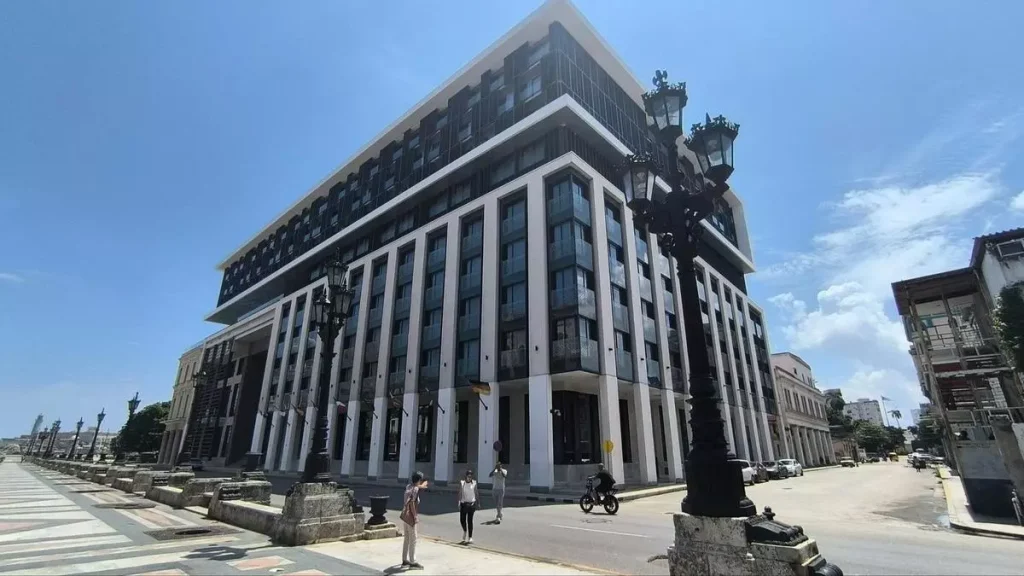

The Grand Packard in Havana is one of the Gaviota hotels from which Iberostar is withdrawing. / 14ymedio

14ymedio bigger14ymedio, Havana, June 1, 2026 — On Monday, the Spanish hotel company Iberostar severed its ties with Gaviota, the hotel chain controlled by the Business Administration Group S.A. (Gaesa), and stopped managing the twelve hotels associated with that entity. The company will maintain its presence in Cuba through properties whose state-owned partners belong to other tourism groups not linked to the military conglomerate, including Cubanacán and Gran Caribe.

The decision became public shortly before the deadline imposed by the U.S. Department of State under Executive Order 14404, signed by President Donald Trump on May 1, 2026, which called for sanctions against “those responsible for repression in Cuba and threats to the national security and foreign policy of the United States.” A few days later, the decree began taking concrete form through specific sanctions against Gaesa, its president Ania Guillermina Lastres, and Moa Nickel S.A.

The Office of Foreign Assets Control (OFAC) set June 5, 2026, as the deadline for companies to terminate their operations or risk exposure to sanctions.

“As of June 1, 2026, these establishments will no longer be managed, marketed, or promoted under the Iberostar brand”

On Monday, 14ymedio confirmed that several hotels previously managed by Iberostar and owned by Gaesa remain open, but are now under the direct administration of Gaviota, as occurred with the withdrawal of Blue Diamond Resorts last Saturday.

Staff at the Grand Packard Hotel explained: “If you try to book an Iberostar hotel in Havana through travel agencies, what will come up is Parque Central, which is still managed by that company. To book with us, you have to do it directly here or through Gaviota.” By contrast, representatives at the Parque Central Hotel—owned by Cubanacán—confirmed to 14ymedio that “Iberostar executives are working here today without any problem, and the company remains at this hotel.”
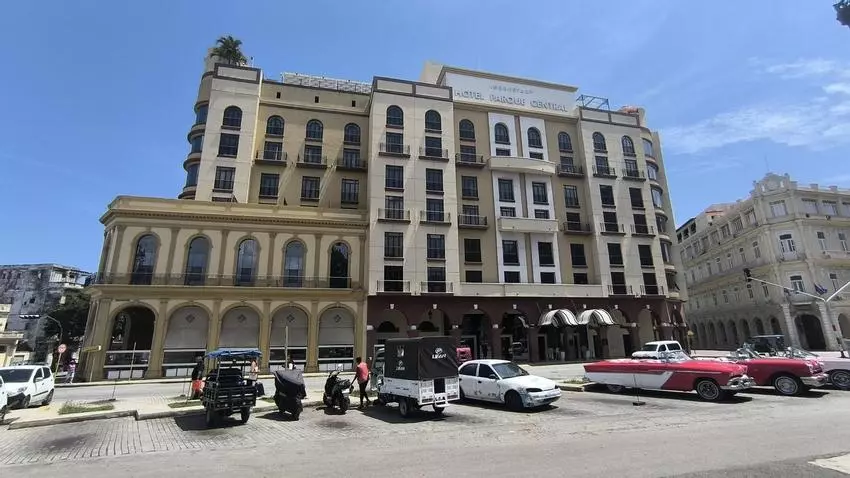
Iberostar continues operating the Selection Parque Central, a Cubanacán property. / 14ymedio

Iberostar’s withdrawal was announced through the Argentine tour operator Sudameria. In the company’s statement, it explained that, “as part of a process of adaptation to the international regulatory environment” and in order to preserve its standards of quality, compliance, and management, Iberostar Cuba Hotels & Resorts “will cease operating and continue reading

marketing a group of hotels in Cuba as of June 1, 2026.”

The company stated that the measure ends any commercial, operational, or branding relationship between Iberostar Cuba Hotels & Resorts and the establishments included in the decision.

Among the 12 hotels from which Iberostar is withdrawing and whose ownership is linked to Gaesa are the Hotel Grand Packard on Prado Avenue; the Iberostar Selection Habana, located in the controversial Torre K [K Tower] and currently closed due to the crisis; the Iberostar Selection Ensenachos in Cayo Santa María; the Iberostar Origin Bella Vista Varadero; and the Iberostar Selection Esmeralda, among others.

“As of June 1, 2026, these establishments will no longer be managed, marketed, or promoted under the Iberostar brand,” according to the statement. They will now be managed directly by Gaviota.

Although Cubanacán appears on OFAC’s Specially Designated Nationals (SDN) list and is sanctioned by the agency, it is not part of the Gaesa conglomerate, which the United States directly sanctioned on May 7

Through the Iberostar Cuba website, only hotels without links to Gaesa can currently be booked, including the Hotel Inglaterra and Iberostar Selection Parque Central, both Cubanacán properties in Havana, as well as the Iberostar Origin Daiquiri in Cayo Guillermo and the Iberostar Origin Taínos in Varadero, both owned by Gran Caribe.

Although Cubanacán appears on OFAC’s SDN list and is sanctioned by the agency, it is not part of the Gaesa conglomerate, which the U.S. State Department directly sanctioned on May 7.

The sanctions could nevertheless be extended to state-owned entities such as Cubanacán, Gran Caribe, and Islazul if the State Department and OFAC determine that they meet the criteria outlined in Orden Ejecutiva 14400, which includes “ownership, control, or direct management by the Government of Cuba.”

Iberostar is following the path taken by the Canadian hotel company Blue Diamond Resorts, one of the main foreign operators in Cuba’s tourism sector over the past decade, which ended its operations on the Island “with immediate effect” last Saturday.

The hotel chain Meliá, which operates between 32 and 35 properties in Cuba, also faces the possibility of sanctions and is under increasing pressure to define its position before the deadline established by the U.S. Department of State.

Translated by Regina Anavy

______________________

COLLABORATE WITH OUR WORK: The 14ymedio team is committed to practicing serious journalism that reflects Cuba’s reality in all its depth. Thank you for joining us on this long journey. We invite you to continue supporting us by becoming a member of 14ymedio now. Together we can continue transforming journalism in Cuba.

Davisleydi Velazco, Triple Jumper Expelled from Cuba, Breaks a Record by 50 Centimeters in France

The athlete from Camagüey has been on the rise since leaving the Island and settling in Puerto Rico, the country she hopes to represent.

Davisleydi Velazco achieved the third-best mark in the world this season with her 14.83-meter jump. / Facebook

14ymedio bigger14ymedio, Havana, June 1, 2026 — Cuban athlete Davisleydi Velazco shattered the triple jump record at the International Meeting of Forbach, France, on Sunday, breaking a mark that had stood for 17 years. With only two attempts, one of them measuring 14.83 meters, the athlete, who left Cuba in 2023 in search of better opportunities, surpassed by half a meter the previous record of 14.33 meters set by France’s Tereza Nzola Mesa in the 2009 edition of the event.

The 26-year-old triple jumper, who was permanently removed from Cuba’s list of eligible athletes last September, also recorded a jump of 14.77 meters, which would likewise have erased the competition record from the books. Both marks were far superior to those achieved by the second- and third-place finishers. Silver went to France’s Ilionis Guillaume with a jump of 14.09 meters, while Germany’s Kira Wittmann completed the podium with 13.89 meters.

With her performance this weekend, Velazco, who competes as an independent athlete, provided further evidence of her excellent form just days after jumping 14.85 meters, her personal best and the third-best mark in the world this season, which earned her the gold medal at the Coqui International Cup held at Paseo de los Artistas in Caguas, Puerto Rico, on May 17.

“I confirmed that dreams can be achieved when you work with faith, discipline, and heart. We keep dreaming, we keep fighting, because this is only the beginning”

The competition was not easy, as she was engaged in a fierce battle with Dominica’s Thea Lafond, the reigning Olympic champion in the event, whom she defeated by just one continue reading

centimeter. “I confirmed that dreams can be achieved when you work with faith, discipline, and heart. We keep dreaming, we keep fighting, because this is only the beginning,” she said after winning the competition.

According to the specialized website Swing Completo, the athlete is likely to surpass the 15-meter mark, given the steady improvement she has shown since leaving Cuba and settling in Puerto Rico, the country she hopes to represent.

In 2025, she enjoyed the best season of her career. In March of last year, she recorded a jump of 14.36 meters at the Spring Break Classic in Carolina, Puerto Rico. That was followed by marks of 14.32 in Tucson, 14.26 in Kingston, 14.61 in Memphis, and 14.38 meters in Florence.

“Her 14.54-meter jump in Gothenburg last July showed she was ready to reach the biggest stages, and in Brussels, on August 22, she achieved one of her best results and a new personal best of 14.72,” the specialized outlet Deporcuba wrote late last year while following the athlete’s progress.

Although she won a bronze medal for Cuba at the 2018 World U20 Athletics Championships in Tampere, Finland, she was later sidelined in several national selection processes. In an interview published last December by the Puerto Rican newspaper El Vocero, the athlete said that her career in Cuba had become “stagnant.” With no prospects for growth and faced with “the economic situation,” she felt compelled to seek new opportunities and leave the Island.

The athlete said that in Cuba her career had become “stagnant,” with no prospects or growth

Her journey took her through four countries, including several months spent between Mexico and the United States, before a turning point arrived when she was contacted by veteran Cuban coach Ubaldo Duany. Duany helped shape the careers of Colombian triple jumper Caterine Ibargüen, who won Olympic gold at Rio 2016, and Pedro Pichardo, the Cuban-born jumper who has won Olympic gold and silver for Portugal at Tokyo 2020 and Paris 2024.

The coach invited Velazco to train for a couple of months at his club in Puerto Rico. She accepted and ultimately decided to stay, a decision that marked a major turning point in her career.

The exodus of athletes due to a lack of opportunities has become a common feature of Cuban athletics. In 2021, triple jumper Cristian Nápoles and sprinter Reynier Mena requested their release from the Cuban Athletics Federation. Time has vindicated several of them. In June of last year, Mena won the 200-meter race at the Diamond League meeting in Stockholm, Sweden, with a time of 20.05 seconds. Days earlier, he had also won meets in Savona, Italy (20.15 seconds), and Norway (20.20 seconds).

As for the triple jumpers who have left Cuba, the event that most clearly highlighted Cuba’s shortcomings and the development of its expatriate athletes was the Paris 2024 Olympics. At those Games, emigrant jumpers swept the podium. Jordan Díaz, competing for Spain, won gold with a jump of 17.86 meters. Silver and bronze went to Pedro Pablo Pichardo of Portugal (17.84 meters) and Andy Díaz of Italy (17.64 meters), respectively.

Translated by Regina Anavy

______________________

COLLABORATE WITH OUR WORK: The 14ymedio team is committed to practicing serious journalism that reflects Cuba’s reality in all its depth. Thank you for joining us on this long journey. We invite you to continue supporting us by becoming a member of 14ymedio now. Together we can continue transforming journalism in Cuba.
Cubans in Mexico Ask the Consulate in Cancún to Speak Out Against a Wave of Discrimination

Island residents report dismissals from jobs, obstacles to renting housing, and social rejection following an altercation in Supermanzana 23.

Local media reported that the case began with a neighborhood dispute related to a dog bite and ended with strong public backlash. / Screenshot

14ymedio bigger14ymedio, Havana, May 31, 2026 — Cubans living in Mexico have called on Cuba’s Foreign Ministry and its Consulate in Cancún to issue a public response to what they say is a climate of hostility that has been unleashed against the Cuban community in Quintana Roo following a recent incident in the Supermanzana 23 neighborhood of Cancún. In a statement circulated on social media, the signatories denounce the diplomatic mission’s silence in the face of discrimination that, they say, has gone beyond online debate and has begun affecting the daily lives of Cuban families unrelated to the events.

The text, titled The Need for Active and Impartial Consular Representation expresses the Cuban residents’ “deep concern” over “the lack of an official statement from Cuba’s Foreign Ministry” after the case sparked a strong reaction on social media and, according to those making the complaint, led to “real episodes of exclusion and discrimination” in the state of Quintana Roo.

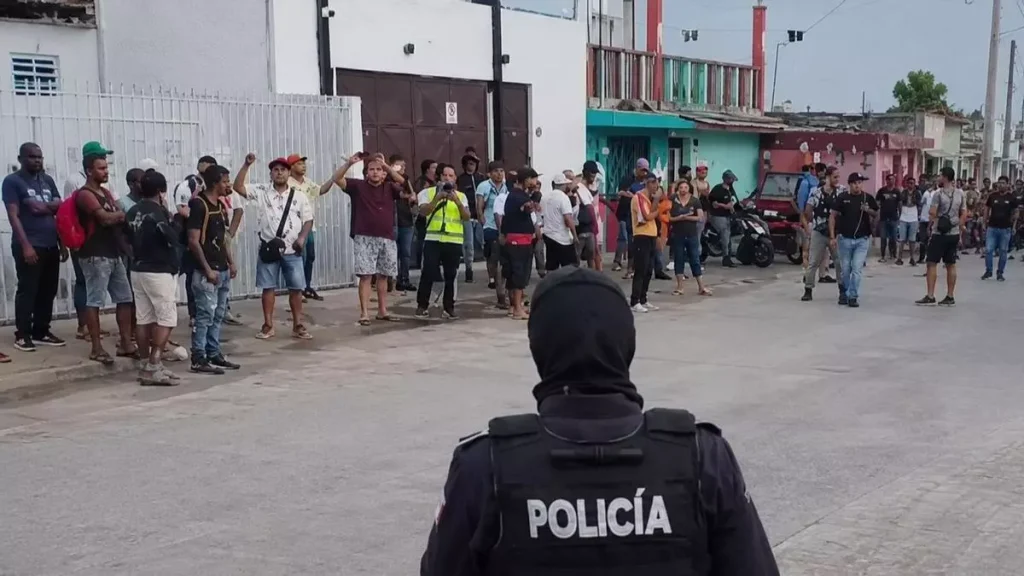
The source of the tension was an altercation in Cancún’s Supermanzana 23, where Cubans Rigoberto “N” and Yudelmis “N” were detained by Mexican authorities and turned over to the National Migration Institute. Local media reported that the case began with a neighborhood dispute involving a dog bite and ended with the intervention of security agents, damage to a home, and strong public condemnation of those involved. From that point on, outrage directed at two individuals evolved, according to migrant-support organizations, into a broader reaction against Cubans living in the area.

The complaint is directed specifically at the Cuban Consulate General in Cancún, located in Supermanzana 20, just a few blocks from where the crisis unfolded

“Unfortunately, we watched with alarm as this online climate spilled over into daily life, affecting our hardworking families who were completely unrelated to those events,” the statement says. It cites reports from Cisvac — International Council Adding Venezuela — a foundation for the defense of human rights, which works with migrants and says it has documented “multiple daily cases” of Cubans who have lost jobs, faced rental disputes, or experienced direct workplace exclusion following the incident.

The complaint points directly to the Cuban Consulate General in Cancún, located continue reading

in Supermanzana 20, only a short distance from where the crisis occurred. For the signatories, that proximity makes the lack of a public position even more difficult to understand. “We find it paradoxical and incomprehensible that our Consulate in Cancún has maintained absolute public silence,” the text states.

The absence of a response, they add, has left the community “in a position of clear social and media vulnerability.” The criticism goes beyond the Cancún case. The document links that silence to broader concerns about Cuban consular work in Mexico, a country that has become a transit point toward the U.S. border, a waiting area, or a destination for forced returns for thousands of Cuban migrants deported from the United States.

Residents perceive a diplomacy that is absent when it comes to defending nationals who are not part of organizations aligned with the Cuban Government

In recent years, Mexico has been one of the main routes for Cubans seeking to reach the United States, but it has also become a bottleneck for those who fail to cross, are detained, or are returned from U.S. territory. Added to that are those stranded in southern Mexico, at immigration offices, or along the northern border, without documents, stable employment, or a clear path forward.

“A considerable number of our compatriots are stranded at various borders throughout Mexico, facing a severe migratory limbo,” the statement warns. It also refers to Cubans “deported or returned from the United States to Mexican territory,” who are left “in conditions of extreme vulnerability.”

The signatories argue that, given this situation, there should be “energetic, high-level consular engagement” with Mexican immigration authorities to ensure dignified treatment of Cubans in transit or facing forced return. However, residents’ perception is the opposite: a diplomacy absent when it comes to defending nationals who do not belong to organizations aligned with the Cuban Government.

“Meetings are frequently organized at the Cuban Embassy in Mexico exclusively for groups of residents who maintain a direct affinity with the official discourse”

The statement touches on one of the most sensitive aspects of the relationship between the regime and its diaspora: selective representation. The signatories recall that consular protection and assistance “are not political concessions, but inalienable rights,” protected by international law and the Vienna Convention on Consular Relations. In that regard, they question the fact that the Cuban Embassy in Mexico frequently organizes meetings with resident groups aligned with the official narrative while ignoring a broader, more diverse community that may be critical of, or simply uninvolved in, those circles.

“Meetings are frequently organized at the Cuban Embassy in Mexico exclusively for groups of residents who maintain a direct affinity with the official discourse,” they state. This practice, they add, “reinforces an unrealistic narrative that attempts to project the idea that all of us abroad support the Government, while deliberately rendering invisible the immense majority of our community.”

The text insists that the most vulnerable Cubans generally do not belong to those favored associations. They are precisely the people facing “migratory limbo, border returns, or labor discrimination.” For them, the signatories argue, consular assistance should be provided “strictly, impartially, and without ideological bias of any kind.”

The statement concludes with three specific demands: that Cuba’s Foreign Ministry issue a public declaration regarding the vulnerability of the Cuban community in Cancún; that it establish transparent communication channels with civil organizations working directly with migrants; and that it assume “an active, inclusive, and equitable diplomatic role in defense of all its nationals, without political conditions.”

Translated by Regina Anavy

______________________

COLLABORATE WITH OUR WORK: The 14ymedio team is committed to practicing serious journalism that reflects Cuba’s reality in all its depth. Thank you for joining us on this long journey. We invite you to continue supporting us by becoming a member of 14ymedio now. Together we can continue transforming journalism in Cuba.

Cuba: In Ciego de Ávila They Warn: Solar Parks in Cayo Coco ‘Will Harm Local Wildlife’

The “builders, far from merely meeting deadlines and budgets, are called upon to be the foremost guardians of the fragile island ecosystem,” Invasor urges.

The project, which will cover 8.5 hectares, will create “heat islands” that could lead to the loss of forest. / Invasor

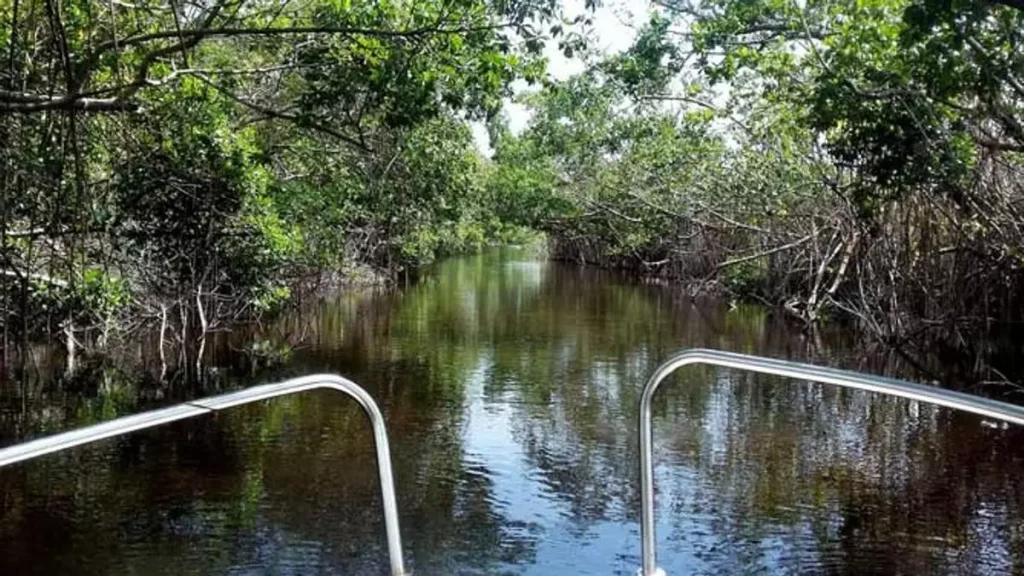
14ymedio bigger14ymedio, Havana, May 31, 2026 – The construction of the first of two photovoltaic solar parks planned for the Jardines del Rey region of Cayo Coco, in Ciego de Ávila, could impact the already “fragile” local ecosystem. Antonio García Quintas, a doctor in Community Ecology and associate researcher at the Center for Coastal Ecosystem Research (CIEC), warns that the project, which will cover 8.5 hectares, “will harm local wildlife, including endemic and threatened species, while migratory birds would be affected by the construction.”

An article published this Sunday in Invasor warns that the installation of the panels, a plan envisioned 10 years ago but only now moving forward, will create “heat islands,” leading to the “loss of a well-preserved evergreen forest that, paradoxically, forms part of the buffer zone that should be protected” in El Bagá Natural Park.

The risk is considerable. According to Raúl Gómez Fernández, a CIEC specialist, in these territories “it is difficult to draw on a map the exact line” separating anthropized zones where human activity has transformed the environment from areas that have not been disturbed.

In response, the specialists consulted by Invasor offer viable alternatives in locations with “secondary vegetation or areas continue reading

converted into solid waste dumps, at higher elevations, less prone to flooding, with lower salt exposure, and located much closer to generating units or electrical substations.”

“What is being proposed is not to halt the investment, but to do it properly, in a place where established forests are not sacrificed”

Because of the impact the project could have, it has undergone modifications since 2016. The site initially selected—western Cayo Coco—was part of non-anthropized ecosystems. Shortly afterward, the Provincial Directorate of Territorial Planning and Urban Development of Ciego de Ávila evaluated the project’s impact there and denied construction in order to protect the flora and fauna. It was then decided that the solar parks would be installed in the eastern part of the cay, although on a smaller area than originally planned, since the initial proposal called for the use of 13 hectares.

“What is being proposed is not to halt the investment, but to do it properly, in a place where established forests are not sacrificed, where existing infrastructure can be utilized, degraded areas rehabilitated, and where construction and maintenance costs would be significantly lower,” Invasor states.

Marialina Herrera Riera, director of investments for the Ciego de Ávila Electric Company, assures that the construction of the photovoltaic solar park will be carried out “under the strictest compliance with all established regulations, without violating any legal provisions.” According to the official, the goal is “to minimize possible impacts on the environment.”

Nevertheless, the provincial newspaper emphasizes that “the solar energy the country so desperately needs, and which is increasingly necessary to generate on the cays themselves where tourism development exists, deserves to be installed in locations that are technically and environmentally justified, not in places that condemn it to greater expenses, accelerated deterioration, or conflict with protective legislation.”

“The solar energy the country so desperately needs, and which is increasingly necessary to generate, deserves to be installed in locations that are technically and environmentally justified”

For this reason, Invasor states in a demanding tone, “its builders, far from merely meeting deadlines and budgets, are called upon to be the foremost guardians of the fragile island ecosystem, protecting wetlands and respecting native wildlife corridors, especially the migratory birds that nest there, ensuring that every panel, every cable, and every movement of earth is carried out with the smallest ecological footprint possible.” Only in this way, it adds, “will this project cease to be a simple renewable-energy undertaking and become a true symbol of coherence.”

The appeal stems from cases such as El Bagá Park, “a themed natural park that existed and disappeared more quickly than it took to build,” because “sustainability is not determined by the type of technology used, but by the way it is integrated into the territory. From the mistakes of the past should finally emerge the wisdom not to repeat them in the present.”

“Today, those same decisions are being paid for through irreversible environmental damage and maintenance costs that no one calculated at the time. This is not about stopping development but about understanding that a poorly located project is not development. It is a legacy of problems for future generations,” the article insists.

The authorities’ strategy for trying to address the country’s energy crisis, with blackouts exceeding 20 hours in several parts of the Island, is the massive installation of solar panels. The program is expected to be fully completed provided the planned schedule is met: within 24 years, by 2050.

Translated by Regina Anavy

______________________

COLLABORATE WITH OUR WORK: The 14ymedio team is committed to practicing serious journalism that reflects Cuba’s reality in all its depth. Thank you for joining us on this long journey. We invite you to continue supporting us by becoming a member of 14ymedio now. Together we can continue transforming journalism in Cuba.
The Head of U.S. Southern Command Meets with Senior Cuban Military Officer in Guantánamo

The unusual meeting between Francis Donovan and Roberto Legrá Sotolongo addressed “operational security” around the perimeter of the U.S. naval base

Image shared by the U.S. Southern Command on its Twitter account to report on the meeting. / @Southcom

14ymedio bigger14ymedio/Agencies, Havana, May 29, 2026 — The head of the U.S. Southern Command, Francis L. Donovan, met this Friday with Cuba’s Chief of the General Staff, Roberto Legrá Sotolongo, at the perimeter of the Guantánamo Bay Naval Station, in an unusual meeting between senior military officials from the two countries.

According to EFE, the meeting was confirmed by the Southern Command itself in a brief statement, which noted that the generals held “a brief exchange on operational security matters.” The discussion also addressed issues related to the safety of military personnel and their families, as well as the operational readiness of the base, together with officers stationed in Guantánamo.

“The Guantánamo Bay Naval Station constitutes a vital operational and logistical hub that supports United States military efforts to counter threats that undermine security, stability, and democracy in our hemisphere,” the Southern Command said in its statement.

Donovan also conducted an assessment of the “perimeter security of the naval base.”

The discussion also addressed issues related to the safety of military personnel and their families

In a brief statement published on social media, Cuba’s Ministry of the Revolutionary Armed Forces confirmed continue reading

that the meeting took place “by agreement of both parties.”

It also stated that the two “delegations considered the meeting positive, where issues related to security around the perimeter dividing the military enclave were discussed,” referring to the naval base. It further added that there was agreement “to maintain communication between both military commands.”

Reuters, which first reported the meeting citing a U.S. official speaking on condition of anonymity, noted that Donovan’s visit to Cuba is the first remembered in recent years involving a Southern Command chief and senior Cuban military leaders. The agency placed the contact in the context of growing concern in Havana about the possibility of U.S. military action against the Isand.

The meeting comes after the unusual visit to Havana on May 14 by the Director of the CIA, John Ratcliffe, amid increasing pressure from Washington on the Cuban regime.

Guantánamo, where the meeting took place, is one of the most sensitive points in relations between the two countries

The military contact comes at a particularly tense moment in bilateral relations. The administration of Donald Trump has hardened its policy toward Havana and placed Cuba among its foreign policy priorities in the hemisphere.

On May 20, Washington formally charged former president Raúl Castro with four counts of murder for the 1996 shootdown of civilian aircraft operated by Miami exiles. The charges were presented as a new step in the United States’ judicial and political offensive against figures within the Cuban leadership.

Guantánamo, where the meeting took place, is one of the most sensitive issues in relations between the two countries. The United States has maintained a naval base there since the beginning of the twentieth century.

In March, Donovan told U.S. lawmakers that the Southern Command was not preparing an invasion, although he stated that its forces were ready to defend the Guantánamo base, protect the U.S. Embassy in Havana, and support a potential response to a large-scale migration crisis.

Translated by Regina Anavy

______________________

COLLABORATE WITH OUR WORK: The 14ymedio team is committed to practicing serious journalism that reflects Cuba’s reality in all its depth. Thank you for joining us on this long journey. We invite you to continue supporting us by becoming a member of 14ymedio now. Together we can continue transforming journalism in Cuba.
UNESCO Warns That Cuban Classrooms Are at Risk Due to the Energy Crisis

Official data show that the deterioration of the system is not due to the embargo

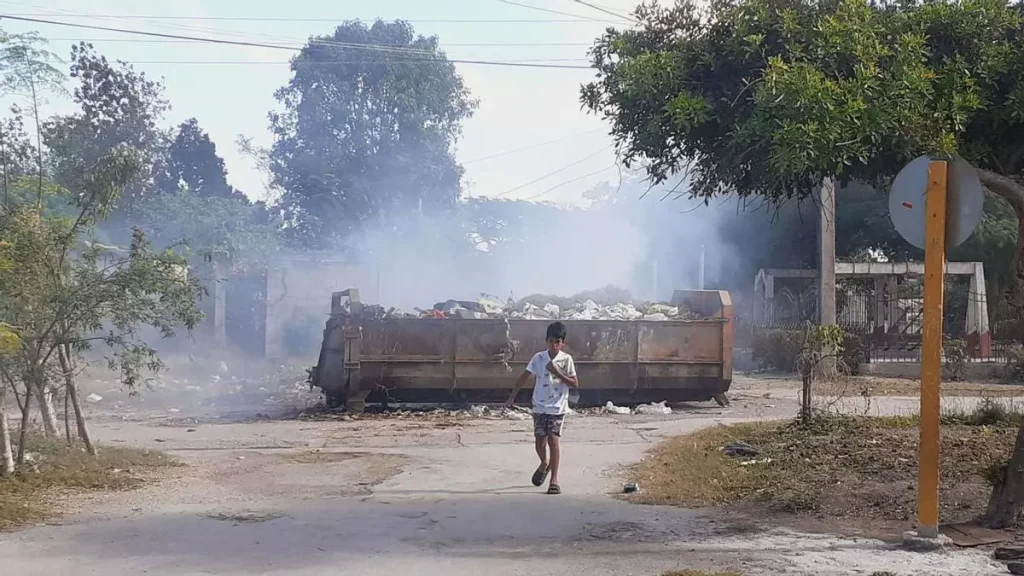
The UNESCO warning does not reveal a new problem but rather validates, through an international institution, what thousands of Cuban families have been experiencing for years. / 14ymedio

14ymedio bigger14ymedio, Havana, May 29, 2026 — “Education in Cuba is at risk because of the current energy crisis.” The phrase, spoken by Anne Lemaistre, director of UNESCO’s Regional Office in Havana and the organization’s representative on the Island, describes the impact of blackouts, fuel shortages, and the deterioration of basic services in Cuban schools.

In a statement circulated on social media, the diplomat warned that the situation “makes it difficult for teachers and students to attend classes, learn effectively, and enjoy a normal social life with their friends.” The problem, she added, “jeopardizes the future of an entire generation, with long-term consequences.”

The official newspaper Granma, however, reacted immediately with its customary reflex. In its headline, the Communist Party’s newspaper added a phrase to Lemaistre’s quote that was not part of her main statement: “resulting from the blockade.” In this way, the paper transformed a warning about the daily collapse of classrooms into another piece of the official narrative, according to which every Cuban crisis has an external cause and a single culprit: Washington.

Before protecting classrooms, the State has protected tourism, hotel investments, political events, propaganda, and mechanisms of control

UNESCO itself, in February, had called for international cooperation to ensure that Cuban children could continue learning and that educational institutions remained safe spaces. In that appeal, Lemaistre said that “every day without fuel compromises school meals, transportation for teachers and students, and the electricity necessary to sustain continue reading

educational programs.” She also concluded with a statement that should make the Cuban Government uncomfortable: “For us, a functioning society begins with the school; it is the first thing that must be restored.”

But in Cuba, schools do not appear to be a government priority. Before classrooms, the State has protected tourism, hotel investments, political events, propaganda, and mechanisms of control. In April 2025, amid the economic crisis, education had already become a secondary issue. Investment in the sector was reduced by about 400 million pesos compared to the previous year. Health and Education combined accounted for barely 3% of the state budget, compared with 37.4% allocated to tourism.

That figure undermines any attempt to portray the educational catastrophe as an unavoidable accident. A country that invests far more in hotels, surveillance and repression than in classrooms has made a political decision. It can blame the embargo, hurricanes, or fuel shortages, but its priorities are reflected in its budget.

“We promote children to the next grade without providing them with sufficient knowledge”

The signs of collapse continue to accumulate. By March 2025, education in Cuba had become “optional” in several schools, which were forced to reduce schedules and hold classes only in the mornings or from Monday through Thursday. A mother in Placetas, Villa Clara, reported that her third-grade daughter was barely receiving instruction and that the school itself had established a Monday-to-Thursday week, forcing the family to find someone to care for the child while the adults worked.

Blackouts affect more than classroom lighting. In Cienfuegos, parents and teachers were already speaking in 2024 about children arriving tired and sleepy, without breakfast, after nights of ten to sixteen hours without electricity. A teacher admitted at the time that schools had been forced to adjust lesson plans because of power outages and low attendance. “We promote children to the next grade without providing them with sufficient knowledge,” she lamented.

The energy crisis has been compounded by the exodus of teachers, which had already raised alarms before the current school year began. In Sancti Spíritus, one of the hardest-hit provinces, teacher staffing reached only 68.2%. In Camagüey, with 716 schools and 98,000 students, there was a shortage of 2,468 teachers, and 19 schools were closed to “optimize resources.” The official formula for plugging the gap has been to hire part-time teachers, merge schools, and overcrowd classrooms.

Education is at risk because the State abandoned schools while continuing to inaugurate hotels, organize political rallies, and harass students who have participated in protests

Authorities also admitted that there was a shortage of 1.3 million uniform items and that only 20% of students would receive new clothing. In classrooms, parents found few materials, poorly photocopied notebooks, and outdated textbooks. For families, the “creativity” demanded by the Government means patching uniforms, improvising backpacks, and obtaining supplies on their own. For teachers, it means reusing notebooks, dictating notes, and paying for photocopies out of their own pockets.

The UNESCO warning does not reveal a new problem but rather validates through an international institution what thousands of Cuban families have been experiencing for years. Education in Cuba is at risk, but not only because of the energy crisis or solely because of the embargo. It is at risk because the State abandoned schools while continuing to inaugurate hotels, organize political rallies, and harass students who have participated in protests.

In Cuba, the future of a generation is not being lost for lack of speeches. It is being lost because the Government decided that education is not a priority.

Translated by Regina Anavy

______________________

COLLABORATE WITH OUR WORK: The 14ymedio team is committed to practicing serious journalism that reflects Cuba’s reality in all its depth. Thank you for joining us on this long journey. We invite you to continue supporting us by becoming a member of 14ymedio now. Together we can continue transforming journalism in Cuba.
Cuba’s Guiteras Power Plant Goes Offline Again Due to “Lack of Raw Water”

The UNE forecasts a 2,072 MW shortfall during Saturday’s peak hours after a full day of blackouts

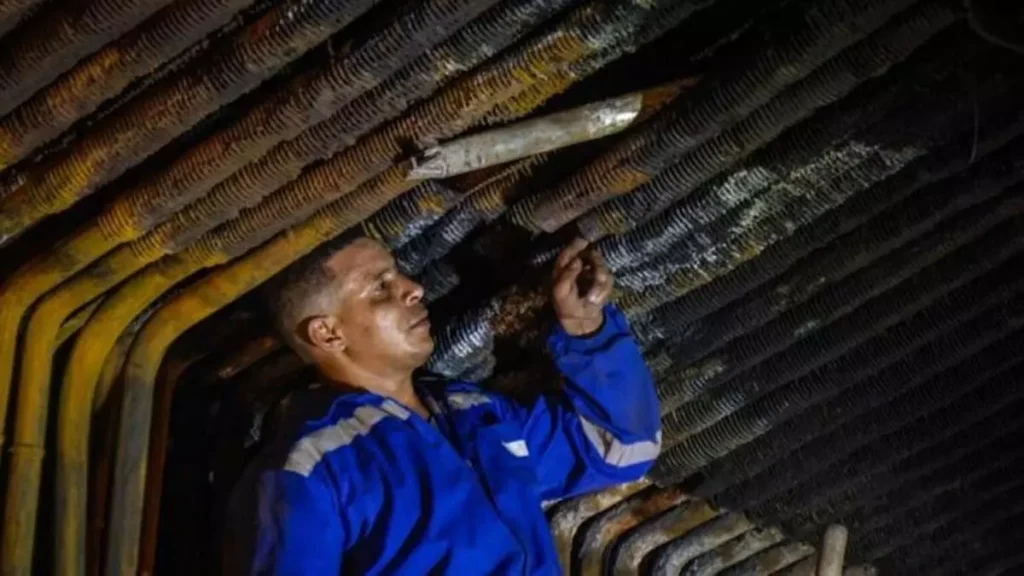
The “lack of raw water” now joins the peculiar catalog of explanations that the National Electric System (UNE) has used to justify the repeated shutdowns of the Guiteras plant. / Periódico Girón / Archive

14ymedio bigger14ymedio, Havana, May 30, 2026 — The Antonio Guiteras thermoelectric plant, the largest single generating unit in Cuba, has once again gone offline from the National Electric System (SEN) for a reason that encapsulates the deterioration of the country’s basic infrastructure: a “lack of raw water.” The shutdown occurred shortly after the plant had been reconnected to the grid, forcing the Electric Union (UNE) to acknowledge that Friday’s power deficit exceeded projections “due to the emergency shutdown” of the Matanzas facility.

The “lack of raw water” now joins the peculiar catalog of explanations that the UNE has offered for the Guiteras plant’s repeated outages, a list that increasingly seems written for Cuba’s brand of dark humor. Added to “unavoidable maintenance” are such causes as “control valve malfunction,” a “false superheated steam signal,” and the famous “boiler puncture”: expressions that have transformed technical jargon into popular satire.

The latest shutdown came at a particularly delicate moment. The Guiteras had synchronized with the grid on Thursday at 7:48 a.m., after spending several days out of service due to a “small hole in the economizer,” a failure that forced the unit offline on May 24. Its return provided only a few hours of relief before the plant continue reading

once again went out of operation.

For peak demand hours, when solar energy no longer contributes to the SEN, the state utility is forecasting a deficit of 2,072 MW, one of the most severe figures of recent days

Although authorities typically present each outage as an isolated incident, the pattern of recent weeks shows that Cuba’s main thermoelectric plant is operating at its limits, with partial repairs, brief restarts, and recurring shutdowns. Every disconnection has an immediate impact on blackouts, because the Matanzas facility can contribute more than 200 megawatts (MW) when operating steadily, although that is still far below its original installed capacity of 330 MW.

The national situation on Saturday confirms the continuing deterioration. At 6:00 a.m., SEN availability was only 1,113 MW against demand of 2,720 MW. At that time, 1,562 MW were already affected, and the UNE estimated a 1,600 MW deficit by midday.

The nighttime outlook is even worse. During peak demand hours, when solar generation contributes nothing to the grid, the state company forecasts a shortfall of 2,072 MW, one of the highest figures recorded in recent days. The only generation expected to come online for the evening peak is Unit 3 of the Renté thermoelectric plant, contributing 45 MW, far too little to alter the overall situation.

The list of breakdowns leaves little room for optimism. In addition to the Guiteras, Unit 2 of the Lidio Ramón Pérez thermoelectric plant in Felton and Units 3 and 5 of the Antonio Maceo plant in Renté remain out of service due to failures. Unit 5 in Mariel, Unit 6 in Renté, and Unit 5 in Nuevitas are under maintenance. Added to this are 318 MW unavailable due to limitations in thermal generation.

Solar generation drops as night approaches, precisely when residential demand rises and blackouts intensify

Fuel shortages continue to worsen the situation. The UNE reported that 106 distributed-generation plants are out of service for lack of fuel, removing 890 MW from the system. Also idle are the Regla floating power plant, the Mariel fuel-oil plant, and the engine facilities in Moa. In total, the company acknowledges that 1,203 MW are unavailable due to fuel shortages.

Not even solar power can offset the collapse in thermal generation. The country’s 54 new photovoltaic parks produced 3,643 MWh on Friday, reaching a maximum output of 526 MW around midday. The UNE presented the figure as a source of relief, but solar generation falls sharply as evening approaches, exactly when residential demand increases and blackouts become most severe.

For ordinary Cubans, however, the technical explanations matter less than the outcome. This will be another Saturday of prolonged power outages, with entire provinces subjected to increasingly difficult rotating blackout schedules. The government continues to manage the crisis through daily reports, but each new bulletin confirms that the system has no real reserve capacity. When one unit comes online, another goes offline; when demand falls, a boiler breaks down; when fuel becomes available, there is a shortage of “raw water.”

Translated by Regina Anavy

______________________

COLLABORATE WITH OUR WORK: The 14ymedio team is committed to practicing serious journalism that reflects Cuba’s reality in all its depth. Thank you for joining us on this long journey. We invite you to continue supporting us by becoming a member of 14ymedio now. Together we can continue transforming journalism in Cuba.
Cuban Authorities Prohibit Alina López Hernández From Attending the LASA Congress in Paris

The academic says the authorities are keeping her legal case “filed away” to avoid the political cost of sending her to prison

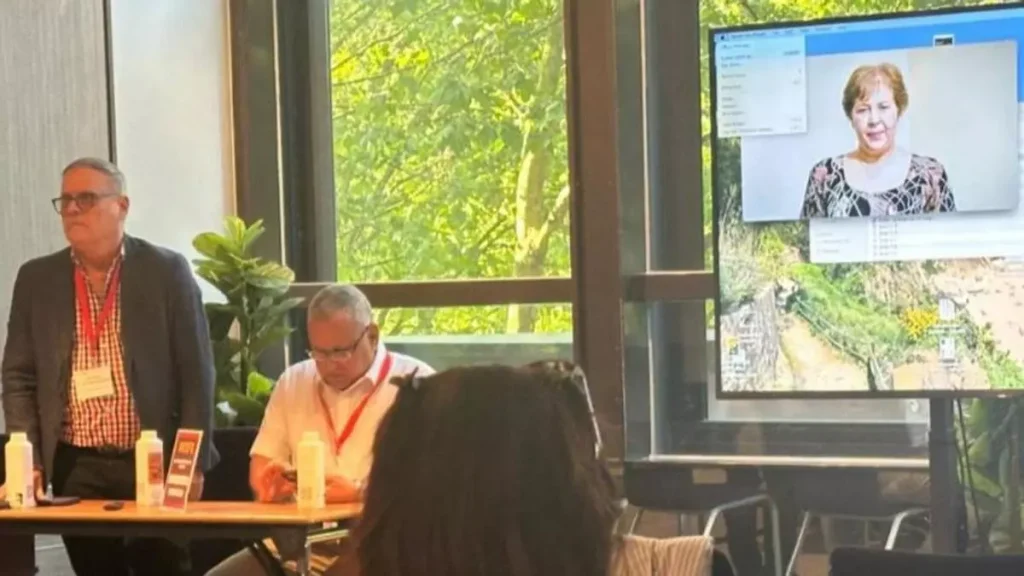
Dr. Alina Bárbara López Hernández during her virtual intervention at the LASA congress. / Facebook/Alina Bárbara López Hernández

14ymedio bigger14ymedio, Madrid, May 29, 2026 — Dr. Alina Bárbara López Hernández, co-director of the Cuba Section of the Latin American Studies Association (LASA), denounced that the Cuban regime prevented her from attending the organization’s annual congress being held this week in Paris.

In a post on her Facebook profile, she explained that despite her important position within LASA’s Cuba Section, “the Cuban Government did not allow me to attend because of the (i)legal process in which I am charged together with Jenny Pantoja, although my travel restriction dates from long before that judicial process.”

López Hernández has been under a travel ban imposed by Cuban authorities since June 2023, despite the intellectual having denounced the arbitrariness of this State decision, which contradicts the Constitution of the Republic itself.

The academic noted in her Thursday post that the prohibition makes her the first co-president of a LASA section in Cuba who is an intellectual under repression and that “this says a great deal about changing times… and about the repressive nature of the Cuban State. Even more than any continue reading

declaration could say.”

“This says a great deal about changing times… and about the repressive nature of the Cuban State. Even more than any declaration could say.”

López and Pantoja are accused of the crime of assault stemming from events that occurred on June 18, 2024, when they were repressed by agents trying to prevent the peaceful protest they carry out on the 18th day of every month. In May 2025, the Prosecutor’s Office requested four years of deprivation of liberty for the intellectual, to be replaced by correctional labor without imprisonment, while for the anthropologist it requested three years, also with the option of substitution by correctional labor.

Interviewed this Friday by Martí Noticias, the academic declared that Cuban authorities are not only preventing her from leaving the country, but are also keeping her legal case and Pantoja’s shelved in order to avoid the political cost of a trial that could send the academic to prison. López Hernández stressed: “Because I am not going to accept correctional labor without imprisonment. I am going to prison, and they know it, that I will not yield on that because of ethics, conviction, and conscience.”

According to the doctor, other Cuban academics from different institutions were able to attend the event, some of them already retired. López Hernández could only share a message with the LASA congress virtually. In the post, the academic thanked colleagues in the session for the debate generated, “where it became clear that studies on Cuba will not respond to political agendas nor can they be conditioned by particular interests.”

“I am not going to accept correctional labor without imprisonment. I am going to prison, and they know it, that I will not yield on that because of ethics, conviction, and conscience.”

14ymedio had already reported this month on the leak of an internal discussion within LASA’s Cuba Section, revealing disagreements over critical positions within the association. The debate originated from a declaration proposed by lawyer and academic Raudiel Peña Barrios, urging the Cuban Government to accept dialogue with citizens who dissent from official economic, political, and social agendas. Figures such as sociologist Aurelio Alonso rejected the proposal, calling it “unacceptable” because they considered it a condemnatory statement. Alina Bárbara López was one of the voices defending the proposal, arguing from her own position as an intellectual suffering repression from State Security.

Since its founding, LASA had been a space close to the Cuban regime’s narrative within the international academic sphere, but after the July 11 protests, the State’s repressive response and the organization’s silence generated discontent among Cuban researchers and led to resignations by members both inside and outside the Island.

In July 2024, more than fifty LASA members requested that the Executive Committee explicitly condemn the “political repression” in Cuba following reports of police violence against Dr. López Hernández and Jenny Pantoja.

Translated by Regina Anavy

______________________

COLLABORATE WITH OUR WORK: The 14ymedio team is committed to practicing serious journalism that reflects Cuba’s reality in all its depth. Thank you for joining us on this long journey. We invite you to continue supporting us by becoming a member of 14ymedio now. Together we can continue transforming journalism in Cuba.
Lukashenko: “We Are Willing To Do Everything Possible for Cuba and Everything the Situation Allows”

Salvador Valdés Mesa met in Astana with the presidents of Kazakhstan and Belarus during the Eurasian Economic Union summit

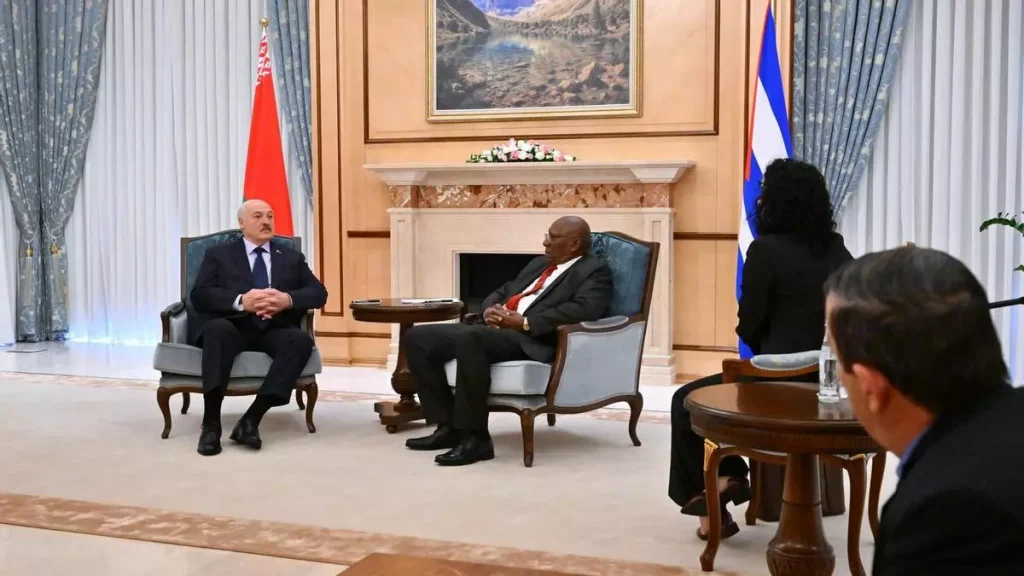
In his meeting with Valdés Mesa, Lukashenko assured that Minsk “is aware” of what is happening in the “friendly country.” / X / Salvador Valdés Mesa

14ymedio biggerEFE / 14ymedio, Astana, May 29, 2026 — Cuban Vice President Salvador Valdés Mesa met this Friday in Astana with the presidents of Kazakhstan, Kassym-Jomart Tokayev, and Belarus, Alexander Lukashenko, on the sidelines of the Eurasian Economic Union (EAEU) summit, a bloc in which Havana participates as an observer country.

During the meeting with Tokayev, the parties discussed the development of bilateral relations, especially in the field of artificial intelligence, according to a statement from the Kazakh presidency. The president explained to Valdés Mesa the steps being taken by the largest country in Central Asia to introduce new technological solutions and expressed his willingness to share that experience with Cuba.

In addition, both leaders highlighted the potential for expanding cooperation in “promising” sectors such as medicine and the pharmaceutical industry. They also examined opportunities to deepen trade, cultural, and humanitarian ties.

The closeness between Cuba and Belarus is not limited to the commercial sphere

In his meeting with Valdés Mesa, Lukashenko assured that Minsk “is aware” of what is happening in the “friendly country.” “We are willing to do everything possible for Cuba and everything the continue reading

situation allows,” said the Belarusian leader, one of Moscow’s closest allies.

Lukashenko added that his country would strictly comply with the agreements reached within the framework of the EAEU and invited Havana to present “additional proposals” to improve bilateral cooperation, which would be considered by Minsk.

The closeness between Cuba and Belarus is not limited to the commercial sphere. In recent years, both countries have strengthened military contacts, with visits by high-ranking Cuban Armed Forces officials to Minsk and Belarusian military chiefs to Havana. In 2023, the defense ministers of both countries discussed military and technical-military cooperation; afterward, the Belarusian press reported Cuban interest in systems such as the Polonez-M missiles, while new “negotiations” and visits linked to air equipment, combat drones, and air defense systems have been documented.

Valdés Mesa invited business leaders from the regional bloc nations to participate in the Havana International Fair scheduled for November

Cuba and the EAEU, made up of Russia, Kazakhstan, Belarus, Kyrgyzstan, and Armenia, agreed this Thursday on a roadmap to strengthen cooperation in the economic, commercial, and scientific sectors.

Among the areas with business opportunities on the Island, Valdés Mesa pointed to the Mariel Special Development Zone, biotechnology, tourism, the sugar industry, and agriculture.

The Cuban vice president also described to his hosts the complex situation the country is going through, which he attributed to the “tightening of the U.S. economic and oil embargo” and to “Washington’s threats of military aggression against the Island.”

In addition, he invited business leaders from the nations of the regional bloc to participate in the Havana International Fair scheduled for November, where new business deals could be finalized.

Translated by Regina Anavy

______________________

COLLABORATE WITH OUR WORK: The 14ymedio team is committed to practicing serious journalism that reflects Cuba’s reality in all its depth. Thank you for joining us on this long journey. We invite you to continue supporting us by becoming a member of 14ymedio now. Together we can continue transforming journalism in Cuba.
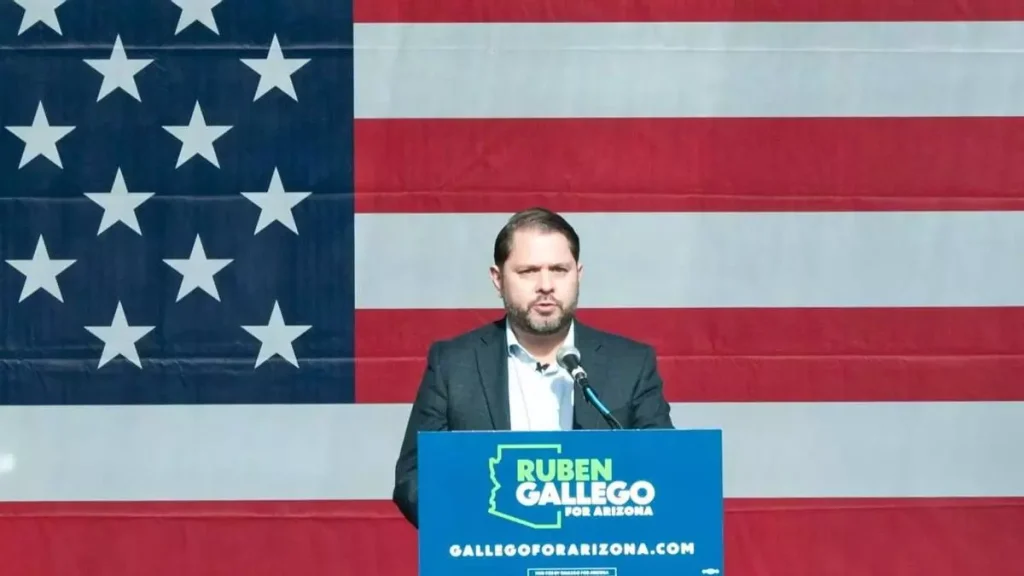
Democratic Senator Rubén Gallego on Cuba: “The U.S. Will Try To Change the Government One Way or Another”

The lawmaker also warns about the electoral impact of wars promoted from the White House

Rubén Gallego, U.S. senator for the state of Arizona and member of the Democratic Party. / EFE/María León

14ymedio bigger14ymedio/Europa Press, Madrid, May 29, 2026 — Democratic Senator for the state of Arizona, Rubén Gallego, warned this Friday that the administration of U.S. President Donald Trump “will try to change the Government of Cuba, one way or another,” a prospect he said he opposes.

“I believe there will be an attempt to change the Government of Cuba, whether through the military or by some other means. Cubans living outside the island have a great deal of influence in circles close to the president,” he asserted during a meeting with journalists at the headquarters of the Real Instituto Elcano, taking advantage of his visit to Madrid.

He thus referred to U.S. foreign policy and the actions of Secretary of State Marco Rubio, whom he accused of “having an obsession with this issue.” Rubio himself stated last week that Havana is “a threat to U.S. national security” and accused the island of being “one of the sponsors of terrorism throughout the region.”

“I believe that 99% of elected Democrats will be against this war and are seeking to pass a law to stop an attempt to invade Cuba”

Gallego, addressing these remarks — which Cuba claims amount to the United States “instigating military aggression” — argued in turn that the Caribbean nation “is not a threat to the United States.” “It is a very poor island with 9 million people,” he said, while emphasizing that “the United States should not start any war.”

“I believe that 99% of elected Democrats will be against this war and are seeking to pass a law to stop an attempt to invade Cuba. I hope we succeed and can stop this, but I believe this president and the Cubans who are in the United States will try to bring down the Government,” he maintained.

The senator clarified that he himself introduced the bill together with Democratic Senator Tim Kaine, former vice-presidential candidate, with the goal of requiring Congress to authorize Trump to carry out military operations similar to those that took place on Iranian and Venezuelan soil. “Hopefully we will have the opportunity to pass this law,” he added.

Regarding the operation carried out in January on Venezuelan soil — which resulted in the capture and transfer to the United States of President Nicolás Maduro and his wife, Cilia Flores — Gallego stressed that it represented a “tactical success” but a “failure” in political terms because it had “used the military to bring down a foreign government.” continue reading

“Maduro was deeply corrupt, but that does not give us a license to bring down the Government”

“Maduro was deeply corrupt, but that does not give us a license to bring down the Government because we open the door for what we say — that someone is a criminal or delinquent — to be used by other countries, for example China, against others such as Taiwan,” he explained.

“Strategically and militarily it was a success, but we have replaced one dictator with another, so geopolitically speaking I think it has been a failure,” he added.

When asked about the possible results of the midterm elections scheduled for November, the Democratic politician expressed optimism about a possible victory for his party in the elections, amid Trump’s declining popularity and rising tensions following the offensive against Iran.

“I believe the Democrats are going to take the House of Representatives and probably also the Senate. This is because the war is a problem for voters, not only because the majority of Americans, around 60%, reject this war but also because it distracts the Government from the things that truly matter to citizens,” he declared, though he declined for now to comment on a possible presidential run in 2028. “First we will focus on 2026,” he insisted.

“I believe the Democrats are going to take the House of Representatives and probably also the Senate. This is because the war is a problem for voters”

Among these issues, he listed the high cost of living: “Everything costs a lot in the United States. The price of housing, rent, vehicles, energy…” he said, before indicating that the president “has done nothing to solve this.”

Regarding the importance of the Latino vote, he stressed that “historically, this is a group of voters that keeps changing. There used to be a solid Democratic base, but that has changed over time, and many of them voted for Trump in 2024,” he complained.

“In Arizona we won because we gained the support of the Latino community and the reason we achieved that support was because we talked about the issues that concerned them, which are the economy and immigration,” he explained, although he admitted that, on many occasions, “Democrats have not known how to address the frustration” of the population.

Translated by Regina Anavy

______________________

COLLABORATE WITH OUR WORK: The 14ymedio team is committed to practicing serious journalism that reflects Cuba’s reality in all its depth. Thank you for joining us on this long journey. We invite you to continue supporting us by becoming a member of 14ymedio now. Together we can continue transforming journalism in Cuba.
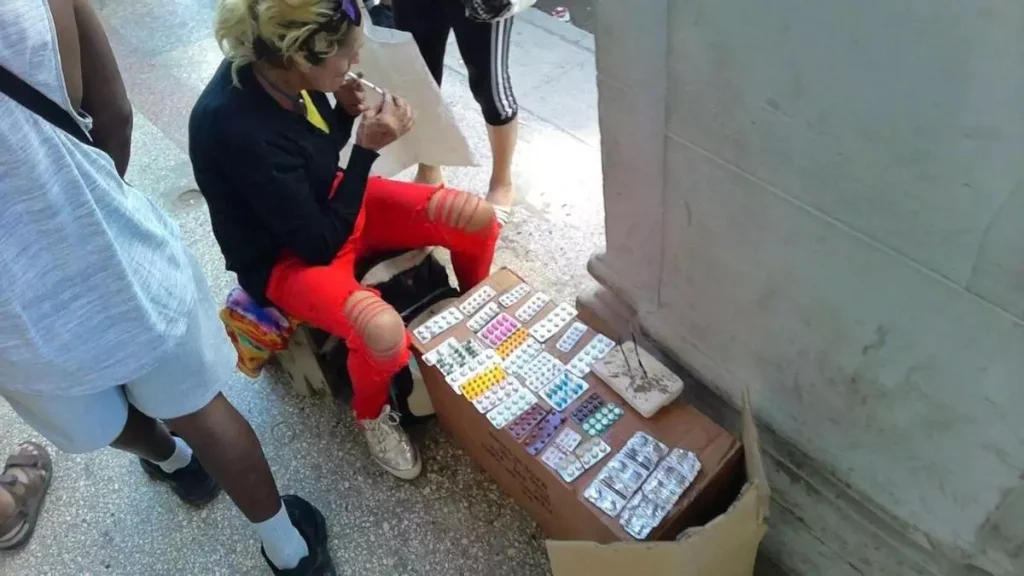
“Alprazolam, Alprazolam!” — The Latest Street Cry in Havana

In Cuba, the anti-anxiety pill is now sold retail, like a cigarette or a candy

To the shortness of “peanuts” and the cadence of “coconut candy” there has now arrived a harsher music: “alprazolam, alprazolam.” / 14ymedio

14ymedio bigger14ymedio, Havana, Natalia López Moya, May 28, 2026 — In the cardboard box, placed on the floor of a doorway as if it were an improvised counter, the blister packs of pills form an unsettling geometry. There are white, pink, green, and yellow tablets, lined up with pharmacy-like neatness, but without lab coats, prescriptions, or questions. Off to one side, a woman smokes while sitting on a low stool, her body slumped forward and her eyes fixed on the movement of passersby. She does not seem to be hiding. Nor does she need to. In today’s Cuba, even controlled medications have learned to sell themselves in broad daylight.

Alprazolam, internationally known as Xanax, a powerful short-acting benzodiazepine used to treat anxiety and panic attacks, has become part of the black-market landscape. It no longer appears only in discreet WhatsApp messages or whispered offers between acquaintances. Now it is hawked on the street alongside loose cigarettes, candy, lighters, and packages of adulterated coffee. What is also new is the retail sale: there is no need to buy the whole blister pack. For 50, 60, or 80 pesos, depending on the place and the buyer’s urgency, anyone can take a pill for the road.

“Take your little pill for the road, don’t leave without this, this helps you live”

The phenomenon is repeating itself in increasingly visible places. On Tulipán Street in Nuevo Vedado; beneath the arcades of Carlos III and Reina in Central Havana; or at the Tejas intersection in Cerro, where everything seems to converge — electric tricycles, street cries, exhaustion, and survival — drug sellers have found continue reading

their clientele. There are no signs or display cases, but neither is there much concealment. One only has to approach, look at the merchandise spread out over cardboard or inside an open shopping bag, and ask. Sometimes not even that: the sales pitch comes to meet you.

Chanting the name of a four-syllable product is not easy. To the brevity of “peanuts” and the cadence of “coconut candy” there has now arrived a rougher music: “alprazolam, alprazolam.” Or, with more salesmanship: “Take your alprazolam, one or two, however many you want.” Near Boyeros, a woman added an even more brutally honest hook: “Take your little pill for the road, don’t leave without this, this helps you live.” The phrase, spoken as casually as someone offering cold water or a croquette sandwich, sums up the country’s emotional state better than any statistic could.

Self-medication, which was always a risk, has become a refuge

There are no published official studies measuring how widespread the consumption of alprazolam bought through clandestine networks has become. Nor are many figures needed to notice that the drug has settled into the routine of a population worn down by blackouts, inflation, uncertainty, and the lack of specialized mental health care. Self-medication, which was always a risk, has become a refuge. A chemical sanctuary, cheap per dose but costly in its consequences.

Cuba has reached a point where, on the way to work or school, someone can buy a cigarette or a pill to endure the day with equal ease. And the gravest thing is not that alprazolam is being sold on the street, but that hearing the street cry advertising it no longer surprises anyone.

Translated by Regina Anavy

______________________

COLLABORATE WITH OUR WORK: The 14ymedio team is committed to practicing serious journalism that reflects Cuba’s reality in all its depth. Thank you for joining us on this long journey. We invite you to continue supporting us by becoming a member of 14ymedio now. Together we can continue transforming journalism in Cuba.
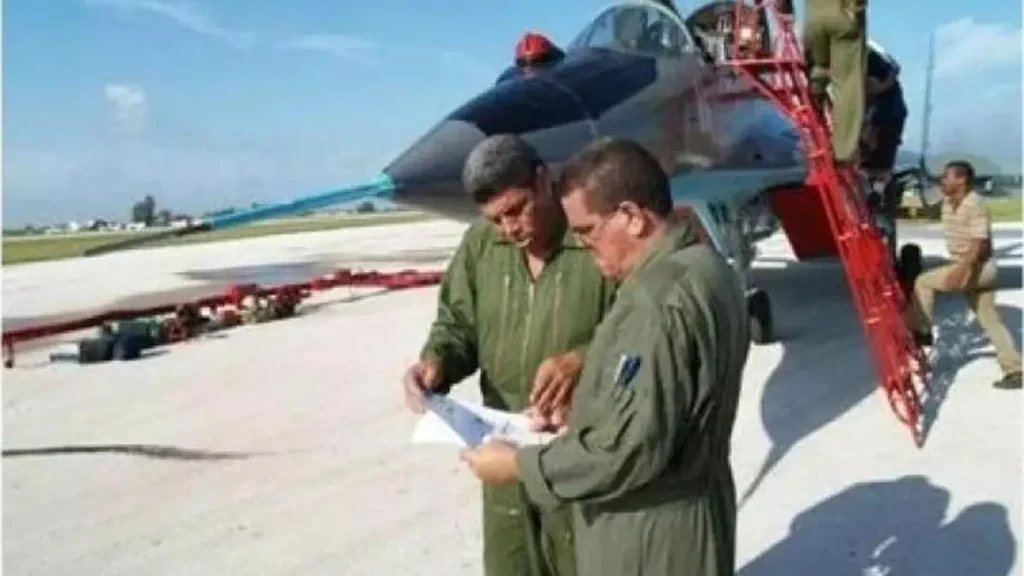
Prison Sentence for Immigration Fraud for One of the Military Officers Indicted Alongside Raúl Castro in the U.S.

Cuban pilot Luis Raúl González-Pardo Rodríguez was sentenced to seven months in prison after admitting he lied on immigration forms

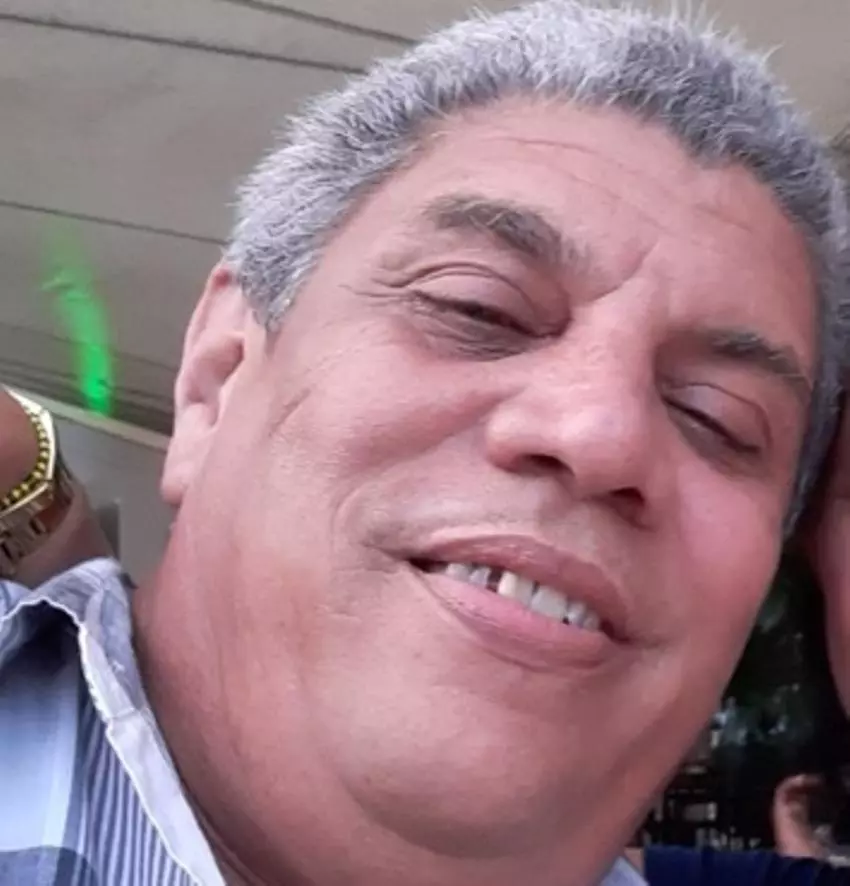
Luis Raúl González-Pardo, left, in an image included in the prosecution files that led to his conviction for fraud. / American Museum of the Cuban Diaspora

14ymedio biggerEFE/14ymedio, Miami, May 28, 2026 — Luis Raúl González-Pardo Rodríguez, a Cuban pilot who was indicted last week alongside former president Raúl Castro for the shootdown of two planes belonging to the organization Brothers to the Rescue, was sentenced this Thursday to seven months in prison in the United States for lying on immigration forms. The sentence comes one week after the defendant, who entered U.S. territory under humanitarian parole, admitted guilt to fraud in obtaining a visa.

The man was already being held in a state prison, so he is expected to be released before that term is completed.

González-Pardo Rodríguez is one of the five military officers whom the U.S. Department of Justice indicted last week, together with Castro, for the deaths of four people — three U.S. citizens and one legal resident, all of Cuban origin — in the 1996 shootdown of the Brothers to the Rescue aircraft. The other military officers are Emilio José Palacio Blanco, José Fidel Gual Barzaga, Raúl Simanca Cárdenas, and Lorenzo Alberto Pérez-Pérez. The indictment includes four counts of murder, conspiracy to kill Americans, and destruction of aircraft.

The U.S. government has not detailed what the next steps might be in the prosecution of Raúl Castro

Unlike González-Pardo Rodríguez, who was already in the United States at the time of the indictment, Castro, 94, remains in Cuba, and the U.S. government has not detailed what the next steps in his prosecution might be.

During the announcement of the indictment last week, acting Attorney General Todd Blanche stated that the former Cuban president would appear before justice “of his own will or by some other means,” though he avoided answering whether Washington was planning an operation in Cuba similar to the one carried out in Venezuela on January 3 to capture then-ruler Nicolás Maduro.

According to Cuba, the attack under scrutiny in this case took place in Cuba’s territorial waters, in legitimate defense and after more than a dozen warnings, and therefore did not violate international law. However, reports from continue reading

the International Civil Aviation Organization (ICAO) and the Inter-American Commission on Human Rights, an autonomous body of the Organization of American States, established that the aircraft were shot down in international airspace.

More recent image of González-Pardo, included in his profile as a repressor by the Foundation for Human Rights in Cuba. / FHRC

Brothers to the Rescue was a nonprofit organization founded in Miami by José Basulto in the early 1990s. Its members patrolled international waters searching for Cuban rafters attempting to flee the Island, while Havana accused them of violating Cuban airspace and carrying out political provocations.

Subsequent investigations revealed that at least two Cuban agents infiltrated into Brothers to the Rescue provided detailed information about flight routes and schedules to the Cuban government, facilitating the regime’s military operation. In 2003, a U.S. federal court charged a Cuban general and two fighter pilots over the shootdown, but no formal charges were brought at that time against the Castro brothers.

In June 1996, El Nuevo Herald published an audio recording in which Raúl Castro can be heard saying: “I said they should try to shoot them down over the territory, but they entered Havana and left again… Of course, with one of those air-to-air missiles, what comes down is a fireball, and it’s going to fall on the city. Well, shoot them down at sea when they show up.” In the same audio document, the then-head of the Armed Forces speaks of giving “authority” to “five generals.”

Translated by Regina Anavy

______________________

COLLABORATE WITH OUR WORK: The 14ymedio team is committed to practicing serious journalism that reflects Cuba’s reality in all its depth. Thank you for joining us on this long journey. We invite you to continue supporting us by becoming a member of 14ymedio now. Together we can continue transforming journalism in Cuba.
The Actors Defining the Sequence of Change in Cuba

What remains for the regime is to renounce the hegemonic role of the only permitted party and attempt a real opening, even if it appears to be a fraudulent change

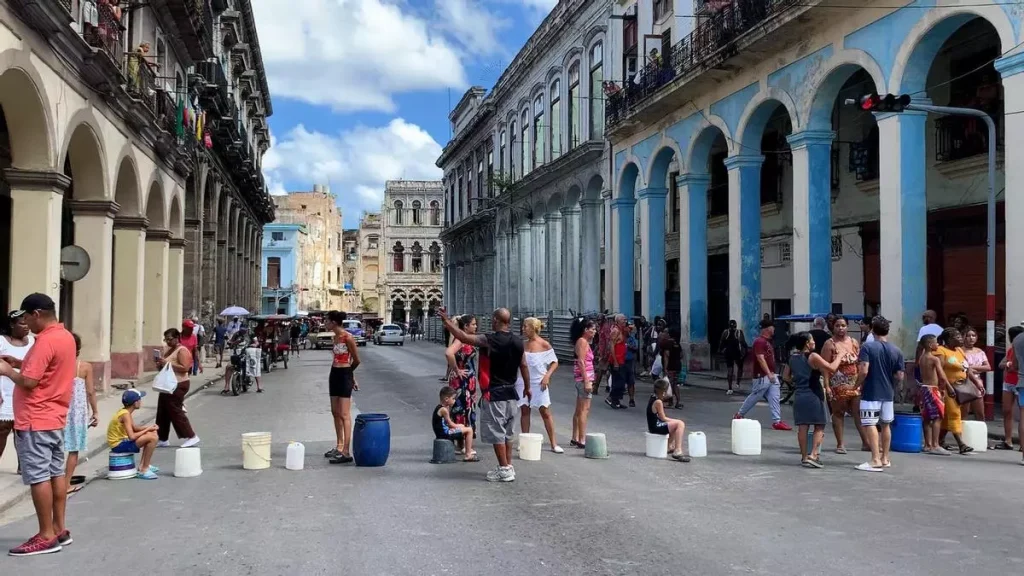
The most dynamic parts of the contradiction are, in my view, the governments of Cuba and the United States, despite the fact that the fundamental contradiction lies between the population and the dictatorship. / EFE

14ymedio bigger14ymedio, Havana, Reinaldo Escobar, May 28, 2026 — Three actors are currently leading the Cuban drama: the dictatorship in power, the population, and external factors.

Although the regime wants to give the impression that it is a monolithic structure, it is enough to cite its different names, or perhaps masks, to perceive the subtle differences: the Party, the military, the family clan, the State, Parliament, the State Security organs. Suspicion falls on each of them as to who is truly governing the country.

Where it says “the population,” one could say “the citizens,” but that designation should be reserved for those human groups whose members are empowered to challenge authority, organize according to their preferences, and periodically go to the polls to reward or punish politicians. One could also say “the people,” but that is the subject that storms government palaces. For now, we are reduced to being merely the inhabitants of this Island. Here, no one asks how the unions will react or what the students will do.

Where it says “the population,” one could say “the citizens,” but that designation should be reserved for those human groups whose members are empowered to challenge authority

Only intuitively, and with an enormous effort to strip away one’s beliefs, can one define the sectors of the population to place supporters of the process on one side and the dissatisfied on the other.

A more detailed study would divide the supporters into different strata: the Marxist-Leninists convinced that socialism is the correct path; those who for some reason feel benefited; the perennial opportunists; and those who, out of inertia, obey and march wherever they are ordered.

The dissatisfied camp is equally varied: the anti-communists continue reading

convinced that socialism as a doctrine ruins nations; those harmed by some law or measure taken over the last 67 years; and those suffering the immediate consequences (scarcity, blackouts, disconnection) but who still do not have the “political consciousness” to participate in a clearly opposition-oriented initiative, where an undeniable minority is active.

External factors are also divided into two camps: on one side, the Government of the United States exercising its enormous economic, diplomatic, and military power to demand the dictatorship’s capitulation. It is timidly accompanied by some democratic countries in Latin America and by the indecisiveness of the European Union, where the belief still prevails that signed agreements and accords can open a path toward democratization.

On the other side, with a less explicit commitment, are Russia, China, and Iran, with their declarations of unrestricted support for the Havana regime, and among neighboring countries, the supportive hand of Mexico, Colombia, and Brazil, joined by a breeding ground of organizations dressed in progressive rhetoric mainly dedicated to confronting, often violently, demonstrations by Cuban exiles abroad. From this chapter of external factors come shipments of food and medicine, cash donations, solar energy installations, and above all applause. They are the deniers of the need for political change. Some for strategic needs, others because they do not want to realize how illusory their illusion about Cuba is.

From the northern neighbor, which struggles with the limits of how far its interference should go, political common sense and trust in the population are expected — a population tired of its condition as mere inhabitants and eager to become citizens peacefully

From this parallelogram of forces, where each side pulls and pushes in different directions, a result must eventually emerge.

The most dynamic parts of the contradiction are, in my view, the governments of Cuba and the United States, despite the fact that the fundamental contradiction lies between the population and the dictatorship.

What remains for the regime is to renounce the hegemonic role of the only permitted party and attempt a real opening, even if it appears to be a fraudulent change.

From the northern neighbor, which struggles with the limits of how far its interference should go, political common sense and trust in the population are expected — a population tired of its condition as mere inhabitants and eager to become citizens peacefully, but on the verge of reacting angrily as a people.

Translated by Regina Anavy

______________________

COLLABORATE WITH OUR WORK: The 14ymedio team is committed to practicing serious journalism that reflects Cuba’s reality in all its depth. Thank you for joining us on this long journey. We invite you to continue supporting us by becoming a member of 14ymedio now. Together we can continue transforming journalism in Cuba.
The U.S. Is Betting on a “Slow-Motion” Collapse of the Cuban Regime

  • The digital outlet Axios cites a State Department source: with the heat, irritation will grow and people will take to the streets
  • “The president does not want troops on the ground for more than 48 hours”
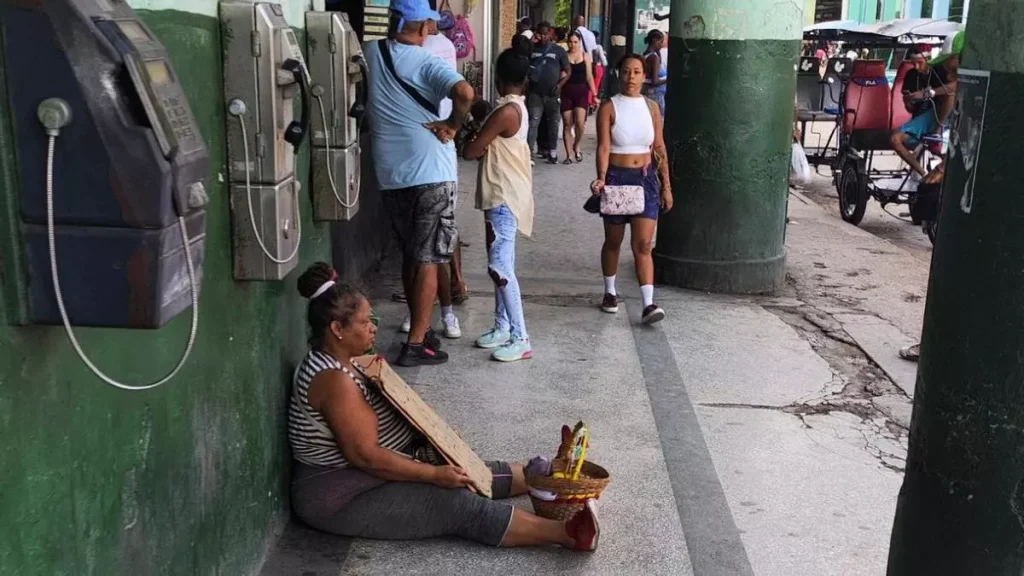
“It’s going to be hot. People won’t have electricity. Food will spoil without refrigeration. People will be more irritated. They may take to the streets. And then what will happen?” / 14ymedio

14ymedio bigger14ymedio, Madrid, May 28, 2026 — The leaks from the U.S. State Department to Axios that so irritate Havana continue unabated. The latest installment, published this Thursday, again speaks of an open-ended scenario in which all options are being considered. Apparently, President Donald Trump trusts that the regime will slowly stew in its own juices, a fairly literal metaphor considering negotiators are talking about a summer in which heat itself will become another suffocating factor that could push the population to explode.

“We do not want to end the regime just yet. There is a method to this, in stages,” one of the sources said. The Administration expects a collapse in the coming months through a strategy the official describes as “accelerationist,” although that definition weakens when he explains that the pressure will be applied “in slow motion.” “Trump wants to exhaust every tool at his disposal. But at this moment, he does not have as many as before,” the source added, maintaining that the president is in no hurry and is focused on Iran, an issue that becomes more complicated the closer it seems to a resolution.

“We have a broad range of resources, especially regarding sanctions and their enforcement. And more measures are coming,” the source said, without clarifying which additional sectors might be affected.

“We have a broad range of resources, especially regarding sanctions and their enforcement. And more measures are coming”

One of the most enigmatic statements the sources gave Axios was the suggestion that there could indeed be someone within the regime capable of steering a transition, although the operation has not yet been approved. “The problem is not that there is no Delcy in Cuba. There could be people continue reading

with a similar profile. But Trump has not yet given the green light to formally get involved,” one official maintained.

According to these sources, there are two other issues that distinguish Cuba from Venezuela. Washington believes that an operation to capture Raúl Castro — criminally charged in the U.S. a week ago for the shootdown of the Brothers to the Rescue planes — similar to the one carried out against Nicolás Maduro would be useless because Raúl Castro already carried out a transition 30 years ago “toward a less authoritarian regime,” and nothing would change. From the official’s remarks, it is understood that the U.S. problem with Cuba is the current system’s economic “incompetence,” without mentioning political aspects.

The other issue is that the embargo is subject to legislative control, meaning the presidency has more limited room to maneuver. “This prevents Trump from normalizing relations with a new government through executive order, as he did in Venezuela, where sanctions were imposed by the U.S. executive branch,” the sources reflected, adding that the interests of Cuban-American representatives play a role here. “They hold hardline positions on Cuba that reflect the conservative exile community in South Florida.”

Removing Venezuelan support has been key to the U.S. strategy, they added. The rest has continued through additional sanctions, and summer, they hope, will do its part. “It’s going to be hot. People won’t have electricity. Food will spoil without refrigeration. People will be more irritated. They may take to the streets. And then what will happen? I do not see the president doing nothing if there is repression,” one source said.

But another of those consulted disagrees. “The president does not want troops on the ground for more than 48 hours. It is a brewing quagmire. This could get complicated.”

Be that as it may, all plans are on the table, as Politico insisted this Wednesday in an article stating that “strategically positioned assets are laying the groundwork for military action, from capturing Havana’s leadership, similar to what was done with Nicolás Maduro, to a series of precision strikes.” “Everything is on the table, but there is no planned or imminent invasion,” they confirmed to Axios. “When the president gives the order, we will be ready for anything.”

“We will talk with them, work on it; we want something good for the Cuban people and, hopefully, there will be a good outcome for them. There has to be”

Amid this situation, the carrot-and-stick strategy remains alive. The U.S. secretary said this Wednesday that he trusts negotiations will succeed. “We will talk with them, work on it; we want something good for the Cuban people and, hopefully, there will be a good outcome for them. There has to be,” Rubio said during a Cabinet meeting at the White House chaired by Trump.

That strategy can also be seen in the offer of $100 million in humanitarian aid that Rubio offered Havana last week and which it accepted. Like the aid sent after Hurricane Melissa, it will be channeled through the Catholic Church. “If we had wanted to accelerate the collapse, we would not have sent any aid,” a senior government official told Axios. This is, he said, a “campaign to show people that they can have a better life if the regime gets out of their way.”

“The political situation is complex on both sides [of the Florida Straits],” another official concluded. “But we have time. They do not.”

Translated by Regina Anavy

______________________

COLLABORATE WITH OUR WORK: The 14ymedio team is committed to practicing serious journalism that reflects Cuba’s reality in all its depth. Thank you for joining us on this long journey. We invite you to continue supporting us by becoming a member of 14ymedio now. Together we can continue transforming journalism in Cuba.
Gaesa is Denounced Before the UN for Limiting Access to Food in Cuba

“The rent-seeking logic of the military elite in Cuba hinders the increase of national production,” says Food Monitor

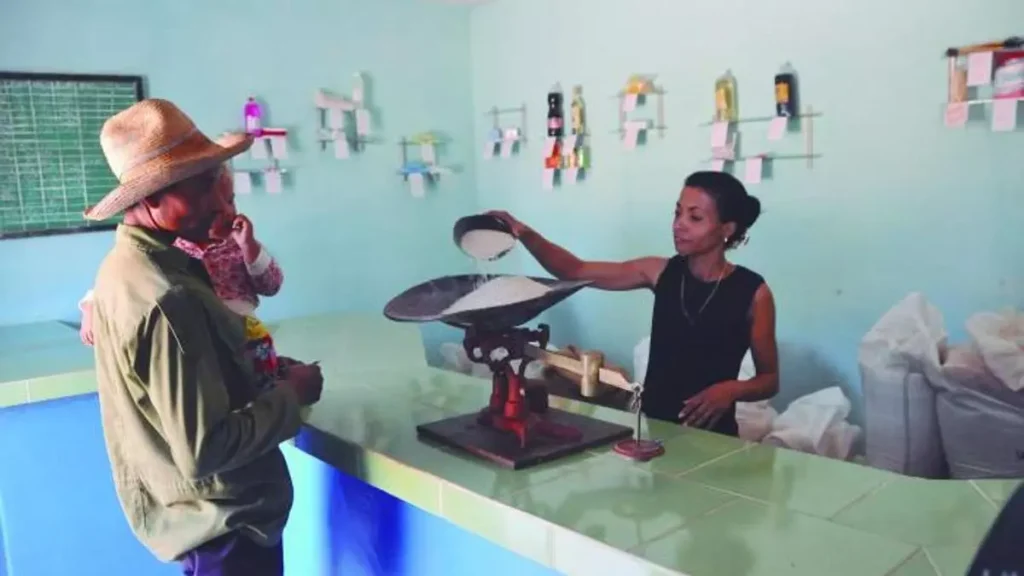
In the country, barely 29% manage to have two meals a day and 7% never eat meat / Granma

14ymedio bigger14ymedio, Havana, May 27, 2026 — The NGO Food Monitor Program filed a complaint this Tuesday before the United Nations Special Rapporteur on the Right to Food against the all-powerful military conglomerate Business Administration Group (Gaesa) — recently sanctioned by the U.S. — for controlling the country’s food resources and limiting access to them.

The document, prepared in response to a UN call to report examples of “concentration of corporate power in global food systems,” states that Gaesa “significantly limits the autonomy and popular sovereignty of socioeconomic actors, reflected mainly in the food system, impacted by the monopoly over foreign currency, imports, and food distribution and commercialization chains,” which has turned access to food into a “mechanism for extracting foreign currency, using the Cuban diaspora as a market.”

It also stresses that “the rent-seeking logic of the military elite in Cuba hinders the increase of national production.” Food Monitor Program explains in its complaint that it has warned “about the government’s lack of interest in resolving the production deficit: 80% of food is imported, while national food production has fallen by 67% over the last five years in favor of food imports.”

Eighty percent of food is imported, while domestic production has fallen by 67%

This, it adds, “limits citizens’ access to basic products, especially when these are sold in foreign currencies inaccessible to many Cubans, and restricts the development of autonomous business and corporate initiatives, and the dynamism of the national economy, in favor of enriching the ruling elite.”

Furthermore, the complaint points out that companies under the control of military figures, such as Flora y Fauna S.A., directed by Commander Guillermo García Frías, “are evidence of the advance of administrative capitalism in the country. Companies under its leadership centralize and restrict popular access to natural food continue reading

resources.”

Regarding this company, the report notes that “under the legal structure of heritage conservation, its units allow the exclusive economic control of species and products such as meats, seafood, and charcoal, which the same company exports in competitive markets.”

That monopoly has pushed independent Cuban producers out of the picture. In the complaint, they anonymously describe their exclusion from decisions about their own work: “It is not fair that we, the people who live on and work the land, do not have control over what we produce, how we do it, or to whom we sell it.”

“It is not fair that we, the people who live on and work the land, do not have control over what we produce”

As for the decision-making process within the sector, farmers state that “organizations have had their space in some agricultural policy discussions, but in the end, it seems that decisions come from above and we are only there to fill seats. Sometimes it feels like they only use us to legitimize what had already been decided.”

Small private entrepreneurs face price caps, tax increases, import restrictions, and provincial bureaucracy that blocks their development, the organization accuses.

The NGO also highlights that, despite “clear violations of the socioeconomic rights of producers in Cuba, including recorded acts of repression and intimidation based on ideological criteria, there are no lawsuits advancing through national legal channels, nor any rulings against the corporations mentioned in this document, which are strongly backed by the ruling leadership.”

There are “clear violations of the socioeconomic rights of producers in Cuba, including recorded acts of repression and intimidation”

In Cuba, Food Monitor recalls, there is no separation between the Executive and Legislative branches, “which means the latter functions as legal support and a legitimizing apparatus for official policies.”

The report warns that hunger is worsening in Cuba, stating “that 96% of the population has lost its purchasing power for food,” according to its 2024 survey, in a country where barely 29% manage to have two meals a day.

Translated by Regina Anavy

______________________

COLLABORATE WITH OUR WORK: The 14ymedio team is committed to practicing serious journalism that reflects Cuba’s reality in all its depth. Thank you for joining us on this long journey. We invite you to continue supporting us by becoming a member of 14ymedio now. Together we can continue transforming journalism in Cuba.