“There are people within the Government’s technocratic sphere who could play some role in this, but we do not have names,” the Secretary of State said.
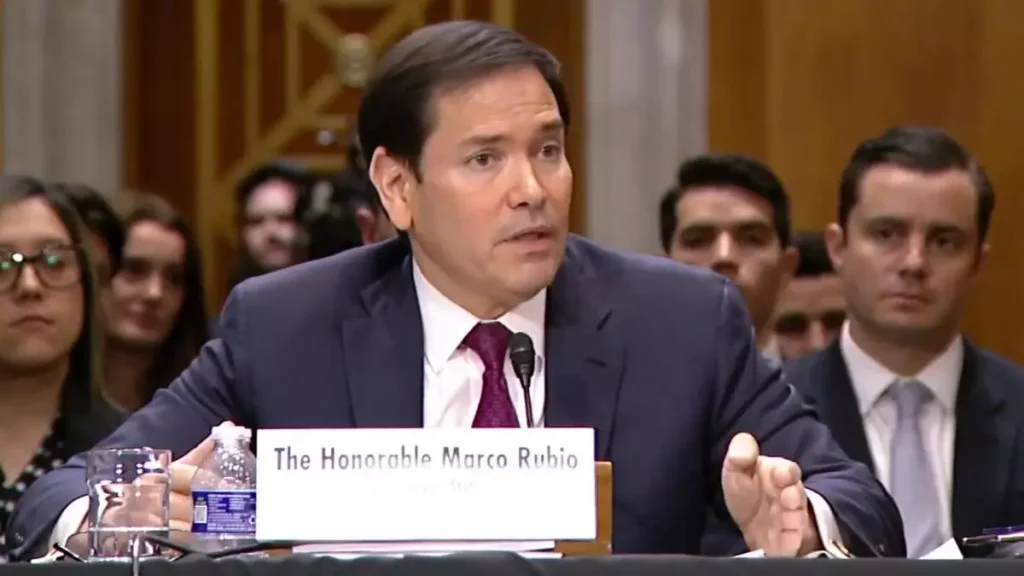
 14ymedio, Madrid, June 4, 2026 – Cuba once again took center stage on the second day of Marco Rubio’s appearance before a U.S. House of Representatives committee, where the Secretary of State affirmed on Wednesday that there are people within the regime with whom a transition can be negotiated.
“There are people within the Government’s technocratic sphere who could play some role in this. But if you ask me whether there is an individual we would trust and who would support us in leading this transition from beginning to end, I cannot give you that name right now,” Rubio said.
Although he refrained from giving any indication of who that person might be, he did suggest that it would not be someone from the highest ranks. “That becomes a little more difficult the higher up the ranks you go, because of the ideological inclination some of them have,” he added.
“That becomes a little more difficult the higher up the ranks you go, because of the ideological inclination some of them have”
The head of U.S. diplomacy was responding to questions from Cuban-American congresswoman María Elvira Salazar, who pressed him on whether the Venezuela model could be replicated in Cuba, referring to the idea of finding a figure from within the regime, akin to Delcy Rodríguez, to help bring about change. Rubio acknowledged that the situation on the Island is of particular interest to him and stressed that his goal was to avoid chaos.
“Clearly, there are individuals within the power structure who understand that what they have is not sustainable and that it must be rebuilt. But they have no power. And if they do have it, they do not know how to do it,” he insisted.
Rubio again criticized the Government by referring to the military conglomerate Gaesa, saying that he would not “allow them to benefit from the game they have been playing, in which they steal money from the Cuban people for the benefit of that conglomerate at the expense of the people of Cuba.” He nevertheless emphasized a negotiated path.
“I think we want to look at models like the Czech Republic or Poland, how they made the transition. And one of the things they did was preserve some institutions in their society to provide stability and longevity to the project,” he explained. His remarks continued the message he delivered the previous day when, while discussing the Island’s precarious situation and its affinity with states supposedly hostile to the United States, such as China and Russia, he argued that change required a new system, inseparable from new leadership.
“They need serious systemic reform,” he said before asking and answering whether the country could take care of itself. “I think the answer is yes, they can, but I do not believe this system is capable of reforming itself unless new people take control or a new mindset is imposed,” he emphasized.
“We have spoken with them, we have offered them what I believe needs to happen for their economy to recover,” he said, without providing further details.
In recent months, the international press has cited as part of the negotiations Raúl Guillermo Rodríguez Castro, the grandson of the former president and who is known as El Cangrejo [The Crab], reportedly having spoken directly with Rubio. Another name mentioned has been Alejandro Castro Espín.
Venezuela also came up during the hearing when Rubio was asked about possible elections in the South American country, precisely five months after the capture of Nicolás Maduro.
“We would like to see them as soon as possible, but remember that only five months have passed: not five years, not 50 months,” he said regarding elections in Venezuela.
“We would like to see them as soon as possible, but remember that only five months have passed: not five years, not 50 months. Five months is not a long time for a country that has gone through what that country has gone through, but clearly we need a new electoral commission,” he declared.
Salazar, speaking after the hearing, suggested that elections in Venezuela could be held in 2027, although she said that 2028 would also be acceptable if that ensured the proper conditions for legitimate elections.
“I am betting on elections being held in 2027, but if it is in 2028, that is fine. These are processes that need to be properly established so that the results are good,” she maintained.
Translated by Regina Anavy
______________________
COLLABORATE WITH OUR WORK: The 14ymedio team is committed to practicing serious journalism that reflects Cuba’s reality in all its depth. Thank you for joining us on this long journey. We invite you to continue supporting us by becoming a member of 14ymedio now. Together we can continue transforming journalism in Cuba.