
Something That Has Deeply Affected Cuban Literature Is Fear

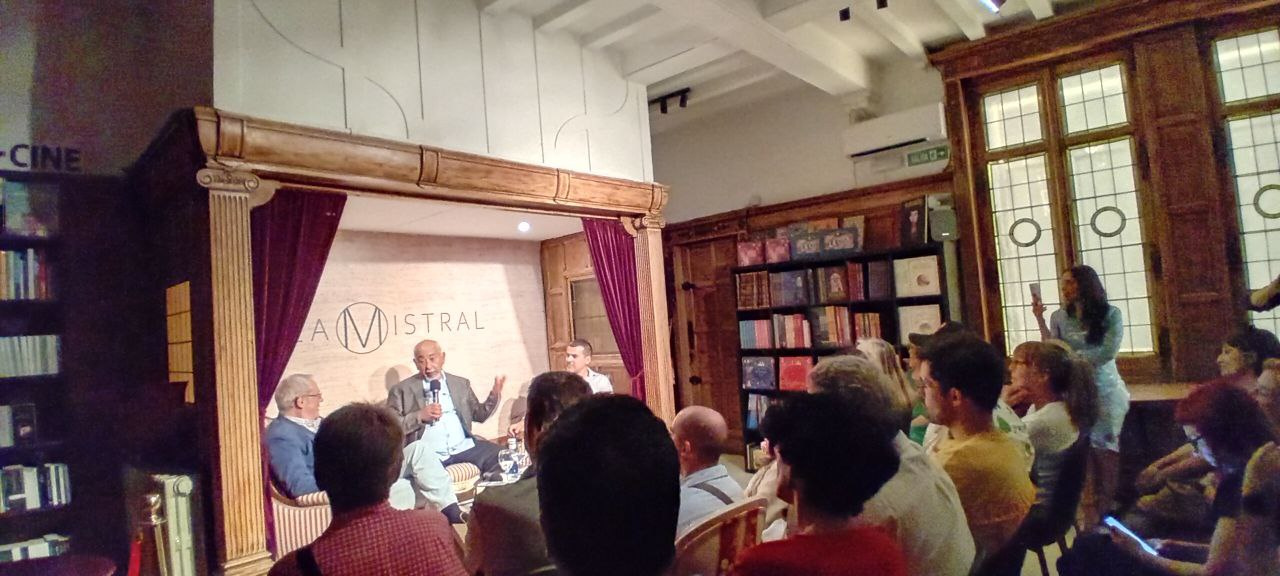
Leonardo Padura presented his book this Wednesday at La Mistral, a few meters from the Puerta del Sol in Madrid / 14ymedio

14ymedio bigger14ymedio, Yunior Garcia Aguilera, Madrid, 22 May 2025 — Madrid starts the week in full swing with Cuban literature. On Tuesday, Carlos Celdran presented his book -with two plays- at the Arenales bookstore. A day later, Roberto Carcassés presented his first novel at El Argonauta, while Leonardo Padura attended the presentation of Un camino de medio siglo: Alejo Carpentier y la narrativa de lo real maravilloso, at La Mistral. Despite the coincidence, the audience filled all the seats.

Padura shared a table with Luis Rafael Hernández, director of the publishing house Verbum, and the Spanish critic and professor Fernando Rodríguez Lafuente, former director of the Cervantes Institute. The conversation was a kind of meeting between the living and the dead, a contest between the marvelous and the harshly real, but also a confession of the fears that have accompanied generations of Cuban writers.

Winner of the Princess of Asturias Prize for Literature (2015), Padura does not hide Carpentier’s influence on his work, even though his colleagues joked that every writer should “erase the traces of his referents”. Carpentier himself used to say that “writers should not talk about their masters, so that the seams do not show.

The label of the Latin American boom has also been applied to Borges and Carpentier, without much nuance. The result: theoretical confusion and the lumping together of different literatures. continue reading

In 1978, Padura wrote a review of La consagración de la primavera, which El Caimán Barbudo subtitled “Más realismo que maravilla” (More realism than wonder). “It was already a novel in which the ’marvelous real’ didn’t work in the same way; you had to look at things from a different point of view,” he explained. But critics continued to work with the same aesthetics, the same categories. The label of the Latin American boom was also applied to Borges and Carpentier, without much nuance. The result: theoretical confusion and the lumping together of different literatures.

Padura drew a clear line: magical realism accepts the fantastic as an indistinguishable part of reality; marvelous realism, on the other hand, presents the magical from a logical, almost rational approach.

The research underlying this essay began in the midst of the Special Period, when access to information in Cuba was a titanic task. To write The Man Who Loved Dogs, he had to rely on friends with free Internet access who downloaded PDF files from abroad. “We’re talking about 2006 or 2007. Imagine what it was like before,” he said.

“In the 1990s, I wrote like a madman in order not to go crazy,” he confessed without laughing. And he recalled that when he gave the essay to Carpentier’s widow, “there were things she didn’t like because she was very jealous, very widowed.”

Thanks to this research, he was able to better understand Carpentier’s concept of history, his vision of space and, above all, his interpretation of the concept of revolution, which Padura considers “very saccharine” and with which he admits to disagreeing. He also told an anecdote that illustrates the biographical ambiguity of the author of The Century of Enlightenment: for fear of being deported during the Machado regime, Carpentier claimed to have been born at 14 Maloja Street in Havana, when in fact he was born in Lausanne, Switzerland. “All in all,” added Padura, “he is the most Cuban Swiss-born writer one can imagine.”

“The writers of the 1970s who survived wrote in fear. And later generations have not been completely free of it.”

In addition to Carpentier, the author revealed three other great references: Vargas Llosa, Cabrera Infante – “who taught me to write in the Havana language” – and Manuel Vázquez Montalbán – “who showed that it was possible to write police literature that was, above all, literature”. “I’ve been wanting to write a note for about two years, and I couldn’t do it while Vargas Llosa was alive, because it might seem like I was buttering him up” he joked.

The writer recalled that his years as a student at the university were marked by a power that demanded “a Marxist understanding of history”. In addition, the culture of the island suffered the ostracized death of two “phenomena” of world literature: Virgilio Piñera and Lezama Lima.

“It was very difficult” – Padura admitted – “something that has deeply affected Cuban literature is fear. People wrote with fear. The writers of the 1970s who survived wrote with fear. And later generations have not been completely free of it.”

Translated by Gustavo Loredo

____________

COLLABORATE WITH OUR WORK: The 14ymedio team is committed to practicing serious journalism that reflects Cuba’s reality in all its depth. Thank you for joining us on this long journey. We invite you to continue supporting us by becoming a member of 14ymedio now. Together we can continue transforming journalism in Cuba.
In the ‘Llega y Pon’ of Matanzas, Cuba, There Are Also Social Differences

Inspectors no longer spread terror with their fines and evictions in illegal settlements.

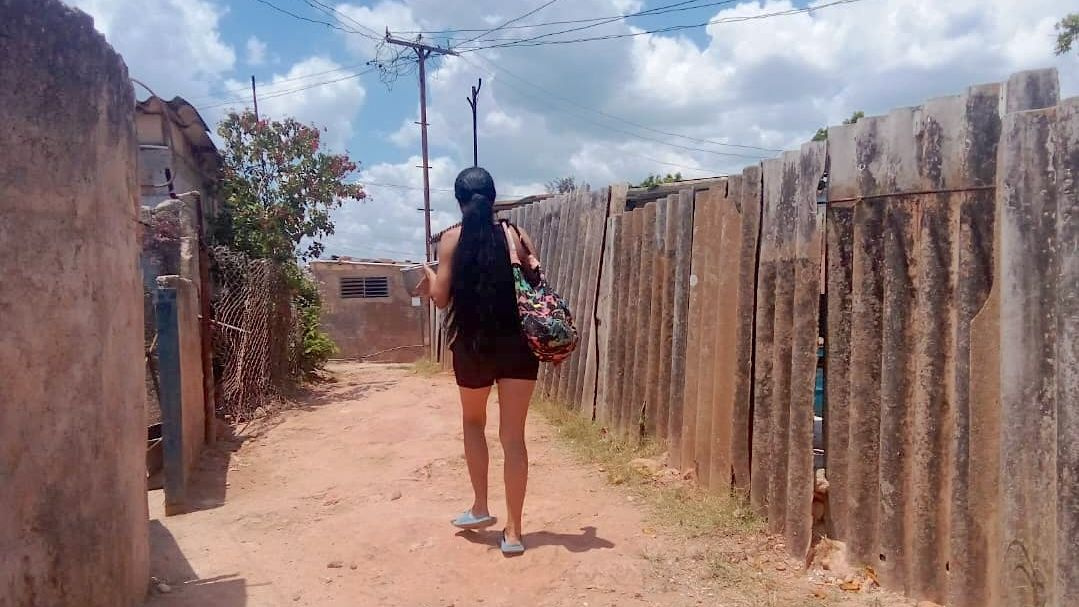
While some houses resemble more of a crumbling shack, others have solid block walls / 14ymedio

14ymedio bigger

14ymedio, Julio César Contreras, Matanzas, May 11, 2025 — Walls made of rusted sheets of metal and roofs that would not withstand a hurricane comprise most of the houses in the illegal settlement that has been growing at the entrance to the city of Matanzas, near the industrial area. Its residents, mostly from the eastern part of the country, cling to the land, despite the lack of basic infrastructure in this area near the Balcon del Yumurí, in the Dubrocq neighborhood, popular council of Versalles.

The “llega y pon” [literally,’arrive and put’] began to be erected more than a decade ago in silence, avoiding the eyes of the inspectors of the dreaded Institute of Physical Planning that, until 2021, sowed terror with its fines and evictions among residents of illegal settlements. “I arrived at this place when there were only two settlements constructed by easterners, near the old School of Trades,”says Juan Carlos, who fled from the poverty of his home province, Guantánamo.

With his own hands, Juan Carlos started cleaning up a piece of land in an area that was covered with garbage. He cleared, removed pieces of metal, leveled the ground and became a bricklayer in the process. The son and grandson of fishermen, who had grown up among fish nets and poor catches, he quickly established himself as a builder raising his own house. It was small and fragile, but it was his.

“The materials to build always have to be bought under the table. There are so many people here who do not have the resources and have had to settle for building a room made of wood and cardboard,” says Juan Carlos.”But the main thing is that they have somewhere to live. They will improve it continue reading

over time,” he adds. With a housing deficit that, in 2024, was estimated throughout the island at more than 850,000 dwellings, having a roof over your head is almost a privilege in Cuba.

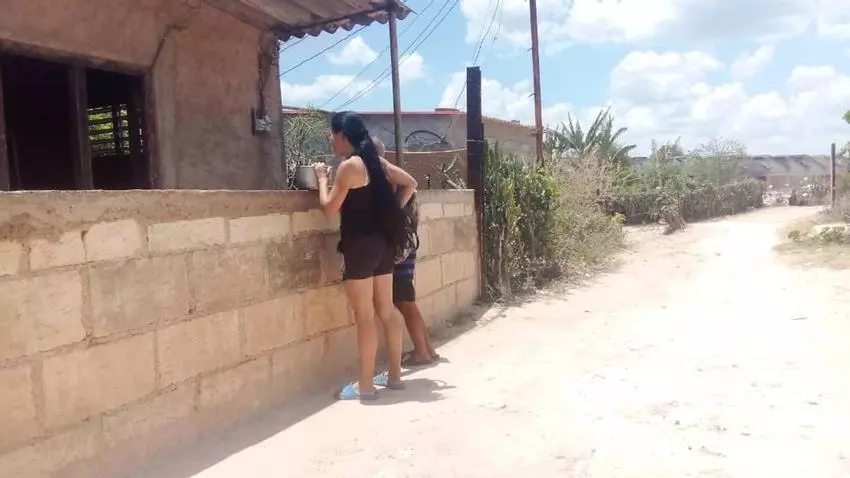
Many residents in the”llega y pon” don’t settle for improvising a home and living badly inside / 14ymedio

Juan Carlos, like many other residents in the “llega y pon”, does not settle for improvising a home and living badly inside. While some houses look more like a shack about to collapse, others show solid brick walls, small terraces and wooden or metal shutters for the breeze. Social differences also arise in the neighborhood. Those who have arrived from other places in the province of Matanzas have more contacts to improve their homes. Those from the east of the country and the elderly live in the most precarious homes.

Yorelbis is one of those from Matanzas who came to the area pushed by the overcrowding in his parents’ house in Pueblo Nuevo. A State worker, he had been waiting for years for a subsidy to purchase construction materials that had been promised at his work center. The money never arrived. The State resources to build a house began to run out, and the young man, married with a pregnant wife, decided not to wait any longer.

Like Juan Carlos, Yorelbis picked out a piece of land. He built the foundation of the house and erected the outer walls with bricks recovered from collapsed buildings or bought on the black market. Finally, he divided the interior with cardboard and wood to have two rooms and a tiny dining room that also serves as a kitchen. Seen from the outside, there is no plaster on the facade, and some of the rebar sticks out just where the asbestos-cement tiles that cover the dwelling begin.

“When you arrive for the first time you feel like you are at the end of the world. There is no asphalt, and the dust gets inside you through your ears. On the other hand, the power never goes out, because we are fed by the electric line that goes to the industrial area,” says Yorelbis. It gives us an illegal power supply, and no family in the settlement pays a cent.” Although we are far from the city, here it seems we have what we need,” says the young man showing a few liters of vegetable oil he has for sale.

Entrepreneurship is also gaining ground in the neighborhood. There are several private cafes, and shops that offer cheap clothing appear here and there. There is no ration store, but there are plenty of merchants who advertise bags of bread rolls or the popular ice-cream sandwich that children make a fuss over and that empties parents’ pockets. The inspectors barely approach, perhaps because of fear or because they intuit that the residents of the area inhabit a feral universe where the law and fines accomplish little.

The smile of pride for his home on Yorelbis’s face dissolves when he lists the disadvantages of living in an illegal settlement

The smile of pride for his home on Yorelbis’s face dissolves when he lists the disadvantages of living in an illegal settlement. One of the main obstacles is the lack of an identity card with the address where he actually lives. ” We still have the papers at my parents’ house and that complicates our lives a lot,” he admits. ” Getting my pregnant wife looked after in the nearest clinic was a headache, and when the child grows up, we will see how we can enroll him in school.”

The neighborhood has been growing and is full of children. While much of Cuba suffers from an aging population, the Dubrocq “llega y pon” has many families with young children. The women carrying babies, the strollers as they go along the rough and unpaved road and the cries of newborns coming from some houses give the area a childlike cheerfulness.

But this striking presence of children also highlights one of the problems that most affects the area: teenage pregnancy. In the province, the fertility rate for the 15-19 age group is 51.5 per 1,000 women. In the poorest neighborhoods, the figures are even more alarming, with consequent problems of maternal malnutrition, low birth weight, school dropout and family material insecurity.

In the group of those arriving from the east of the country, many also bring their young children. “I came here from Bayamo with my two small children, because my brother left the country and gave me this room,” Yanelis tells this newspaper. Yanelis lives in a modest house made of metal sheets that were once destined to become cans. ” At least I don’t get wet when it rains,” she says.

In the group of those arriving from the east of the country, many also bring their young children / 14ymedio

Yanelis, however, does not hide her concern that she has not managed to change the address of her identity card. ” I have been able to keep my children studying with the help of the school principal, but I do not know how long that will be possible.” Although the regulations are strict to enroll a student in a school, some directors turn a blind eye or facilitate the admission of undocumented students into classrooms, aware of the serious housing problem in the country.

Like most of her neighbors, Yanelis has a long list of dissatisfactions ranging from water supply problems in the area to the insecurity that spreads between its crowded alleys as soon as night falls and the lack of recreational places for children and teenagers. However, also like many of the residents in the Matanzas settlement, she feels that this piece of dry land and precarious houses is finally her home.

Translated by Regina Anavy

____________

COLLABORATE WITH OUR WORK: The 14ymedio team is committed to practicing serious journalism that reflects Cuba’s reality in all its depth. Thank you for joining us on this long journey. We invite you to continue supporting us by becoming a member of 14ymedio now. Together we can continue transforming journalism in Cuba.

“There Will Be More Cuban Repressors Sanctioned,” Says the Head of the US Embassy in Havana

Regarding the regime’s criticism of his tours around the island, Hammer said at a press conference in Miami: “There’s nothing in the Vienna Convention that doesn’t allow that.”

Mike Hammer, head of mission of the US Embassy in Havana, at this Friday’s press conference in Miami, Florida /Facebook/Martí Noticias

14ymedio bigger 14ymedio, Madrid May 23, 2025 — Mike Hammer, head of the US mission in Cuba, will continue to work as he has done in the months that he has been in office, touring the Island and approaching people. He insisted on it at a press conference held this Friday in Miami, Florida, which was broadcast live on social media.

With the affable style that characterizes him, addressing the half-dozen media in the room, he began the event by thanking “the press that does its job, in a democracy where there is freedom.” Before submitting to questions, he reiterated the line followed by the current government of Donald Trump in its policy towards the Island, headed by Secretary of State, Marco Rubio, and based on two pillars: “a return to a hard policy towards the Cuban regime” and “support for the Cuban people.”

Regarding the former, he gave as an example the sanctions announced last Wednesday on three judges and a prosecutor who intervened in the arbitrary trial of Luis Robles Elizástigui, “the young man with the banner,” stating that “there will be more. It’s a beginning, not an end,” he reiterated at question time. “This administration is determined to punish the repressors. There will be consequences for their actions, and I can’t reveal more measures that are coming but they will come, I can assure you.” continue reading

“What we don’t want to see is repressors walking around the streets of South Beach sipping their mojitos”

Regarding the errors that may be made in identifying repressors to punish them, or unjustly denying visas or residence to certain people, he acknowledged that there may be some but that they will continue with the tightening of the law. “What we don’t want to see is repressors walking around the streets of South Beach sipping their mojitos. That can’t be, it’s not fair for Cubans who want to come legally to the United States,” he said. “The Cuban people also tell me that it hurts to see repressors enjoying the good life here in the United States. How can it be, if we are the ’great enemy’, that every Cuban wants to come to the United States?”

The second pillar of US foreign policy towards Cuba has to do, he clearly stated, with his journey through the country. He has been, he said, in all the provinces, “from the west, in Pinar del Río, to the other end, the east, in Guantánamo.” And what he has heard from the majority, “almost all people, even some of the State machinery, is that the Revolution has failed.”

The diplomat continued: “There is no electricity, you see the blackouts, there is a shortage of fuel, there is a shortage of food, there is a shortage of medicines, and people recognize that the Cuban regime is responsible, which has nothing to do with any policy of the United States.”

“Those in the Regime who want to accuse us of one thing or another should listen to their own people”

“Those in the Regime who want to accuse us of one thing or another should listen to their own people,” he said, referring to the criticism he received from the Cuban government, which has described his conduct as “disrespectful”, “contrary to the rules of international law”, “unwise” and “interventionist”.

Hammer recalled his career of more than 36 years, in which, among other destinations, he was in Chile and the Congo. “As I said to the Cuban regime, I did the same thing in those countries, go out and meet people, talk to them. There is nothing in the Vienna Convention that prohibits this.”

In fact, he indicated, about Cuban diplomats on US territory, “they do it. They travel all over the United States meeting with whomever they want. Well, I’m doing the same thing; there’s nothing wrong with it.” Regarding the obligation, recently imposed by the US on these Cuban diplomats to give advance notice of their movements, he clarified that he seeks “reciprocity. It is not that they cannot go, it is that they have to notify.”

“Obviously there’s a lot of movement, you see the Ladas everywhere”

He also wondered, at various times: “What are they afraid of, if I am a simple head of mission?” He further reported that there have been threats to people not to meet with him, but that despite this, he continues to encourage them: “Keep on meeting with us, we appreciate the support.”

Asked if he does not fear that there may be an “out-of-control incident” on his tours or that they may “limit his movements,” he replied that he is not concerned about the constant surveillance he assumes is there. “Obviously there is a lot of movement, you see the Ladas everywhere. If we turn right, they turn right. I don’t like to go left – he joked – but well, if we do go left, they come with us. They are filming me constantly.”

That, he says, doesn’t matter to him: “We are saying what we are doing, it’s totally transparent.” What he is concerned about is that they have seen calls on social networks by the authorities for “trolls” and “militants” to “come and disturb” or “interrupt” their trips. It’s something, he said, “you have to keep an eye on.”

“Any state has a responsibility to protect any foreign diplomat, and I am sure that the Cuban government will comply with this.”

“In cases where the regime does not want to accept them from the United States, it has to look for other options”

About the case of two Cubans with criminal records deported to South Sudan José Manuel Rodríguez Quiñones and Enrique Arias Hierr- about which the US administration has not been entirely clear, Hammer said he was aware and very familiar with the reality of South Sudan, as he was a special envoy for the Horn of Africa. “Every month there are deportation flights to Havana. We present a list, the regime reviews it, and so far they have accepted it. In cases where the regime does not want to accept them from the United States, it has to look for other options, but it is the responsibility under international law that they receive Cuban citizens.”

The journalist who inquired about the subject asked again if what he was saying is that the Government of Havana refused to receive these two compatriots, and the head of mission avoided giving details: “I prefer the answer to be given by the State Department.”

“Is Cuba a failed state?” asked another journalist, to which he replied that it is not for him to give an answer, although an opinion was allowed: “If you have hotels where there is air conditioning for foreigners and not for your people, you are not responding to the needs of your people.”

In his speech, the diplomat also called for the release of all political prisoners and defended visiting their families: “You have to give them a little support, and they appreciate it.” And he added, “It’s unusual that someone can’t go out and express themselves in peaceful protests. In all countries of the world, more or less, that can be done. That José Daniel Ferrer and Félix Navarro, who had been released, should be imprisoned again, why? Because José Daniel is feeding his community? That has nothing to do with meeting me. They know what we talk about, they have heard everything.” He also alluded to Luis Manuel Otero Alcántara and Maykel Castillo Osorbo: “Why are they afraid of some artists?”

Finally, he spoke of the entrepreneurs he has visited, especially “micro-entrepreneurs” and, above all, women, about whom he argued that they are “people who want to earn a living because there is no other way” and have “a spirit we all share here. It is worth supporting them, especially because the State does not do so.”

Translated by Regina Anavy

____________

COLLABORATE WITH OUR WORK: The 14ymedio team is committed to practicing serious journalism that reflects Cuba’s reality in all its depth. Thank you for joining us on this long journey. We invite you to continue supporting us by becoming a member of 14ymedio now. Together we can continue transforming journalism in Cuba.

Gibara, Cuba, a City That Survives Thanks to Its Culture

“I look out the door and it makes me feel so sad. The streets are empty. Nothing remains of the youth, everyone is gone.”

Craftsman Gerson Gonzalez waits on a customer at his stall where he sells handicrafts made from local products. / Dariel Pradas/IPS

14ymedio biggerDariel Pradas/IPS via 14ymedio, Gibara, April 27, 2025 — On Saturday, May 19, the closing night of Gibara’s annual International Low-Budget Film Festival,* the lights suddenly went out. After a week of festivities, the abrupt power outage signaled a return to normalcy for the 70,000 residents of this city in eastern Cuba.

According to 59-year-old Hilda Freyre, there are usually two power outages a day in her hometown, each lasting six hours. An outage can sometimes last longer if there is an unforeseen problem in the electrical system.

However, there were no power outages during the five days of the town’s film festival. Dozens of tents were erected along the bay, with vendors selling food and drinks to local residents and visitors.

“I still cannot believe it. Electricity all day long!” says Freyre.

Behind a large sign bearing the name Gibara, the small Cuban coastal town in Holguín province can be seen. / Courtesy of the Gibara International Festival of Low-Rise Cinema/IPS

Many of the vendors at the festival are from out of town and come here for the economic opportunities the event provides. After they dismantle their stalls and go home, supplies fall, prices rise to their previous levels and Gibara reverts to its typically slow pace.

“I get very sad when I look through the door. The streets are empty. There are no young people on the streets and everyone has left,” says Freyre, continue reading

whose son has been living in the United States for eight years.

Gibara — also known as Villa Blanca de los Cangrejos (White Village of the Crabs) because of the shellfish that were once harvested here — is the capital of a larger district with the same name. It is located is located 771 kilometers east of Havana, in the province of Holguín.

Its decline is evidenced by the fact that a large part of its population lives off remittances sent by their relatives in other countries.

Tourism, which represents another important sector of the local economy, relies almost entirely on Cuban Americans who vacation here in the summer or at year’s end, and on the weeklong film festival, when state-run hotels and private homes fill up with film enthusiasts.

“During the festival, Gibara is a special place but not during the rest of the year. So far, it hasn’t become the tourist destination aspires to be,” says Gibara resident Jaquline Tapia, the province’s director of culture.

” I get very sad when I look through the door. The streets are empty. There are no young people on the streets and everyone has left”

Last year, Cuba experienced a decline in the number of foreign visitors. According to the National Office of Statistics and Information, this number fell to 90.4% in 2023, the worst figure since 2007, not counting the COVID-19 pandemic in 2020 and 2022, which impacted global tourism.

While there has been no recent report on the number of visitors to Gibara, the decline is clearly being felt in this provincial town, which offers tourists a more urban experience than the seaside experience typical of large hotel chains.

“Unfortunately, a decade has been lost due to the country’s bad decisions regarding tourism,” says local filmmaker Armando Capó. He points out that visitors more often stay in Guardalavaca, a tourist hub east of Gibara and located 52 minutes away by car. They avoid Gibara because, he says, “there’s no electricity, no food, nothing.”

Gibara is not the only small town in this Caribbean island nation to experience a temporary economic boom due to a sudden influx of foreign visitors. However, it may be the only one whose tourism sector is periodically revived due to a single event like a film festival.

In an interview with local media in late January, Prime Minister Manuel Marrero, who serves as Gibara’s representative in Cuba’s National Assembly, discussed the need to reverse the region’s economic decline by reducing the fiscal deficit, which in 2024 had grown by more than 30 million pesos ($250,000 at the official exchange rate of 120 pesos to the dollar).

“Unfortunately, a decade has been lost due to the country’s bad decisions regarding tourism”

When tourism is in decline, the town’s finances often follow suit. It has been this way for many years.

In 1927, the country had one of the worst sugar harvests in its history. Gibara, which — like the rest of Cuba — had depended on the sugar industry to drive its economy, switched its focus to tourism.

A village that had been known for crab fishing became somewhat of a seaside resort, using its local culture as the draw. It touted its local culinary tradition, which relied heavily on fish and shellfish, as well as handicrafts made from seashells and other sea-borne materials that washed ashore.

“Gibara has been an artisanal powerhouse for many years. Wonderful handicrafts have always been made here for sale to visitors. Fishing has also been a tradition we inherited from our ancestors,” says 72-year-old Robiel Jomarrón, the owner of a fishing boat.

The town grew in this way until the Cuban revolution in 1959, after which a shipyard and a fishing base were built. Subsequently, the number of foreign visitors who could enter the country was limited by government policies and later by sanctions the United States imposed on Cuba.

“Gibara has been an artisanal powerhouse for many years”

According to Capó, whose documentaries deal with the history and customs of his hometown, tourism in Gibara began to slowly dry up in the 1990s after the fall of the Soviet bloc and the decline of virtually all of the country’s industrial base. It began to see some growth after the launch in 2023 of the Low-Budget Film Festival, which is now held annually .

The year’s festival featured more than 500 entries from some thirty countries. Filmmakers compete for prizes in various categories in a competition films — both completed and in-progress — in a competition whose rules limit the cost of production.

“The festival transformed Gibara. It put it on the map,” says Capó.

Four state-owned hotels and dozens of privately owned restaurants and rental properties have been built since 2003.

In 2014, the influx of foreign visitors began to rise exponentially thanks to the resumption of diplomatic relations between Cuba and the United States during the administration of U.S. president Barack Obama. That year, 62-year-old Jorge Luis Rodríguez opened a restaurant, La Cueva Taina, in Gibara.

With typical Gibara dishes and locally sourced ingredients found within one-kilometer radius, the business has grown both in physical size and in reputation. Today, with little tourism, it survives thanks to the festival and Cubans visiting from overseas.

“If we’re talking about native cuisine, the best example is northeastern Cuba. Things are at at a standstill now but we’re holding on because we already have a reputation,” says Rodríguez.

“When the weather clears up, we’ll go out. Otherwise, it’s not worth it because it’s our livelihood. We try to catch enough fish to bring home food and money”

By Saturday the 19th, the sea had been rough for two consecutive days, with no sign of a letup. No fisherman dared to set sail in his boat.

“When the weather clears up, we’ll go out. Otherwise, it’s not worth it because this is our livelihood.. We try to catch enough fish to take home and to sell,” says Sam, a fisherman who asked this that his last name not be mentioned.

But with weather this bad, we can’t do that,” adds Frank, another fisherman.

Most of Gibara’s fishing activity takes place on the high seas, where the local waters meet the Atlantic Ocean. Boats must travel several miles out to sea and return in less than thirty-six hours. This requires higher levels of fuel consumption than in the country’s other fishing areas.

Private vessels, which are associated with a fishing union affiliated with the local port, used to get state-subsidized fuel. However, for about a year now, they have gotten nothing and often have to buy it on the open market at inflated prices.

A fisherman displays freshly caught fish on a dock at the Gibara Bay port. / Jorge Luis Baños/IPS

However, the local government sets a price cap on the fish sold to consumers, making it very difficult for a fishing business to remain profitable.

“They cap the price of fish but fuel never drops to a reasonable price. I manage by plowing ahead. What’s bad is that you can go out and not catch anything. That’s a debt that keeps growing. It’s more a matter of luck than anything else,” Frank complains.

While fishermen try their luck at sea, artisans try their luck in the world beyond Gibara’s city limits.

“This is an artisanal town,” says 48-year-old Gerson González, who has worked as a craftsman for more than two decades. “Eighty percent of local craftspeople travel around, going to other places to sell their wares, things which are only made here.”

With the close of this year’s film festival, the busy sales season has come to an end. Many artisans will leave for other provinces or find temporary employment.

González fondly recalls the days when tourism was booming and he was selling year round. He has not lost hope, however, that that the glory days will return.

For filmmaker Armando Capó, his town is an example of how culture and traditions can transform the economy of a place.

Translator’s note: “Cinema pobre” (literally “poor cinema”) is a term coined by Cuban director Humberto Solás to describe independently produced work by filmmakers using their own limited financial resources.

____________

COLLABORATE WITH OUR WORK: The 14ymedio team is committed to practicing serious journalism that reflects Cuba’s reality in all its depth. Thank you for joining us on this long journey. We invite you to continue supporting us by becoming a member of 14ymedio now. Together we can continue transforming journalism in Cuba.
The Prosecution Calls for Eight Years in Prison for Cuban Pastors Who Invoked God During a Trial

The parents were defending their son, who deserted the military service and faces a four-year prison sentence.

The situation of the pastors was denounced this Friday by the Cuban Observatory for Human Rights and the Alliance of Christians of Cuba / Facebook profile of Borja

14ymedio bigger14ymedio, Havana, May 23, 2025 — Evangelical pastors Luis Guillermo Borja and Roxana Rojas testified in a military trial for their son and dared to invoke God. This was enough, it seems, for the prosecution to request eight years in prison for both.

Their son, Kevin Lay Laureido Rojas, was forced into military service despite a medical opinion exempting him for psychiatric and orthopedic reasons. Failing to receive his medication in the unit, he fled. Now he faces four years in prison.

The prosecutor did not tolerate the mention of “divine justice” and ordered their immediate arrest

His parents, for declaring that what happened was “an injustice to men and to God,” were accused of contempt and disobedience. The prosecutor did not tolerate the mention of “divine justice” and ordered their immediate arrest. Borja remains in custody and incommunicado. Rojas, the mother, collapsed after the hearing from a pericardial effusion and was admitted to hospital. According to World Christian Solidarity, during her hospitalization she was harassed by a man dressed as a civilian who posed as a nurse.

This Friday, their situation was denounced by the Cuban Observatory for Human Rights (OCDH) and the Alliance of Christians in Cuba (ACC), who described what happened as an intolerable attack on human rights. They also called on international Christian churches, including the Assemblies of God, NGOs and democratic governments, to denounce the situation of the three citizens. continue reading

Just a year ago, Cuban Foreign Minister Bruno Rodríguez Parrilla was protesting strongly on X for the inclusion of Cuba in an American report on violations of religious freedom. He claimed that the country had an “exemplary record” in this matter. To reinforce the argument, Caridad Diego, head of the Office of Religious Affairs of the Central Committee of the Communist Party, assured that this freedom was “broad”, since the babalaos (Yoruba high priests) had been able to present their Letter of the Year and the Catholic priests celebrate their masses for peace.

There were 996 incidents against religious freedom documented in 2024 alone

However, in 2024 alone, the OCDH documented at least 996 incidents against religious freedom, from impediments to attending worship to fines for pastors of unrecognized churches and the refusal of religious visits to political prisoners. The Government systematically refuses to grant legal recognition and legal personality to independent congregations, directly affecting the more than 63 entities that make up the ACC .

Military service remains one of the regime’s most controversial practices. Although the Constitution defines it as a “sacred duty”, in practice it has been the scene of medical neglect, abuse, suicide and unexplained deaths. Last weekend, Léster Álvarez shot himself with his own rifle while passing his military service in Ariza prison in Cienfuegos. As in so many other cases, the silence of the uniformed power was absolute.

Campaigns such as “No to military service” promoted by activists and civil society organizations have gained strength in recent years, considering it an oppressive and dangerous system for Cuban youth. None of these voices has been recognized by the State media, but the clamor persists.

The Office of Religious Affairs exercises tight control over what can be preached and by whom

Article 57 of the Cuban Constitution recognizes freedom of religion. But, as in so many other fields, the letter is worth less than the context. The Office of Religious Affairs exercises tight control over what can be preached and by whom. Any religious expression not aligned with official discourse is systematically repressed.

The case of Borja and Rojas shows the growing deterioration in relations between the Church and the State. Some religious leaders-those who support government campaigns, celebrate patriotic events and avoid criticism- still pretend normalcy . But those who raise their voices against abuses, such as the ACC, are being persecuted head-on.

Various religious and civil society organizations inside and outside the country have condemned this new abuse. They do so knowing that the Regime rarely backs down. Although the Constitution is disguised as tolerance, the true sacred book of Cuban power remains Fidel Castro’s compendium of phrases. And in that text there is still a line about the churches that says it all: “They are the fifth column of the counter-revolution.”

Translated by Regina Anavy

____________

COLLABORATE WITH OUR WORK: The 14ymedio team is committed to practicing serious journalism that reflects Cuba’s reality in all its depth. Thank you for joining us on this long journey. We invite you to continue supporting us by becoming a member of 14ymedio now. Together we can continue transforming journalism in Cuba.

The Yayabo River in Sancti Spíritus, Cuba is Dying from Drought and Garbage

Water hyacinths thrive in contaminated spaces and in water where garbage is frequently dumped / 14ymedio

14ymedio bigger14ymedio, Mercedes García, Sancti Spíritus, May 22, 2025 — The Yayabo River, which suffers from 35 degrees of heat and a drought, has been reduced to a mere stream for weeks and is barely flowing. The undergrowth and garbage have blocked its course; the steam of summer in the tropics makes it impassable, and given the color of the water -a sickly yellow-, no one who wants to stay healthy would dare to bathe there or take his animals.

It doesn’t matter if you look at the Yayabo from the pedestrian bridge or from outside the city, the impression will be the same. Its poor vigor and the poor quality of its water affect the supply of a municipality that has always made its living -since colonial times- by making use of the river.

To clean the water, a powerful bulldozer would be needed to remove the heavy stalks

Now, a thick layer of water hyacinths (malangueta), an invasive and ecosystem-destroying species, covers the riverbed. Malangueta thrives in contaminated spaces and in waters frequently littered with garbage and waste of all kinds. In a country where little attention is paid to landfills, it is unlikely that the Yayabo will have the equipment to rid it of the persistent plague. To clean the water, a powerful bulldozer would be needed to remove the heavy stalks.

The water has not reached Sancti Spíritus for several weeks. The problem is common throughout the country and has to do not only with the drought but also with the blackouts. The lack of electricity prevents the pumping of continue reading

water from its various sources, including the river, and plunges entire neighborhoods into despair for not having the most basic resources or alternatives to obtain them.

El Tuinucú está también seco y con poco cauce. / 14ymedio

The Yayabo River feeds the aqueduct that sends water to the southern part of the city. The people in the north of the municipality have an easier time getting their water from the Tuinucú river, even when it is not at its best, while their neighbors depend on the condition of the Yayabo.

The power cuts and falling water levels prevent the residents from filling their tanks properly, and the authorities have warned that there are technical problems which have led to reduced pumping cycles in certain areas of the province, in particular the municipality of Cabaiguán.

Taking advantage of their proximity to the city’s water pipe, some neighbors get up at seven in the morning. If there is power, they extract some water for their tanks. It is a real privilege, governed by the chance of whether or not they live near the pipeline.

Many in Sancti Spíritus fear that the Yayabo will follow the same path as the Zaza reservoir

Many in Sancti Spíritus fear that the Yayabo will follow the same path as the Zaza reservoir, the largest in the country. It is affected not only by drought but also by frenetic fishing, invasive species and agricultural overexploitation of some areas that suck up the water and upset the balance of the reservoir.

But the flow of water or its availability is only one aspect of the problem. When it arrives at homes, it comes with a fishy smell and is very cloudy. It is the unmistakable aspect of stagnant water, and they have to think twice before collecting it and boil it many times before consumption.

Translated by Regina Anavy

____________

COLLABORATE WITH OUR WORK: The 14ymedio team is committed to practicing serious journalism that reflects Cuba’s reality in all its depth. Thank you for joining us on this long journey. We invite you to continue supporting us by becoming a member of 14ymedio now. Together we can continue transforming journalism in Cuba.

Drawn by Spies

The sketch made by an English agent in 18th-century Havana sparked an invasion, a conversation, and a novel.

Map of Havana in ’Atlas of the English Colonies’, printed in Nuremberg in 1739.

14ymedio bigger14ymedio, Xavier Carbonell, Havana, 10 May 2025 – You have to go back to the moment in which Miriam Gómez, tormented by a husband who writes even after death, remembers a map “made by an English spy in the eighteenth century”, hanging in Alejo Carpentier’s office. Cabrera Infante looks at it and names a novel after it, but in the actual text he forgets all about it and prefers instead to evoke a Hemingwayesque print from 1778: ’A youth rescued from a shark’.

Distracted by Carpentier’s baloney, Cabrera Infante has time to examine more than one picture. He looks closely at the drawing of the sharks, but he also looks at an antique map of Havana, and perhaps then one of his famous pet phrases occurs to him: “The picture describes” or “In the picture can be seen”, which he uses in ’View of the Dawn in the Tropics’.

The strongest proof that the map existed – and now I feel like a scholarly theologian – is that very same book itself. In ‘View of the Dawn in the Tropics’ the novelist describes in great detail (amongst dozens of vignettes of violence in Cuba) the map that we’re looking for:

“I have here a map created a few days (or perhaps weeks or months) before the English attack on the island’s capital. As one can see, the map is quite crude but its task is well accomplished because the fortifications of Morro and La Cabaña are clearly shown, at the entrance to the bay, and then the fortifications in Havana itself of La Punta, Castillo de Atarés and Torreón de San Lázaro. You can see how the map distorts the city’s characteristics and those of its surrounding area. It’s believed that this map was created by an English spy”.

The mistakes are numerous but let’s just say that Cabrera Infante’s Havana is timeless and gloss over that

The mistakes are numerous but let’s just say that Cabrera Infante’s Havana is timeless and gloss over that. The British Invasion happened in 1762 and the maps that the fleet used were actually from a few years earlier, not continue reading

“weeks or months”. La Cabaña didn’t even exist then; it was just a hillock which in fact was strategically important at the time of the bombardment of Morro. Neither Atarés nor San Lázaro existed either. Cain only got it right with La Punta.

In one of his catalogues Emilio Cueto brings together 17 maps drawn up by English spies in 1762 alone. In earlier decades many others were drawn up, and a great quantity of sketches which were more or less precise, “crude” but useful for the invasion. Several of those maps were created from testimonies by “an experienced commander”.

In 1756, one of those high ranking commanders visited Havana. He was Charles Knowles, the naval governor of Jamaica, who, from first entering the bay began to make careful notes about the city’s defences. It was he who drew up the plan for the attack six years later. The maps used in the occupation were reproduced ad nauseum in British magazines to bring news of the battle.

The espionage became more intense as the invasion approached. In 2003, the translator Juliet Barclay brought to light two unedited documents in the magazine Opus Habana – a letter and a map – addressed to the Count of Egremont in 1760. Signed “your most faithful servant”, the text offered the coodinates of the port – “the base for all Spanish maritime forces in America”.

In the agent’s view, Havana was “almost oval, completely surrounded by stone and brick walls”

In the agent’s view, Havana was “almost oval, completely surrounded by stone and brick walls” and having a bay with “a narrow inlet”, as is seen in his sketch, somewhat inaccurately. It’s a little reminiscent of Cargapatache’s Map – a Portuguese bandit who left instructions to enter the Havana bay in the sixteenth century. For him, the bay was a kind of feminine belly and the ship had to be guided by two mounds which he called The Tits. Was this the map that Cabrera Infante saw? Barclay unfortunately doesn’t say where he got it from.

There’s no solution to the case until someone discovers where Carpentier’s drawings ended up. Cabrera’s “English spy” could be Knowles, or an anonymous Brit who escaped to England before the invasion, or any “experienced commander” who passed through the island. Or even some Cuban, because there was no shortage of collaborators when Havana was under English occupation.

Thumbing through Cueto’s catalogue leaves an investigator with a bunch of suspects’ names – people who drew or printed maps during those years: Pierre Chassereau, William Henry Toms, P. A. Rameau, J. Gibson, Andrew Bell, Giuseppe Pazzi… Which of them was our man in Havana? To find out, you’d need a metaphysical detective in the style of Oesterheld or Mœbius, an informer of the kind Infante and Carpentier talked about, a spy to spy on the spy that eluded us… and a better artist than he was.

Negative image of the city. / Xavier Carbonell

Translated by Ricardo Recluso

____________

COLLABORATE WITH OUR WORK: The 14ymedio team is committed to practicing serious journalism that reflects Cuba’s reality in all its depth. Thank you for joining us on this long journey. We invite you to continue supporting us by becoming a member of 14ymedio now. Together we can continue transforming journalism in Cuba.
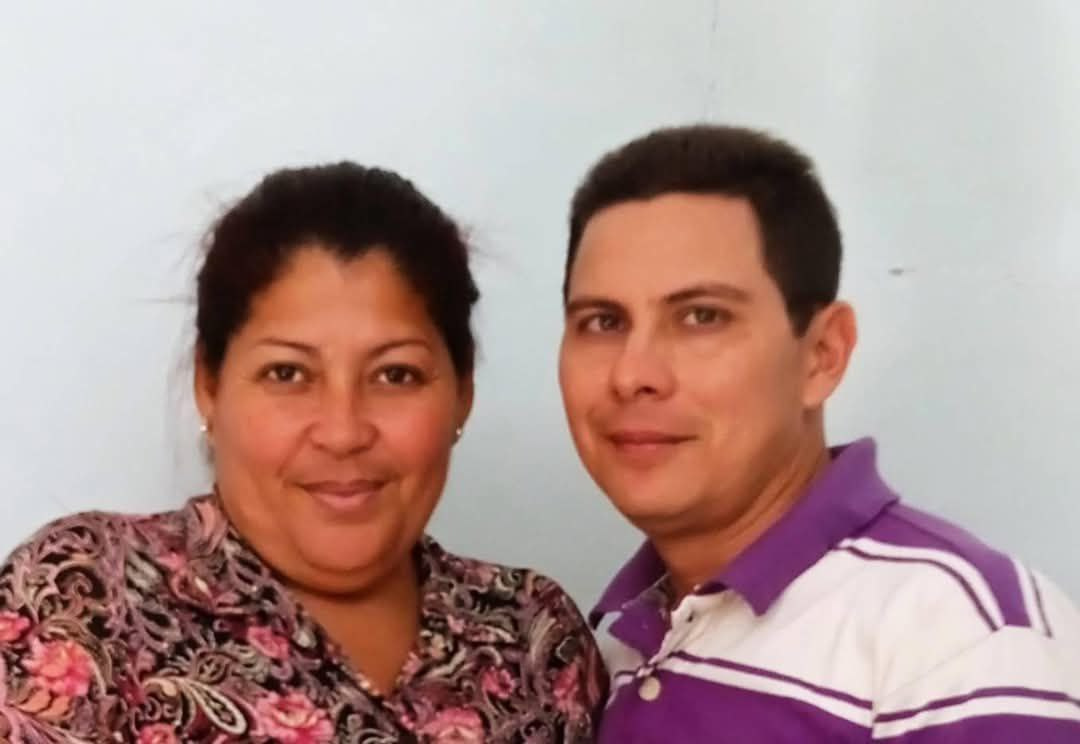
The Ruins of the Industrial Design Institute in Havana, Metaphor for a Crumbling Country

Of the building built in the 19th century, only the facade remains, hiding rubble and piles of rubbish.

“If you look out at it from San Carlos Street, it seems like a bomb fell on top,” says a neighbor of the ISDi / 14ymedio

14ymedio bigger14ymedio, Juan Diego Rodríguez/ Yunior García, Havana/Madrid, 13 May 2025 — Although Havana – like almost all of Cuba – is today a catalogue of rubble, it remains particularly painful to see the ruins of what was once the Instituto Superior de Diseño Industrial (ISDi). The facade still resists, while its interior collapses under the weight of abandonment. Among the rubble and piles of garbage, the building sinks into its own history, converted today into a metaphor for a country that is also crumbling.

The remains of the ISDi, behind the fences, have created a microclimate of insalubrity. “One should by now be accustomed to building collapses, but this is impressive,” says Yamila, a former neighbor of the area, in statements to 14ymedio. “From the outside it looks strong, but if you look out at it from San Carlos Street it seems like a bomb fell on top. If this happened with the ISDi, what awaits the rest of this city?”

Yamila is worried about the coming rains. “This is going to become a breeding ground for rats and mosquitoes; look at the neglect there.” Shee is also afraid of another collapse or that the pile of garbage will clog the sewer and cause flooding. “I avoid going through this street at night,” she adds. “Imagine what can occur in the middle of a blackout. Anything could happen here.”

The building, originally a military hotel and club for officers of the Spanish Army, was home to the School of Cadets (1874-1878), the Asylum of continue reading

Widows and Orphans, the barracks of the General Staff during the First American Occupation and the Ministry of Health in 1940. In 1982, it was transformed into the headquarters of the Polytechnic Institute of Industrial Design, the predecessor of the ISDi.

Decades of idleness, poor renovations and lack of maintenance slowly condemned the property / 14ymedio

Its architectural, historical and educational value was unquestionable. But decades of idleness, poor renovations and lack of maintenance slowly condemned the property. In March 2022, the building was closed after an “architectural failure” was detected that endangered students and workers. Then, however, the official press was full of optimism: “The Revolution founded the universities and always accompanied them,” it said, as if words were enough to sustain cracked columns.

That speech fell apart in July 2024, when part of the interior facade collapsed. And in January 2025, another partial collapse left an elderly woman injured and four families without access to their homes. Although there were no fatalities, the symbolic impact was profound: not only was the building sinking but also a promise, an institution and an era.

More accurate were the words of the architect Lourdes Martí, founding rector of the ISDi until 1988, who in 2022 had launched a public complaint:

“What happened during these last 33 years? Was it never maintained again? What architectural fault is it that does not allow the restoration of the building, or part of the building? Do you want to destroy the building or eliminate the training of industrial and information designers? Are we witnessing the end of the country’s industrial development?”

The answer to his questions are not in a technical report but are on the face of Yamila, who looks at the rubble with resignation: “I feel very sorry for the kids who studied there. Do you think this will ever return to what it was? This will likely remain a place that is destroyed, for tourists to take pictures of or people to ’plunder’ little by little. Or they will turn it into a hotel. But it will never be a school again.”

Translated by Regina Anavy

____________

COLLABORATE WITH OUR WORK: The 14ymedio team is committed to practicing serious journalism that reflects Cuba’s reality in all its depth. Thank you for joining us on this long journey. We invite you to continue supporting us by becoming a member of 14ymedio now. Together we can continue transforming journalism in Cuba.

Archivo Cuba Urges Bahamas to Hire Cuban Doctors Directly

The organization believes that paying the doctors directly into their accounts does not solve anything, since the doctors will continue to deliver part of their salaries to the regime.

The presence of Cuban doctors causes discomfort among local health workers / La Prensa

14ymedio bigger14ymedio, Madrid, May 13, 2025 — Archivo Cuba, author of a report which determined that the government of the Bahamas paid up to $5,000 and $12,000 to the Cuban regime for each doctor sent to the archipelago on an international mission, has sent a statement expressing its position on the statements made by Prime Minister Philip Davis. The head of the Bahamian Executive said he would pay the health workers directly into their own accounts, which, according to the organization, “does not end the human trafficking and forced labor.”

Cuba Archive argues that the idea, expressed by Davis in The Nassau Guardian, “does not represent a real change of policy and will not stop exploitation” as it is documented that, “even when Cuban workers who are exported are paid ’directly’, they are still obliged to send a large part of their income to the Cuban government”.

The organization urges the Bahamas to hire workers directly, as well as nationals and foreigners, in addition to ceasing the intermediation of the Cuban government “or any of its entities or representatives.”

“Even when the exported Cuban workers are paid ‘directly’, they are still obliged to send a large part of their income to the Cuban government.”

On May 6, Philip Davis held a meeting with US Secretary of State, Marco Rubio, in which they discussed several issues that are of concern to Washington, including Cuban medical missions. “As you know, the issue of how Cuban doctors are compensated is something for which the Secretary of State has shown concern and raised a red flag,” said Bahamas press continue reading

secretary Keishla Adderley.

She was referring to the measure announced in February of this year by the US expressing its intention to restrict visas to officials from foreign countries involved in what it called “labor exploitation” of Cuban workers abroad, including health workers.

At last week’s meeting, Davis told the local press that he had explained the situation to US officials and denied that Cuban doctors were in a situation of labor exploitation. “We were able to communicate to them, and I think they were satisfied that we are not involved in forced labor as far as we know,” he said.

“If forced labor is occurring in our country with the Cubans, we have no record of it,” he added, while indicating that an exhaustive analysis was being carried out to determine whether there was any “element” of this type present in the employment relationship. “If we discover something like this, it will be corrected,” he said.

Davis argued that the payment method, through the Cuban government, is not extraordinary. The Prime Minister resorted to recalling how the US paid part of the wages of Bahamian seasonal workers to the UK before the islands became independent. “That is not an unknown concept or construct. But it is now considered an ingredient for forced labor. So, we will address that. To anyone we hire, we will say: ’Look, we’ll pay directly into your account’.”

Cuba Archive believes that this eventual solution does not imply any change in what is understood more as a message to the US State Department.

“Newly received information indicates that a Cuban official in Nassau, Amaury Gomez (who is probably listed as a “health worker”), has been collecting these remittances in cash. Cuban teachers have been instructed to start sending money by authorizing a fictitious online purchase linked to a Royal Bank of Canada subsidiary, RBC Dominion Securities, at 3250 Bloor Street West, Toronto, Ontario. Those who resist face deportation and other sanctions,” argues the organization, which counts 40 current members of the Cuban medical brigade and 130 Cuban teachers.

In the report, Cuba Archive reviews the figures of the agreements between the Bahamas and Cuba, estimated at $15.7 million annually by health workers and educators

In the report, Cuba Archive reviews the figures of the agreements between the Bahamas and Cuba, estimated at $15.7 million per year for health care and educators, plus travel, insurance, training and other items that it estimates at $17 million more annually.

According to the organization’s figures, “specialist medical advisers” are paid $12,000 a month and “biomedical engineers” $5,000, 92 per cent of which goes to the Cuban Government. In addition, Archivo Cuba states that during the pandemic, 50 Cuban nurses came to Nassau who worked without permission for half a year, of which only 10 treated patients with covid-19 for $750 per month, while the nurses that the country had hired directly were pocketing between $4,000 and $6,000.

For their part, Cuban teachers must pay 50% of their salary to the regime and, as with the health workers, must comply with strict rules, including avoiding relations with the local population and demonstrating against the embargo on the last Sunday of each month.

Translated by Regina Anavy

____________

COLLABORATE WITH OUR WORK: The 14ymedio team is committed to practicing serious journalism that reflects Cuba’s reality in all its depth. Thank you for joining us on this long journey. We invite you to continue supporting us by becoming a member of 14ymedio now. Together we can continue transforming journalism in Cuba.

Former Cuban Sergeant Found Guilty of Fraud in the US Could Face Life in Prison

The Storm Lake Police Department contributed to investigations of Cuban fraud in Iowa / Facebook / Storm Lake Police Department

14ymedio bigger14ymedio, Havana, May 12, 2025 — Former Cuban sergeant Yovany Ciero could be sentenced to life imprisonment and fined more than $10,000,000 after being convicted by a jury at a trial in Iowa. The state’s Attorney General’s Northern District charged him with almost 30 counts, including electronic fraud and money laundering, which caused the US government losses of $2.4 million, according to a statement issued on Friday.

Ciero is charged, in particular, with “three charges of electronic fraud, 23 charges of money laundering, one more for his participation in a monetary transaction with goods derived from a specific illicit activity and another for conspiracy to launder money.”

The 48-year-old man was working at a meat packing plant in Algona, Kossuth County in 2020, at the beginning of the Covid-19 pandemic. The jury found that Ciero fraudulently received loans granted by the US government through the Payroll Protection Program (PPP), a $2 billion package approved in the US Congress for individuals, health care providers, small businesses and heavily affected sectors of the economy.

For each fund fraudulently obtained by the applicants, usually of $20,000, the Cuban kept $3,000

The former military man submitted an application to the PPP, stating that in 2019 he was part of the group of affected self-employed entrepreneurs and whose gross income was approximately $100,000. “Ciero and more than a hundred Cuban immigrants obtained fraudulent PPP loans, when in fact they worked at the packing plant or elsewhere,” the statement said. continue reading

According to court file 24-CR-3013, which was detailed in a federal court in Sioux City, the Cuban was one of six “bundlers” in the fraudulent PPP loan scheme. His role was to recruit people from whom he obtained confidential information to fill in the applications and then shared it with others who submitted the fraudulent forms to PPP lenders.

Deputy federal prosecutors Timothy L. Vavricek and Daniel A. Chatham explained that Yovany Ciero and his wife received two loans from the PPP, which they used to buy a semi-trailer truck. In addition, for each fund fraudulently obtained by the applicants, usually of $20,000, the Cuban was left with $3,000. Investigations confirmed that the former sergeant “channeled the money into a money-laundering conspiracy.”

Ciero is the sixth former worker in an Iowa meat packing plant convicted under the PPP scheme.

The authorities also indicated that the former Cuban sergeant was denied a visa to enter the US legally. “Almost 20 years ago he crossed the border with Mexico” and after several years settled in Mason City, Iowa. Due to his crossing he was established in Colombia and Venezuela.

Translated by Regina Anavy

____________

COLLABORATE WITH OUR WORK: The 14ymedio team is committed to practicing serious journalism that reflects Cuba’s reality in all its depth. Thank you for joining us on this long journey. We invite you to continue supporting us by becoming a member of 14ymedio now. Together we can continue transforming journalism in Cuba.
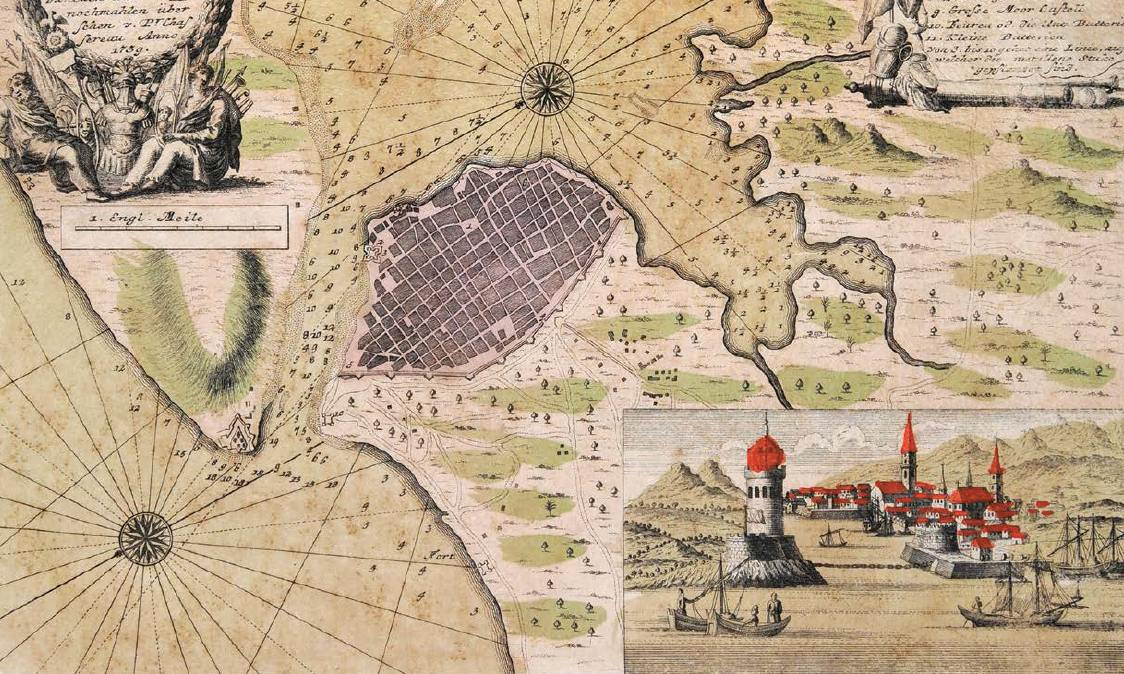
The Cuban Regime Prioritizes Its ‘Special and Strategic’ Ties With China

Rodríguez assured that “fostering the best links” between China and Latin America is a “duty” for Cuba / EFE

14ymedio biggerEFE (via 14ymedio), Beijing, May 12, 2025 — Cuban Foreign Minister Bruno Rodriguez highlighted on Monday in Beijing the priority that his country gives to its ties with China, which he described as “special and strategic”, before the Fourth Ministerial Forum of China and the Community of Latin American and Caribbean States (CELAC) begins in the Chinese capital.

During a meeting with his Chinese counterpart, Wang Yi, Rodriguez said that “fostering the best links” between China and Latin America is a “duty” for Cuba, in an “exclusionary and dysfunctional international order”.

The Chancellor also stressed China’s “respect for international law” and “focus on development.”

The Chancellor also stressed China’s “respect for international law” and “focus on development.”

Rodriguez traveled to China from Russia, where he attended, with Cuban president Miguel Díaz-Canel, the celebrations for the 80th anniversary of the Soviet victory over Nazi Germany in World War II. continue reading

The Cuban leader met in the Russian capital with his Chinese counterpart, Xi Jinping, who considered that the ties between both countries are in a new “stronger” stage and advocated for “further deepening.”

During his meeting with Wang, Rodriguez referred to the meeting between the two leaders and stated that “he raised consensus and priorities that we will honor in implementing”.

The IV China-Celac Ministerial Forum will take stock of the Joint Cooperation Plan 2022-2024 and lay the foundations for a new roadmap to guide relations until 2027. Topics such as climate change, public health, education and digitalization will be at the center of the debate.

Between January and September 2024, bilateral trade reached $427.4 billion, an increase of 7.7% year-on-year

The event will take place at a time when China consolidates as the second largest extraregional investor in Latin America, behind the United States, and as the main trading partner of several countries in the region, such as Brazil, Chile and Peru.

In 2015, China set a target of $500 billion in annual bilateral trade and $250 billion in cumulative investment in the Latin American and Caribbean region ten years later.

According to official data, between January and September 2024, bilateral trade reached $427.4 billion, an increase of 7.7% year-on-year.

Translated by Regina Anavy

____________

COLLABORATE WITH OUR WORK: The 14ymedio team is committed to practicing serious journalism that reflects Cuba’s reality in all its depth. Thank you for joining us on this long journey. We invite you to continue supporting us by becoming a member of 14ymedio now. Together we can continue transforming journalism in Cuba.

Stripped Years Ago of Their Vacation Centers, Cuban Workers Ask for Their Return

Stripped years ago of their vacation centers, Cuban workers ask for their return

The villa El Raíl was found by the workers of the Las Tunas electrical sector in this pitiful state / Reynaldo López Peña

14ymedio bigger14ymedio, Madrid, May 12, 2025 — Eleven days have passed since the workers, called by their official union, the Central de Trabajadores de Cuba (CTC), took to the streets on May 1 to show their commitment to the regime. As in most communist countries, the parade is not for demanding labor improvements but is staged to show the supposed support for a supposed government of the people.

But demands do exist, and today the official press puts the focus on one of them: the return of the houses on the beach that for decades worked as an incentive. Today, after passing into the hands of the hotel group Islazul, they have become a pile of ruins and debris.

“We believe that we are right. We deserve it. We feel it as an extension of the factory, because there were always spaces to share with your colleagues, with your family,” says the employee of a cement plant in Sancti Spíritus. The Trabajadores newspaper devotes an article to this issue, which appears at times as an obituary for a project that started out with benefits, including material benefits, and has ended up being a victim of abandonment.

Oscar Hernández Pérez, of Cemento Siguaney, says that there is “a large file of complaints and denunciations to state institutions, national press media and government bodies about the decision, which eliminated important incentives.” The media does not hesitate to point out that the measure never brought about a change for the better and that it would be most appropriate to return these holiday homes “to the trade union movement, to the workers.” continue reading

Oscar Hernandez Perez, of Cemento Siguaney, says that there is “a large file of complaints and denunciations to state institutions, national press media and government bodies about the decision”

The report goes back to the creation of these leisure centers, an idea of the omnipresent Fidel Castro, who indicated after the triumph of the Revolution that the homes and facilities of the “exclusive” beaches of Cuba, confiscated from exiles, would be “for the enjoyment of the workers.”

“The houses in Playas del Este alone, in the Cuban capital, had about a million workers and family members passing through each year,” says Gloria Esther Becerra, who was at the head of the program for 20 years. According to her, there were about 700 houses handed over to the unions in Havana and Jibacoa (now in Mayabeque) for their employees to restore and later enjoy.

The workers then paid a low price for the package, which included round-trip transport and food. Vacationers in general could enjoy the houses by paying a higher – but adjusted – price. The trade margin was around 5%, according to one interviewee. The plan extended throughout the country, as detailed in the text, which mentions Las Tunas, Ciego de Ávila and Pinar del Río, among many others.

“In Las Tunas we founded a movement with companies and trade unions, and sites appeared as work incentives in agriculture and the Ministry of Sugar, the two basic economic activities of the land,” says José Vistorte Pupo, then senior officer of the provincial CTC. In this case, 100 cabanas were delivered in La Boca (Puerto Padre) that were distributed and repaired .

“Tunazúcar was the mecca for its conditions, the quality of its offers and the proximity to the capital city. Its facilities housed national vanguards, distinguished cane cutters and combine operators. We had 19 rooms in Varadero and 20 at the Hotel Las Tunas,” she added. Another worker in the sector recalls that all companies in the sugar sector had centers of this type, with accommodation included, except for one in Majibacoa which was a country house with a pool.

Elci Cecilia Martínez Couce, manager of a construction company in Pinar del Río, also recounts how the workers made the decision to invest the profits of that year in building cabanas on the beach of Boca de Galafre, in the tobacco municipality of San Juan y Martínez. Land was purchased and 12 were initially built, a project that became the largest resort in the province (Playa Bailén), with 37 villas and 80 cabanas, which today belong to the company of Accommodation and Gastronomy.

Land was purchased and 12 were initially built, a project that became the largest resort in the province (Playa Bailén), with 37 villas and 80 cabanas, which today belong to the company of Accommodation and Gastronomy

The interviewees agreed that knowing that they could enjoy these houses aroused great enthusiasm among the workers, who organized themselves to participate in construction or rehabilitation, as appropriate, with voluntary overtime.  “There was such joy that on some days at the construction of Tunazúcar there were almost a thousand workers on the job, from all the sugar companies in the territory,” says one of them.

The text describes a “sustainable” system in which self-consumption existed because food was provided, which also generated solidarity between different labor groups that helped each other.

Until between 2009 and 2010, during the term of office of Raul Castro, who is not even mentioned, everything ended overnight. “In the capital we were told that the houses in Playas del Este would not continue to be serviced by the unions, that Islazul would take care of it. From then on, and in a first stage, the trade union movement only received enough places to incentivize its leaders,” says Gloria Esther, who regrets how the second stage followed.

“At the beginning rents were low and food prices were quite good. Subsequently, Islazul began marketing it for the whole population, for anyone who wanted and could afford it, but in CUC [pegged to the US dollar],” she admits. This was not the worst case. In Las Tunas some had to be dismantled, and a villa was handed over that had been repaired only three years ago, while another, in Punta de Tomate, was demolished.

The workers claim that the excuses offered to them -“companies and trade unions don’t exist for this; the economy cannot support these benefits or buildings on the beach” – never took into account the impact it would have on employees. Some, in fact, were hostile to the point of refusing to hand over what was built. This was the case of the employees of Cemento Siguaney and the Agrarian Industrial Company of South Jíbaro, who have kept their claims alive for more than a decade.

“We delivered a luxury villa, without receiving any remuneration. It was the envy of any hotel. It had a total of 21 air-conditioned rooms, an air-conditioned restaurant, centralized television, a bar-cafeteria, an approved project for a swimming pool with sea water and one of the best equipped kitchens in Trinidad,” says Oscar Hernández .

The report is peppered with photographs of some of these places, and the captions could not be more eloquent. “Punta Alegre beach in Ciego de Ávila. No words needed,” says one of them

The article states that this issue is raised at most CTC congresses and adds that it is a factor of enormous discontent that not only these centers were taken away from the workers but also that they have been forgotten, even more so since they were used as isolation sites in the pandemic. The report is dotted with photographs of some of these places, and the captions could not be more eloquent. “Punta Alegre beach in Ciego de Ávila. No words needed,” says one of them.

Yosquel Resquene González, a resident of a recreation village in Ciego de Ávila, explains that “the deterioration and Hurricane Irma in 2017 took over the installation, but its biggest enemy was the lack of interest in restoring it. What the hurricane did not take away was taken away by the people who occupied it when they lost their houses.”

The cabanas of La Boca, vandalized; the hotel of the sugar farmers of Ciego de Ávila, in ruins; the houses of Playas del Este, “seem rather out of a war conflagration, although they continue to be administered by the tourist chain Islazul.” These are all scenarios of a cloaked struggle between the workers and the government that extends across the Island.

Translated by Regina Anavy

____________

COLLABORATE WITH OUR WORK: The 14ymedio team is committed to practicing serious journalism that reflects Cuba’s reality in all its depth. Thank you for joining us on this long journey. We invite you to continue supporting us by becoming a member of 14ymedio now. Together we can continue transforming journalism in Cuba.

Propaganda and Ruin, the Two Faces of a Building in Cuba

The flags on the high-rise buildings of Peñas Altas, in Matanzas, barely hide the deterioration, which puts neighbors and passersby at risk.

“Every time I go in or out I do it as quickly as possible, because it’s not the first time bits have fallen off the balconies or the outside columns” /14ymedio

14ymedio bigger 14ymedio, Julio César Contreras, Matanzas, 6 May 2025 — Looked at from one side it looks majestic, but the 13 storey building in Peñas Altas, in the city of Matanzas, only has one good side. The huge Cuban flag, 44 metres high, painted on one side of its façade, barely hides the ruin of the rest of the building, a deterioration putting at risk the lives of the people living there and anybody passing by.

Four years ago, the face of the city was changed with the completion of an enormous mural, signed by the artist Jesús Alberto Mederos Martínez. For the occasion, the local press was full of headlines praising the world’s largest Cuban ensign, but the rest of the concrete block was completely ignorant of the paintbrushes and scaffolding that were mobilised for the occasion.

Now, the inhabitants of the building, which was put up in the years of Soviet subsidies and which looks like all the communist architecture in Eastern Europe, is falling to bits. This week a lump of concrete balcony collapsed right next to a little boy who was, at that moment, entering the building with his father. “It fell next to my smallest boy, touching his shoulder, it tore his pullover but he escaped with hardly a scratch”, the alarmed man declared in the social media.

A poster “Fatherland or death, we will win” leaves it quite clear where is the priority of the propaganda about investment to improve the lives of the residents.

While the balcony parapets, cracked and with rusted metal, endange the lives of anyone passing by, a poster “Fatherland or death, we will win” leaves it quite clear where is the priority of the propaganda about investment to improve the lives of the residents. Below the wording on the ensign, in bright red, the walls of the building also known as “Polineiso Building” after the restaurant on the top floor, are cracked, dirty and bulging in places.

“Every time I go in or out I do it as quickly as possible, because it’s not the first time bits have fallen off the balconies or the outside columns” one of continue reading

the top floor residents, who has lived there since it was built, told 14ymedio this Monday . In those days, the Peñas Altas complex of modern buildings was seen as a foretaste of the future and the consecration of the Cuban model and its most finished product: the new man.

Sylvia cannot help comparing the present situation with her memories as a youngster, when dozens of families, all carefully seletced by the system, moved into a pristine building, with wide corridors, a welcoming entrance hall, and spectacular view of the bay and the city of Matanzas. At that time, the elevators were a source of wonder for many people who had never been in one, but over the years they had become a headache due to technical problems and long power cuts.

The mural with its single star and white and blue stripes form part of the artistic “My flags” quarter, dedicated to Fidel Castro and opened at the end of 2021 / X/Jancel Moreno

Sylvia prefers to go up the stairs to her apartment every day to avoid being trapped by a power cut, or having to put up with the jolts in the apparatus, which has been damaged by the passage of time and by people using it to move their furniture and heavy boxes. The woman does not conceal her dismay at the contrast between the building’s symbolism with its enormous national flag on its side, and the reality of living inside it.

The mural with its single star and white and blue stripes form part of the artistic “My flags” quarter, dedicated to Fidel Castro and opened at the end of 2021, when the city of Matanzas celebrated the 328th anniversary of its foundation.

“We are not so badly off because at least we have the Cuban flag” saiys another resident ironically, indicating one of the buildings in the complex decorated with the flag of the July 26 Movement and the ranks of the Commander in Chief. Look at from a distance both buildings make up an image that the official press photographers look for and the official extol.

From up close on the other hand real life doesn’t have such intense colours. “These corridors at night are so dark that I only go down from my flat in an emergancy” Sylvia explains. In the gloom you have to look out for the bumps and holes on the steps. “A little while ago my neighbour fell over when he caught his foot where there was no concrete above the scaffolding. If we put up lights they steal them and if we bring up the need for some repairs they says they have no money, says the woman.

“As soon as you come near you can smell the urine, because there are people who use the ground floor area as a public toliet” /14ymedio

Water leaks between floors also plague the residents. “The pipes are rotten. You can see where the columns and structure are weak. You only have to look at the cracks to see it could collapse,” says another resident, who knows every detail of a building he has lived in for more than thirty years. “It won’t be today or tomorrow, but if they don’t do something , there could be a disaster,” he says with the knowledge that comes from his job as a builder.

Apart from the residents in the building, lots of clients come to the Consumer Register Office (Oficoda) every day which is located on the ground floor. Also at ground level is the rationed goods warehouse and other state establishments that have permanent queues. Over the heads of the people waiting to go through a procedure or buy their ration of subsidised food lumps of concrete are dangling ready to fall on their heads, rusty steel reinforcement rods and old air conditioner casings rotting in the sun.

The restaurant El Polinesio on the top floor does not escape this mess. With its slogan “high level gastronomy” the state diner is closed most of the time due to lack of supplies and the infrastructure problems. Re-opened in 2023 after being closed for two years and after an investment of 18 million pesos, the business suffers most from having to go without electricity.

Humidity inside the “Polynesia building”, in Matanzas. / 14ymedio

It sounds simple enough to say it — just nip up to the 13th floor to reach the restaurant – but having to do it is enough to scare off just about anyone.” says the workman. And the state of the building doesn’t help much. “As soon as you come close you can smell the urine, because there are people who use the ground floor as a public toilet. It’s obvious that this place doesn’t invite anybody to come and eat – or to live – I am still here because I haven’t been able to move. Locals speak of the microbrigade buildings like they’re cursed.

In the 1970s and 1980s, the high-rise blocks that began to be put up in Cuba’s main cities were seen as a foretaste of the modernity that the whole country would enter at an accelerated pace, but with the passage of time, the deterioration and evidence of the limitations of these projects made with cheap materials, hasty construction and lack of maintenance, earned them a bad reputation.

All it takes is for a classified ad to state that the flat for sale or exchange is located in a microbrigade building for potential buyers to flee in panic. On the other hand, stressing that it is a “capitalist” property, built before January 1959, guarantees greater success in the transaction. The difference in price and the speed at which these properties move is also very different. Those built for the ‘New Man’ are worth less and people don’t want them.

And, what’s more, if the buyer learns that the flat for sale is located in the “flag building”, he or she is likely to put an unenthusiastic look on his /her face, as evident as the red triangle flag painted on the side of the building is in the Matanzas landscape.

Translated by GH

____________

COLLABORATE WITH OUR WORK: The 14ymedio team is committed to practicing serious journalism that reflects Cuba’s reality in all its depth. Thank you for joining us on this long journey. We invite you to continue supporting us by becoming a member of 14ymedio now. Together we can continue transforming journalism in Cuba.

A New ‘Chemical’ Has Arrived in Cuba That Is More Lethal and up to 100 Times Stronger

The city’s bars and restaurants are the new epicenter of drug dealing / 14ymedio

14ymedio bigger14ymedio, Havana, May 10, 2025 — All residents of Sancti Spíritus know that the dangerous neighborhood of Kilo 12 is the place to buy the “chemical” (químico) in the city. What they did not know, which the police warned about in the official press on Saturday, is that it is also where this drug has been reinvented, through mixtures with other narcotics and medicines.

“We continue referring to it as a synthetic cannabinoid, because it is a synthetic drug whose effects are similar to cannabis, but now other substances are being added to it, such as carbamazepine and other benzodiazepines, in addition to anesthetic for animals and even formalin, fentanyl and phenobarbital,” Leidy Aragón, a captain of the Ministry of the Interior specialized in Toxicology, explained to the Sancti Spíritus newspaper Escambray.

Different forms of the chemical are sold in key points of Kilo 12, for those who can’t pay for cocaine or marijuana, explains Aragón, or for those who are now accustomed to the caliber of the “bombazo” with a high of up to 40 minutes. The most common is to buy a dose or “little paper” with an area of 0.5 cm2 impregnated with the substance, for a price of 200 to 300 pesos. It is even more expensive than in Havana.

So far this year, there have been five people prosecuted for drug trafficking – three for the chemical and two for sale of controlled medicines – a remarkable increase given that in the province only one case was detected in the first quarter of 2024. continue reading

Trying to make it last longer by increasing the dose is in vain, the police warn. It is useless and increases the risk of death

According to the captain, there have been “people hospitalized for an overdose.” The new chemical is more lethal than the conventional one, and Aragón estimates that it is up to 100 times stronger than marijuana. It can cause tachycardia, high blood pressure, resistance to antidotes and has a fixed duration. Trying to make it last longer by increasing the dose is in vain, the police warn. It is useless and increases the risk of death.

In Aragón’s opinion, the variations in chemical composition that are now occurring are the result of many attempts by the manufacturers to mask them. Each batch seized by the police is different from the others, she says. The most frequent form “now” is to find the chemical attached to paper, blank or printed, without the quality of the substance being altered in any way.

“We have seen the aggressive behavior that it provokes, as well as the disinhibition of people under its effects who have undressed in public and thought that was okay. I assure you, too, that we can detect and track it,”said Aragón.

One of her colleagues, Major Rolando Alonso, recently launched an operation in Kilo 12 that he had been preparing since late 2023

One of her colleagues, Major Rolando Alonso, recently launched an operation in Kilo 12 that he had been preparing since late 2023. He had been infiltrating agents among the youth in each neighborhood for months to detect the “secret drug route,” activating “corner wiretaps” and tracking traffickers and consumers.

Results: they found two traffickers, an accomplice/lover and “distributor” of one of them, countless consumers and several drivers who, without knowing it, brought the chemical from Havana. They were the “initiators,” Alonso calculates.

The drugs were carried in jewelry bags and spice packets that the woman was carrying when she was captured in 2024. At the time of her arrest she was carrying 405 wrappers – 11.33 grams – of which Escambray provides a photo. The policeman now asks the residents to inform him of “every rumor, every doubtful step, every bag that changes hands.”

There are many testimonies in the newspaper from former addicts. In recent months, both the press and official television have given the green light to works like this one – though not as detailed as this Saturday’s – that collect stories of “economic ruin and family isolation.”

The young woman lamented at great length about how the chemical destroyed her life and gave details about the personal consequences of addiction

One of the interviewees, identified with the false name of Ismael, reports that a “broken step” of Kilo 12 was – until Alonso’s operation – the meeting point for the sale of the chemical. The blackout helped conceal all transactions. After an overdose, the young man, apparently under 18 since he enrolled in university after the crisis, ended up “vomiting without stopping.”

Another, identified as Kenia, is now serving seven years in prison. The young woman lamented at great length about how the chemical destroyed her life and gave details about the personal consequences of addiction. Testimonies like hers, but with names and surnames, appeared recently in at least two televised programs about ex-addicts.

The police assure that the traffic and consumption of chemical is “under control” in Sancti Spíritus, an aging province, and attribute the rise to “the migration of our young people to drug-producing countries, social networks and contact with realities where drug consumption is legalized.” Controlled drugs are sold in networks, while chemicals, marijuana and cocaine are traded in person or over the phone. All this has “permeated the local mentality,” Lieutenant Colonel Iván Ruiz told Escambray.

“The drug that enters Sancti Spíritus today comes almost all from the capital of the country as part of interprovincial traffic, so we have tightened controls on the roads,” he added.

Now, the police are “preparing” owners of private businesses, a new focus of drug dealing in Kilo 12, says the official. Bars, nightclubs and restaurants where a recent operation called Nocturno was carried out against private premises and others are on the way. “The perpetrators are in provisional detention,” according to Ruiz.

When asked about the fate of the seized chemical shipments, Ruiz said that the provincial police keep them in custody until they are taken to a destination prepared by the Ministry of the Interior. Once there, the drugs are “totally incinerated” in front of several people. “It is even documented on video,” he said.

Translated by Regina Anavy

____________

COLLABORATE WITH OUR WORK: The 14ymedio team is committed to practicing serious journalism that reflects Cuba’s reality in all its depth. Thank you for joining us on this long journey. We invite you to continue supporting us by becoming a member of 14ymedio now. Together we can continue transforming journalism in Cuba.

US Limits the Movements of Cuban Diplomats on Its Territory

Entry of the Embassy of Cuba in Washington, D.C.

14ymedio bigger14ymedio, Havana, May 8, 2025 — The US limited, this week, the mobility of Cuban diplomats on its territory. Officials will now be required to submit prior notification before visiting “state, local and municipal governments of the US and its territories.” The measure also includes access to educational and research institutions, including “national laboratories and agricultural facilities.” The resolution does not specify, however, whether the representatives of Havana could expect formal authorization for their travel.

The new requirement instituted by the State Department was published on Wednesday in the US Federal Register and is adopted “under the Foreign Missions Act,” according to the text. So far, the Cuban authorities have not reacted to the measure, but it is to be expected that they will respond by also restricting the movement of US diplomats on the island.

For decades and until the diplomatic thaw between the two countries, driven by the Obama administration in 2014, Cuban diplomats based in Washington could not travel within a radius of more than 50 miles outside the American capital, without prior special authorization from the State Department. The limitation also applied to the diplomats of the then US Interests Section in Havana.

In 2013, the US government began allowing Cuban diplomats to leave with greater flexibility

In 2013, the US government began allowing Cuban diplomats more flexibility to leave Washington and New York to attend public events in other cities. A similar process took place on the island, where travel by American representatives became increasingly frequent. The recent country tours of Mike Hammer, head of mission of the US Embassy in Cuba, are an example of this new diplomacy on wheels. continue reading

The official, who has become the new pet peeve of the official Cuban press, recently released a video, only 37 seconds long, in which he sent a message to the population inviting them to approach him and talk to him if they meet him during one of his tours.

“I am visiting Cuba because I know, from my experience as a diplomat for more than 35 years, and having been an ambassador in Chile and Congo, that it is very important to understand a country and its people, to travel and visit all the provinces. So, when you see me on the street, I would like to talk with anyone who wants to share their perspectives, their ideas, and I hope we have a good conversation. See you around and until next time,” said a friendly Hammer.

The video constituted a challenge precisely in a week when the diplomat was singled out by the official press, which accuses him of maintaining “disrespectful behavior contrary to the norms of international law.” Randy Alonso, director of Cubadebate, called Hammer’s performance “stupid and meddling” and pointed to him as a “subversive agent and self-promoter” on the island.

Since last December, Hammer, who had been in office for only one month, began meeting with some opponents

Since last December, Hammer, who had been in office for only one month, began meeting with some opponents, starting with the leader of the Ladies in White, Berta Soler, and the historic dissident Martha Beatriz Roque. The official medium Razones de Cuba had already accused the diplomat of having met with “two worn-out figures of the Cuban counterrevolution,” and warned: “The new representative of the United States has gone down the wrong path, because nothing good can be expected from that scourge.”

Hammer, instead of becoming inhibited, continued to meet with activists, independent journalists and relatives of political prisoners. He visited José Daniel Ferrer, leader of the Patriotic Union of Cuba who had just been released from prison – a measure that was reversed earlier this month by the Supreme Court. He also approached the hermitage of the Virgen de la Caridad del Cobre and met with the former prisoner of the Black Spring Félix Navarro – like Ferrer, who has just been returned to prison – the dissident Oscar Elías Biscet and the Camagüey priest Alberto Reyes.

In addition, he visited the province of Camagüey and met with Henry Constantín and Iris Mariño, independent journalists for La Hora de Cuba, and relatives of political prisoners Andy García Lorenzo and Aroni Yanko García Valdez, in Santa Clara. His meetings with opponents and relatives have multiplied in recent days in all the Cuban provinces.

Hammer has also met with part of the exile. During a visit to Madrid, the diplomat was with Yanelis Núñez of the feminist platform Alas Tensas; Iliana Hernández and Luz Escobar, independent journalists; and Angélica Garrido, former political prisoner. All these meetings have been questioned by the official media, accusing him of weaving an anti-Cuban network. Connections that could have their days numbered if Havana responds to the new measure taken by Washington restricting the mobility of US diplomats on the island.

Translated by Regina Anavy

____________

COLLABORATE WITH OUR WORK: The 14ymedio team is committed to practicing serious journalism that reflects Cuba’s reality in all its depth. Thank you for joining us on this long journey. We invite you to continue supporting us by becoming a member of 14ymedio now. Together we can continue transforming journalism in Cuba.