Inspectors no longer spread terror with their fines and evictions in illegal settlements.
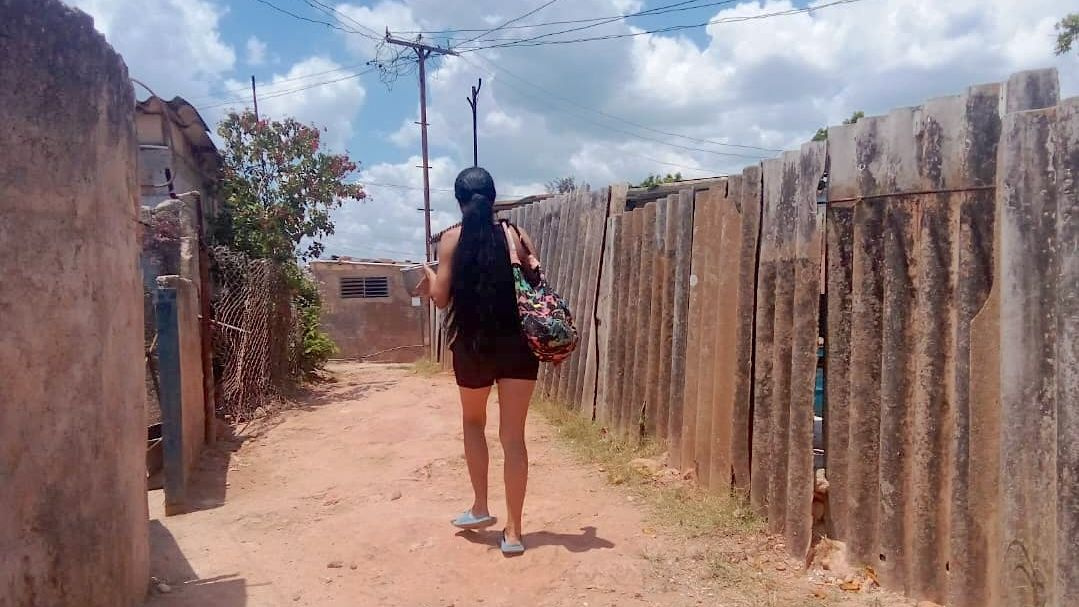

14ymedio, Julio César Contreras, Matanzas, May 11, 2025 — Walls made of rusted sheets of metal and roofs that would not withstand a hurricane comprise most of the houses in the illegal settlement that has been growing at the entrance to the city of Matanzas, near the industrial area. Its residents, mostly from the eastern part of the country, cling to the land, despite the lack of basic infrastructure in this area near the Balcon del Yumurí, in the Dubrocq neighborhood, popular council of Versalles.
The “llega y pon” [literally,’arrive and put’] began to be erected more than a decade ago in silence, avoiding the eyes of the inspectors of the dreaded Institute of Physical Planning that, until 2021, sowed terror with its fines and evictions among residents of illegal settlements. “I arrived at this place when there were only two settlements constructed by easterners, near the old School of Trades,”says Juan Carlos, who fled from the poverty of his home province, Guantánamo.
With his own hands, Juan Carlos started cleaning up a piece of land in an area that was covered with garbage. He cleared, removed pieces of metal, leveled the ground and became a bricklayer in the process. The son and grandson of fishermen, who had grown up among fish nets and poor catches, he quickly established himself as a builder raising his own house. It was small and fragile, but it was his.
“The materials to build always have to be bought under the table. There are so many people here who do not have the resources and have had to settle for building a room made of wood and cardboard,” says Juan Carlos.”But the main thing is that they have somewhere to live. They will improve it over time,” he adds. With a housing deficit that, in 2024, was estimated throughout the island at more than 850,000 dwellings, having a roof over your head is almost a privilege in Cuba.
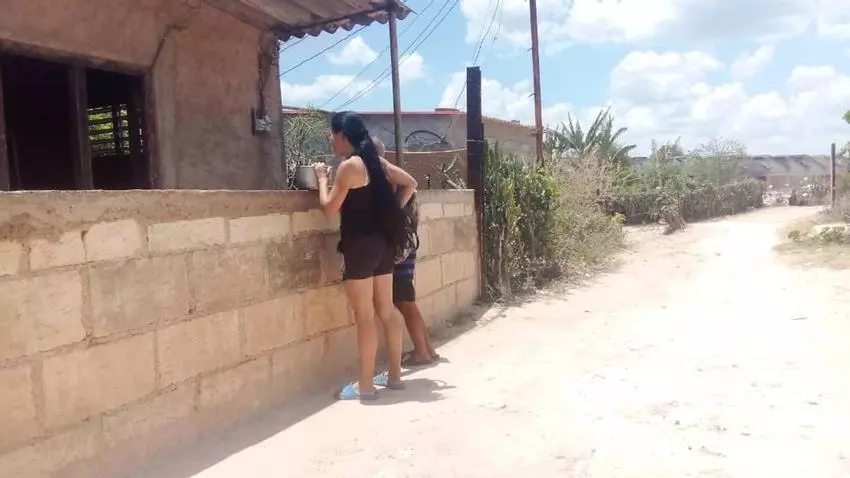
Juan Carlos, like many other residents in the “llega y pon”, does not settle for improvising a home and living badly inside. While some houses look more like a shack about to collapse, others show solid brick walls, small terraces and wooden or metal shutters for the breeze. Social differences also arise in the neighborhood. Those who have arrived from other places in the province of Matanzas have more contacts to improve their homes. Those from the east of the country and the elderly live in the most precarious homes.
Yorelbis is one of those from Matanzas who came to the area pushed by the overcrowding in his parents’ house in Pueblo Nuevo. A State worker, he had been waiting for years for a subsidy to purchase construction materials that had been promised at his work center. The money never arrived. The State resources to build a house began to run out, and the young man, married with a pregnant wife, decided not to wait any longer.
Like Juan Carlos, Yorelbis picked out a piece of land. He built the foundation of the house and erected the outer walls with bricks recovered from collapsed buildings or bought on the black market. Finally, he divided the interior with cardboard and wood to have two rooms and a tiny dining room that also serves as a kitchen. Seen from the outside, there is no plaster on the facade, and some of the rebar sticks out just where the asbestos-cement tiles that cover the dwelling begin.
“When you arrive for the first time you feel like you are at the end of the world. There is no asphalt, and the dust gets inside you through your ears. On the other hand, the power never goes out, because we are fed by the electric line that goes to the industrial area,” says Yorelbis. It gives us an illegal power supply, and no family in the settlement pays a cent.” Although we are far from the city, here it seems we have what we need,” says the young man showing a few liters of vegetable oil he has for sale.
Entrepreneurship is also gaining ground in the neighborhood. There are several private cafes, and shops that offer cheap clothing appear here and there. There is no ration store, but there are plenty of merchants who advertise bags of bread rolls or the popular ice-cream sandwich that children make a fuss over and that empties parents’ pockets. The inspectors barely approach, perhaps because of fear or because they intuit that the residents of the area inhabit a feral universe where the law and fines accomplish little.
The smile of pride for his home on Yorelbis’s face dissolves when he lists the disadvantages of living in an illegal settlement
The smile of pride for his home on Yorelbis’s face dissolves when he lists the disadvantages of living in an illegal settlement. One of the main obstacles is the lack of an identity card with the address where he actually lives. ” We still have the papers at my parents’ house and that complicates our lives a lot,” he admits. ” Getting my pregnant wife looked after in the nearest clinic was a headache, and when the child grows up, we will see how we can enroll him in school.”
The neighborhood has been growing and is full of children. While much of Cuba suffers from an aging population, the Dubrocq “llega y pon” has many families with young children. The women carrying babies, the strollers as they go along the rough and unpaved road and the cries of newborns coming from some houses give the area a childlike cheerfulness.
But this striking presence of children also highlights one of the problems that most affects the area: teenage pregnancy. In the province, the fertility rate for the 15-19 age group is 51.5 per 1,000 women. In the poorest neighborhoods, the figures are even more alarming, with consequent problems of maternal malnutrition, low birth weight, school dropout and family material insecurity.
In the group of those arriving from the east of the country, many also bring their young children. “I came here from Bayamo with my two small children, because my brother left the country and gave me this room,” Yanelis tells this newspaper. Yanelis lives in a modest house made of metal sheets that were once destined to become cans. ” At least I don’t get wet when it rains,” she says.

Yanelis, however, does not hide her concern that she has not managed to change the address of her identity card. ” I have been able to keep my children studying with the help of the school principal, but I do not know how long that will be possible.” Although the regulations are strict to enroll a student in a school, some directors turn a blind eye or facilitate the admission of undocumented students into classrooms, aware of the serious housing problem in the country.
Like most of her neighbors, Yanelis has a long list of dissatisfactions ranging from water supply problems in the area to the insecurity that spreads between its crowded alleys as soon as night falls and the lack of recreational places for children and teenagers. However, also like many of the residents in the Matanzas settlement, she feels that this piece of dry land and precarious houses is finally her home.
Translated by Regina Anavy
____________
COLLABORATE WITH OUR WORK: The 14ymedio team is committed to practicing serious journalism that reflects Cuba’s reality in all its depth. Thank you for joining us on this long journey. We invite you to continue supporting us by becoming a member of 14ymedio now. Together we can continue transforming journalism in Cuba.