Idalberto claims to have received the Cuban “vaccine” Theravac-HIV without his consent: “It’s as if they were experimenting on me.”
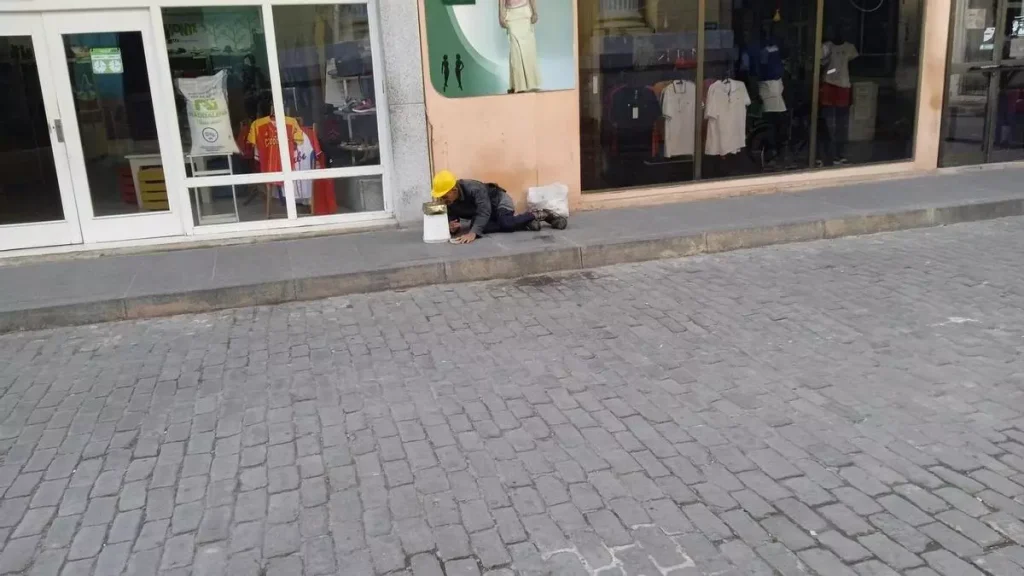
 14ymedio, Pablo Padilla Cruz, Matanzas, May 4, 2026 / Sitting on a central street, Idalberto observes the indifferent daily hustle and bustle of passersby, hoping one of them will give him a few bills. Beside him, on cardboard, he displays a clear message: “It’s for food,” and he doesn’t hide the fact that he is HIV-positive.
“It’s all there,” he says, showing another poster. “Even my case index, 15707, from December 21, 2011, for anyone who wants to check.” According to his account, the first decade of his illness was relatively stable. “Personalized” attention and, of course, free care for people living with HIV and those with AIDS is, in fact, one of the services the Cuban state boasts about most, although the reality, deep down, leaves much to be desired .
In Idalberto’s case, everything changed abruptly with the coronavirus pandemic, which hit the island particularly hard in 2021. “Before, I regularly received my treatments and visits from doctors and social workers, but after COVID, everything changed,” he told 14ymedio. The treatments began to change without explanation: “Sometimes they would give me an antiretroviral, and other times it would disappear. It was as if they were experimenting on me.”
Idalberto also claims to have received the experimental Cuban “vaccine” called Theravac-HIV without his consent.
The success of antiretroviral therapy (ART)—a set of medications designed to suppress viral replication and maintain a functional immune system—depends largely on its consistent administration. Frequent changes or interruptions in treatment, explains Idalberto, can lead to viral resistance, a weakened immune system, and other adverse effects such as nausea, cramps, or fatigue.
Idalberto also claims to have received the experimental Cuban “vaccine” called Theravac-HIV without his consent . The immunotherapy, still in the research phase, aims to stimulate the immune response against the virus, but its use without adequate information for the patient violates ethics and numerous laws worldwide. “I am a human being and I have dignity,” Idalberto states. “I didn’t like being a lab rat.”
Medical advances have meant that, in the developed world, having HIV is no longer life-threatening, but in countries with shortages, like Cuba, the situation is much more complicated. Idalberto recounts how he has had colds that have become severe, and how he lived through the recent arboviral epidemic—especially dengue and chikungunya—which left almost 70 dead on the island, according to official figures, and hundreds of patients with physical aftereffects .
Although the government claims there is “stable control” over the number of people living with HIV on the island, the reported figure for 2025 reached 35,373 cases , after having remained above 31,000 for several years. The prevalence among trans women , moreover, continues to be among the highest on the continent.
Like Idalberto, César Manuel, a diabetic patient who has developed an ulcer on his right foot, is barely surviving.
In the fight against AIDS, the regime also tends to overlook the importance of foreign aid. Just a few weeks ago, it was reported that Cuba will receive up to $16 million from the Global Fund to Fight AIDS, Tuberculosis and Malaria (GFAID) over the next three years, an initiative from which it has benefited since 2003.
The situation of begging for many patients, in any case, contrasts with the triumphalist discourse, still in force, of public health in Cuba.
Like Idalberto, César Manuel, a diabetic patient, is barely getting by after developing an ulcer on his right foot. “I just came from the clinic. They cleaned it with hydrogen peroxide, put on some ointment, and sent me home,” he recounts. With the wound bleeding and barely covered with gauze that, he’s grateful, they “gave” him, he had to walk back.
Why wasn’t he given Heberprot-P, the flagship drug touted by the Ministry of Health as the most advanced for this type of injury, designed to stimulate healing and reduce the risk of amputation, and approved in up to 40 countries and currently in Phase III trials in the European Union? Because in Cuba’s free and universal healthcare system, it’s not so easy to get it. “It’s a long process: from the doctor’s office to the polyclinic and then to the hospital,” César explains. “And that’s if they even approve it.”
His anger is evident: “Diabetes is one of the most widespread diseases, but it seems the medication isn’t reaching everyone. It’s sold abroad while it’s scarce here.” The millions in profits the Cuban state earns from international agreements for biotechnology, the sale of medical services, and health tourism don’t reach the majority of the population.
Idalberto, with his sign, and César Manuel, with his unresolved wound, wonder: what can they boast about, if the system doesn’t reach everyone?
______________________
COLLABORATE WITH OUR WORK: The 14ymedio team is committed to practicing serious journalism that reflects Cuba’s reality in all its depth. Thank you for joining us on this long journey. We invite you to continue supporting us by becoming a member of 14ymedio now. Together we can continue transforming journalism in Cuba.