Cuban Long Jumper Hayla González Escapes in Spain

The Havana native won the gold medal at the Pamplona Athletics Meeting with a mark of 6.47 meters.


Hayla González left the team last Saturday in Pamplona, Spain. / Jit

14ymedio bigger14ymedio, Havana, 4 August 2025 — Cuban long jump hopeful Hayla González left the team last Saturday in Pamplona, Spain. Her departure is a significant loss for the national athletics team, which had her as a key player in the upcoming Junior Pan American Games in Asunción 2025. She “was shaping up to be a key player in the 4 x 100 meter relay, even aiming for a starting position in the women’s relay,” according to the Deportcuba website.

González “made the decision not to continue under the orders of the island’s authorities and escaped,” said retired wrestler Roly Dámaso, while recalling that the Havana native was on the verge of participating in the 2024 Paris Olympics, but “missed out on the summer event by just one centimeter.”

The 21-year-old won gold at the Pamplona Athletics Meeting in Spain on July 2. The official outlet Jit praised González for dominating the event with a jump of 6.47 meters, her best mark of the season so far. The competitor also completed two other attempts of 6.37 and 6.40 meters. However, the publication emphasized that she needed “more centimeters because she is still far from the 6.85 meters that has been her personal best since 2024.” continue reading

The 21-year-old won gold at the Pamplona Athletics Meet in Spain on July 2. / Facebook/Hayla Gonzalez

This action, Dámaso pointed out, reflects “the exodus of Cuban athletes dissatisfied with the current system.” Last June, Marys Adela Patterson , a gold medalist at the San Salvador 2023 Central American and Caribbean Games, defected from Austria .

Added to the list of those who have left is Cuban sprinter Shainer Rengifo, who in June of last year took advantage of his recovery process from a fractured metatarsal bone in his right ankle in Guadalajara, Spain, to disassociate himself from Cuban sports.

Spain has been a haven for the island’s athletes. This has been the case for triple jumper Jordan Díaz and javelin thrower Yulenmis Aguilar, whose absences have weakened the Cuban athletics team. Both Cubans now compete for Spain.

The absence of renowned athletes led the governing body to reinsert high jumper Juan Miguel Echevarría into the system in April 2024. The return of the Tokyo 2020 silver medalist and 2018 world indoor champion in Birmingham (United Kingdom) came after spending time in Spain as part of Iván Pedroso’s team.

Other retired athletes have found better opportunities to continue competing abroad. Last May, World Athletics confirmed to the Cuban Athletics Federation that Olympic hammer throw champion and former national commissioner Yipsi Moreno is eligible to represent Albania in international events.

Albania became the former commissioner’s second homeland after she took the oath of citizenship in October 2024. Five months earlier, the Cuban participated in a competition held at the Elbasan Arena. Moreno was part of Tirane’s team and crowned her performance with a mark of 63.94 meters in the hammer throw.

____________

COLLABORATE WITH OUR WORK: The 14ymedio team is committed to practicing serious journalism that reflects Cuba’s reality in all its depth. Thank you for joining us on this long journey. We invite you to continue supporting us by becoming a member of 14ymedio now. Together we can continue transforming journalism in Cuba.
Tax Evasion Debt in Sancti Spíritus, Cuba Exceeds 300 Million Pesos

“Absolutely all” those inspected by ONAT “underreported,” the provincial newspaper explains.

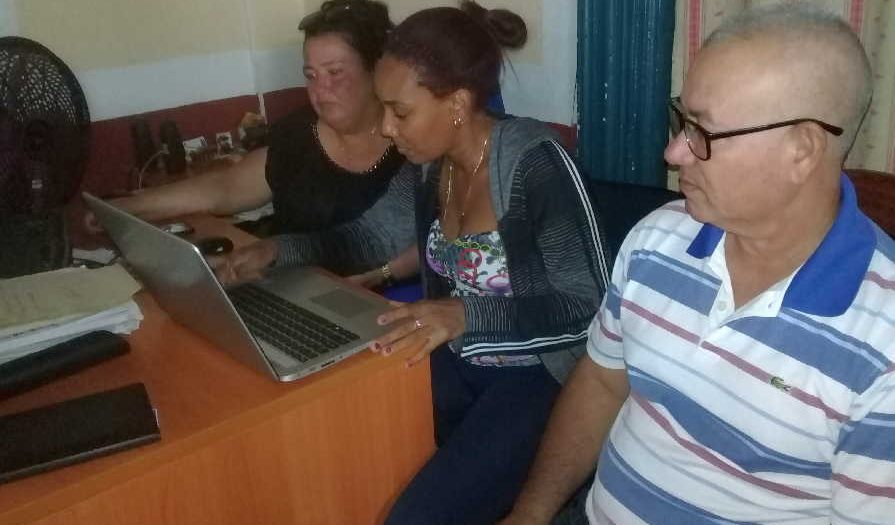
ONAT office in Sancti Spíritus/ Escambray

14ymedio bigger14ymedio, Havana, 4 August 2025 — A total of 365,600,000 pesos (more than $925,000 at the informal exchange rate) are owed by taxpayers in Sancti Spíritus, if the figures presented Monday by the Sancti Spiritus newspaper Escambray are accurate. The official newspaper doesn’t state it that way, but this is the sum of the various audits carried out by the National Office for Tax Administration (Onat), understood to have occurred in recent months, although a time frame is not specified.

On the one hand, 2,050 “actions” were carried out—which Escambray describes as the “minimal” among the 16,500 taxpayers registered in the province—”primarily on businesses dedicated to imports, showing signs of substantial profits, maintaining high sales levels, or located in places with a significant influx of people.”

The inspections revealed what the provincial newspaper calls an “undeniable truth”: “absolutely all those inspected underreported,” and they owe 163.5 million pesos (more than $400,000 at the informal exchange rate).

The reasons given by these “non-compliant” taxpayers, listed by Escambray, range from “ignorance” to paying taxes on profits and not on gross income.

The reasons given by these “non-compliant” taxpayers, as listed by Escambray, range from “ignorance” of paying taxes on profits rather than gross income, to “accounting difficulties,” “lack of control over sales,” “rising raw material prices,” and the “high dollar exchange rate on the black market.”

Without specifying whether this is part of the newly discovered debt or an older one, the Sancti Spiritus newspaper reports that ONAT has collected more than 132 million pesos from debtors, but still has a list of another continue reading

2,700 taxpayers with late payments, totaling more than 128 million pesos.

Other taxpayers, more than 2,400 says Escambray, were “verified” to confirm their fiscal bank accounts. This inspection resulted in “dozens of fines” for those who “have not opened or used this payment instrument and have failed to comply with their obligation to deposit their sales proceeds in the bank, as well as to accept online payments, which are greatly in demand by customers today due to the cash shortages in branches.”

On the other hand, ONAT found around thirty MSMEs* with “declared losses” that nevertheless owed 600,000 pesos, and, at the same time, “it is in the process of verifying a group of 2024 tax returns where significant under-declarations have been found, so far estimated at almost 30 million pesos.”

No one in the province has received a prison sentence, and only one person has received three years of correctional labor without confinement

All of this added up to almost 300 million pesos, which, if added to the more than 43.5 million pesos owed by 164 taxpayers who were prohibited from leaving the country for tax evasion, the total amounts to more than 365 million calculated in the first paragraph.

If the debt is large, however, the consequences don’t seem so. Initially, the National Tax Agency (ONAT) requires debtors to pay what they owe plus a surcharge and a fine. If they fail to comply with this penalty, “they move on to the so-called enforcement procedure, and if they definitively fail to cover their debts, they can even be taken to court for the crime of tax evasion.”

Fewer than a dozen people have been forced to use this method, according to Escambray, and only three of them “have had complaints filed against them.” Of the rest, some were closed “because they paid the money,” and others remain pending. No one in the province has received a prison sentence, and only one person has received three years of non-confinement correctional labor.

‘Regulation’ appears to be the most widely used sanction, and quite effective, judging by the data: 194 taxpayers had their penalties lifted, after being charged a total of approximately 128.5 million pesos. Half of the “under-filers” pay what they owe within the established timeframe, according to Escambray, while the majority of the other half remain in the “negotiation process.”

And all this, taking into account that Sancti Spíritus is, according to its provincial newspaper, “among the best provinces in the country in terms of the quantity and effectiveness of fiscal control actions.”

Behind citizens’ lack of awareness when it comes to fulfilling their obligations to the State are citizens’ distrust of institutions and the lack of transparency in explaining how public funds are spent. The authorities limit themselves to providing percentages of large budget allocations, without even detailing them by ministry. In addition, discontent is generated by the large sums allocated to the government’s currently unproductive activities, such as hotel construction, among others, reinforces citizens’ lack of conscience when it comes to fulfilling their obligations to the State.

*Micro, Small, Medium Enterprises, mipyme in Spanish

____________

COLLABORATE WITH OUR WORK: The 14ymedio team is committed to practicing serious journalism that reflects Cuba’s reality in all its depth. Thank you for joining us on this long journey. We invite you to continue supporting us by becoming a member of 14ymedio now. Together we can continue transforming journalism in Cuba.
Cubans Denounce Extortion and Complicity With Lawyers in Mexican Immigration Offices

Comar employees promise to “speed up procedures” in exchange for breaking the law and charging up to $1,500.

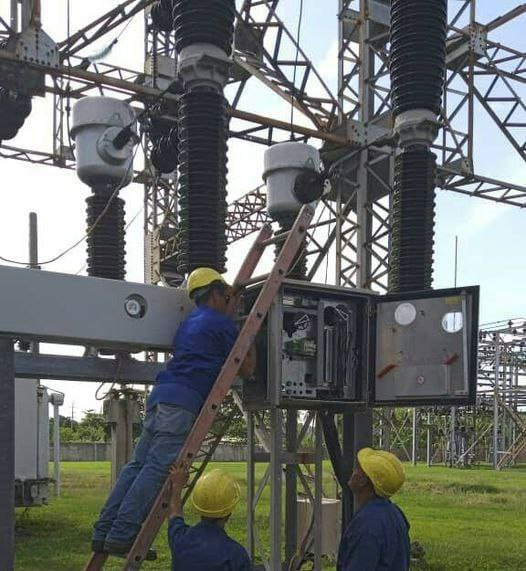
Migrants outside one of the offices of the Mexican Commission for Refugee Assistance in Tapachula, in the Mexican state of Chiapas. / File/EFE/Juan Manuel Blanco

14ymedio bigger14ymedio, Ángel Salinas/Yaiza Santos, México/Madrid, 1 August 2025 — “Don’t be fooled! The procedures are free.” Advertisements like this are repeated in every Mexican public office where there is no fee to complete the process. Among them are those of the Mexican Commission for Refugee Assistance (Comar) and the National Migration Institute. However, in the Chiapas border city of Tapachula, according to several firsthand accounts from 14ymedio, officials at these institutions “sell everything.”

Those are the exact words of Niorbis, a native of Matanzas who has experienced it firsthand. Cubans, Colombians, and Venezuelans, he says, have paid up to $1,500 to expedite “appointments, application forms, and even recorded interviews,” but their processes ultimately are not any faster. Many of them still don’t obtain refugee documents.

Figueredo claims he tried to avoid “extortion” and went to the immigration office in mid-June. “I stood there every day for a week to get an appointment,” the 28-year-old migrant laments. “They keep you there, in line, and at the end, they ask you to wait for mail from Comar. It never arrives; it’s all corruption.”

“If you don’t pay a lawyer, they won’t give you anything, but if you pay 50,000 pesos, they promise you’ll stay in the country.”

Finally, the Cuban had to go to a lawyer named Ezequiel, who charged him almost 4,000 Mexican pesos [US$200] to expedite the process. “In three days, he resolved the eight signatures required by Comar, and now I’m continue reading

waiting for a date for the final interview.”

Another migrant, Viviana, claims that “Comar is a brothel.” This Colombian woman was denied a humanitarian visa and alleges that officials have set prices for the procedures, “ranging from 15,000 to 25,000 pesos [just over $1,304].” She says that “if you don’t pay a lawyer, they don’t give you anything. But if you pay 50,000 pesos [$2,650], you are promised permission to remain in the country.”

After three rejections, with the advice of a lawyer Cuban Alexander Barrera and three of his relatives paid 36,000 pesos [almost $2,000] to begin the process of requesting asylum.

The fact that migrants end up having to hire lawyers to undertake the process is part of the corruption. That’s the opinion, at least, of Damián, a Cuban from Holguín, who was stranded with his family in Tapachula, waiting for a refugee claim that arrived four months later than expected. He understood very well that he shouldn’t give in to extortion, but his friends
didn’t have the same attitude and paid more than $1,000 to have their cases resolved.

“Comar denies your case to force you to find a lawyer; in fact, they even suggest which one.”

“That’s where the lawyers come in,” he told 14ymedio. “Comar denies your case to force you to find a lawyer; in fact, they even suggest which one. That lawyer will handle the case for you for 20,000 or 25,000 Mexican pesos [between $1,000 and $1,300], and of course, they then resolve it, and always, always, without any kind of contract.”

The story of those who suffer these hardships is similar. Comar begins to delay emails—up to three months, the first of which the migrants must receive to continue the process from the moment they begin it—and those affected begin to file complaints. It is then that the government agency suggests something like this: “I advise you to also find a lawyer, if you are unable to do it yourself, and they will help, because we are overwhelmed.”

The prevailing opinion among migrants is: “Without lawyers, you won’t make it.” Damián says: “It’s a magic wheel they have among themselves.” In reality, he explains, the lawyers don’t carry out any procedure that one couldn’t do themselves before the Comar (National Commission of Migration). He concludes: “Regardless of whether the offices are overwhelmed or not, they are violating the law.”

Indeed, bribery—the crime “committed by a public servant who requests or accepts money or any other gift in exchange for performing or omitting an act related to his or her duties, whether for his or her own benefit or that of a third party”—is classified in the Mexican Federal Penal Code and even carries prison sentences.

“Regardless of whether the offices are overwhelmed or not, they are violating the law.”

Luis Rey García Villagrán, who is organizing a caravan departure on August 4, accused the regional coordinator of Comar, Carmen Yadira de los Santos Robledo, of “deliberately prolonging” the migrants’ paperwork. “They’re trying to tire people out. The message is clear: ’Either you pay or you don’t move forward’.”

The activist recalled that De los Santos “has a dark history as a representative of the INM in Tapachula (from 2019 to 2022) and in Yucatán (2023), and has returned to continue her acts of corruption at the Comar.”

He also pointed out the collusion between authorities and Farah Cerdio, the head of the Comar (National Commission for the Defense of Human Rights) in Tapachula. Despite the constant complaints and evidence that migrants and human rights groups have presented to the authorities, he laments, there have been no legal consequences, not even dismissals.

This Thursday, Comar employees filed a complaint against De los Santos for a series of unjustified dismissals, nepotism, labor exploitation, and non-payment. The aggrieved parties claim that the official placed relatives and acquaintances in the positions of those forced to leave their jobs. Those still working, meanwhile, said they have gone fifteen days without receiving their salaries.

“There are more than 3,000 people working in the 4,500 bars and cantinas in appalling conditions, and no one is doing anything.”

According to Villagrán, migrants stranded in Tapachula have fallen prey to labor and sexual exploitation. “There are more than 3,000 people working in the 4,500 bars and cantinas in appalling conditions, and no one does anything.”

On this topic, last Wednesday, he confronted the officials who were present at the Information Fair for World Day Against Human Trafficking, held in the auditorium of Miguel Hidalgo Central Park: “They come to take photos, selfies, while girls are exploited in prostitution, and members of the LGBT community are exploited. These events, with all due respect, are a simulation, a pretense.”

Tapachula has become a second home for 13,779 Cubans. However, 5,959 of these people remain without having regularized their immigration status. In the state of Chiapas, bordering Guatemala, 1,533 Cubans have a Temporary Resident Card, which guarantees them legal residence in the country for a limited period and its subsequent renewal. Another 3,915 people from the Island already have permanent residency.

The Migration Policy, Registration, and Identity Unit has also issued 2,228 Humanitarian Cards to Cubans in vulnerable or at-risk situations, giving them temporary access to services and legal protection.

____________

COLLABORATE WITH OUR WORK: The 14ymedio team is committed to practicing serious journalism that reflects Cuba’s reality in all its depth. Thank you for joining us on this long journey. We invite you to continue supporting us by becoming a member of 14ymedio now. Together we can continue transforming journalism in Cuba.
A Power Substation Failure Leaves Havana Without Power, Including Hospitals

Unit 6 of Mariel, Energas, and the Moa engines were disconnected from the national electricity system.

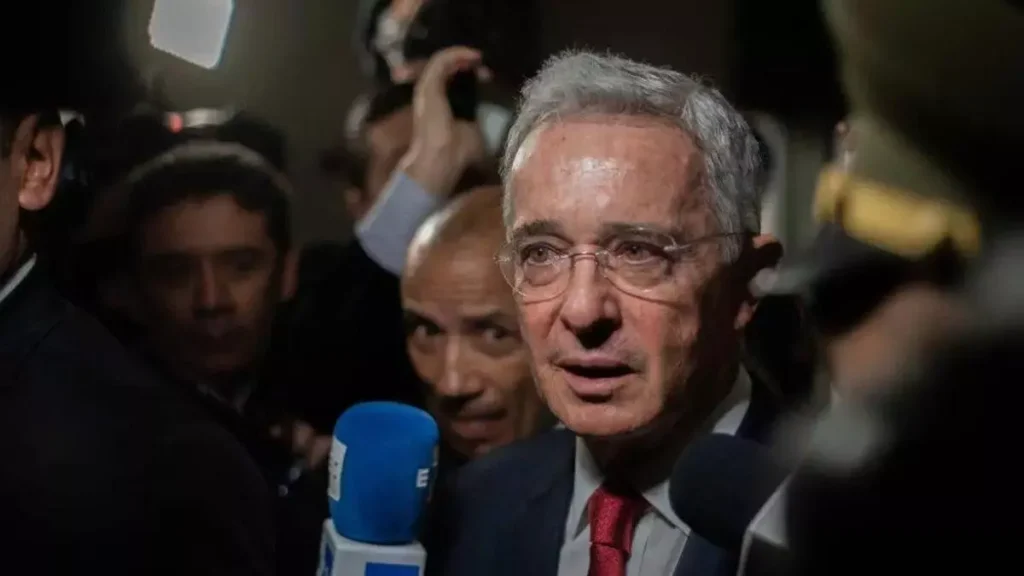
Electrical workers repairing a substation. / UNE

14ymedio bigger14ymedio, Madrid, 4 August 2025 — A power outage on Sunday night left much of Havana without power, including hospitals and the main water supply sources, which regained electricity after 2:00 a.m. As a result, unit 6 of the Máximo Gómez thermoelectric plant in Mariel, Energas, and the engines at Moa were disconnected from the national electricity system (SEN), according to the Ministry of Energy and Mines.

The initial outage occurred at the Naranjito substation, affecting the Príncipe, Melones, and Tallapiedra substations. The number of affected circuits multiplied across almost all of Havana’s municipalities: Arroyo Naranjo, Boyeros, 10 de Octubre, Plaza de la Revolución, Cerro, Centro Habana, Habana Vieja, Playa, Lisa, Marianao, San Miguel, Cotorro, Guanabacoa, and Habana del Este.

Just after 3:30 a.m., the Havana electric company announced that power was restored to Arroyo Naranjo (Los Pinos, Vieja Linda, La India, Alturas de la Víbora), 10 de Octubre (Mónaco), Boyeros (Santiago de las Vegas, Wajay), Cerro, Centro Habana, San Miguel, and Playa (areas of Cubanacán, Querejeta). Some users living in the aforementioned circuits protested their continue reading

continued lack of power, while the UNE (National Electricity Union) asked them to be patient with the “gradual” restoration.

 Some users living in the aforementioned circuits protested their continued lack of electricity, while the UNE asked them to be patient with the “gradual” restoration.

The electricity company (UNE) has not reported the outage on its Facebook account, although it did specify that it would keep its instant messaging group channels updated. On its Telegram account, UNE limited itself to explaining the transmission function of an electrical substation, as well as stating the deficit of 1,500 megawatts in the early morning.

The Ministry of Energy and Mines, the first to sound the alarm, stated that the cause of the incident was being investigated, opening the door to all kinds of speculation. Doubts were compounded by the impact on the engines at Moa, a diesel-powered power plant located more than 900 kilometers from the site of the failure.

On social media, it is clear that the discontent isn’t limited to the Cuban capital, which has been exceptionally affected by this partial power outage. Criticism rained down from every province over what has been a hellish summer, with the largest electricity shortages on record. From Matanzas to Mayabeque to Guantánamo, the messages of weariness and discontent were relentless, including criticism of the unfulfilled promises of the authorities—who months ago assured that things would improve by July—and the excessive investment to support tourism, while the tourists haven’t arrived.

“Either this is all a lie from you so you don’t have to say you’ve run out of fuel, or the on-again-off-again you’ve set up is catching up with you.

“The causes are two,” one user retorted. “Either this is all a lie from you guys so you don’t have to say you ran out of fuel, or the on-again-off-again system you’ve set up is catching up with you. No electrical system is designed for the on-and-off system you set up. Much less ours, which has been running for years.”

Amid this situation, the imminent departure of the Turkish barge Suheyla Sultan is expected. Last night, it was still operating in Havana Bay, but its departure was announced by UNE’s technical director, Lázaro Guerra, who attributed it to “commercial reasons.”

“Actions are being taken to ensure this condition doesn’t worsen the impact on our current service,” the engineer added. Although the shutdown was expected for this Saturday, it was still active on Sunday. The 240 MW the Turkish patana (floating power plant) can provide, if operating at full capacity, would seriously aggravate the situation in the middle of August.

____________

COLLABORATE WITH OUR WORK: The 14ymedio team is committed to practicing serious journalism that reflects Cuba’s reality in all its depth. Thank you for joining us on this long journey. We invite you to continue supporting us by becoming a member of 14ymedio now. Together we can continue transforming journalism in Cuba.

Eleventh Commandment: You Shall Not Undermine the Public Trust

It is not part of the famous Decalogue. But it should be.

Former Colombian President Álvaro Uribe. / EFE

14ymedio bigger14ymedio, Federico Hernández Aguilar, San Salvador, 3 August 2025 — In recent days, after a lengthy trial that began in 2012, former President Álvaro Uribe Vélez was sentenced to 12 years of house arrest, becoming the first Colombian president to receive a criminal conviction. According to the judge in charge of the case, Uribe is guilty of bribery and procedural fraud, following a lawsuit in which the former president was the initial plaintiff for alleged slander against him.

Beyond the details of the scandal, or whether Uribe has reason to consider himself a “victim of justice,” the truth is that the sentence has exacerbated the conflict between the former president’s supporters and detractors, further polarizing—if possible—the already heated political climate in Colombia.

In Spain, meanwhile, Pedro Sánchez’s government is facing ruin. Allegations of illegal overcharging, inflated public works contracts, money laundering, and even sex trafficking have shaken the Spanish Socialist Workers’ Party (PSOE) to its foundations. The bets are now focused on how long Sánchez will endure this storm. The prestigious British magazine, The Economist, has dedicated a catastrophic note to the stubborn PSOE leader: “To restore confidence in Spanish democracy, the Prime Minister should assume his responsibility and step aside. There is no valid reason for him to remain in office.” It couldn’t be said more clearly.

Today, countless Republican voters are demanding transparency in the Epstein case and are loading the dice against Trump.

The dark story of tycoon Jeffrey Epstein, who died in 2019 while serving a prison sentence for sex trafficking of minors, has ended up splashing on the White House for reasons that shouldn’t surprise us, as they feed on the tangle of conspiracy theories that Trump’s own followers, sometimes continue reading

instigated by him, have concocted with vigorous passion in recent years.

Today, countless Republican voters are demanding transparency in the Epstein case and are loading the dice against the leader who taught them how to redirect neurons through the liver’s ducts. Of course, as in the cases of Uribe and Sánchez, this is not the place to offer a definitive opinion on Donald Trump’s culpability. The only certainty is that the moral bankruptcy of the current political leadership, in most of the world, is manifest and unquestionable.

I think every well-born citizen, wherever he or she lives, would like to see corrupt officials struck by lightning when they approach the state coffers with malicious intent, just as were those who dared to touch the Ark of Yahweh in biblical times. We would like officials who enrich themselves unduly to be punished by an infallible, supreme law, so that they would always remember that the place where public funds are kept is sacred.

Corruption, fraud, and influence peddling are certainly not crimes our societies should tolerate. They divert valuable resources intended for purposes far more noble than lining the pockets of scoundrels. Worse still, they seriously jeopardize the credibility of our institutions and their leaders. Unfortunately, there are still plenty of sleepless anarchists and socialists who take advantage of the unacceptable shortcomings of some public servants to proclaim the end of democracies and propose authoritarian tendencies (which then end up being equally or more repugnant than the replaced leadership).

I think every well-born citizen, wherever he or she lives, would like to see corrupt officials struck by lightning

The Austrian jurist and philosopher Hans Kelsen already warned us in this regard: “The tendency towards clarity is specifically democratic, and when it is lightly stated that certain political inconveniences, especially immoralities and corruption, are more frequent in democracy than in autocracy, a judgment that is too superficial or malevolent of this political form is issued, since these inconveniences occur equally in autocracy, with the only difference being that they go unnoticed because principles prevail there that are opposed to publicity,” that is, to denunciation, to freedom of expression, to the guarantees for and by the truth that liberal systems provide.

You and I, dear reader, have the right to demand that the money we give to the State be converted into public works. You and I have the right to demand that those who dishonored their office and vehemently deceived to cling to power not be protected.

Corruption and lies are highly corrosive: they degrade, undermine, and erode. In addition to contributing to the depravation of politics, they rob citizens of the trust that is essential for institutional systems to function properly. Quality of life suffers irremediably, because everything tends to collapse.

It is therefore our responsibility to demand that corrupt and mendacious individuals be brought down with effective prosecutions and strict laws. Regardless of what ideas they preach, officials who debase their work must be assured that their crimes will never go unpunished

____________

COLLABORATE WITH OUR WORK: The 14ymedio team is committed to practicing serious journalism that reflects Cuba’s reality in all its depth. Thank you for joining us on this long journey. We invite you to continue supporting us by becoming a member of 14ymedio now. Together we can continue transforming journalism in Cuba.

Three Minors Died and One Was Injured in a Lightning Strike in Villa Clara, Cuba

One of the victims, aged 14, was vacationing on the island from the United States.

The medical team at the José Luis Miranda Children’s Hospital and authorities with the hospitalized minor. / Herny Omar Pérez

14ymedio bigger14ymedio, Madrid, 4 August 2025 — Three minors died this Sunday in Manicaragua, Villa Clara, after being struck by lightning during a storm. They were accompanied by Diamelis Delgado Granados, 14, the only survivor of the group. She is now hospitalized and is recovering well, according to authorities.

The victims are Andy Alberto Turiño González, 13, Analía García Rodríguez, 14, and Jorge Alejandro de la Coba Monteagudo, also 14, who had traveled from the United States to spend the holidays in Cuba.

Authorities rushed to the José Luis Miranda Children’s Hospital in Santa Clara, where they monitored the injured girl. “The young woman remains conscious, oriented, and shows positive progress,” Magalys Molina Díaz, a specialist in the center’s Intermediate Therapy Unit, told the official press.

“The young woman remains conscious, oriented, and shows positive progress,” Dr. Magalys Molina Díaz told the official press.

“We are relieved to know that Diamelis is progressing positively thanks to the swift intervention of the medical team. We reiterate our commitment to supporting the family and ensuring she receives all the necessary care for her full recovery,” said Susely Morfa, First Secretary of the Communist continue reading

Party, who attended with the provincial governor, Milaxy Yanet Sánchez Armas.

Just two months ago, two other teenagers lost their lives in a similar manner in Bautá, Artemisa. That incident occurred on June 7 in the Pita neighborhood, in Urban Council 2, when Luis Antonio and Maicol, who were playing soccer outdoors, were struck by lightning.

In 2023, another electric shock killed Dunielkis Fonseca Borges, a worker at the Nickel Union Services Company in Moa, Holguín. In that case, six other coworkers who were waiting for transportation home were injured.

Cuba records an annual average of 54 deaths from lightning strikes, the leading cause of death from meteorological phenomena on the island, with 1,742 deaths between 1987 and 2017, according to the latest data available thanks to a study conducted by specialists from the Island’s Institute of Meteorology (Insmet).

____________

COLLABORATE WITH OUR WORK: The 14ymedio team is committed to practicing serious journalism that reflects Cuba’s reality in all its depth. Thank you for joining us on this long journey. We invite you to continue supporting us by becoming a member of 14ymedio now. Together we can continue transforming journalism in Cuba.
 

Cuba: An Eloquent ‘Freedom’ Painted on a Wall in Holguín Rekindles Popular Discontent

The graffiti appeared in a busy area where thousands of people pass by every day.

The sign is located between the La Barra Dalama guarapera [sugar cane drink stand] and the old service station known as La Curva. / 14ymedio

14ymedio bigger14ymedio, Miguel García, Holguín, 4 August 2025 — Residents in the Alex Urquiola neighborhood of Holguín woke up this weekend to find a word painted on a deep blue wall: “Freedom.” The graffiti, written in uneven and hasty letters, appeared on the stretch between the La Barra Dalama guarapera [sugar cane drink stand] and the old gas station known as La Curva, a busy area where thousands of people pass through every day.

The sign draws attention not only for its direct message, but also for the way it was written, with a final “t” that betrays a spelling error but, for many residents, reflects the urgency and spontaneity with which it was created. “Whoever wrote it must have written it exactly as it sounded in their mind,” commented a neighbor who stopped in front of the improvised mural. “You can’t spell a word that’s never used correctly,” added another local woman with a wry smile that summed up the widespread frustration with the situation on the island.

“You can’t spell a word well if you never use it.”

The graffiti is the latest in a string of public expressions of discontent that have become more frequent in Holguín—and throughout Cuba—in recent years. And that have increased in recent months.

In mid-June, authorities in Holguín were busy early in the morning erasing some 20 anti-government graffiti on the wall of the Mayabe cemetery, even scraping with machetes, while Interior Ministry agents, supported by continue reading

several cars and motorcycles, controlled the area and watched for anyone who approached. A tricycle driver recounted how he couldn’t even take out his phone for fear of being arrested, while a tanker truck loaded with lime waited to paint the extensive wall and cover the remnants of the messages as quickly as possible.

In mid-June, 20 anti-government graffiti appeared on the wall of the Mayabe cemetery.

In the Lenin neighborhood, also in Holguín, graffiti bearing the phrase “Down with communism” appeared on one of the buildings in May. Authorities reacted quickly, attempting to cover it with reddish paint, but the faded color left the message visible, creating a palpable irony. The act of censorship ended up reinforcing the phrase.

In May, the phrase “Down with communism” was painted on one of the buildings in the Lenin neighborhood.

The head of the U.S. mission to Cuba, Mike Hammer, who was visiting the city, even posed for a photo in front of the sign, emphasizing that Cubans should be able to express themselves without fear of reprisals.

In the case of this new graffiti on Alex Urquiola, however, the word “Freedom” remained visible all weekend, becoming a topic of conversation for pedestrians and drivers passing by. Some even speculate that the authorities’ failure to remove the message could be due to the fact that the experts have run out of resources to analyze the frequent protest graffiti. One much more suspicious Holguín resident sarcastically commented: “Maybe there’s not even any paint left.”

____________

COLLABORATE WITH OUR WORK: The 14ymedio team is committed to practicing serious journalism that reflects Cuba’s reality in all its depth. Thank you for joining us on this long journey. We invite you to continue supporting us by becoming a member of 14ymedio now. Together we can continue transforming journalism in Cuba.
Fifteeen Seconds, Fifteen Years Ago

Everything happened in a fleeting instant—a brief flash reflected in the rearview mirror, as if that figure had vanished in the blink of an eye.

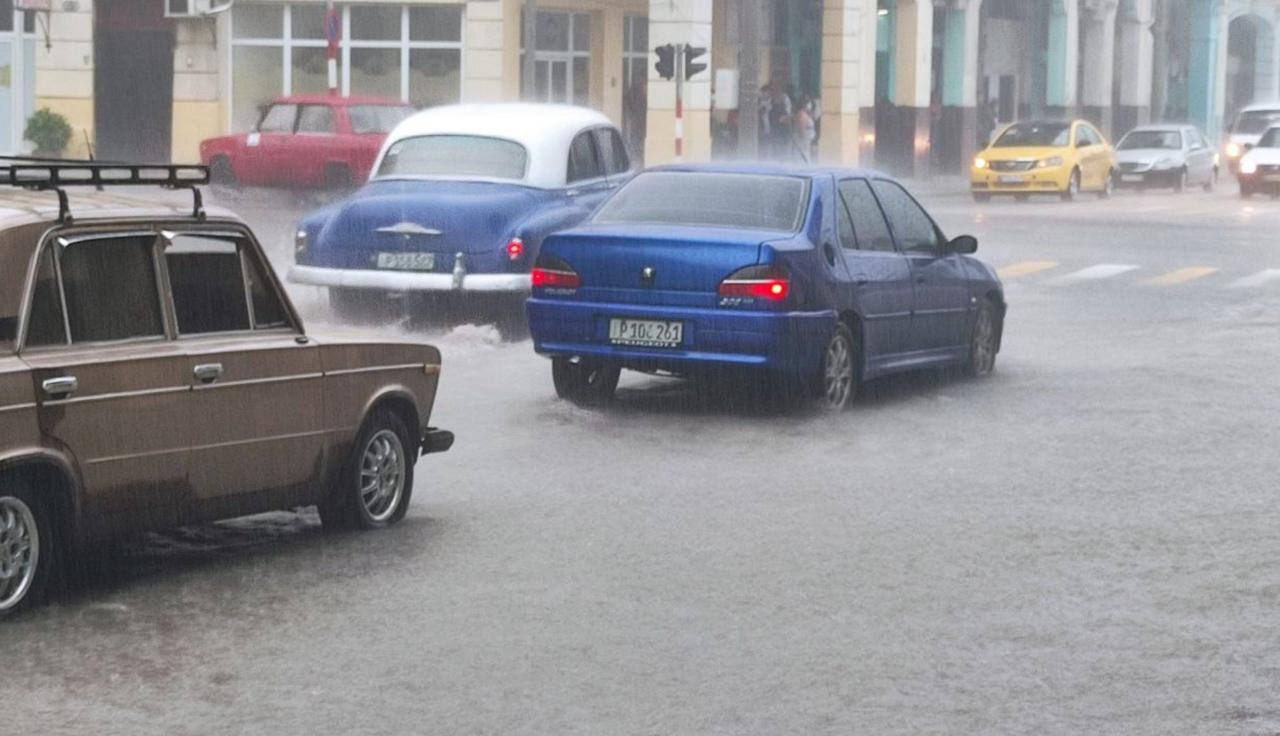
The avenue stretched out before him, exactly as he remembered it: the steady rain, blurred reflections, shimmering puddles / 14ymedio

14ymedio bigger14ymedio, Milton Chanes, Berlin, 3 August 2025

Three more years had gone by.

Three years since that fateful afternoon of November 12—twelve years ago now—when it was his own scream that had sealed Ana’s fate. Now, after months of meticulous adjustments, frantic calculations, and tireless rehearsals, he had finally managed to extend the temporal jump to fifteen seconds.

Fifteen fleeting seconds—but enough, perhaps, to alter what had once seemed irrevocably written.

This time, he would not make the same mistake. He had prepared obsessively, analyzing every possible outcome, every minimal variation in the cruel script of time. He knew exactly where to appear: right in the center of the avenue’s flowerbed. There, hidden among the shrubs and the shadows cast by the rainy dusk, he would avoid being seen by his former self.

He initiated the jump.

The sensation was the same as always: that fleeting vertigo as he crossed the invisible curtain between present and past.

When he opened his eyes, he felt the damp grass beneath his feet, soaked by the insistent rain. He looked around quickly.

The avenue stretched out before him, exactly as he remembered it: the steady rain, blurred reflections, shimmering puddles, the fine mist kicked up by tires, and the ceaseless murmur of vehicles gliding over the wet asphalt.

Then he saw her—Ana—walking with determination, as beautiful as ever, in those impossible heels no one should wear on such a slippery street.

A few meters behind her, he saw himself—his self from three years earlier—approaching, still unaware of the horror about to unfold.

There was no time to lose. An elderly man, rushing to cross the avenue in a futile attempt to escape the downpour, slipped and crashed to the ground. The impact echoed sharply, followed by a faint groan.
He couldn’t stop to help—every second was crucial. He turned his attention to the approaching vehicles, immediately recognizing the old seafoam-green Bel Air, rusted, driven by Usnavy, struggling through the torrential rain and a fogged-up windshield. He ran toward it, waving his arm frantically, trying to catch the driver’s attention, silently begging him to change his fatal course.

Blinded by the storm and with nearly zero visibility, Usnavy barely perceived a silhouette emerging suddenly from the left. In a reflexive, panic-stricken move, he jerked the steering wheel to the right. The Bel Air skidded clumsily across the slick road, losing speed as the gearbox groaned with a metallic screech.

At that moment, a heart-wrenching scream pierced through the sound of the rain:

—Noooo!

Everything happened in a fleeting instant—a brief flash reflected in the rearview mirror, as if that figure had vanished in the blink of an eye. Almost at the same time, another voice cried out from the sidewalk:

—Ana!

It had happened again.

Then he opened his eyes. He was back in the present. He hadn’t been able to do anything. Worse still—had he, once again, triggered the tragedy himself? Every action he took seemed to lead inevitably to the same ending, over and over. What was the solution—if there even was one? He had tried everything, absolutely everything, and still, fate insisted on finding new paths to fulfill its cruel decree.

He understood then, with heartbreaking clarity, that it wasn’t about the place, the precise moment, the car or the driver.

He understood then, with heartbreaking clarity, that it wasn’t about the place, the precise moment, the car or the driver. The tragedy was woven deeper, embedded in the very fabric of time.

He slowly stood up. From the lab’s window, he watched as the rain began to fall once more, linking past and present in some kind of cosmic bond. But perhaps the key was not to avoid the inevitable, but to understand that each attempt to change the past created multiple timelines—unpredictable parallel worlds, vibrating in a chaotic, invisible dance. Like a quantum butterfly effect, every small gesture could resonate infinitely across universes he would never even know existed.

The question, then, was no longer how to save Ana, but whether by trying, he might be unleashing even darker realities—fates more terrifying still.

And there, beneath the unrelenting rain, staring out the window, he had yet to understand that uncertainty was the only certainty.

Translated by the author.

The series:

Twelve Seconds, Twelve Years Ago

Fifteen Seconds, Fifteen Years Ago

Witness of the Rain
____________

COLLABORATE WITH OUR WORK: The 14ymedio team is committed to practicing serious journalism that reflects Cuba’s reality in all its depth. Thank you for joining us on this long journey. We invite you to continue supporting us by becoming a member of 14ymedio now. Together we can continue transforming journalism in Cuba.
‘There Are No Vacations for the Poor Here’ A Cuban Street Vendor Explains

On the sidewalks of Matanzas, informal vendors defy the heat and surveillance to survive.

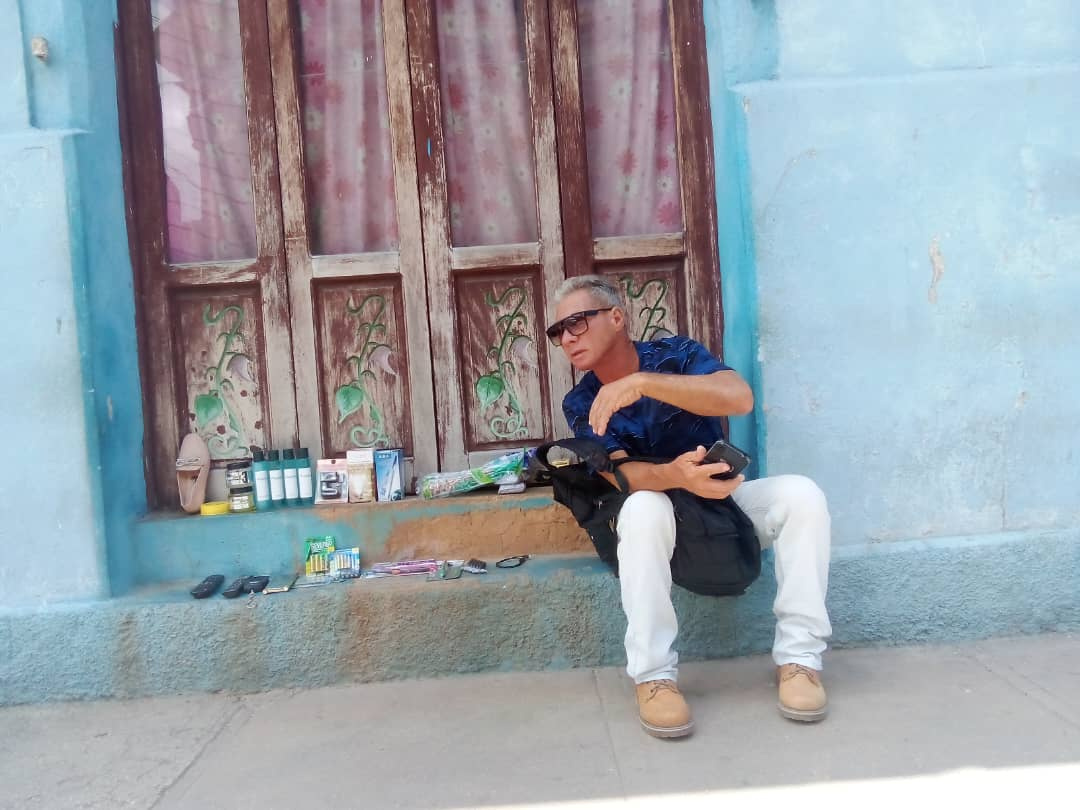
Informal vendors are an extension of the urban landscape. / 14ymedio

14ymedio bigger14ymedio, Julio César Contreras, Matanzas, 3 August 2025 — In July and August, school holidays send children and teenagers home. Many state employees also take a break. But in Matanzas, the city isn’t completely at rest: on its sidewalks and in its doorways, informal vendors remain, unfazed by the harsh sun or the barely visible shade offered by the eaves.

“This is my workplace. Thanks to what I sell here, my wife and I survive,” says Lázaro, a retiree who arranges matches, soap, and pencils on the steps of a house on Calzada de Tirry every morning. His voice mingles with the sound of traffic and the impromptu shouts of other street vendors, never taking a break. “There are no vacations for the poor here.”

A former school bus driver, he never imagined making a living this way. “At first, it was difficult because I’d never even sold a pin,” he confesses. “There was also the logical fear of being fined for not having a license. But going hungry is terrible. Seeing the empty pots gave me the strength to make up my mind, and I’ve been selling this way for a year now.” His strategy for evading inspectors includes “a little gift to make them turn a blind eye and go back where they came from.”

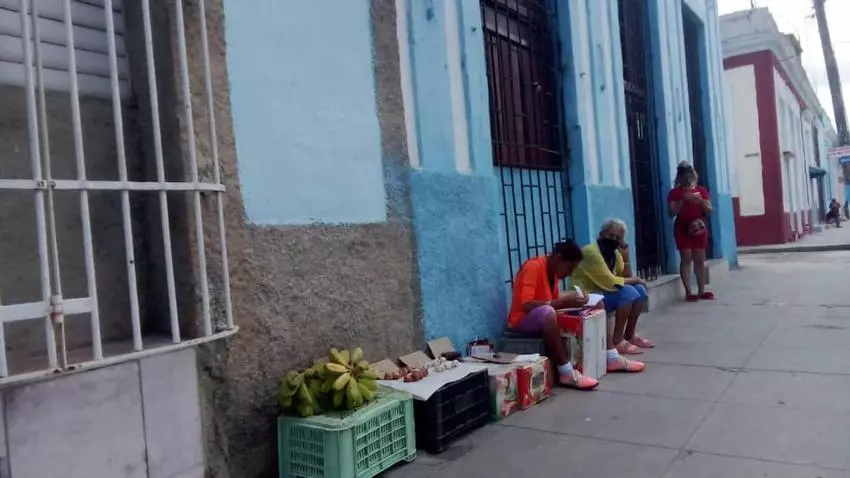
They sit under colonial portals, in front of pharmacies, or around markets. / 14ymedio

In Matanzas, informal vendors seem like an extension of the urban landscape: under colonial doorways, in front of pharmacies, or around markets. They can’t even afford to rest on Sundays. “These products aren’t mine, so most of the money doesn’t belong to me either,” explains Orestes, as he sets up his makeshift folding table at the entrance to a pharmacy. “When they warn me of an inspection, I stay away from the En Familia café and walk through neighborhoods where I sell less, but run less risk of fines.”

On his small table, there’s everything: matchboxes, instant glue, gaskets for coffee makers and pressure cookers, rat poison, pens, and even covers for the ration book, which is being used less and less due to the shortage of supplies in the bodegas [ration stores].

“Who does it hurt when an old man like me sells nylon bags and razors?” Lázaro asks, recalling the afternoon he tore up his National Vanguard Construction diplomas, accumulated over nine consecutive years. “In addition to paying us miserable pensions, the government makes our lives difficult, even by fining us a few pesos that aren’t even enough to make ends meet.”

They sell everything: matchboxes, glue, gaskets for coffee makers and pressure cookers, rat poison, pens, and even covers for ration books. / 14ymedio

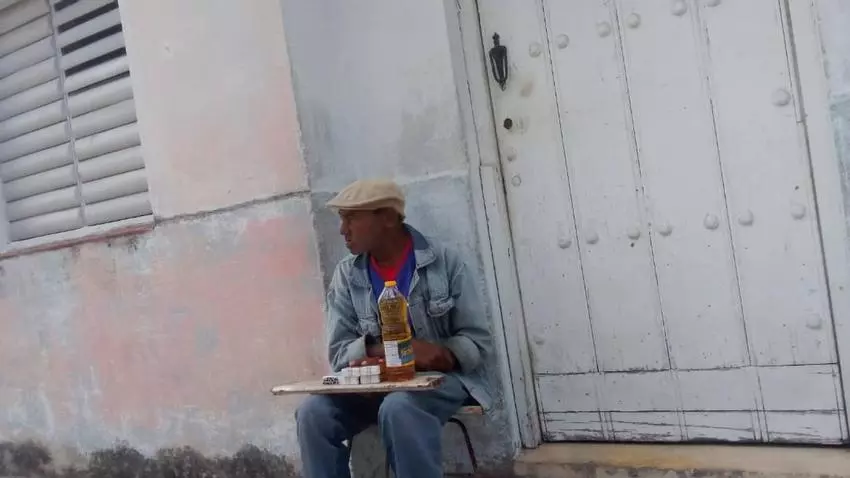
Others prefer more discreet methods. Demetrio, sitting on a bench on Calzada de San Luis, holds three packs of cigarettes in his hand. He doesn’t need more: the buyers come by themselves. “I arrange them with the warehouse manager or a friend who works at an MSME” [a small private business] he admits quietly. “I don’t want any trouble, but I have to do something so I don’t starve to death, because things are really tough.”

Poverty is growing, spreading from the Simpson and La Marina neighborhoods to the old residential areas of Peñas Altas and Versalles. For informal vendors, there are no weekends, holidays, or summer vacations. They stay until the day gives them just enough to eat. And then, at dusk, they clear their tables, stash the little money they’ve earned, and hope that tomorrow won’t surprise them with an inspection or despair.

For informal vendors, there are no weekends, holidays, or summer vacations. / 14ymedio

____________

COLLABORATE WITH OUR WORK: The 14ymedio team is committed to practicing serious journalism that reflects Cuba’s reality in all its depth. Thank you for joining us on this long journey. We invite you to continue supporting us by becoming a member of 14ymedio now. Together we can continue transforming journalism in Cuba.
The Matanzas Bus Terminal Closed and Commercial Life Shut Down

Cafes and kiosks near the building in danger of collapse are surviving with minimal sales and reduced hours.

Moving the bus services to the train station has been a hard blow to merchants. / 14ymedio

14ymedio bigger14ymedio, Julio César Contreras, Matanzas, 2 August 2025 — Since the Matanzas bus terminal closed due to the risk of collapse, the bustle around it has dried up, taking down the incomes of those who depended on commuters. Maricela, 24, has only been able to work intermittently in one of the cafés near the dilapidated building and fears the situation could last for months or years.

“We have a good location, right in front of where the wait list used to be,” she says, pointing to the now-deserted corner. “Before, people would stay there until 8:00 p.m., but since the buses stopped coming, things die after 2:00 p.m.,” the Matanzas native laments.

Initially, Maricela worked as a sales assistant three days a week. Now, with fewer customers and dwindling profits, her schedule has been reduced to covering the other employee’s shifts only when they’re absent. “My salary was 1,000 pesos a day. I used to work two days and rest two, but now they barely pay 700. The joy in the poor person’s house is short-lived,” she laments.

Some employees have seen their work shifts reduced due to low customer numbers. / 14ymedio

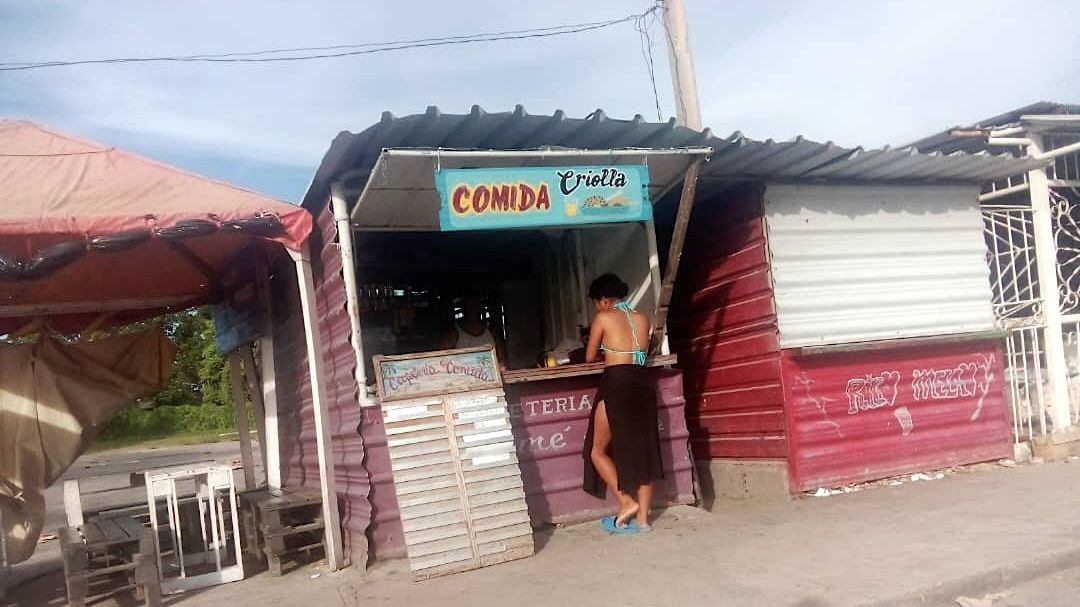
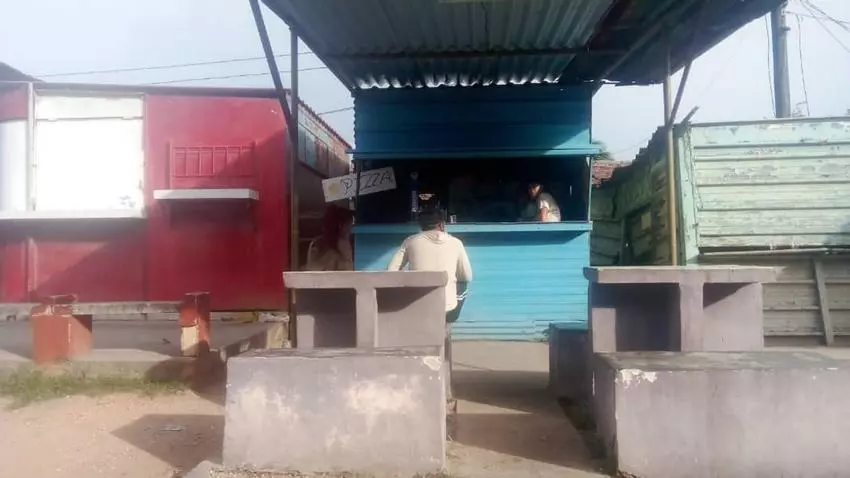
The terminal’s closure also threatens the livelihood of Vladimir, who recently got a job as a clerk at a kiosk near the taxi rank. “We had to stop selling pizzas because we can’t turn on the oven with the power outages. The soda heats up quickly, and no one buys it,” he explains. By six in the evening, they’ve barely sold 5,000 pesos worth.

“In less than a month, two private businesses closed right next door. The owner couldn’t even pay the rent,” he adds, concerned about the warning he received from his boss: if sales don’t improve in the next few days, they will temporarily close until the terminal reopens. Other outlets are facing a very similar situation.

But the prognosis for the work is uncertain. The building has such accumulated deterioration that its restoration could take a considerable amount of time and resources. With its half-broken, once colorful stained-glass windows and a metal framework—in the style of classic European stations—the terminal was built in 1883 by the British company United Railways. Decades without investment caused ferns to sprout from its walls and enlarged the gaps in the roof.

Last October, the official announcement came that bus terminal services would be moved to the train station. The relocation has not only inconvenienced passengers but has also been a severe blow to local merchants, drivers, and street vendors.

“Our main customers were those who traveled long distances, not those who traveled within the province,” the merchants say. / 14ymedio

Eliécer, another entrepreneur in the area, also faces a shortage of drinking water. “I rent a tricycle and bring water from my house in buckets,” he says. His kiosk, which he opened next to the bus platform, attracted by the old crowds, now sells only jams and pre-prepared light meals.

“Before, we opened at five in the morning and set up everything right there. I even considered having the kiosk open 24 hours a day. I invested in improving the roof and was ready to buy a small power plant. But in this country, nothing is the way you want it. Now I close at five in the afternoon and I don’t plan on spending any more,” he admits.

Private merchants bear the losses. “Our main customers were those traveling far away, not those traveling within the province or the taxi drivers,” says Eliécer. “Those who came here to travel wanted a sip of coffee before boarding the bus, a bite to eat for a snack, or a meal before leaving,” he details.

Eliécer believes that by the time the station reopens, many of the local businesses will have completely collapsed. “Every day it’s closed means a business has one foot in the grave,” he describes.

____________

COLLABORATE WITH OUR WORK: The 14ymedio team is committed to practicing serious journalism that reflects Cuba’s reality in all its depth. Thank you for joining us on this long journey. We invite you to continue supporting us by becoming a member of 14ymedio now. Together we can continue transforming journalism in Cuba.

Of Statues and Monuments

The mayor of Cuauhtémoc in Mexico City, Alessandra Rojo de la Vega, removed the statues of the tyrant Fidel Castro and the murderer Ernesto ’Che’ Guevara.

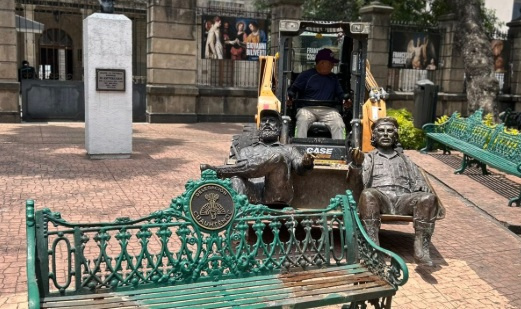
Image from the day the statues of the tyrant Fidel Castro and the murderer Ernesto ’Che’ Guevara were removed. / X General Directorate of Culture

14ymedio bigger14ymedio, Pedro Corzo, Miami, 3 August 2025 — La señora Alessandra Rojo de la Vega, mayor of Cuauhtémoc, a town considered the heart of Mexico City, decided to remove the statues of the tyrant Fidel Castro and the murderer Ernesto Che Guevara. The sculptures had been in place in a park in the district since 2017, following the decision of a Mexican official close to the Cuban regime and a member of the administration of current President Claudia Sheinbaum.

Castro and Guevara had already been removed in 2018, when it was discovered that the permits to install the figures in the park were lacking. They had also been the target of vandalism in protest and neighborhood demonstrations against them.

In consequence, the mayor, within the powers conferred by her office, determined that the monuments had generated controversy and that their placement in Tabacalera Park was unjustified due to irregularities. She made no mention of the $32,000 in public funds spent on the statues’ construction or the fact that they were paying tribute to two individuals who represented values contrary to what Mexican society and its government claim to ennoble. She added: “Neither Che nor Fidel requested authorization to be installed in Cuba, nor in Tabacalera Park.”

Castro and Guevara had already been removed in 2018, when it was discovered that the permits to install the figures in the park were not adequate.

The sculptures, placed on a park bench, depicted Castro and Guevara with a book and a tobacco pipe, respectively, instead of an assault rifle or an explosive device, objects more closely related to their history. continue reading

The removal of the statues has sparked numerous comments, but undoubtedly the most striking have been the remarks of Mexican President Claudia Sheinbaum, who said that Mayor Rojo de la Vega had acted illegally by removing the monuments and accused the official of displaying “tremendous intolerance.”

La señora presidenta, following the Castro regime’s pattern of attempting to discredit its adversaries and enemies, stated that the mayor had gone to Cuba on vacation, which, in her opinion, showed that she was not against the regime, ignoring the fact that not everyone who visits the island does so out of love for the dictatorship.

To honor the truth, I am not in favor of destroying statues and monuments. Every day I become more convinced that there are indelible values represented by images and monoliths dedicated to distinguished personalities or events in history, even though each person’s perception of the same events and people may be radically different from that of others.

Mayor Rojo de la Vega made it clear: “Fidel Castro and Che Guevara were murderers. A murderer is no less a murderer if he’s on the left.”

For example, I reject the removal of statues dedicated to Christopher Columbus and other discoverers and conquerors of the Americas from public spaces. I don’t believe the demonizing arguments of those who promote their removal. It’s true that the figures represented by many of these statues committed countless abuses and crimes, but they were also the ones who made possible the collision of two worlds and the enrichment of both.

The same cannot be said of Castro and Guevara, nor of those who supported them in their control of Cuba and their failed attempt to destabilize an entire continent in order to impose totalitarian power.

Monuments and statues represent momentous episodes in history, and their construction or removal should be the subject of detailed research, the outcome of which should not be influenced by sympathies but by the contribution they have made to humanity.

Knowing the ways these criminals operate, I think it is a good idea to remove similar monuments anywhere in the world that represent individuals like these, particularly the one dedicated to Che Guevara in the city of Santa Clara. Mayor Rojo de la Vega stated clearly: ” Fidel Castro and Che Guevara were murderers. A murderer is no less a murderer if he is on the left.”

____________

COLLABORATE WITH OUR WORK: The 14ymedio team is committed to practicing serious journalism that reflects Cuba’s reality in all its depth. Thank you for joining us on this long journey. We invite you to continue supporting us by becoming a member of 14ymedio now. Together we can continue transforming journalism in Cuba.
Abused for Years, Kenia Died After Being Thrown Off the Roof of Her Home by her Partner

With this murder, there have been 20 femicides in Cuba since January.

Neighbors claim that Kenia had been abused by her partner for years. Text of sign: Violence Leaves Mars, Ignoring it Leaves Femicides / YoSíTeCreo in Cuba

14ymedio bigger14ymedio, Juan Diego Rodríguez, Havana, 28 July 2025 — Kenia Rodríguez Mora, a resident of the Havana neighborhood of Luyanó and mother of a 7-year-old girl, is the latest victim of domestic violence recorded in Cuba. According to 14ymedio sources, on Sunday her partner, the child’s father, threw her from the roof of the home they shared on Rodríguez Street.

Although the news has not been confirmed by independent Cuban feminist associations, residents of Luyanó told this newspaper about the incident, which did not come as a surprise to those around them. “The man is an alcoholic and beat her constantly. They say the woman had been enduring the beatings for years until today, and that’s when he killed her,” says a woman living a few blocks away.

“The fight started last night, and in the morning he continued hitting her and threatening her,” continues the neighbor, who claims that Kenia ran up to hide on the roof, where the alleged murderer chased her and threw her off. Later, according to the story, he tried to take her to the hospital, but nothing could be done for her. continue reading

“The fight started last night, and in the morning he continued hitting her and threatening her,” continues the neighbor, who claims that Kenia ran up to hide on the roof, where the alleged murderer chased her and threw her off.

“I passed by there a while ago and there were two police officers,” says another resident. “The woman was very poor, she didn’t even have any clothes. She lived selling and begging,” he says. Another neighbor remembers Kenia frequently stopping by her house trying to earn some money or begging. “Terrible. She didn’t even weigh 100 pounds and was just over 5 feet tall,” she adds.

Reluctant to share much more, neighbors claim the alleged attacker was a very violent man feared in the neighborhood, as rumors suggest he had a history of murder. Witnesses say the police arrested the attacker, but they fear he will be released and return to the neighborhood.

With the murder of Rodríguez Mora—whose surname was provided by independent platforms when reporting the news—this year’s record of femicides compiled by this newspaper has risen to 20. Just this Sunday, the same day as the events, the death of 29-year-old Yailín Carrasco, at the hands of her partner, was confirmed in Cienfuegos on July 22. According to the Alas Tensas and Yo Sí Te Creo observatories in Cuba, the crime occurred “in front of at least one of the three surviving girls.”

Both associations made public the death of another woman murdered in the street in Holguín on July 13, Yailín Requejo, 41. In that case, the state press reported on the murder only to announce the arrest of the attacker last Tuesday. However, the woman, described as a “young wife,” was not identified, and it was stated that Requejo’s youngest daughter was seriously injured.

In 2024, 14ymedio recorded 52 murders due to gender-based violence based on independent records. According to figures from the Cuban Observatory on Gender Equality, a total of 76 gender-based murders in which the victims were over 15 years old were prosecuted in the country in 2024. The organization does not specify the dates on which the crimes were committed, but they most likely occurred in 2023 and 2024.

____________

COLLABORATE WITH OUR WORK: The 14ymedio team is committed to practicing serious journalism that reflects Cuba’s reality in all its depth. Thank you for joining us on this long journey. We invite you to continue supporting us by becoming a member of 14ymedio now. Together we can continue transforming journalism in Cuba.
The Drought Hits Eastern Cuba, Leaving Homes Without Water For Two Months

The lack of rainfall has led to an alarming reduction in reservoir levels.

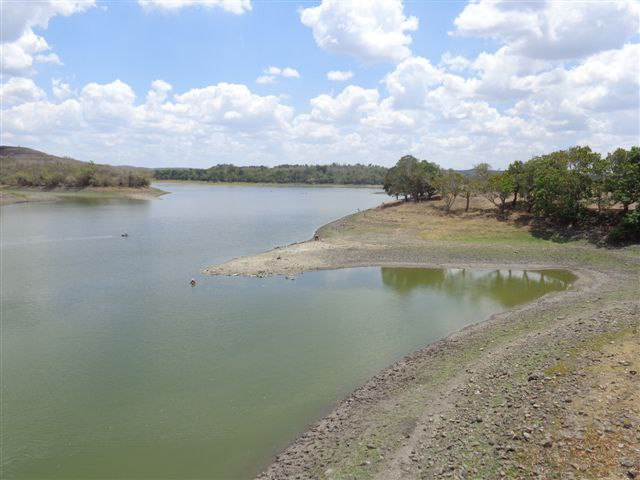
Cacoyugüín Dam, in Holguín. / Trabajadores

14ymedio bigger14ymedio, Miguel Hernández, Holguín, 28 July 2025 — “The drought is already hitting us here. There are areas where the water supply hasn’t been rising or hasn’t been pumped for more than 20 days, and in some areas, like Loma del Caguayo in Hilda Torres, it’s been going on for two months,” says Raúl, a 38-year-old resident of Holguín who spoke with 14ymedio . The lack of water, coupled with prolonged blackouts, is deepening the crisis facing residents in eastern Cuba.

Raúl’s testimony reflects a critical reality in provinces such as Santiago de Cuba, Holguín, and Guantánamo, where the lack of rainfall has led to an alarming drop in reservoir levels and the partial collapse of the water supply systems.

According to official data, in Santiago de Cuba, more than 80% of the population depends on the Quintero System, which has seen its water intake drop to between 900 and 1,000 liters per second after the loss of key sources like Gota Blanca and the reduction in supply from Gilbert. “Only one of the system’s five pipelines is functioning… the water supply situation is very critical,” continue reading

acknowledged Ludmila Rodríguez Barroso, director of Aguas Santiago.

In Holguín, reservoirs and aquifers have reached “alarmingly low” levels.

In Holguín, where nearly 48% of the territory was experiencing meteorological drought at the end of March, reservoirs and aquifers have reached “alarmingly low” levels, according to Radio Angulo. The flow supplying the city has dropped from 1,189 to 880 liters per second, forcing severe rationing. Agricultural production, already deteriorating, has suffered a further decline due to the lack of irrigation, worsening food insecurity and raising prices in local markets.

In Guantánamo, the situation is no less dramatic: the La Yaya reservoir, the province’s main reservoir, is at 9% capacity, with barely one million cubic meters of usable water. This has forced the operation of only one of the Guantánamo canal’s pumping engines, particularly affecting southern communities such as Carreterita and La Jabilla. The provincial government announced emergency measures, such as water transfers from the Caribe District and the cleaning of diversion pipelines, while urging the population to maximize conservation.

Added to this water crisis is the impact of the deteriorating national electricity system. Junior González Núñez, first vice president of the OSDE Agua y Saneamiento (Water and Sanitation Department), admitted that “approximately 70% of service disruptions are linked to problems in the electrical system.” After blackouts, water takes between six and eight hours to reach homes, further prolonging distribution cycles and leaving entire neighborhoods without water for days.

Although the authorities have begun installing solar-powered pumping systems—with the import of 866 photovoltaic units—these measures are failing to reverse the water shortage or meet demand. In Santiago de Cuba, delivery cycles exceed 20 days, while in critical areas they have already reached 60 days.

The drought, which has plagued eastern Cuba for years, not only threatens domestic water supplies, but also agricultural production, the local economy, and public health. In the words of Raúl, a Holguín resident desperately facing dry pipes, “This isn’t just a lack of water: it’s hunger, heat, blackouts, and empty businesses… all of this together is crushing people here in the East.”

____________

COLLABORATE WITH OUR WORK: The 14ymedio team is committed to practicing serious journalism that reflects Cuba’s reality in all its depth. Thank you for joining us on this long journey. We invite you to continue supporting us by becoming a member of 14ymedio now. Together we can continue transforming journalism in Cuba.
‘La novia de Lázaro’, by Dulce María Loynaz [Download the book for free]

Betania Publishing offers the complete edition of the book, first published in 1991, as a free download.

Cuban writer Dulce María Loynaz, born in Havana on 10 December 1902, was awarded the Cervantes Prize in 1992.

14ymedio, 30 July 2025 , Madrid/ (Fragment)

IV

Like the first dawn of the world. That is it, and you have to adjust to that. But while the heart adjusts, it will be useless for you to fatigue me with eagerness.

I had a long night. Don’t you understand? You had it too, I won’t deny it. But you were dead and I was alive; you were dead and you rested in your own death like in a shoreless lake, like a child before birth in the still blood of its mother.

Meanwhile, I lived on, with eyes that wanted to pierce your darkness, bones that refused to stretch, and bitten flesh, pierced by black angels rebelling against God. You were dead, and I lived on, feeling the passing, the weight, the dregs of the night that had settled over me, incapable of dying or moving it! To move death. That was what I intended. To move the Unshakeable, the Blind, the Deaf, the Mute.

It was someone else who did it. He came, and the night became dawn, death became play, the world became a child.

He came and time stopped, opening the way for his smile like the waters of the Red Sea for our ancient Fathers.

All it took was a little crying, a little smiling, and everything was in place. Sweetly. Simply. Indolently.

______________

Editor’s Note: Betania Publishing—as a summer gift—is making the complete book by Dulce María Loynaz (Cervantes Prize winner, 1992) available to 14ymedio readers. You can download the PDF at this link.

____________

COLLABORATE WITH OUR WORK: The 14ymedio team is committed to practicing serious journalism that reflects Cuba’s reality in all its depth. Thank you for joining us on this long journey. We invite you to continue supporting us by becoming a member of 14ymedio now. Together we can continue transforming journalism in Cuba.
Cuban Regime Revokes the Release of 11J Prisoner Marlon Brando Díaz

The young man, who is serving an 18-year sentence for sedition, loses the benefit of house arrest and returns to prison.

Marlon Brando Díaz was sentenced to 18 years in prison for sedition after protesting on 11 July 2021. / Facebook

14ymedio bigger14ymedio, Madrid, 1 August 2025 — The Cuban regime has revoked the release of 11J political prisoner Marlon Brando Díaz Oliva, who was under house arrest, a benefit granted to him in January of this year as part of the agreement between Washington and Havana brokered by the Vatican.

The information was released Thursday by the Madrid-based Cuban Observatory of Human Rights (OCDH). At this time, details regarding his return to prison are unknown, although sources close to the case told 14ymedio that Díaz Oliva had left his residence for a few minutes to make a purchase. The 23-year-old had been sentenced to 18 years in prison for sedition in 2022 and had served three years and six months of his sentence at the time of his return home.

Díaz Oliva was part of the large group arrested on 11 July 2021 at the corner of Toyo and La Güinera streets in Havana, and ultimately sentenced for the anti-government protests of that day. In six cases involving 128 people, the People’s Supreme Court issued sentences totaling 1,916 years. Most of the defendants were convicted of serious crimes such as sedition, with sentences reaching up to 30 years in prison. The High Court specified that those convicted were involved in “serious disturbances and acts of vandalism with the purpose of destabilizing public order, collective security, and citizen tranquility.”

“These revocations demonstrate that the release of political prisoners is nothing more than a temporary measure, lacking legal guarantees or continue reading

respect for fundamental rights,” the OCDH stated.

“These revocations demonstrate that the release of political prisoners is nothing more than a temporary measure, lacking legal guarantees or respect for fundamental rights.”

On January 14, Cuba announced it would release 553 people as a gesture to the Vatican for the jubilee year decreed by the late Pope Francis. The news came minutes after the Biden administration announced the island’s removal from its list of state sponsors of terrorism, a list it returned to a week later, the same day Donald Trump took office.

Havana argued that the releases were a unilateral and sovereign measure, but the coincidence revealed that it was an agreement facilitated by the Vatican. In March, with the process concluded, human rights organizations counted some 200 political prisoners who had benefited from the measure. The remainder of the 533, the majority, were common-law prisoners.

Supreme Court Vice President Maricela Sosa Ravelo then held that the beneficiaries must fulfill certain obligations, such as regularly appearing before a judge, continuing to comply with the additional sanctions, and assuming civil liability; otherwise, “there would be consequences.” “These benefits could be revoked if the released prisoners failed to comply with their obligations, and they would then return to the penitentiary to complete the remaining time on their sentences,” she explained.

“These benefits could be revoked if the released prisoners fail to comply with their obligations, and they would then return to the prison to complete the remaining sentence.”

Just a week after Pope Francis’s death in April, José Daniel Ferrer and Félix Navarro, two of the most well-known former prisoners, returned to prison for allegedly failing to comply with these conditions. Both had warned upon their release that they had no intention of complying with any of the regime’s demands.

In early June, the release of another political prisoner, Donaida Pérez Paseiro, a Yoruba priestess living in Placetas, was also revoked. The woman from Villa Clara had been sentenced to eight years in prison for “public disorder,” “disobedience,” “contempt,” and “assault,” also in the context of 11J. In her case, the court announced the suspension of her release, alleging “a breach of obligations, primarily related to the workplace, and failure to appear when summoned by the Enforcement Judge.”

The first case to be revoked was that of Jaime Alcide Firdó, released on January 18 and returned to prison in early April, allegedly for refusing to become a State Security informant. The 25-year-old was serving a seven-year prison sentence for sedition after participating in the 11 July protests in La Güinera.

____________

COLLABORATE WITH OUR WORK: The 14ymedio team is committed to practicing serious journalism that reflects Cuba’s reality in all its depth. Thank you for joining us on this long journey. We invite you to continue supporting us by becoming a member of 14ymedio now. Together we can continue transforming journalism in Cuba.