A Report on the Escape of a Blind Cuban Swimmer Is a Finalist in the SIP Awards

Two journalism students in Chile narrate the desertion that occurred during the 2023 Parapan American Games in Santiago.


“Escape in the Dark: the Story of the Blind Parathlete Who Deserted During Santiago 2023.” / JIT

14ymedio bigger14ymedio, Havana, 5 August 2025 — “I’m in a taxi and I’m escaping,” was the brief phrase Yunerki Ortega Ponce, a blind Cuban swimmer, told his mother over the phone after escaping from the Parapan American Games in Santiago, Chile, in November 2023.

Now, the report that recounts that flight, Escape in the Dark: The Story of the Blind Parathlete Who Deserted During Santiago 2023, published by Diego Portales University, has been nominated as a finalist for the Inter-American Press Society (IAPA) International Prize in the category of University Journalism.

Written by Francisco González and Juan José Leyton, the text accurately reconstructs the voluntary flight of Ortega Ponce, a Paralympic swimmer from the island who decided to leave the Cuban delegation.

He was the last of at least eleven Cuban athletes who deserted during that edition of the Games in Chile.

The report describes how Ortega, diagnosed with retinosis pigmentosa, came to compete in the S11 category and finished fifth in the 50-meter freestyle. He was the last of at least eleven Cuban athletes who deserted during that edition of the Games in Chile -among them members of the women’s hockey, rowing, handball and athletics teams- and his defection generated a police complaint for “alleged misfortune” before the Carabineros de Chile.

According to the report, his escape was planned with the support of a Mexican athlete friend and a lawyer in Chile. He left the Villa Panamericana in the early hours of November 19 and walked with all his belongings to the National Stadium. He was then taken by sympathetic supporters to the home of a compatriot and began the process of political asylum with attorney Mijail Bonito Lovio.

“God, don’t let them catch me, because if they grab me that will be my end.”

The text highlights the voice of Ortega, who expressed fear and determination: “God, don’t let them catch me, because if they grab me that will be my end,” in reference to possible reprisals in Cuba. It also describes his humble origin in Ranchuelo, his sports career, and the contrast between his international achievements and the lack of state support on the island.

Legislative recognition in Chile is also part of the story. In July 2025, the Chilean Senate unanimously approved granting citizenship by way of grace to Ortega, following a proposal that received support in the Chamber of Deputies in April of the same year. This institutional support helped his integration into sports in Chile. Now he is training for the paratriathlon with Venezuelan Miguel Brito as his coach and guide, with the ambition of representing Chile at the 2028 Paralympic Games in Los Angeles.

A system that rewards athletics, but marginalizes socially

The article, nominated for the Spirits International Prestige Awards (SIP), balances the chronological reconstruction of desertion with a human perspective and contextualizes the Cuban reality: a system that rewards athletically, but marginalizes socially. Ortega, a seven-time Parapan American medallist, faced obstacles in his country that led him to seek ansylum and a new citizenship in Chile, where his talent can find dignified conditions and a renewed projection.

In this sense, the journalistic work of the UDP not only exposes an individual story of escape and reinvention but also a broader phenomenon: the multiple desertions of Cuban athletes at recent international events. The narrative combines direct testimonies, logistical reconstruction and political analysis, which explains its inclusion among the finalists for the SIP competition.

Translated by Regina Anavy

____________

COLLABORATE WITH OUR WORK: The 14ymedio team is committed to practicing serious journalism that reflects Cuba’s reality in all its depth. Thank you for joining us on this long journey. We invite you to continue supporting us by becoming a member of 14ymedio now. Together we can continue transforming journalism in Cuba.
The Dance of Millions in the Tax-Free Enterprises of the Cuban Armed Forces

The Miami Herald got access to documents that reveal details about Gaesa’s finances and a $5 billion drop from the tourism crash.

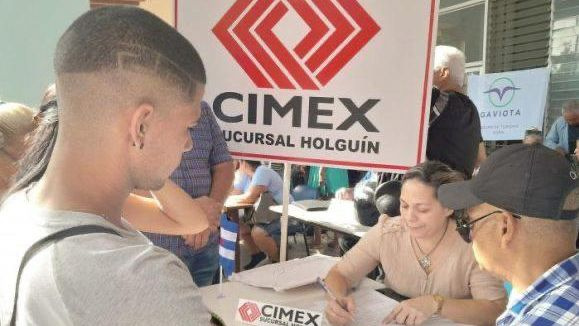
Photo of a Cimex office in Holguín / Granma

14ymedio bigger14ymedio, Havana, August 7, 2025 — The fact that the Gaesa military conglomerate has a free hand in the Cuban economy is no secret to anyone, but knowing -with figures in hand- that the economic crisis is also affecting its finances is, to say the least, surprising. A leak of 22 internal financial documents corresponding to March and August 2024, obtained by the Miami Herald, not only provides figures on its management, but also demonstrates that the group operates without being subject to tax control or paying part of its taxes.

In the first quarter of 2024 alone, the regime’s golden goose made $2.1 billion in net profits. Cimex, its most lucrative company, was responsible for more than half of that amount, with $1.2 billion in profits as of March 2024, out of total revenues of $3.4 billion in that period, although they were even higher the previous year.

Between January and August 2024, excluding Cimex, Gaesa recorded a drop in sales and profits of 67% and 72%, respectively, compared to the same period last year.

Cimex does not appear in the 2024 balance sheets, possibly due to a cyber-security attack that paralyzed their systems in January of this year, according to the Miami Herald, which points out that the fall in the finances of the whole conglomerate -and not only Cimex- coincided with the government’s offensive against the private sector, especially against wholesalers and importers, whom it perceives as competition.

The Herald gives the example of Gaviota, the Armed Forces division dedicated to tourism, whose leaked records show that the company lost $5.8 billion in just five months last year. By March, the company had deposited $8.5 billion in “unidentified bank accounts” and in Rafin S.A., continue reading

another financial institution owned by Gaesa. Five months later, the money given to Rafin was gone, and Gaviota had only $2.7 billion in the bank.

Five months later, the money given to Rafin was no more, and Gaviota had only $2.7 billion in the bank.

According to the Herald, “there is a possibility that the military may have simply transferred the missing dollars abroad or used them to finance other investments without being recorded. However, the collapse of tourism on the Island provides a reasonable explanation for at least some of Gaviota’s losses.”

The same is true for the other companies not associated with Cimex, which between March and August 2024 went from having $14 billion in liquid assets to only 9.3 billion, a fall of 5 billion attributed to the report to the collapse of tourism.

However, the size of Gaesa’s business is such that even without taking into account the contributions of Cimex, which represent about 40% of its revenues, the rest of its companies had, in March 2024, some $18 billion in assets, of which 14.5 billion were deposited in banks or financial institutions controlled by the conglomerate itself. These figures, argues the media, give an account of a business network that functions as a state within the state and which, according to the Cuban economist Pavel Vidal -consulted by the Herald-has assumed the role of “central bank.”

The business of the conglomerate continues to generate large profits. In 2023, Gaesa accumulated $17 billion in sales and $7.2 billion in net profits in the first eight months of the year. According to Vidal, these gross gains represented about 40% of Cuba’s official GDP and were 3.2 times higher than all the State’s tax revenues.

In sectors such as tourism, construction and finance, Gaesa’s role could be even greater. “I have not been able to find a similar example of a conglomerate with such a large share in the economy of a country,” Vidal said. “It even exceeds the weight of Ecopetrol in Colombia, Petrobras in Brazil or Pdvsa in Venezuela”.

Among the companies with the largest bank accounts up to March 2024 are Gaviota, with $8.5 billion; TRD Caribe, with $3.4 billion; and Almacenes Universales, with $1.6 billion.

One of the most alarming facts revealed by the documents is that Gaesa companies do not pay taxes on their foreign exchange transactions. In August of last year, the military conglomerate owed 920 million pesos in taxes -less than 1% of its domestic sales of 100 billion pesos- but had received from the State 9.2 billion as “state investment,” ten times more.

There is also no information on the taxes that Cimex should have paid, but the documents reveal that the tax deductions that Gaesa does pay end up in an institution hitherto unknown: the Revolutionary Armed Forces Tax Administration Office.

The Herald also denounced the opacity of the conglomerate’s financial records, which distort and hide its real assets.

The Herald also denounced the opacity of the conglomerate’s financial records, which distort and conceal its real assets. For example, the finances of August 2024 report a net worth of $2 billion, identical to the profits, when in reality that patrimony amounts to $13 billion, plus 28 billion pesos.

Gaesa uses the exchange rate of 1 dollar for 24 pesos in its operations, an anonymous source close to the conglomerate told the media, and its reports add up pesos and dollars as if they were equivalent.

Although much of the information is half-baked, it is clear that Gaesa’s power within the Cuban economy is greater than expected and that the tax benefits it receives favor its enrichment. In stark contrast, the Cuban people sink ever deeper into poverty, while the dollars flow to tourism, exports and banking.

Translated by Regina Anavy

____________

COLLABORATE WITH OUR WORK: The 14ymedio team is committed to practicing serious journalism that reflects Cuba’s reality in all its depth. Thank you for joining us on this long journey. We invite you to continue supporting us by becoming a member of 14ymedio now. Together we can continue transforming journalism in Cuba.
Cuba Hopes To Place Among the Top Four in the Pan American Junior Games

The Island will be represented by 231 athletes, three of them hoping to win gold

14ymedio bigger

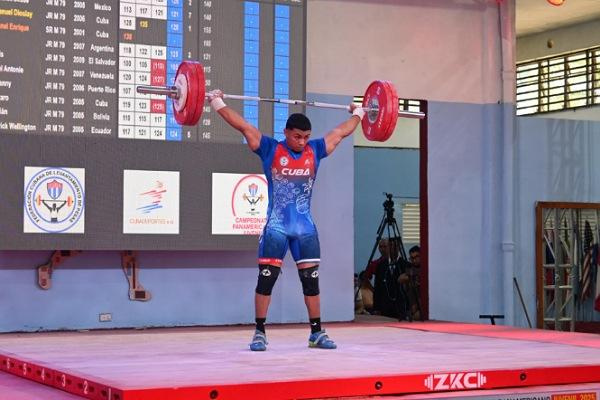
One of the main contenders is the weightlifter Emanuel de la Rosa, who will compete in the category of 79 kilograms. / Granma

14ymedio bigger14ymedio/EFE, Havana, August 7, 2025 — One of the main contenders is the weightlifter Emanuel de la Rosa, who will compete in the category of 79 kilograms. His competitive record places him as a favorite, having been triple Continental Junior U13 champion and winner of three gold medals at the Pan American Youth Championship held last March in Havana. At that contest, he registered 140 kg at the start and 170 kg in the push, accumulating a total of 310 kg in the biathlon.

In the women’s section, hope is placed on the sprinter Yarima Garcia, who will participate in the 100 and 200 meter dash, in addition to the 4×100 meter relay. Her international renown grew after reaching seventh place in the U-20 World Championships of Athletics in Cali 2022. Her personal best is 11.32 seconds in the 100 meter and 23.36 seconds in the 200 meter.

In the women’s section, hope is placed on the sprinter Yarima Garcia, who will participate in the 100 and 200 meter dash.

The third outstanding name is the sprinter Reynaldo Espinosa, who will run the same tests as Garcia in the male section: the 100, 200 and 4×100 meter relays. Espinosa already has experience on the Pan American podium, after winning the silver medal in the Santiago 2023 Games with his teammates Rogelio Amores, Yaniel Carrero and Shainer Rengifo, with a time of 39.68 seconds, being surpassed only by the Brazilian team that clocked 38.68.

With a larger delegation than in the 2021 edition of Cali, where 212 athletes participated, Cuba will try to surpass the fifth place achieved then, when it accumulated a total of 70 medals: 29 gold, 19 silver and 22 bronze.

Translated by Regina Anavy

____________

COLLABORATE WITH OUR WORK: The 14ymedio team is committed to practicing serious journalism that reflects Cuba’s reality in all its depth. Thank you for joining us on this long journey. We invite you to continue supporting us by becoming a member of 14ymedio now. Together we can continue transforming journalism in Cuba.

Foreign Funds for Endangered Cuban Crocodiles and Polymite Snails in the Midst of the Environmental Crisis

The shells of colorful snails, endemic to the island, are sold on the internet for up to 200 dollars.

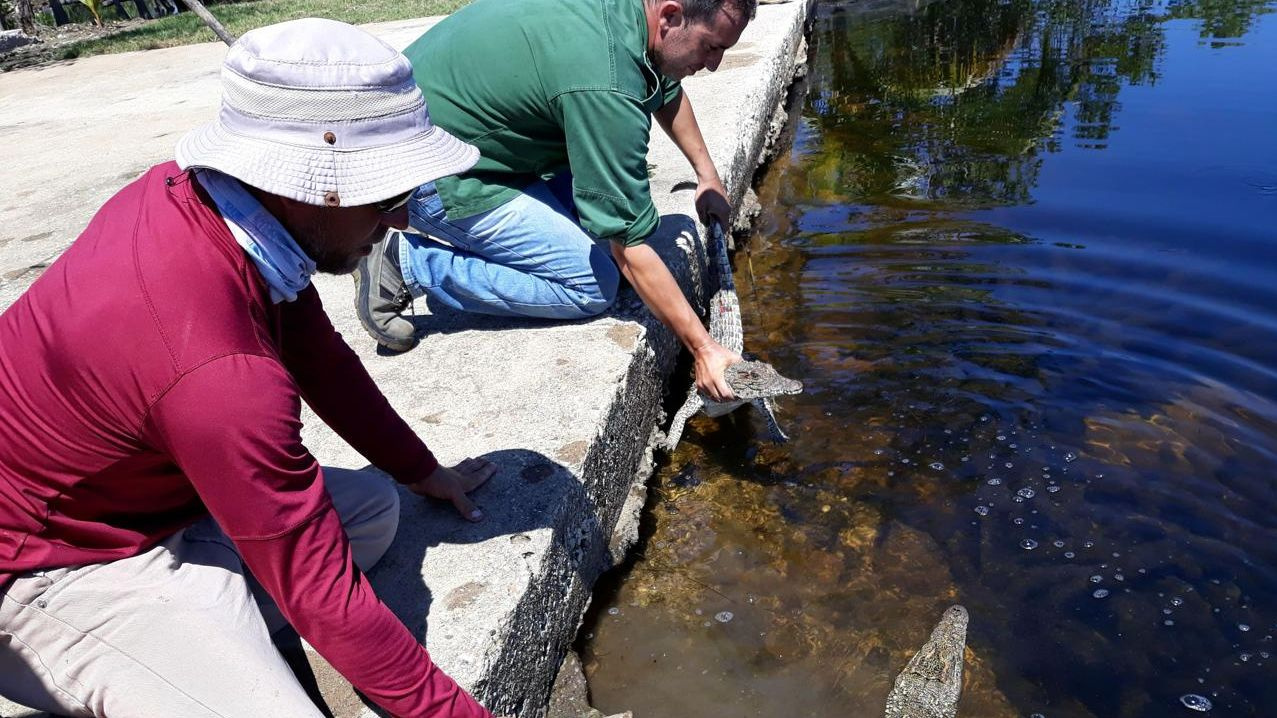
Image of caretakers at the crocodile farm in Ciénaga de Zapata. / UNDP

14ymedio bigger14ymedio, Havana, 6 August 2025 — Like many other sectors in crisis on the island, the loss of biodiversity has proved to be another sensitive issue that attracts international aid to the satisfaction of the regime. If the species are also endemic, it is likely that more resources and funds will be allocated. This is the case of the Cuban crocodile, whose protection has prompted a fund-raising effort by the United Nations Development Program (UNDP).

The campaign, called See you in a while, crocodile – based on the English expression See you later, alligator – will begin this coming October and is aimed at ensuring “the survival of the Cuban crocodile,” which is “threatened by human action on the ecosystem, climate change and other factors.”

According to the official UNDP website, “donations will make it possible to purchase satellite tags and place them on the crocodiles to monitor their movements, as well as develop educational activities that strengthen their protection in local communities.”

The program specifies that the tags will allow the study of their patterns of movement, habitat use and areas of activity, which will facilitate the planning of actions to conserve the ecosystem. They will also help identify suitable sites for releasing captive-bred crocodiles, which would increase continue reading

their chances of survival.

The initiative will also seek to strengthen collaboration with local communities, promoting educational activities that integrate residents of the Zapata Swamp in the protection of the ecosystem. “With your support, we will be able to closely follow the Cuban crocodiles in their natural habitat and better understand how to protect them,” concludes the campaign.

The initiative will also seek to strengthen collaboration with local communities, promoting educational activities.

The project is led by two specialists: biologist Etiam Pérez and veterinarian Gustavo Sosa, who, according to UNDP, have years of experience working with crocodiles. They will be responsible for the placement of satellite tags and for coordinating research, education and conservation actions that can be carried out thanks to donor contributions.

Hopefully, the funds will help to improve the quality of life of the species and extend the project, a result of an alliance between the Group of Specialists in Crocodiles of Cuba (GECC), the Company for the Conservation of the Ciénaga de Zapata, the Antonio Núñez Jiménez Foundation for Nature and Man (FANJ), and the UNDP representation in Cuba. The activities are also supported by the global Biofin initiative, coordinated in the country by the Ministry of Science, Technology and the Environment.

The Cuban crocodiles are not only a unique species of the island, but its ecosystem, close to the beaches of the south coast of Matanzas and several tourist enclaves -the breeding farm itself being one of them- has exposed them to constant human contact. Under more or less precarious conditions, crocodiles are bred in the Zapata Swamp, where they can be visited by national and international tourists, who can even taste their meat – a luxury that mostly foreigners can afford.

But the Cuban crocodile is not the only endemic species at risk for which the state receives funds and aid. In the east of the country, snails known as polymites are at risk due to climate change, habitat loss and, above all, illegal trafficking of their shells, coveted for their natural beauty and colors. A conservation study between the University of Oriente and the British University of Nottingham attempts to prevent their disappearance.

According to Cubadebate, which quotes a BBC report, there have been sales on the internet of polymite shells from the United Kingdom for more than 200 dollars, although their extraction from Cuba without permission is illegal, according to the Convention on International Trade in Endangered Species (Cites).

Among the most threatened, adds the official newspaper, is the variety sulphurosa, which has green hues with blue, orange and yellow bands. “Its beauty attracts people who collect and trade in shells. The same thing that makes them interesting as scientists is also putting them at risk,” explains Angus Davison, a geneticist at the University of Nottingham involved in the conservation project.

Of the approximately 36,700 species listed in Cuba, 35% are endangered.

The collaboration, also led by conservation biologist Bernardo Reyes-Tur, seeks to understand the genetic evolution of these species and preserve their diversity. While genetic research is being carried out in Nottingham, the work in Cuba is done “in a hot climate to try to breed snails in captivity,” a process still in the experimental phase, but which specialists believe is on track.

Cuba is facing an alarming crisis of biodiversity loss: of the approximately 36,700 species listed, 35% are endangered, and it is estimated that up to 75% of mammals could disappear. Plants are also severely affected: 580 plant species are critically endangered, along with 16 amphibian species. In addition, 70% of amphibians, of which 71 species are identified (94% endemic) on the island, are threatened.

This deterioration is mainly due to illegal hunting, intensive agriculture, mining, deforestation and pollution, which has eroded natural habitats and drastically reduced local fauna. However, the attention of the state also plays an essential part in a context of economic crisis, where the enjoyment of tourists is prioritized over the protection of natural reserves.

Even the official data confirm the state’s inability and lack of resources to protect endangered species. In the Zapata Swamp, they have come to admit, the number of rangers is insufficient.

In 2020, 14ymedio published an article on social indifference to the silent environmental crisis in Cuba. This newspaper then denounced the predation of polymites for their use in handicrafts and their illegal trade, despite being protected.

Translated by Regina Anavy

____________

COLLABORATE WITH OUR WORK: The 14ymedio team is committed to practicing serious journalism that reflects Cuba’s reality in all its depth. Thank you for joining us on this long journey. We invite you to continue supporting us by becoming a member of 14ymedio now. Together we can continue transforming journalism in Cuba.

Private Companies a Get Good Deal on Cocoa Due to State Ineptitude

The price of cocoa beans was rising rapidly in international markets, from $2,000 a ton in 2022 to more than $12,700 in 2024

Baracoa’s old chocolate factory, whose opening Che Guevara presided over in 1963. / Granma

14ymedio bigger14ymedio, Madrid, 30 July 2025 — For Baracoa, chocolate was once the goose that laid the golden egg. The town was once the epicenter of Cuban cocoa production, responsible for 85% of the country’s total output. But the goose has flown along with hundreds of tons of beans, which are being sold to the private sector, where prices on the international market are soaring. In an article published on Wednesday in the communist party newspaper Granma, Cuban officials and the paper itself lamented the “shortsightedness” of those who decided to allow private companies to take over chocolate production.

Granma does not name names but it accuses small and medium-sized private companies (MSMEs) of acquiring 101 tons of cacao over an unspecified period of time. One of them, reportedly located in the rural town of Paso de Cuba, bought close to half of the beans from the state-owned Agroforestal y del Coco company. The 45-ton sale involved three separate purchases: two for 20 tons each and one for five tons.

Baracao mayor Mayelín Frómeta Alayo “deplores,” as Granma puts it, “that a key product intended for the municipality’s industry has gone elsewhere.” In overwrought prose, the newspaper — without unhesitating and repeatedly— accuses “new economic actors and self-employed workers” of taking advantage of a situation caused by the ongoing problems of the Cuban economy.

Mayelín Frómeta Alayo “deplores,” as Granma puts it, “that a key product intended for the municipality’s industry has gone elsewhere.”

The root of this problem lies in the delayed reopening of the town’s cocoa factory, which restarted operations in 2018 after its predecessor—inaugurated in 1963 by Ernesto Che Guevara—was declared inoperable. Authorities then invested an unspecified amount of money, which the Granma estimates at 43 million “in both national and foreign currency,” with no indication of how much they expected to recoup or how quickly. “The product will be sold abroad at an excellent price,” Reynaldo Mosqueda Martínez, an engineer and investor in the project, said at the time.

The machinery for the renovated factory was imported from Italy and Switzerland, which sent workers to assemble the parts, train local employees, and launch the operation. “No one expected it would all be done in a matter of a few weeks, especially at a time of economic challenges and setbacks, but no one thought continue reading

it would take so long,” the article states.

Currently the price is around 8,000 dollars a ton. / villaparadisobaracoa.com

In fact, the process dragged on for five years for reasons that remain unclear. The only ones mentioned were the pandemic and the delayed arrival of foreign technicians, though Granma now also cites the “comprehensive and intensified economic and financial siege by the U.S.” The factory was finally inaugurated in November 2022, though it was not widely covered by the press until it became fully operational in the summer of 2023.

Meanwhile, despite all the difficulties, the fields kept producing, with cacao beans piling up in warehouses year after year. “The surplus of raw material was growing,” says Raúl Matos Pérez, director of the Agroforestry and Coconut Company in Baracoa. Even after selling off a significant portion to Baracoa Cocoa Derivatives, there were still 800 tons left “not counting what was stored in towns and warehouses in other eastern provinces,” he says.

Then a solution came from the private sector, which had cleverly found a way of selling the coveted crop. Matos Pérez says that initially the proposal was to start exporting but the idea went nowhere. “The decision was then made to sell it to the chocolate factory, which would store it until its business was fully up and running,” he says. But the raw material continued piling up, though to a lesser extent due to the country’s economic crisis.

No one in the article explains who made the decision or why not to export the cocoa, whose value in international markets was rapidly growing, from $2,000 a ton in 2022 to more than $12, 700 in 2024. Ultimately, the frenzy ultimately slowed, with the current price settling at roughly $8,000.

Granma criticizes the government’s failure to change direction “when it became clear that the factory’s reopening would be delayed and the opportunity to export the cocoa would be lost.”

While Granma believes it was not a bad idea to keep the product in state hands, it criticizes the government’s failure to change direction “when it became clear that the factory’s reopening would be delayed and the opportunity to export the cocoa would be lost.” It was at that moment that MSMEs and self-employed workers, whom the government had recently granted permission to sell cocoa-derived products, got the green light to start producing chocolate themselves.

“Logic went out the window and easily avoidable mistakes were made. In the voracious rush to get things done, decision-making became sloppy,” states the paper, adding that officials should have had plans in place to deal with a worst-case scenario. It accused those responsible of not even considering “the impact that allowing MSMEs to get into the chocolate business would have on Baracoa’s cocoa development strategy.”

The factory has a production capacity of 7,000 tons, much more than the 2,200 tons that, according to Granma, it produced in 2025, or the 150 tons it is projected to produce in 2025 amid the ongoing financial crisis.

“Could the municipal authorities not have hired 120 self-employed workers, not to mention the more than 400 who were informally processing and marketing cocoa?” the article asks critically.

This concludes the first part of a report that will continue perhaps tomorrow, Thursday, in which the Granma promises to reveal what happened next.

____________

COLLABORATE WITH OUR WORK: The 14ymedio team is committed to practicing serious journalism that reflects Cuba’s reality in all its depth. Thank you for joining us on this long journey. We invite you to continue supporting us by becoming a member of 14ymedio now. Together we can continue transforming journalism in Cuba.
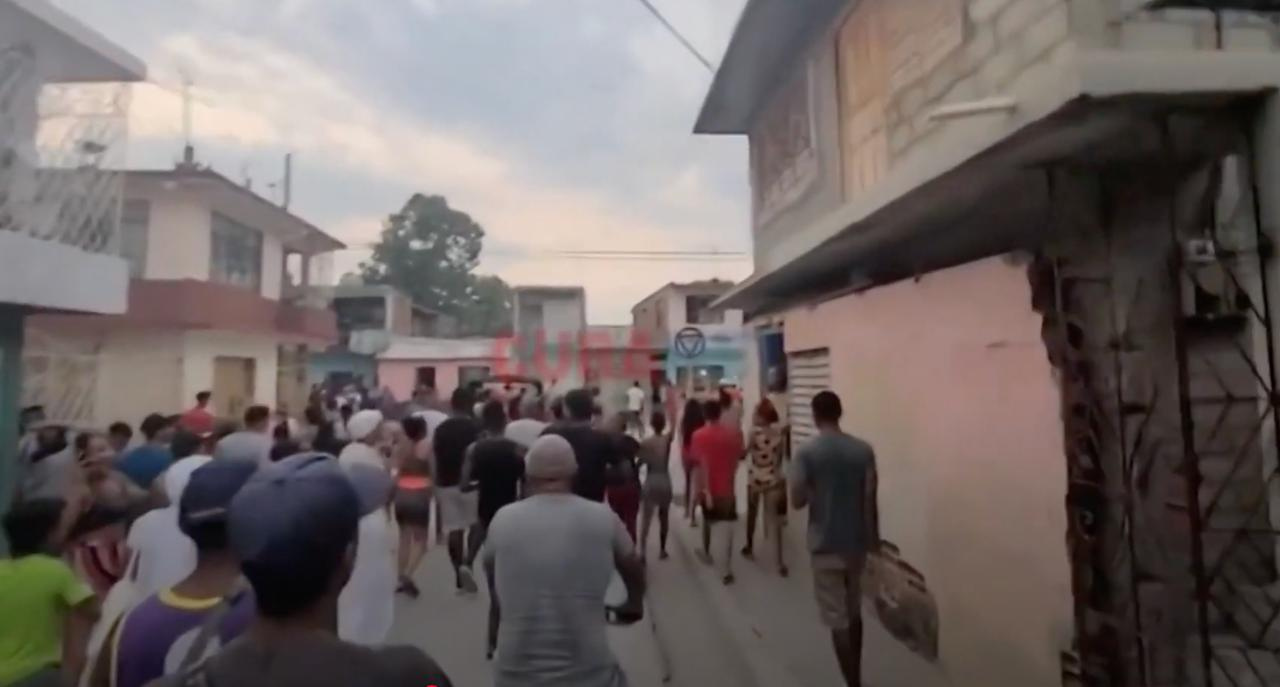
A Year After the Protests in Cuba’s Granma Province, the Regime Is Holding 17 Protesters in Prison Without Trial

In July, Prisoners Defenders recorded the imprisonment of 25 new political prisoners.

Image of protesters on the streets of Granma in March 2024. / Screenshot

14ymedio bigger14ymedio, Havana, 7 August 2025 — More than a year after the March 2024 protests in Granma Province, Prisoners Defenders (PD) has confirmed the arrest of at least 17 protesters on that date. While the details of the arrests remained unknown until now, the organization clarified in a July report on political prisoners, that the silence was because the fear of the regime’s repression on the part of “those affected” and their families often limited the investigation.

On June 20, after being held without trial for more than a year, the report notes, 16 of the detainees received their prosecutorial requests, a process that was carried out “without any judicial protection,” it adds. The penalties sought for the group range from one to seven years in prison.

Among those arrested in Granma is Juan Carlos Verdó Zamora, who was only 18 years old at the time of his arrest. He remains in prison today and is the only member of the group for whom the Prosecutor’s Office has not filed a petition. Two other members of his family were imprisoned during the same demonstration, in which residents demanded an end to the blackouts and shortages.

Prisoners Defenders also reported that, as of the end of July, 1,176 political prisoners remained in Cuban prisons. Of these, 124 were women, many of them mothers, and 33 were minors, some convicted of “sedition,” one of the most punishable offenses under the Penal Code.

Prisoners Defenders also reported that, as of the end of July, 1,176 political prisoners remained in Cuban prisons.

Last month alone, 25 new political prisoners were registered, although seven people were also removed from the list: six due to serving their sentences and one due to death. Political prisoner Yan Carlos González died on July 7 after a prolonged hunger strike in protest of his sentence.

González had been incarcerated for over a year in Santa Clara’s La Pendiente prison, accused of setting fire to a sugarcane field. The 44-year-old prisoner faced up to 20 years in prison at the request of the prosecutor’s office.

The organization also included in its records the revocation of parole for five political prisoners who benefited from the agreement between Havana and the Vatican. Just a week after Pope Francis’ death in April, José Daniel Ferrer and Félix Navarro were returned to prison for allegedly failing to comply with these conditions.

In early June, Donaida Pérez Paseiro, a Yoruba priestess living in Placetas, had her prison sentence revoked. The political prisoner had been sentenced to eight years in prison for “public disorder,” “disobedience,” “contempt,” and “assault,” also in the context of ’11J’, as the Island-wide protests in July of 2021 are called. In her case, the court also alleged a “breach of duty, primarily in the workplace, and failure to appear when summoned by the Execution Judge.”

The first case of revocation, however, was that of Jaime Alcide Firdó, released in January and returned to prison in early April, allegedly for refusing to become a State Security informant. The 25-year-old political prisoner is serving a seven-year sentence for alleged sedition after taking part in the June 11 protests in La Güinera, Havana.

Finally, a few days ago, the regime returned to prison political prisoner Marlon Brando Díaz Oliva, who was convicted for 11J, for allegedly violating his house arrest.

An alarming fact also highlighted by the report is that 474 political prisoners suffer from serious illnesses.

Prisoners Defenders also dedicated part of its report to female political prisoners: 45 of them, it said, remain imprisoned in inhumane conditions, without medical care, under extreme heat, and subjected to constant threats; while another 79 are serving sentences under house arrest. Some face sentences of up to 15 years.

Another alarming fact highlighted in the report is that 474 political prisoners suffer from serious illnesses, and 40 have mental disorders without receiving adequate medical treatment. The organization asserts that lack of nutrition, mistreatment, and isolation exacerbates their situations.

Another report from the Cuban Observatory of Human Rights (OCDH) states that July was the most repressive month so far this year, with at least 357 such actions by the regime. The record includes cases of harassment, threats, police summons, and surveillance of activists and dissidents, especially in Havana, Matanzas, Villa Clara, and Granma.

The abuses, according to the OCDH, intensified around key dates such as July 4th and the fourth anniversary of 11J, with the aim of preventing activists and relatives of political prisoners from participating.

____________

COLLABORATE WITH OUR WORK: The 14ymedio team is committed to practicing serious journalism that reflects Cuba’s reality in all its depth. Thank you for joining us on this long journey. We invite you to continue supporting us by becoming a member of 14ymedio now. Together we can continue transforming journalism in Cuba.
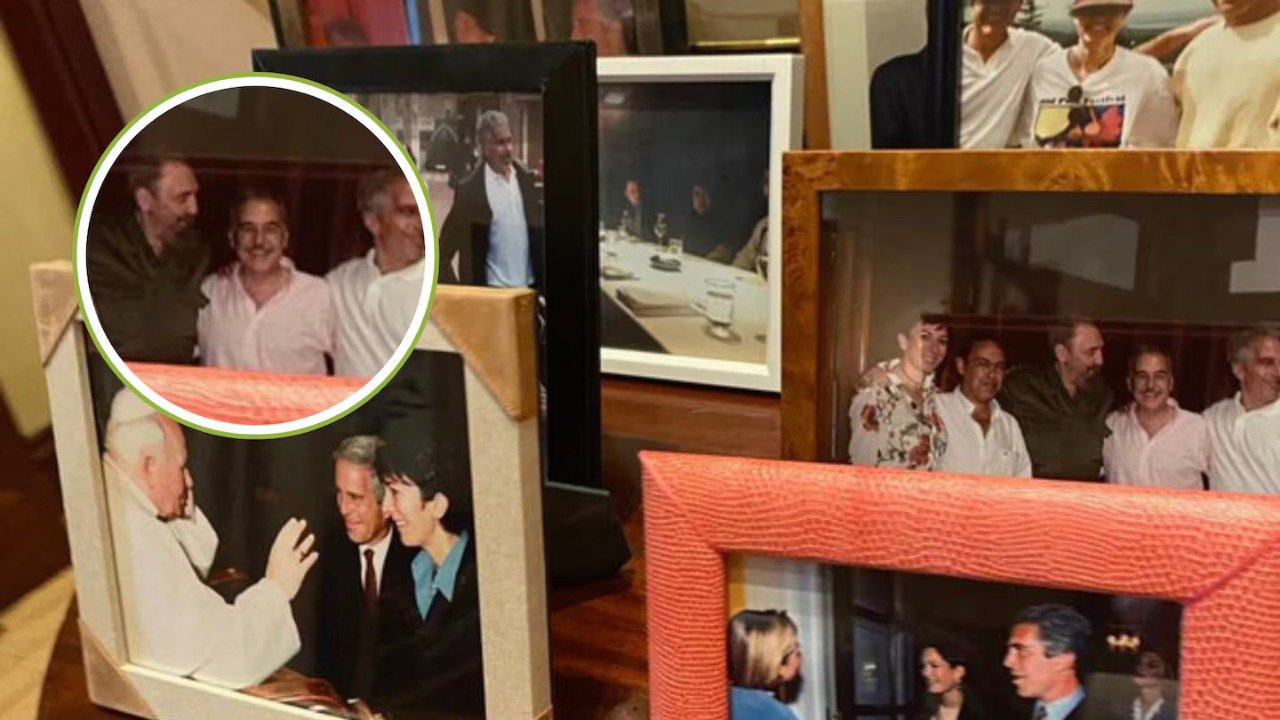
In Addition to Trump, Fidel Castro Also Appears Alongside Sexual Predator Jeffrey Epstein

The New York Times reveals a previously unpublished photo of the Cuban dictator with the American businessman.

To date, the Cuban regime has remained silent about the appearance of the image published by The New York Times. / X

14ymedio bigger14ymedio, Madrid, 7 August 2025 — Fidel Castro and sex offender Jeffrey Epstein pose for the camera in the middle of a smiling group, who are all embracing, on Cuban soil. A recent report by The New York Times has revealed images and documents seized from the American financier’s New York mansion.

The image is part of a collection of letters, artifacts, and portraits that show Epstein’s ties to dozens of global power figures—from Bill Clinton to Pope John Paul II—and rekindles debate about the true extent of his network of influence.

The context of this image with Castro goes back to 2003, when former Colombian President Andrés Pastrana claimed he traveled to Havana on Epstein’s private plane, known as the Lolita Express, with the explicit purpose of meeting with the revolutionary leader. According to his testimony, Epstein hosted the trip and was allegedly invited by the Cuban leader himself. Among the flight companions was French model Jean-Luc Brunel, later implicated as a recruiter in the magnate’s sex trafficking ring. continue reading

Journalistic investigations, such as those by the Miami Herald, have suggested that Epstein’s trip to Cuba may have had ulterior motives.

Journalistic investigations, such as those by the Miami Herald, have suggested that Epstein’s trip to Cuba may have had ulterior motives. Among the hypotheses raised is that Epstein was exploring the possibility of requesting asylum on the island, anticipating his growing judicial exposure in the United States. However, there is no evidence that Castro offered him such protection. What does exist is the photograph, which adds a layer of mystery to an already murky episode with no clear answers.

So far, the Cuban regime has remained silent regarding the appearance of the image published by The New York Times. Meanwhile, pro-government media outlets such as Cubadebate have devoted extensive space to the relationship between Epstein and Donald Trump, including nearly a dozen recent articles.

There’s no doubt about the authenticity of the photos showing Trump and Castro with the tycoon—of course, never at the same time. However, there are many other fake images and videos generated by artificial intelligence showing Trump in compromising situations.

At least one manipulated video and seven images have accumulated more than 7.2 million views, according to the organization NewsGuard. The scenes show Trump and Epstein dancing with young people or sitting on couches surrounded by girls who appear to be minors. However, specialized tools such as Hive and IdentifAI have determined that the content is digitally fabricated to appear authentic.

The apocryphal materials have been interpreted by conservative sectors as maneuvers to divert attention from the real documentation, and at the same time protect certain elites from public scrutiny.

The viral spread of these montages has highlighted the dangers of automated disinformation and its ability to rewrite narratives in real time. Amid renewed public interest in the Epstein case—fueled by recent FBI and Justice Department reports that have debunked several conspiracy theories—the apocryphal materials have been interpreted by conservative sectors as maneuvers to divert attention from the real documentation while simultaneously shielding certain elites from public scrutiny.

The image of Castro with Epstein is not a part of this fabricated content ecosystem; it was recovered by the FBI in one of the official searches of the magnate’s mansion and its authenticity has not been denied by any source. On the contrary, the former Colombian president’s testimony confirms its existence.

Was it an informal meeting? Did it have diplomatic, personal, or strategic purposes? Was Epstein seeking some sort of political protection on the island? As long as the official documents remain sealed and Havana maintains its silence, the mystery continues. Only one thing is certain: Epstein’s reach extended further than many imagined, even into the corridors of power in Cuba.

____________

COLLABORATE WITH OUR WORK: The 14ymedio team is committed to practicing serious journalism that reflects Cuba’s reality in all its depth. Thank you for joining us on this long journey. We invite you to continue supporting us by becoming a member of 14ymedio now. Together we can continue transforming journalism in Cuba.
Webinar With Yoani Sánchez, August 7 / See Below for Video

 The Power of Podcasting in Repressive Environments

Host: Yoani Sánchez, Director of the Digital News media: 14ymedio.

Date: Thursday, August 7, 2025.

Time: 9:00 AM – Havana/US Eastern Time

Register: Click here

Description:

How do we tell stories in contexts of censorship and surveillance? What tools enable independent journalists and creators to build audiences in hostile environments? Podcasting isn’t just a format: it’s a powerful form of resistance and connection. This seminar will cover the keys to creating a podcast from scratch: defining objectives, choosing formats, accessible technical tools, basic editing, and distribution strategies on platforms like Spotify or Apple Podcasts. Promotion tactics, monetization methods—such as sponsorships or crowdfunding—and the use of artificial intelligence to improve production and reach will also be explored. Drawing on her experience leading 14ymedio, Yoani Sánchez will share ideas, tools, and lessons learned on how to narrate freely and amplify voices amidst censorship.

Israel Rojas, ‘La Joven Cuba’ and the Art of Surviving the Collapse

Domesticated reformers and Taliban clash as regime collapses

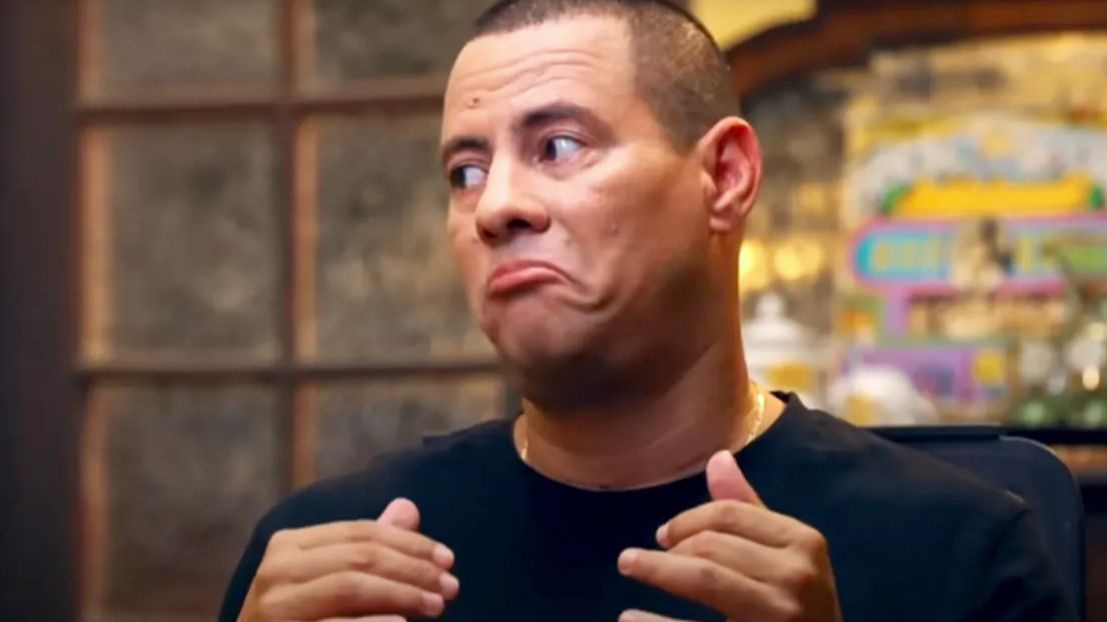
In ’La Sobremesa’ we saw a disenchanted Israel Rojas, transformed into a kind of Care Bear with selective amnesia. / Screenshot

14ymedio bigger14ymedio, Yunior García Aguilera, Madrid, 5 August 2025 — The recent interview with singer and composer Israel Rojas on the program La Sobremesa, on La Joven Cuba (LJC), has sparked intense controversy on both sides of the Cuban political spectrum. For some, it was an attempt to “whitewash” one of the most unpopular figures in the Cuban exile community; for others, especially those close to the regime, it was an unacceptable betrayal: how could Rojas possibly agree to appear on a media outlet “funded by the enemy”?

For years, there have been those who view La Joven Cuba as a sort of cultural supplement to the official newspaper Granma or a watered-down version of Cubadebate. Founded in Matanzas by Harold Cárdenas in 2010, it emerged under the wing of the so-called reformist ruling party. Over time, once outside Cuba, its writing began to shift between measured criticism and calculated winks that would allow it to maintain its status as a “valid interlocutor” for the island’s power.

That ambiguity worked for them. But the social uprising on 11 July 2021 marked a turning point.

During the Obama era and the thaw, that ambiguity worked for them. But the social uprising of 11 July 2021 marked a turning point. La Joven Cuba didn’t know how to—or didn’t want to—incorporate the historical weight of that rupture into their discourse. They clung to their narrative trenches as if the country were still the same as it was in 2010, when they were barely a university blog. It then, is no surprise that today they are judged harshly from both sides. Their lukewarmness is incomprehensible in a country where the streets and despair demand clearer definitions. continue reading

Their ambivalent strategy—outdated for some, opportunistic for others—lost them followers. Some prominent voices stopped writing in their pages. And their mocking, almost childish tone toward other media outlets that lost funding after the closure of USAID seemed like the final nail in their coffin. However, it must be acknowledged that La Sobremesa has been their resurrection, a “Lazarus, arise and walk” that has returned them to the center of debate and won them new followers.

The numbers don’t lie. The interview with Israel Rojas surpassed 50,000 views on YouTube, while the latest broadcast of Con Filo barely reached 7,000, fewer even than the army of cyber-speakers forced to inflate their metrics. It’s not the algorithm; it’s boredom. And it’s clear that Etecsa’s restrictions have also affected the “cyber-combatants.”

We saw a disenchanted, defeated Israel Rojas, transformed into a kind of Care Bear with selective amnesia.

On La Sobremesa, we saw a disenchanted and defeated Israel Rojas, transformed into a kind of Care Bear with selective amnesia. The poet of the “bulb” and the “ringworm” seems to have forgotten that he was present on November 27th, but not on the side of the artists, but rather locked in the offices of the Ministry of Culture. He also took to the streets on 11 July 2021, but not with the peaceful protesters, but after receiving the “combat order,” aligned with plainclothes police and military personnel. He arrived at the ICRT (Cuban Institute of Radio and television) ready to “beat the hell out of,” albeit late: they had already loaded us onto a truck of rubble headed for the Bivouac prison.

Now, Cubadebate —a self-proclaimed defender of sovereignty—is attacking him by hiring a foreign writer. Carlos González, an Asturian communist (not to be confused with Mentepollo, whose surname is Gonzalvo), accuses him of having fallen into “the trap of equidistance,” while resorting to the old and stale slogan of a besieged fortress. For this radical, the enemy is no longer the United States, but perfidious Norway. Shortly after, Michel Torres Corona—more eager to fly to Madrid than to defend the Revolution—echoes these words on Facebook and calls them “illuminating.”

The Cuban model is collapsing. And each of its fragments is competing to avoid being crushed in the collapse.

There are theories circulating that this is all part of a State Security operation: to restore some visibility to an artist faithful but without a muse, and to reposition La Joven Cuba as a victim of both extremes, thus renewing its legitimacy. Frankly, I don’t think they’re that clever.

The Cuban model is collapsing. And each of its fragments is competing to avoid being crushed in the collapse. Israel Rojas wants to tour internationally without having to sing for the benefit of the few in the venues of solidarity movements. La Joven Cuba needs to regain its audience and sustain its funding. Becoming the victim of cross-attacks suits them perfectly, as it allows them to appeal to that broad sector that, as in any society, prefers to avoid polarization.

Neither Donald Trump nor Xi Jinping would move a single aircraft carrier through Cuba.

The ideological Taliban, for their part, act as their nature dictates. Even though they feel the tremors beneath their feet, they must answer to their international allies, who are often more Castro-friendly than Castro himself. This radicalism guarantees them scholarships, trips, forums, positions, awards, fellowships, and red hearts, in the form of ‘likes’.

Ideology, in this context, seems to have reached unimaginable levels of prostitution. And in this great geopolitical brothel, neither Donald Trump nor Xi Jinping would move a single aircraft carrier through Cuba. That whiny, epic, and stale speech by Israel Rojas about “the besieged little island that resists more than anyone” no longer serves even as lyrics for a hit song.

The regime has failed. Everyone knows it: Buena Fe, La Joven Cuba, Díaz-Canel, Cubadebate. The only question is who clings to more bricks… while the building collapses.

____________

COLLABORATE WITH OUR WORK: The 14ymedio team is committed to practicing serious journalism that reflects Cuba’s reality in all its depth. Thank you for joining us on this long journey. We invite you to continue supporting us by becoming a member of 14ymedio now. Together we can continue transforming journalism in Cuba.
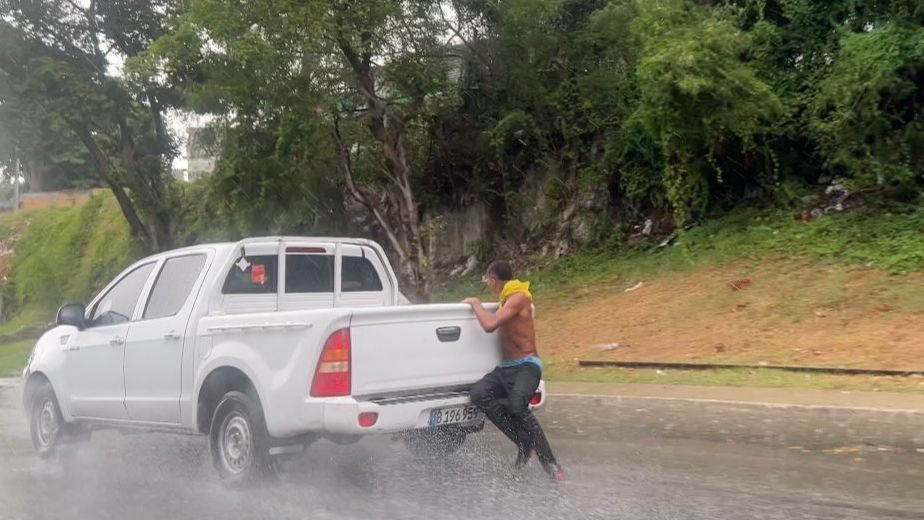
Skiing on the Asphalt: The Dangerous Game Cuban Children Play in the Rain

Pedestrian collisions remain the third leading cause of death in traffic accidents in Cuba.

Trash-filled streets, potholes, uncovered drains, old vehicles without proper brakes. All of this creates a lethal scenario. / 14ymedio

14ymedio bigger14ymedio, Havana, 6 August 2025 — When it rains in Havana, the city transforms into a scene as dramatic as it is dangerous. Along flooded avenues and streets, groups of children and teenagers cling to moving vehicles to slide across the asphalt, as if practicing a kind of “urban skiing.” Sometimes they hold onto buses, even trucks. Some drivers brake and scold the children. Others, however, accelerate or zigzag with punitive intent, or perhaps in search of an irresponsible adrenaline rush. It all seems like part of a game, until tragedy strikes.

This newspaper witnessed a recent scene on Vía Blanca. Under heavy rain, a group of children—some no older than ten—were clinging to a car in an attempt to skid. The driver stopped, got out, and yelled at them. Minutes later, a police patrol car drove by. Several cars honked, drawing the officers’ attention, but they drove on without intervening.

On Vía Blanca, under heavy rain, a group of children—some no older than ten—were clinging to a car to try their hand at drifting. / 14ymedio

Although the practice has been reported on social media and captured on video by independent media, there are no official statistics documenting fatal accidents directly associated with this behavior. However, the overall picture is alarming. In 2024 alone, Cuba reported more than 7,500 traffic accidents, with 634 deaths. Children and adolescents are among the most vulnerable groups. continue reading

In April 2025, the National Symposium on Child Road Safety was held in Havana under the slogan “Stop the risks, reach your destination,” with the participation of the Ministry of the Interior, the Cuban Society of Pediatrics, and UNICEF. Worrying figures were discussed there, and educational workshops for adolescents were organized. But outside the venue, on the streets, everything remains the same. Institutional initiatives seem to focus more on ideological campaigns or combating drug use, leaving aside phenomena like this, as visible as they are ignored.

Several cars honked, drawing the attention of the patrol officers, but they drove on without intervening. / 14ymedio

Varios autos pitaron, llamando la atención de los agentes en la patrulla, pero estos siguieron de largo sin intervenir. / 14ymedio[/caption]

Similar practices have been reported in other countries under the name “skitching,” which describes the act of holding onto a vehicle while rollerblading or skateboarding. Although it doesn’t occur in rainy conditions, the risks are similar: speed, lack of protection, and traffic. In the United States and Australia, where this practice has caused multiple accidents, including deaths, it has been banned in several states. In Ohio, following the death of a 16-year-old teenager who fell off his skateboard while being towed, a specific law was proposed to penalize this practice.

In Cuba, poverty prevents many children from having access to skateboards. It is the rain, paradoxically, that fills that void. But Havana’s urban context only multiplies the danger: streets littered with garbage, pavement riddled with potholes, uncovered drains, and old vehicles without proper brakes. All of this creates a lethal scenario. In February 2025, a 13-year-old boy died after falling into an open sewer during a flood. He was swept away by the current in full view of neighbors. His death sparked a wave of complaints on social media about uncovered drains in neighborhoods like Luyanó and El Vedado, where others have been injured in similar falls.

No official entity has launched a campaign specifically targeting this behavior. / 14ymedio

Despite the evidence and growing public concern, no official entity has launched a campaign specifically targeting this behavior. Reports come primarily from social media users, from Facebook to neighborhood groups, who also warn of the lack of adult supervision, institutional neglect, and deteriorating infrastructure as factors that increase the risks. The country’s own statistics recognize that pedestrian collisions remain the third leading cause of death in traffic accidents, but there are no concrete measures to address this type of street behavior.

There is no need to wait for a major tragedy to strike before taking action. What some consider a visual eccentricity of Havana’s downpours is, in reality, a ticking time bomb that jeopardizes the lives of children. While the city sinks into potholes, rain, and neglect, children continue to cling—literally—to the risk.

____________

COLLABORATE WITH OUR WORK: The 14ymedio team is committed to practicing serious journalism that reflects Cuba’s reality in all its depth. Thank you for joining us on this long journey. We invite you to continue supporting us by becoming a member of 14ymedio now. Together we can continue transforming journalism in Cuba.

‘Veguita’, a Feared Repressor in Cuban Prisons, is Arrested in the US

Several Cuban exiles accuse him of beatings and torture against common and political prisoners.

Jorge Luis Vega García, known as “Veguita,” was arrested this Tuesday in the United States. / Martí Noticias

14ymedio bigger14ymedio, Havana, 5 August 2025 — The former Interior Ministry (Minint) lieutenant colonel Jorge Luis Vega García, known as Veguita, was arrested Tuesday in the United States, as confirmed to to Martí Noticias by the United States Immigration and Customs Enforcement. Several political prisoners identified the migrant as a repressor who beat and tortured inmates.

Vega García legally entered the country on January 20, 2024, through Tampa International Airport in Florida, with his wife and son, under the Humanitarian Parole Program. He was later eligible for the Cuban Adjustment Act, despite his history as one of the “most feared repressors” in the Cuban prison system, a connection that went undetected during his immigration process.

In Cuba, he directed the Agüica and Canaleta prisons in Matanzas, and is accused by former political prisoners such as Benito Ortega Suárez, Pablo Pacheco Ávila, Blas Giraldo Reyes, and Fidel Suárez Cruz of orchestrating physical and psychological torture, beatings, prolonged confinement, and reprisals against imprisoned opponents during the Black Spring of 2003.

“Veguita is one of Cuba’s many murderers,” Fidel Suárez told journalist Mario J. Pentón. Suárez claims that, along with other officials, Vega beat him 19 times in a month, leaving him with permanent scars. Pacheco, convicted during the Black Spring of 2003, remembers him as a man with a “short, Nazi-style haircut” whose “evil you could see in his face.” continue reading

Cuban-American Congressman Carlos Giménez formally requested his deportation.

The arrest comes after Cuban-American Congressman Carlos Giménez formally requested his deportation in a letter to Secretary of Homeland Security Kristi Noem, in which he included documentary evidence of his involvement in the repressive apparatus. The signatures on several documents signed by Vega in Cuba in 2010 and in the United States in 2024 confirmed his identity.

Vega denied to Martí Noticias that he had ever been a member of the Cuban prison system and ended a call during which he was confronted. “If you defended communism so much, what are you doing here, in the country you criticized so much?” Pacheco questioned.

So far, ICE has not announced the specific charges against Vega García.

Vega García’s case adds to other recent ones, such as that of Jorge Javier Rodríguez Cabrera, also linked to the Cuban regime and detained by ICE in recent months. Daniel Morejón García, who appears on the Foundation for Human Rights in Cuba’s (FDHC) list of repressors, was also arrested and subsequently deported to the island last May. More than 100 names appear on a list submitted by Giménez to the Department of Homeland Security, including alleged repressors residing in the US.

To date, ICE has not announced any specific charges against Vega García. Exile organizations and victims are demanding a formal investigation and a trial to hold him accountable for the alleged crimes.

____________

COLLABORATE WITH OUR WORK: The 14ymedio team is committed to practicing serious journalism that reflects Cuba’s reality in all its depth. Thank you for joining us on this long journey. We invite you to continue supporting us by becoming a member of 14ymedio now. Together we can continue transforming journalism in Cuba.

Constitutional Reform in El Salvador and Also in Cuba

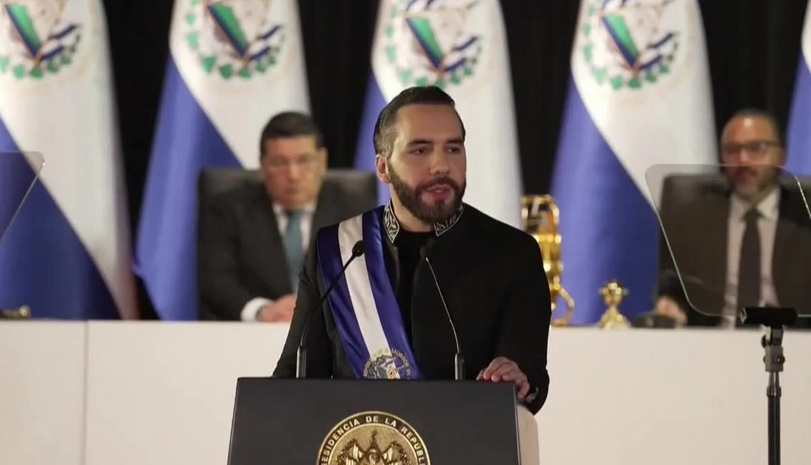
The scant information in Cuba about the authorization of Salvadoran President Nayib Bukele’s indefinite reelection is very eloquent in itself.

The first year of Bukele’s second consecutive term is considered unconstitutional. / EFE

14ymedio bigger14ymedio, René Gómez Manzano, Havana, 5 August 2025 / Last Friday, one of the main international news stories of the day in its own right was the adoption, in fraternal El Salvador, of a constitutional reform that, along with a series of other diverse measures, authorizes the indefinite reelection of the president of the Republic.

Reports on the matter indicate that, this Thursday, the government forces of the small Central American nation approved what undoubtedly deserves the epithet used in various media outlets: “express reform.” To this end, these forces made use of their overwhelming majority in the Salvadoran Legislative Assembly, which includes only three parliamentarians belonging to other parties.

It is worth clarifying that Bukele’s next reelection, under the new reform, would not be his first. Despite the fact that such a move was expressly prohibited by the current Constitution, the president resigned six months before the end of his first term. Adding to this ruse was a rash interpretation of supralegal precepts by the Constitutional Chamber of the Supreme Court of Justice, conveniently renewed entirely by the Legislative Assembly, already controlled by the president’s party. Thus, Bukele was reelected in 2024 with an impressive 88.3% of the valid votes. continue reading

Despite the fact that such a thing was expressly prohibited by the current Constitution, the president resigned six months before the end of his first term in office.

This staggering figure is neither unfounded nor arbitrary. It is a fact that, before Bukele’s arrival as head of state, criminal gangs (the famous “maras,” a Salvadoran term that has become a standard in our language) were rampant in the country.

With a mix of energy and severity (sprinkled, according to some critics, with a certain degree of violation of gang members’ human and procedural rights), Bukele and his government managed to reverse this lamentable situation. At the same time, the homicide rate per 100,000 inhabitants plummeted: from 105 in 2015 to 1.9 in 2024 (which, in turn, was 26% lower than in 2023).

These realities allow the Salvadoran population, with all the right in the world, to have a much better perception of their country’s security situation. In this context, the high level of popular support for Nuevas Ideas, the party that nominated and successfully elected Bukele, as well as the overwhelming majority of the assembly members, is explicable and perfectly comprehensible.

Thus, in 2024, of the 60 members of the legislature, the governing coalition obtained 57 (54 of them from Nuevas Ideas); the opposition, as mentioned, obtained only three. The only national representation (some name must be given) that surpasses it in this regard is Cuba, where each and every member of the so-called “National Assembly of People’s Power” (ANPP) is openly from the governing party.

But there are immense differences between these two legislative bodies. The overwhelming majority in El Salvador’s government was elected thanks to the aforementioned popular support, and against opposition candidates who had every opportunity to develop their respective electoral campaigns.

In Cuba, no. In our country, the sole party’s absolute control over the legislature stems from the so-called nomination committees. This deceptive mechanism, enshrined in the Electoral Law, allows for only one candidate for deputy to be registered for each seat to be filled. In other words, the “election” of each candidate is guaranteed in advance, as demonstrated by all the elections held under the Castro-communist constitutions.

But, even recognizing the abysmal differences that exist in this regard between the two countries, it is legitimate to ask some questions in the case of El Salvador: Is it appropriate for the electoral system of a democratic country (as until now, I believe, the Central American republic continues to be) to allow for virtually absolute control of the legislature by a single political force? Is it right for the country’s Magna Carta to be amended in a single day? Because it must be said that, in this last aspect, there were also too many similarities between what happened in Havana a few days ago and what happened in San Salvador last Thursday.

Is it appropriate for the electoral system of a democratic country (as until now, I believe, the Central American republic continues to be) to allow for virtually absolute control of the legislature by a single political force?

It is assumed that a country’s Constitution establishes, so to speak, “the rules of the game.” Its precepts—of course!—must be constantly updated, but important decisions like these are supposed to be made in an informed manner, and citizens are supposed to participate broadly in this process. This requires a certain amount of time: if not years or months, then at least a few weeks.

That was missing from the Salvadoran supralegal reform last Thursday; as it was from the Cuban one on the 18th. But, well, we already know that if there’s one thing that characterizes our long-suffering island, it is precisely the undemocratic nature of its system of government. And this latter fact is so significant that it has been reflected in the scant coverage that news from Central America has received in our archipelago.

The independent Cuban press, in reporting this important development, has recognized its significance. This newspaper, 14ymedio, as well as CubaNet and Diario de Cuba (to name a few), have reported on the Salvadoran constitutional reform.

The same cannot be said of the official Cuban press. Several days have passed, and the news has barely appeared in the digital media outlets that agitate and propagandize in favor of the Castro-communist government. I don’t believe this caution should be attributed to the negligence of the editorial staff of the various media outlets that serve the regime.

I think the blame should be fall in one place: I’m referring to the infamous Ideological Department of the Central Committee. In accordance with the written (but unpublished) rules that govern the functioning of that body, it is responsible for determining what is and is not published in the official press; and, in the first case, how the information should be framed and what kind of assessment it should receive.

And if we situate ourselves in the Ideological Department, we would have to ask ourselves other questions: How do we approach information?

With system so ineffectitive, any omission by bureaucrats in the Ideological Department will necessarily result in inaction by information professionals at government sites like Cubadebate, Granma, or Juventud Rebelde, to name just the most prominent.

And if we were to situate ourselves in the Ideological Department, we would have to ask ourselves other questions: How should we approach the information? Should we praise the speed shown by the Salvadoran Legislative Assembly, so similar to that of the Cuban National Assembly? Should we criticize the lack of a broad national debate on the reform (when there wasn’t one on our island either!). Should we approve or criticize the very idea of unlimited reelection? (It is true that the current version of the Raúl Castro Constitution—which, of course, can be reformed in a single day when the leaders so decide—establishes a limit of two consecutive presidential terms, but it is also true that the founder of the dynasty was reelected as many times as his health allowed…).

Of course the doubts are reasonable. But, as the popular saying goes, they brought it on themselves. Who ordered them to serve as spokespersons for an anti-democratic, totalitarian regime like the Castro-Communist regime?

____________

COLLABORATE WITH OUR WORK: The 14ymedio team is committed to practicing serious journalism that reflects Cuba’s reality in all its depth. Thank you for joining us on this long journey. We invite you to continue supporting us by becoming a member of 14ymedio now. Together we can continue transforming journalism in Cuba.

House Arrests, Internet Outages, and Detentions on the Anniversary of the Maleconazo

Journalist Reinaldo Escobar was detained for a couple of hours in Havana.

Image posted by activist Yamilka Lafita (Lara Crofs), also besieged in her home. / Facebook / Lara Crofs

14ymedio bigger14ymedio, Havana 5 August 2025 — On August 5, 31 years after the Maleconazo, the Cuban regime activated its repressive apparatus with house arrests, detentions, and internet shutdowns against journalists, activists, and families of political prisoners. On the anniversary of the historic popular protests, which took place on the Havana coast, the police pattern of other sensitive dates for the regime, such as July 11 and December 10, is repeated

The day began with complaints from various parts of the island, mainly from human rights activists and reporters associated with independent media outlets.

Escobar was detained for almost two hours at the Aguilera station, where he was interrogated.

Internet access to the 14ymedio newsroom, located in the Nuevo Vedado neighborhood, was cut off early in the morning. Journalist Reinaldo Escobar was detained by State Security agents as he was walking near the home of Berta Soler, leader of the Ladies in White in Lawton. That organization’s headquarters was surrounded by State Security.

Escobar was detained for nearly two hours at the nearby Aguilera station, where he was interrogated by political police officers.

Journalist Camila Acosta has also once again experienced what has become routine repression. “Once again, I am besieged by the police and State Security,” she denounced on social media, accompanying her post with a photograph of the plainclothes officer stationed in front of her house: “Although he looks like a common criminal, he is a State Security officer. The same one showed up last week during another operation and told me I couldn’t leave, without showing any warrant or legal justification. If I did, they would arrest me and charge me with a common crime,” Acosta continue reading

concluded.

“Although he looks like a common criminal, he is a State Security officer.”

Another target of this day was Manuel Cuesta Morúa, activist, political scientist, and vice president of the Council for Democratic Transition in Cuba, who also woke up under siege in his home in Havana. The organization he represents denounced this act as a new episode of systematic harassment, and recalled that Cuesta Morúa and activist María Mercedes Benítez were victims of similar actions last July.

“The policy of arbitrary house arrests directly violates fundamental rights such as freedom of movement,” warns the organization, which alerted the international community to the “attempt to silence one of the most recognized voices of Cuban civic activism.”

Wilber Aguilar Bravo, the father of Walnier Luis, a political prisoner and 11 July 2021 (’11J’) protester  also denounced the surveillance outside his home. Aguilar accompanied his post with an image of the patrol car parked at the door. “Defending one’s children is to live. There is no law in this world that prohibits defending one’s child. Walnier’s freedom is worth more than my life,” he wrote.

The Maleconazo was the first massive and spontaneous protest experienced by the Cuban regime since 1959

The Maleconazo of August 5, 1994, was the first massive, spontaneous protest experienced by the Cuban regime since 1959. Hundreds of people, fed up with the hunger, long blackouts, and hopelessness brought on by the so-called Special Period, took to the streets of Havana shouting “Freedom” and “Down with Fidel.” Although the protest was quickly suppressed and repressed, it marked a turning point in the popular imagination: the wall of fear had begun to crack.

Three decades later, the causes of the social upheaval not only remain, but have worsened. Food shortages, the energy collapse, the mass exodus, and the brutal repression following ’11J’ have demonstrated that the Cuban model is not being renewed or improved, but rather entrenched. And fear is increasingly shifting sides.

In 2021, tens of thousands of Cubans took to the streets again in more than 40 locations across the country. The repression was more ferocious than in 1994, with thousands arrested, hundreds convicted (many for “sedition”), and a judicial system turned into a political instrument. But the message was clear: citizens have lost their fear.

In July 2025, Cuba experienced the most repressive month of the year, with at least 357 documented actions.

The repression unleashed today — Tuesday august 5th — did not occur in a vacuum. It comes amid one of the worst socioeconomic crises in Cuban history, with daily blackouts, rampant inflation, chronic shortages, isolated protests, and a historic exodus that surpasses that of the 1980s and 1990s.

Last month, July 2025, Cuba experienced its most repressive month of the year, with at least 357 documented actions against the civilian population, according to the Cuban Observatory of Human Rights. Of these, 68 were arbitrary arrests and 289 corresponded to other forms of repression, such as raids, harassment, threats, and police summons, especially in provinces such as Havana, Matanzas, Villa Clara, and Granma.

The regime intensified its repressive actions to prevent opposition members from participating in the July 4th celebrations at the U.S. diplomatic headquarters in Havana and to prevent commemorations of the fourth anniversary of the 11 July 2021 protests. This Tuesday, history repeats itself.
____________

COLLABORATE WITH OUR WORK: The 14ymedio team is committed to practicing serious journalism that reflects Cuba’s reality in all its depth. Thank you for joining us on this long journey. We invite you to continue supporting us by becoming a member of 14ymedio now. Together we can continue transforming journalism in Cuba.
Cuba: At the Matanzas Maternity Hospital Mothers Bring Their Own Supplies

The falling birth rate and shortages paint a worrisome picture for pregnant women in the province.

The heat doesn’t ease women’s worries, as they fear that they might go into labor and lack something at the hospital. / 14ymedio

14ymedio bigger14ymedio, Julio César Contreras, Matanzas, 5 August 2025 –“All in yellow,” is how Yamila wants her baby to be born at the José Ramón López Trabane Provincial Gynecological and Obstetric Teaching Hospital in Matanzas. There’s still plenty of time until that day, but the 22-year-old doesn’t have a minute to waste. While she waits for her turn, she reviews the problems she must overcome at the city’s main maternity hospital due to the lack of resources, human and material.

Despite the prestige once enjoyed by what is commonly called the Matanzas Maternity Hospital, the situation in its consulting rooms, lounges, and hallways is very different now. Pregnant women who come seeking care know that, without a personal recommendation or a gift for the doctor, they are forced to resign themselves to waiting at the end of the line and sitting in a plastic chair that barely relieves their fatigue.

In the waiting room that Monday morning, the air was thick and the pages of medical records became improvised fans.

In the waiting room that Monday morning, the air was thick, and the pages of medical records became improvised fans. Among the sweating women was Yamila, 15 weeks pregnant. “In Ceiba Mocha, where I live, the family doctor’s office has been closed for two years,” she told 14ymedio. “I’m a first-time mother, I come from the countryside, and I don’t know any obstetrician who might treat me.”

While she waits, her mental to-do list grows: she’s already started buying syringes, sutures, gauze, and some regalitos — small gifts — for the continue reading

medical staff. “A friend gave birth last month and even had to bring the gloves for the delivery. There’s nothing here,” she says, watching a woman cross the hall carrying a bucket and a homemade water heater. “I hope I don’t need a C-section. I’m scared,” she confesses.

Preparing the birthing bag, a long-standing tradition among Cuban women, has become more complex each year. While it used to include diapers, the clothes the baby would leave the hospital in, blankets, and cotton, it now includes cash and a wide range of items, from a pillow to food. Fans, cutlery, a bathing basin… the supplies “look like packing to move,” the young woman emphasizes.

Yamila is not alone in the almost dark hallway waiting for an appointment. A few steps away, Yanelis and her partner have been waiting outside the door for two hours. They suspect an unwanted pregnancy and want to know if there’s still time to terminate it. “My cousin used to do ultrasounds, but she went to work as a waitress because the pay in Public Health is so bad,” she laments. During that wait, they’ve seen cockroaches crawling on the stained walls, orderlies smoking at the windows, and doctors letting in those who arrive loaded with bags first. “When that door opens, we’re going in. Let’s see who can stop us,” she says, determined.

The deterioration isn’t just material. Leticia, with a high-risk pregnancy due to her diabetes, warns: “I started bleeding this morning. I told a doctor, hoping she’d see me quickly, and here I am.” She holds back the urge to go to the bathroom because the only restroom “doesn’t flush.” For her, experiencing her second pregnancy, “it all depends on what you can give; if you have the resources, they see you faster.” Her brother, from abroad, has already promised to send her money every month to speed up her medical checkups.

Her brother, from abroad, has already promised to send her money every month to speed up the medical check-ups.

This health crisis is occurring in a province where fewer and fewer children are being born. In recent decades, Matanzas went from registering almost 8,000 births per year to just over 4,000 in 2024; it is the province with the fifth worst birth rate (6.6 per 1,000 women). Experts point to migration, especially of young women, and an economy that discourages motherhood as the main causes: lack of housing, high prices for basic goods, and wages that are barely enough to get by. According to the National Statistics Office (ONEI), the birth rate in Cuba has been fewer than two children per woman since 1978, insufficient to maintain the population in a country that, moreover, does not receive migrants to help alleviate the situation.

Selective out-migration, which is shrinking the age brackets between 20 and 35, exacerbates the imbalance: fewer births and more older adults. Even though programs such as the Maternal and Child Care Program (PAMI) promote health campaigns and support for couples struggling to conceive, maternity hospital wards show the other side of the crisis: pregnant women without priority care, births requiring supplies brought from home, and overwhelmed or unmotivated professionals.

In the heat, expectant mothers wait their turn while sheets of paper continue to flap like fans. Between fear and resignation, they all know that giving birth here isn’t just about bringing a life into the world; it’s also about surviving an increasingly deteriorating healthcare system.

____________

COLLABORATE WITH OUR WORK: The 14ymedio team is committed to practicing serious journalism that reflects Cuba’s reality in all its depth. Thank you for joining us on this long journey. We invite you to continue supporting us by becoming a member of 14ymedio now. Together we can continue transforming journalism in Cuba.