The young man, who is serving an 18-year sentence for sedition, loses the benefit of house arrest and returns to prison.
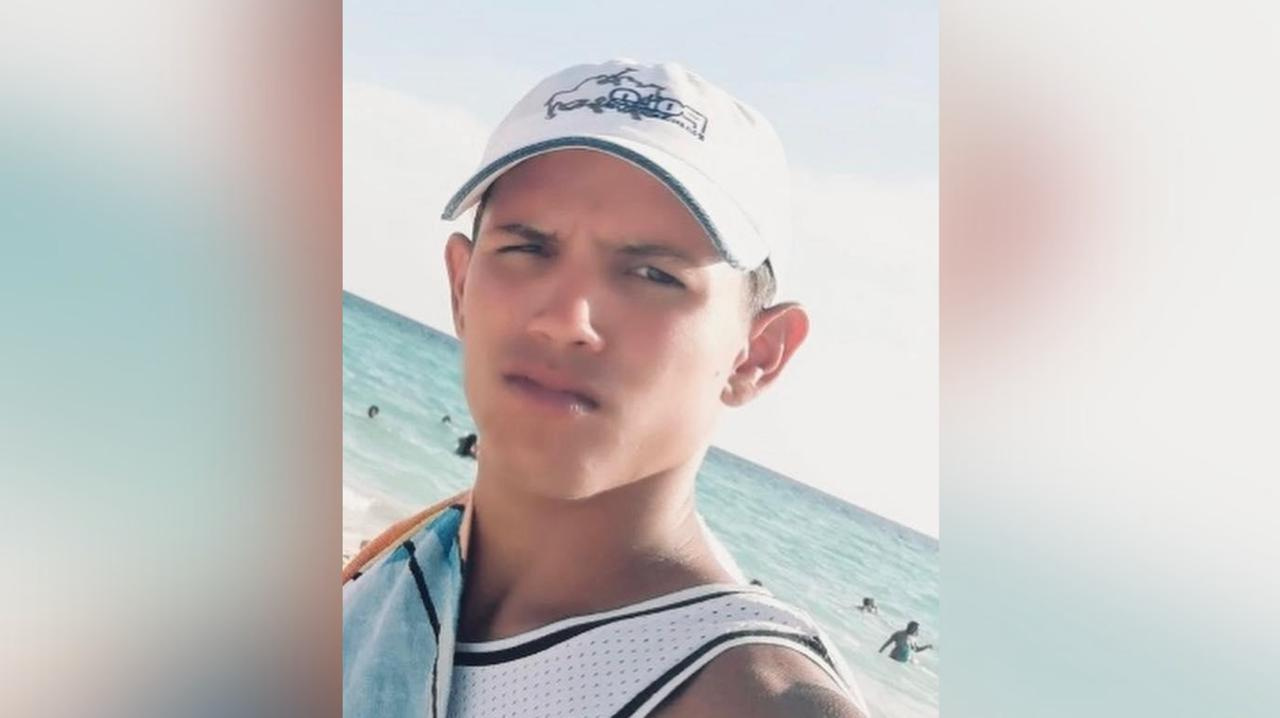
 14ymedio, Madrid, 1 August 2025 — The Cuban regime has revoked the release of 11J political prisoner Marlon Brando Díaz Oliva, who was under house arrest, a benefit granted to him in January of this year as part of the agreement between Washington and Havana brokered by the Vatican.
The information was released Thursday by the Madrid-based Cuban Observatory of Human Rights (OCDH). At this time, details regarding his return to prison are unknown, although sources close to the case told 14ymedio that Díaz Oliva had left his residence for a few minutes to make a purchase. The 23-year-old had been sentenced to 18 years in prison for sedition in 2022 and had served three years and six months of his sentence at the time of his return home.
Díaz Oliva was part of the large group arrested on 11 July 2021 at the corner of Toyo and La Güinera streets in Havana, and ultimately sentenced for the anti-government protests of that day. In six cases involving 128 people, the People’s Supreme Court issued sentences totaling 1,916 years. Most of the defendants were convicted of serious crimes such as sedition, with sentences reaching up to 30 years in prison. The High Court specified that those convicted were involved in “serious disturbances and acts of vandalism with the purpose of destabilizing public order, collective security, and citizen tranquility.”
“These revocations demonstrate that the release of political prisoners is nothing more than a temporary measure, lacking legal guarantees or respect for fundamental rights,” the OCDH stated.
“These revocations demonstrate that the release of political prisoners is nothing more than a temporary measure, lacking legal guarantees or respect for fundamental rights.”
On January 14, Cuba announced it would release 553 people as a gesture to the Vatican for the jubilee year decreed by the late Pope Francis. The news came minutes after the Biden administration announced the island’s removal from its list of state sponsors of terrorism, a list it returned to a week later, the same day Donald Trump took office.
Havana argued that the releases were a unilateral and sovereign measure, but the coincidence revealed that it was an agreement facilitated by the Vatican. In March, with the process concluded, human rights organizations counted some 200 political prisoners who had benefited from the measure. The remainder of the 533, the majority, were common-law prisoners.
Supreme Court Vice President Maricela Sosa Ravelo then held that the beneficiaries must fulfill certain obligations, such as regularly appearing before a judge, continuing to comply with the additional sanctions, and assuming civil liability; otherwise, “there would be consequences.” “These benefits could be revoked if the released prisoners failed to comply with their obligations, and they would then return to the penitentiary to complete the remaining time on their sentences,” she explained.
“These benefits could be revoked if the released prisoners fail to comply with their obligations, and they would then return to the prison to complete the remaining sentence.”
Just a week after Pope Francis’s death in April, José Daniel Ferrer and Félix Navarro, two of the most well-known former prisoners, returned to prison for allegedly failing to comply with these conditions. Both had warned upon their release that they had no intention of complying with any of the regime’s demands.
In early June, the release of another political prisoner, Donaida Pérez Paseiro, a Yoruba priestess living in Placetas, was also revoked. The woman from Villa Clara had been sentenced to eight years in prison for “public disorder,” “disobedience,” “contempt,” and “assault,” also in the context of 11J. In her case, the court announced the suspension of her release, alleging “a breach of obligations, primarily related to the workplace, and failure to appear when summoned by the Enforcement Judge.”
The first case to be revoked was that of Jaime Alcide Firdó, released on January 18 and returned to prison in early April, allegedly for refusing to become a State Security informant. The 25-year-old was serving a seven-year prison sentence for sedition after participating in the 11 July protests in La Güinera.
____________
COLLABORATE WITH OUR WORK: The 14ymedio team is committed to practicing serious journalism that reflects Cuba’s reality in all its depth. Thank you for joining us on this long journey. We invite you to continue supporting us by becoming a member of 14ymedio now. Together we can continue transforming journalism in Cuba.