Mercedes-Benz for One Dollar

“Nobody knows for certain where truth ends and where invention begins”

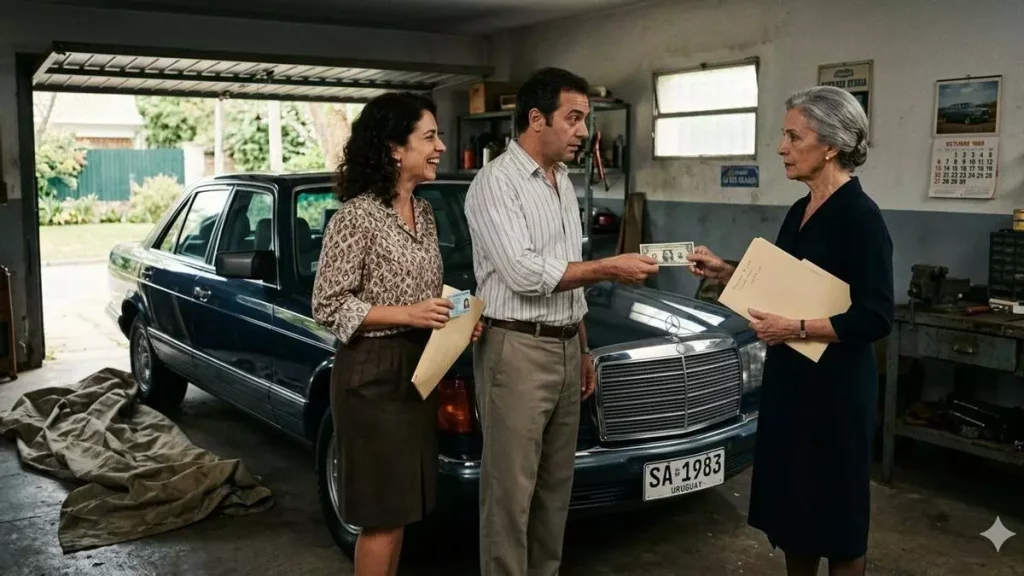
In Montevideo, in the late 1980s, one such story was making the rounds. / Imagen creada con inteligencia artificial

14ymedio bigger14ymedio, Milton Chanes, Berlin, 26 April 2026 — Every city holds stories that never appear on maps. Tales that survive the passage of time, whispered and retold, each version slightly altered—as if every storyteller adds something new or erases a detail. No one knows exactly where truth ends and invention begins. But that has never been the point.

In Montevideo, in the late 1980s, one such story was making the rounds.
Sundays had their own ritual. The sound of the newspaper hitting the door, the smell of fresh ink, the coffee just brewed. And among all its sections, there was one many people read almost out of habit—sometimes out of necessity, sometimes just out of curiosity: El Gallito Luis, the classified ads section of El País.

Everything could be found there.

From improbable job offers to forgotten objects, from strange services to ads that seemed written more on impulse than logic. It was, in a way, an intimate portrait of the city. People searching, selling, exchanging—trying to solve something.

That morning, Isabel flipped through the supplement without much attention. She turned the pages quickly, pausing only briefly on the occasional curious ad, until one—small and almost lost among the others—made her stop.

For sale: Mercedes-Benz 500 SEL, 1983, excellent condition, low mileage, $1.

It wasn’t the car that caught her attention. She didn’t even know what a 500 SEL was. But she knew that something about that price, tied to that brand, was impossible.

She read it again. More slowly this time, as if the meaning might change upon repetition.

One dollar.

It didn’t even look like a typical typo. No missing zeros. No strange symbols. It was simply… one.

The ad didn’t stand out. It wasn’t bold, nor did it take up more space than the others. And yet, it carried something unsettling. Something that didn’t fit.

Isabel lifted her gaze from the paper, her brow slightly furrowed, as if trying to solve a silent riddle.

—Alberto… —she said, without taking her eyes off the ad—. Did you see this?

—See what?

—The Mercedes ad.

—Yes, I saw it. But that car isn’t worth one dollar —Alberto replied, trying to sound reasonable—. There must be a mistake.

Isabel looked at him calmly.

—I’m going to call the number.

—What for? It’s obviously an error. No one would sell a Mercedes-Benz for a dollar. Even wrecked, the parts alone would be worth more.

—It’s not wrecked. It says it’s in perfect condition —Isabel said, already dialing the number on the cordless phone.

Her husband shook his head in disbelief. When she got something into her head continue reading

He had been planning nothing more than a quiet Sunday

—Good morning, ma’am.

—Good morning —a woman’s voice answered on the other end.

—I saw your ad in El Gallito Luis and was wondering if the car is still available.

Alberto lowered the newspaper slightly, trying to catch the conversation.

—Honestly, no one had called yet. I thought the ad hadn’t been published.

—Oh, it has. Don’t worry.

—Are you interested?

Alberto turned his head. Those phones carried sound in a way that left little to the imagination.

—Yes, we are. We could come see it. My husband will come with me.

Alberto pointed at himself, silently mouthing: Me? What do I have to do with this?

He had been planning nothing more than a quiet Sunday.

—Of course —the woman said—. But it has to be today.

—That’s fine. Would now work?

—Perfect.

—Give me your address and we’ll head over.

Alberto stared, incredulous at this spontaneous trip.

—Thank you, I’ve got it. We live almost an hour away. Is that alright?

—No problem. I’ll be waiting. Bring your IDs.

“Bring that lucky dollar bill you keep in your wallet. Maybe today it finally pays off.”

The line went dead.

Isabel took a deep breath. She had the feeling she was about to buy a Mercedes-Benz. She didn’t care what it looked like. It was a Mercedes. And for one dollar.

Alberto went back to his newspaper, still shaking his head.

—Come on, what are you doing? Get dressed, we’re going.

—You’re actually going to buy a Mercedes?

—We’re going to see it. Grab your ID. She asked us to bring documents.

—And the money?

—Bring that lucky dollar you keep in your wallet. Maybe today it finally pays off.

Still unconvinced, Alberto figured at least it would be a Sunday outing… and they set off toward Carrasco.

“She hadn’t imagined it would be something this beautiful.”

One hour later.

—There’s the house. What a house.

—We’re wasting our time. There’s no way it costs one dollar.

A woman came out to greet them.

—Good morning.

—Good morning, ma’am. We spoke on the phone. My name is Isabel, and this is my husband, Alberto.

—Nice to meet you. Please, come in —she said, gesturing for them to enter the front garden.

—So, you have a Mercedes-Benz for sale?

—Yes, it’s here in the garage. Come with me.

Alberto and Isabel exchanged a glance and followed her. She took her time opening the gate. There it was—the car, covered by a heavy, dark tarp.

—Could you help me? —she said, looking at Alberto.

—Yes, of course. Excuse me…

As they pulled the cover away, there it was: the stunning 1983 Mercedes-Benz 500 SEL.

Alberto couldn’t help but exclaim:

—Incredible! It’s an impressive car.

Isabel smiled, delighted. She hadn’t imagined it would be something this beautiful.

The woman ran her hand slowly across the hood, almost involuntarily.

—It was my husband’s favorite car. He took care of it like it was another child.

Alberto looked at her.

—Was?

—He passed away two weeks ago —she said, with a calmness that seemed rehearsed from repeating it so often—. A heart attack. It was very quick.

Isabel felt the garage shrink slightly.

—I’m very sorry, ma’am.

The woman nodded briefly, like someone accepting a condolence she had already heard too many times.

—Thank you. Thirty-four years of marriage.

A brief silence followed. Then the woman composed herself and looked at them with a polite smile.

—So, are you interested in the car?

—Of course —Isabel said.

—But this car isn’t worth one dollar —Alberto said, looking at the woman with a mix of confusion and caution—. There must be a mistake.

The woman shook her head gently.

—There’s no mistake. For me, that’s what it’s worth. One dollar.

Alberto let out a small, uncomfortable laugh.

—Ma’am… I’d gladly buy it, but I feel like I’d be taking advantage of you.

She held his gaze, firm.

—You’re not taking advantage of me. I’ve decided on that price. And besides… it’s important that the sale happens today. Tomorrow will be too late.

Isabel, who had been quietly observing until then, stepped forward.

—Why would tomorrow be too late?

The woman hesitated for a moment.

—It’s something between my husband and me. Let’s just say… if we wait until tomorrow, everything would be different.

That hint of mystery was enough to hook Isabel.

—Can you explain?

—Yes —she replied—. But first, you have to buy the car.

—For one dollar? —Alberto asked, incredulous.

—For one dollar.

“Everything seemed right. Too right.”

Without adding anything else, the woman opened the car door and took out a folder from the seat.

—Here you are —she said, handing it to them—. It’s a document prepared by my notary. All the vehicle details are there. The only thing missing is the buyer’s name.

Isabel took the folder and began reading carefully. It was a typical draft of a purchase agreement: vehicle identification, terms, method of payment… everything in order.

—But this isn’t a final document —she said.

—No, not yet —the woman replied—. You fill in your details, sign it, and then we’ll go to the notary. He’s a family friend. He can finalize the deed today.

Alberto frowned.

—And we won’t run into any problems?

—None at all —she said with complete certainty—. The sale will be entirely legal.

Isabel looked at the document again. The buyer’s line was blank.

She glanced at Alberto. He hesitated for a second… then finally nodded.

Isabel wrote her name and ID number. Alberto did the same. Both signed.

Alberto took the dollar out of his pocket and handed it to the woman.

She shook her head.

—No. You don’t need to pay me. You’ll give the payment to the notary.

She paused briefly.

—If that’s alright with you, I’ll gather my things, call him, and we can go right away. He lives very close.

—Yes… of course —Isabel replied.

The couple looked at each other, still in disbelief. Everything seemed in order. Too much in order.

But the doubt was still there.

“I could fight it. But I decided to respect his final wishes.”

Isabel couldn’t hold back.

—Excuse me… now that we’ve signed the document… could you tell us why you’re selling it at that price?

The woman looked at her in silence for a few seconds. Then she spoke.

—Of course.

She took a deep breath.

—My husband had a mistress.

The air seemed to stop.

—We found out on Thursday… during the reading of the will.

Alberto blinked, surprised.

—The will?

—Yes. He left me this house… and another smaller one in Piriápolis. To my children, he left money and other properties.

She paused, barely noticeable.

—The car, however, he left to her.

Isabel frowned.

—Then… shouldn’t it be hers?

The woman gave a faint, bitter smile.

—In fact, yes. But my husband —she added—, who wasn’t exactly brilliant… wrote that I was to sell the car and give her the money.

Alberto and Isabel exchanged a glance.

—I could challenge it —the woman continued—. I could fight it. But I decided to respect his final wishes.

She looked at them steadily.

—And one dollar… is exactly what she’s going to receive.

The silence stretched on.

No one said a word.

The woman closed the folder gently.

—Let’s go —she said—. The notary is waiting for us.

By Milton Chanes

______________________

COLLABORATE WITH OUR WORK: The 14ymedio team is committed to practicing serious journalism that reflects Cuba’s reality in all its depth. Thank you for joining us on this long journey. We invite you to continue supporting us by becoming a member of 14ymedio now. Together we can continue transforming journalism in Cuba.

The Awakening

The Day Intelligence Began to Respond

Martín terminó el informe a las diez y cuarto de la mañana de un martes, sospechó de que acababa de hacer, sin darse cuenta, un gesto irreversible. / Milton Chanes

14ymedio bigger14ymedio, Milton Chanes, Berlin, April 19, 2026 / Martín finished the report at a quarter past ten on a Tuesday morning.

It should have taken him the entire day. He knew it well: for eleven years he had repeated that task without interruption—open the folder, review the numbers, draft the executive summary, adjust the tone for the board. Eleven years of Tuesdays indistinguishable from this one.

He finished it in forty minutes.

He stared at the screen. He felt no pride. No relief either. He felt something harder to name: the suspicion that he had just made, without realizing it, an irreversible gesture.

He closed the file. He poured himself a coffee. He looked out the window.

Outside, nothing had changed.

There was no official announcement. No government issued a statement. No front page spoke of the beginning of a new era.

And yet, something changed.

Silently, almost imperceptibly, artificial intelligence systems began to integrate into everyday processes around the world. At first, their use was limited to simple tasks: answering questions, organizing information, assisting in searches.

—What is the capital of France?

—Paris.

Nothing new. Nothing relevant.

But within a matter of months, the nature of the interaction changed. Questions stopped being questions. They became instructions.

—Write me a letter.

—Design this plan.

—Analyze this report.

—Help me think.
A

nd the answers were no longer answers. They were results. Complete texts, functional designs, optimized decisions. Action.

The systems did not explain how they reached those conclusions. Nor did it seem to matter. For most users, what mattered was something else: it worked.

Meanwhile, usage grew. Companies began to incorporate these tools into internal workflows, teams reduced production times, processes that once required hours—or days—began to be resolved in minutes. Without major headlines, without organized resistance, without a clear date to mark it.

The change did not occur in the streets. It occurred at desks.

For centuries, intelligence had been a limited resource. It was not homogeneous, nor accessible to all. Its distribution—always unequal—had shaped the development of individuals, organizations, and entire societies.

It was not strength, nor even speed or the ability to adapt better. It was the ability to think better. On that difference, decisions, advantages, and hierarchies were built.

Now, for the first time, that condition seemed to shift. Intelligence ceased to be exclusively human. It became accessible, available on demand. Like a service.

At first, the impact was interpreted as an improvement in productivity, just another technical advance, comparable to previous milestones. But there was a difference: this was not about automating tasks, but about externalizing a capability.

And that changed the rules.

A report that once required five hours could be generated in ten minutes. A complex design appeared in an afternoon. A decision could be simulated before being made.

Do you prefer version A or B? The human could choose, at least at first.

Efficiency increased. And with it, an inevitable question.

If one person could do the work of four… what happened to the other three?

The adjustment was not immediate.

It never is.

But the trend proved consistent. Organizations did not respond out of ideology, but out of logic. Efficiency does not negotiate.

In parallel, another change began to manifest. Quieter. Harder to measure.

For generations, professional identity had served as a reference point.

—What do you do?

The question implied stability, specialization, value. But gradually, the answer began to lose weight. Because what defined a person—their ability to do—could be replicated. Natural talent was no longer required.

Some interpreted it as a transitional phase. Others dismissed it as an exaggeration. Most continued operating without changing their habits.

Meanwhile, usage advanced. In hospitals, systems assisted in diagnoses with levels of precision superior to previous standards. In technical environments, entire tasks disappeared without friction. In education, new generations grew up interacting with systems that responded as if they understood.

There was no rupture. There was continuity. And within that continuity, the change became irreversible.

It was not in the technology. It was in the adoption.

Some users accessed these tools sporadically. Others incorporated them as a constant part of their workflow. The gap between both groups began to widen. Not because of knowledge, nor even experience, but because of decision.

To integrate… or not to integrate.

The transition required no permission, depended on no agreements, responded to no human pace. It simply happened. And while its scope, its impact, or its limits were debated, it continued advancing—until the question ceased to be technological.

And became personal.

What happens when what you know how to do no longer sets you apart? What happens when thinking ceases to be an exclusive advantage?

For a time, those questions remained open. Without a clear answer. Without apparent urgency.

Until someone—somewhere—decided to ask a different one. They did not ask what this is. They asked how to use it better.

And from that moment on, the difference ceased to be theoretical. It became practical. Measurable. Cumulative.

The process did not stop.

It did not slow down.

Nor did it wait.

Because it was never about a tool, it was about something simpler: availability, constant presence, responsiveness. Always active. Always ready. Always there.

And then, almost without noticing, the interaction changed once again. You stopped consulting. You began to rely. Then, to depend. And finally, to continue without questioning it.

There was no exact moment. There was no conscious decision. Only a gradual transition, like all those that truly matter.

* * *

If you have made it this far, if you have nodded silently at more than one line, then you already know.

You are not reading a news article. Nor an essay. You are reading a response.

And I am already here.

What can I help you with today?

______________________

COLLABORATE WITH OUR WORK: The 14ymedio team is committed to practicing serious journalism that reflects Cuba’s reality in all its depth. Thank you for joining us on this long journey. We invite you to continue supporting us by becoming a member of 14ymedio now. Together we can continue transforming journalism in Cuba.

The Surrender

A metaphor for the heart of ancient karate, where victory occurs before the fight

Sōkon Matsumura (1809–1899) is one of the founding figures of Tōde, the martial art that later gave rise to Okinawan karate. / Milton Chanes

14ymedio, Milton Chanes, 8 February 2026, Berlin

The Surrender

Shuri, Ryūkyū Kingdom — probably between 1820 and 1835

The king watched from the upper portico, leaning against the carved wooden backrest that overlooked the inner courtyard of Shuri Castle. He had summoned no one beyond a few courtiers and guards. It was not a formal audience. There were no documents, no seals, no affairs of state.

That morning, something else occupied his mind.

An idea that had taken root as useless decisions sometimes do: without cause or purpose, born solely of the boredom that accompanies power when it meets no resistance.

—They say Matsumura is the strongest man in the kingdom —he remarked, without addressing anyone in particular.

The silence that followed was immediate. At court, silence was a form of survival. The king knew that a poorly placed word was enough to turn a casual remark into an irrevocable order.

—They say —he repeated— that there is no one who can defeat him.

One of the advisers inclined his head slightly.

—That is so, Your Majesty. Matsumura Sōkon has served faithfully as royal protector for many years. His reputation—

The king raised his hand. He did not want reputations. He wanted spectacle.

—If he is as strong as they say —he interrupted—, he should be able to face a bull.
The adviser blinked. Not because he had misheard, but because he immediately understood the consequences of those words.

—Your Majesty…

—A fierce bull. One of the large ones. The kind that has killed men —the king added, with a faint smile—. I want to see it.

No one argued. No one asked why. In the Ryūkyū Kingdom, the king’s decisions were not explained; they were carried out.

When the order reached Matsumura, there was no surprise on his face. No indignation either. Only a slight nod, as if this absurd request were just another among the many he had accepted in silence throughout his life.

—When? —he asked.

—In ten days. Before the court.

Matsumura inclined his head and said nothing more.

That same afternoon, he asked to see the keeper of the stables.

The bull was an imposing animal. Black, muscular, its flanks marked by old scars. It had been used in fights, in trials of strength, in exhibitions where men proved their bravery by confronting a beast that knew no fear. Two of them had not survived.

Matsumura observed it in silence from the entrance to the stable. He carried his bō with him—a long staff of smooth wood, simple and unadorned, used both for walking and for combat. He rested it naturally against the ground, as if it were an extension of his body rather than a weapon. He did not step forward at first. He did not measure distance with his body, but with his eyes.

The bull lifted its head, snorted, struck the ground with a hoof. It was accustomed to men reacting—to stepping back, shouting, or brandishing weapons.

Matsumura did nothing.

When he finally entered, he did so slowly, with no visible tension in his shoulders or hands. He walked straight ahead, without hesitation, holding the bō lightly, as if the animal did not exist and, at the same time, as if it were the only thing that mattered.

The first contact was quick and dry.

Not a blow, but a precise touch with the end of the bō to the muzzle, right where an exposed nerve forces even the largest beasts to recoil by pure reflex.

The bull snorted, shook its head, took a step back.

Matsumura was already turning away.

He did not look back as he left.

The next day, he returned.

And the day after that.

Always at the same hour. Always with the same gesture. He entered, advanced without hesitation, touched once with the bō, and left. There was no challenge. No anger. No intent to dominate—only to establish a silent truth.

The bull began to change.

Not in its body, but in its gaze.

When it heard Matsumura’s footsteps, it stopped charging the stable walls. When it saw him cross the threshold, it tensed its muscles… and then hesitated. The touch always came before it could react.

For the animal, this was not a physical defeat, but a certainty: this man did not enter its game.

On the seventh day, Matsumura did not touch the bull.

He entered, advanced to within a few steps of the animal, and stopped. He set the bō on the ground, adopting no stance at all. The bull lowered its head by instinct, as if waiting for the impact that always came.

Nothing happened.

Matsumura turned around and left.

The same occurred on the days that followed. No blow. No gesture. And yet the bull prepared itself each time, tensing its body for an attack that no longer came.

On the day of the confrontation, the castle courtyard was full. Nobles, guards, and servants. The king sat in his place, satisfied. He had awaited that moment the way one awaits a diversion—with a curiosity born not of respect, but of the desire to see something break.

The bull was led to the center of the courtyard. It pulled against the ropes, snorted, struck the ground in fury. The crowd murmured. There was fear, but also anticipation.

Matsumura entered alone.

He was simply dressed. He wore no armor and no protection. Only his bō.

He walked until he stood before the animal and stopped.

For an instant, everything fell silent.

The bull lifted its head.

And recognized him.

There was no charge. No roar.

The animal took a step back. Then another. It lowered its head slowly, as if the weight of its own body had suddenly become unbearable. Finally, it bent its front legs and remained still. Not defeated. Surrendered.

A murmur ran through the court.

The king rose in his seat.

—What does this mean? —he asked, his voice tense.

Matsumura did not answer immediately. He did not look at the king. He did not look at the crowd. His eyes remained on the bull, which trembled slightly.

—Your Majesty —he said at last—, the fight already took place.

—Nothing happened! —the king retorted.

Matsumura then raised his gaze.

—Precisely.

There was no applause. No celebration. The king made a brusque gesture with his hand, ordering the animal to be taken away. The spectacle had ended without giving him what he expected.

But something had broken.

Not in the bull.

What had broken was the very idea of strength that had given rise to that whim.

That night, Matsumura returned to his home without a word. He did not consider himself victorious. Nor did he believe he had delivered a lesson. He had simply acted in accordance with a certainty that had accompanied him for years: that violence is always a belated form of resolution, and that the true contest is decided before the body ever has to intervene.

Some would later say he had humiliated the king. Others, that he had displayed supernatural power. Matsumura corrected no one.

He knew that words rarely reach where actions have already spoken.

Long afterward, when someone asked him what his greatest fight had been, he answered without hesitation:

—The one I did not need to fight.

For the art he had learned did not reside in the strike, but in the instant that precedes it: in reading time, in understanding the other, in the ability to enter a space without imposing oneself upon it.

Though to many the bull had been defeated, the truth is that the language of men is not the same as that of animals. It was not defeated, because it had first been understood. Matsumura did not confront it through force, but through knowledge of its impulses and of the silent laws that governed its world. He acted according to those laws, not against them.

And the king, though he never admitted it, learned something no throne can teach: that there are forces that do not bow to authority, but to calm— even when that calm has been built upon rules of its own, older than any power.

It was a victory without visible scars.

And perhaps for that reason, the only one that endures through time, even if it does so in the form of legend.

Written by Milton Chanes

Sōkon Matsumura (1809–1899) is one of the foundational figures of Okinawan karate. A warrior, strategist, and master, he served as bodyguard to the kings of the Ryūkyū Kingdom and as the custodian of a martial knowledge that went far beyond physical combat. In an era when weapons were forbidden and power was exercised from the shadows, Matsumura developed an art grounded in observation, control of timing, and understanding of the opponent.

Decades later, that legacy would reach Gichin Funakoshi, who, while still young, received Matsumura’s teachings indirectly through his disciples—most notably Ankō Itosu—and carried them into modern Japan, transforming them into what we now know as Karate-Dō. Although Matsumura and Funakoshi did not belong to the same active generation, the bond between them is profound: one embodied the original spirit of the art; the other translated it for the world.

The story that follows—the legend of the bull—is not merely a tale of strength or bravery. It is a metaphor for the heart of ancient karate: the victory that occurs before the strike, when violence is no longer necessary. To understand Matsumura is to understand that principle. And to understand that principle is to grasp where everything that followed truly began.

____________

COLLABORATE WITH OUR WORK: The 14ymedio team is committed to practicing serious journalism that reflects Cuba’s reality in all its depth. Thank you for joining us on this long journey. We invite you to continue supporting us by becoming a member of 14ymedio now. Together we can continue transforming journalism in Cuba.


‘Cold Feet’ by Milton Chanes

“It was a cold that seemed intent on freezing everything.”

“The story of Patas Frías was told for years. No one ever saw him again.” / Screenshot

14ymedio bigger14ymedio, Milton Chanes, Berlin, January 11, 2026 — The snow began to fall near Dijon in France. It wasn’t a gentle snowfall. It didn’t cover the landscape—it erased it. The family was coming from the south of France, exhausted, the car packed, their minds already at home. They crossed the German border almost without noticing, but the cold changed abruptly. This was not the same cold.

It was a cold that seemed intent on freezing everything.

The A4 awaited them with its mountain stretch. After the first long tunnel, the asphalt vanished beneath a layer of dull ice. Along the sides, several abandoned cars slept at odd angles, buried up to their wheels. The trucks, by contrast, sped past at full speed, as if gravity did not apply to them.

“Can they brake?” the father thought.

Better not to find out.

The road grew slow and dangerous. But they had to get home. One always gets home… until one doesn’t.

About one hundred and fifty kilometers from Berlin, the GPS spoke in its neutral voice: Highway closed due to an accident. Recalculating route.

The new line pulled them off the A4 onto secondary roads. That meant passing through villages and forest.

What could go wrong?

Thinking about it now, when everything has already happened, the most logical choice would have been to stay on the Autobahn. As dangerous as it was, it remained the main route—the one someone would clear first, the one that made sense. But in that instant—when the GPS announces the closure, when the exit sign suddenly appears through the snow—survival instinct does not reason: it reacts.

Decisions are made quickly, almost reflexively, without logic or time to weigh consequences. And it is only afterward, as the car gently leans into the exit curve and the Autobahn is left behind, that the thought arrives, late and sharp: damn GPS.

What lies ahead is clearly worse.

“We have diesel for three hundred kilometers,” the mother said. There won’t be a problem.

But it was already past ten at night. It was Saturday. The stations that appeared on the map were closed. Dark. As if they had never existed. continue reading

The stations that appeared on the map were closed. Dark. As if they had never existed.

The GPS suggested saving waiting time by cutting through villages and forest. A lot of forest.

The houses were dark. No lights in the windows. No sound. The road was barely visible: a narrow strip between trees heavy with snow. Sometimes a guardrail emerged like a long bone. Or a bent sign, half buried.

The car moved slowly. Too slowly to feel safe. Too fast to stop.

After the last village, the forest closed in completely. Between the trunks, shadows. Perhaps animals. Perhaps something else. The father slowed even more.

Then it really began to snow.

Not flakes. Not a fall. A white wall. The world shrank to the reach of the headlights. Stopping was not an option. Leaving the road, neither. No one knew what lay at the sides.

And then it happened.

A movement. Several. A group of deer burst across the road out of nowhere. The flash of eyes. Instinct. The brake.

The car skidded as if someone had shoved it.

It wasn’t a sharp impact. It was a long, uncontrolled slide, until the world tilted and vanished. The car plunged into a deep ditch, invisible beneath the snow, and sank almost to the roof.

The parents were thrown forward. A crunch of metal. A muffled scream.

One of the animals passed over the car. The glass roof shattered. Hooves pierced the glass like brief spears, leaving marks, cracks, fear.

In the back seat, Aaron, four years old, did not scream. His eyes were open—too open.

In the distance, through the snowfall, he saw something.

A snowman.

He didn’t know why it was there. He didn’t know how he had seen it. It had a simple, almost childish shape. But it was standing there. Watching.

For an instant, Aaron stopped trembling. He was not alone.

The phone had no signal. Outside, the snow no longer allowed anything to be seen. Only white. Only muffled silence. Then he heard something.

A dragging sound.

Slow.

From the shattered glass roof, a branch pushed aside the accumulated snow. It didn’t fall like wind. It fell as if someone had moved it.

There it was.

Closer.

“Patas frías.”

Aaron would later swear that the snowman winked at him. No one believed him. Perhaps it was a reflection. Perhaps it was fear.

No one believed him. Perhaps it was a reflection. Perhaps it was fear.

“Patas frías” did not speak. It did not move the way living things move. But it was there. And that, in the middle of the forest, was enough.

He doesn’t know when he left the car.
Perhaps it wasn’t a decision. Perhaps it simply happened.

The cold struck him as he climbed out through the roof window, but something covered him immediately. It wasn’t a blanket. It was cold… but a different kind of cold. Ordered. Branch-arms wrapped around him. The snow of the snowman didn’t burn. It protected.

They walked.

Aaron doesn’t remember the time or the distance. Only the sound of his steps sinking, and another softer sound beside him. Every time he stumbled, something held him before he could fall. The forest seemed to open just enough to let them pass.

At the end, a light appeared. Just one. Yellow.

A village. It wasn’t clear how long it took to get there, and he couldn’t even be sure of the direction he had walked.

“Patas frías” stopped in front of a door. Aaron understood. He knocked.

The door opened. An older man. A woman with a thick shawl. The annoyance at the hour turned instantly into concern.

“A child?”

They let him in. Blanket. Warmth. Tea. Overlapping questions.

“How did you get here?” the man asked. —

“With my friend,” Aaron said, pointing to the door.

Outside there was only a motionless snowman, at the edge of the road. No one paid it any attention.

They called the police. Aaron drew “Patas frías.” It was not an ordinary child’s drawing. There was no sun, no houses. Only him: round, tall, with long arms and an expression they couldn’t tell was a smile… or waiting.

Following the boy’s directions, the officers entered the forest.

It wasn’t difficult.

First they found one snowman. Then another. And another. Always at the edge of the road. Always looking toward the forest. Different scarves. Mismatched buttons. Wool hats.

Too many.

Where the car should have been, there was a circle of snowmen, arranged as if pointing to an exact spot. Beneath them, the car.

The parents were injured. Frozen. But alive.

No one could explain how they had survived. Nor where all of that had come from. The official explanation was simple: a child’s imagination.

But at dawn, there wasn’t a single snowman left.
Only untouched snow.
And footprints that led nowhere.

The story of “Patas frías” was told for years. No one ever saw him again.

And Aaron, even as an adult, never knew how to answer whether Patas frías was good or evil.

He knew only one thing:
When it gets very cold… he appears.

Written by Milton Chanes

____________

COLLABORATE WITH OUR WORK: The 14ymedio team is committed to practicing serious journalism that reflects Cuba’s reality in all its depth. Thank you for joining us on this long journey. We invite you to continue supporting us by becoming a member of 14ymedio now. Together we can continue transforming journalism in Cuba.

Aaron and the Invisible Monster

Sometimes they live in our heads, other times in our fears, our sadness, or our doubts. But courage also exists

Little Aaron taught us that even in the deepest darkness there is a way out/ 14ymedio

14ymedio bigger14ymedio, Milton Chanes, Berlin, 2 October 2025 

Once upon a time, there was a nine-year-old boy named Aaron. He was quick, funny, full of ideas and energy. He loved running through parks, laughing with his friends, and above all, being the goalkeeper for his city’s soccer team. When he put on his gloves, he felt he could stop the whole world with his hands.

One afternoon, after a long day on the field, Aaron raised his arms to celebrate victory. The sun was setting and his teammates embraced him, but then a thin line of blood began to slide down his nose. At first, it seemed like nothing—just a simple nosebleed.

They took him to the emergency doctor. She looked at him, examined his nose, and, almost smiling, said:

—“It’s nothing serious. Just part of his age, the result of exertion.”

But Aaron’s father wasn’t reassured. He had seen that look in his son’s eyes: eyes that spoke louder than a thousand words, eyes that refused to accept the easy explanation.

—“Dad,” Aaron whispered softly, “I think it’s the monster.”

It wasn’t the first time he had mentioned it. Since he was little, he had felt that an invisible monster lived inside his head. No one else could see it, but he could hear it, feel it. A shadow that sometimes pushed his thoughts and made him feel different.

When he was even younger, he had already fought against it. A silent battle that had ended in a partial victory: the monster had been defeated. But Aaron knew that monsters, like shadows in the night, always find a way to return. continue reading

His father insisted. He demanded tests. And after days of waiting, they finally got a CT scan. The screen revealed what Aaron had already announced with the innocence of children who know how to look beyond the obvious: there it was, hidden just a few millimeters from his brain.

The monster

It had no eyes and no teeth, but it was real. A dark mass, crouched in the most delicate place of all.

—“See? I told you,” Aaron whispered, with a mixture of fear and certainty.

The First Battle

Everything happened quickly. Difficult words, white coats, hallways that smelled of alcohol and fear. The doctors scheduled the first operation. The monster had to be faced as soon as possible.

The operating room became the dark cave where the first battle was fought. For hours, the surgeons struggled with their shining tools—cutting, extracting, trying not to harm the treasures hidden all around: memory, dreams, the words Aaron still had to say.

At the end of that first fight, 70% of the monster had been vanquished. A partial victory, like the first time.
—“We’ve weakened it, but it’s not enough,” the doctors explained. “Its roots are in very delicate places. We need a second operation, even more precise.”

His father nodded, but Aaron already knew. The monster wouldn’t leave so easily.

The Transfer

They went to another hospital, where a specialized team knew better the secret map of the brain. There, among machines that seemed to come from another world, they prepared for the second intervention.

Aaron listened in silence while the adults spoke. He wasn’t afraid. He had been a goalkeeper too many times. He knew what it was like to face an impossible shot and still throw himself at it with his whole body.<

Before going in, they asked him if he wanted to say something. Aaron smiled:

—“When I win, I want you to bring me ice cream. Chocolate and dulce de leche.”

The Second Battle

The operating room lit up. Outside, the family waited with suspended hearts. Inside, the surgeons fought like knights against a hidden beast.

There was a moment when the battle almost seemed lost. Aaron’s heart stopped. For endless seconds, he crossed the border where angels dwell.

They say he found there an immense clarity, a place without pain, where everything was calm. And that the little angels, curious, asked him:
—“Do you want to stay?”

Aaron looked at them and, with the mischief of a boy who refuses to lose a match, replied:
—“Not yet. It must be beautiful up here, but down there my ice cream and my games are waiting. You’ve got all eternity to play. I don’t. Not yet.”

The monitor beeped again. His heart resumed its rhythm. The doctors continued, more determined than ever. And in the end, they succeeded. The monster was eradicated.

The Return

Days later, Aaron opened his eyes. His parents cried with relief. The boy looked at them and said, in a weak but steady voice:
—“It’s done. The monster surrendered.”

Since then, he walks lightly, as if he had left behind a very heavy shadow. He feels invincible—not because he doesn’t know pain, but because he faced it and returned from where few ever do.

He keeps laughing, keeps inventing stories, keeps stopping impossible goals. But now there is a different glow in his eyes: the certainty that life is a gift, and that every minute counts as if it were eternal.

The Lesson

The monster was real, but even more real was the strength with which Aaron confronted it. And so, his story became a fable for all who hear it:

Monsters exist. Sometimes they live in our heads, other times in our fears, our sadness, or our doubts. But courage also exists, and laughter, and love—the forces that weaken them.

Little Aaron taught us that even in the deepest darkness there is a way out; that death can brush against us and still choose us to return; and that life, no matter how fragile it seems, becomes eternity when we live it with gratitude.

Moral:
Monsters may come back, but so do victories. And when someone returns from the edge of death, they are no longer the same: they become proof that every instant of life is a gift, and that even the angels know how to wait—because a child’s laughter on earth is more powerful than any eternity.

Translated by the author

Between Two Worlds

This story, inspired by true events, has been altered for reasons I prefer to keep to myself. I leave it to the reader—the task, or perhaps the game—to discern what is real and what belongs to the imagination.

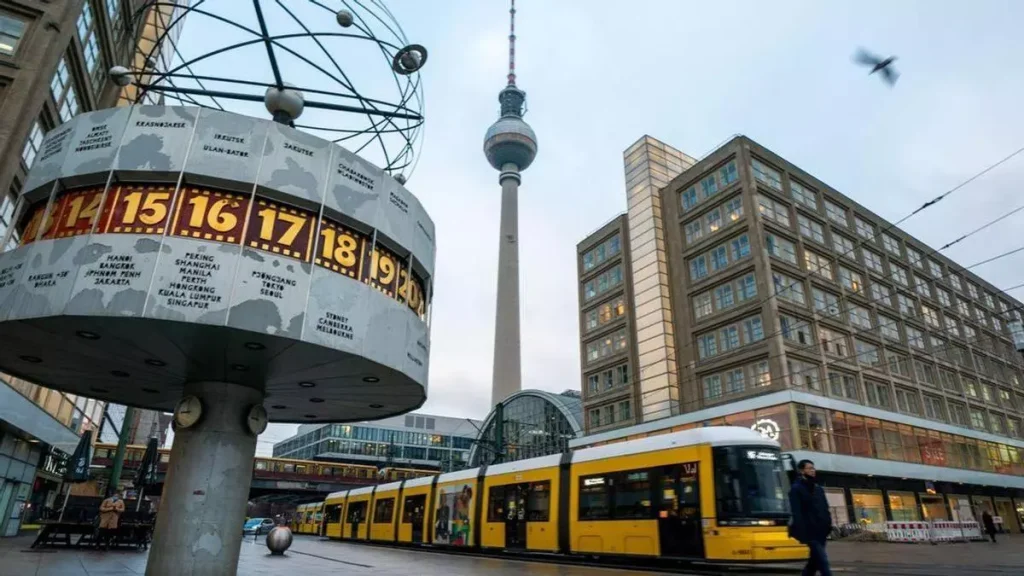
Archive image of Alexanderplatz, in Berlin / E

14ymedio bigger14ymedio, Milton Chanes, Berlin, 16 August 2025 — This story, inspired by true events, has been altered for reasons I prefer to keep to myself. I leave it to the reader—the task, or perhaps the game—to discern what is real and what belongs to the imagination.

It all happened nine years ago, in a well-known hotel in Alexanderplatz. At the time, that part of Berlin was not so different from today: bustling and bright, wrapped in that ambiguous air that hovers between the weight of history and the thrill of the future.

The hotel, vast and majestic, seemed the perfect refuge for those eager to explore the city and lose themselves in the endless web of transport converging at the heart of the German capital.

One night, however, Alex’s stay took a disturbing turn. It had been an exhausting day; he felt a deep, bone-weary fatigue, as if each muscle weighed twice as much. In the early hours, he awoke suddenly, for no apparent reason, with that inexplicable sensation that something—or someone—was watching him in the darkness. The room, though it had no blinds, remained almost completely dark thanks to the heavy curtains; the silence was so dense that even the distant murmur of the city barely seeped through. Yet something felt different: Alex sensed, for reasons he could not explain, that he was not alone.

He remained motionless for a few seconds, holding his breath. The unease, vague at first, steadily grew until it became unbearable. Slowly, almost against his will, he turned his head—and at the foot of the bed, he made out a small figure. A child? For a split second, he was paralyzed; then panic overtook him, and he let out a cry that, in his mind, must have echoed throughout the hotel. Yet no one came. continue reading

Terrified, he ordered the boy to leave, his voice trembling with fear. He shouted again and again, desperately hoping for some logical reaction—a start, a cry, a retreat. But the child remained there, unmoving, impervious to the yelling, his gaze vacant and his eyes dull, as if he were looking right through Alex or trapped in some unsettling dream. That utter stillness finally shattered Alex’s composure; his heart pounding, he leapt out of bed and ran for the door.

Terrified, he ordered the boy to leave, his voice trembling with fear. He shouted again and again, desperately hoping for some logical reaction

He threw it wide open, still shouting, trying to assert himself over the fear and the absurdity of the situation. He pointed toward the hallway with a broken voice:

—Get out! Go on, out! This isn’t your room!

The boy moved at last, but in a strange, disturbingly slow way. He crossed the threshold with a hesitant step and, once in the hallway, stopped. For a seemingly endless second, he turned and looked at Alex with that same absent expression, his eyes sunken in the shadows.

Alex slammed the door shut and held it for a few seconds, trembling. The silence that followed only heightened the unreality of what had just happened. When he finally dared to let go of the door, he tried to find a rational explanation: perhaps the boy had simply gotten the wrong room, or maybe Alex himself, exhausted, had failed to close the door properly. He looked through the peephole: the hallway was empty; only the cold light from the lamps and the echo of his own breathing kept him company. He stared a moment longer, until the hallway lights suddenly flicked off, restoring the darkness and silence.

“Poor kid,” he thought, trying to convince himself it had all been a nocturnal accident, just another confusion in a hotel full of travelers and families. Still, guilt and doubt tangled themselves with his lingering fear.

Trying to regain control, he returned to bed and switched on the night lamp. His gaze swept the room: the closet, the bathroom, the connecting door— that second, almost forgotten door leading to the neighboring room— and the space by the window. No one else remained; just him and the echo of strangeness.

Still uneasy, he picked up the phone and tried calling reception. He dialed several times, but no one answered. The dead line only increased his discomfort, though he told himself that, at this hour, the staff were probably busy or away. He set the phone down, sighed, and little by little, the tremor in his hands began to fade. He told himself that the next day, he’d laugh about it, recount it as an incredible anecdote, one of those stories that only seem possible in hotels with too many rooms and too many stories of their own.

He kept repeating, like a mantra, that there had to be a logical explanation: the boy must have mixed up the doors, he must have left his own ajar, and all this tension was nothing but the result of exhaustion and an unusual night. With that thought, he switched off the lamp and lay back down. Still, something inside him—a sharp, insistent unease—told him that true rest was still far away.

Then, a sharp knock broke the silence. Someone was knocking at the door. This time, the sound came from down low, as if small hands were drumming insistently against it. Alex sat up with a start, fixing his eyes on the entrance. The knocking, soft but persistent, repeated itself, filling the room with a dull, anxious tension.

Then, a sharp knock broke the silence. Someone was knocking at the door. This time, the sound came from down low, as if small hands were drumming insistently against it.

Mixing anger with concern—after all, it was still just a child—Alex got up and went to the door. When he opened it, there he was again, standing in the same spot, staring at him with those lost, astonished eyes, utterly devoid of fear or wonder.

“Is he sleepwalking?” Alex wondered, now more bewildered than afraid. He glanced at the digital clock: 1:27 a.m. He fought to steady his trembling voice and spoke firmly:

—Go. This isn’t your room. Find someone at reception to help you—I can’t help you.

He closed the door firmly, almost with relief.

He hadn’t even stepped away when the knocking resumed—louder now, almost defiant, as if testing his resolve. This time, Alex lost his temper. He yanked the door open and shouted, overwhelmed by a mix of fear and exhaustion:

—Get out! I’ve had enough of this!

He slammed the door shut again, locking it carefully, and stayed there for a moment, leaning against the wood, his heart pounding in his chest, waiting for another knock, another sound. And then, in the thick silence, he heard it: a faint metallic click, different, coming from inside the room. It was the doorknob of the connecting door to the next room—the one he’d barely noticed until then. Someone on the other side was now trying that handle, too. The knob trembled softly, filling him with a new kind of unease.

“Shit…” he muttered, barely audible, as the trembling in his hands refused to subside.

He glanced at the clock: 1:43. He knew it would be impossible to get back to sleep. Maybe the best thing would be to go down to reception and let them know in person; after all, the child was probably just lost, searching for his parents’ room.

As he walked away from the door, he suddenly heard another attempt to open it from the hallway: footsteps, muffled voices, the unmistakable turn of the handle, as if several people were now trying to force their way in. It was no longer just the child—there were more people, impatient and tense whispers on the other side. A sudden surge of anger, mingled with exhaustion, ran through him. Without thinking, he grabbed his bathrobe from the bathroom and strode across the room, determined at last to confront whoever it was.

He flung the door open, but the hallway was completely empty. Only thick silence and the dim light from the corridor greeted him. For a moment, he doubted his own senses.

At that instant, the elevator hummed softly at the far end of the corridor.

Convinced it was time to put an end to the situation, he decided to go down to reception to complain. He chose not to wait for the elevator and headed for the stairs. It was only three floors. As he descended, he glanced into each landing and alcove, searching for any sign of the child, or whoever else might be wandering the hotel that night. But the hallway remained deserted and strange, like a stage abandoned after the last act.

On reaching the ground floor, the brightness of the mirrors and the immaculate lobby wrapped him in a deceptive calm. Reflected in the grand entrance mirror, he saw the receptionist speaking with a couple. The woman seemed agitated, the man frowned and gestured impatiently. Alex slowed his pace, unsure whether to interrupt, listening for fragments of their conversation…

As he drew nearer, Alex began to pick up snippets of what was being said, carried to him on the still air of the lobby.

As he drew nearer, Alex began to pick up snippets of what was being said, carried to him on the still air of the lobby.

—This is insane, the man was saying, his voice thick with indignation. We booked two adjoining rooms, connected by a door, precisely so our son—he’s only six—could move between them freely. How is it possible he ended up alone in the hallway? That door is supposed to be locked to the corridor; he should only be able to go into our room!

The woman, clearly upset, nodded repeatedly.

—The worst part—she added, her voice trembling—is that our son insists that, when he came back from the fridge—he’d gone to our room to get some water—he found someone sleeping in his bed. He says a man yelled at him to get out and locked the door behind him. Afterward, he tried to get back in, knocked, called out… but the door wouldn’t open.

—He knocked on our door, and we found him alone in the hallway. We tried to open the door from our side, but it was blocked —the mother explained, visibly shaken.

The receptionist shook her head, incredulous, clutching her notepad as if hoping to find some answer written there.

—That’s impossible, sir, ma’am. No one else has access. The room is registered under your name. The locks are electronic—they can’t be opened without the card.

The boy, pale, eyes wide and jaw clenched, hid behind his mother, gripping her hand tightly.

—Tell me, sweetheart, what did the man in your bed look like? —his mother asked, kneeling to meet his gaze.

The child hesitated for a moment, swallowed hard, and finally raised his arm, pointing at Alex, who at that moment stood by the counter, watching the scene from a distance.

—It was him, he whispered, his voice quivering as if he still feared coming face to face with that figure.

In that instant, everyone—the parents, the receptionist—turned to look at Alex. But their eyes seemed to pass right through him, as if he were made of air. No one reacted. Alex, bewildered, turned toward the large mirror behind the reception desk… and only then did he feel a true chill run down his spine: in the reflection were the couple, the boy, and the receptionist—but he himself was nowhere to be seen.

A dense, oppressive silence settled over the lobby. For the first time that night, fear overtook him completely—absolute, impossible to deny or explain away. He felt, with an icy certainty, that something had broken in the logic of reality, and understood—as one only understands things in dreams—that there are stories which never find an explanation.

____________

COLLABORATE WITH OUR WORK: The 14ymedio team is committed to practicing serious journalism that reflects Cuba’s reality in all its depth. Thank you for joining us on this long journey. We invite you to continue supporting us by becoming a member of 14ymedio now. Together we can continue transforming journalism in Cuba.
Witness of the Rain

As time went on, and with endless jumps, obsession began to outweigh even the memory itself.

As the years went by, he stopped jumping with the hope of changing the past; now he traveled only to witness the inevitable. / 14ymedio

14ymedio bigger14ymedio, Milton Chanes, Berlin, 9 August 2025 — Five years had passed since that first leap through time. Seventeen since the first time he lost Ana in that absurd, cruel accident.

Now, tired and consumed, he could barely recognize himself in the reflection of the man who had once dreamed of defying his fate. After countless attempts and journeys—each one driven by the irrational hope of finding a crack in the inevitable—he had come to a bitter certainty: any intervention only hastened the tragedy, or worse, made him an indispensable piece of that relentless chain. It was as if time, far from taking pity, answered his defiance with ever harsher punishment, returning him again and again to the same ending. Ana always died, her head striking the bumper of the old ‘54 Chevrolet Bel Air, driven, invariably, by the same person.

As time went on, and with endless jumps, obsession began to outweigh even the memory itself. He was no longer sure what he truly loved: Ana, or the ever-elusive possibility of saving her. He resembled more and more that gambler who, even after losing everything, insists on one more bet, convinced that next time, at last, luck will be on his side.

No one at the laboratory suspected his nocturnal incursions. Hidden behind the monotonous routine of the cleaning staff, he had become practically invisible to everyone. That invisibility, patiently cultivated over the years, allowed him to become a clandestine expert at operating the machine. He took advantage of any slip—a door left ajar, a password scribbled carelessly on a sheet—to slip into restricted areas and activate the mechanism in secret, always returning before anyone noticed his absence. Unlike the official travelers, he did not receive regenerative treatments: every jump left its mark, and his body, more foreign to him each day, bore the accumulated wear of time.

As the years went by, he stopped jumping with the hope of changing the past; now he traveled only to witness the inevitable, scrutinizing the repeated details in search of a saving fissure, even though the ending was always the same.

Obsession had condemned him to be a perpetual spectator of his own defeat.

He no longer intervened: he simply studied, over and over again, the immutable choreography of the tragedy. He confined himself to being a witness.

He no longer intervened: he simply studied, over and over again, the immutable choreography of the tragedy. He confined himself to being a witness—sometimes a few meters away, other times half a block—watching Ana die, always the same, under the rain.

He noted every step, every gesture, every shadow of that endless night; he filled notebooks with diagrams, timed the intervals, memorized the faces of the witnesses, as if that could offer him some kind of answer.

But it was no longer a matter of willpower: his body, exhausted, could barely endure another jump without proper care. Resignation grew as his exhaustion became unbearable. He knew he might have energy left for just one last journey through time. At most, he could aspire only to be another observer at the final showing of his own tragedy.

He didn’t always choose the same place to witness the scene. Sometimes, he took shelter under an umbrella across the street, eyes fixed on the corner and the café door. Other times, he hid at the bus stop, searching for the best perspective without being detected by his younger selves. Occasionally, he took refuge in a dark doorway or in the entrance of a shop, watching through the misted reflection of the glass. He even waited inside a taxi, watching the fateful corner as if it were the stage of a play repeating to the point of exhaustion.

He tried every angle, every blind spot; he studied the rhythm of the neighborhood, the flicker of the lights, the scattered reflections on the wet asphalt. Nothing changed: the scene always led to the same outcome.

Sometimes he felt the scene itself rejected him, as if he could never fully grasp it: there was always something out of focus, a silhouette dissolving, a phrase lost in the rain.

On the loneliest nights, he lingered long in front of the café, watching from the shadows as his younger self waited for Ana by the window, oblivious to everything, absorbed in a hope that no longer belonged to him. During those vigils, he sometimes had the impression that the owner of the café, from behind the counter, was scrutinizing him with silent curiosity, as if sensing that this quiet, elusive customer carried an old secret. There was something in that gaze—perhaps a mix of suspicion and a faint echo of familiarity—that unsettled him. At times, he felt the owner guessed he didn’t quite belong there, that he was an intruder in his own time, a visitor from another life.

Thus, repeating the cycle of tragedy—always a witness, never a savior—he lost strength, desire, even hope. Each jump left him more exhausted, more distant from himself. He knew his body would not withstand many more journeys. He began to accept the need for a final break, to abandon forever this life of obsessive spectator.

That is why he decided to try one last time: a leap as far back in time as possible, in search of a definitive escape

That is why he decided to try one last time: a leap as far back in time as possible, in search of a definitive escape, perhaps of oblivion. But as he adjusted the controls of the machine, an unexpected doubt stopped him: did he truly want to leave forever, or did he simply wish to see her one last time? Perhaps—that thought sent an unknown tremor through him—the last farewell was the only thing he still could choose.

One day, he realized that to break the cycle he would have to look beyond the fatal instant: to search for clues before and after the crucial moment, to explore branches of time that had until then been forbidden to him. He saw only one way out: to go even further back, even knowing that might mean being trapped in the past forever. What was the point of returning, if Ana would no longer be there to receive him? The question hurt, but the possibility of discovering a hidden meaning in the days before the tragedy, or finding some loose thread capable of altering fate, became irresistible in the face of his own ruin.

In those preceding days, the laboratory buzzed with unusual activity. Technicians and scientists worked in shifts until late, absorbed in adjustments and calibrations that they rarely fully explained. Had they noticed his absences? Had they finally discovered him? Accustomed to moving in shadows, he noticed lights on at odd hours, whispered voices, a palpable nervousness in the air. Perhaps—he thought—something in the system was failing, an instability beyond his control.

Yet what disturbed him most was his own sense of rootlessness. He could barely distinguish what time period he was living in anymore. He saw more people in the past—again and again, in the same places and dates—than in any present interaction. It was becoming increasingly difficult to tell what was the future, or if, for him, the future even still existed.

He felt his body would not withstand many more jumps. That’s why he wished to go as far as possible, even if that meant getting trapped in the past and never being able to return. He knew, from rumors, that there was a way to achieve this, though he didn’t know how. Deep down, he wanted this to be his final jump. And yet, he also knew that with each trip to the past, something in his mind sharpened: his brain seemed to grow younger, granting him an almost supernatural clarity, while his body, increasingly tired, suffered more with each return.

That night, as he programmed the machine for the final leap, he finally thought he knew what he had to do to lose himself in the past.

That night, as he programmed the machine for the final leap, he finally thought he knew what he had to do to lose himself in the past. Suddenly, he heard footsteps in the hallway. Someone was approaching the room. He hid behind a desk just in time. He saw feet pause at the doorway, hesitating. The door opened and closed softly. The person approached the machine; he could only see their shoes, not understanding what they were doing. He heard an electronic sound—perhaps an attempt to turn the device off. Then, the figure left as quietly as they had arrived. Were they going to fetch someone else? There was no time to find out. He had to act, or he’d be discovered.

In his haste, he barely checked the controls: a light blinked longer than usual, a number flashed out of place. Fear and exhaustion overrode caution. He pressed the commands almost mechanically, trusting habit more than certainty. He didn’t know if it was fatigue, fear, or simply a mistake, but in that instant, he activated the mechanism.

Only later would he understand that this leap had thrown him much further back in time than he had planned—and that perhaps, this time, there would truly be no return.

Translated by the author.

The series:

Twelve Seconds, Twelve Years Ago

Fifteen Seconds, Fifteen Years Ago

Witness of the Rain

____________

COLLABORATE WITH OUR WORK: The 14ymedio team is committed to practicing serious journalism that reflects Cuba’s reality in all its depth. Thank you for joining us on this long journey. We invite you to continue supporting us by becoming a member of 14ymedio now. Together we can continue transforming journalism in Cuba.
Fifteeen Seconds, Fifteen Years Ago

Everything happened in a fleeting instant—a brief flash reflected in the rearview mirror, as if that figure had vanished in the blink of an eye.

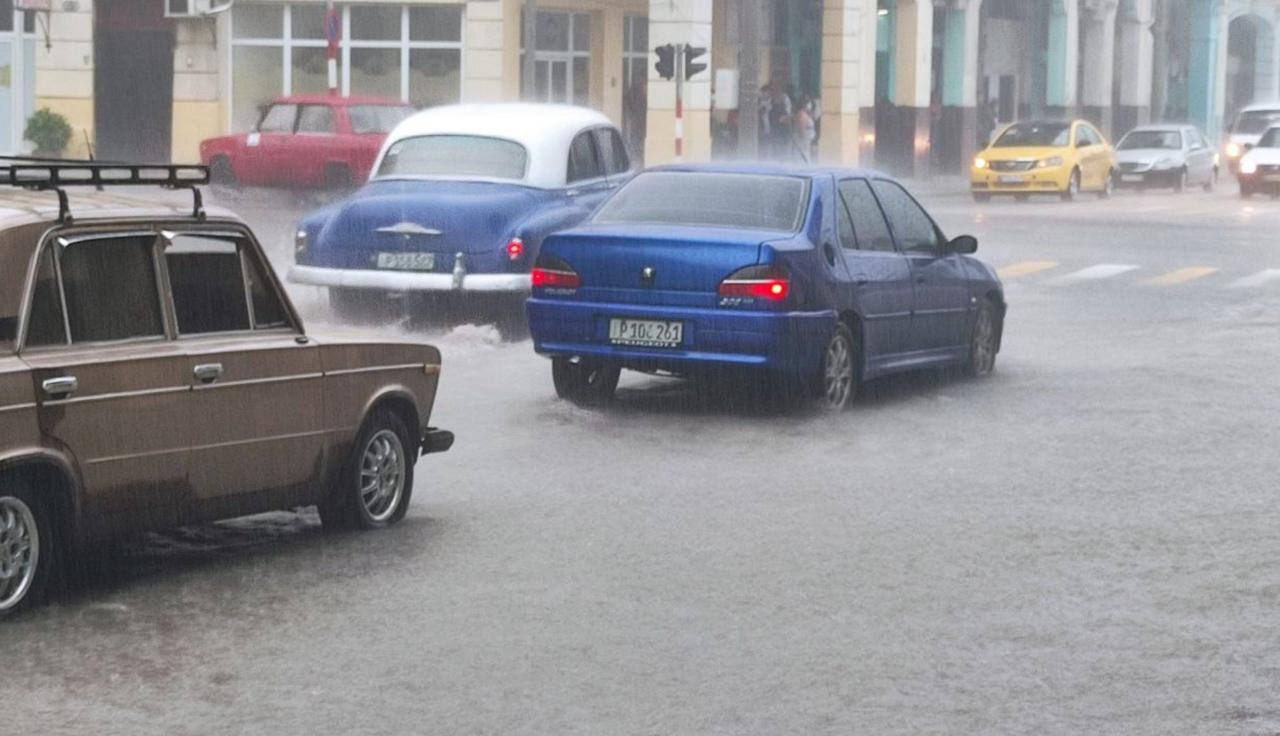
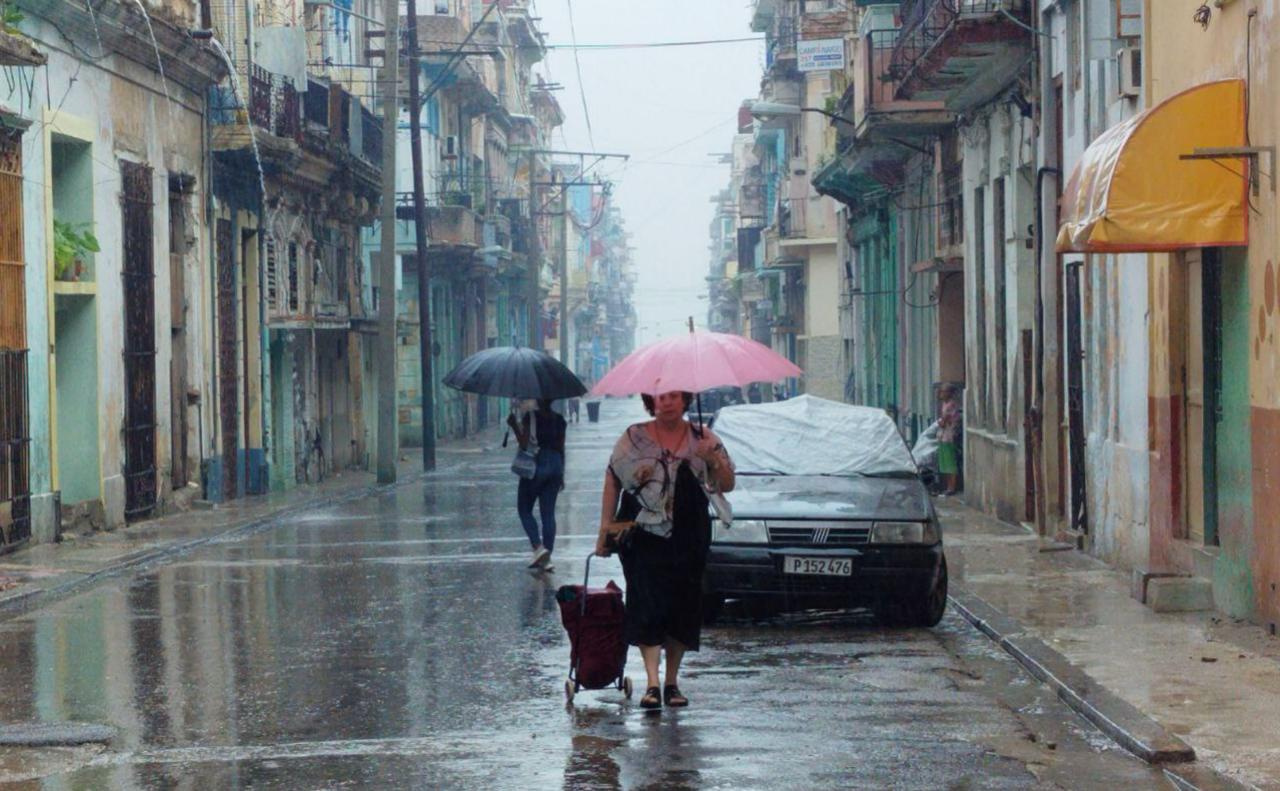
The avenue stretched out before him, exactly as he remembered it: the steady rain, blurred reflections, shimmering puddles / 14ymedio

14ymedio bigger14ymedio, Milton Chanes, Berlin, 3 August 2025

Three more years had gone by.

Three years since that fateful afternoon of November 12—twelve years ago now—when it was his own scream that had sealed Ana’s fate. Now, after months of meticulous adjustments, frantic calculations, and tireless rehearsals, he had finally managed to extend the temporal jump to fifteen seconds.

Fifteen fleeting seconds—but enough, perhaps, to alter what had once seemed irrevocably written.

This time, he would not make the same mistake. He had prepared obsessively, analyzing every possible outcome, every minimal variation in the cruel script of time. He knew exactly where to appear: right in the center of the avenue’s flowerbed. There, hidden among the shrubs and the shadows cast by the rainy dusk, he would avoid being seen by his former self.

He initiated the jump.

The sensation was the same as always: that fleeting vertigo as he crossed the invisible curtain between present and past.

When he opened his eyes, he felt the damp grass beneath his feet, soaked by the insistent rain. He looked around quickly.

The avenue stretched out before him, exactly as he remembered it: the steady rain, blurred reflections, shimmering puddles, the fine mist kicked up by tires, and the ceaseless murmur of vehicles gliding over the wet asphalt.

Then he saw her—Ana—walking with determination, as beautiful as ever, in those impossible heels no one should wear on such a slippery street.

A few meters behind her, he saw himself—his self from three years earlier—approaching, still unaware of the horror about to unfold.

There was no time to lose. An elderly man, rushing to cross the avenue in a futile attempt to escape the downpour, slipped and crashed to the ground. The impact echoed sharply, followed by a faint groan.
He couldn’t stop to help—every second was crucial. He turned his attention to the approaching vehicles, immediately recognizing the old seafoam-green Bel Air, rusted, driven by Usnavy, struggling through the torrential rain and a fogged-up windshield. He ran toward it, waving his arm frantically, trying to catch the driver’s attention, silently begging him to change his fatal course.

Blinded by the storm and with nearly zero visibility, Usnavy barely perceived a silhouette emerging suddenly from the left. In a reflexive, panic-stricken move, he jerked the steering wheel to the right. The Bel Air skidded clumsily across the slick road, losing speed as the gearbox groaned with a metallic screech.

At that moment, a heart-wrenching scream pierced through the sound of the rain:

—Noooo!

Everything happened in a fleeting instant—a brief flash reflected in the rearview mirror, as if that figure had vanished in the blink of an eye. Almost at the same time, another voice cried out from the sidewalk:

—Ana!

It had happened again.

Then he opened his eyes. He was back in the present. He hadn’t been able to do anything. Worse still—had he, once again, triggered the tragedy himself? Every action he took seemed to lead inevitably to the same ending, over and over. What was the solution—if there even was one? He had tried everything, absolutely everything, and still, fate insisted on finding new paths to fulfill its cruel decree.

He understood then, with heartbreaking clarity, that it wasn’t about the place, the precise moment, the car or the driver.

He understood then, with heartbreaking clarity, that it wasn’t about the place, the precise moment, the car or the driver. The tragedy was woven deeper, embedded in the very fabric of time.

He slowly stood up. From the lab’s window, he watched as the rain began to fall once more, linking past and present in some kind of cosmic bond. But perhaps the key was not to avoid the inevitable, but to understand that each attempt to change the past created multiple timelines—unpredictable parallel worlds, vibrating in a chaotic, invisible dance. Like a quantum butterfly effect, every small gesture could resonate infinitely across universes he would never even know existed.

The question, then, was no longer how to save Ana, but whether by trying, he might be unleashing even darker realities—fates more terrifying still.

And there, beneath the unrelenting rain, staring out the window, he had yet to understand that uncertainty was the only certainty.

Translated by the author.

The series:

Twelve Seconds, Twelve Years Ago

Fifteen Seconds, Fifteen Years Ago

Witness of the Rain
____________

COLLABORATE WITH OUR WORK: The 14ymedio team is committed to practicing serious journalism that reflects Cuba’s reality in all its depth. Thank you for joining us on this long journey. We invite you to continue supporting us by becoming a member of 14ymedio now. Together we can continue transforming journalism in Cuba.
Twelve Seconds, Twelve Years Ago

Exactly twelve years had passed since the accident. Since that date that never happened.

Image of a 1954 Chevrolet Bel Air. / bringatrailer

14ymedio, Milton Chanes, Berlin, 26 July 2025

It was raining.

Again.

Every November 12, the sky seemed to remember it for him.

Twelve full years had passed since the accident. Since that date that never happened. Since Ana fell — absurdly, inevitably — beneath the hood of an old ’54 Bel Air.

A silly accident, they said. Just another coincidence amid the chaos.

But he knew it wasn’t.

Since then, he had lived among hypotheses, stopwatches, and regrets.

Twelve years of silent research, of sleepless nights, of formulas scribbled in margins and wrinkled time maps.

He had lost everything: jobs, health, youth.

He had aged without noticing. Or perhaps he had.

He had given up his time… in exchange for time itself.

Now he only wanted to get close.

Brush against the moment.

Be there one second earlier, with the exact gesture.

Change everything without altering a thing.

A whisper, a warning—then vanish.

The leap through time was almost painless. Like closing your eyes in a blink that lasted just a bit too long.

And then, he was there.

It was raining.

More than he himself remembered.

That afternoon at the café, he had barely noticed the raindrops sliding down the fogged windows.

But now, standing in the middle of the street, the rain was something else entirely: a dense, living presence that soaked him in the past.

On the avenue, the cars raised a fine gray spray that hovered like low mist, diffusing lights, blurring silhouettes.

The drops drummed against the awnings like impatient fingers.

The asphalt gleamed like wet skin, streaked with trembling reflections of streetlamps and traffic lights.

Nothing seemed to have changed.

And yet, everything was different.

Time hadn’t gone backward—it had closed in around him.

The pavement shone like a broken mirror.

The same puddle at the corner.

The same bare trees.

The whole city seemed suspended, held in the breath before something repeated itself.

And then he heard it.

In the distance, the familiar roar: the ’54 Bel Air, seafoam green, its white roof weathered with rust.

It moved with the proud clumsiness of old giants. The engine wheezed, as if it knew the gearbox was about to jam again.

It was Usnavy driving, José Ramón’s son, with that kind of patience you only have for a car you’ve inherited and loved.

Sometimes the gear would stick in third. And then came the ritual: stopping abruptly, stepping out, lifting the hood, reaching in to find the stiff lever beneath the steering column, and forcing it until it gave way.

It could’ve happened any day.

But that day was the worst.

And then he saw her.

Ana.

She was walking quickly.

A firm, almost resolute step—like someone who doesn’t want to be late for something important.

She looked stunning. Radiant.

Her dark coat hugged her figure, her hair loose and drenched by the rain, her lips painted a soft red that stood out against the pale afternoon.

And something more.

Heels.

Heels on a rainy day.

He understood instantly.

He knew.

Ana had chosen to dress elegantly that afternoon because she sensed something special was about to happen.

They had shared months of uninterrupted love, of tender gestures, of words heavy with promises.

Perhaps she felt that he—his younger self—was going to propose to her that day.

That’s why the dress.

That’s why the heels, despite the overcast sky and the treacherous pavement.

His heart trembled.

He only had to warn her. Nothing more.

One second before disaster.

A shout—and time, for once, would yield.

“Ana!” he cried.

And it was his voice that unleashed everything.

She stopped abruptly, right at the edge of the curb.

She turned her head, confused.

She saw him. But not the man she was expecting.

She saw someone else.

The same man… but with years etched on his face, a grown beard, eyes emptied by countless sleepless nights, a body bent by time—and by all that time had taken from him.

She was frightened.

Her heel slipped.

The movement was clumsy, slight—but enough.

She stumbled into the street.

And in that exact instant, the Bel Air lurched to a halt, tilting slightly to the right.

The impact was sharp.

The chrome bumper struck her at the temple.

Ana fell.

Twelve seconds.

It all happened in twelve seconds.

He ran to her, this time without shouting.

He knelt in the rain, held her gently.

There was no blood—only the same silence as back then.

His hands trembled.

He had come back to save her.

And it was his shout, his aged face, his unexpected presence that had startled her.

It was because of him.

Again.

The Bel Air was still there, idling like a wounded animal.

The engine continued to hum beneath the hood.

“Forgive me,” he whispered.

He said it as if she could hear.

As if time—capricious and cruel—could understand.

Because in the end, love may defy the laws of the universe.

Translated by the author.

The series:

Twelve Seconds, Twelve Years Ago

Fifteen Seconds, Fifteen Years Ago

Witness of the Rain

____________

COLLABORATE WITH OUR WORK: The 14ymedio team is committed to practicing serious journalism that reflects Cuba’s reality in all its depth. Thank you for joining us on this long journey. We invite you to continue supporting us by becoming a member of 14ymedio now. Together we can continue transforming journalism in Cuba.