As time went on, and with endless jumps, obsession began to outweigh even the memory itself.
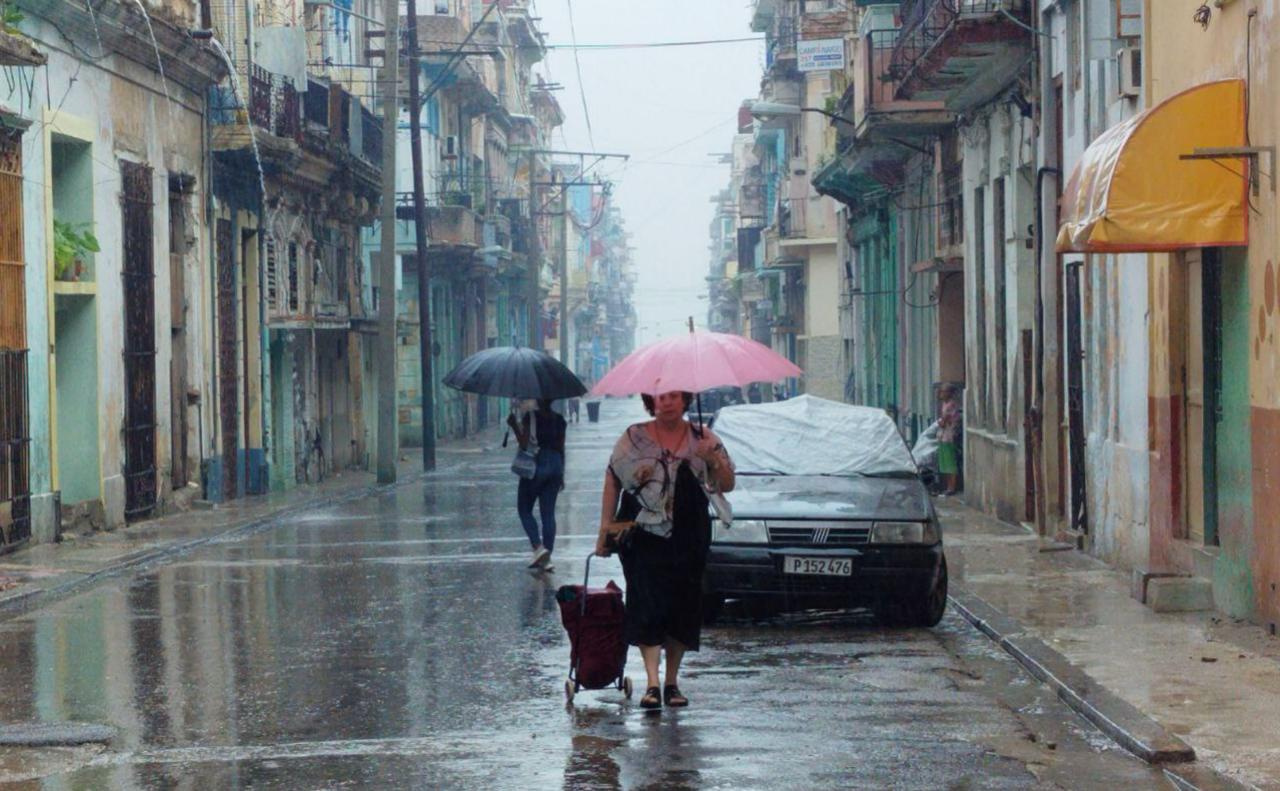
 14ymedio, Milton Chanes, Berlin, 9 August 2025 — Five years had passed since that first leap through time. Seventeen since the first time he lost Ana in that absurd, cruel accident.
Now, tired and consumed, he could barely recognize himself in the reflection of the man who had once dreamed of defying his fate. After countless attempts and journeys—each one driven by the irrational hope of finding a crack in the inevitable—he had come to a bitter certainty: any intervention only hastened the tragedy, or worse, made him an indispensable piece of that relentless chain. It was as if time, far from taking pity, answered his defiance with ever harsher punishment, returning him again and again to the same ending. Ana always died, her head striking the bumper of the old ‘54 Chevrolet Bel Air, driven, invariably, by the same person.
As time went on, and with endless jumps, obsession began to outweigh even the memory itself. He was no longer sure what he truly loved: Ana, or the ever-elusive possibility of saving her. He resembled more and more that gambler who, even after losing everything, insists on one more bet, convinced that next time, at last, luck will be on his side.
No one at the laboratory suspected his nocturnal incursions. Hidden behind the monotonous routine of the cleaning staff, he had become practically invisible to everyone. That invisibility, patiently cultivated over the years, allowed him to become a clandestine expert at operating the machine. He took advantage of any slip—a door left ajar, a password scribbled carelessly on a sheet—to slip into restricted areas and activate the mechanism in secret, always returning before anyone noticed his absence. Unlike the official travelers, he did not receive regenerative treatments: every jump left its mark, and his body, more foreign to him each day, bore the accumulated wear of time.
As the years went by, he stopped jumping with the hope of changing the past; now he traveled only to witness the inevitable, scrutinizing the repeated details in search of a saving fissure, even though the ending was always the same.
Obsession had condemned him to be a perpetual spectator of his own defeat.
He no longer intervened: he simply studied, over and over again, the immutable choreography of the tragedy. He confined himself to being a witness.
He no longer intervened: he simply studied, over and over again, the immutable choreography of the tragedy. He confined himself to being a witness—sometimes a few meters away, other times half a block—watching Ana die, always the same, under the rain.
He noted every step, every gesture, every shadow of that endless night; he filled notebooks with diagrams, timed the intervals, memorized the faces of the witnesses, as if that could offer him some kind of answer.
But it was no longer a matter of willpower: his body, exhausted, could barely endure another jump without proper care. Resignation grew as his exhaustion became unbearable. He knew he might have energy left for just one last journey through time. At most, he could aspire only to be another observer at the final showing of his own tragedy.
He didn’t always choose the same place to witness the scene. Sometimes, he took shelter under an umbrella across the street, eyes fixed on the corner and the café door. Other times, he hid at the bus stop, searching for the best perspective without being detected by his younger selves. Occasionally, he took refuge in a dark doorway or in the entrance of a shop, watching through the misted reflection of the glass. He even waited inside a taxi, watching the fateful corner as if it were the stage of a play repeating to the point of exhaustion.
He tried every angle, every blind spot; he studied the rhythm of the neighborhood, the flicker of the lights, the scattered reflections on the wet asphalt. Nothing changed: the scene always led to the same outcome.
Sometimes he felt the scene itself rejected him, as if he could never fully grasp it: there was always something out of focus, a silhouette dissolving, a phrase lost in the rain.
On the loneliest nights, he lingered long in front of the café, watching from the shadows as his younger self waited for Ana by the window, oblivious to everything, absorbed in a hope that no longer belonged to him. During those vigils, he sometimes had the impression that the owner of the café, from behind the counter, was scrutinizing him with silent curiosity, as if sensing that this quiet, elusive customer carried an old secret. There was something in that gaze—perhaps a mix of suspicion and a faint echo of familiarity—that unsettled him. At times, he felt the owner guessed he didn’t quite belong there, that he was an intruder in his own time, a visitor from another life.
Thus, repeating the cycle of tragedy—always a witness, never a savior—he lost strength, desire, even hope. Each jump left him more exhausted, more distant from himself. He knew his body would not withstand many more journeys. He began to accept the need for a final break, to abandon forever this life of obsessive spectator.
That is why he decided to try one last time: a leap as far back in time as possible, in search of a definitive escape
That is why he decided to try one last time: a leap as far back in time as possible, in search of a definitive escape, perhaps of oblivion. But as he adjusted the controls of the machine, an unexpected doubt stopped him: did he truly want to leave forever, or did he simply wish to see her one last time? Perhaps—that thought sent an unknown tremor through him—the last farewell was the only thing he still could choose.
One day, he realized that to break the cycle he would have to look beyond the fatal instant: to search for clues before and after the crucial moment, to explore branches of time that had until then been forbidden to him. He saw only one way out: to go even further back, even knowing that might mean being trapped in the past forever. What was the point of returning, if Ana would no longer be there to receive him? The question hurt, but the possibility of discovering a hidden meaning in the days before the tragedy, or finding some loose thread capable of altering fate, became irresistible in the face of his own ruin.
In those preceding days, the laboratory buzzed with unusual activity. Technicians and scientists worked in shifts until late, absorbed in adjustments and calibrations that they rarely fully explained. Had they noticed his absences? Had they finally discovered him? Accustomed to moving in shadows, he noticed lights on at odd hours, whispered voices, a palpable nervousness in the air. Perhaps—he thought—something in the system was failing, an instability beyond his control.
Yet what disturbed him most was his own sense of rootlessness. He could barely distinguish what time period he was living in anymore. He saw more people in the past—again and again, in the same places and dates—than in any present interaction. It was becoming increasingly difficult to tell what was the future, or if, for him, the future even still existed.
He felt his body would not withstand many more jumps. That’s why he wished to go as far as possible, even if that meant getting trapped in the past and never being able to return. He knew, from rumors, that there was a way to achieve this, though he didn’t know how. Deep down, he wanted this to be his final jump. And yet, he also knew that with each trip to the past, something in his mind sharpened: his brain seemed to grow younger, granting him an almost supernatural clarity, while his body, increasingly tired, suffered more with each return.
That night, as he programmed the machine for the final leap, he finally thought he knew what he had to do to lose himself in the past.
That night, as he programmed the machine for the final leap, he finally thought he knew what he had to do to lose himself in the past. Suddenly, he heard footsteps in the hallway. Someone was approaching the room. He hid behind a desk just in time. He saw feet pause at the doorway, hesitating. The door opened and closed softly. The person approached the machine; he could only see their shoes, not understanding what they were doing. He heard an electronic sound—perhaps an attempt to turn the device off. Then, the figure left as quietly as they had arrived. Were they going to fetch someone else? There was no time to find out. He had to act, or he’d be discovered.
In his haste, he barely checked the controls: a light blinked longer than usual, a number flashed out of place. Fear and exhaustion overrode caution. He pressed the commands almost mechanically, trusting habit more than certainty. He didn’t know if it was fatigue, fear, or simply a mistake, but in that instant, he activated the mechanism.
Only later would he understand that this leap had thrown him much further back in time than he had planned—and that perhaps, this time, there would truly be no return.
Translated by the author.
The series:
Twelve Seconds, Twelve Years Ago
Fifteen Seconds, Fifteen Years Ago
____________
COLLABORATE WITH OUR WORK: The 14ymedio team is committed to practicing serious journalism that reflects Cuba’s reality in all its depth. Thank you for joining us on this long journey. We invite you to continue supporting us by becoming a member of 14ymedio now. Together we can continue transforming journalism in Cuba.