Cafes and kiosks near the building in danger of collapse are surviving with minimal sales and reduced hours.
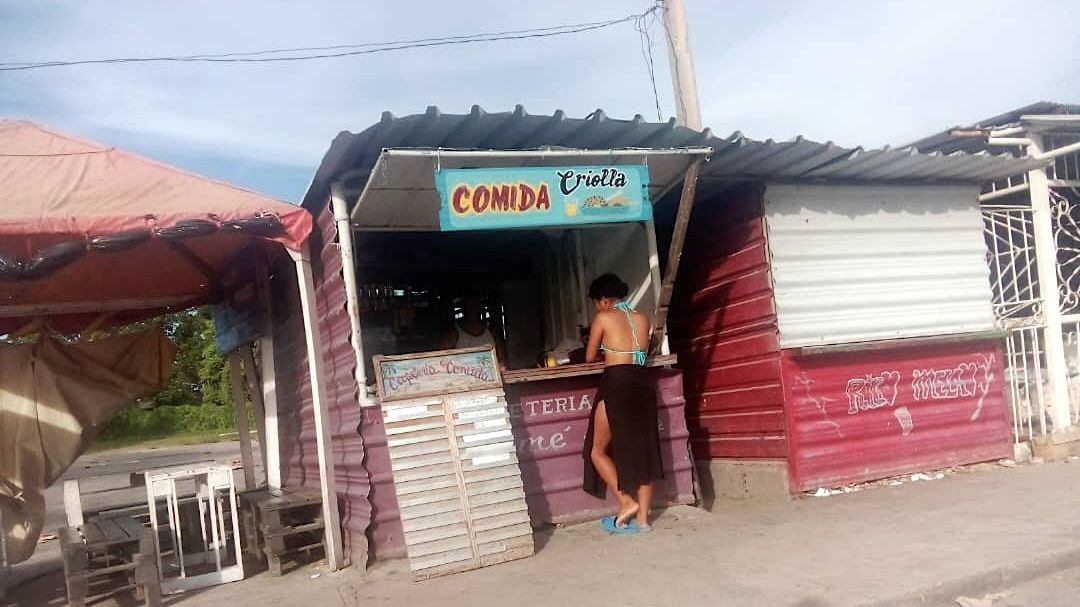
 14ymedio, Julio César Contreras, Matanzas, 2 August 2025 — Since the Matanzas bus terminal closed due to the risk of collapse, the bustle around it has dried up, taking down the incomes of those who depended on commuters. Maricela, 24, has only been able to work intermittently in one of the cafés near the dilapidated building and fears the situation could last for months or years.
“We have a good location, right in front of where the wait list used to be,” she says, pointing to the now-deserted corner. “Before, people would stay there until 8:00 p.m., but since the buses stopped coming, things die after 2:00 p.m.,” the Matanzas native laments.
Initially, Maricela worked as a sales assistant three days a week. Now, with fewer customers and dwindling profits, her schedule has been reduced to covering the other employee’s shifts only when they’re absent. “My salary was 1,000 pesos a day. I used to work two days and rest two, but now they barely pay 700. The joy in the poor person’s house is short-lived,” she laments.
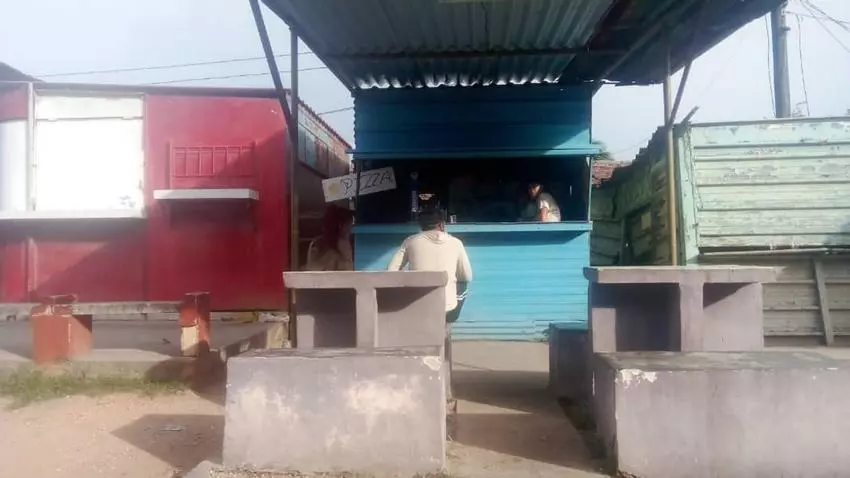
The terminal’s closure also threatens the livelihood of Vladimir, who recently got a job as a clerk at a kiosk near the taxi rank. “We had to stop selling pizzas because we can’t turn on the oven with the power outages. The soda heats up quickly, and no one buys it,” he explains. By six in the evening, they’ve barely sold 5,000 pesos worth.
“In less than a month, two private businesses closed right next door. The owner couldn’t even pay the rent,” he adds, concerned about the warning he received from his boss: if sales don’t improve in the next few days, they will temporarily close until the terminal reopens. Other outlets are facing a very similar situation.
But the prognosis for the work is uncertain. The building has such accumulated deterioration that its restoration could take a considerable amount of time and resources. With its half-broken, once colorful stained-glass windows and a metal framework—in the style of classic European stations—the terminal was built in 1883 by the British company United Railways. Decades without investment caused ferns to sprout from its walls and enlarged the gaps in the roof.
Last October, the official announcement came that bus terminal services would be moved to the train station. The relocation has not only inconvenienced passengers but has also been a severe blow to local merchants, drivers, and street vendors.
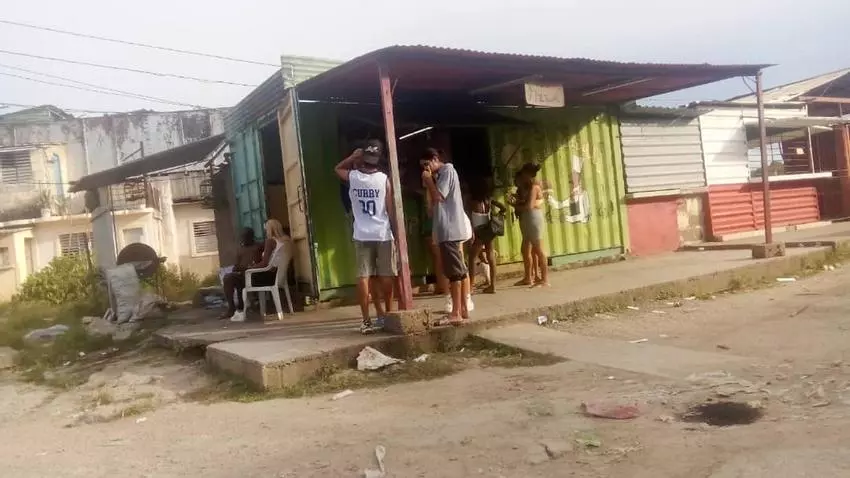
Eliécer, another entrepreneur in the area, also faces a shortage of drinking water. “I rent a tricycle and bring water from my house in buckets,” he says. His kiosk, which he opened next to the bus platform, attracted by the old crowds, now sells only jams and pre-prepared light meals.
“Before, we opened at five in the morning and set up everything right there. I even considered having the kiosk open 24 hours a day. I invested in improving the roof and was ready to buy a small power plant. But in this country, nothing is the way you want it. Now I close at five in the afternoon and I don’t plan on spending any more,” he admits.
Private merchants bear the losses. “Our main customers were those traveling far away, not those traveling within the province or the taxi drivers,” says Eliécer. “Those who came here to travel wanted a sip of coffee before boarding the bus, a bite to eat for a snack, or a meal before leaving,” he details.
Eliécer believes that by the time the station reopens, many of the local businesses will have completely collapsed. “Every day it’s closed means a business has one foot in the grave,” he describes.
____________
COLLABORATE WITH OUR WORK: The 14ymedio team is committed to practicing serious journalism that reflects Cuba’s reality in all its depth. Thank you for joining us on this long journey. We invite you to continue supporting us by becoming a member of 14ymedio now. Together we can continue transforming journalism in Cuba.