Sheep Thieves Kill One Custodian and Seriously Injure Another in Santiago De Cuba

Authorities presumably arrested the six responsible “in less than 24 hours.”

Authorities at UBPC Fidel Domenech Rizo, from Pueblo Nuevo, in Contramaestre (Santiago de Cuba), the day after the event / Facebook / Heroes of the Moncada

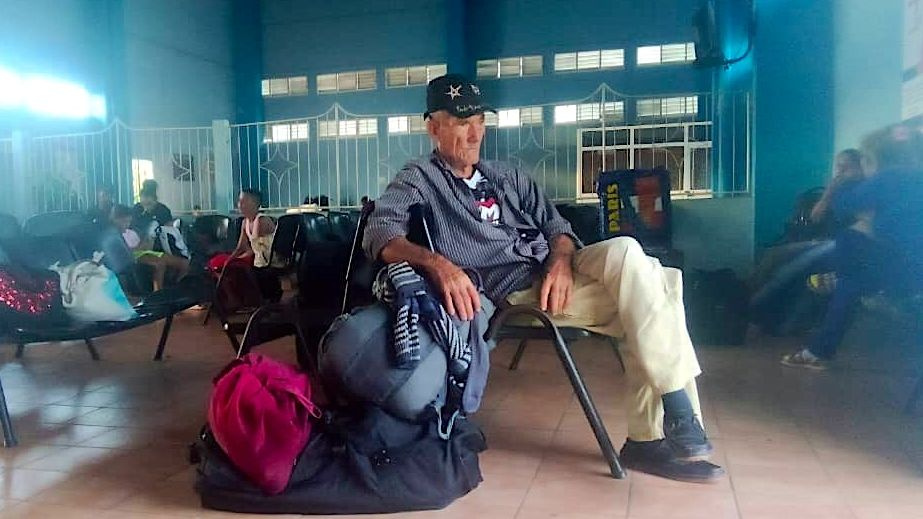
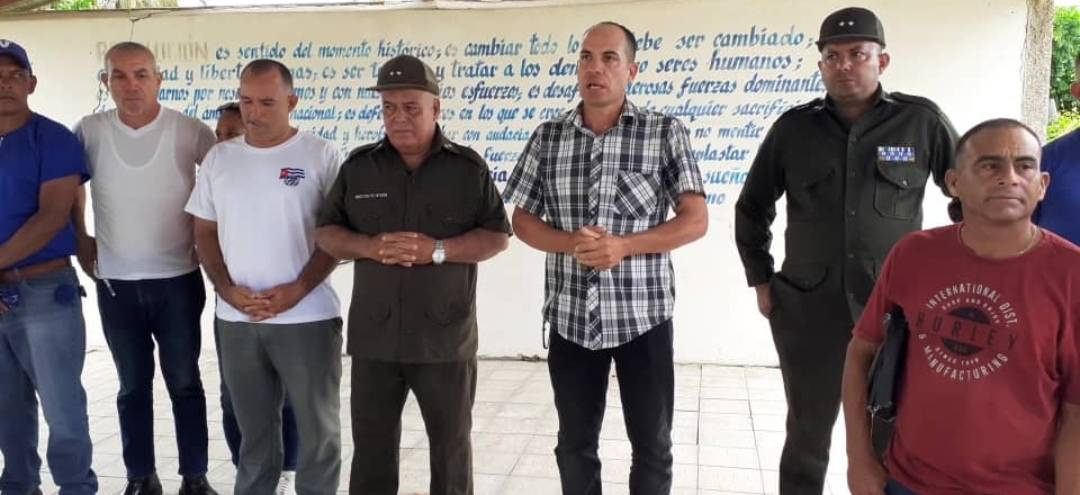
14ymedio bigger14ymedio, Havana, August 7, 2025 — A caretaker was killed and another seriously injured when six individuals raided a state cooperative in Santiago de Cuba to steal sheep. According to a brief statement released on Wednesday by the official press, the events took place on Monday night when “unknown persons” entered the UBPC Fidel Domenech Rizo, in Pueblo Nuevo, belonging to the municipality of Contramaestre.

From there they left with 13 animals, the text says, and “objects of the entity,” after killing one of the guards and inflicting “serious injuries on a second, to the point that he thought he would die.” The Ministry of the Interior’s statement says that early on Tuesday “investigations began,” and “within a few hours” they identified “several recipients of the stolen meat, as well as citizens associated with the commission of the act.”

The report does not give more details of the victims or the possible perpetrators, but an official profile on Facebook of Heroes of the Moncada gives complete information. The suspects are six men, between 33 and 43 years old, who have already been arrested. The post, which differs by one in the number of stolen sheep -12-, presumes that the security forces “solved the crime in less than 24 hours, putting behind bars the aggressors, who will be tried by the courts with the severity continue reading

that such a reprehensible crime requires.”

Several comments offer condolences for the murdered caretaker, whom they call Ismael.

Similarly, the publication reports that the animals were recovered and “slaughtered in gastronomic and recreational facilities of the municipality.”

In the comments, several users offer their condolences for the murdered caretaker, whom they call Ismael, a local resident. As usual in this type of crime, which is increasingly common on the island, commentators also call for the death penalty for those responsible.

Last October, three people were sentenced to life imprisonment and a fourth to 30 years in prison for the murder of the custodian of the Industrial Forestal de Mayarí economic unit, in Holguín, Orlando Pérez, who surprised them while they tried to steal the batteries from several vehicles of the state company.

Deputy Víctor Manuel Montesinos, from Contramaestre, denounced in July before the Agroalimentaria Commission of the National Assembly that of every 100 cases of livestock theft, “only one or two are solved.” That session of the Parliament exposed the debacle of the sector, which has only decreased, by leaps and bounds, since 2019. Additional data provided is that 84.5% of the livestock mass is in the hands of private producers while the government continues to prioritize the state sector, unable to guarantee even the shade under which their cows graze.

Translated by Regina Anavy

____________

COLLABORATE WITH OUR WORK: The 14ymedio team is committed to practicing serious journalism that reflects Cuba’s reality in all its depth. Thank you for joining us on this long journey. We invite you to continue supporting us by becoming a member of 14ymedio now. Together we can continue transforming journalism in Cuba.

The OECD Estimates That Cuba Will Leave the Group of Countries Receiving Development Aid

  • The latest ECLAC report predicts that the economy of the island will remain negative for at least two years.
  • The agency believes that between 2025 and 2035, Cuba will be among the countries with sufficient per capita gross national income to be left without these funds.
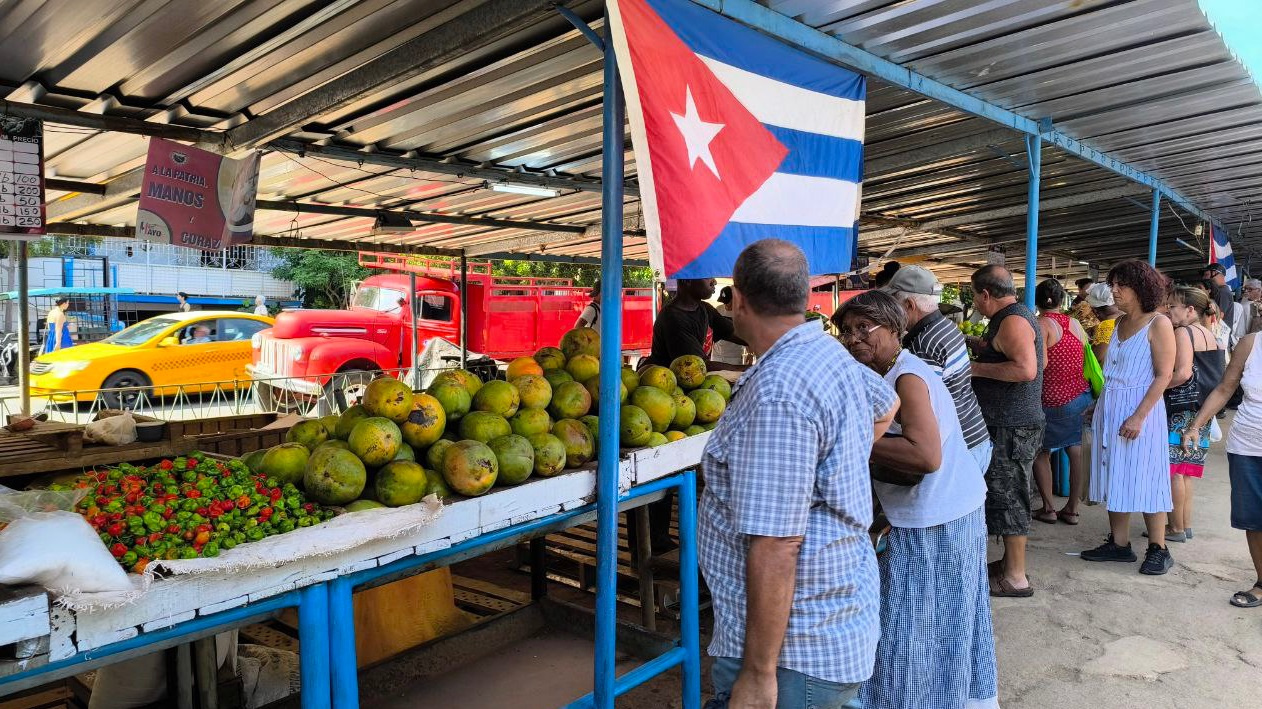
Cubans buying at a market stall at 17 and K / 14ymedio

14ymedio bigger14ymedio, Madrid, August 6, 2025 — At least two years of suffering remain for the Cuban economy. According to the latest report of the Economic Commission for Latin America and the Caribbean (ECLAC), Cuba’s gross domestic product (GDP) will fall in 2025 by 1.5%, more than in the previous year (-1.1%), remaining alone in this situation of decline. Its only companion is neighboring Haiti, whose GDP will decline by 2.3%, although in its case there is an improvement, since last year it declined by 4.2%.

For 2026 the forecasts are less gloomy, as Cuba will remain negative, but only by 0.1%.

Despite this, the ECLAC report contains relatively positive medium-term data, although with uncertain results. Cuba is in the group of future graduates, a block of countries that will move to the category of high “per capita gross national income,”which in practice means leaving the list of those eligible for Official Development Assistance (ODA). In other words, if this forecast is maintained, Cuba may lose one of its major sources of financing.

The Organization for Economic Cooperation and Development (OECD) considers that countries which have maintained a high-income status for three consecutive years, pre-defined on an annual basis and now very close continue reading

to $14,000, can “graduate,” and that the Island will do so between 2025 and 2035.

OECD allocates, through its Development Assistance Committee (DAC), the funds provided by donor countries based on per capita gross national income.

The OECD allocates, through its Development Assistance Committee (DAC), donor funds based on the per capita gross national income as established by the World Bank and the United Nations. As the report published this Tuesday mentions, several countries in the region have graduated in previous years, and by 2026 Panama and Guyana are expected to graduate. “The OECD (2014, 2024) estimates that between 2025 and 2035, Argentina, Brazil, Costa Rica, Cuba, Mexico, Peru, the Dominican Republic, Saint Lucia, Saint Vincent and the Grenadines and Suriname could also graduate,” states the document.

“In the last decade, Bolivia, Brazil, Cuba, Colombia and Haiti have been the main recipients of ODA, measured in dollars, which underlines the importance of these flows and the challenges that their possible loss after graduation entails,” warns the ECLAC, which draws ambivalent conclusions from this situation. While, in their view, graduation represents evidence of economic progress, “it also implies the loss of access to concessional financing that may be difficult to replace with alternative sources, which often have stricter conditions.”

In the case of Cuba, in particular, its access to other types of loans is mostly closed due to its withdrawal from international organizations such as the Monetary Fund, the U.S. sanctions and the very low rating of its debt.

ECLAC places the ODA as one of the largest funds, with disbursements of about $119,096 million between 2013 and 2023, compared to $50,296 from the World Bank. For this reason, the Commission offers some recommendations in view of the possible graduation of so many countries in Latin America and the Caribbean, and it asks that GDP per capita should no longer be considered as a criterion “because it does not reflect the complexity of development needs. It also recommends the adoption of smoother transitions for newly graduated countries.

The macroeconomic development of Cuba does not suggest that it can be part of a list of countries with high per capita gross national income.

The macroeconomic development of Cuba does not suggest that it could be part of a list of countries with high per capita gross national income. The latest data were obtained in 2019, when the last crisis had not yet arrived, and stood at $7,593.35, far from the $13,845 that the DAC considers “high” for the period 2024-25. However, it should be noted that the current classification of the island is intermediate-high, aimed at those above $4,496, according to the World Bank.

The ECLAC report, moreover, places Cuba once again as a country with chronic inflation, and it is one of the countries excluded from calculating the regional average. Argentina, Haiti, Suriname and Venezuela accompany the island in this case. Their inflation numbers are so persistently high that they would artificially deform the whole. While Latin America and the Caribbean have an average of 4.3% inflation and a median of 2.9%, which is much better than in 2022, when it was above 8%, Cuba has reached 24.9%. Only Haiti (28.7) and Argentina (122.1%) are worse off.

Cuba has greatly improved this indicator, at least officially, as it was 39.1% in 2022 and 31.3% in 2023. However, inflation figures above double digits are very dangerous and have two aggravating factors in this case: the first is that in the informal market, which must be constantly resorted to to obtain goods otherwise impossible to find, it is much greater. The second is that, as some Cuban economists point out, the decline in this figure has been achieved by the contraction of the population’s purchasing power and not because there is more production that reduces prices.

Translated by Regina Anavy

____________

COLLABORATE WITH OUR WORK: The 14ymedio team is committed to practicing serious journalism that reflects Cuba’s reality in all its depth. Thank you for joining us on this long journey. We invite you to continue supporting us by becoming a member of 14ymedio now. Together we can continue transforming journalism in Cuba.

The Official Press Warns About the Low Impact of Laws Against Sexist Violence

In Periódico 26, 72% of participants in a survey consider the current laws against these crimes to be “insufficient.”

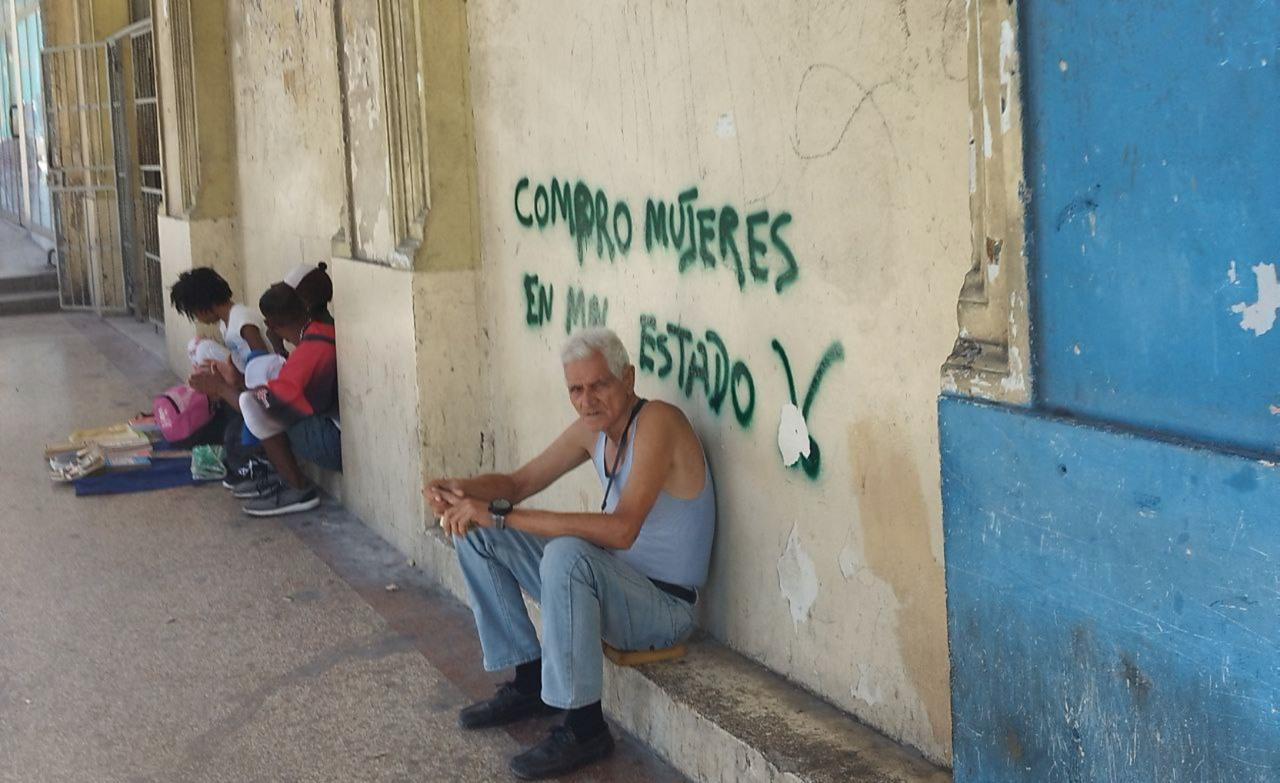
Image of a poster painted on a wall in Havana that reads: “I buy women in bad condition.”

14ymedio bigger14ymedio, Havana, 31 July 2025 — After years of complaints by observers and independent media about the limited capacity of the Cuban Penal Code to punish crimes against women, this Thursday the official press finally began to ask questions. “Do we need more legal reforms in this regard? Should sexual offenses be better criminalized? Do we need faster judicial processes and more protection for victims?” asks Periódico 26 in its own survey in which it exposes a crucial fact: 72% of the participants consider that the current laws against these crimes are “insufficient” or “lax.”

The media warns that the survey “is not representative,” but ensures that the perception of citizens brings to debate a concern not unfounded and, above all, “brings to light the macho culture that surrounds us.”

In 2024, according to figures from the Cuban Observatory on Gender Equality, Las Tunas reported 22 cases of “gender-based violence,” two more than the previous year. Although the report does not detail whether they were assaults or murders and offers a brief profile of the victims -the most common being white women between 20 and 44 years old- it confirms that these facts are hardly those that reached the courts.

The survey also measures the low level of trust in authorities.

Las Tunas was also the second province in the country with the highest number of cases that year, only behind Havana (51), which has more than four times its population, an information that Periódico 26 ignores.

The survey also measures the low level of trust in authorities — between 46% and 55% of respondents believe that many cases are never reported — and the stigma women suffer when they are victims of machista violence. “It is frightening that some, [a] small percentage but enough to worry, feel that ‘they are asking for it’, in a clear sign that the reprehensible culpability of continue reading

the victims persists,” warns the media.

This same Thursday, the official newspaper of Camagüey, Adelante, announced that the system of courts on the island created “gender committees” in each province to “mainstream a gender perspective in the administration of justice.”

According to the article, the strategy seeks, among other things, to deal with these cases “urgently and as a matter of priority,” emphasizing the “right to a dignified life free from violence.”

The articles of both Adelante and that of Periódico 26 were published ten days after the official press reported the murder of a woman in Holguín, calling it “femicide” contrary to its custom. However, a few weeks ago the independent media reported the case of Orlis Daniela, only nine years old, killed by a neighbor in Grito de Yara, Granma, about which the authorities never commented.

So far this year, 14ymedio records 20 femicides, of which one took place in that province.

The girl and her four brothers had found the body of their mother, Yusmila Mayo Ruiz, victim of a femicide perpetrated by her partner on February 14, 2024, in Las Tunas. After Orlis’ death, independent observatories called out the authorities for leaving the children homeless. “The terrible story of this little girl is not a tragedy or fate; it is the consequence of a broken society and a State that refuses to protect the lives of women and girls,” they said.

So far this year, 14ymedio records 20 femicides, of which one took place in that province. This is the teacher Nancy Leyva García, 35 years old and a resident of Las Delicias (Puerto Padre), who was killed by her partner on the street on April 12.

According to the platforms, Nancita, as she was known, was very popular in the community for her profession. She had two children, at least one of them of school age.

In an unusual report that seeks to confirm that enough attention is being paid to machista violence in Cuba, the official press also reported last June the sentencing to 28 years in prison of a man accused of killing his former partner last year in Las Tunas. “The accused, in the early hours of June 5, 2024, assaulted with a knife and deprived of life the woman (…) with whom he had two children,” said Periódico 26, which did not reveal the name of the victim, who could be identified thanks to independent records.

This is Katia Ortiz Figueredo, 25 years old, killed around 11:00 in the evening in front of several people who were waiting to buy medicines in front of a pharmacy. “They had been divorced for a few months, but he, under threats, had kept her in his home for five days and sexually abused (her), according to the expert reports from the necropsy, leaving two children, a boy eight and a girl of three,” said a family member.

Translated by Regina Anavy

____________

COLLABORATE WITH OUR WORK: The 14ymedio team is committed to practicing serious journalism that reflects Cuba’s reality in all its depth. Thank you for joining us on this long journey. We invite you to continue supporting us by becoming a member of 14ymedio now. Together we can continue transforming journalism in Cuba.

The Murder of a 19-Year-Old Woman is the Fourth Femicide in Cuba in August

Ledisvannielis Acosta Echavarría was stabbed in her home in Centro Habana by her partner.

The murder of Acosta Echavarría adds to a particularly bloody cycle. / Facebook

14ymedio bigger14ymedio, Havana, 18 August 2025 — The body of 19-year-old Ledisvannielis Acosta Echavarría was found in the bathroom of her house, located on Calle Amistad, between San José and Barcelona, in the Havana municipality of Centro Habana. The Alas Tensas Gender Observatory (OGAT) confirmed the event on Monday through its social networks.

The crime occurred on Tuesday, August 12 and, according to neighbors in the area, the attacker was seen trying to sell her pet before turning himself over to the police around eight o’clock at night. The perpetrator, also a very young man, stated that he was under the influence of drugs at the time of the murder.

The murder of Acosta Echavarría adds to a particularly bloody cycle. The young woman became the youngest victim of the femicides recorded this month.

Violence against women affects the entire country

With this case, 14ymedio counts 24 femicides in Cuba so far in 2025. In August alone, four women have lost their lives in similar circumstances.

The records of this newspaper and feminist platforms show that violence against women affects the entire country. Holguín tops the list with four confirmed femicides. It is followed by Havana and Camagüey, with three continue reading

victims each. There are two cases in each of Ciego de Ávila, Sancti Spíritus, Granma and Santiago de Cuba, while at least one such murder has been documented in Pinar del Río, Cienfuegos, Matanzas, Las Tunas and Artemisa.

The dispersion of the events shows that almost no province is exempt from a phenomenon that feminist organizations call a national emergency. The lack of official data and effective prevention protocols aggravate the picture.

Not all murders of women in the context of a robbery are classified as femicides.

On August 4, Mailenis Blanco Amor, 47, was murdered in the town of Puerta de Golpe, in the municipality of Consolación del Sur. Three unknown men, posing as policemen to break into her house and rob her, ended her life. Both Alas Tensas and Yo Sí Te Creo en Cuba emphasize that, although not all murders of women in the context of a robbery are classified as femicides, in this case “gender bias is evident,” since the aggressors waited for the victim to be alone and applied disproportionate violence against her.

A day later, on August 5, another crime occurred in the city of Holguín. Milagros Batista Estévez, 56, was killed by her ex-partner in her home in the Alex Urquiola neighborhood. According to reports from feminist platforms, the victim had filed multiple prior complaints against her attacker, but police authorities had not adopted any effective protective measures. Batista, a mother of two grown children and grandmother to several grandchildren, was well-known in her community, which was shocked by the incident and the institutional inaction.

The 72-hour deadline required to officially report a missing person puts women victims of gender-based violence at greater risk.

The third victim in August was Bárbara Elena Tejería Magdaleno, also 56, a resident of Calabazar, Boyeros municipality, Havana. On August 11, she was attacked with a machete by her partner, who denied having seen her for days. Bárbara Elena’s body was found three days later in a vacant lot in the Las Cañas neighborhood. The attacker took his own life shortly afterward. Her case reignited the debate over the 72-hour deadline required to officially report a missing person, a protocol that, according to activists, puts women victims of domestic violence at greater risk.

Neither the Federation of Cuban Women nor other state institutions have offered a public response to these crimes, despite the growing social alarm they provoke. Independent observers warn that the lack of effective recognition of femicide in the Cuban Penal Code is reflected in the lack of prevention policies, the lack of protection for victims, and the lack of transparency in official statistics.

The state’s response is limited to prosecuting the aggressors and issuing “exemplary sentences.”

These organizations also denounce that there is no network of shelters for women at risk, nor specialized helplines that operate systematically throughout the country. The state response is limited, in most cases, to prosecuting the aggressors and issuing “exemplary sentences.”

The four victims of August share common elements: solitude in the face of their attackers, a lack of institutional protection, and the extreme violence inflicted on them. From murders committed by resentful ex-partners to those perpetrated in the context of robbery, the common denominator is the use of excessive force against women in vulnerable situations.

Translated by Regina Anavy

____________

COLLABORATE WITH OUR WORK: The 14ymedio team is committed to practicing serious journalism that reflects Cuba’s reality in all its depth. Thank you for joining us on this long journey. We invite you to continue supporting us by becoming a member of 14ymedio now. Together we can continue transforming journalism in Cuba.

Guanabacoa, Land of Rivers and Hills, Is Running Out of Water

In Centro Habana, neighbors use buckets to block Reina Street in protest at the lack of supply.

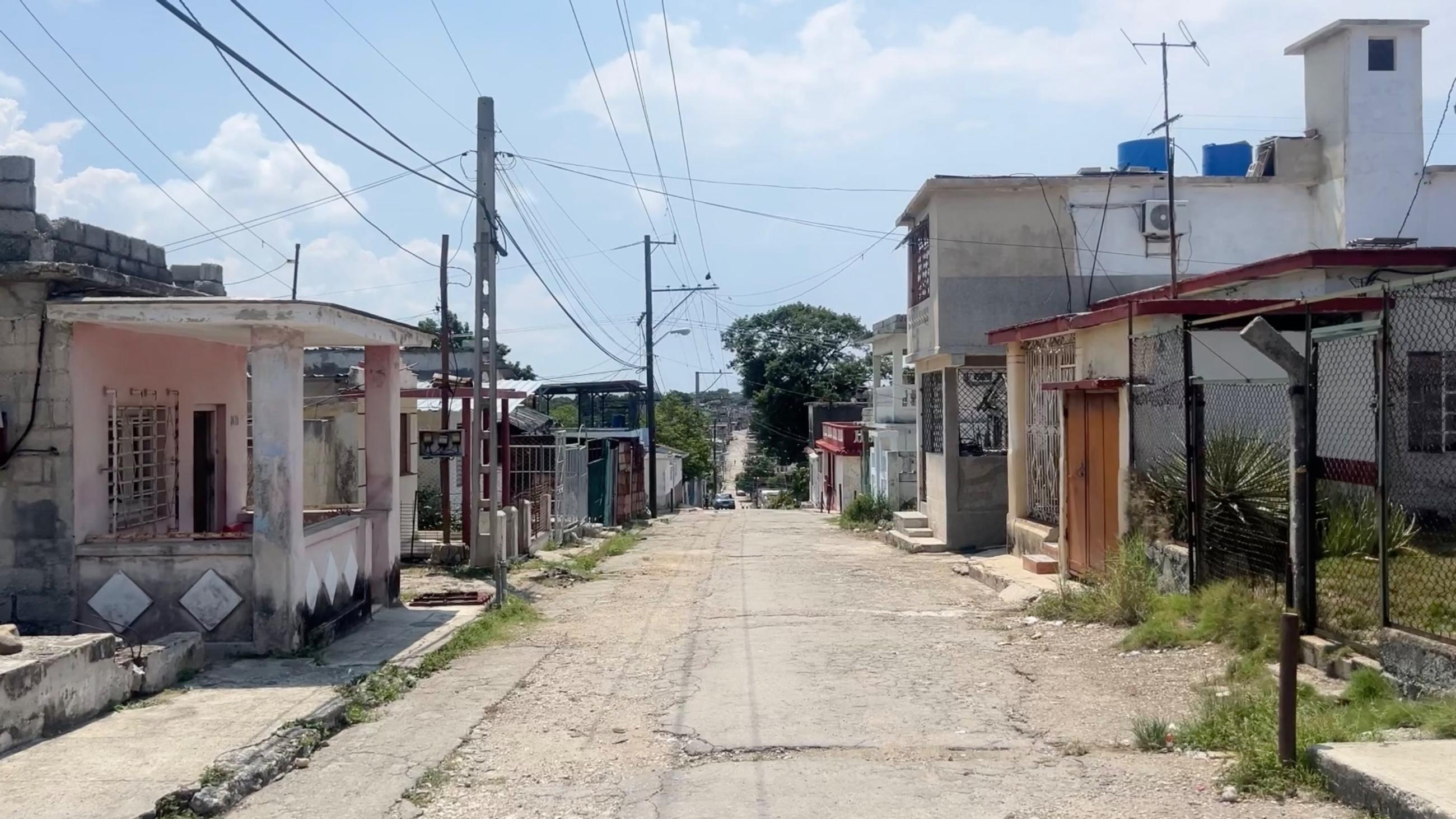
La Loma de Corrales, Corrales Hill, which gives its name to the street, is an insurmountable obstacle for the old water pipes that have little pressure. / 14ymedio

14ymedio bigger14ymedio, Darío Hernández, Havana, August 20, 2025 — Guanabacoa evokes the orishas, Catholic processions and water, a lot of water, as reflected by the Taína word that gave it its name: land of rivers and hills. Although its springs remain part of the collective and religious imagination, dry water pipes are changing the way many residents perceive one of the most dilapidated municipalities in the Cuban capital.

“Here in my house we are lucky because the water sometimes arrives, but it’s been months since that block has had it,” says Carmita, a neighbor who lives a few meters from Calle Corrales, epicenter of the most serious supply problems in the area. “People have to come here to fill their buckets,” she says, adding “not that much comes in, you have to have a pump to get it out.”

La Loma de Corrales — Corrals Hill — which gives name to the street, is an insurmountable obstacle for the old water pipes that have little pressure. To the law of gravity are added problems with the electricity supply, the poor state of the pumping equipment in the aqueducts and, especially, the chaotic handling of the valves that allow water to reach the neighborhood.

“This problem has been going on for over 20 years, but it got more complicated when they did some work in 2022,” adds Carmita.

“This problem has been going on for more than 20 years, but it got more complicated when they did some work in 2022,” adds Carmita. She is referring to works that enabled a new continue reading

route for supply to other areas of Guanabacoa. However, the so-called bypass, directed by Rosaura Socarrás Ordaz, deputy director of operations of the Havana Water Company, brought relief to some and an ordeal to others.

“Since then, water has stopped coming in frequently,” says a neighbor. The lack of pressure that the whole area suffers forces residents, like Carmita, to have a ‘water thief ‘ able to suck the pipes to extract every last drop. But in the houses on Calle Corrales, not even the most powerful pump can get anything out most of the time.

“Right now we have gone 20 days without having any water,” says a young man who has just returned this Monday from the municipal office of People’s Power where complaints and claims about the water supply are coming more often. “”When they send a water truck, it is barely enough for three houses, and that is every 20 days or more. No one can live like this,” he emphasizes.

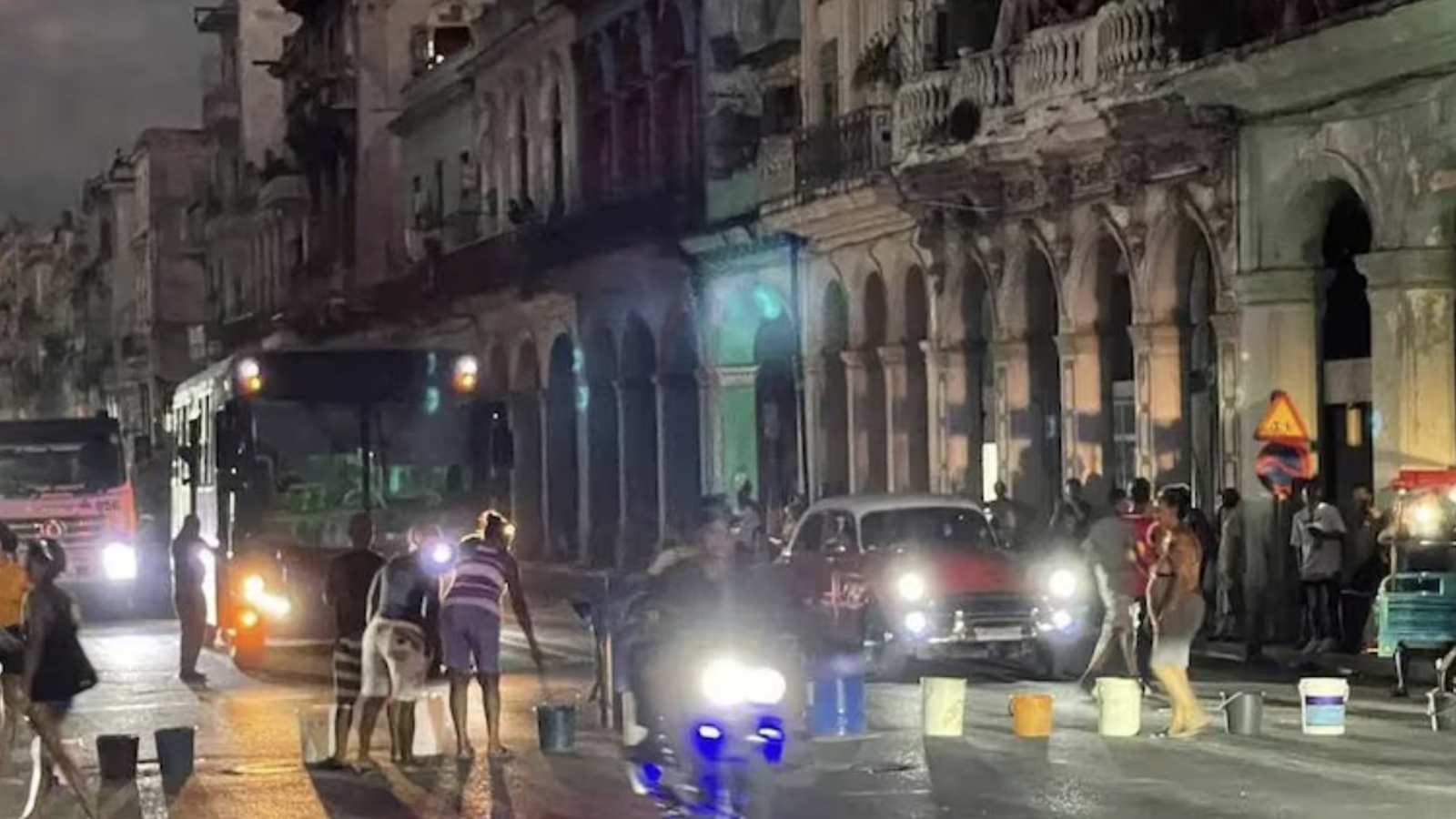
This Tuesday, in Centro Habana, a group of people protested by blocking Reina Street with buckets after going seven days without water. Their complaints even reached the international press, while Guanabacoa, with very few investments in infrastructure in recent decades, is still considered by many to be the most forgotten municipality of Havana. Its historic center has suffered numerous building collapses; its rivers are visibly polluted; many streets lost
their asphalt years ago; and demands on the hydraulic system, installed in the first half of the twentieth century, have grown along with the emergence of slums. The urgency of a renovation project is obvious, but the Havana Water Company does not have the resources to tackle it.

This Tuesday, in Centro Habana, a group of people with buckets protested the lack of water and blocked Reina Street. / OCDH/X

“They blow us off, tell us that the country lacks currency to buy what’s needed abroad; it’s the same speech as always,” complains a resident from inside her doorway, where she takes shelter from the strong August sun. “The water trucks they send are small, and the water, when it arrives, has a strange color, like it’s dirty.”

The protest calls out other affected people who end up improvising an assembly on a corner near Corrales. “The answer they give is that they write you down on paper and do nothing, nothing. They throw the papers in a drawer. They said that by today they would see if they could send us a water truck,” the young man complains. “They keep us guessing, because when the water comes they cut off the electricity, and we can’t fill anything. Since the 15th of last month, we haven’t had any water.”

Several residents point to a mishandling of the valves located in the area known as El Mikito as the main cause for the low pressure that prevents the inhabitants of Corrales street from having water in their pipes. They have been able to continue bathing and cooking thanks to the solidarity of those who live in areas where supplies do arrive and allow them to fill their buckets.

Several residents report poor valve management in the area known as El Mikito as the main cause of the low pressure.

“In my house we carry it from the neighborhood of Santa Maria, in buckets and small tanks. All this past year I have had to put some bottles in the same cart as the propane tank, and I go up and down that hill several times a day,” points out another resident who joins the improvised meeting where emotions run high and reports of the laziness of the institutions are repeated.

“The Havana Water Company is doing a bad job, because when they open the tap in El Mikito the water has a little more pressure. They will have to change the employee who takes care of it here. Change him or kick him out,” speculates an old woman with a face full of despair. “What they are doing is filling swimming pools and making money,” she says.

The discussion dissolves when the imperative of going out to fetch water imposes itself. One with a wheelbarrow, another with a shopping cart and a third with a backpack, they leave in different directions. They will not return until they have filled the bottles and buckets they carry. In La Loma de Corrales, whole families are waiting to start cooking, bathing and washing clothes.

Translated by Regina Anavy

____________

COLLABORATE WITH OUR WORK: The 14ymedio team is committed to practicing serious journalism that reflects Cuba’s reality in all its depth. Thank you for joining us on this long journey. We invite you to continue supporting us by becoming a member of 14ymedio now. Together we can continue transforming journalism in Cuba.

A House in Poor Condition Is Given to a Cuban Softball Captain

The house that was given to Yilian Rondón Velázquez has damp walls and beams full of woodworms.

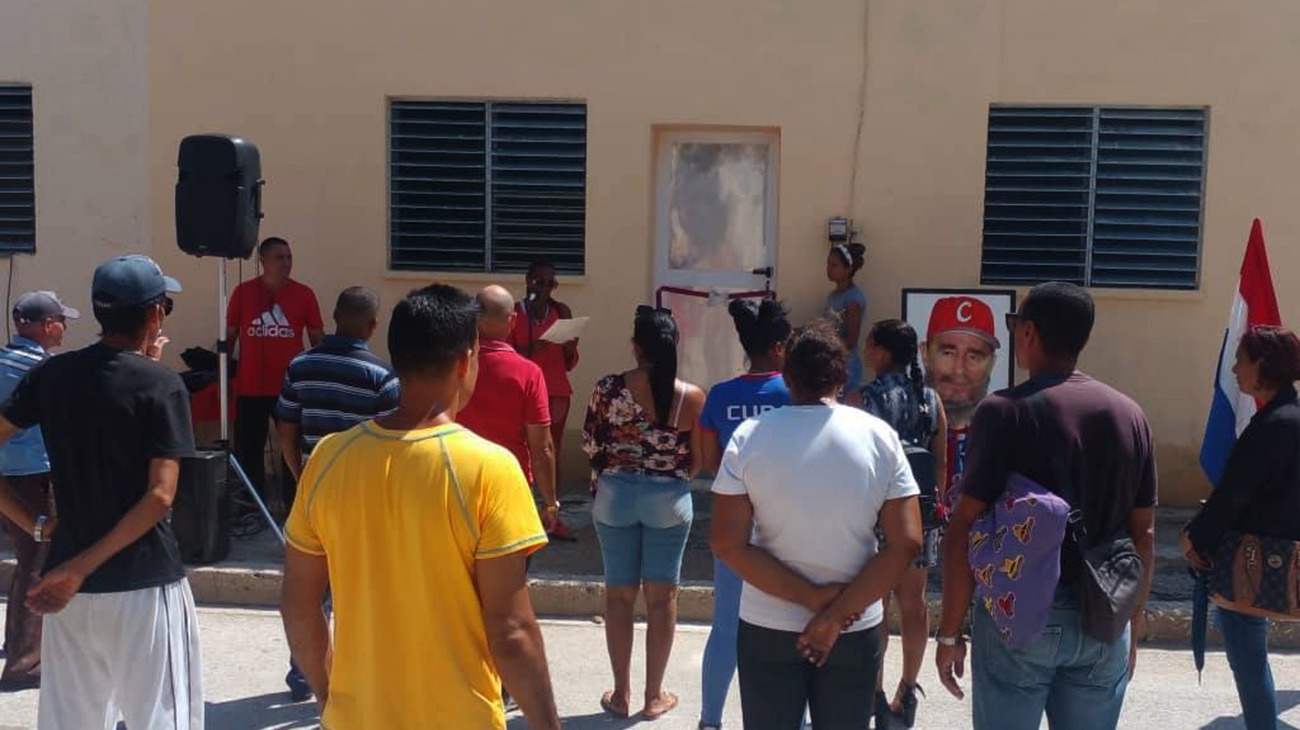
The event where the house was given to Yilian Rondón Velázquez. / Facebook/Yoel al Strike

14ymedio bigger14ymedio, Havana, 20 August 2025 — A house in very poor condition was given to the captain of the Granma and Cuba softball teams, Yilian Rondón Velázquez, at the celebration of Fidel Castro’s 99th birthday. According to the complaint published by ’Yoel al Strike’ on Facebook, the house in Manzanillo, Granma, “seems to be a shelter, a warehouse or a barracks.”

The “incentive” given to the national selection of the sport for 15 years, was a house with “damp walls.” In addition, emphasizes the post, “in the support for the beams, there is a maggot [that parasite that devours the wood little by little and comes out when the evil is already done].”

There are photos showing the carelessness in the remodeling of the house. “When painting, they did not take into account the protection of the landing, and it was covered with slag from the welding of the roof.” Also, “they dropped the tiles from a meter high, and they are uneven, without color and with joints that look like the tributaries of the Amazon.”

The walls of the house are damp. / Facebook/Yoel al Strike

Yoel Rosales Wert, the owner of the Facebook space Yoel al Strike, pointed to the president of the Cuban Baseball and Softball Federation, also national commissioner, Juan Reinaldo Pérez Pardo, for delivering a home that “does not have the slightest aesthetic, comfort and much less safety,” and who obtained four international contracts “contributing to the economy” of the Island.

“Don’t tell me that there are heroes and Olympic champions who have no home,” added Rosales.

The incentives to athletes, coaches and sports stars have often been questioned for their poor conditions. At the end of July, the coach of the five-time Olympic champion Mijaín López and other medallists, Raúl Trujillo, received a vehicle continue reading

with more than 190,000 kilometers on it and worn-out tires.

The “dedication and loyalty” of Trujillo, “one of the most successful coaches in the history of the Cuban struggle,” was recognized by the regime with a vehicle withdrawn from tourist rental. A car, stressed Rosales, with “three 14-inch tires and one 16-inch tire, without a spare. In addition, they are smooth, and there are two visible bumps on the body.”

The damaged vehicles with which the National Institute of Sports, Physical Education and Recreation recognized the fidelity of their sports heroes have been evidenced on other occasions. The gold medalist at the Olympic Games in Paris 2024, Erislandy Alvarez, said months ago that “they gave me shit” and that the only thing that worked on the Hyundai Grand i10 “is the engine.”

The boxer said he “spent almost $5,000” to restore it. “These are things that are not published when they report it. This shows no respect. A tire even blew out on me; thank God nothing happened,” he said on his networks, referring to an official press release. Shortly thereafter, he deleted the post.

Translated by Regina Anavy

____________

COLLABORATE WITH OUR WORK: The 14ymedio team is committed to practicing serious journalism that reflects Cuba’s reality in all its depth. Thank you for joining us on this long journey. We invite you to continue supporting us by becoming a member of 14ymedio now. Together we can continue transforming journalism in Cuba.

Political Prisoner Virgilio Mantilla Arango Is Free After “More Than Four Years in Inhumane Conditions”

 The Camagüey opposition leader “is in the worst of misery,” his friends claim.

He would have completed his sentence in October 2024, but he was given an additional 10 months after being charged with contempt. / Facebook

14ymedio bigger14ymedio, Havana, 19 August 2025 — Virgilio Mantilla Arango, founding leader of Camagüeyan Unity for Human Rights, was released from prison this Sunday, according to his family and friends on social media, including activist and Lady in White Leticia Ramos Herrería, who requested basic assistance for the opposition leader.

“I’ve never asked for anything for myself, but rather for brothers in struggle. Virgilio Mantilla Arango has just been released and is in the worst of misery. He doesn’t even have a sheet to sleep on, or a phone, or anything. I’m calling on all my friends and brothers and sisters in exile to help him with whatever they can,” she pleaded on her Facebook account late Sunday, after speaking with him.

Mantilla Arango was released after serving his prison sentence. The opposition figure was convicted in 2021 following the historic Island-wide anti-government protests of 11 July (’11J’), although he had already served time in prison and subsequently had multiple convictions against him.

In 2020, Mantilla Arango expressed his solidarity with the members of the San Isidro Movement who had taken up quarters in November to demand freedom and democracy and were detained by authorities, who accused them of violating health regulations to contain COVID-19. Accused of “hoarding food,” the opposition leader was sentenced to seven months in prison in the Kilo-7 prison in Camagüey. On July 4, after serving his sentence, he was released, but his release lasted just over a week.

On July 16, following the protests, Mantilla Arango was arrested again with other demonstrators and in September 2021 he was sentenced to three years and three months in continue reading

prison. He would have completed his sentence in October 2024, but was given an additional 10 months after being charged with contempt for demanding better prison conditions with other inmates. The complaint also earned him several days in solitary confinement.

Last June, his sister Kenia Mompié Mantilla had to deny a rumor that had circulated about his being murdered in prison, although it turned out to be another unspecified inmate.

“Virgilio, always the same as yesterday, today, and always, reaffirms with forceful words that he has left prison greatly strengthened spiritually, and his spirit is very contagious and positive,” said activist Mary Lugo on social media after a conversation with Mantilla Arango on Sunday.

“This morning, the prison authorities informed him of his release, and he told the officers that if they didn’t want him, they shouldn’t let him go, because he wouldn’t stop fighting in freedom for the good of the people and protesting so many injustices, as he has just done in this conversation, where he asks that the horrible situation of the prisoners be denounced and the sadness of seeing his people suffer so much,” she added.

The Madrid-based Cuban Observatory of Human Rights reported on his release on Monday and denounced the opposition leader’s ordeal, who “has been imprisoned for more than four years in inhumane conditions, generating constant complaints of human rights violations.”

____________

COLLABORATE WITH OUR WORK: The 14ymedio team is committed to practicing serious journalism that reflects Cuba’s reality in all its depth. Thank you for joining us on this long journey. We invite you to continue supporting us by becoming a member of 14ymedio now. Together we can continue transforming journalism in Cuba.

The Cuban Regime’s Cultural Commissars Discover the Podcast

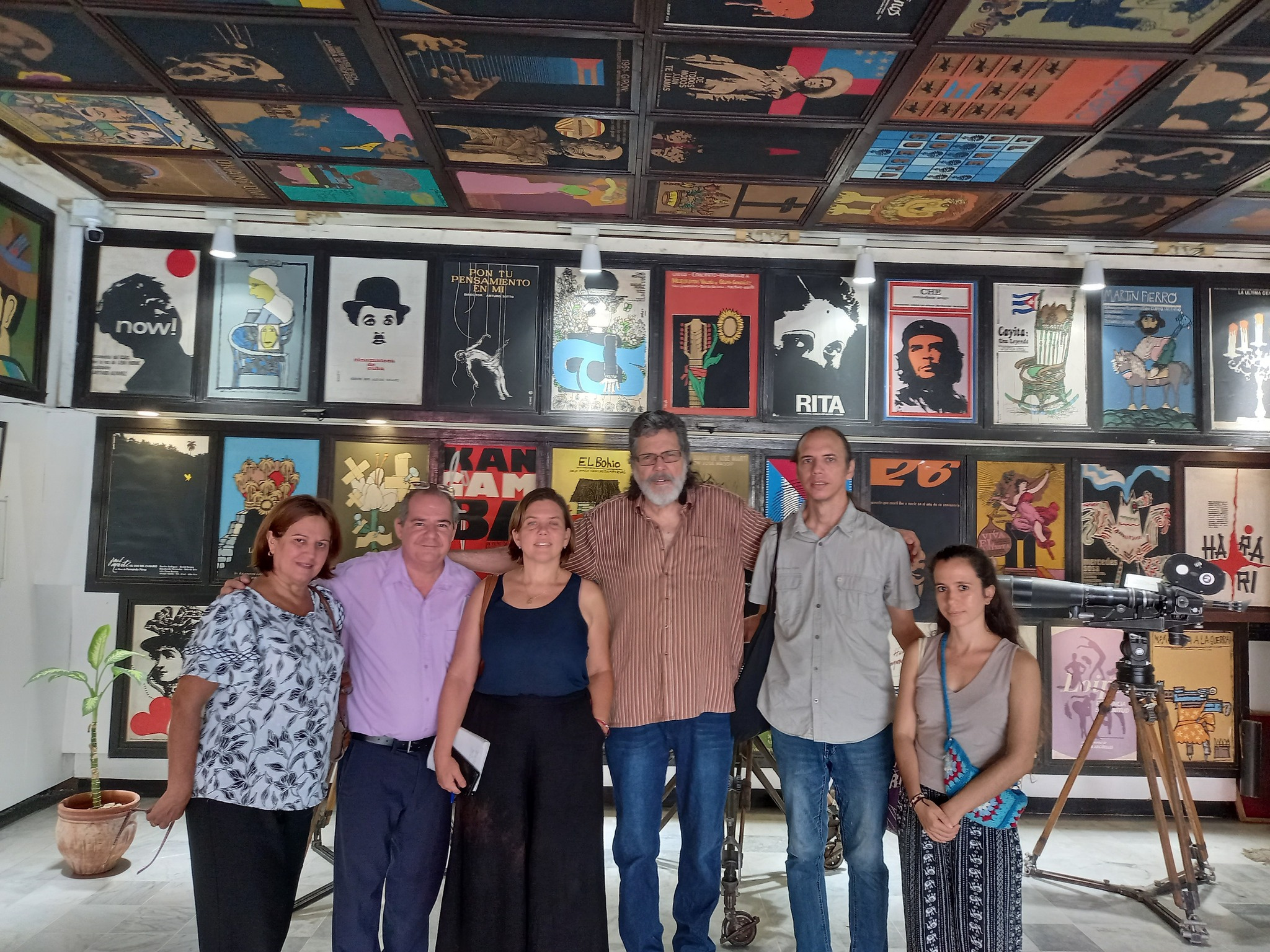
Abel Prieto announces that his podcast will be “anti-fascist, anti-colonial, anti-imperialist, Latin Americanist, Caribbean and ‘Lezamian’.”

The former Minister of Culture’s announcement barely garnered a dozen comments on Facebook, half of them negative. / Facebook

14ymedio bigger14ymedio, Yunior García Aguilera, Madrid, 20 August 2025 — La Casa de las Américas has decided to join the podcast craze in Cuba. On its X and Facebook profiles, the institution’s president, Abel Prieto Jiménez, announced that they will begin publishing a biweekly program, with an “anti-fascist, anti-colonial, anti-imperialist, Latin Americanist, Caribbean, and Lezamian*” approach. What the former Minister of Culture didn’t explain is how they plan to fit all of this together without the whole mess exploding in their listeners’ stomachs.

The Cuban regime maintained a monopoly on information for decades. The arrival of the internet—albeit late—began to break its grip on the narrative. Aware of their defeat in the so-called “communications battle,” the single-party strategists launched an offensive: anonymous profiles, the so-called cyber-clarias [catfishers], weren’t enough. It was necessary to create creators of revolutionary content, Castro influencers, hammer-and-sickle YouTubers and tropical communism podcasters.

The hand-picked president himself took on his role with Desde la Presidencia. With effort—it must be admitted—Miguel Díaz-Canel managed to read the teleprompter without looking like a primitive version of artificial intelligence. He hid his cards from the camera’s frame and rehearsed sentences while biting a pencil to hide his poor diction. continue reading

He is not a millennial dictator. He would never take a selfie at the UN, like Salvadoran President Bukele did. Díaz-Canel is an old-school bureaucrat.

He is not a millennial dictator. He would never take a selfie at the UN, like Salvadoran President Bukele did. Díaz-Canel is an old-school bureaucrat, even though his wife, Liz Cuesta, introduced him to the art of botox. In his podcast, he promised a July “without blackouts,” a ‘family basket’ with “better prospects,” [from the ration store] and “greater stability” in the water supply. Reality shows that, just as paper can withstand anything, a microphone can also withstand any lie spewed into it.

It is no surprise that Prieto’s podcast claims to be Lezama-esque. Cynicism and hypocrisy are organic characteristics of the model inherited from the Soviets. The young people recruited by Casa de las Américas may only use Lezama to boast about their difficult readings, without remembering that his Paradiso was dismissed as “incomprehensible” and “elitist,” “foreign to revolutionary morality,” and “art useless for the people.” The man whom El Caimán Barbudo called “bourgeois extravagance” now inspires the cultural commissars’ podcasts .

The headlines and presentations of pro-government communicators always seek to break, to slash, to tear. Con Filo promises to “tear the seams of media manipulation,” Arleen Rodríguez Deribet’s Chapeando Bajito (“Weeding Low”), although more than grass, she seems to want to uproot all dissenting opinions. Prieto, for his part, attempts to use the Lezamian “scratch in the stone,” without making it clear whether this rocky mass refers to the site where Fidel Castro’s ashes were buried.

The official menu is ample, but with a fairly uniform flavor: elegies to the institution, political analyses from a single perspective, and news summaries filtered through various ideological filters. On YouTube, iVoox, or Spreaker, the results are not good. Desde la Presidencia rarely exceeds a few hundred views, except for temporary peaks. The same is true of Chapeando. They depend more on the official machinery than a loyal community.

On the other hand, critical podcasts have built strong and engaged audiences.

On the other hand, critical podcasts have built strong and engaged audiences. In terms of public metrics—followers, playbacks, community—independent podcasts lead the way. State-run podcasts have the machinery, but are failing to retain audiences. Critical podcasts, despite facing censorship and with their audiences inside Cuba forced to use VPNs, are building active communities.

Prieto’s announcement received only 12 comments on Facebook, half of them negative. The Cuban intellectual who signs on from Madrid under the pseudonym Fermín Gabor predicts that the podcast will be more like “a stone in the sand.” At least the production of memes is guaranteed.

________

*Translator’s note (copied from AI on-line source): “Lezamian refers to something connected to José Lezama Lima (1910–1976), a renowned Cuban novelist and poet known for his unique writing style characterized by Baroque syntax and complex imagery. A ‘Lezamian feast,’ for example, would be a massive, extravagant meal, referencing a scene in his novel Paradiso.”

____________

COLLABORATE WITH OUR WORK: The 14ymedio team is committed to practicing serious journalism that reflects Cuba’s reality in all its depth. Thank you for joining us on this long journey. We invite you to continue supporting us by becoming a member of 14ymedio now. Together we can continue transforming journalism in Cuba.

Tons of Marble Abandoned at the Port on the Isle of Youth

At the same time, official data indicates that this year Cuba has imported this material from the United States.

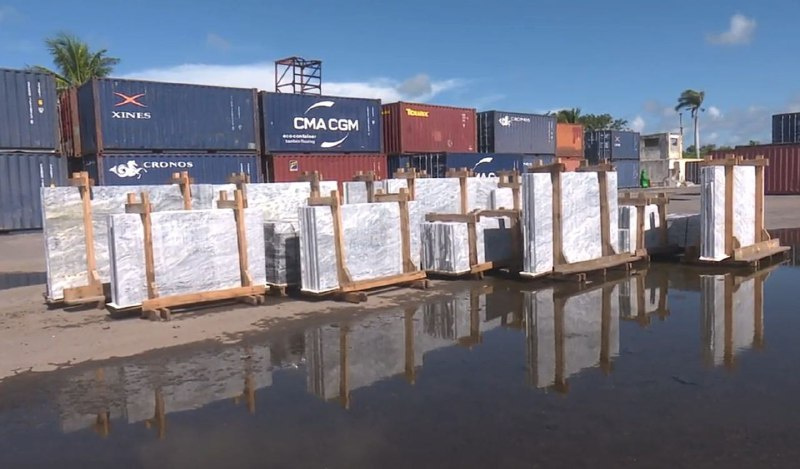
Between 400 and 500 tons of marble are stuck between the factory and the port. / Islavisión

14ymedio bigger14ymedio, Madrid, 12 August 2025 — Desperate to export its marble, a company on the Isle of Youth is facing serious difficulties. Year after year, state media publishes bombastic articles praising the “efforts of workers” and “the commitment of production companies.” However, it is proving very difficult for this company to achieve its dream of extracting a few dollars from the so-called “gray gold” given the firm’s obsolete machinery, the nation-wide exodus of skilled labor and inept attempts by officials to transport the marble to Havana.

Four- to five-hundred tons of marble lie stranded between the factory and the port, causing construction delays and undermining the company’s reputation. In a July report on the local television channel Islavisión, journalist Dagoberto Consuegra bemoaned the abandonment of the marble at the port of Nueva Gerona. The consignment has been waiting to be transported to the capital, without success, since May. Radio Caribe confirmed on Monday that the situation remains unchanged.

In the Islavisión report, the director of Mármoles Isla (Island Marbles) expressed his frustration. “We are losing credibility with the customer. They feel like they received the invoice, paid it but haven’t received the merchandise. I think that’s not good for the company’s reputation or for employee morale,” he said. continue reading

“We are losing credibility with the customer. They feel like they received the invoice, paid it but haven’t received the merchandise. I think that’s not good for the company’s reputation or for employee morale”

Radio Caribe adds that the company was planning on using the money from the sale to update its 40-year-old machinery, buy a new cutter and polisher, and raise employees’ salaries. “The Isle of Youth is setting a bad precedent,” the radio outlet stated “How do we expect to turn this entity into an export hub on the national level, with a major customer like Russia, when it cannot currently ship its output from the local port?”

The island’s gray hills hide a geological treasure which has given form and beauty to monuments such as the Havana Tunnel, the José Martí Civic Plaza (now known as Plaza of the Revolution) and buildings in Varadero. It was discovered in 1834 by a Frenchman with the last name of Chateaux in the Sierra de Caballos when he was searching for gold, never imagining the rocky fortune he would find there.

The first attempts at commercial exploitation date back to 1845, with the arrival of the first steam engines on the banks of the Brazo Fuerte. In the following decades, marble became part of the local landscape — used in parks, sculptures, trails, and buildings — and a symbol of identity and permanence. Its weather resistance and mirror-like surface make it especially prized as a material for building construction and artistic expression.

The local industry got a boost in the 1980s with the opening of the Nelson Marrero Mine, marking a leap forward in the production of this resource. In 2020, reserves of Siboney Gray marble were estimated to exceed 348,000 cubic meters, with those of Perla adding another 210,000, enough to last for decades.

However, excessive decorative use of the stone in cemeteries and government buildings gave it a bad reputation. It came to be known as “funeral home marble.” A 2011 article in the newspaper Juventud Rebelde tried to blame stone masons for giving it a bad rap. “Isle of Youth marble is gray (Pearl or Siboney). Many people do not like it because they see it in hospitals, police stations and cemeteries. . . But the problem is not with the stone but rather with the way it is placed. The mason typically lays the slabs like a bricklayer and does not approach the work like an artist would,” the article stated.

Excessive decorative use of the stone in cemeteries and government buildings gave it a bad reputation. It came to be known as “funeral home marble”

It has fallen out of favor with Cuba’s nouveau riche, so it comes as no surprise that, in the first half of this year, $23,521 worth of materials, including marble, were imported from the U.S. A more popular option these days is porcelain tile, which can be made to look like any material. The fact that it can also be purchased in large slabs, is more manageable and weighs less has given it a significant edge over the local marble.

In 2020 the local office of UEB sent out a shipment of coarse-grained slabs, to be marketed under the trade name Roca Real, for evaluation. It was not thinking about the domestic market. Instead, it had its sights on potential customers in the Caribbean, Europe and North America. It had also made commercial overtures to Russia and Slovakia.

A tangible breakthrough occurred in 2021 when the company made its first international sale, in this case to Trinidad and Tobago. The hope was this would allow it to expand production in 2022 but reality shattered the those plans. “Whoever is in charge of loading or not loading the truck should rethink how they do things and gradually create conditions for the marble to get from the port of Pinar del Río to Batabanó,” the local radio station complained. Until the logistical, bureaucratic, and technological hurdles are overcome, exporting will remain a promise, trapped in crates that never reach the sea.

Site manager’s note: LOVELY TRANSLATION! Thank you.

____________

COLLABORATE WITH OUR WORK: The 14ymedio team is committed to practicing serious journalism that reflects Cuba’s reality in all its depth. Thank you for joining us on this long journey. We invite you to continue supporting us by becoming a member of 14ymedio now. Together we can continue transforming journalism in Cuba.

Between Two Worlds

This story, inspired by true events, has been altered for reasons I prefer to keep to myself. I leave it to the reader—the task, or perhaps the game—to discern what is real and what belongs to the imagination.

Archive image of Alexanderplatz, in Berlin / E

14ymedio bigger14ymedio, Milton Chanes, Berlin, 16 August 2025 — This story, inspired by true events, has been altered for reasons I prefer to keep to myself. I leave it to the reader—the task, or perhaps the game—to discern what is real and what belongs to the imagination.

It all happened nine years ago, in a well-known hotel in Alexanderplatz. At the time, that part of Berlin was not so different from today: bustling and bright, wrapped in that ambiguous air that hovers between the weight of history and the thrill of the future.

The hotel, vast and majestic, seemed the perfect refuge for those eager to explore the city and lose themselves in the endless web of transport converging at the heart of the German capital.

One night, however, Alex’s stay took a disturbing turn. It had been an exhausting day; he felt a deep, bone-weary fatigue, as if each muscle weighed twice as much. In the early hours, he awoke suddenly, for no apparent reason, with that inexplicable sensation that something—or someone—was watching him in the darkness. The room, though it had no blinds, remained almost completely dark thanks to the heavy curtains; the silence was so dense that even the distant murmur of the city barely seeped through. Yet something felt different: Alex sensed, for reasons he could not explain, that he was not alone.

He remained motionless for a few seconds, holding his breath. The unease, vague at first, steadily grew until it became unbearable. Slowly, almost against his will, he turned his head—and at the foot of the bed, he made out a small figure. A child? For a split second, he was paralyzed; then panic overtook him, and he let out a cry that, in his mind, must have echoed throughout the hotel. Yet no one came. continue reading

Terrified, he ordered the boy to leave, his voice trembling with fear. He shouted again and again, desperately hoping for some logical reaction—a start, a cry, a retreat. But the child remained there, unmoving, impervious to the yelling, his gaze vacant and his eyes dull, as if he were looking right through Alex or trapped in some unsettling dream. That utter stillness finally shattered Alex’s composure; his heart pounding, he leapt out of bed and ran for the door.

Terrified, he ordered the boy to leave, his voice trembling with fear. He shouted again and again, desperately hoping for some logical reaction

He threw it wide open, still shouting, trying to assert himself over the fear and the absurdity of the situation. He pointed toward the hallway with a broken voice:

—Get out! Go on, out! This isn’t your room!

The boy moved at last, but in a strange, disturbingly slow way. He crossed the threshold with a hesitant step and, once in the hallway, stopped. For a seemingly endless second, he turned and looked at Alex with that same absent expression, his eyes sunken in the shadows.

Alex slammed the door shut and held it for a few seconds, trembling. The silence that followed only heightened the unreality of what had just happened. When he finally dared to let go of the door, he tried to find a rational explanation: perhaps the boy had simply gotten the wrong room, or maybe Alex himself, exhausted, had failed to close the door properly. He looked through the peephole: the hallway was empty; only the cold light from the lamps and the echo of his own breathing kept him company. He stared a moment longer, until the hallway lights suddenly flicked off, restoring the darkness and silence.

“Poor kid,” he thought, trying to convince himself it had all been a nocturnal accident, just another confusion in a hotel full of travelers and families. Still, guilt and doubt tangled themselves with his lingering fear.

Trying to regain control, he returned to bed and switched on the night lamp. His gaze swept the room: the closet, the bathroom, the connecting door— that second, almost forgotten door leading to the neighboring room— and the space by the window. No one else remained; just him and the echo of strangeness.

Still uneasy, he picked up the phone and tried calling reception. He dialed several times, but no one answered. The dead line only increased his discomfort, though he told himself that, at this hour, the staff were probably busy or away. He set the phone down, sighed, and little by little, the tremor in his hands began to fade. He told himself that the next day, he’d laugh about it, recount it as an incredible anecdote, one of those stories that only seem possible in hotels with too many rooms and too many stories of their own.

He kept repeating, like a mantra, that there had to be a logical explanation: the boy must have mixed up the doors, he must have left his own ajar, and all this tension was nothing but the result of exhaustion and an unusual night. With that thought, he switched off the lamp and lay back down. Still, something inside him—a sharp, insistent unease—told him that true rest was still far away.

Then, a sharp knock broke the silence. Someone was knocking at the door. This time, the sound came from down low, as if small hands were drumming insistently against it. Alex sat up with a start, fixing his eyes on the entrance. The knocking, soft but persistent, repeated itself, filling the room with a dull, anxious tension.

Then, a sharp knock broke the silence. Someone was knocking at the door. This time, the sound came from down low, as if small hands were drumming insistently against it.

Mixing anger with concern—after all, it was still just a child—Alex got up and went to the door. When he opened it, there he was again, standing in the same spot, staring at him with those lost, astonished eyes, utterly devoid of fear or wonder.

“Is he sleepwalking?” Alex wondered, now more bewildered than afraid. He glanced at the digital clock: 1:27 a.m. He fought to steady his trembling voice and spoke firmly:

—Go. This isn’t your room. Find someone at reception to help you—I can’t help you.

He closed the door firmly, almost with relief.

He hadn’t even stepped away when the knocking resumed—louder now, almost defiant, as if testing his resolve. This time, Alex lost his temper. He yanked the door open and shouted, overwhelmed by a mix of fear and exhaustion:

—Get out! I’ve had enough of this!

He slammed the door shut again, locking it carefully, and stayed there for a moment, leaning against the wood, his heart pounding in his chest, waiting for another knock, another sound. And then, in the thick silence, he heard it: a faint metallic click, different, coming from inside the room. It was the doorknob of the connecting door to the next room—the one he’d barely noticed until then. Someone on the other side was now trying that handle, too. The knob trembled softly, filling him with a new kind of unease.

“Shit…” he muttered, barely audible, as the trembling in his hands refused to subside.

He glanced at the clock: 1:43. He knew it would be impossible to get back to sleep. Maybe the best thing would be to go down to reception and let them know in person; after all, the child was probably just lost, searching for his parents’ room.

As he walked away from the door, he suddenly heard another attempt to open it from the hallway: footsteps, muffled voices, the unmistakable turn of the handle, as if several people were now trying to force their way in. It was no longer just the child—there were more people, impatient and tense whispers on the other side. A sudden surge of anger, mingled with exhaustion, ran through him. Without thinking, he grabbed his bathrobe from the bathroom and strode across the room, determined at last to confront whoever it was.

He flung the door open, but the hallway was completely empty. Only thick silence and the dim light from the corridor greeted him. For a moment, he doubted his own senses.

At that instant, the elevator hummed softly at the far end of the corridor.

Convinced it was time to put an end to the situation, he decided to go down to reception to complain. He chose not to wait for the elevator and headed for the stairs. It was only three floors. As he descended, he glanced into each landing and alcove, searching for any sign of the child, or whoever else might be wandering the hotel that night. But the hallway remained deserted and strange, like a stage abandoned after the last act.

On reaching the ground floor, the brightness of the mirrors and the immaculate lobby wrapped him in a deceptive calm. Reflected in the grand entrance mirror, he saw the receptionist speaking with a couple. The woman seemed agitated, the man frowned and gestured impatiently. Alex slowed his pace, unsure whether to interrupt, listening for fragments of their conversation…

As he drew nearer, Alex began to pick up snippets of what was being said, carried to him on the still air of the lobby.

As he drew nearer, Alex began to pick up snippets of what was being said, carried to him on the still air of the lobby.

—This is insane, the man was saying, his voice thick with indignation. We booked two adjoining rooms, connected by a door, precisely so our son—he’s only six—could move between them freely. How is it possible he ended up alone in the hallway? That door is supposed to be locked to the corridor; he should only be able to go into our room!

The woman, clearly upset, nodded repeatedly.

—The worst part—she added, her voice trembling—is that our son insists that, when he came back from the fridge—he’d gone to our room to get some water—he found someone sleeping in his bed. He says a man yelled at him to get out and locked the door behind him. Afterward, he tried to get back in, knocked, called out… but the door wouldn’t open.

—He knocked on our door, and we found him alone in the hallway. We tried to open the door from our side, but it was blocked —the mother explained, visibly shaken.

The receptionist shook her head, incredulous, clutching her notepad as if hoping to find some answer written there.

—That’s impossible, sir, ma’am. No one else has access. The room is registered under your name. The locks are electronic—they can’t be opened without the card.

The boy, pale, eyes wide and jaw clenched, hid behind his mother, gripping her hand tightly.

—Tell me, sweetheart, what did the man in your bed look like? —his mother asked, kneeling to meet his gaze.

The child hesitated for a moment, swallowed hard, and finally raised his arm, pointing at Alex, who at that moment stood by the counter, watching the scene from a distance.

—It was him, he whispered, his voice quivering as if he still feared coming face to face with that figure.

In that instant, everyone—the parents, the receptionist—turned to look at Alex. But their eyes seemed to pass right through him, as if he were made of air. No one reacted. Alex, bewildered, turned toward the large mirror behind the reception desk… and only then did he feel a true chill run down his spine: in the reflection were the couple, the boy, and the receptionist—but he himself was nowhere to be seen.

A dense, oppressive silence settled over the lobby. For the first time that night, fear overtook him completely—absolute, impossible to deny or explain away. He felt, with an icy certainty, that something had broken in the logic of reality, and understood—as one only understands things in dreams—that there are stories which never find an explanation.

____________

COLLABORATE WITH OUR WORK: The 14ymedio team is committed to practicing serious journalism that reflects Cuba’s reality in all its depth. Thank you for joining us on this long journey. We invite you to continue supporting us by becoming a member of 14ymedio now. Together we can continue transforming journalism in Cuba.

The Castro Fraud

They consciously acted against the rights of their fellow citizens and actively participated in the destruction of civic values.

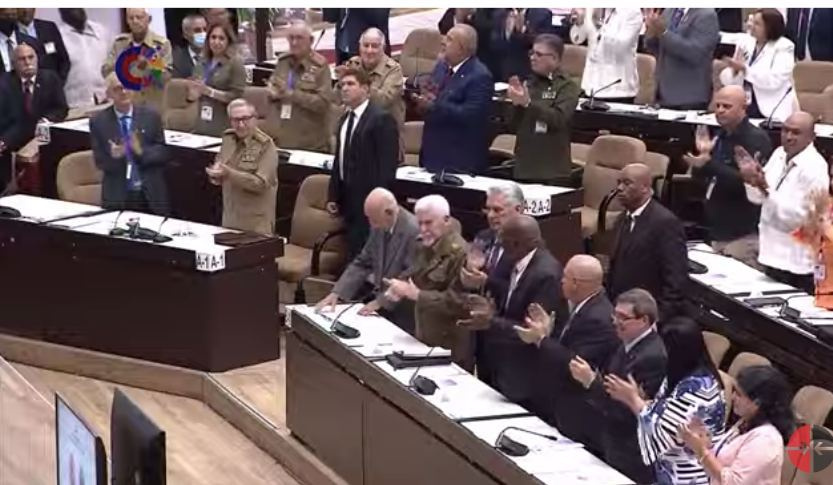
Several Cuban leaders and military personnel during a session of the National Assembly in 2023. / Canal Caribe-Facebook-Screen Capture

14ymedio bigger 14ymedio, Pedro Corzo, Miami, 17 August 2025 — Even before the totalitarian system was imposed in Cuba, the Castro nomenklatura promoted false heroic narratives upon which the current system of absolute control was cemented, a task they have carried out with extreme efficiency, to the chagrin of the Cuban people and the misfortune of Nicaraguans, Bolivians, and Venezuelans, whose leaders turned out to be frauds every bit as much as the Castros.

These lies, all grandiose, such as Fidel Castro’s heroic participation in the assault on the Moncada barracks, the landing, read shipwreck, of the yacht Granma, and the deceptive military epics in the Sierra Maestra and Cristal in which the Castro brothers imaginatively squandered military genius and personal courage, these were the symphony on which they orchestrated a colossal plot supported by officials, military personnel and oppressors who were presented as upright citizens, selfless servants who served the country when in reality they were criminals who only sought their personal benefit while crushing the citizenry.

Disgracefully, a notable quantity of supporters of Castro’s totalitarianism believed this story. Some may have identified with the proposal with absolute sincerity and, in the dire present in which they lives they were completely frustrated on seeing the results for which they even imprisoned and killed, while others, the majority, bet on winning, aware of the atrocities in which they were complicit and choosing not to see the overcrowded prisons nor to hear the roar of the firing squad. continue reading

Those primarily responsible for the Cuban tragedy have been those who provided political, military and repressive services under totalitarianism.

There were many athletes from different fields, as well as outstanding individuals in professions, arts, and trades, who rejected generous offers of a better life and professional success because they believed, perhaps sincerely, that they were building a just and equitable society. This naiveté has left them mired in a miserable life in which they lack the most basic rights, while continuing to suffer degrading misery. Others, conversely, continue to fulfill their chosen role: executioners.

However, those primarily responsible for the Cuban tragedy have been those who served politically, militarily, and repressively under totalitarianism. They consciously acted against the rights of their fellow citizens and actively participated in the destruction of civic values.

The principle support of the Cuban system has been the military, and later, at a great distance, the repressive bodies and international intelligence forces, along with the diplomatic service.

From the very year of the triumph of the insurrection, in 1959, the military assumed control, while civilians were displaced. Society became militarized, and commanders became ministers. In these more than six decades in the military ranks, there has only been one defection, framed by a major question mark: the Arnaldo Ochoa case. This demonstrates a stability and loyalty unmatched in other government organs, including the Ministry of the Interior.

The Castros’ hegemonic appetites were always satisfied by their military, which, covertly or acting as international gendarmes, intervened on three continents without generating any questioning of the tyrant’s dictates.

The main support of the Cuban system has been the military and then, at a great distance, the repressive and international espionage bodies together with the diplomatic service.

They have always displayed discipline, a desire to serve, a mystique of glory, and unwavering obedience to the supreme leader. However, a recent article published in the Miami Herald and other media outlets confirms that the servile obedience of the Cuban generals is not the product of ethical or political convictions, but rather that the island’s generals are mere mercenaries seeking only their own personal enrichment and that of their families.

According to the report, the Cuban military, through the monopolistic Grupo de Administración Empresarial SA (Gaesa), controls assets totaling $18 billion.

The group operates in key sectors of the economy such as tourism, finance, construction, and transportation, while maintaining a significant presence in the rest of the Cuban economy. According to the report, Gaesa generated $2.1 billion in profits in the first quarter of 2024 alone. According to these documents, the flagship company is Cimex, a company that carries out retail activities, in addition to banking and international trade activities, reaching revenues of $2.1 billion.

These individuals, who can never plead ignorance or misinformation, were the bricklayers who supplied the necessary products and essential labor for the construction of totalitarianism. They were the ones who, in the heat of extremist fervor, understood that when their leader, the condottiere Fidel, exclaimed the slogan “the future belongs to socialism,” he was actually repeating a slogan from a pirate movie: “Take what you can, give nothing in return.” This is what they have done for these past 66 years: steal and kill.

____________

COLLABORATE WITH OUR WORK: The 14ymedio team is committed to practicing serious journalism that reflects Cuba’s reality in all its depth. Thank you for joining us on this long journey. We invite you to continue supporting us by becoming a member of 14ymedio now. Together we can continue transforming journalism in Cuba.

Trans Women in Havana Have One of the Highest HIV Rates in Latin America, According to Cuban Government Data

The study also provides figures on the spread of diseases such as syphilis and hepatitis B in Havana, Cienfuegos and Bayamo.

Only 46.8% of transgender women in Havana and 32.2% of men who have sex with men (MSM) in the capital knew they had HIV before undergoing testing. / EFE

14ymedio biggerEFE (via 14ymedio), Havana, 19 August 2025 — Transgender women in Havana have “one of the highest prevalence rates” of the Human Immunodeficiency Virus (HIV) in all of Latin America, according to a study published Monday by Cuba’s National Office of Statistics and Information (ONEI).

The “HIV, Syphilis, HBV, and HCV Seroprevalence Survey,” the first to detail HIV prevalence rates in selected Cuban cities, indicates that 54.9% of transgender women in the Cuban capital have the virus.

By comparison, the median HIV prevalence among transgender women in Latin America was 22.1% in 2022, the study reports, citing the United Nations.

In comparison, the median HIV prevalence among transgender women in Latin America was 22.1% in 2022, the study reports, citing the United Nations.

The other key population focused on in the study, men who have sex with men (MSM), has an HIV prevalence of 37.9% among residents of this group in Havana.

Of those surveyed, only 46.8% of transgender women in Havana and 32.2% of MSM in the capital knew they had HIV before undergoing the test.

The study notes that, globally, so-called key populations (trans women, MSM, sex workers, intravenous drug users, and prisoners) represent less than 5% of the population but account for 70% of new infections. continue reading

The survey estimates that there are approximately 1,443 transgender women and 29,104 MSM living in Havana alone. It also highlights that in Cuba, the main route of HIV transmission is sexual, accounting for more than 99% of reported cases.

The 234-page study also provides figures on the prevalence of diseases such as syphilis and hepatitis B in Havana, Cienfuegos, and Bayamo, the three cities where the survey was conducted; these figures present much lower rates than that of HIV.

The research was conducted between December 2022 and April 2023 and was supported technically and financially by the United Nations Global Fund to Fight AIDS, Tuberculosis and Malaria.

____________

COLLABORATE WITH OUR WORK: The 14ymedio team is committed to practicing serious journalism that reflects Cuba’s reality in all its depth. Thank you for joining us on this long journey. We invite you to continue supporting us by becoming a member of 14ymedio now. Together we can continue transforming journalism in Cuba.

Cuba: Darkness, Heat and a Train That Doesn’t Turn Up — The Night in the Matanzas Terminal

New railway timetables push passengers into early mornings and long waits in dangerous conditions.

Passengers are used to blackouts, toilet closures and no drinking water in the terminal. / 14ymedio

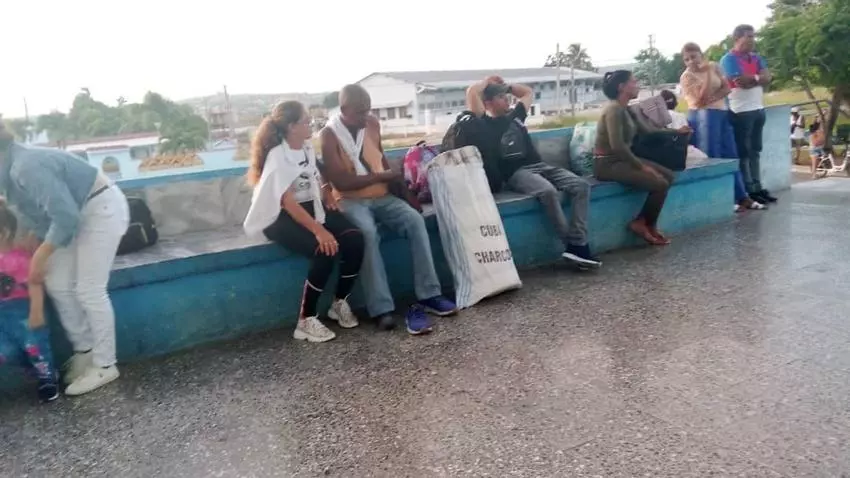
14ymedio bigger14ymedio, Julio César Contreras, Matanzas, 31 July 2025 — Evening fell slowly over the makeshift Matanzas train terminal, a former freight warehouse refurbished to fill the gap in the lack of a proper station. There, amidst mosquitoes and shadows, dozens of commuters were checking out the new schedule this Monday for the four domestic trains departing from Havana until September 30th.

According to the Ministry of Transport, the readjustment responds to “the shortage of cars” and the need to “have more trains throughout the summer,” that will leave every four days. These additional convoys, the agency said, “will guarantee the transport of students, workers, athletes participating in sporting events, such as the School Games, and other sectors,” while the rest of the population will be able to book seats whenever available “as usual during this period.”

However, at the Yumurina terminal, travellers see a very different reality. “I had to come early, because this place is so remote that you can only get there by renting a vehicle,” Georgina told 14ymedio, while recalling that she had already spent “2,000 pesos on a bicycle taxi” without knowing whether she would be able to board the train to Holguín. “In the morning I signed up on the waiting list. Then I went to my daughter’s house, who lives near Parque René Fraga, to pick up my luggage,” she says with a tired expression.

The Havana-Holguín train used to pass through Matanzas around 10 p.m. / 14ymedio

The Havana-Holguín train used to pass through Matanzas at around 10 p.m., but the new timetable means passengers will have to wait past midnight. “I booked the tickets several days ago. I thought the stay at the terminal was going to be relatively short, but now they tell me it will leave Havana at 10:05pm. That means we’ll be coming to catch it after 1:00 in the morning. How inconsiderate,” complained Reidel, accompanied by his wife and young son. continue reading

Accustomed to the blackouts, closed toilets, and no drinking water in the terminal, Reidel knows that not even the street vendors dare to cross the Camilo Cienfuegos distribution area at night. “We bring food from home because here, when it gets dark, you can’t even see your hands in fonrt of your face,” he says. The young man recalls that “last month I almost couldn’t travel because of the waiting list, because the train had only five cars. Now that I buy my ticket in advance, they change the timetable. They do nothing to help us.”

Inside the main hall, which is also the domestic bus terminal, the heat and mosquitoes make the wait unbearable. The crammed together metal benches barely leave room to move between the luggage. Some, like Isabel, who is returning to Las Tunas, prefer to sit outside on the concrete walls. “The employees have their work cut out too; they have to use the torches on their phones to check tickets or make a note on the waiting list,” she says.

With her suitcase between her feet, Isabel estimates that, with luck, she’ll be home in 12 or 13 hours. “My son wanted me to stay a few more days and take one of those extra trains they announced, but if they don’t follow the established routes, I don’t think they’ll add anything extra,” she says, aware that the transportation crisis will delay her next reunion with her grandchildren.

As faces blur in the darkness, resignation grows. An elderly man stretches out on a cement wall and nods in a restless sleep. Others improvise conversations to pass the wait, as if talking could shorten the night. At the Matanzas terminal, everyone knows, even if no one says so, that the train will hardly leave on time, even under the new schedule. Amidst blackouts, heat, and stinging winds, they await the moment when the metallic roar of the locomotive breaks the silence.

Translated by GH

____________

COLLABORATE WITH OUR WORK: The 14ymedio team is committed to practicing serious journalism that reflects Cuba’s reality in all its depth. Thank you for joining us on this long journey. We invite you to continue supporting us by becoming a member of 14ymedio now. Together we can continue transforming journalism in Cuba.

Cuban Judoka Jonathan Delgado is the Fifth Athlete to Escape in Paraguay

Robert Landy Fernández, Félix Puente Batista, Keiler Ávila Núñez and Suannet de la Caridad Nápoles, the first to flee, still have not applied for asylum.

Judoka Jonathan Delgado met the competition schedule at the Junior Pan American Games. / Jit

14ymedio bigger14ymedio, Havana, August 18, 2025 — Cuban judoka Jonathan Delgado took advantage of an oversight by the delegation at the Paraguay 2025 Junior Pan American Games to escape last Friday. The athlete’s departure “leaves a void within the team and generates reflections on the challenges that many athletes face in their sporting and personal path,” said Facebook space Del-pí Al-pá.

Delgado completed the competition schedule at the event. His first match was in the quarterfinals in the category of more than 100 kilograms, in which he was surpassed by the Dominican José Miguel Brache. However, the combination of results allowed him to access the playoffs, where last Tuesday he was defeated by the American Kanta Ueyama.

Before his return to the island, the judoka decided to escape and follow in the footsteps of the three members of the team of eight with helmsman, Robert Landy Fernández, Félix Puente Batista and Keiler Ávila Núñez, who won the bronze medal, and the handball champion Suannet de la Caridad Nápoles. All of them escaped on Wednesday.

Delgado was not afraid that the head of the Cuban delegation in the Panamerican Games Junior Paraguay 2025 and president of the National Institute of Sports, Physical Education and Recreation (Inder), Osvaldo Vento Montiller, would report the escape to the Tenth Police Station in Asunción and ask for support to locate the deserters.

Despite the fact that the local media made known the flight of the Cubans, the sports mission has kept silent about the absences. On Thursday, the continue reading

president of the Paraguayan Olympic Committee (COP), Camilo Pérez, confirmed that the head of the island’s sports mission told them that the athletes “withdrew from the delegation.”

These statements were followed the same day by those of the Paraguayan Minister of the Interior, Enrique Riera, to confirm that the Cuban athletes informed Vento Montiller of their decision to not return to Cuba. “The police in these cases do what is called an alert to find out if there are any issues to worry about, but apparently it would be a case of desertion,” he said.

Commissioner Pedro Bavera, of the Tenth Police Station in Asunción, who received the report of the flight, said that no reports were found that would lead to the location of the Cubans.

To date, none of the five Cuban athletes has approached the authorities for asylum. Nevertheless, the Minister of the Interior hopes that they will contact the National Commission for Stateless Persons and Refugees (CONARE) to initiate this process.

Cuba ranks ninth on the medal list with four gold, two silver and four bronze medals. The event that ends on August 23, and Brazil is currently in the lead with 52 first places, 27 second places on the podium and 36 third places.

Translated by Regina Anavy

____________

COLLABORATE WITH OUR WORK: The 14ymedio team is committed to practicing serious journalism that reflects Cuba’s reality in all its depth. Thank you for joining us on this long journey. We invite you to continue supporting us by becoming a member of 14ymedio now. Together we can continue transforming journalism in Cuba.

San Antonio de los Baños Celebrates the 99th Anniversary of Fidel Castro With Anti-Regime Posters

Indifference prevails, especially among young people, and the cult of personality no longer works as an ideological cement.

It is no coincidence that in the same place where the spark that originated 11J was ignited, the 99th anniversary of Fidel Castro’s birth was thus received. / Odalys H Rizo

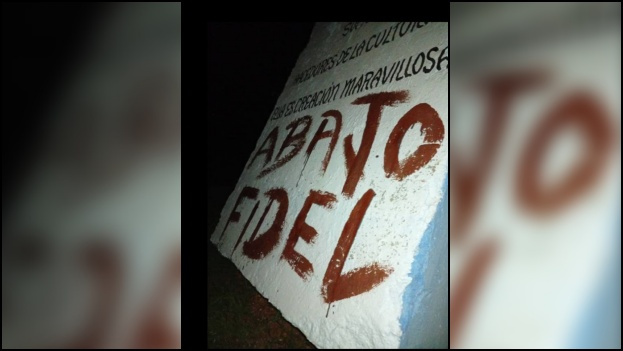
14ymedio bigger14ymedio, Yunior García Aguilera, Madrid, August 13, 2025 — On this 13th of August, in the streets of San Antonio de los Baños, several posters appeared that read “Abajo Fidel,” “Martí no es comunismo,””Patria y Vida” and “Libertad.” It is no coincidence that, in the same place where the spark that originated the social outburst of July 11, 2021 was ignited, the 99th anniversary of Fidel Castro’s birth was thus received.

The Cuban government, aware of the low popularity of the current leaders, has tried to dust off Castro’s figure. In a calculated maneuver, the electricity deficit was reduced for at least a few days, ensuring that almost two-thirds of the population were exempt from the usual blackouts. In addition, youth camps, book presentations, photo exhibitions and other activities were organized to revive an admiration that no longer exists beyond official circles.

What abound are photomontages of Castro in ridiculous situations and mocking comments about his legacy.

In New York, an enormous luminous sign with the image of the bearded man adorned a central street. It was not a spontaneous initiative of nostalgic emigrants, but a service paid for by The People’s Forum, an organization run by pro-Castro activists Claudia de la Cruz and Manolo de los Santos. Already known for their photos with the president-elect Miguel Díaz-Canel, and for campaigns to support Team Asere, the Cuban baseball team, both have been singled out for receiving funding from billionaire Neville Roy Singham, resident in Shanghai and linked to the Chinese propaganda apparatus. The operation, rather than a tribute, is more like an expensive reminder that the official Cuban story should not be forgotten abroad.

However, the celebration has not aroused enthusiasm on the island. Most Cubans reacted with sarcasm on social media, turning the event into a festival of memes. Instead of tears and veneration, what abounds are photomontages of Castro in ridiculous situations and mocking comments about his legacy. continue reading

None of the major international media dedicated relevant space to the anniversary.

Confusion was evident among the very ranks of officialism. Some activists believed that it was already the centenary of his birth, not the 99th year. The error reveals the historical ignorance even within the militancy and the overload of activities with which the regime saturated its bases. More than one official suggested, in a low voice, that something should be left for 2026, when the anniversary will actually happen.

Outside the Island, silence has been prominent. None of the major international media devoted significant space to the anniversary. In similar countries such as Venezuela and Nicaragua, laudatory notes were published but without much resonance. Even when asked by several artificial intelligences about the most influential figure born on August 13, “Alfred Hitchcock” was the most frequent answer.

Citizens stopped seeing him as the “uniformed and threatening leader” and perceived him as a frail old man, poorly dressed and obsessed with moringa.

The island’s own recent political history helps to explain the disinterest. During the period when Raul Castro took over, he strove to turn away from orthodox faithfulness, betting on an image of greater pragmatism. The thaw with Barack Obama and the timid economic opening required a symbolic break with his big brother’s intransigent speech. The Reflections that Fidel published in the press became anachronistic and often uncomfortable for the new course. Citizens stopped seeing him as the “uniformed and threatening leader” and perceived him as a frail old man, poorly dressed and obsessed with moringa.

The result was a gradual substitution of symbols, perhaps traced from Raúl’s own office. Presenting Fidel as a foolish and delusional grandfather served to smooth the transition and to justify the idea that the future depended on a change of style, not system. In contrast, Raul Castro has striven to be much more vital–at 94–than the last images we saw of his haggard brother. And this remarkable difference between the two nonagenarians is not a coincidence for a regime with so many communicative filters.

But the Raulist experiment also failed miserably. The Ordering Task, conceived as a decisive economic adjustment, further eroded purchasing power and public confidence. This failure gave new life to loyalist sectors that had remained in the shadows. Figures like Iroel Sánchez and other defenders of a more rigid Marxism returned to occupy media spaces, insisting that Fidel’s orthodoxy was the only way.

In contrast, Raúl Castro has striven to be shown as much more vital–at age 94–than the last images we saw of his haggard brother.

In this ideological vacuum, Miguel Díaz-Canel clung to the slogan of “continuity,” but without a clear plan or enough charisma to sustain it. Mass access to the internet has eroded information control. Authorities, who for decades boasted of “winning the battle of ideas,” publicly admitted that they were losing it.

The attempt to use the 99th anniversary as an act of political reaffirmation has come up against a reality that can no longer be reversed. The figure of Fidel Castro has been emptied of content for a large part of the Cuban population. The new generations know him more by familiar accounts of deprivation and repression than by fiery speeches about sovereignty. For many, he is the symbol of immobility, endless pronouncements and the cause of the problems that continue to suffocate the country.

The anniversary, far from strengthening the official narrative, has served to measure the distance between myth and reality. The personality cult that once served as ideological cement is now perceived as a liability. Propaganda fails to reverse accumulated fatigue and the increasingly widespread conviction that the country needs radical change.

Translated by Regina Anavy

____________

COLLABORATE WITH OUR WORK: The 14ymedio team is committed to practicing serious journalism that reflects Cuba’s reality in all its depth. Thank you for joining us on this long journey. We invite you to continue supporting us by becoming a member of 14ymedio now. Together we can continue transforming journalism in Cuba.