New railway timetables push passengers into early mornings and long waits in dangerous conditions.
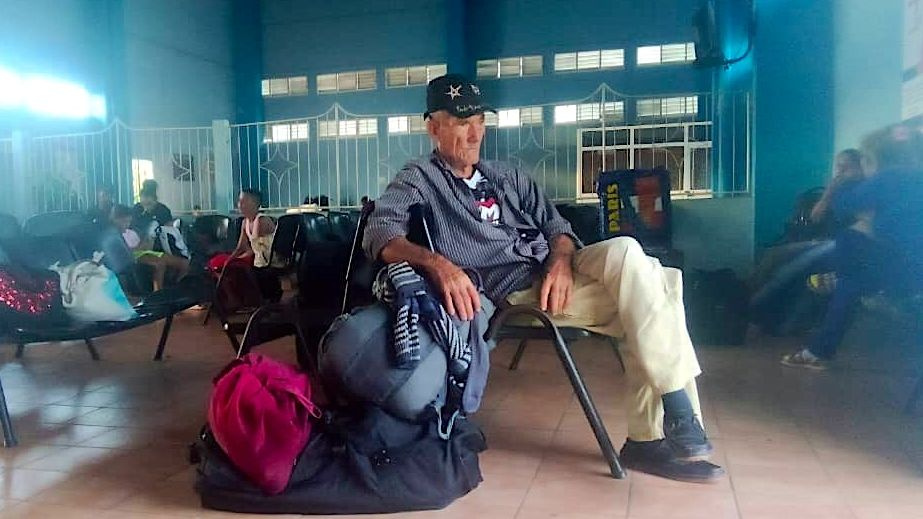
 14ymedio, Julio César Contreras, Matanzas, 31 July 2025 — Evening fell slowly over the makeshift Matanzas train terminal, a former freight warehouse refurbished to fill the gap in the lack of a proper station. There, amidst mosquitoes and shadows, dozens of commuters were checking out the new schedule this Monday for the four domestic trains departing from Havana until September 30th.
According to the Ministry of Transport, the readjustment responds to “the shortage of cars” and the need to “have more trains throughout the summer,” that will leave every four days. These additional convoys, the agency said, “will guarantee the transport of students, workers, athletes participating in sporting events, such as the School Games, and other sectors,” while the rest of the population will be able to book seats whenever available “as usual during this period.”
However, at the Yumurina terminal, travellers see a very different reality. “I had to come early, because this place is so remote that you can only get there by renting a vehicle,” Georgina told 14ymedio, while recalling that she had already spent “2,000 pesos on a bicycle taxi” without knowing whether she would be able to board the train to Holguín. “In the morning I signed up on the waiting list. Then I went to my daughter’s house, who lives near Parque René Fraga, to pick up my luggage,” she says with a tired expression.
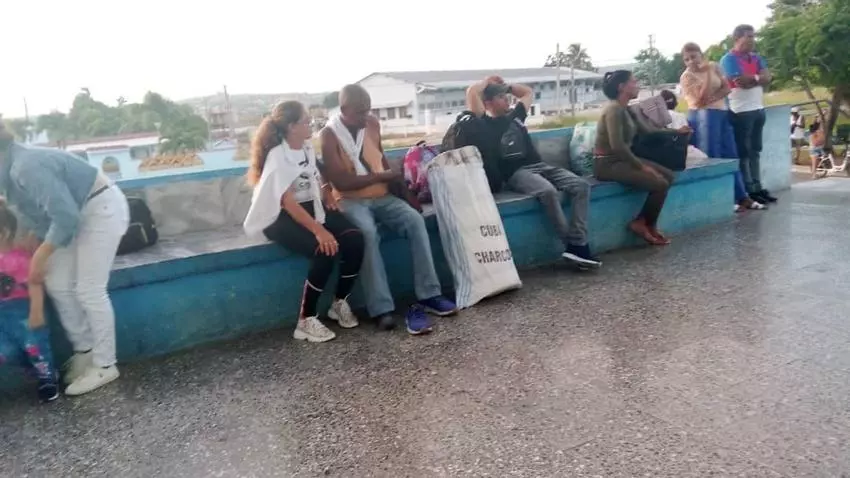
The Havana-Holguín train used to pass through Matanzas at around 10 p.m., but the new timetable means passengers will have to wait past midnight. “I booked the tickets several days ago. I thought the stay at the terminal was going to be relatively short, but now they tell me it will leave Havana at 10:05pm. That means we’ll be coming to catch it after 1:00 in the morning. How inconsiderate,” complained Reidel, accompanied by his wife and young son.
Accustomed to the blackouts, closed toilets, and no drinking water in the terminal, Reidel knows that not even the street vendors dare to cross the Camilo Cienfuegos distribution area at night. “We bring food from home because here, when it gets dark, you can’t even see your hands in fonrt of your face,” he says. The young man recalls that “last month I almost couldn’t travel because of the waiting list, because the train had only five cars. Now that I buy my ticket in advance, they change the timetable. They do nothing to help us.”
Inside the main hall, which is also the domestic bus terminal, the heat and mosquitoes make the wait unbearable. The crammed together metal benches barely leave room to move between the luggage. Some, like Isabel, who is returning to Las Tunas, prefer to sit outside on the concrete walls. “The employees have their work cut out too; they have to use the torches on their phones to check tickets or make a note on the waiting list,” she says.
With her suitcase between her feet, Isabel estimates that, with luck, she’ll be home in 12 or 13 hours. “My son wanted me to stay a few more days and take one of those extra trains they announced, but if they don’t follow the established routes, I don’t think they’ll add anything extra,” she says, aware that the transportation crisis will delay her next reunion with her grandchildren.
As faces blur in the darkness, resignation grows. An elderly man stretches out on a cement wall and nods in a restless sleep. Others improvise conversations to pass the wait, as if talking could shorten the night. At the Matanzas terminal, everyone knows, even if no one says so, that the train will hardly leave on time, even under the new schedule. Amidst blackouts, heat, and stinging winds, they await the moment when the metallic roar of the locomotive breaks the silence.
Translated by GH
____________
COLLABORATE WITH OUR WORK: The 14ymedio team is committed to practicing serious journalism that reflects Cuba’s reality in all its depth. Thank you for joining us on this long journey. We invite you to continue supporting us by becoming a member of 14ymedio now. Together we can continue transforming journalism in Cuba.