
In Cuba, Remedios Suspends Popular December Celebrations / 14ymedio, Marcelo Hernandez

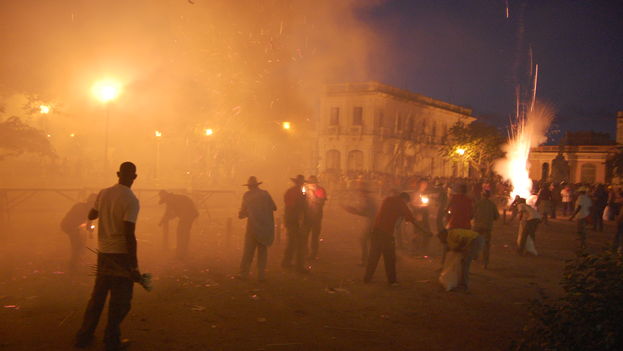
Fireworks are a prominent part of multi-day December celebrations going back to the 1800’s in Remedios, Villa Clara, Cuba. (Flickr / Sergio Carreira)

14ymedio bigger14ymedio, Marcelo Hernandez, Havana, 12 December 2016 — Havana has its carnivals, Bejucal has its brass bands, and Remedios has its parrandas,  Christmas season street festivals dating back to the 1800s. But this December, all end-of-year celebrations are suspended. Fidel Castro’s death has turned out the lights and shut off the loudspeakers of these festivities.

After nine days of national mourning, including a prohibition on alcohol and music, the Cuban government has also decreed that the local celebrations planned for the coming weeks will be canceled. In the center of the island, the Remedios parrandas are among the festivities most affected by the prohibition. continue reading

Considered the oldest festivals on the island, the Remedios parrandas mix the attraction of their ingenious floats with an impressive variety of fireworks. In addition, the old rivalry between two neighborhoods is played out in a battle of lights, music and wit that generate interest in the event.

After a whole year of preparation, Remedians have had to park their enthusiasm and put into storage the wide range of pyrotechnics planned for the occasion, including rockets, sparklers, fountains, firecrackers, Roman candles and others. This is not the time “to display joy in the streets,” Communist Party authorities told the festival’s organizers.

Although publicly the national mourning ended on 4 December, with the placement of Fidel Castro’s ashes in a mausoleum in Santa Ifigenia Cemetery, officialdom is intent on prolonging the austerity and is calling for an end of year marked by “tributes to the undisputed leader of the Revolution.”

The Remedios floats have been halted just when they were about to be set in motion. With their designs based on historic, literary, mythological or abstract themes, the compositions will have to wait twelve more months to be publicly displayed. The efforts of the “undercover agents” who try to uncover the other side’s “secrets,” have been absolutely fruitless this year.

In the town of Zulueta tradition has also been interrupted this December. Its parrandas are the last to be held in the country, not getting underway until 31 December. The two opposing sides, the Chivos (goats) of La Loma and the Sapos (toads) of El Guanijibes, will have to remain silent on San Silvester Day, waiting for time and oblivion to bury grief and sobriety.

Both towns in Villa Clara province are only a part of those affected by the austerity set off by the death of the former Cuban president. After his death was announced on 25 November, Cuba has not been the same in the cultural arena.

The centrally located Palacio de la Rumba, in Central Havana, has not opened its doors since the death of Castro. Its local programming remained suspended even on 30 November, the day UNESCO declared the Cuban rumba an intangible cultural heritage.

Administrators in Havana’s elementary schools have been advised that Teachers Day, 22 December, should not be celebrated with music. “There will be a morning assembly, a reading of some commitments, but no cake or dancing,” said Rosa, a teaching assistant at a school in Cerro.

Teachers Days are traditionally joyful in Cuban schools, with classes suspended, replaced by parties and, for the teachers, lots of presents. “It is our day,” the educator lamented to this newspaper. For her, the cancellation is bad news, “They’re taking away something we deserve,” she protests.

With the suspension of the Remedios parrandas and the parties for Teachers Day, Cubans are preparing for a discreet end of year, celebrated behind closed doors. “The party will be within us,” says Rosa.
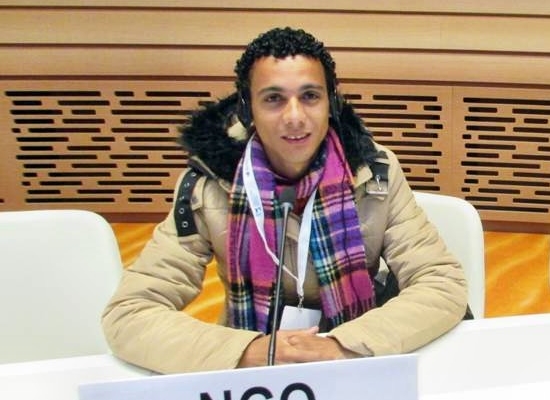
Cuban State Security Interrogates And Threatens Young LGBTI Leader / Cubanet, Alejandro Tur Valladares

Dr. Nelson Gandulla (Courtesy)

cubanet square logoCubanet,  Alejandro Tur Valladares, Havana, 12 December 2016 – Dr. Nelson Gandulla Diaz, a national delegate to the Cuban Foundation for LGBTI Rights, headquartered in Cienfuegos, was interrogated by Cuban State Security officials after being cited to appear at the offices of Emigration and Aliens on 10 December.

Gandulla said that the interrogation began at 9:00 in the morning and continued to 11:30 AM. He was questions by an official who called herself Patricia, and Captains Ihosvani and Angel.

According to the activist, the agents wanted to investigate his numerous work trips outside the country and whether some NGO financed his activities and who he met with. Particular emphasis was given to asking about his presumed ties to the Colombian organization Affirmative Caribbean and the Czech organization People in Need.

The doctor said that one of those present told him that the organizations that he works for, according to his interrogator, use their discourse to attack the official National Center of Sex Education and its director, Mariela Castro, daughter of Cuba’s current ruler.

After confirming that Gandulla was not a “collaborator” with the purposed of the political commissars who were questioning him, the conversation changed in tone. “They threatened me, they told me that continuing my activities on behalf of the Cuban LGBTI community was not consistent with what could happen to me and to my family.”

According to Gandulla, a leader of the Foundation, the threats included prohibitions on holding activities in his home, under penalty of going to prison.

Losing Fear To Get Freedom / 14ymedio, Rolando Gallardo

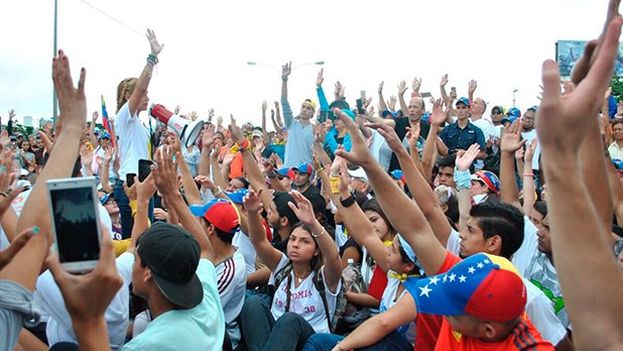
In Venezuela the opposition is aware of its strength and its leaders show their faces in demonstrations against the regime. (@liliantintori)

14ymedio bigger14ymedio, Rolando Gallardo, Quito, 10 December 2016 — On the 58th anniversary of the overthrow of Fulgencio Batista, the seizure of power by Fidel Castro and the disappearance of the national hope of a return to the constitutional values ​​of 1940, the people of Cuba, their emigration and the “historic exile” continue to ask the same rhetorical question: When will we be free?

Before the Obama administration’s rapprochement, the island’s regime raised the alarms of the possible perpetuation of the current state of affairs. Opposition groups have concentrated their intellectual efforts on delegitimizing the actions of the United States government and few have concerned themselves with analyzing the new opportunities for action that it presents. They demand that Washington return to the politics of confrontation of the last 50 years, a return to a Cold War based on ideological footholds or real threats to the stability of the United States that no longer exist. Times have changed, the world is not the same, this is a fact.

Although US President Barack Obama broke the taboo by stepping foot in Havana and shaking General Raul Castro’s hand, and despite the ongoing conversations, the situation in Cuban continues more or less the same. The defenders of the regime point to the deep popular roots of the “Revolution”; the defenders of Obama’s policies blame the opposition’s inability to articulate a plan to destabilize the regime or to win popular support; the detractors of the US administration, coincidentally the traditional opposition the Cuban regime, both on the same side but for opposite reasons, argue that rapprochement is useless. For officialdom it is a maneuver to hide mixed objectives, for the regime’s opponents it is a maneuver to strengthen the regime and betray democratic aspirations, etc.

But what are the real reasons that social unrest does not happen in Cuba? continue reading

In the current Cuban conflict four elements are involved. We must assume that there are four important figures, three national and one external. The national figures are the government and its repressive structures (“mass organization” in the official jargon), opposition groups inside and outside the country and, most importantly, the ordinary people (workers, students, housewives, technicians, doctors etc.), mostly discontented but with high levels of political apathy. The external element is the US government and its policies toward the island.

Where is the project?

The traditional, dispersed and divided opposition base their positions on the flagrant violations of human rights. The main flag of dozens of opposition groups is the establishment of democracy and free elections, a cause undoubtedly just but one that does not offer a intelligible plan to the Cuban masses who want a change in their pocketbooks and in their kitchens. The objectives of the struggle seem futile to a needy majority that depends on the ration book and the tiny wages, the lowest salaries in the Western hemisphere. The opposition discourse forgets to speak out about the pressing needs of the population. What does the ordinary Cuban want to hear? Do they want to hear about democracy? Are the interests of the opposition the same as those of the common people?

Leadership?

The opposition leadership is a burning issue. Some avoid talking about it so that they are not accused of “pandering to the regime” and end up being called “G2 agents,” that is in the pocket of State Security. New times need ethical leadership, a leadership immune to the caudillos, one that can articulate the ideas and diverse projects in the current collage of opposition factions.

We have a common rosary of ex-prisoners turned into patriotic opponents, people who love to get checks and their phones recharged, opposition caricatures who don’t act if the interests of their fiefdom or their personal opinions are not affected. A leadership that doesn’t skimp on launching insults to devalue their adversaries, in the seeking of remittances from abroad. A kind of political flip-floppers that end up smearing the work of ethically firm and committed opponents. One wonders which they benefit more, the democratic cause, or the regime’s discourse. They should aspire to a prepared leadership, trained in theory and practice. Leaders, not supervisors, are what the cause needs.

Civil disobedience?

The Gene Sharp Academy has become famous among opponents. It is common to hear the term as if it were a hidden card, a weapon per se. Civil disobedience is a process that starts from a common idea, a shared desire by the majority who attempt to act together from the first moment in the simple refusal to be a part of what they don’t agree with

The mistake is to call the masses to participate in marches and strikes when they have not first been called to abandon the repressive structures of the regime. It is joining together in civil disobedience when fear is lost and this is discovered when realizing there are many who are willing to be punished.

A simple act of civil disobedience is putting a ribbon on the door or a sticker in the window. It is not about a march like that of September 1st in Venezuela if people haven’t already identified with the opposition project.

“The suspicion syndrome”

The fear of being marked by the regime is one of the reasons for political apathy. The vast majority of Cubans talk quietly at home, criticizing the barbarity and arbitrariness of the government. People avoid talking about it more at work saying: “You don’t know who’s who.” The fear of being put on the blacklist makes people prefer to remain outside any political debate and simply repeat the regime’s propaganda or join its repressive organizations (mass organizations) “so as not to stand out.” Opportunism and amorality have become an instinct for self-preservation.

End of the charismatic government

Fidel Castro met his end. The charismatic leader, bearer of all truth, was a decrepit old man. Although some, glued to the criticism of his image and legacy, still blame him for everything as if he still ruled, the reality is that nature, the only effective opponent of the regime, has removed Fidel Castro.

Fidel’s hypnotic personality was the cornerstone of the Cuban government. The interfamily transfer of power left a vacuum that we ignore. Raul Castro, the elderly general, is a person with little facility with words, jovial among his people but lacking charisma, incoherent, a faint shadow of what was the sex-symbol image of the Commander in Chief in his younger days.

Obama’s visit unveiled a Raul Castro without arguments, disoriented, his voice shrill and disagreeable, reflecting what was left of the “historic leadership of the Revolution.” The dictatorship has lost its charisma and its essence becomes more evident.

Possibility of dialog

The Cuban opposition currently does not have the power or the popular support to force a dialog with the government. Some passionate but hardly pragmatic leaders refuse, as an exercise in bravado, to accept a possible future dialog with the regime. Dialog is desirable, it can be a way to negotiate agreements and to obtain a share of power when the conditions for it are created. But, being realists, the opposition in Cuba had done very little to obtain the elements of pressure.

Obama policy and “normalization”

“Normalization” took the opposition by surprise. Something cooking behind the scenes until we all got a whiff of it. President Obama, ending his term in office, launched an adventure toward an uncertain future. Like it or not there are now fluid diplomatic relations between both countries. The screws have been loosened on the restrictions of the embargo-blockade, a policy that has been voted against for two decades by the majority of the countries that make up the United Nations General Assembly. Keeping it was illogical and trying this new path is the only reasonable option.

The disappearance of tensions and the eventual end of the embargo will put an end to the concept of the imperialist enemy and mark the end of political ideological work. The regime is left without the excuse of considering itself the hero of the “plaza under siege.” The blame cannot eternally fall on the United States: there are no reasons for the scarcities, the corruption, the persecution of entrepreneurs, the imposed lack of connection to the internet, the lack of freedom of expression and the violations of human rights. Will the opposition adapt to the new rules of the game and abandon its tantrums?

Keys

A social explosion will not occur in Cuba as long as a separation of immediate interests between the population and the opposition persists. People must lose their fear and become aware that most Cubans want an immediate change in relations with the state. An ethical renewal of the opposition is essential, as is the meeting at an intermediate point that permits unifying the idea of change for Cuba on the basis of a viable project to undermine the foundations of a regime that has lost its charismatic leader. Articulating a project for a future Republic that does not start from antiquated rhetoric about obsolete economic projects and licenses to kill.

A social explosion will come only when the majority of the population identifies the single culprit responsible for their ills, for which the distractions and excuses must disappear. We must put an end to the idea of the “imperialist enemy.” It requires a committed opposition that takes advantage of the new conditions and doesn’t lend itself to the improbable activities of those who have settled into a way of life guaranteed by dissent.

The freedom of Cuba does not depend on the United States, it depends on our own efforts. As long as we don’t understand our own responsibility, we will not achieve the changes we aspire to.

The Seven Phases of Fidel Castro / Iván García

Waiting for the start of the funeral ceremony in the Plaza of the Revolution, Tuesday, November 29. Photo by Mauricio Lima for the Spanish language version of the New York Times.

Ivan Garcia, 10 December 2016 — In a country sculpted by slogans, intolerance and symbols, the departure of Fidel Castro — absolute ruler and founding father of the Cuban Revolution — changes the rules of the game.

Nothing will ever be the same again. No future autocrat will be able to summon a million people to a public square, call for enormous sugar harvests, tell huge lies or launch wars of emancipation far from our shores.

Fidel Castro’s death is the signature on the death certificate of his Revolution. Castro himself perverted it in 1976 when the country formally adopted a Soviet-style system. The whole process can be divided into seven different phases. continue reading

The first phase was romantic. Fidel and his bearded soldiers were like the Three Wise Men bearing a simple political message: democracy, free elections and social justice.

Most people applauded the deception. Fidel deceived the public by appearing to distance himself from communism and seducing a large swath of the world’s intellectuals.

Then there was his own version of the Storming of the Bastille. Red tides, confrontations, executions of opponents, a phony civil war in the Bay of Pigs and seven years of uprisings in the Escambray Mountains.

Large industries were nationalized as an astute Fidel Castro entered into a strategic geopolitical alliance with the Soviet Union. It was the most violent phase of his rule, with 50,000 political prisoners. He governed the country as though it were his private estate and transformed Havana into the Mecca of anti-colonial guerrilla movements.

One day, when the secret archives of the state sanctum are opened and their contents are dispassionately examined, we will see how irresponsible Castro was during the Cuban Missile Crisis. Urging Nikita Khrushchev to launch the first atomic missile strike, thus condemning his own people to extermination, was no small detail.

The years 1968 to 1976 marked Fidel Castro’s most radical phase. He confiscated small businesses, anesthetized art and culture, and accumulated total power.

From that date until 1991 he began building Soviet Cuba. The army grew to a million men, four thousand tanks and two-hundred-fifty MIG fighter jets.

Espionage became professionalized and social control began to be applied with scientific precision. Cuban intelligence services ultimately had agents operating in half the world’s countries and about five thousand in Florida alone.

The arrival of Mikhail Gorbachev in the Kremlin, along with his policies of perestroika and glasnost, heralded the decline of Castro’s personal empire. Already in the fifth phase, Cuba suddenly found itself face to face with reality. It was a nation that had been impoverished by economic delusions and Fidel’s wars in Africa and Latin America.

Thus began a painful period of deprivation. People fainted from hunger in the streets, oxen replaced tractors in the fields and daily blackouts lasted for twelve hours or more.

In spite of thousands of Cubans fleeing by air, land and sea, as well as an attempted popular uprising in 1994, Fidel Castro was able to govern without major disruption due to the efficiency of his propaganda and security apparatus.

The sixth phase was a gift from Santa Claus. Hugo Chavez — a former parachutist from the Venezuelan city of Barina, a man of disjointed speeches with the obsessions of a visionary hero — attempted to revive socialism by combining a handful of theoretical inanities by Heinz Dietrich with a bogus religiosity and odes to Simon Bolivar.

In his twilight years Fidel Castro achieved his crowning achievement: Venezuela. It was perhaps as significant as the victory at Cuito Cuanavale, a key battle against the South African army, which he had commanded from ten thousand kilometers away.

The Venezuelan case is worthy of study by political scientists and instructors in espionage. Castro conquered Caracas without firing a shot. His recipe? Ideology and backroom consultations.

Fidel remade himself into a kind of Caribbean Rasputin. Never in human history has a nation with an army of has-beens managed to colonize another nation with three times the population and four times the GDP.

The symbolism and message it offered were enough. Chavez opened the doors of his presidential palace to Cuban military advisers and the South American country got thirty thousand doctors and medical personnel.

Half of this aid was paid for with petroleum, the other half with dollars. The current Venezuelan crisis, a perfect storm, arose from the fall in petroleum prices but was aggravated by interference from Cuba.

The seventh and current stage began with the political death of Fidel Castro on July 31, 2006. His brother and hand-picked successor, Raul, is trying to dismantle the operation and get the machinery of production back in order.

In the international arena, Cuba put away the pistols and began the diplomatic dialogue. Raul Castro, always operating from behind the scenes, negotiated the release of a handful of political prisoners with the Catholic church and the Spanish government. Cuba held secret talks with the United States, which made possible the reestablishment of diplomatic relations with its old enemy. It helped mediate an end to the civil war in Colombia. It alleviated burdensome international financial debts and it allowed Cubans to be tourists in their own country. Believe me, all this was no small feat.

It did all this while still repressing dissenting voices. The repressive model of the Raul era is different and probably more efficient. Opponents can travel overseas and, if they are detained, it is often only for a few hours in police holding cells except in unusual circumstances.

By the time Fidel Castro had died — from causes still unknown — on the night of November 25, a quarter of a million Cubans had emigrated over the previous four years, the economy had run aground, corruption had become endemic, the country faced an eminent demographic time bomb, apathy and discontent were widespread and an amateurish dissident movement was as disorganized as it was distracted.

With the death of Fidel Castro, things are bound to change in Cuba. One cannot continue to expect good results from the same old economic, political and social recipes.

Fidel Castro was the past. When he came to power, there were no such things as cell phones, the internet or gay marriage. Some nations were still colonies and electronic commerce was something out of science fiction.

The European Union was but a dream in the head of the French president, General Charles de Gaulle, and no one foresaw the end of Russian communism. Raul Castro announced that he will retire in February 2018, a year and two months from now.

According to Cuba watchers, the possible subsequent scenarios range from neo-Castroism to state capitalism to a family dynasty. And any of the three, they predict, could lead to democracy in the not too distant future.

The reason is simple: we have already hit bottom.

Marti Noticias, December 7, 2016

Raul Castro at the Crossroads / Carlos Alberto Montaner

Carlos Alberto Montaner, 10 December 2016 — Raúl Castro is on his own. Gone is his mentor, his paternal figure, the man who molded his life and led him at gunpoint — literally — from insignificance to the nation’s leadership. But he did so brusquely, reminding him every so often that he despised him for his intellectual limitations. That never ceased to hurt Raúl.
Many years ago, Raúl realized that Fidel was the revolution’s essential stumbling block — his arbitrary voluntarism, his stubborn foolishness, his improvisations, the odious way in which he wasted time in interminable conversations and perorations. But he also knew that without Fidel there would have been no revolution. On one hand, he admired him; on the other, he rejected him. There was something monstrous and fascinating in a person who talked for eight consecutive hours without the least concession to his bladder or that of the defenseless interlocutor. continue reading

Nevertheless, life had taught Raúl that a deeper problem existed: Marxism-Leninism, in which he believed blindly in his youth, and the reason he killed others without compunction, was a misguided doctrine that led to gradual impoverishment.

If Fidel had been different, or if relations with Washington had been a lot better, nothing essential would have changed. The unproductiveness of the system did not depend on the leader’s errors or character, or the economic embargo, but on the system’s lack of adaptation to human nature. It always fails.

The same had happened in the Soviet Union, in East Germany, in Czechoslovakia, in Poland. Whether the subjects were Slavs, Germans or Latins made no difference. Romania had been granted “most-favored nation” status by the United States.

It mattered not whether communism was being tested on societies with Christian, Islamic or Confucian roots; it inevitably failed. Nor did it depend on the leaders’ quality or formation. Their plumage could be varied: lawyers, union bosses, professors, teachers, even elevated labor activists. None was any good.

In addition, it was easy for Raúl to confirm that the market economy, with its simple way of rewarding the entrepreneurs and punishing the lazy, gave large though unequal fruit. His own father, Galician Ángel Castro Argiz, was a living example: he arrived in the Republic of Cuba at a young age without a penny, even without education, but at his death in 1956 he left a fortune consisting of $8 million and an organized agricultural business that employed dozens of people.

The issue now facing Raúl is how to dismantle the horrid contraption generated by his brother and himself almost 60 years ago without being buried in the rubble of that useless system. By now he knows that his “guidelines,” which is how his timid, sometimes puerile reforms are called in Cuba, are ill-placed Band-Aids stuck on a socialist system beyond salvation, a system made worse by military management in all its economic activities nationwide. But he has said, over and again, that he didn’t replace his brother to bury socialism but to save it.

I suppose he already knows that communism is beyond salvation. It has to be buried. That’s what Mikhail Gorbachev discovered when he tried to rescue it by applying drastic reforms: perestroika — giving it a transparent air of fearless discussion — and glasnost –convinced that it could be the best productive system created by human beings.

In a few years, Gorbachev’s salvage operation sank communism, not through the clumsiness of the rescue team but through the system’s insolvency and the poor theoretical formulation of Marxism-Leninism. Central planning was a bungle. Keeping the mechanisms of production from private hands was counterproductive. The committees for the assignation of prices were totally unaware of the people’s needs or reality. The constant presence of the political police destroyed coexistence and generated all kinds of psychological ills.

When Raúl Castro read “Perestroika,” Gorbachev’s book, he became so enthused that he ordered a special edition just for his officers. Fidel found out, scolded him in a humiliating manner and recalled all copies. Fidel was not interested in the people’s material well-being but in his own permanence in power. Gorbachevism, he said, would lead to the disappearance of communism.

He was right, but only half right. Raúl is at the same crossroads where Gorbachev stood, but with the added flaw that today almost no one — much less the profound idiots — thinks that communism can be saved. At least, none of the nations that have managed to abandon it has reversed that decision. They learned their bitter lesson. For now, the symptoms show that Raúl will maintain the same Stalinist course drawn by his brother, but there’s a difference: Fidel is no longer alive. He is buried in a huge rock at Santa Ifigenia cemetery. If Raúl doesn’t rectify that course, he is a coward.

Ed. note: English version is from Mr. Montaner’s own blog.

Donald Trump, Cuba, and the Example of Vietnam / Dimas Castellano

Dimas Castellano, 5 December 2016 — The majority of analysts looking at the change of direction which may be experienced in the relations between Cuba and the United States, following the 8th of November elections, have concerned themselves solely with the policies on Cuba to be pursued by the new occupant of the White House, ignoring the fact that these are bilateral relations.

Their forecasts range from those who consider that Donald Trump will fulfill his electoral promise of going back on Barack Obama’s policy, up to the possibility of an improved understanding with the Cuban authorities. In nearly all cases, the emphasis is on what the new President will do, as if the Cuban side of things had nothing to do with what could happen from next 20th of January onwards. continue reading

A retrospective analysis of relations between the two administrations indicates otherwise. Taking into account the fact that the Cuban people don’t have human or political rights to influence that process, and that the weakness of the emerging civil society makes it difficult for it to take the role of an opposition, the analysis has to limit itself to intergovernmental relations.

Appealing to electoral populism is one thing, and leading the greatest power in the world is another. Setting back the development in re-establishing relations during Barack Obama’s presidency will be extremely difficult. The institutionalisation of public powers, the existence of diverse sectors with interests in our island, and regional interests in the face of incursions by other powers, will hinder it. In those conditions the President-elect could limit of eliminate some things, but he could not nullify everything, because it would affect his country’s own interests.

The re-establishment of diplomatic relations between Cuba and the United States – the most important political act since the 1959 revolution – responds to the interests of both nations. The supposition that Trump constitutes a threat to the relations which the Barack Obama administration succeeeded in moving forward is one side of the coin. The brake applied by the Cuban government to the advances is the other side.

The obstinate obsession with dragging everything into public ownership, centralised production, and the absence of liberties for Cubans, are among the principal causes of the crisis in which Cuba finds itself. The Obama administration’s policy offered an opportunity for change, which was missed by the Cuban side, to remove internal obstacles in the country. Therefore, along with the potential risk represented by the Trump administration, there is the real negative in the form of a Cuban government lacking the necessary political will to face up to the present situation. An insoluble contradiction consisting of changing and at the same preserving power.

Fidel Castro’s thesis that “Cuba already changed, in 1959,” produced a more pragmatic vision than General Raúl Castro’s one of “changing some things to hold onto power.” The measures implemented to that end over eight years have not brought about the desired result. Instead, they have revealed the unviability of the model and the depth of the crisis, in the face of which the only way forward is implementing major reforms.

If the series of measures  enacted by the White House – including the Presidential Decision Directive of last October aimed at rendering irreversible the advances achieved – have not produced a better outcome, it is because they were not accompanied by the necessary measures on the Cuban side to free up production and restore civil liberties. For that reason, the solution for Cuba lies in its own authorities, as opposed to what might happen during the Trump administration. To tackle these changes now, albeit very late, would neutralise any intention to set things back on the part of the new occupant of the White House.

Bearing in mind that the suspension of the embargo is the prerogative of the United States Congress, what is needed now, after the “physical disappearance” of Fidel Castro, is to get on with a comprehensive structural reform, which should have been started a long time ago, commencing with, at least, what Vietnam did, with a crippled economy, in a country which had had, in ten years of war, three times the number of bombs dropped on it than were used in the Second World War, where 15% of the population perished or were injured in the struggle, with 60% of the villages in the south destroyed and which, after the war ended, confronted the economic blockade and frontier attacks, and, instead of ideological campaigns, launched reforms.

The Granma daily of November 4th, in a report entitled The Vietnam of the Future, says that the province of Binh Duong, previously mostly agricultural, is now predominantly industrial. This province has more than 2,700 projects funded by foreign investment; its GDP is, since 2010, increasing at an annual 14%; it boasts 28 industrial parks with factories constructed by companies from more than 30 countries; in the last two years it has launched nearly 370 new investment projects, and, between 1996 and now it has created more than 90,000 jobs.

The same paper, on 11th November, published The Miracle of the Vietnam Economy, where it reported that the World Bank had placed Vietnam among the most successful countries, which had, in 30 years, tripled per capita income, between 2003 and the present had reduced the level of those in poverty from 59% to 12%, and, in 20 years, had lifted more than 25 million people from destitution. It added that in 1986 the average Vietnamese income was between $15 and $20 a month and now varies between $200 and $300, and that in 1986 they eliminated centralised control and implemented a market economy, with a socialist orientation.

With these results, the United States suspended the embargo which lasted 30 years. In 2008 they directed their efforts to exiting the list of developing countries, in 2010 established the objective of entering the group of countries with medium income, in 2014 they found themselves among the 28 highest exporters in the world, and in 2016, they approved measures to convert themselves into an industrialised nation.

In that same time period, Cuba anchored itself in the past, with a policy of “Rectifying errors and negative tendencies,” and managed to get the United Nations to condemn the embargo for a period of 25 years.  Now, we have to lay out millions of dollars on importing food which we could produce in Cuba, and, after teaching the Vietnamese how to grow coffee, we have to buy the beans.

Havana, 28th November, 2016.

Translated by GH

Cuban Government Launches Ideological Offensive On Human Rights Day / 14ymedio, Zunilda Mata

A member of the opposition movement Ladies in White is arrested during a demonstration on International Human Rights Day in December 2015. (EFE)

14ymedio bigger14ymedio, Zunilda Mata, Havana, 10 December 2016 — For several years on International Human Rights Day, the Cuban government has strengthed its ideological battle on the internet with police operations around the country. The volume of epithets posted on social networks and the official slogans published in on-line forums offer a strong contrast to the poor access to the World Wide Web experienced by people on the island.

Cuba has one of the lowest internet penetration rates of the Western hemisphere, with fewer than 5% of the population connected, but this Saturday its presence on the web will surpass that of other more connected nations. The authorities have prepared an avalanche of messages of support to spread what they call “the human rights enjoyed by Cuban youth.” continue reading

For the virtual offensive they have called on university students, members of the Young Communist Union, and teenagers in high school. The political battle on the network will be accompanied by activities and celebrations in dozens of parks and plazas throughout the country.

“I have to go, but variety is the spice of life; because I publish on Twitter they asked me to take advantage of it and connect with some friends on Facebook,” a student majoring in History at the University of Havana, who is participating in the digital offensive, told this newspaper.

The official press has called the day a “hornet’s nest” that is held under the slogan “My Cuba with rights.” The activities not only address the National Day for Human Rights, but also plan a tribute to “the chief defender of the humble, Comandante en Jefe Fidel Castro Ruz,” according to the announcement.

The activities planned for Saturday also include sports competitions, cultural shows, book sales and presentations of audiovisual materials. The sites chosen for the celebrations coincide in many cases with points where the opposition traditionally demonstrates during the Human Rights Day.

University Law Professor Luis Sola Vila spoke on the Legal segment of the morning news magazine, saying that “in our country the Universal Declaration of Human Rights went into effect with the triumph of the Revolution, undeniably.”

Sola Vila noted that Cuba is a signatory to several treaties, including those against torture, discrimination against women and racial discrimination, but omitted that the government of the island has not yet ratified the United Nations International Covenant on Civil and Political Rights and its International Covenant on Economic, Social and Cultural Rights.

Amid the intense ideological campaign on display in the official media for the occasion, conspicuously absent has been any reference to the rights of association or freedom of expression.

From the early morning hours several activists denounced police operations around their homes and warnings from State Security not to go out into the street. At dawn the headquarters of the Ladies in White in the Havana neighborhood of Lawton was surrounded by political police, according to a report from the dissident Angel Moya.

Officialdom expects to mark another ideological victory on this Human Rights Day, keeping the opposition forces under control, deploying an army of followers on the internet, and staging prepared celebrations in Cuban parks.

The Film ‘Santa and Andrés’ is Excluded From Havana Festival / 14ymedio, Luz Escobar

Still from the film ‘Santa and Andrew’ Carlos Lechuga. (Facebook)

14ymedio bigger14ymedio, Luz Escobar, Havana, 23 November 2016 — The film Santa and Andrés will not be screened at the 38th edition of the Havana Film Festival, to be held between 8 and 18 December. Sources from the industry guild commented to 14ymedio that the exclusion of the independent film, directed by Carlos Lechuga, could be motivated by its theme, focusing on censorship against a gay intellectual in the early eighties.

The 36th International Festival of New Latin American Cinema awarded the film the prize for an unpublished script, but it will not compete in this year’s festival. This decision came from “the highest authority,” several filmmakers told 14ymedio, and contrasts with the decision initially made by the event’s organizing committee, which gave a green light to the showing of the film. continue reading

An article in the official blog El Heraldo Cubano says that the plot of the movie “aims to highlight political persecution and attacks on the island that did not take place.” The article says that the film follows “a course of action that is not consistent with history.”

The article has circulated widely among filmmakers, and Carlos Lechuga, in a passionate response on his Facebook page, says that the author’s words are not only an attack on Santa and Andrés, but also represent “a critique and an attack on all independent cinema.”

The director, Enrique ‘Kiki’ Alvarez, has joined the defense of the film because he feels that the story of the two main characters, “who are opposites, she a revolutionary and he a censored writer, forced to be together,” ends up leading them “to a coming together and a recognition of the other that defines the humanistic will of this film.”

Lechuga continues to hope that the decision to exclude the movie from the most important film event on the island will be reversed. However, the filmmaker Miguel Coyula believes he “is still trying to have a dialogue of the deaf (…). We have to advocate for creating a space, an independent theater, where art films are shown without being dominated by the dictates of an institution.”

The official attack has ignored the vast number of awards received by Lechuga, including the Julio Alejandro Award from Spain’s General Society of Authors and Editors (SGAE). This is the second feature film by this young director, who captivated audiences with his film Molasses (2012).

Santa and Andrés premiered to a full house at the Toronto International Film Festival, and was also screened at San Sebastian, Chicago and Zurich. Its first showings were dedicated to Reinaldo Arenas, René Ariza, Nestor Almendros, Guillermo Cabrera Infante, Virgilio Piñera and José Lezama Lima.

Lechuga says that in the idea and filming of the work he was motivated by “the desire, the attempt, to hear the voice of many who were silenced or who suffered the repression of people who tried to silence them.”

The Havana Film Festival will show 440 films this year, with 36 of them competing for prizes. Among them, two Cuban productions will compete in the category of first works and three will compete for the award for best feature film.

For more than three years several Cuban filmmakers have defended, in open meetings ,the idea of a Film Law that would permit the development and operation of independent production houses.

Impressions of a Novice (Part 1) / 14ymedio, Regina Coyula

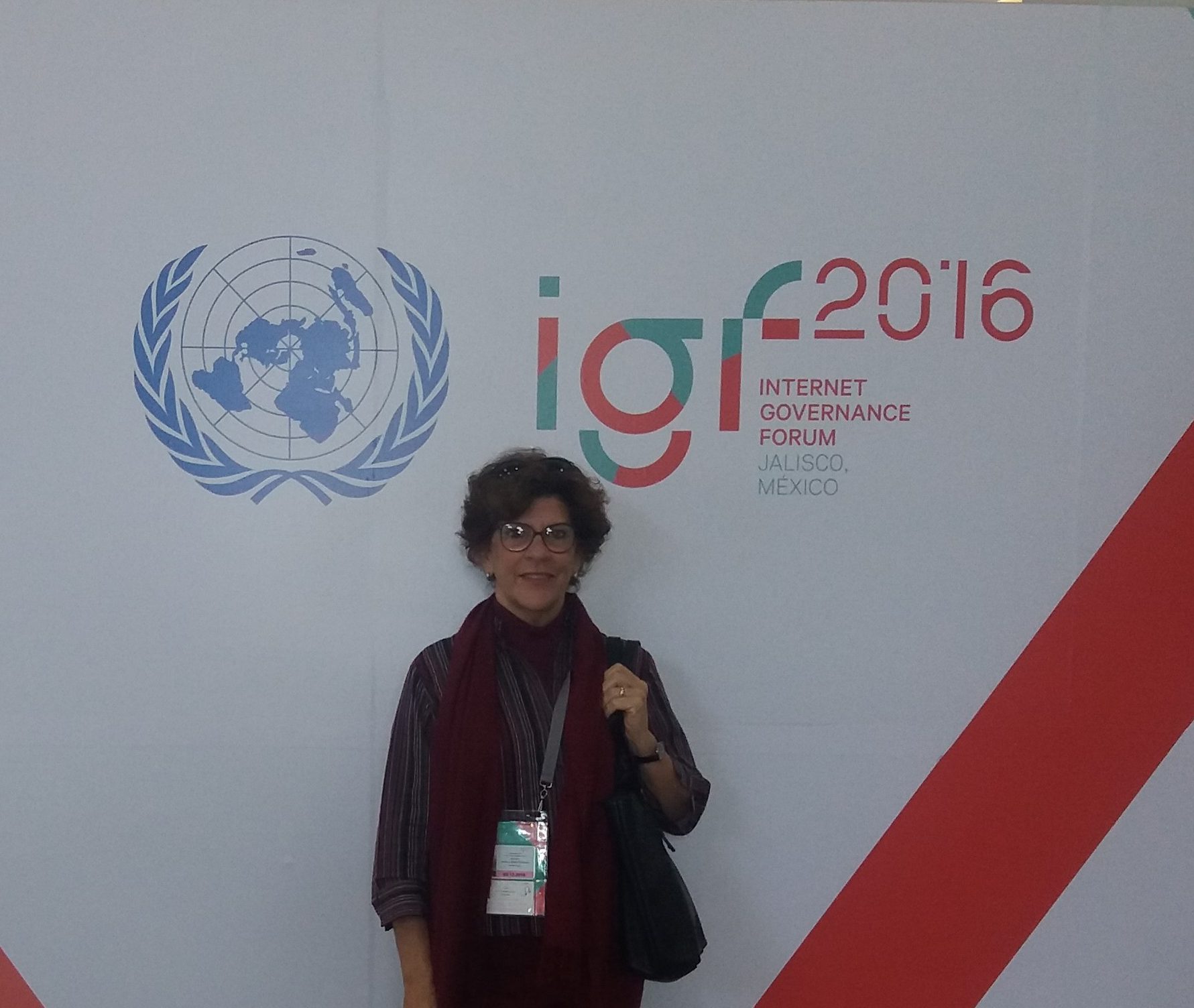
14ymedio bigger14ymedio, Regina Coyula, 8 December 2016 — A novice in Mexico and a novice in the Internet Governance Forum (IGF). The city surprised me because I had attributed to it a rural character it does not have. Zapopan and Guadalajara, to the eyes of a stranger, are a single city; one city with the equivalent of three-quarters of the entire population of Cuba. Many construction sites, many luxurious apartment towers that don’t seem to be inhabited, never mind the information from Miguel, my taxi driver to PALCCO.

PALCCO is the Convention Center and is enormous. The security measures are extensive, because it is a world event filled with people, including famous people, sponsored by the United Nations.

Numerous social, academic, journalism and other organizations have set up little stands in the entrance to present their programs. continue reading

Once inside the main building it is very difficult to orient yourself; an army of young volunteers, smiling and helpful, help you find your way in that labyrinth of meeting rooms and a place to have coffee.

I look at the agenda. All the topics are interesting and it’s hard to decide which to attend because up to ten sessions overlap at the same time. The technology is a wonder, because you can follow them on Youtube or watch them later.

For personal reasons I’m interested in the forums on public policy about access and internet rights, digital security, and surveillance; but I also attended sessions on other topics such as on-line education, and the lower levels of use among women, the disabled and minorities.

The sessions are in English and there is no simultaneous translation, which requires all my attention. Huge screens transcribe it and thus I can follow the topic.

I make the briefest comments on the panel on the Right of Internet Access in Latin America. I am listening to my Latin American colleagues, realizing the uniqueness of Cuba: not only has Cuba not ratified the UN covenants on human rights, but it voted against considering Internet Access a Human Right; and although the “cable” (Alba 1, from Venezuela) came to Cuba, the Internet has not come.

A synthesis that seems to be interpreted literally by another Cuban delegate, a woman representing the business sector, feels the need to remind the audience that Cuban has free education and healthcare, about the impact of the “Blockade” (the American embargo), and in my opinion, the most pernicious idea: the concern about giving people Internet when no one knows what they will do with it.

Here is the video with my comments, which occur roughly between 1:17:53 and 1:30:25.

https://www.youtube.com/watch?v=BWpZ9PMFobk&t=1h17m53s

Cuba’s Christian Liberation Movement Leader Gets a Lawyer / 14ymedio

Eduardo Cardet, national coordinator of Cuba’s Christian Liberation Movement. (Flickr)

14ymedio biggerEduardo Cardet, national coordinator of the Christian Liberation Movement (MCL) who has been under arrest since the night of 30 November, as of Thursday has found a lawyer to represent him. His relatives have denounced in several media that no lawyer wanted to take on the activist’s defense. Although the lawyer has not had access to his file, the family is optimistic and affirms that the attorney “fight for his right to bail.”

Yaimaris Vecino, the activist’s wife, told this newspaper in a phone conversation that she was able to see Cardet just after they moved him to the so-called “provisional prison” of Holguin, located on the Bayamo highway very close to the airport. continue reading

Yaimaris said that the regime opponent still has notable injuries on his face that he suffered during his arrest, and she clarified that ultimately the accusations have focused on the crime of attack, for which the prosecution would ask for a sentence of between one and three years, as stipulated in the Criminal Code.

Under the law, it is a crime when the use of “violence or intimidation against a public authority or official or its agents or assistants impede them from realizing an act appropriate to their duties.”

However, according to the testimony of numerous witnesses consulted and the family, it was the agents of authority, represented by two members of the State Security in plainclothes and two in uniform, who pounced on Eduardo Cardet when he arrived on a bicycle at his mother’s house.

“It was they who knocked him off his bike and exercised unnecessary violence to arrest him,” his wife explained. No one has officially explained why they went to arrest him at this time. “The first answer when I asked the reason for his arrest was from a State Security official, who told me everything was for his counterrevolutionary activism and they there were not going to allow any actions of this time,” his wife said.

Yaimaris Vecino explains that the attack occurred at the door of her house in front of their children, one age 11 and another 13 years old. “The only police officer who suffered something like an injury was one who injured his hand when he threw my husband against a fence with spikes to try to injure him,” she adds.

The Christian Liberation (MCL) Movement was founded in 1988 by the dissident Oswaldo Payá (who was killed in 2012); the MCL promotes a peaceful change towards democracy and seeks respect for human dignity.

Cuba’s Phone Company, The Monopoly of Inefficiency / 14ymedio, Zunilda Mata

Problems on the phone company’s Nauta internet service are exacerbated during the weeks a recharge specials are in effect. (14ymedio)

14ymedio bigger14ymedio, Zunilda Mata, Havana, 9 December 2016 – The Nauta network has failed again. This time users have been unable, for several days, to recharge their accounts on the internet, or to check or make balance transfers. The Cuban Telecommunications Company (ETECSA) suffers constant interruptions, a situation that highlights the deficiencies in its infrastructure, despite the substantial profits it earns as a monopoly.

Since its creation in 1994, ETECSA has been gobbling up all the sectors of the telecommunications market that were once managed by other companies, such as C-COM or Cubacel. Five years ago, Cuban authorities acquired all elements of that company and put an end to any foreign investment in the sector. continue reading

The closing of that stage, which was characterized by foreign investment from countries such as Mexico and Italy, was a symbolic slamming of the door in the same year that the Italian company Telecom sold its shares – 27% of the company – for 207 million dollars. With complete control of the country’s phone service, ETECSA began to dictate its operations.

Currrently, the monopoly manages all fixed and cellular phone service on the island, email communications and internet, and the distribution of recharge cards, the latter of which has improved in recent years with the licensing of private individuals to work as telecommunications agents.

Although in the last five years ETECSA has expanded from 350 to a little more that 600 base stations in the country and brought its signal to all the municipalities in the country, in web services and email ongoing problems generate constant complaints among users.

“I can only send or receive messages late at night, when there’s no one on-line,” protests Yohandri Rojas who lives in Santa Clara. The 29-year-old complains about the poor quality of the Nauta email service, which is managed from mobile phones. “It’s a disaster,” he says.

Rojas works with a friend in a small place that repairs mobile phones, and has extensive knowledge of computing and communications that he taught himself. “This is because of problems with the bandwidth on the data network,” he explained to 14ymedio. “What has happened is that ETECSA has not expanded its servers consistent with the growth in the number of users,” he emphasizes.

ETECSA refused to answer questions from this newspaper to explain the causes of the frequent crashes in service and the poor quality of its operation. “We are working on solving the problem,” an employee at the number to report problems curtly told this newspaper.

Services from email to cellphones have worsened in the past year. “They have sold more accounts than they can effectively manage,” says a telecommunications agent in the Regla district of Havana, who preferred to remain anonymous. “The service is disappointing and if another company emerges offering a different service, ETECSA is going to lose a lot of customers.”

In the middle of this year, Ministry of Communications authorities let it be known that there are 11.2 million temporary or permanent email accounts on mobile phones. Many of them are opened by tourists passing through the country, but at least half are regularly used by domestic customers.

Each megabyte downloaded or uploaded via email on Nauta mobile phone services costs one Cuban convertible peso, the daily wage of a professional. But because of the instability in connections, the same amount can cost three times as much, because interruptions cancel message transmissions over and over again.

The problems are worse during weeks when “bonus recharges” are offered, allowing the user to purchase a recharge amount on the internet with a bonus as a “gift” from the company. “During those days there is no way I can get into my Nauta email inbox,” explains Deyanira, a nurse who lives in Havana’s Cerro neighborhood.

“When they announce ‘double’ or ‘bonus’ recharges, I know I won’t be able to communicate with my family by email that week,” she explains. The young woman’s mother lives in Germany with her younger sister, and email via mobile phones is the quickest way to stay in touch. However, most of the time, “my messages remain in the outbox for hours or days, waiting for ETECSA to wake up,” she jokes.

Bandwidth problems on the cellular network affect more than just email services. Ernesto, a Valencian visiting Cuba for two weeks, complains that “the roaming service is very unstable, and sometimes there’s a signal and sometimes not.” At more than 5 euros for every megabyte sent, the tourist tried to use “Facebook and also Instagram, but with little success.”

In recent months, Cuba has signed agreements for roaming with several telephone companies in the US, most notably Verizon, Sprint and AT&T.

“If they continue to strain the network with users demanding data, but do not expand or update the infrastructure, it will collapse,” predicts Yohandri Rojas. “ETECSA is going to be like the hard currency stores that sell beer: high demand and low supply,” he scoffs.

Little War Games / Fernando Dámaso

Fernando Damaso, 29 November 2016 — In October, Hurricane Matthew struck the eastern side of the Island, creating destruction and desolation in Maisí, Baracoa, and other communities of the territory, from which their inhabitants–given the precariousness under which they were already living–will take years to recover. This is especially so being that much of what is reconstructed today is of a temporary character, due to the lack of durability and resistance to natural phenomena of the materials utilized.

The national economy continues to be in crisis, and the lack of supplies can be seen in the empty shelves of the freely-convertible currency (CUC) stores, in the service stations bereft of gasoline, and in the pharmacies that don’t stock basic medications. Other essential services also show their deterioration and affect the Cuban people. continue reading

Against all logic, from the 16th through 18th of this month, the authorities carried out the Bastion 2016 Strategic Exercise, which practically paralyzed the country for those three days. As if this were not enough, they added two “Days of Defense,” the 19th and 20th, with the goal of perfecting the country’s preparedness to confront a supposed enemy, under the concept of “War of All the People.”

In the conclusions published in the official press, the solution to wartime problems was declared “successful” by the ministries in charge (the same ones who are incapable of resolving the problems of peacetime) as were the exercises carried out with the mobilized population (infantry exercises, arming and disarming of weapons, shooting, grenade launching, disguise and others). In addition, there were assurances that “Cuba’s invulnerability to military aggression” had been confirmed.

In today’s world, with the level of arms development and technological advances in all spheres, no country can consider itself invulnerable, including the major powers. It is absurd to declare this with respect to a small and poor country such as Cuba, equipped with obsolete and recycled weaponry.

Now the practice runs were underway for a great military parade, in the style of those from the Cold War era, on 2 December, for the 60th anniversary of the Landing of the Granma and in honor of the “historic leader’s” 90th birthday–which has been moved to 2 January 2017, due to his death on the evening of 25 November and the activities surrounding his funeral.

It is true that all of these events, except the (albeit expected) demise, was long planned. But prior to Hurricane Matthew and the results of the United States elections. they could have been reconsidered.

It is no secret to anyone that these happenings required resources of all types and exacted great physical and economic costs. The questions by many citizens were: Why, instead of being squandered, were these means not applied to relieve–in the shortest time possible and with greater quality–the problems in the communities affected by the hurricane?

The explanations provided by the authorities–including the one about the exclusion of Guantánamo, a poor province with few resources, from these activities–satisfied very few. In the context of the improvement of relations between the governments of Cuba and the United States, do they not insert unnecessary noise?

Could it be that with these little war games, there was an attempt to “cohere” to the regime the ever-less “cohered” Cuban people?

Could it be a pathetic attempt to “play an old hand” for the benefit of the next tenant of the White House?

Given the recent events, much should change.

Translated by: Alicia Barraqué Ellison

Legacy and End Point / Somos+, Pedro Acosta

Somos+, Pedro Acosta, 6 December 2016 — After your departure the Cuban people should be eternally grateful for:

The fall of the dictatorship. Fulfilling your political promises, especially the respect for the 1940 Constitution, the quick holding of free elections, and not placing yourself permanently in power.

For making us economically independent (??!), developing our industry and raising it to levels never before seen, diversifying production and eliminating our dependence on our dangerous neighbor to the north and transferring it first to the Socialist camp and then to the first ones who came along. Maintaining the boom and constantly growing our powerful sugar industry. continue reading

Also for giving us a dignified wage that allows us to live at ease. Because our children can savor a tasty breakfast, lunch and dinner. And the Cuban family has the possibility to enjoy some deserved vacations in the respectable hotels that adorn the national territory, including the keys.

For granting us a Social Security System that covers the basic needs of the human being and allows us to retire without having to depend on our families to maintain us or having to take up any task we can find to be able to subsist and not live by begging.

For giving us decent housing that resists hurricanes, with only 52% of the housing stock in the country in fair or poor condition. Because the stores have fair prices according to the generous income the government pays us. In addition to having at our disposal all kinds of new generation appliances.

Giving us free choice and having telephones, TV channels and internet and so having an excellent level of information and not being subject to the opinions of any individual or of the communication media.

For giving us free (??!) education and health care. And in the schools and hospitals having facilities and technologies sustained by country’s powerful economic development.

For giving us the chance to feel proud of the behavior and formal education of the population, especially the youth. For eradicating: gambling, prostitution, racism, marginalization, corruption and other evils of the past.

Establishing diligent public services and eliminating absurd bureaucratic and cumbersome procedures, with officials who feel proud of serving the people, for fulfilling an honorable duty.

Infinite thanks:

For not interfering in warring conflicts of any kind. And not squandering the country’s abundant resources. For respecting our free will and possessing an unsurpassed freedom of expression, given through the media.

For never having lied to the people and for expressing from the first day your intentions to implant socialism in Cuba.

Because with your example we learned to respect and never denigrate our compatriots with political opinions different from those proclaimed by the Communist Party, and the Organs of State Security never having repressed in any way the regime’s opponents, much less tried and condemned them under false accusations. With your actions jealously respecting the Constitution of the Republic.

For maintaining a clear separation between legislative, executive and judicial powers.

For giving us the best Electoral System in the world where others think and argue for us and for having the ability to know, through their biographies, the Deputies of the National Assembly, people who don’t need to be from the area where they are elected from and whom we have never seen in real life. For giving us the ability to elect the president of the county.

Also, for giving us, at 50 years, hopes that in the next 50 years it will be possible to find the right road.

For this and a thousand other things:

THANKS!

The Legacy of Fidel Castro and the Future of Cuba / Iván García

Saturday, December 3, Santiago de Cuba. Elementary school students await the arrival of the entourage with the ashes of Fidel Castro. Photo by Darío López-Mills, from AP, taken from El País.

Iván García, 6 December 2016 — Some large scale political events, the ones where people are weeping over the death of a “venerated leader” or yelling slogans like ventriloquists, are really smoke and mirrors. A dishonest trick.

On April 7, 1957, a month after the assault on the Presidential Palace by the March 13 Revolutionary Council, friends of the dictator Fulgencio Batista organized a demonstration on the esplanade in front of the palace.

It was a rainy day but, according to press accounts at the time, 250,000 citizens turned out. This was a huge number considering that the 1953 census reported that Havana had 785,455 residents. (The entire population of Cuba in 1953 was 5,829,000.) One year and nine months later the same residents, probably in even larger numbers, filled the streets of the capital to pay homage to the new soldier messiahs. continue reading

A resident of Santos Suárez, now deceased, told me that on November 8, 1958, Batista’s hitmen were involved in a shootout for more than five hours with four young people from the July 26th Movement, who were holed up in a building at Goicuría and O’Farrill streets in what is today the Tenth of October district.

No one from the neighborhood came to the defense of Pedro Gutiérrez, Rogelio Perea, Angel “Machaco” Ameijeiras and Norma Porras, who was nineteen-years-old and pregnant by Machaco, the group’s leader. Residents remained indoors, watching the shooting from behind their blinds. They later recounted seeing the three men taken alive. After being tortured, they were executed. Porras was captured on a neighboring roof and taken to a military hospital.

Neither their torture nor their corpses, which were thrown into a ditch by Batista’s repressive security agencies, were enough to convince Cubans to hold public demonstrations. Similarly, dissident protests denouncing human rights violations are not enough to summon the large mass of Cubans who harshly criticize the Castros in private.

According to experts, closed societies govern by resorting to human fear. In a democracy, any incident or injustice can be an incentive for strikes or public protests.

But in an autocracy — whether it be communist, fascist or a banana republic — acquiescence and fear stifle rebellion. It’s not as though Cubans have a genetic predisposition for this condition. Certainly not.

In Italy, Mussolini reined in the Mafia. In Germany, Hitler used the public squares for his xenophobic, anti-Semitic, and militaristic harangues.

Cuba has spent sixty-four years under dictatorships. Seven under a capitalist dictatorship which respected free press and granted amnesty to political prisoners. Although it did impose press censorship at times, it also later lifted it. For fifty-six years the socialist dictatorship has invoked a false sense of nationalism and co-opted the heroes of Cuban independence for its own advantage.

Fidel Castro was clearly an important leader, for good and for evil, but only in the political realm. In 1956 he raised a guerilla army and launched a war that broke all the rules of conventional warfare, destroying a professional army that relied on artillery, planes and war ships.

He was a key figure in Africa’s anti-colonial movement. He provided men and materiel to seventeen African nations. He tried to subvert almost all of Latin American except for Mexico (although Subcomandante Marcos’ men did train in Cuba) with strategies that combined armed struggle with terror.

A majority of the continent’s seditionists — from Venezuela’s Carlos the Jackal to Colombia’s Manuel Marulanda (alias Sure Shot) — passed through the military camp set up in Guanabo, a seaside area on the outskirts of Havana. They also included commandos from the Basque terrorist group ETA as well as the PLO and the IRA.

In terms of economics, Fidel Castro did very little that is worthy of applause. And a lot at which to jeer. Let’s consider what has come of some of his hair-brained schemes, the lies he told, the promises he never fulfilled.

In Picadura Valley there are no air-conditioned dairies or robust livestock setting new records for dairy production. Nor any exotic fruits in Baconao. And Havana was never able to attain the standard of living of New York, as he once promised in one of his hundreds of speeches.

Rather the opposite has occurred. The neighborhoods he built are a master class in architectural folly. His schemes destroyed or depreciated sugar, citrus and coffee production operations.

His brother Raúl had to resort to urgent economic reforms, timid and still incomplete, if for no other reason than to paper over the disasters created by Fidel.

Castro I was a dictator, an enlightened leader. He did not have a 900 million dollar fortune, as Forbes magazine reported. He had much more. He had something that cannot be appraised in monetary terms. He had a whole country. A country that he ran like his own personal estate.

Now that he has died, the question that arises is: What will happen to the more than twenty houses that he owned throughout the country? Or to his private navy? Or his island in Cayo Piedra south of the Bay of Pigs?

The man whom God has just called home has, to my mind, caused damage on an anthropological scale to Cuba and to Cubans. He polarized society and opinions. He sold us on the idea that the Fatherland was synonymous with revolution and socialism.

Castroism did not end with Fidel Castro’s death. The regime still has some life left in it. But with his death an era ends and the revolution loses a symbol. International economic forces will require new reforms if it is to survive. A relapse into ideology and a retreat from economic reform will spell the beginning of the end for Castroism.

After Fidel Castro’s ashes have been set inside an enormous rock, supposedly brought down from the Sierra Maestra, and the funeral services have concluded, honest Cubans — those from here and those from there — must sit down and discuss whether or not we want live in a democratic nation.

All of us are vital to the future of Cuba. The best way to repair the terrible sociological and spiritual damage Fidel Castro has caused is to set aside resentment and engage in dialogue.

To paraphrase the poet Angel Cuadra, the two sides have the same hero, José Martí. Both always defend their ideas singing the same anthem and raising the same flag.

The war is over. Let’s build a new Cuba together.

 Diario Las Americas, December 4, 2016