Kimberley Motley, The Lawyer Who Fights Against Outrages / 14ymedio


14ymedio bigger14ymedio, Havana, 17December 2016 — The US lawyer arrested Friday in Havana could become a nightmare for the Cuban government. Kimberley Motley traveled to Cuba to advise on the case of the artist Danilo Maldonado, known as El Sexto (The Sixth), and was arrested and held for some hours, prompting a wave of international condemnation.

Motley has worked in environments such as Afghanistan where she traveled in 2008 as part of a legal aid program. During her nine-month stay in the country she understood “how laws that were meant to protect people were being underused, while brutal and illegal measures were being overused.” continue reading

The American lawyer became the first foreigner to litigate in the Afghan courts, an experience that helped her realize that “the lack of justice is not only a problem in Afghanistan, but a global problem.”

During the more than ten years she has practiced law, Motley has represented people ranging from high-ranking executives of prestigious companies, to Afghan girls with few resources. The premise of her work is “to work the system from within,” and to use “the laws in the way they are meant to be used.”

Born in 1976 in Milwaukee, United States, Motley won the Miss Wisconsin beauty pageant in 2004 and is the mother of three children.

The lawyer believes that many injustices are committed because people do not know “what their rights are,” laws are “supplanted or ignored by tribal customs” or there are no “lawyers who are willing to fight for those laws.”

These premises brought her to Havana this December to advise on the case of the graffiti artist El Sexto, detained since November 26 after painting a graffiti about the death of Fidel Castro with two simple words: “Se fue” (He’s gone).

Motley’s arrest this Friday adds to the risks that she has experienced in her career. “I have been temporarily detained. I have been accused of running a brothel, accused of being a spy,” she says in a Ted Talk that has gone viral on the internet.

The lawyer points out that for all the risks she runs, her clients run “much greater risks, because they have much more to lose if their cases are not heard.”

This Saturday the attorney was released but the echoes of her arrest are just beginning. A figure with great media and public impact, Motley calls “to create a world economy of human rights and that we all become global investors in human rights.”
The Material Basis Of Joy / 14ymedio, Reinaldo Escobar

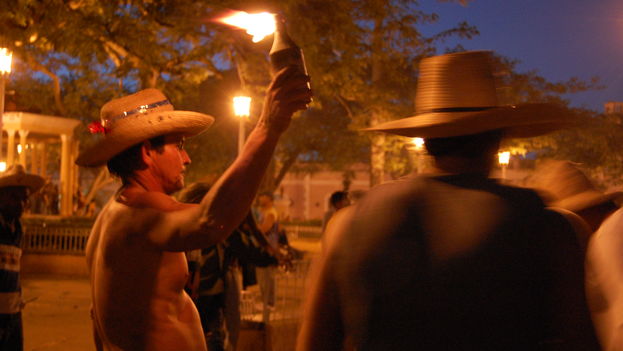
Traditional celebrations called ‘parrandas’ that are normally held in December in Remedios, have been postponed this year until January 6-7. (DC)

14ymedio bigger14ymedio, Reinaldo Escobar, Havana, 16 December 2016 — In the Marxist catechism it is established that the material is first, over the spiritual. From this conceptual Big Bang, is structured a doctrine in which all categories are concatenated more or less harmoniously; social property over the means of production, the fundamental law of socialist distribution, and the dictatorship of the proletariat.

From this key starting point it is explained that matrimonial fidelity is due to the appearance of private property, and that the ambition for riches will only be overcome in the human condition when material goods flow like a river due to the increased productivity that comes as a fruit of dominion over nature. continue reading

For the faithful followers of this form of thinking, joy in human beings is nothing more than the result of drinking alcoholic beverages in an environment where there is music and jokes, social contacts, smiles, cheers and laughter. That is, people do not drink, sing and laugh because they are happy, but the other way around.

At the end of December, Cubans usually indulge their desire to celebrate. Christmas and New Year’s come together to promote gift giving, Christmas Eve feasts, improvised choirs of nostalgic carols, resolutions for the future, furtive kisses at midnight, buckets of water thrown into the street to wash away the year’s evils, and taking a walk with a suitcase as an expression of the desire to take a magical trip to another part of the world.

With this cornucopia, joy prevails and bottles are uncorked, while others eat or dance and someone opens the door to receive the latest guest who didn’t want to miss the feast in which the discomfort of daily life is temporarily relegated to the background.

However, in these days that are left of the month of December, on the pretense of a tragic reason, from certain more or less official bodies, “the order has come down” to moderate the joy, postpone the parrandas, ban celebrations at workplaces and schools. Rumors are rife that alcohol will disappear as of the 20th, there will be no fireworks, and no loud music, not even within one’s own home.

Marxists are like that. They are intimately convinced that by eliminating or undermining “the material basis of joy” they can prevent joy from rising in hearts, crush feelings of gratitude for life itself, and smother the sparks of hope that light the way. At the end of the day, they maintain, the material is above the spiritual.

‘El Sexto’s’ American Lawyer and Two Activists Arrested in Havana / 14ymedio

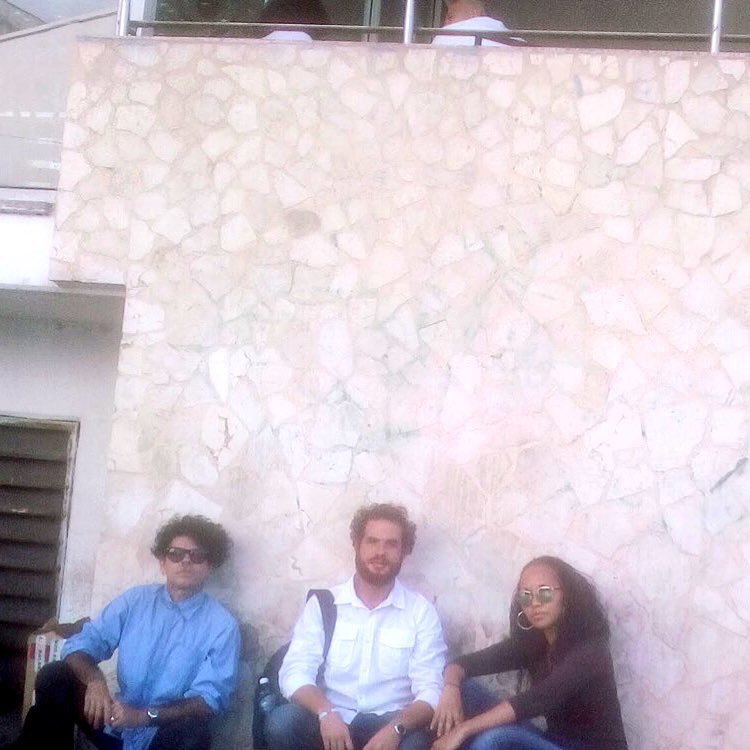
(L to R) Gorki Aguila, Luis Alberto Marino and Kimberly Motley in Havana (Source: Rosa Maria Paya’s Twitter)

14ymedio bigger14ymedio, Miami, 16 December 2016 – Kimberly Motley, an American attorney, and the activists Gorki Aguila and Luis Alberto Marino were arrested this Friday as they prepared to hold a press conference outside the Provincial Court in from of the Capitol Building in Havana. The Cubans were taken to the Zanja police station, but there is no information about the whereabouts of the American lawyer.

“They were going to give a press conference about the situation of Danilo Maldonado, ‘El Sexto,’ who the authorities accuse of damage to public property,” according to Rosa Maria Paya, president of the Latin American Network of Youth for Democracy, who spoke to 14tmedio by phone. Motley also intended to take on the defense of Eduardo Cardet, National Coordinator of the Christian Liberation Movement (MCL).

Cardet his been under arrest since 30 November for “his political activity of leadership within the MCL” according to the Paya. He is accused of “assault,” a crime that carries a prison sentence from one to three years.

On 26 November, El Sexto was arrested after painting several graffiti on the walls of the Habana Libre Hotel, reading “se fue” (He’s gone), and loaded a video to his Facebook profile celebrating the death of Fidel Castro.

Recently he was transferred to Combinado del Este, a high security prison in Havana.

Threats and Arrests if Dissidents Continue in Cuba / 14ymedio

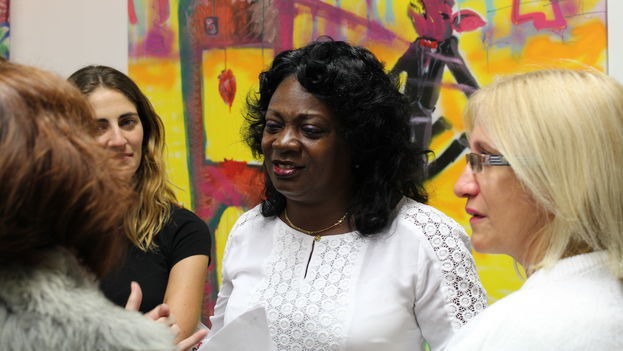
The leader of the Ladies in White, Berta Soler, during an exhibition of the work of Danilo Maldonado, known as ‘El Sexto’. (14ymedio)

14ymedio bigger14ymedio, Havana, 15 December 2016 –The leader of the Ladies in White, Berta Soler, was arrested Thursday in the morning when she was about to leave the headquarters of the organization in the neighborhood of Lawton, Havana, in order to connect to the Internet.

Angel Moya, a former prisoner of the Cause of 75 from the 2003 Black Spring and Soler’s husband, told this newspaper that neighborhood witnesses confirmed to him that the arrest had been made with excessive use of force. “She was arrested violently, neighbors testify that they even beat her,” says the dissident who was not at home at the time of arrest. continue reading

Moya speculates that Soler was taken to the detention center in Alamar, but was unable to confirm the information.

The former prisoner of the Black Spring told 14ymedio that the Ladies in White movement has not programmed any activities for today. “Right now, the only thing Berta did was to launch a call for Tuesday, 19 December, at two in the afternoon in Central Park, for the traditional Literary Tea, if State Security continues to operate around the group’s headquarters in Lawton, and prevents the activists from accessing it.

Around two in the afternoon the political police arrested another Lady in White, Marlen Gonazalez, when she went out with her husband to buy food at the agricultural market. “A patrol car came and asked for her ID card and they took her prisoner,” said her neighbors in the San Miguel de Padron area.

While all this was going on, at Jose Marti Airport the activist Jose Diaz Silva, a Cuban delegate to the Democracy Movement, he was approached by police before taking a flight to the United States. According to a report from the dissident, the officials warned him that on his return from Miami he would encounter very serious reprisals and that from now on the opposition’s “days are numbered.”

The latest report of the Cuban Commission for Human Rights and National Reconciliation (CCDHRN) said that during November there were at least 359 arbitrary arrests of peaceful opponents on the island, over a hundred cases fewer than in October. However, the independent organization warns of a possible increase in repression following the death of former President Fidel Castro.

Google, the Phone Company and Censorship in Cuba / Mario Lleonart

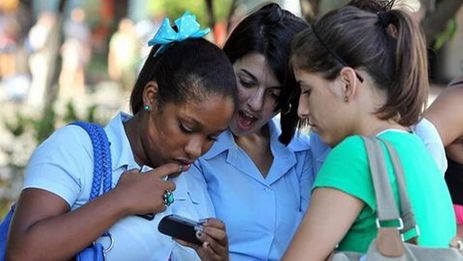
Young women connect from a cellphone in a newly enabled wifi zone in Cuba, where one hour’s connection cost the equivalent of two days’ pay.

Mario Felix Lleonart, 14 December 2016 — Google recently signed an agreement with ETECSA, Cuba’s telecommunications monopoly, owned by the Castros. As of 2011, when the owners of the country bought out the 27% interest in ETECSA maintained by Telecom Italy, there have not been as many expectations as now.

Then, after the Italians took off with their 706 million dollars, the lucrative business without competition became a goldmine for the Castro family, and at the same time guaranteed the maximum censorship possible. continue reading

Since then the ETECSA monopoly has not taken a single step to diminish censorship, or to diminish its capital. In addition to a political victory, it will now also benefit from this agreement with Google. For some time the international telecommunications giant has been visiting the island and its proposals, in principal, sought to procure the maximum benefits for the Cuban people, but ultimately they signed what ETECSA’s owners allowed them to.

From now on Google will be forced to provide the information the island’s regime requires from them, about “suspicious websurfers,” as it does with any governments with whom it signs agreements like this. Now the censorship will occur with the complicity of Google who negotiates with the Castro regime, the absolute owner of ETECSA. As if ETECSA were a reputable company, and as if the Havana regime was a good government.

Personally I am curious if, at least to dissimulate, ETECSA will again permit access to my blog from the island, forbidden according to reports received, since the death of the tyrant, or to other sites blocked for a long time now, such as the digital newspaper 14ymedio, Yoani Sanchez’s blog Generation Y, or pages such as MartiNoticias.com. I think that experts such as Sebastian Arcos Cazabon or Raudel Garcia Bringas, interviewed by Marti Noticias, are right when they affirm that this agreement between ETECSA and Google will not solve the problem.

Meanwhile, and far beyond this story, but perhaps for reasons of geopolitics, today this blog, Confessing Cuba, was attacked from Ukraine (see screenshot below), although thanks to the protection of WordPress and its BPS log-in security alert, the pirates didn’t manage to get what they wanted. Hopefully those on the island, ETECSA and its owners, will soon no longer always get away with what they want.

After the Mourning, the Grief / Fernando Dámaso

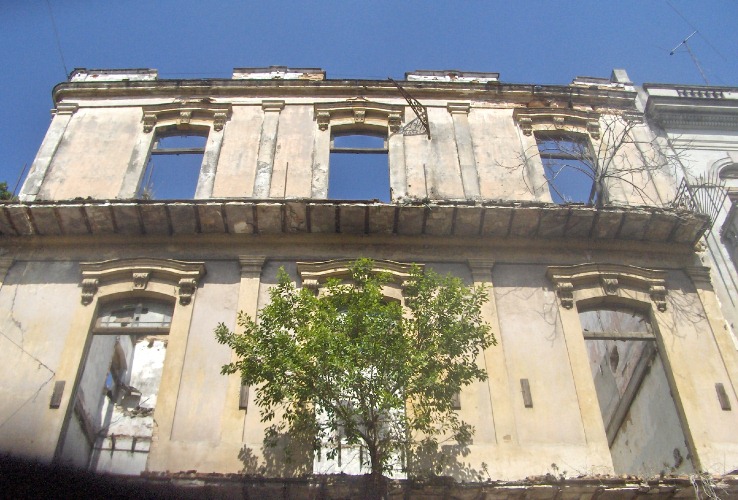
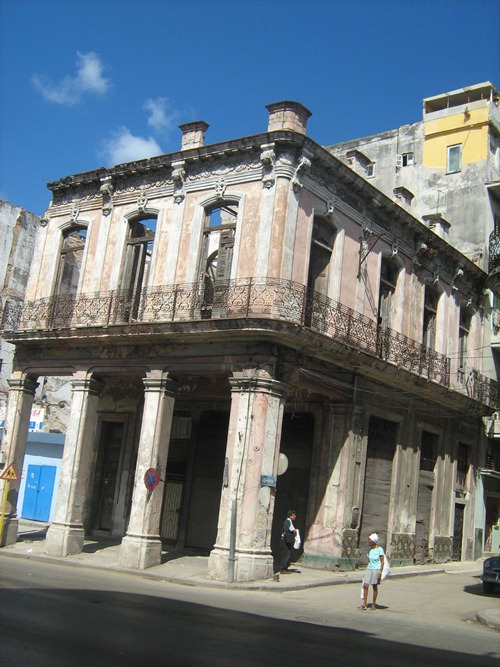
Havana Cuba After Fidel.

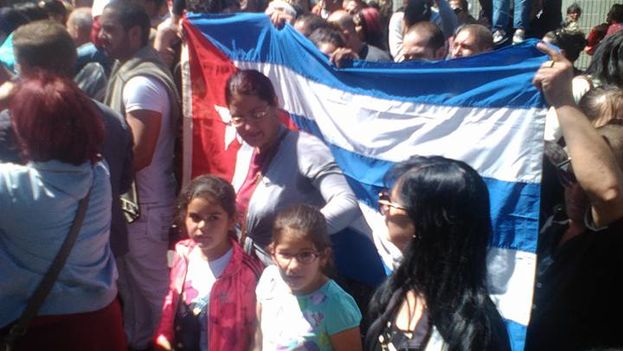
Fernando Damaso, 14 December 2016 — It seems that, the nine days of national mourning having ended, it is now extended into interminable grief, imposed by the official media, trying to sanctify the image of the deceased with a virtual eternity. It gives the strange sensation that his spirit continues to govern the country, and that he is the one dictating orders and regulations.
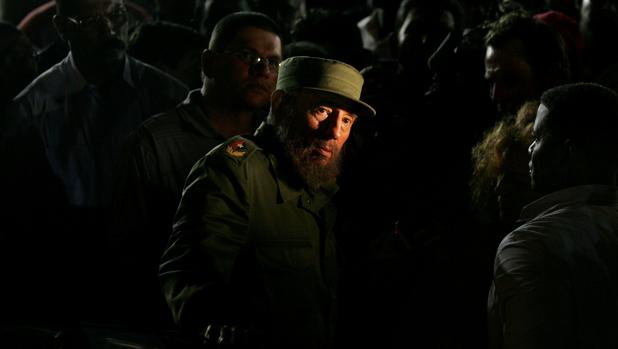
Violating the most elemental limits of reason, the idea has arisen of including his ideas in the curriculum of every university major this coming year, taking into account the “genius” of his content that, ironically, led the country to misery and has made it one of the worst economies in the world.

Documentaries, books, poems, articles, photographs, paintings and songs beset Cuba’s citizens day and night, repeated many times, causing rejection rather than acceptance, and everything related to him has quickly become part of  the island’s “choteo,” an unending stream of bitter humor. You just have to walk our streets with an attentive ear.

Excesses always bring bad results and are paid for dearly. This is something the Cuban authorities should know, after so many years of exercising power.

Amnesty International: Where to Write for Release of El Sexto

UA: 273/16 Index: AMR 25/5244/2016 Cuba Date: 29 November 2016

URGENT ACTION

CUBAN GRAFFITI ARTIST ARRESTED AGAIN

Cuban graffiti artist Danilo Maldonado Machado (‘El Sexto’) – named a prisoner of conscience by Amnesty International in 2015 – was re-arrested on 26 November, shortly after the announcement of Fidel Castro’s death.

Cuban graffiti artist Danilo Maldonado Machado (also known as ‘El Sexto’) was arrested at his home in Havana, the capital, at approximately 11.15 am on 26 November, hours after the announcement of Fidel Castro’s death. Danilo Maldonado was on the phone with his girlfriend when state officials forced their way into his apartment.

According to his mother, Maria Victoria Machado, she and his sister were initially unable to locate him, before they eventually located him at a prison later that afternoon. Danilo Maldonado’s mother says he is currently detained in Guanabacoa, Eastern Havana. When Maria Machado visited him on 27 November, officials did not give reasons for his arrest.

On 26 November, according to Cuba-based newspaper 14 y medio, Danilo Maldonado had graffitied the words “He’s gone” (Se fue) on a wall in Havana. The news outlet reported that El Sexto’s graffiti was one of the first public demonstrations outside of the state-organized demonstrations of mourning following the announcement of Fidel Castro’s death.

Short-term arbitrary arrests remain a common tactic to restrict freedom of expression in Cuba. In October, the Cuban Commission of Human Rights and National Reconciliation, which like other human rights organizations is not recognized by Cuban authorities, reported 620 arbitrary detentions of peaceful protestors and opposition activists.

Provisions of the Cuban Criminal Code, such as contempt of a public official (desacato), resistance to public officials carrying out their duties (resistencia) and public disorder (desórdenes públicos) are frequently used to stifle free speech, assembly and association.

Please write immediately in Spanish or your own language:

Calling on the authorities to release Danilo Maldonado Machado (‘El Sexto’) immediately and unconditionally, as he is a prisoner of conscience, imprisoned solely for peacefully exercising his right to freedom of expression;

Calling on them to guarantee the right to freedom of expression, including for dissident, opponent or activist voices.

PLEASE SEND APPEALS BEFORE 10 JANUARY 2017 TO:

President of the Republic

Raúl Castro Ruz

Presidente de la República de Cuba

La Habana, Cuba

Fax: +41 22 758 9431 (Cuba Office in Geneva); +1 212 779 1697 (via Cuban Mission to UN)

Email: cuba@un.int (c/o Cuban Mission to UN)

Salutation: Your Excellency

Attorney General

Dr. Darío Delgado Cura

Fiscal General de la República

Fiscalía General de la República Amistad 552, e/Monte y Estrella

Centro Habana, La Habana, Cuba

Salutation: Dear Attorney General/ Señor Fiscal General

Also send copies to diplomatic representatives accredited to your country. Please insert local diplomatic addresses below:

Name Address 1 Address 2 Address 3 Fax Fax number Email Email address Salutation Salutation

Please check with your section office if sending appeals after the above date.

URGENT ACTION

CUBAN GRAFFITI ARTIST ARRESTED AGAIN

ADDITIONAL INFORMATION

On 20 October 2015, Cuban graffiti artist Danilo Maldonado Machado (‘El Sexto’) was released after spending almost 10 months in prison without trial following accusations of “aggravated contempt”. Amnesty International considered him a prisoner of conscience, imprisoned solely for peacefully exercising his right to freedom of expression (see: https://www.amnesty.org/en/documents/amr25/2710/2015/en/).

Danilo Maldonado Machado was accused of “aggravated contempt” after being arrested on 25 December 2014 for transporting two pigs with the names “Raúl” and “Fidel” painted on them, which he intended to release in an art show in Havana’s Central Park. He was never formally charged nor brought before a court during the almost 10 months he spent in detention.

Name: Danilo Maldonado Machado, also known as ‘El Sexto’

Gender m/f: male

UA: 273/16 Index: AMR 25/5244/2016 Issue Date: 29 November 2016

Cuban Adjustment Act or Upheaval Act / 14ymedio, Rolando Gallardo

Cubans demonstrating against the US embassy in Quito, Ecuador. (14ymedio)

14ymedio bigger14ymedio, Rolando Gallardo, Quito, 14 December 2016 — I wake up and I see a report on the arrival of a group rafters on the coast of Miami. I’m surprised by the open declaration of one of them, who confesses having left Cuba in search of a better future, but says he has nothing against Fidel Castro. His words set me to meditating.

The Cuban Adjustment Act is a good deed on the way to hell. Thousands of Cubans arrive in the United States every year to take advantage of its benefits. Its repeal is a taboo subject among the exile and the emigration. Those who say they are in favor of its elimination or reform from abroad, receive avalanches of criticism and support, demonstrating the division of opinions about it. continue reading

The government of the island ascribes to the Cuban Adjustment Act the main reason for the exodus, dismissing internal conditions and policies that cause people to leave, this being a long-time strategy of the regime: Someone else is always to blame.

Authorized voices within the Cuban-American political establishment, such as Senator Marco Rubio, call for a revision of the Cuban Adjustment Act on the basis that not all Cubans arriving in the United States and claiming refuge under it meet the conditions to apply for asylum, and many of them demonstrate their political apathy by returning to the island as soon as they obtain a US residence permit, discrediting their supposed condition as a politically persecuted person.

Since the beginning of the most recent migration crisis in November of 2015, the division among Cubans stranded in Costa Rica and Panama is evident.

One group reaffirms, recklessly and motivated by an ignorance of the nature of the Adjustment Act, that they are economic migrants, which strengthens the arguments of the regime about the causes of illegal immigration.

Others, however, say that they left Cuba because of its repressive policies, lack of political and economic freedoms, and the impoverishment of the country, something imposed by an internal blockade that has plunged the Cuban people into despair.

Both sides agree that this mass escape was motivated by the fear of political transformations that would be generated by the “thaw,” leaving them inside a nation that sees no long-term changes in the relationship between the government and the people.

It is legitimate to question whether the Cuban Adjustment Act should continue under the current terms. The receiving government spends an annual average of 500 million dollars in aid to the “Cuban refugees.” Some estimates indicate that, from 2014 to late 2016, the United States has allocated 1.5 billion dollars for monetary aid for the first six months, food stamps for three months which are renewable for longer, health insurance for ten months for adults and more health insurance assistance for children, as well as supplementary services for the elderly.

Does every Cuban deserve such kindness? The final saga of the migratory crisis, which has had its most recent and dire chapter in Ecuador, demonstrated that some members of the regime are parasites benefitting from the Cuban Adjustment Act. They waste no time in leaving behind the claws of the tiger, and brazenly appear among the voices clamoring for an airlift to continue their journey to the United States, while in Cuba they were persecutors of the Ladies in White, Cuban counterintelligence officials, members of the National Assembly of People’s Power, and militant communist/opportunists who, tired of the perks of the regime, head north to take advantage of other perks in “la Yuma” – the United States. Many of them, who denied there was a political motive to this breakout, are now in the United States enjoying government help.

Another group, misunderstood and attacked, launched itself in courageous though reckless protest against the Cuban embassy in Quito, showing the political nature of the exodus and starring in one of the never before seen historic feats of the emigration. Unfortunately, it is an event little spoken of. Many of the protesters were deported to Cuba. Another group of people and protagonists of the protest camp in Quito’s Arbolito Park are already in the United States, justifying with their actions and political stance that they deserve the benefits of the Cuban Adjustment Act.

I support reform of the terms of the Cuban Adjustment Act. It is not fair that the American taxpayers’ money goes into the hands of those who enjoyed communism and now want to enjoy capitalism without deserving to. It is not fair that economic emigrants and future speculators head back to the island with their recently obtained residence permits, trampling on the spirit that gave rise to the law. Those who are unscrupulous and reject with their behavior – far from that of the politically persecuted – the refuge offered to them, should have their status reassessed.

I do not live in the United States and I have not benefited from the Cuban Adjustment Act, nor do I consider myself politically persecuted, despite my actions and opinions, but I condemn those who mock the law and discredit the support and sustenance that the United States government has offered to our people in the hard years of the exodus, which sadly does not end.

Cuban Apartheid / Cubalex

“Law No. 118. Law of Foreign Investment”

Cubalex, Havana, 14 December 2016 – In Cuba there are no conditions under which economic, social and cultural rights can be exercised. “All Cubans have free healthcare and education,” is a claim that is easily refuted. We continue the debate with another question: Who decided we Cubans could not invest in a hotel or form joint ventures with the state?

First absolute silence, then a bombardment of stones. In the end, Pedro threw a pea! The National Assembly and the Council of State are those who dictate the laws, he responded, doubtfully.

“Have you read any law that says Cubans cannot invest in the national economy?” the professor asked. No, but the law is called “The Law of Foreign Investment” and it assumes that only they can participate in the national economy at the same level as the Cuban government.

Is it fair? He asked again. No, he said. Do you believe it is a violation of human rights? He continued interrogating him. I don’t know, he replied, annoyed. He approached him and slapped his shoulder twice. Yes, the state excludes us, discriminates against us, he said, while looking at him and nodding.

“We all have the right to equality and non-discrimination. It is a universally recognized right,” explained the professor while walking back and forth in the improvised classroom. The critics of this law call it Cuban Apartheid. Do they know this is a crime in the current Cuban Penal Code?

I leave them to their first task: reading paragraph (b) of Part 1 of Article 120 of the Penal Code. Explain in 140 characters, that is in a Tweet, if the situation just described could define the crime called “Crime of Apartheid.” See you next Wednesday. Don’t miss it!

See also:

The Socioeconomic Legacy Of Fidel Castro / Miriam Leiva

ABC International, Miriam Leiva, 26 November 2016 — Fidel Castro left Cuba in disastrous economic conditions after exerting absolute power for more than 47 years. His brother received a country “on the precipice” on 31 July 2006.

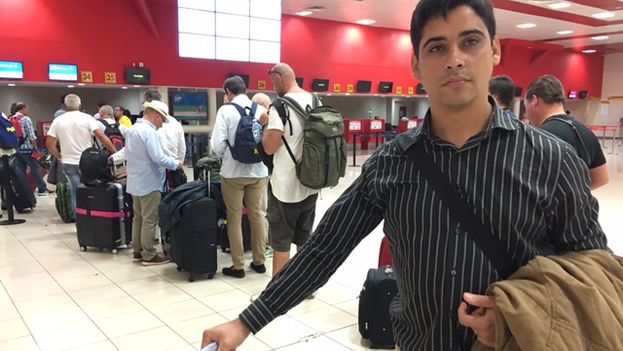
Raul Castro has had to eliminate the “genial” initiatives of the comandante en jefe, without repudiating them, presenting it as an update of the economic model, always inspired by Fidel’s ideas. In fact, his speeches and aphorisms were so many that he could use them according to his needs. However, most Cubans are convinced he squandered them in his great failed works and caused the most comprehensive crisis in the nation’s history.

While arguing he was defending Cuba’s sovereignty, Fidel Castro was strengthened in power by economic dependence on the Soviet Union and Venezuela; he depreciated the value of labor; he impoverished the population; he destroyed moral and civic values; he extinguished hope for a solution and increased the exodus abroad, mainly of young people, with very serious implications for the future of the country. continue reading

At the time of the triumph of the Revolution in 1959, Cuba shared with Argentina, Uruguay, Chile, and Costa Rica the most advanced economic and social indicators in Latin America and the Caribbean. Although it did face challenges, such as a slow rate of growth; excessive dependence on the sugar industry; outsized economic ties with the United States, particularly in investment and trade; high rates of unemployment and underemployment; significant inequalities in living standards, especially between urban and rural areas; unjust distribution of land, with extensive estates, poorly cultivated; and a lack of industrial development and infrastructure, among others.

Rupture

Fifty-five years later, reality indicates that the problems inherited from the pre-revolutionary period were not solved. The breaking off of economic and trade ties with the United States did not lead to the achievement of independence in these areas.

The Soviet Union and its allies replaced the United States until 1989, when the USSR disappeared and there began a period of great shortages that Fidel Castro called “a special period in times of peace.” GDP fell by a third between 1990 and 1994. Castro authorized, though with strong restrictions, farmers markets, tourism, a certain independence of state enterprises and foreign investments. But he reestablished restraints when Venezuela’s strong petro-dollar contributions began.

Without sugar

One of Castro’s most notable disasters was the destruction of the sugar industry, which began with the failed plan for a “10 million harvest” in 1970. Several years of preparation leading up to the grand plan annihilated the country’s non-sugar agriculture production and damaged livestock farming in favor of sowing sugar cane and huge investments in mills, which were not ready in time.

In 2002 he decided to restructure the 156 remaining sugar centers, dismantling 85 mills, 21 of them supposedly dedicated to producing honey or tourism. This involved the demolition of cane fields, the destruction of roads, the dispersion of experienced personnel and the decline of villages.

Cuba had been the largest producer and exporter of sugar in the world, with more than 6 million tons in 1959 and 8.2 million tons in the 1980s, which fell to 1.1 million annually, without being able to recover despite the reorganization. In 2013, 49 plants operated, producing about 1.6 million tons (similar to 1909). Cuban culture and nationality developed with this industry, starting in the seventeenth century. In those days it was said, “without sugar there is no country.”

Land confiscated after 1959 was not used efficiently. The state-owned estates created have been more unproductive than the previous ones. Agriculture remained for many years with enormous tracts of land poorly cultivated, empty or overrun by the invasive marabou weed.

Production levels in relative terms do not exceed what was achieved per inhabitant before 1959, with about 80% of the food that makes up the much-reduced basic food basket now imported, despite the leasing of land to private farmers and cooperatives since 2008.

Cuba had more than 7 million head of cattle, but today the number does not exceed 4 million, with a substantial decrease in the production of meat and milk.

Manufacturing has a production volume equivalent to 43% of that obtained in 1989. The average monthly salary and pension at the end of 2014 were 467 and 269 pesos respectively (the equivalent of 15 and 10 euros at the official exchange rate).

In order to survive, Cubans depend on remittances from family abroad, work in areas related to foreigners – where they can earn generous tips – or the informal market, all of which has led to a growing loss of ethical and moral values ​​due to deception, theft and illicit activities. The elimination of accounting, contracts and other practices in the 1960s prompted a great lack of control and administrative corruption, which Raul Castro is attempting to eliminate through the new Comptroller General of the Republic.

Without goods to export

In July 2007, Raul Castro acknowledged the need for structural and conceptual changes, which are contained in the “updating of the economic model, without haste but without pause.” However, the changes have been few, limited and late, and the economic levels of 1989 have not been regained.

In the last 24 years, the investment rate has been very low, causing a process of decapitalization. There are no savings or access to credits due to the unreliability of repayment. The new Mariel Special Development Zone is intended to bring in 2.5 billion dollars annual in foreign investment, which has not been achieved. The Minister of Economy and Planning acknowledged in July 2014 that “the economy grows in relation to 2013, although it does not reach the expected levels, which leads to a greater deceleration than expected.”

With virtually no goods to export, Cuba has become a supplier of skilled labor abroad, in particular health workers which are “leased” to other countries, and which has become the country’s main source of foreign exchange earnings. Characterized as having an advanced population, today the country exhibits a generalized technological backwardness, which places it behind the nations of the region on crucial issues such as internet access.

Progress at the beginning of the Revolution in public health and education has deteriorated. These vital sectors are set back by the lack of resources due to the crisis; at the same time graduates and specialists, generally poorly utilized and underpaid, prefer work that requires lesser qualifications but is better paid (for example, in the tourist sector), or choose to leave the country.

Colossal catastrophe

The dreams awakened by Fidel Castro as the Maximum Leader of the process begun on January 1, 1959 have ended in a great nightmare, a catastrophe of colossal magnitude. He squandered the opportunity to leave a legacy of progress and well-being for the Cuban people, prioritizing his desires to satisfy immense longings for absolute power and an uncontrollable delirium of grandeur.

Why didn’t they write to the General-President? / Cubanet, Miriam Celaya


cubanet square logoCubanet, Miriam Celaya, 12 December 2016 — In a curious coincidence with the fifth meeting, held last week in Havana, of the Bilateral Commission in charge of the dialogue process between the United States and Cuba, about one hundred Cuban “entrepreneurs” have just addressed a letter to Donald Trump, the newly elected President of that country to the north, whose term will begin on January 20, 2017, asking the controversial magnate for continuity of the policy of rapprochement and dialogue with Cuba, initiated two years ago by the outgoing president, Barack Obama, as well as the lifting of the Embargo.

The note, promoted by the company Cuba Educational Travel and the group Engage Cuba, is not relevant in itself. A group of Cuban small business owners – united under the officially vilified term of “entrepreneurs” – is appealing to the solidarity and understanding of a great “successful entrepreneur” so that, in his new role of maximum political leader of his country, he might favor the “economic commitment among nations” for the mutual benefit of both sides, a disguised political plea, nothing short of a sly complicit wink among “colleagues.” continue reading

Of course, it is praiseworthy that such an incipient and fragile sector has taken the (spontaneous and autonomous?) initiative to come out in favor of the advances of the slimmest of conquered spaces. In fact, in their letter, the Cuban entrepreneurs equally enthusiastically defend the rights of US businessmen to trade with and invest in Cuba as if the Americans, and not the Cubans, were the ones lacking in democratic institutions and laws. Clearly, this is a short letter, but one that makes us want to read it over numerous times.

The concerns of the Cuban embryonic private sector is understandable, taking into account Trump’s well-known statements about his intentions to reverse the process of “rapprochement” if the Cuban side does not show strides in political and religious freedoms, something that would directly affect the influx of American tourists that has been taking place since the re-establishment of relations between both governments, which has clearly favored private lodging, restaurant and transportation businesses.

However, the aforesaid letter is vague on essential matters, and it stands out for its baffling omissions, details that deserve particular attention. The first blunder is its origin, and lies in the improper selection of the recipient on the part of the Cuban proto-entrepreneurs: no less than a president of a foreign country that even today, despite the current policy of détente, is still demonized by the Castro regime’s monopoly of the press as the cause of all the past and future national evils.

This simple fact not only calls into question the much-vaunted national sovereignty – by placing the solution of matters that are the responsibility of the internal economic policy in the hands of a foreign and intrinsically hostile government – but suppresses the Cuban regime’s responsibility for the constraints (if not the smothering) imposed on the private sector, be it the high tax burden, the absence of a supply wholesale market, the punishment for the “accumulation of wealth” or the numerous absurd and unjustified bans that prevent greater prosperity and the development of private businesses.

Likewise, measures which favored the private sector significantly, dictated by President Barack Obama, were hindered by the Cuban government itself from being effective.

None of the official restrictions that the “businessmen” ask to quell in Cuba relate to the embargo, nor do they depend absolutely on the political will of the American government.

In addition to this, the signers of the letter belong to a social sector which tends to express an open rejection of political issues and, on the other hand, voluntarily joined the only union in the world that embodies the interests of the most powerful employer represented by the Government-State-Party, described by them in this letter as the promoter of the reform that allowed the existence of private businesses. To whom, then, could they legitimately make demands other than to this despicable monster, who is both benefactor and exploiting boss?

Therefore, the recipient of the entrepreneurs’ letter should have been the General-President, Raúl Castro, and not the President elected by Americans last November.

Another noteworthy detail is the select club of signers to the letter, mostly entrepreneurs who classify as “successful” within Cuban standards. The problem is not one of phobia against economic success, but quite the contrary. There is nothing we need more in this ruined hacienda than a flood of successful entrepreneurs and autonomous sectors willing to defend their own interests

But it doesn’t seem very honest to claim particular measures on behalf of the entire Cuban people and – even more unseemly – on behalf of the American people, especially when the shocking absence of the more modest signers is evident, who are, paradoxically the most numerous in that economic sector, whom the letter writers estimate at half a million individuals. Weren’t there humble cart vendors, bicycle-taxi operators, DVD vendors, scissors grinders or even retired master dishwashers ready to subscribe to such a remarkable epistle? Were they even informed?

Obviously, the acute social differences of today’s Cuba continue to set the tone, denying the old egalitarian speech that continues to be repeated from the power base. So it happens that, among the private businesses of the idyllic socialist society, there are some that are more equal than others. And, as is often the case, the least equal speak on behalf of the whole.

In the end, in a quasi-foolish brushstroke, the signers make an evident effort to be politically correct in the eyes of the Castro regime, thus remaining halfway between the legitimate defense of their own interests and the ideological commitment demanded by the olive green power authority in return for the corseted ease they enjoy.

Too many doubts in this epistolary chapter suggest the existence of certain powerful hidden hands that, of course, did not sign the letter, including promoters abroad. When it comes to Cuban issues it’s well known that conspiracies are never lacking. But let’s not be suspicious, after all, if our most successful entrepreneurs choose Trump to communicate with, it must be because they think that matters are better handled by entrepreneurs.

Translated by Norma Whiting

Cuban Authorities Block Travel Of Dissident Amel Carlos Oliva / 14ymedio

Carlos Amel Oliva was not able to fly from Havana to Warsaw via Madrid, as planned, because the airport computer system showed he is forbidden to travel. (14ymedio)

14ymedio bigger14ymedio, Havana, 14 December 2016 – Yesterday, Tuesday afternoon, Carlos Amel Oliva checked in well in advance with his ticket to take Air Europe Flight 052 that was leaving for Madrid just after 10:00 PM, intending to connect from the Spanish capital to travel on to Poland. However, the activist was not able to board because an immigration official told him he was prohibited from leaving.

Oliva was invited to participate in the third edition of Warsaw Democratic Dialogue as a representative of the Patriotic Union of Cuba (UNPACU).

Upon reaching the immigration controls he was separated from the line. “They took me to an office where there was an official who was apparently the shift manager, who explained that I appeared in their computer system as a person prohibited from leaving,” he explained to 14ymedio. continue reading

Carlos Amel asked for an explanation, which he felt he deserved, but the control officials responded that they “didn’t work on that part.”

The dissident told this newspaper what had happened a few yards from the check-in desk for his flight. “[The official] suggested that I direct myself to the appropriate entities, such as the prosecutor, so that I could find out the reasons and I replied that I already knew, because surely the only possible reason was my status as a dissident, a peaceful opponent.”

“I do not have any unpaid fines, nor am I in the midst of a judicial or police investigative process,” Amel Oliva stated, rejecting that he was subject to these established reasons for being denied the right to travel.

On December 10, International Human Rights Day, his father, also named Carlos, was also unable to take his plane at Terminal 2 at José Martí International Airport, heading to a meeting sponsored by Freedom House and the Venezuelan Institute of Parliamentary Studies that was being held in the United States. The UNPACU youth leader’s father also did not receive any satisfactory explanation.

“Obviously,” Carlos Amel Oliva commented before leaving the terminal to return to Santiago de Cuba, “this measure I have been the victim of is not consistent with the signing of agreements between Cuba and the European Union, which has set aside its so-called Common Position. The European Union has done something that could be called a goodwill gesture, having ceased to condition its relations with the Cuban government on issues of human rights, but this is how the government repays the gesture: preventing a peaceful dissident from attending an event organized by civil society in a European country,” he lamented.

The current Cuban immigration law, in force since January 2013, established different reasons for denying a Cuban citizen the ability to leave the country. Among them are motives of public interest or national security, or being subject to a pending court case, as with the former prisoners of the Black Spring of 2003 who refused to leave the country as a condition of their release, and so remain in Cuba on parole. They, however, were each granted the right to make one trip abroad earlier this year.

A common method to prevent a civil society activist or regime opponent from traveling abroad, is to detain them at a police station on the day they are planning to travel and to release them after their flight has already left.

Denunciation and Fear: Fidel Castro’s Family Treasure / Luis Felipe Rojas

Maikel R. Alfajarrín, an informant, seated next to First Lieutenant Alexander La ‘O Aguilera, a police officer who was convicted on corruption charges in 2011.

Luis Felipe Rojas, 28 November 2016 — Who in Cuba has not been asked to speak a little more softly? Who has not lowered his or her voice while making a comment about Fidel Castro? This is the regime’s family treasure: a snitch on every corner.

When the triumphant son from the town of Birán — Fidel Castro’s birthplace — announced the creation of the Committees for the Defense of the Revolution in 1961, he set in motion the well-oiled machinery of denunciation, of the little men who direct the pipeline of information between neighbors and the much-feared State Security (known as G2). continue reading

Every company, hospital, cultural institution, baseball stadium, fine collection office and shoe shop is “served”  by one or more agents, the number based on the facility’s national importance or the sensitivity of the activities which take place inside.

Everyone knows them; many keep out of their way. These “officials” yield power with few restraints. If they tag you as being “hostile to the revolutionary process,” you will spend years trying to get your name removed from their list. They will then forget about you or look the other way when they see you, should that ever happen.

Within the provincial offices of State Security is the Department of Enemy Confrontation. This is the agency that deals with opponents, dissidents, writers and independent journalists, as well as those artists who once dared to use metaphor or irony in their work to portray the power or person of Fidel Castro.

At the bottom of the hierarchy are the confrontation officers, who have less visibility but more devious responsibilities. In the shantytowns, so-called honorary officers — often frustrated men and women who saw their Interior Ministry careers cut short — now find solace by keeping watch over an opponent’s house, snitching on a little old lady selling coffee beans or reporting a rapper who has just written a protest song.

I was detained on one occasion for five days and had to sleep the floor of a meeting room at a village police station. It was guarded in rotating shifts by almost a dozen young honorary officials who worked for G2.

Among them was “Pedrito,” an educator and active member of the Union of Young Communists. He had been accused of stealing televisions, then trying to sell them through a national Social Workers’ program. Pablo, an agronomist and former classmate, was unable to answer any of my questions about human rights in Cuba, explaining that conversing with detainees was forbidden.

I met others a little more despicable and despised. One was Maikel Rodríguez Alfajarrín, dubbed “Maikel the Spark.” A former bartender, student and civilian, he doled out punishments such evictions, fines and criminal prosecutions as a member of the Housing Intervention Brigades while also acting as an informant, or a chivato as Cubans in the 1930s called people like him.

There are others, many others. I cannot be the only Cuban to have had an experience with them.

The honorary officers carry an identification card displaying the State Security insignia, with the infamous acronym G2 stamped one corner.

One day in the town of San Germán in Holguín province, my wife was waiting in line to buy soap in store that only accepted payment in dollars. It was May and Mother’s Day was approaching. The line was very long. Women were talking or arguing when a seguroso, a State Security agent, arrived. The honorary official’s name was Luis Perez, commonly known as “Luis El Calvo” (Bald Luis). The store allowed only about twenty people inside at a time. Everyone else had to wait outside in the stifling heat. When the doorman looked up to let a few more people in, El Calvo demanded to speak with the manager: “Tell him there is a counterintelligence officer here who needs some nylon bags.”

Mumbles, furrowed brows, pursed lips and eyes moving wildly in their sockets were the reactions to the announcement by the honorary officer.

All honorary officers are affiliated with the Rapid Response Brigades — designed to come running at the least sign of protest — and even coordinate their surveillance, harassment and acts of repudiation. Many people fear them, many hate them, but few dare to challenge these evil Cubans who use their red pencils to turn you into a non-person.

Translated by GH

Google Will Accelerate But Not Expand Internet Access In Cuba 14ymedio, Zunilda Mata

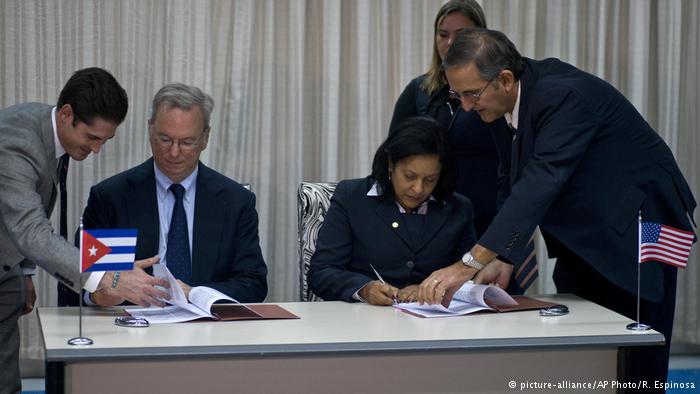
Eric Schmidt from Google and Mayra Arevich from the Cuban phone company ETECSA, sign an agreement in Cuba. @picture-alliance/AP Photo/R. Espinosa

14ymedio bigger14ymedio, Zunilda Mata, Havana, 13 December 2016 – The news made the headlines and generated a wave of enthusiasm. The agreement signed this Monday between the US information giant Google and the Telecommunications Company of Cuba (ETECSA) will improve the experience of Cuban websurfers, but will not, in the short term, affect the number of people who can access the internet from the island.

Google has taken a historic step to overcome official suspicion in the telecommunications sector. Google will install servers in Cuba that will increase the speed and quality of web connections, an improvement which will enable better access to services such as Gmail, YouTube and Google Drive.

However, accelerating, in this case, does not mean expand. The agreement signed by the chief executive of the Cuban state monopoly, Mayra Arevich, and Google CEO Eric Schmidt will only benefit those who already are connecting to the web from the island. continue reading

Cuba is at the forefront of the list of countries with the least internet penetration in the Western hemisphere. An hour of navigation from a state-provided wifi zone costs the equivalent of two days pay for a professional, and is plagued by crashes, service faults, and hackers who wirelessly steal the balance on your internet card, as well as being subject to the physical theft of phones, laptops and tablets by thieves who haunt the wifi zones for this purpose.

“This agreement allows ETECSA to use our technology to reduce latency to locally deliver some of our most popular content and a higher bandwidth, for example YouTube videos,” Google said in a statement.

Once stored on servers within Cuba, that content will reach internet users up to 10 times faster, according to expert predictions. But the agreement does not affect the customers’ bandwidth or allow access to sites that the government of Raul Castro keeps under strict censorship.

Google has been exploring service on the island since 2014, when Schmidt visited Cuba along with other executives and interviewed journalists with 14ymedio, students at the University of Information Sciences in Havana, and Cuban officials. Shortly after that trip, the company opened its products to Cuban users on the island – who previously could not access them – including products such as Google Chrome, Google Play and Google Analytics.

The news of the agreement with the US company spread by word of mouth among Cubans and was presented in the official media as an achievement by the government “to improve the computerization of Cuban society,” but few spoke about the details.

“I hope that now the ability to surf the internet from cellphones is closer,” said Vosvel Camejo, a customer of the only telephone company allowed in the country, and for whom Google is the only entity that can save the country “from underdevelopment.”

The signing of the agreement comes a few weeks from Republican Donald Trump’s inauguration as president of the United States, on 20 January 2017. President-elect Trump has been inconsistent in his position on the process of normalization of relations with the island, moved forward by his predecessor, Barack Obama. Google has rushed to sign the agreement, given the uncertainty presented by the tycoon’s arrival in the White House.

For the Government of Havana, the clock is ticking off certain emergencies in telecommunications. In February 2011, a fiber optic cable connecting the island to Venezuela reached land on Siboney Beach in eastern Cuba. This cable carries the major flow of data entering and leaving Cuba.

Access from home is only allowed for a very small group of officials, professionals with links to officialdom, and foreign residents of the island. “The ideal would be for this agreement to also bring internet to Cuban homes, so that the country can develop all the talent of its people,” says Camejo.

For now, the company, based in California, has committed to improve the browsing experience, a step that can be very important for the development of the independent sector that produces audiovisuals, and for the “YouTubers” who have begun to emerge in the country.

Independent organizations such as the Patriotic Union of Cuba (UNPACU) frequently use video services to publish reports, interviews and images of repression in the east. With the new agreement, their presence and effectiveness on the web can grow significantly.

New Anthology of ‘Fidelism’ / 14ymedio, Reinaldo Escobar

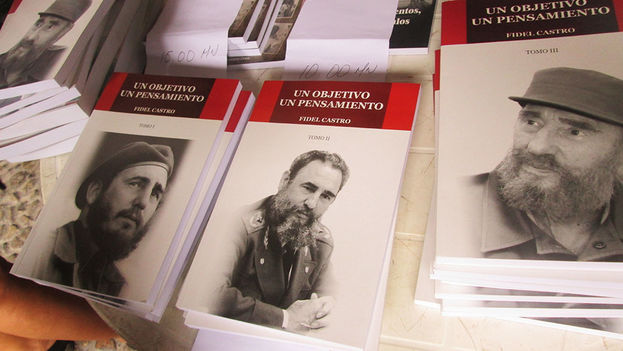
On the cover of each volume are portraits that show the physical and psychological transformation of the man. (14ymedio)

14ymedio bigger14ymedio, Reinaldo Escobar, Havana, 12 December 2016 – The first impression one gets of the book “One Objective, One Thought” is that throughout its three volumes the reader can assess the political evolution of Fidel Castro, author of the quotes contained in the tome. The initial assessment is owed to the portraits appearing on the covers of each volume, which show the physical and psychological transformation of the man.

The first cover shows the leader with a black beard, olive green beret and defiant gaze. It is the image of the guerrilla in power during the ‘60s and ‘70s. On the second volume he is seen in the dress uniform of the Commander in Chief, notably graying and with the look of someone who has an answer for everything, as he presented himself in the ‘80s and ‘90s. continue reading

The image on the third cover reflects a moment in Castro’s life in this millennium. The former president is on the brink of old age, with a certain halo of wise experience, but maintaining his willful authority. It is a snapshot from before 31 July 20016, when he announced his retirement from public life due to the serious state of his health.

However, beyond the impression of transformation offered by these three images, the book presented this Saturday at the Palace of the Captain Generals in Havana, is simply a compilation of the ex-president’s ideas organized chronologically around 50 topics. A bundle of carefully chosen quotations to show more the continuity of his thought than its evolution.

The edition was conceived to honor the leader’s 90th birthday, celebrated this last August, but its launch has taken place a few days after his ashes were placed in a vault in Santa Ifigenia Cemetery in Santiago de Cuba. The work thought of as a summary of a life has become, in reality, a condensed post mortem of Fidel’s legacy.

The work, priced at 30 Cuban pesos (less than $1.50 US), has as an antecedent the “Dictionary of the Thinking of Fidel Castro,” prepared by Salomon Susi Sarfati for Politica Publishers in 2008. Another compilation of high value is “Thus Spake Fidel Castro,” from Roberto Bonachea Entrialgo, issued by the Spanish publisher Ediciones Idea, also in 2008.

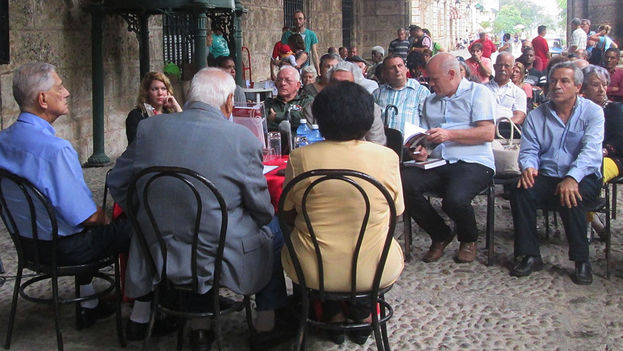
The text was presented by Eugenio Suarez, director of the Office of Historical Affairs of the Council of State, along with the main editor of the volume, Rosa Alfonso Mestre, as a guide for action and ideas for future generations. The presentation took place in front of 50 participants, among them, notably, the faces of officials, admirers of the deceased leader and members of the Communist Party.

The editors state that “for this compilation 4,000 bibliographic sources were consulted, covering a period from October 1953 to April 2011 (…) from which around 8,000 quotes were selected.” Speeches, interviews, Fidel’s newspaper column “Reflections,” have been the principal sources.

But the reader finds a highly filtered text, which avoids quoting Castro’s mistakes, rants and more intolerant positions. For example, under the theme of terrorism, a speech he gave for the 15th anniversary of the creation of the Ministry of the Interior is omitted.

The book was presented at the Palace of the Captain Generals in Havana. (14ymedio)

On that day in 1976, at the Karl Marx Theater in Havana, the leader admitted: “If we dedicated ourselves to terrorism, it is certain we would be effective. But the fact is that the Cuban Revolution has never used terrorism. That does not mean we renounce it, let us warn you!”

In addressing drug trafficking, the anthology does not mention a single word from Cause No. 1 of June 1989, when high officials from the armed forces were tried and condemned to death for their supposed implication in this crime.

On the subject of self-employment and private enterprise, the editors avoided the speeches given during the 1968 Revolutionary Offensive, where Castro emphasized, “We propose to eliminate all manifestations of private commerce, in a clear and decisive manner.” Three decades later, he had to once again authorize the non-state sector, to ease the profound economic crisis caused by the fall of the Soviet Union.

In the chapter dedicated to racial and gender discrimination, you cannot find a single one of the multiple occasions on which he expressed his well-known homophobia. Conspicuous by its absence are the remarks Castro delivered in March of 1963: “Many of these bums, children of the bourgeoisie, walking around with their too-tight pants; some of them with a little guitar and an ‘Elvis-Presley’ attitude have taken their debauchery to the extremes of wanting to go to some public gathering places and organize their faggot-y shows for free.”

Despite the extreme partisanship in the selection of the texts included in these three volumes, the workflow the editors faced is clear. Filtering hundreds of speeches, interminable public presentations and long hours of soliloquy must have been a marathon and exhausting task. But the most arduous work is that of the reader, peering into these pages of such a chaotic, contradictory and disproportionate legacy, like the man who created it.