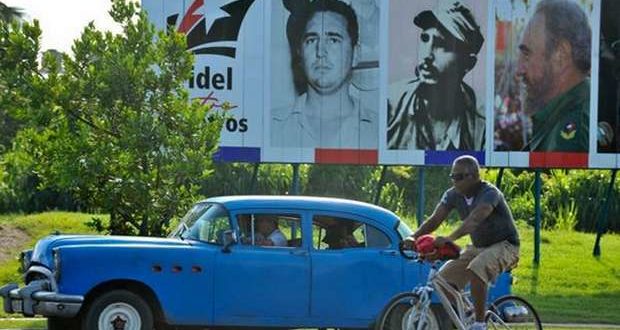
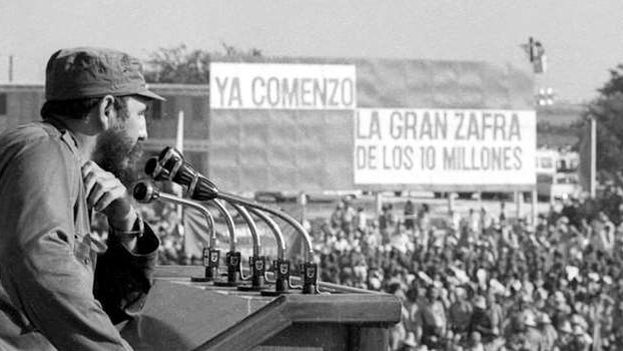
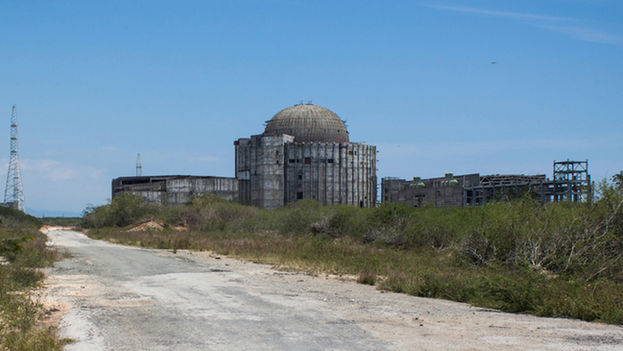
Iván García, 28 November 2016 — It was half past ten at night in the privately-owned Perla Negra bar in Havana’s populous La Viñora neighborhood and thirty minutes by car from the center of the city, where the locals were drinking mojitos, caipirinhas and even stout. No one had yet learned of the death of the Fidel Castro.
The dominant sounds were salsa music, reggaeton and Marc Anthony ballads along with the clinking of glasses, the shuffle of canapés and the whispers of couples in love.
No one thought to interrupt the party to announce the death of the old guerrilla leader. At midnight, Oscar Lopez —an engineer who was celebrating his birthday with his wife — was walking the nine blocks to his apartment in the Lawton neighborhood. He did not notice anything out of the ordinary other than a short line of four or five people waiting to buy ground pork patties for their children’s breakfasts. continue reading
As is customary at this time of the morning, sales clerks at small food service businesses were yawning in front of shelves of confections and cold-cut sandwiches, drunkards were lying on the covered sidewalks of Tenth of October Avenue, and a few gay and transvestite prostitutes were trolling for customers.
“I swear, nobody was talking a about the news. I didn’t even notice any extra police deployments. The night that Fidel Castro died was a night like any other. I found out about his death at two o’clock in the morning when my brother, who lives in Miami, phoned to tell me,” says Oscar as he waits in the line to purchase bread, which Cubans have bought from the state using their ration books since 1962.
When you ask ordinary Havana residents what they were doing when they heard the news of Castro’s death, they respond without any hint of drama. More than a few of them found out through text messages sent from Miami. This is not surprising given that a large segment of the Cuban population does not typically watch state television.
Most people watch TV through illegal satellite antennae or they rent a compendium of programming known as the Packet, which offers melodramatic Mexican soap operas and mediocre audience participation programs from the other side of the Florida Straits.
Unlike Miami, where Castro’s death took place on the day after Thanksgiving and Black Friday, and hundreds of people celebrated with bottles of rum and roast pork, the news here was received here with little notice or fanfare.
For Cubans, Fidel Castro essentially died on July 31, 2006, when an unexpected illness forced him to give up power. By the time his passing was announced on a cool autumn night ten years later, his death had been long expected.
Sahily Téllez, a sixteen-year-old high school sophomore, says Fidel was a distant figure to her. “Unlike my parents, I did not grow up seeing him as a dominant figure in my life. To me, he was old news, a man who led a revolution and built a society that barely works. Fidel and other elderly officials like him seem anachronistic, conservative. Among people of my age, Fidel and Raúl are not very popular. It’s just that many of us aspire to live in a consumer capitalist society. We associate Fidel with poverty and his speeches were full of ideology.”
What most worries Daniel Pereda, a self-employed taxi driver who drives a dilapidated 1954 Chevrolet, is what could come after the death of Fidel Castro.
“The situation isn’t pretty. There’s the crisis in Venezuela. If Nicolás Maduro loses power because he is shipping oil to Cuba at rock-bottom prices, it will impact Cuba and our lives. Then there is the victory of Donald Trump in the United States. He is an unpredictable guy who will probably not continue Obama’s friendly policies towards Cuba. This must be giving quite a few people in the Palace of the Revolution (the seat of government) anxiety attacks,” he says as he swerves to avoid potholes in Cerro Avenue.
Already the state press has begun broadcasting extensive special programming eulogizing the life and work of Fidel Castro. The funeral planning committee has announced that on November 28 and 29 people will be able to visit the José Martí Memorial in the Plaza of Revolution to pay their well-deserved respects.
People are also being called upon to do something that seems mind-boggling: “Sign the solemn oath to fulfill the concept of Revolution as expressed by our historic leader on May 1, 2000 as an expression of the will to give continuity to his ideas and our socialism.”
At 7:00 P.M. on November 29, a commemorative rally will be held in Havana’s Plaza of the Revolution. The transfer of Castro’s ashes will begin the following day, retracing the route that The Caravan of Freedom followed in January 1959. The journey will end with another rally in Santiago de Cuba on December 3, this time in the city’s Antonio Maceo Plaza.
The internment is scheduled for 07:00 A.M. on December 4 at Santa Ifigenia Cemetery in Santiago de Cuba. It was also reported that the Military Review and Combatants March, which commemorates the 60th anniversary of the Granma landing (December 2, 1956), and Revolutionary Armed Forces Day are being postponed until January 2, 2017.
Suspicions and rumors are spreading throughout Havana. Marino Ruiz, a grocery store worker, believes that “Fidel Castro died days ago. Everything fits perfectly. A weekend that correlates with December 2, the 60th anniversary of the armed forces and a month and six days after the 58th anniversary of the triumph of the Revolution,” he observes. But the truth is that Fidel Castro met with the president of Viet Nam, Tran Dai Quang, at his home on November 15. And photos of the meeting were taken by his son, Alex Castro, and his personal photographer.
According to Ignacio Gonzalez, a nurse, the memorial events will be a nine-day nuisance. “There will be dozens of programs on radio and television eulogizing the ’maximum leader.’ And all this racket will no doubt go on for one or two months. You have to wonder what awaits us. If only I could fly to the moon.”
With no power to rally supporters or a message that resonates with the average Cuban, Castro’s death has caught the divided dissident community off guard.
“Difficult days lie ahead,” according to Carlos Díaz, an independed sociologist.” I would not want to be in Raúl Castro’s shoes. He is faced with an ongoing economic crisis, a system that does not work, a very erratic Donald Trump as president of the United States and the impending fall of Chavismo in Venezuela. He will have to move very carefully to avoid being the one who brought down the revolution his brother Fidel led. I believe the government will accelerate new and more significant economic reforms. But the political process will remain closed and they will continue exerting iron-fisted social control as long as they can.”
Julio Aleaga — head of the opposition group Candidates for Change, which advocates nominating dissidents for the few elected offices for which private citizens can compete — believes that “the death of Fidel Castro, a very negative figure, can be the catalyst for profound change. The conservative wing of the ruling party has lost a powerful symbol. And in medium term change is unstoppable.”
Diana Armenteros, a political science graduate, is not so optimistic. “Castroism has a lot of life left in it. They won’t be able to bury Fidel just yet. Let’s not forget that the military controls 80% of the national economy. Untangling this mess won’t be so easy,” she claims.
At the moment it is too soon to analyze what effect the death of Fidel Castro will have on the current situation. The funeral ceremonies have only just begun.
The legendary Plaza of the Revolution is being prepared to receive millions of Cubans who will pay their last respects to Fidel. And the Communist Party propaganda machine will continue to run at full throttle.
For a few days — probably for a couple of months — the place Cuba will most closely resemble is North Korea.
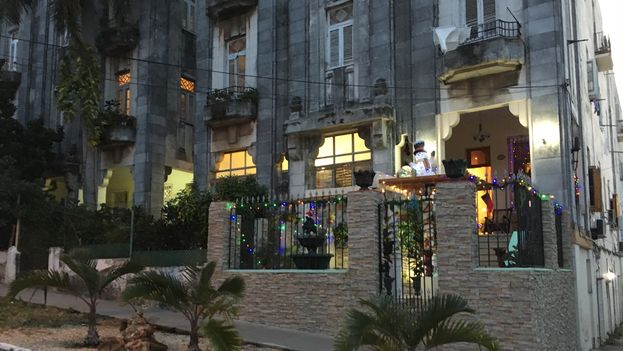
 14ymedio, Yoani Sanchez, Havana, 1 December 2016 – Timidly, without much noise or fuss, Havanans are shaking off the national mourning decreed for Cuba, as of last Saturday, for the death of Fidel Castro. Despite cultural activities having been cancelled, the closed theaters and the bars without alcohol, the first Christmas decorations are beginning to be seen in some homes.