Cuba and US Intervention: Is History Repeating Itself?

The Island faces in 2026 the same structural crises that the US military occupation found in 1899. A thorough review of what that administration did reveals a historical parallel so precise that it is difficult to ignore

Nations are sustained by educated citizens, not by ignorant subjects. / Archive

14ymedio bigger14ymedio, Rolando Gallardo, Alicante (Spain), May 30, 2026/ The image is the same, even though the century has changed. In the Havana of 1899, US sanitary brigades moved through neighbourhoods devastated by war, destroying breeding grounds of the Aedes aegypti mosquito and fumigating homes to combat the yellow fever that was decimating an exhausted population. In the Havana of 2026, those same neighbourhoods accumulate tonnes of refuse on every corner, while dengue, chikungunya and the Oropouche virus spread unchecked under the same vector that Cuban physician Carlos J. Finlay identified more than a century ago. The mosquito has not changed. Nor has the neglect.

This parallel is not a metaphor: it is a diagnosis. Cuba today faces the same structural urgencies that the US military occupation found when it landed in January 1899, when General John R. Brooke inherited a territory in absolute ruins. The war of independence and the scorched-earth tactic had displaced hundreds of thousands of peasants towards the cities and shattered the Island’s economic foundations. Infrastructure was destroyed, public finances were non-existent, and institutional order was an aspiration more than a reality. What that administration had to build from scratch, incredibly in 2026, a third US intervention in Cuba would have to do exactly the same thing.

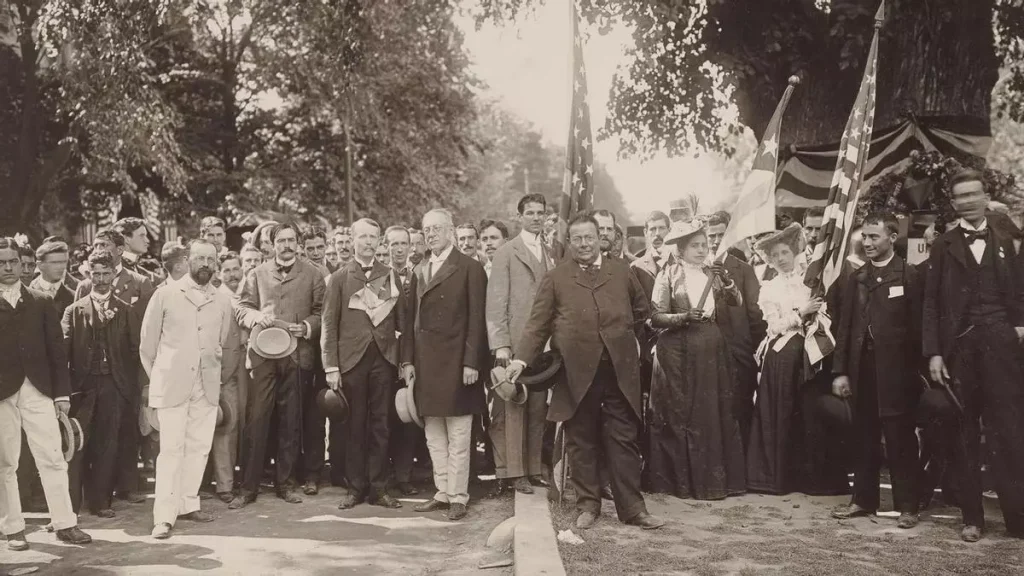
Brooke’s successor, General Leonard Wood, was a physician by training. He understood from the first day that no political order is sustainable over a sick population. Drawing on Finlay’s theory – who had spent decades trying to convince the scientific world that yellow fever was transmitted by mosquito bite – the Army organised an unprecedented environmental sanitation campaign: drainage of pools, destruction of Aedes aegypti breeding grounds, fumigation of homes, closure of insanitary cemeteries, construction of sewerage systems in Havana. The result was historic: in September 1901, the city recorded its last indigenous case of a disease that Spanish colonial rule had been unable to eradicate in four hundred years.

Drawing on Finlay’s theory, the US Army organised an unprecedented environmental sanitation campaign on the Island. / Archive

Today, the water and sewerage networks modernised in the early years of the revolution and left to their fate since the 1990s have collapsed in most provinces. The unofficial rubbish dumps that the State lacks the operational capacity to clear are feeding arbovirus outbreaks that spread without restraint. Any external stabilisation would have to launch, from day one, exactly the same all-out offensive that Wood and Dr Walter Reed carried out with the tools of 1900: elimination of breeding grounds, mass public hygiene, reconstruction of sanitary infrastructure. The difference is that in 1899 there was a three-year war to account for the destruction. In 2026, there are six decades of socialism and mismanagement.

The war had destroyed bridges, ripped up rails and left the roads in a state that made it impossible to move agricultural produce to the ports. The Wood administration undertook the repair and expansion of the rail network, restoring the continue reading

connections between the sugar-growing zones and the export ports. The logic was impeccable: without logistics there is no economy, and without economy there is no republic.

Cuba’s roads in 2026 are, across wide stretches of the interior, obstacle courses where metre-deep potholes coexist with stretches that are simply non-existent. The railway, which at the beginning of the twentieth century was one of the most modern in Latin America, today operates with Soviet rolling stock from the 1960s and 1970s on routes that take double or triple the reasonable journey time when they manage to function at all. A new administration could not repair this infrastructure: it would have to rebuild it. The accumulated deterioration far exceeds what a three-year war caused; it would demand an effort proportional to what Wood carried out, but incomparably more complex in technological and budgetary scale.

One of the least celebrated – but perhaps most decisive – chapters of that occupation was the dissolution of the Cuban Liberation Army

The Cuban sugar industry – the most sophisticated in the world in its day – had been dismantled by the conflict. The occupation administration actively fostered foreign investment to rebuild the sugar mills and modernise the machinery. Sugar began to flow again, and with it the fiscal revenues that would finance the rest of the reforms. In parallel, Wood reorganised the banking system and laid the groundwork for a currency that would be, in the following decades, on a par with the dollar: a reflection of an economy that, when operating under predictable market rules, was capable of generating real prosperity.

Cuba’s sugar output today does not reach 150,000 tonnes, compared to the ten million that the great epic harvest of 1970 attempted without success. The financial system operates with a schizophrenic monetary duality that has destroyed any external investor confidence. A hypothetical stabilisation would have to open to private capital – both domestic and international – the only sector with a proven track record of performance, while unifying and restoring credibility to a currency whose worth is not decreed: it is built with institutions that function.

One of the least celebrated – but perhaps most decisive – chapters of that occupation was the dissolution of the Cuban Liberation Army. Heroic in war, dysfunctional in peace, it was discharged in an orderly fashion, with compensation payments that allowed soldiers to reintegrate into civilian life. In its place, professional armed forces were built, sized to meet the real needs of the republic rather than the political appetites of strongmen. A nation cannot build democracy when it has an army that surpasses it in actual power.

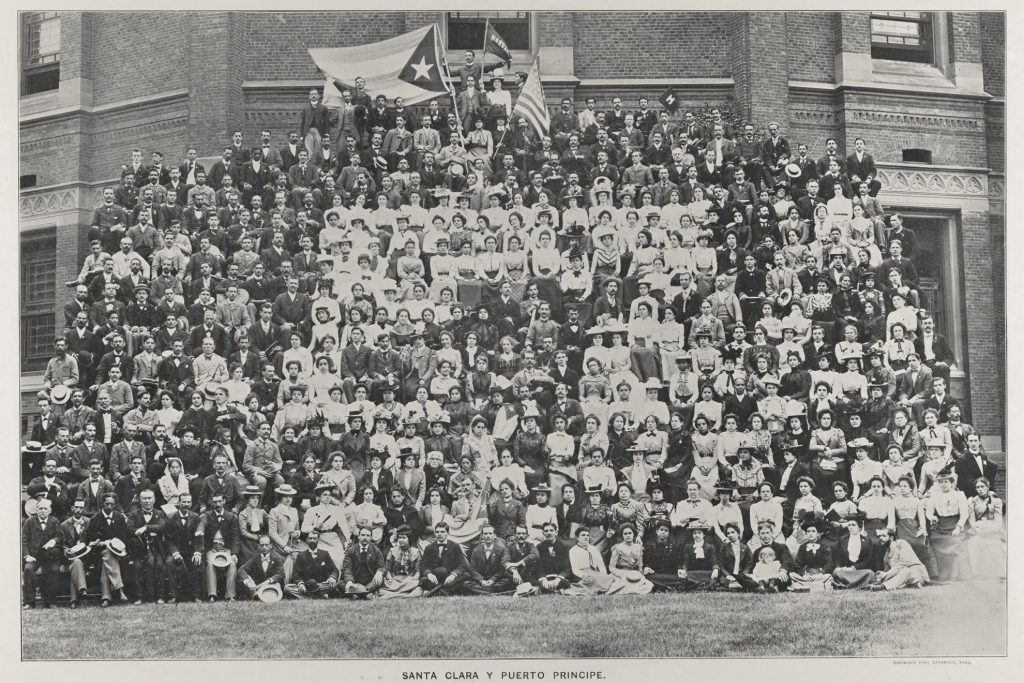
More than a thousand Cuban teachers travelled to Harvard in the summer of 1900 to be trained in modern pedagogical methods. / Archive

The current Armed Forces, together with the Ministry of the Interior and the constellation of repressive entities that sustain the regime, are oversized relative to any real defensive need. They constitute, in practice, an apparatus of political control rather than an instrument of national defence, and a budgetary burden that the economy simply cannot bear.

A new administration would have to undertake, as Wood did with the Liberation Army, an orderly discharge process with the civilian reintegration of personnel. This chapter also has a geopolitical dimension that deserves to be named: Cuba is a North Atlantic nation, was an ally of the United States in the Second World War, and its position at the entrance to the Gulf of Mexico makes it a strategic actor of the first order. A professional, modern Cuban army aligned with democratic standards could, in the medium term, present solid arguments for integration into the security architecture of the Western Hemisphere.

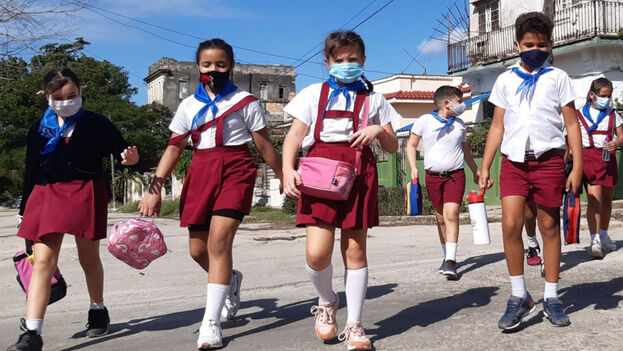
Wood imported the US educational model with an ambition unprecedented in the region. Cuba went from having barely a few hundred operational schools to more than two thousand in three years. More than a thousand Cuban teachers travelled to Harvard in the summer of 1900 to be trained in modern pedagogical methods. It was the most lucid wager of the entire occupation: nations are sustained by educated citizens, not by ignorant subjects.

A nation that in the twenty-first century faces the same structural urgencies as in the nineteenth century has paid an extraordinary historical price for its political experiments

The paradox of 2026 is that the revolution achieved high literacy rates only to then produce decades of single-party thinking, intellectual hollowing-out and a brain drain that has left the Island without its best-trained generations. More than two million people have left Cuba between 2020 and 2024, a proportion of the population without precedent in peacetime. The reconstruction of a free, pluralist education system connected to international standards would be, as in 1900, the most worthwhile investment of any process of national reconstruction.

To name this scenario is not to desire it. It is to measure honestly the depth of the accumulated failure. A nation that in the twenty-first century faces the same structural urgencies as in the nineteenth century – the same diseases transmitted by the same mosquito, the same broken infrastructure, the same dependence on an external order to provide what the State cannot – has paid an extraordinary historical price for its political experiments.

The Cuban republic was born under the tutelage of a power that knew how to act as the adult when the Island could not yet be one. It grew up denouncing that tutelage as an affront, without ever building the institutional consensuses that make guardians unnecessary. And it reached old age – more than six decades of revolution – with the same shortcomings of its infancy, magnified by the pride of one who has not learned from its mistakes.

The true emancipation of Cuba will not come from any occupation or any tutelage, however well-intentioned. It will arrive on the day when its society, with its own institutions and its own democratic consensus, is capable of providing its citizens with the clean water, electricity, healthcare and freedom they have been waiting for across generations. Until then, history will continue doing what it does best: repeating itself, with a faithfulness that no longer surprises, but that still hurts.

Translated by GH.

______________________

COLLABORATE WITH OUR WORK: The 14ymedio team is committed to practicing serious journalism that reflects Cuba’s reality in all its depth. Thank you for joining us on this long journey. We invite you to continue supporting us by becoming a member of 14ymedio now. Together we can continue transforming journalism in Cuba.
Notes for a Transition Towards a Functioning Republic in Cuba

The question is not whether the regime will fall; it is whether Cuba will survive its own fall.

The result is profound fragmentation. Internal opposition exists, but it thrives in extreme vulnerability. / 14ymedio

14ymedio bigger14ymedio, Rolando Gallardo, Huesca (Spain), May 13, 2026 / There is a recurring fantasy in exile circles and in certain Washington offices: that of a people who one day awaken, take to the streets, and, with the sheer force of their weariness, restore democracy. It is a powerful and understandable image. It is also, at this point, dangerously naive.

The greatest obstacle to change in Cuba is not the longevity of a gerontocracy clinging to power, nor the loyalty of its generals. It is something more difficult to quantify and even more difficult to repair: the damage that 67 years of totalitarianism have inflicted on the very fabric of Cuban society. The regime not only destroyed institutions; it destroyed trust among neighbors. It replaced the social fabric with a network of surveillance and denunciation. It transformed envy of those who prosper into a civic virtue, and collective failure into proof of equality.

The result is profound fragmentation. Internal opposition exists, but it lives in extreme vulnerability, not only to state repression, but also to an environment where suspicion is the everyday language and where any organized alternative is crushed before it can take root. Cuba today does not have an independent civil society. Instead, it has an institutional desert.

What Cuba needs is not a transition, in the conventional sense of the term, but a refounding

Recognizing this is not pessimism. It is the honest starting point for any serious analysis. And from that starting point comes a conclusion that makes many uncomfortable but that the history of the last 130 years clearly demonstrates: what Cuba needs is not a transition, in the conventional sense of the term, but a complete refounding.

The difference is not semantic. A transition implies institutional continuity, which simply does not exist in Cuba. What occurred was not the evolution of a republic toward another form of government: it was the hijacking of a state by a dynasty that administered it as a family patrimony for more than continue reading

six decades. The constitutional thread was severed. Restoring it requires more than elections; it requires rebuilding from scratch the foundations upon which those elections can have any meaning.

This implies accepting an uncomfortable truth: that Cuba, in the period immediately following the regime, will not be able to govern itself without external support. Not because its citizens are incapable—they are, in fact, extraordinarily resilient—but because the institutions that would make such self-government possible have been systematically destroyed. A country without an independent judiciary, without a free press, without parties with real roots, without a recent tradition of peaceful transitions of power, needs time and structure before it can sustain a functioning democracy.

To prevent the power vacuum from being filled by the same actors who oppress the country today, or by others who are equally violent.

The alternative to external support is not immediate sovereignty. It is chaos. Examples abound and are instructive in their brutality: Libya after Gaddafi, Iraq after Hussein, Somalia after Barre. The collapse of a dictatorship without a replacement structure does not produce freedom; it produces violence, fragmentation, and often the return of some form of authoritarianism under a different label.

For Cuba, the proposal that deserves serious discussion is that of an internationally backed civilian transitional administration—with central participation from the United States and the Cuban diaspora—that provides the necessary order and technical legitimacy while institutions are rebuilt. Not an occupation. Not a colonial-style protectorate. Rather, a temporary framework, explicitly defined in its limits and expiration date, designed to prevent the power vacuum from being filled by the same actors who currently oppress the country, or by others equally violent.

To ensure that this framework does not clash with national pride—which is real and legitimate, and should not be confused with the nationalism manufactured by the regime—its day-to-day operations should be entrusted to a Civil Transition Council composed of Cubans. Not politicians seeking office, but jurists and intellectuals of proven technical integrity, without immediate electoral ambitions and without ties to the factions that will inevitably compete for power in the next stage.

Among those who meet these criteria are names well known to the Cuban legal community: Eloy Viera Cañive, whose precision in dismantling authoritarian legislation is exceptional; Julio Antonio Fernández Estrada, one of the most rigorous experts on Cuban constitutional history; and Laritza Diversent, of Cubalex, whose systematic documentation of abuses has already created an invaluable archive for any transitional justice process. These and other key figures could form a transition council comprised of a cultural elite without overt political ambitions.

Outlaw the Communist Party of Cuba, transform the Armed Forces, and create an Economic Emergency Law that guarantees investment.

Two decisions will be unavoidable, and both will be politically costly.

The first: the outlawing of the Communist Party of Cuba. Not as an act of ideological revenge, nor as a proscription of an idea—ideas cannot be outlawed—but as the dissolution of the organic structure through which the dynasty has exercised total control of the State for more than half a century. Allowing that structure to survive the transition would be like trying to build a new building on the same rotten foundations. The national refounding would be flawed from the outset.

The second: the transformation of the Armed Forces. Here, the temptation to demolish everything is understandable but suicidal. A total dismantling of the military apparatus does not produce security; it creates a vacuum that is filled by mafias, traffickers, and paramilitary groups already operating on the fringes of the regime. What is needed is not destruction but surgery: the removal of the business-oriented generals—those officers who have turned national sovereignty into a holding company for personal businesses—and the promotion of mid-level officers, colonels and lieutenant colonels with a technical background, trained in doctrine but without complicity in the crimes of the system. A republican army, overseen by the Civil Council committed to a new constitutional doctrine, is the only guarantee that the transition will not lead to settling of scores or territorial collapse.

But none of these measures – neither the most sophisticated institutional architecture, nor the best emergency economic legislation – will be sufficient if the deepest damage that the regime has caused is not addressed: the damage that lies within people.

Sixty-seven years of indoctrination leave scars that cannot be erased by a decree. The culture of envy toward those who prosper, the distrust of private enterprise, the dependence on the State as the sole source of certainty… These are not individual aberrations; they are rational responses to decades of systematic conditioning. Reversing them requires time, education, and, above all, the concrete experience that personal effort produces real results.

Therefore, an emergency economic law that provides legal guarantees for investment and eliminates obstacles for small and medium-sized enterprises is not just a technical measure. It is a psychological and cultural intervention. It is the instrument through which Cuban citizens begin to learn, in their own lives, that individual success is not a betrayal of the collective but rather the possible foundation for shared prosperity.

The road from dictatorship to a restored republic will not be short or smooth. It never is. But the first step is to honestly name what Cuba needs: not illusions, but a solid foundation. Not romanticism, but rigor. Not a return to an idealized past, but the patient and deliberate construction of something Cuba has never truly possessed: a functioning republic.

______________________

COLLABORATE WITH OUR WORK: The 14ymedio team is committed to practicing serious journalism that reflects Cuba’s reality in all its depth. Thank you for joining us on this long journey. We invite you to continue supporting us by becoming a member of 14ymedio now. Together we can continue transforming journalism in Cuba.
The ‘War of the Whole People,’ the Final Crime Against Cubans

The supposed strategic genius of Fidel Castro was always an intellectual fraud

The regime is not only defying military logic but dismantling the legal framework that protects human life. / Facebook / Minfar Cuba

14ymedio bigger14ymedio, Rolando Gallardo, Huesca, Spain, 8 March 2026 — In the corridors of power in Cuba, the nervousness is obvious. As the regime watches its ideological cronies burning out and staggering on the global stage, the leadership in Havana seems determined to “poner sus bardas en remojo” — to start taking precautions — as the international pressure tightens around it. The response from the Castro successor to the pressure of a U.S. administration closing the net around the regime has not been openness or dialogue, but the dusting off of a disastrous plagiarism from Fidel: the doctrine of the “war of the whole people.”

Under the varnish of national sovereignty, this strategy hides a grim logic: mobilizing a mass of citizens with no military training and effectively turning them into legitimate targets for any potential expeditionary forces. This is not heroic defense but the design of a pre-planned massacre, intended to be used as propaganda leverage to portray the regime as a victim before world public opinion.

A caricature of fanaticism

The supposed strategic brilliance of Fidel Castro was always an intellectual fraud. The “war of the whole people” is nothing more than a caricature of the desperate tactics used by Adolf Hitler in the final days of the Third Reich. Just as the German dictator mobilized women, the elderly, and children in the Volkssturm to resist the unstoppable advance of the Allies, the Cuban regime now intends to sacrifice its population under a nihilistic premise: if the system cannot survive, the nation must perish with it.
It was Hitler himself who said the German people did not deserve to live if they were incapable of defeating their enemies. Today the PCC appears to share that same contempt for the lives of those it governs.

The “war of the whole people” is nothing more than a caricature of the desperate tactics used by Adolf Hitler in the final days of the Third Reich. / Polish National Archives

In practice, concepts such as “sovereignty,” “popular will,” or “collective good” are nothing but empty packaging. The reality is a political caste ready to sink the population into the sea if it cannot keep hold of the helm itself. What is sold as patriotism is essentially a Caribbean mutation of Hamas tactics in Gaza, where the value of a citizen is measured by their usefulness as a human shield or as a televised corpse that helps win the battle of global narrative.

The collapse of logistics and the Sierra myth

The viability of this armed resistance, under the island’s current conditions, is nonexistent. The regime appeals to nostalgia for the civil war of 1956–1959, but it deliberately ignores a crucial economic factor: the rebel groups continue reading

back then survived in the mountains thanks to an extensive supply network of food, medicine, and provisions coming from private businesses and prosperous farms — the very same economic base that Castroism itself later destroyed.

In the impoverished Cuba of 2026, marked by energy collapse and chronic shortages, sending elderly people and armed youths up into the mountains would immediately trigger a logistical disaster. Without an economic base to sustain them, any attempt at prolonged resistance would end either in mass surrender due to conditions incompatible with life or in widespread death from hunger and treatable diseases. Logistics — not enemy fire — would be the first executioner of this improvised militia.

International law and the loss of “protected person” status

By reviving this doctrine, the regime is not only defying military logic but dismantling the legal framework that protects human life. According to the Geneva Conventions, a civilian enjoys immunity from direct attack as long as they do not take part in hostilities. But the moment a citizen picks up a rifle or carries out acts of sabotage, that protection disappears and the person becomes a combatant.

The “war of the whole people” is nothing more than a caricature of the desperate tactics used by Adolf Hitler in the final days of the Third Reich. / Polish National Archives

This strategy creates a situation of “unprivileged combatants.” When the state hands out weapons, it is deliberately erasing the line of distinction. This ambiguity is a deadly trap; historically it has led to tragedies where expeditionary forces, unsure and fearing ambushes in urban environments, fire at any suspect, exponentially increasing collateral casualties.

For the ruling elite, this scenario is not a mistake but an objective: the more civilian victims there are, the more material they will have for their victimhood propaganda machine.

The leadership’s shield and the end of the mystique

The regime tries to suggest that armed resistance in the Middle East can tip the balance, ignoring that such movements are sustained by mystical indoctrination and a culture of martyrdom that has little to do with Cuban society. The people of Cuba are not looking for glory in the afterlife or sacrifice for a dying dogma. What most people want is prosperity, food, and freedom. After decades of deprivation, many openly long for the capitalist consumerism that official discourse condemns.

Arming a population that lacks even the most basic necessities is the final act of immorality by a dictatorship that knows it is nearing its end. By turning every neighborhood into a barracks and every citizen into an improvised soldier, the Cuban state is not defending the nation but building a wall of flesh and blood to protect the privileges of the elite at the expense of the physical safety of the population.

The “war of the whole people” confirms that, for Cuba’s leaders, sovereignty does not lie in the wellbeing of citizens but in the preservation of their own power. If history is any guide, this “final crime” will not be remembered as a heroic act of resistance but as the last gasp of a ruling caste that preferred the possibility of a national holocaust rather than accepting its own obsolescence.

Cuba today does not need rifles in the hands of civilians; it needs the state to stop using its people as bargaining chips in a war that exists only in the delusions of those unwilling to let go of control.

Translated by GH

______________________

COLLABORATE WITH OUR WORK: The 14ymedio team is committed to practicing serious journalism that reflects Cuba’s reality in all its depth. Thank you for joining us on this long journey. We invite you to continue supporting us by becoming a member of 14ymedio now. Together we can continue transforming journalism in Cuba.

Goebbels in Havana

The Cuban regime has always relied on the 11 principles of the Nazi minister’s propaganda.

The principle of unanimity is based on making people believe that all Cubans are Fidelistas and communists. /CC

14ymedio bigger14ymedio, Rolando Gallardo, Huesca (Spain), 5 January 2025 — The propaganda machine of the Cuban government is unmistakably inspired by the teachings of the terrible Nazi minister Josef Goebbels. His words echo in my head as a statement of the character of the Cuban Revolution: “The bourgeoisie must yield to the working class…. Whatever is about to fall must be pushed. We are all soldiers of the revolution. We want the victory of the workers over filthy profit. That is socialism” (quoted in Doctor Goebbels: His Life and Death). The slogans of the “Ñico Lopez” Communist Party University are a discursive copy of Goebbels. Goebbels’ contributions in the field of propaganda make Cuban socialism akin to German National Socialism.

It is necessary to review Joseph Goebbels’ 11 principles of propaganda to understand how the Cuban regime uses Nazi mechanisms against the Cuban people and its rebellious freethinkers.

11 Principles for 1 Revolution:

Principles of single enemy and contagion: For the Revolution, there are not numerous adversaries, there is only one that manifests itself in various forms. Imperialism is always linked to dissidents; it does not matter that there is no proof. If you are against it, you are a “gusano” (worm) in the service of imperialism. The image of the Cuban “gusano” is not accidental, it was one of the many used by the Nazis to represent the Jew, depersonalize them and then execute them in mass without remorse. The independent journalist, the sportsman who flees, the doctor who abandons a mission or the citizen who demands humanitarian intervention in times of crisis is just continue reading

as much an enemy of the Revolution. Those who dare to contradict will be in the same bag.

The image of the Cuban “gusano” is not accidental, it was one of the many used by the Nazis to represent the Jews.

Principle of Transposition: Goebbels recalled that for effective propaganda it is necessary “to make the people believe that hunger, thirst, scarcity and disease are the fault of our opponents and to make [the] sympathizers repeat this to themselves at all times…” All the mistakes and negative tendencies of the regime and the failures of past, present and future rearrangements are the fault of imperialism, mafias and traitors. For the propaganda, the corruption, brazenness, incoherence and bad decisions they make daily are not, and cannot be their fault.

Principle of Exaggeration and Disfigurement: To turn any anecdote into a serious threat, no matter how small. The country is falling, garbage is overflowing, and people are starving, but the news in the official media is the invasion attempts on a jet ski of two dangerous counterrevolutionaries who intend to exert terrible actions against Cuba. They have very well-oiled mechanisms for stories of this kind, which must be believed no matter how implausible

Principle of Vulgarization: “All propaganda must be popular” If they are hungry promise lots of chicken and if it is ostrich, so much the better. Say adorable idiocies, the media will put up with everything and the masses will eventually forgive you. Democratizing idiocy is a guarantee of communicative effectiveness, adapting political communication to the least intelligent of the individuals to whom it is addressed. “The larger the mass to be convinced, the smaller the mental effort to be made. The receptive capacity of the masses is limited and their comprehension is scarce; besides, they have a great capacity to forget,” said Goebbels.

Principle of Orchestration: Propaganda should be like a catchy summer song: a few ideas, repeated to exhaustion, from all possible angles, but always aiming at the same conga-style refrain: “Hey I am Fidel,” “We are continuity,” “Cuba advances and that hurts them.” Repeating things with no practical sense but with an air of confidence. This is the origin of the famous phrase: “If a lie is repeated enough, it ends up becoming the truth,” in people’s minds. That is why they insist that the socialism of the PCC (Cuban Communist Party) is viable, only that, of course, they do not let them. How convenient!

Principle of Renewal: It is vital to constantly issue new information and arguments at such a pace that, by the time the adversary responds, the public is already interested in something else. The adversary’s responses must never be able to counteract the growing tsunami of accusations. For this, the regime takes permanent measures and countermeasures with the promise that everything will improve, that now they will build what they have never built. And, boy, are they effective: they have been telling the same story for almost seven decades and there are still those who swallow it hook, line and sinker as if it were the first day. It is enough to compare Granma’s slogans of the 60’s and 80’s of the last century with the current ones. It is the same melody, only now with a couple more off-key notes.

Principle of Verisimilitude: To build plots from different sources, through the so-called probe balloons or fragmentary information. They use phrases from their allies in this or that country, from loyal intellectuals, and from media such as Telesur that serve the same political agenda. So, if NTV (National News) quotes a seemingly foreign media, or a foreign friend of the regime’s, or they showcase the increasingly fewer Spanish artists they have on their payroll, everything seems more real and they manage to convince many that the first world is worse off than Cuba and that in the largest Island of the Antilles, there is an oasis of prosperity.

Principle of Silencing: To remain silent on issues for which there are no reasons and to conceal the news that favors the adversary, also by counter-programming with the help of like-minded media. In particular, denying any right to reply and denying access to divergent criteria in the partisan spaces they call public media.

Propaganda always operates based on a pre-existing substratum, be it a national mythology or a complex of traditional hatreds and prejudices.

Principle of Transfusion: As a general rule, propaganda always operates based on a pre-existing substratum, whether it is a national mythology or a complex of traditional hatreds and prejudices; the aim is to disseminate ideas that can take root in primitive attitudes. They set some Cubans against others, manipulate history and take the issue to the confrontational plane between nation and colonialism. On that line, they develop the Castro mythology and his epic fight against an imperialism ready to attack at any moment. Although the Cuban Army does not have the military capacity for a frontal clash with the United States, the technological gap being evident, they still call for ridiculous exercises to keep active the imminence of the myth of the invasion or the idea of a besieged place.

Principle of Unanimity: To convince many people that they think “like everyone else,” creating the impression of unanimity. The false unanimity, the promulgation that all of Cuba is communist, Fidelista, and whoever is not is because he is an ex-Cuban, a non-patriot, a lackey, a mercenary and all the appellatives that the propaganda promotes. And this practice extends to the structures of the State, where it is not necessary to choose a president among several options and projects since ratifying the candidate imposed by the single party is enough. In the same way, laws are passed and, when they fail to be implemented, there is nothing to fear because there are enemies to blame.

Epilogue

Goebbels’ principles have found a natural extension in the Cuban regime. Propaganda is the oxygen of the Revolution, and as long as the slogan that hunger and misery are the enemy’s fault resonates, the spirit of the Nazi minister will continue to walk the streets of Havana. What is the Cuban Revolution if not the most perfect incarnation of Goebbels’ words, sacrificing the self for the whole, dooming entire generations to the service of a lie repeated a thousand times over? While they demand sacrifices from the hungry, they live like kings.

Translated by LAR

____________

COLLABORATE WITH OUR WORKThe 14ymedio team is committed to practicing serious journalism that reflects Cuba’s reality in all its depth. Thank you for joining us on this long journey. We invite you to continue supporting us by becoming a member of 14ymedio now. Together we can continue transforming journalism in Cuba.
Corruption in Cuba: Sacrificing Gil to Save Diaz-Canel

Miguel Díaz-Canel (left) and Alejandro Gil Fernández (right), in an archive image / Granma

14ymedio bigger14ymedio, Rolando Gallardo, Huesca (Spain), 9 March 2024 — The Cuban regime’s media landscape needs to be understood with certain tips to develop an analytical perspective and avoid falling into the system’s deceptions. Between Yarelis* and Alejandro Gil, the Cuban news events of these days are summarized, diverting attention from what is truly important to superficial elements. This show, with its jesters and lynchings, is everything necessary for a Roman circus but without the bread.

The system must always be kept oiled and ready to survive, but the warning indicators do not stop setting off alarms. The Cuban Revolution has become a media myth where the real results of the policies implemented are irrelevant; the crucial thing is to sustain the idea of ​​solidity, eternity and trust in the project. To do this, techniques are used to control the eventual rage of the masses who, for decades, have been domesticated and dumbed down by propaganda.

Few connect the events that occurred in a period of approximately one month, immersed in immediacy and losing the interlinking of events and intentions behind them. As time progresses, the ridiculousness of Diáz-Canel’s visit to Río Cauto on January 26 is forgotten, when “God Fidel” was seen walking among mortals, and those ladies, as if they had been previously indoctrinated, expressed their support for Díaz-Canel with a fervent and unusual bristling. Why was this “bath of the people” and the equation with the “enigmatic historical leader” so necessary? continue reading

The president’s journey occurred a week before the surprise dismissal of Alejandro Gil on February 2. This man, known for his advocacy of radical measures, was stripped of his position without us seeing it coming. His thesis tutor, Miguel Díaz-Canel, and the leadership that pulls the strings of the political guignol withdrew their support. Gil was the undesirable face of the economic failures of the regime, his loyalty to the dictatorship made him the image most hated by the popular majorities on the Island, victims of inflation, inequality and hunger. It was necessary to get rid of such company and make the most of the situation.

Considered the useful idiot, Gil will bear the blame for the economic disaster, while an effort is made to rehabilitate the image of Díaz-Canel, a man with less charisma than a sweet potato  

In those days, Cuba’s collapse in the international measurement of the perception of corruption was broadcast. The country has experienced a precipitous decline since 2020, going from a score of 47 out of 100 to 42 in three years. Although this data may seem superfluous compared to other countries in the region, it is serious when analyzed internally. In Chile, before the devastating social outbreak of 2019, there was a drop of just one point in the corruption perception index. With a drop of five points in three years, the regime is trying to plug the hole before it is too late.

Gil is convenient in this context. Considered the useful idiot, he will bear the blame for the economic disaster, while an effort is made to rehabilitate the image of Díaz-Canel, a man with less charisma than a sweet potato. This anti-corruption round-up seeks to give the impression that the Revolution and its top leadership are clean and willing to fight against any negative trend that threatens the heroic and rebellious “continuity” of Fidel and the leaders of the Revolution, although everyone knows which leg the self-proclaimed revolutionary leaders are limping from. Gil is simply a scapegoat used to divert attention from the true roots of corruption in Cuba.

The circus has begun, and everyone will observe the arenas where Máximo Gil Décimo Meridio, former Minister of Economy and general of the legions of fallen bootlickers, will try to fight for his life. Meanwhile, the MSME [micro, small and medium enterprises] stores are full of American products, defying an embargo that is gladly flouted, at the same time that the regime requests urgent international help from the UN due to its inability to provide food to the overwhelming helpless mass, throwing the blame on someone it no longer makes sense to blame.

Gil has been made the scapegoat, he will go down in history as el más gil de todos los giles [the dumbest of all the dumb]**, and we, along with him, look towards the wrong side of the media illusion. In today’s Cuba, justice cannot be done to Gil. The day those conditions arrive, he and the entire leadership will be in the dock. And if we cannot deliver justice in this life, we will know with total conviction that Gil and his current jailers will share a destiny in Antenora, Dante’s 9th and final Circle of Hell, dedicated to traitors to their people and country.

Translator’s notes:
*’Yarelis’ is apparently an otherwise anonymous Cuban woman recently captured in viral videos with ’boyfriends’.
**A Spanish-English dictionary offers the following translations of ‘gil’: idiot, numskull, twat, nerd, twit, twerp, dumb.
____________

COLLABORATE WITH OUR WORKThe 14ymedio team is committed to practicing serious journalism that reflects Cuba’s reality in all its depth. Thank you for joining us on this long journey. We invite you to continue supporting us by becoming a member of 14ymedio now. Together we can continue transforming journalism in Cuba.
The Russian Reconquest of Cuba: What We’re Not Seeing

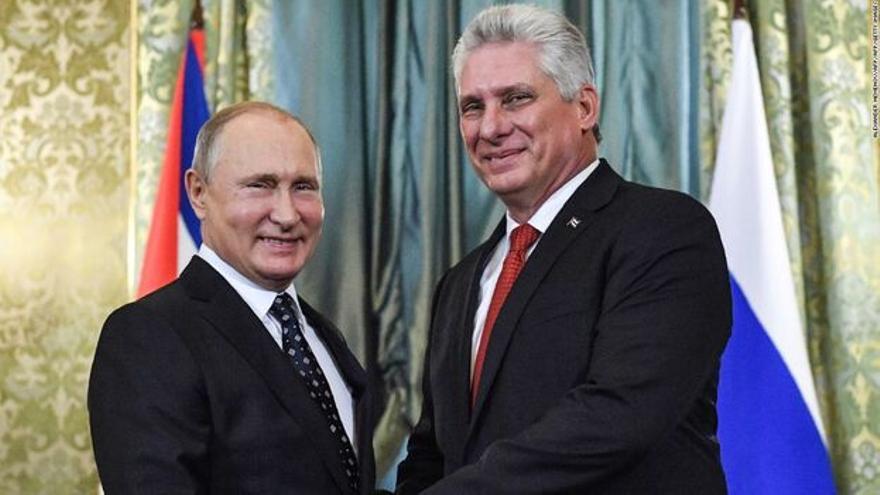
Cuban president, Miguel Díaz-Canel, with the Russian president, Vladimir Putin. (Archive/Kremlin)

14ymedio bigger14ymedio, Rolando Gallardo, Quito, 3 June 2023 — After twenty long intergovernmental sessions between Cuba and Russia and a visit of moral support by Díaz-Canel to the butcher of Ukraine — the warrior Vladimir Vladimirovich Putin — the Havana regime opened its arms to the proposals and pressures of the Russian oligarchy. Cuba is going through the greatest economic, political and social crisis in its recent history, and for the Kremlin’s vultures it is low-hanging fruit. The conditions ceased to be mere points of negotiation to become a “take it or leave it.”

What is Russia looking for in Cuba by gaining land in usufruct for more than 30 years? This is the question that the official media makes us ask, when, without a doubt, it is the least important element in the geopolitical move that the weak Cuban regime is making.

Let’s pay attention. Russia is a country of 17 million square kilometers (6,563,737 sq. miles), while Cuba does not exceed 11,000 (4,247 sq. miles). The small Caribbean island fits 1,545 times into the territory of the Russian Federation.

One might think that fertile Cuban lands are an appetizing prize for Russian farmers and Siberian businessmen tired of snow and frozen furrows, but such ideas would be typical of an irrational villager.

The most fertile lands on the earth’s surface are called chernozem, and they are only found on 7% of the planet, and of that amount 74% are in Russia. To be clear, Cuba would fit 23 times into the highly fertile territory of Russia, and we are not even talking about the other arable lands of the largest country in the world. A small detail: Cuba doesn’t have a single square meter of chernozem. continue reading

It is evident that it is not the “privileged” lands of Cuba that convened the eleventh business meeting between the Russian oligarchs and the worn-out Cuban leadership. The words of Boris Titov, the most visible face of the Russian right-wing billionaires and businessman close to the Castro regime, should serve as an alert for us to understand what is coming.

As “Comrade” Titov said at the inauguration of the XI Meeting of the Business Committee: “There is a whole set of proposals for Russian businessmen, such as the usufruct of land for more than 30 years. The elimination of tariffs for the import of high-tech products and the guaranteed right to be able to send the earnings and profits obtained in business to Russia (…). Currently, the Government of the Republic of Cuba guarantees that this process will be done in a short time with privileges for Russian businessmen.”

These words may seem innocuous, but it is necessary to translate Russian intentions into neighborhood Spanish. Titov is the main teacher of the political guidelines (requirements) of the Russian oligarchs to the Cuban regime. The so-called “roadmap” between Moscow and Havana are commandments to move forward with investments. The official document is preserved under some secrecy, as usual, but official publications of the Putin Government already allude to it, using that name.

From what has been published by Russian media, it is understood that the lands in usufruct are nothing more than the elimination of land leases for Russian agricultural and technology companies. Even the Americans were not so evicted with the Treaty of the Lease of Naval Bases and Coalfields. The “imperium” always paid rent. But the Russians will take the land for their companies and businesses without paying, and they will enjoy privileges that have not been given to any Cuban company that doesn’t have a direct association with the military entrepreneurship of the Castro regime.

Russians will be able to bring in technology for their businesses without paying the tariffs that Cubans have to pay even for basic necessities. They are guaranteed that they will not be disturbed at the Customs of the Republic of Cuba, while the citizens of the Island do not have that security.

The most scandalous of the privileges is that “the elimination of tariffs for the import of high-tech products is guaranteed, as is the right to be able to send to Russia the earnings and profits obtained in business,” according to Titov. If it were another country that spoke of free-form capital outflow, the Havana regime and its press would shout that they are profiteers and vultures.

It is natural that Russia’s “vulture” investments arrive at this time with guarantees of return to the accounts of the oligarchs outside Cuba. Russians can be whatever they want, but fools they have never been. Cuba is a country in political and social crisis, lacking leadership, and a hotbed of silent conflicts between the military, select cadres of the Communist Party and those close to power. In an increasingly unstable country it is mandatory to have a capital escape route that does not collide with bureaucratic obstacles and lack of legal guarantees.

The Russian Deputy Prime Minister, Dmitri Chernishenko, said during the meeting in Havana: “The Governments of Russia and Cuba are working on the creation of beneficial conditions for business. That means the elimination of bureaucratic barriers, the reduction of taxes and tariffs and the development of banking infrastructure to guarantee uninterrupted service.”

There are many optimists on social networks who see in this move the salvation of the dictatorship and the rebound of the Cuban domestic economy. The big question they should ask themselves is in what currency they plan to use to pay the Russians for the agricultural and technological products they will develop in Cuba. Do you really believe that the Russian ultra-capitalist millionaires led by Titov want to accumulate pesos?

Cuban emigration has decimated the Cuban population in the last decade. Estimates indicate that more than 2.3 million Cubans live in the United States. The northern neighbor is the largest source of remittances for Cuba. If the Russians take charge, they will try to monopolize the turbulent foreign exchange market of the Island and fill their pockets while they can.

In these circumstances, Fidel comes to mind, when he was questioned by a journalist at the inauguration of one of those first hotels for foreigners which denied access to Cubans. “If these mixed hotels were to charge in pesos, the hotel would not be built here. Because even the capitalists would not come to invest; it they wouldn’t really be interested in accumulating pesos.” Then he continued with his diatribe about the American blockade, in the same style as the current Díaz-Canel discourse.

Cuba is a long loop of repetitions of history. Memories of past failures come and go. The owners of Cuba’s destiny are not the Russian oligarchs, nor the pink cadres of the Communist Party, nor the old military, nor the last-minute screamers. This prolonged and unpleasant novel will culminate when the Cuban people do what they have to do.

Translated by Regina Anavy

____________

COLLABORATE WITH OUR WORKThe 14ymedio team is committed to practicing serious journalism that reflects Cuba’s reality in all its depth. Thank you for joining us on this long journey. We invite you to continue supporting us by becoming a member of 14ymedio now. Together we can continue transforming journalism in Cuba.

Team Asere Does Not Belong to the Dictatorship, It Belongs to the Cuban People

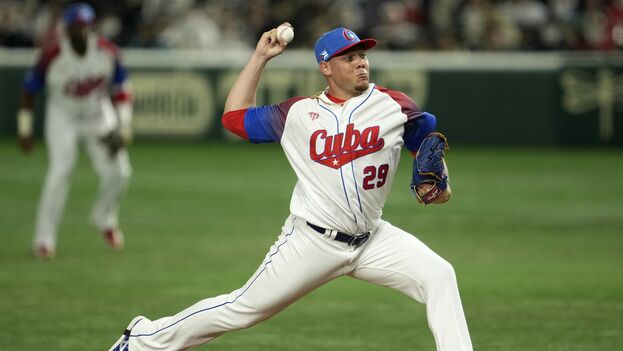
Yariel Rodriguez during this Wednesday’s game with Australia, in which Cuba managed to qualify for the quarterfinals in the World Classic. (EFE)

14ymedio bigger14ymedio, Rolando Gallardo, Quito, 16 March 2023 — I once heard an influencer, whose name I don’t want to remember, say that the “Cuban opposition was facing a scientific regime using improvisation.” This idea may have arisen creatively and spontaneously or come from the argument of Gene Sharp [an American political scientist]: “The idea that improvisation will give you great success is absurd; it’s exactly the opposite. If you don’t know what you’re doing, you’ll most likely get into serious trouble.”

This is the story of the Cuban opposition’s wild goose chase, always unscientific, far from the clear minds that make it up. There is so little of our awareness of real power that we end up acting without the nobility of victors. This visceral and predictable form of the brothers in opposition to the dictatorship is our Achilles’ heel, because the Regime, scientific, methodical and equipped with propaganda resources, comes, punctures us and already knows what leg we are going to limp on.

The ball is round and comes in a square box, and so is the world, full of supposed contradictions and logical solutions. But if you don’t stop to observe with Buddhist discipline the real problems that happen in front of your nose, they will continue to fuck you ad infinitum. You may not see it yet, but the decrepit Regime and Díaz-Canel passed you a cat for a hare.

The Cuban government is in a clear crisis of prestige, with its symbols and slogans crumbling. The opposition, by chance or persistence, has managed to impose new stories, raised new flags and imprinted new slogans and goals on the Cuban mentality. For the Regime, seeing its ideological edifice built with Soviet cement fall must not be a good sign. They may be singaos [motherfuckers], but they are not fools. So they have given themselves the task of fabricating new victories and feeling renewed pride, flavored with the Cuban Communist Party (PCC). continue reading

The World Classic was the best place to have this little cultural battle. They send the Asere Team with the “mission” of bringing victory to Cuba, “the victim of the blockade,” to the “oppressed people” who made an unforgivable socialist revolution just 90 miles from the largest empire… Well, you know how the propaganda goes. They do it, in addition, knowing how we will act in the face of such a provocation. We will take improvisation out of our pockets and begin to form campaigns without sustenance or empathetic content, to boycott underpaid players who, as history has shown, take advantage of these contests to negotiate the contract-signing of their lives that will take them forever out of that hell in which they live.

Without the slightest attachment to the bases of propaganda, without understanding that marketing, whether commercial or political, seeks to empathize, attract, fall in love with and engage the receiver, we lend ourselves to the Cuban Communist Party’s game. Divide and win, they poisoned the team with Díaz-Canel’s outstretched hand and made the great debate begin of whether or not it was ethical to bite the hand of the “communist stepmother.”

We accept the facts that the official narrative presents to us. We don’t try for a moment an elastic withdrawal and counterattack strategy. We entrench ourselves in the predictable discourse and begin to act on impulse. We start the smear campaigns of a ball team, of people who suffer from inflation like anyone else, who have cousins or acquaintances imprisoned for the demonstrations on July 11, 2021 [11J], Cubans like many others, closer to us than to them, and we made them the embodiment of evil.

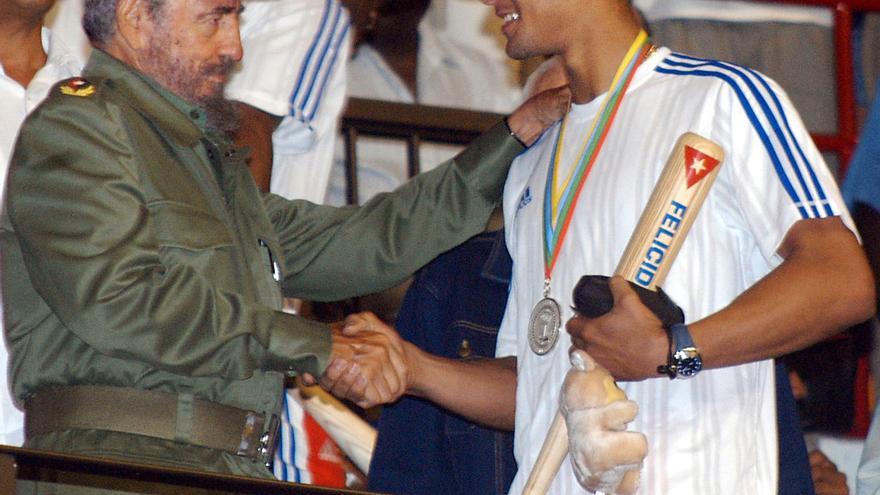
Yulieski Gurriel receiving an award from Fidel Castro in 2006. (Granma)

In this propaganda distraction we were not creative. I think it might be better to give them support, to rob from them the idea that the team is the property of the dictatorship. We could forgive them for any statement. In the end, thousands of Cubans have had to support the Regime circumstantially, while they prepare their getaway. It would be more stoic to reaffirm that sport belongs to the Cuban people and that no sectarian party could abolish that. Aren’t there photos of Yulieski Gurriel receiving awards from Fidel Castro? Isn’t the Gurriel family now a symbol of free and prosperous Cubans in the United States? Aren’t thousands of Cubans going to applaud him and take pictures with him?

We have time to receive Team Asere in style in Miami, the land of free Cubans, the home of the Cuban family. The Cuban team that presents itself in South Florida is always a Home Club. If we were an intelligent opposition, we would fill the stadium with the flags of Cuba, of the United States, with Patria y Vida [Homeland and Life] posters. We would bring shouts of victory and support, so that they feel at home. It is very likely that they will move here soon. I would like to see how the fuck they are going to broadcast on Cuban television a stadium full of happy Cubans, anti-communists and baseball players to the core, supporting the Cuban team and shouting “freedom”! That’s what it’s all about, that’s how you play with science.

Translated by Regina Anavy

____________

COLLABORATE WITH OUR WORKThe 14ymedio team is committed to practicing serious journalism that reflects Cuba’s reality in all its depth. Thank you for joining us on this long journey. We invite you to continue supporting us by becoming a member of 14ymedio now. Together we can continue transforming journalism in Cuba.

The Myth of Cuba’s Education System

When UNESCO speaks of the high level of education in Cuba, it refers to it as “free,”,. but that does not mean the Cuban system educates its new generations well. (14ymedio)

14ymedio bigger14ymedio, Rolando Gallardo, Quito, 16 January 2022–Determining the quality of the education system in Cuba is a task filled with pitfalls and endless assumptions as it is impossible to access verifiable macro data. So much secrecy incites even more suspicion.

In the Latin American and Caribbean region, we know that the countries with the best educational outcomes are Chile — paradoxically, a window into reviled neoliberalism — followed by Uruguay, Costa Rica and Mexico, according to the list created by PISA testing (Program for International Student Assessment), which measures the application of acquired knowledge in daily life after the completion of mandatory education. Cuba does not appear in the data, for one simple reason: it does not participate in the measurement.

In 2013, the tough nucleus of “21st-century socialism”, Cuba, Bolivia, and Venezuela, refused to participate in these evaluations. For the governments of these countries, education was considered a strength of the social processes they developed and they preferred their “achievements” not to be questioned.

Without access to government information and refusing to provide data to international organizations, one must ask from where the idea came that Cuba is the point of reference for the best education system in the region. continue reading

The United Nations itself is responsible for presenting the Cuban system as the paradigm, but if one reads between the lines, the indicators highlighted by UNICEF are not reliable evidence of the quality of education.

When UNESCO speaks of the high level of education in Cuba it refers to it as free, but the absence of a cost does not mean the Cuban system educates its new generations well.

While in Latin American countries textbooks are updated, on average, every five years, in the case of Cuban textbooks, from physics to Spanish and literature, these were last updated between 1989 and 1990, with the objective of eliminating Soviet propaganda and strengthening the unique social nature of the Cuban revolution.

Indoctrination in textbooks from preschool through the last year of high school is the only thing that has not varied in Cuba in the last three decades. This can be corroborated by reviewing the Cuban Ministry of Education’s books which have been digitized.

When a rigorous measure of poverty is applied to Latin American education systems and the real impact of the lack of family resources has on the quality of education is understood, one forgets that Cuba transitioned from ranking as the 23rd economy globally, in 1958, to compete with Haiti on poverty indicators since the 1990s when the USSR collapsed.

Cuban civil society estimates that 51% of the population currently lives in poverty and rural and suburban areas are in extreme poverty. The minimum monthly salary is 19 USD, according to the real value of this hard currency on the black market. The annual income per capita for Cubans is 300 USD, similar to the Democratic Republic of Congo.

In a country where the average family income is so low and access to protein has been difficult since 1990, what can be said about the nutrition students need to face classes in the morning and complete their homework in the afternoon.

Despite the palpable reality in classrooms, UNICEF and the UN Food and Agriculture Organization (FAO) accept, without questioning, uncorroborated data from the Cuban government about “nonexistent child undernutrition” in Cuba. These types of approaches generate more questions about the role international organizations play in the country.

The starting monthly salary for Cuban teachers is 4,825 pesos (70 USD). To support themselves in the midst of runaway inflation, teachers take on extra work as tutors, for which they charge 100 pesos per session (less than 1.50 USD). Receiving tutoring is not an option for all students, the family’s ability to pay determines who has a greater chance to achieve the best test scores and subsequently secure a university spot in their desired career field. Evidence that the “free” system for all is just a cover for the surreptitious social Darwinism of the system.

The idea we have in Latin America of an average quality education includes the use of the internet and information technologies. In Cuba, this vision is limited to learning the parts of a computer and mediocre use of Microsoft’s Office package. Social access to the internet was approved in the country in 2013 and its use as a resource for research and classwork is a dream which still has not arrived, in accordance with the state policy of maintaining a traditionalist system of education.

The layout of classrooms, the forms of organization, the methodologies, and the promotion of innovation are static and eminently theoretical; in practice, the changes in the last 40 years are barely perceptible. Among the transformations that require a meritorious mention is the implementation of inclusive education policies, which integrated special needs students who formerly were destined for special schools. The first students to be integrated with average students were children and adolescents from reform schools, where they were marginalized as juvenile delinquents until 2003, when they were assigned to regular schools.

Despite these changes, teacher training has had to deal with massive desertion, constant migratory crises, and demotivation as a result of the lack of financial incentives and the declining social recognition of teachers, who are viewed as the spokesmen and spokeswomen of a totalitarian regime and responsible for decades of indoctrination.

Faced with this crisis, in 2000 Fidel Castro opened Emerging Teacher Training Schools, which as their name suggests, train teachers in an accelerated manner. At first, teachers were expected be ready to go to the classroom in six months, later it was after a year. This fix reduced the prominence of university education for teachers and spread the learning weaknesses of these adolescents-turned-teachers.

The dictator’s direct intervention in public education policies resulted in the systematic destruction of the management structure in schools. It reached the point of assuming that a secondary school teacher could teach physics, mathematics, literature, chemistry, and art under the assumption that if “Aristotle could teach his disciples several sciences, integrated general teachers (PGI) could as well.” In the end, the PGI were unable to offer a deep knowledge in anything, though they were required to talk about everything.

Twenty years after the “Emergent Training” disaster, 70% of the teachers in the country at all levels of Cuba’s education system are the result of poor training. When we pay attention to academic training and teaching practices, that should be an indicator when determining the quality of the education provided in Cuba.

Putting these data in the context of the Cuban reality, we should reconsider whether its education model should be the paradigm for Latin America. How many of us would be willing to guarantee free education accessible to all at the expense of our individual liberties? How many parents would choose an ideological education with explicit indoctrination? How many teachers would prefer an education model that is static, traditionalist, in addition to being the lowest paid in the western hemisphere? Some stories are poorly told.

Translated by: Silvia Suárez

____________

COLLABORATE WITH OUR WORK: The 14ymedio team is committed to practicing serious journalism that reflects Cuba’s reality in all its depth. Thank you for joining us on this long journey. We invite you to continue supporting us by becoming a member of 14ymedio now. Together we can continue transforming journalism in Cuba.

Cuban Adjustment Act or Upheaval Act / 14ymedio, Rolando Gallardo

Cubans demonstrating against the US embassy in Quito, Ecuador. (14ymedio)

14ymedio bigger14ymedio, Rolando Gallardo, Quito, 14 December 2016 — I wake up and I see a report on the arrival of a group rafters on the coast of Miami. I’m surprised by the open declaration of one of them, who confesses having left Cuba in search of a better future, but says he has nothing against Fidel Castro. His words set me to meditating.

The Cuban Adjustment Act is a good deed on the way to hell. Thousands of Cubans arrive in the United States every year to take advantage of its benefits. Its repeal is a taboo subject among the exile and the emigration. Those who say they are in favor of its elimination or reform from abroad, receive avalanches of criticism and support, demonstrating the division of opinions about it. continue reading

The government of the island ascribes to the Cuban Adjustment Act the main reason for the exodus, dismissing internal conditions and policies that cause people to leave, this being a long-time strategy of the regime: Someone else is always to blame.

Authorized voices within the Cuban-American political establishment, such as Senator Marco Rubio, call for a revision of the Cuban Adjustment Act on the basis that not all Cubans arriving in the United States and claiming refuge under it meet the conditions to apply for asylum, and many of them demonstrate their political apathy by returning to the island as soon as they obtain a US residence permit, discrediting their supposed condition as a politically persecuted person.

Since the beginning of the most recent migration crisis in November of 2015, the division among Cubans stranded in Costa Rica and Panama is evident.

One group reaffirms, recklessly and motivated by an ignorance of the nature of the Adjustment Act, that they are economic migrants, which strengthens the arguments of the regime about the causes of illegal immigration.

Others, however, say that they left Cuba because of its repressive policies, lack of political and economic freedoms, and the impoverishment of the country, something imposed by an internal blockade that has plunged the Cuban people into despair.

Both sides agree that this mass escape was motivated by the fear of political transformations that would be generated by the “thaw,” leaving them inside a nation that sees no long-term changes in the relationship between the government and the people.

It is legitimate to question whether the Cuban Adjustment Act should continue under the current terms. The receiving government spends an annual average of 500 million dollars in aid to the “Cuban refugees.” Some estimates indicate that, from 2014 to late 2016, the United States has allocated 1.5 billion dollars for monetary aid for the first six months, food stamps for three months which are renewable for longer, health insurance for ten months for adults and more health insurance assistance for children, as well as supplementary services for the elderly.

Does every Cuban deserve such kindness? The final saga of the migratory crisis, which has had its most recent and dire chapter in Ecuador, demonstrated that some members of the regime are parasites benefitting from the Cuban Adjustment Act. They waste no time in leaving behind the claws of the tiger, and brazenly appear among the voices clamoring for an airlift to continue their journey to the United States, while in Cuba they were persecutors of the Ladies in White, Cuban counterintelligence officials, members of the National Assembly of People’s Power, and militant communist/opportunists who, tired of the perks of the regime, head north to take advantage of other perks in “la Yuma” – the United States. Many of them, who denied there was a political motive to this breakout, are now in the United States enjoying government help.

Another group, misunderstood and attacked, launched itself in courageous though reckless protest against the Cuban embassy in Quito, showing the political nature of the exodus and starring in one of the never before seen historic feats of the emigration. Unfortunately, it is an event little spoken of. Many of the protesters were deported to Cuba. Another group of people and protagonists of the protest camp in Quito’s Arbolito Park are already in the United States, justifying with their actions and political stance that they deserve the benefits of the Cuban Adjustment Act.

I support reform of the terms of the Cuban Adjustment Act. It is not fair that the American taxpayers’ money goes into the hands of those who enjoyed communism and now want to enjoy capitalism without deserving to. It is not fair that economic emigrants and future speculators head back to the island with their recently obtained residence permits, trampling on the spirit that gave rise to the law. Those who are unscrupulous and reject with their behavior – far from that of the politically persecuted – the refuge offered to them, should have their status reassessed.

I do not live in the United States and I have not benefited from the Cuban Adjustment Act, nor do I consider myself politically persecuted, despite my actions and opinions, but I condemn those who mock the law and discredit the support and sustenance that the United States government has offered to our people in the hard years of the exodus, which sadly does not end.

Losing Fear To Get Freedom / 14ymedio, Rolando Gallardo

In Venezuela the opposition is aware of its strength and its leaders show their faces in demonstrations against the regime. (@liliantintori)

14ymedio bigger14ymedio, Rolando Gallardo, Quito, 10 December 2016 — On the 58th anniversary of the overthrow of Fulgencio Batista, the seizure of power by Fidel Castro and the disappearance of the national hope of a return to the constitutional values ​​of 1940, the people of Cuba, their emigration and the “historic exile” continue to ask the same rhetorical question: When will we be free?

Before the Obama administration’s rapprochement, the island’s regime raised the alarms of the possible perpetuation of the current state of affairs. Opposition groups have concentrated their intellectual efforts on delegitimizing the actions of the United States government and few have concerned themselves with analyzing the new opportunities for action that it presents. They demand that Washington return to the politics of confrontation of the last 50 years, a return to a Cold War based on ideological footholds or real threats to the stability of the United States that no longer exist. Times have changed, the world is not the same, this is a fact.

Although US President Barack Obama broke the taboo by stepping foot in Havana and shaking General Raul Castro’s hand, and despite the ongoing conversations, the situation in Cuban continues more or less the same. The defenders of the regime point to the deep popular roots of the “Revolution”; the defenders of Obama’s policies blame the opposition’s inability to articulate a plan to destabilize the regime or to win popular support; the detractors of the US administration, coincidentally the traditional opposition the Cuban regime, both on the same side but for opposite reasons, argue that rapprochement is useless. For officialdom it is a maneuver to hide mixed objectives, for the regime’s opponents it is a maneuver to strengthen the regime and betray democratic aspirations, etc.

But what are the real reasons that social unrest does not happen in Cuba? continue reading

In the current Cuban conflict four elements are involved. We must assume that there are four important figures, three national and one external. The national figures are the government and its repressive structures (“mass organization” in the official jargon), opposition groups inside and outside the country and, most importantly, the ordinary people (workers, students, housewives, technicians, doctors etc.), mostly discontented but with high levels of political apathy. The external element is the US government and its policies toward the island.

Where is the project?

The traditional, dispersed and divided opposition base their positions on the flagrant violations of human rights. The main flag of dozens of opposition groups is the establishment of democracy and free elections, a cause undoubtedly just but one that does not offer a intelligible plan to the Cuban masses who want a change in their pocketbooks and in their kitchens. The objectives of the struggle seem futile to a needy majority that depends on the ration book and the tiny wages, the lowest salaries in the Western hemisphere. The opposition discourse forgets to speak out about the pressing needs of the population. What does the ordinary Cuban want to hear? Do they want to hear about democracy? Are the interests of the opposition the same as those of the common people?

Leadership?

The opposition leadership is a burning issue. Some avoid talking about it so that they are not accused of “pandering to the regime” and end up being called “G2 agents,” that is in the pocket of State Security. New times need ethical leadership, a leadership immune to the caudillos, one that can articulate the ideas and diverse projects in the current collage of opposition factions.

We have a common rosary of ex-prisoners turned into patriotic opponents, people who love to get checks and their phones recharged, opposition caricatures who don’t act if the interests of their fiefdom or their personal opinions are not affected. A leadership that doesn’t skimp on launching insults to devalue their adversaries, in the seeking of remittances from abroad. A kind of political flip-floppers that end up smearing the work of ethically firm and committed opponents. One wonders which they benefit more, the democratic cause, or the regime’s discourse. They should aspire to a prepared leadership, trained in theory and practice. Leaders, not supervisors, are what the cause needs.

Civil disobedience?

The Gene Sharp Academy has become famous among opponents. It is common to hear the term as if it were a hidden card, a weapon per se. Civil disobedience is a process that starts from a common idea, a shared desire by the majority who attempt to act together from the first moment in the simple refusal to be a part of what they don’t agree with

The mistake is to call the masses to participate in marches and strikes when they have not first been called to abandon the repressive structures of the regime. It is joining together in civil disobedience when fear is lost and this is discovered when realizing there are many who are willing to be punished.

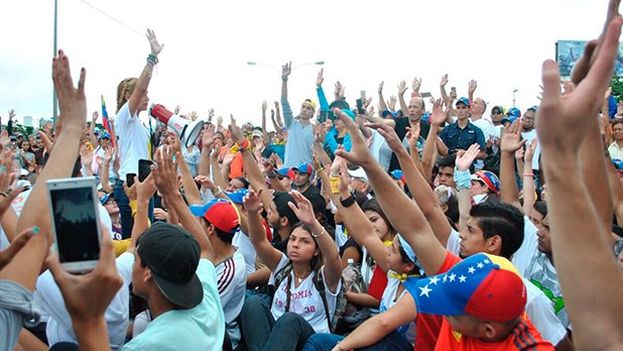
A simple act of civil disobedience is putting a ribbon on the door or a sticker in the window. It is not about a march like that of September 1st in Venezuela if people haven’t already identified with the opposition project.

“The suspicion syndrome”

The fear of being marked by the regime is one of the reasons for political apathy. The vast majority of Cubans talk quietly at home, criticizing the barbarity and arbitrariness of the government. People avoid talking about it more at work saying: “You don’t know who’s who.” The fear of being put on the blacklist makes people prefer to remain outside any political debate and simply repeat the regime’s propaganda or join its repressive organizations (mass organizations) “so as not to stand out.” Opportunism and amorality have become an instinct for self-preservation.

End of the charismatic government

Fidel Castro met his end. The charismatic leader, bearer of all truth, was a decrepit old man. Although some, glued to the criticism of his image and legacy, still blame him for everything as if he still ruled, the reality is that nature, the only effective opponent of the regime, has removed Fidel Castro.

Fidel’s hypnotic personality was the cornerstone of the Cuban government. The interfamily transfer of power left a vacuum that we ignore. Raul Castro, the elderly general, is a person with little facility with words, jovial among his people but lacking charisma, incoherent, a faint shadow of what was the sex-symbol image of the Commander in Chief in his younger days.

Obama’s visit unveiled a Raul Castro without arguments, disoriented, his voice shrill and disagreeable, reflecting what was left of the “historic leadership of the Revolution.” The dictatorship has lost its charisma and its essence becomes more evident.

Possibility of dialog

The Cuban opposition currently does not have the power or the popular support to force a dialog with the government. Some passionate but hardly pragmatic leaders refuse, as an exercise in bravado, to accept a possible future dialog with the regime. Dialog is desirable, it can be a way to negotiate agreements and to obtain a share of power when the conditions for it are created. But, being realists, the opposition in Cuba had done very little to obtain the elements of pressure.

Obama policy and “normalization”

“Normalization” took the opposition by surprise. Something cooking behind the scenes until we all got a whiff of it. President Obama, ending his term in office, launched an adventure toward an uncertain future. Like it or not there are now fluid diplomatic relations between both countries. The screws have been loosened on the restrictions of the embargo-blockade, a policy that has been voted against for two decades by the majority of the countries that make up the United Nations General Assembly. Keeping it was illogical and trying this new path is the only reasonable option.

The disappearance of tensions and the eventual end of the embargo will put an end to the concept of the imperialist enemy and mark the end of political ideological work. The regime is left without the excuse of considering itself the hero of the “plaza under siege.” The blame cannot eternally fall on the United States: there are no reasons for the scarcities, the corruption, the persecution of entrepreneurs, the imposed lack of connection to the internet, the lack of freedom of expression and the violations of human rights. Will the opposition adapt to the new rules of the game and abandon its tantrums?

Keys

A social explosion will not occur in Cuba as long as a separation of immediate interests between the population and the opposition persists. People must lose their fear and become aware that most Cubans want an immediate change in relations with the state. An ethical renewal of the opposition is essential, as is the meeting at an intermediate point that permits unifying the idea of change for Cuba on the basis of a viable project to undermine the foundations of a regime that has lost its charismatic leader. Articulating a project for a future Republic that does not start from antiquated rhetoric about obsolete economic projects and licenses to kill.

A social explosion will come only when the majority of the population identifies the single culprit responsible for their ills, for which the distractions and excuses must disappear. We must put an end to the idea of the “imperialist enemy.” It requires a committed opposition that takes advantage of the new conditions and doesn’t lend itself to the improbable activities of those who have settled into a way of life guaranteed by dissent.

The freedom of Cuba does not depend on the United States, it depends on our own efforts. As long as we don’t understand our own responsibility, we will not achieve the changes we aspire to.